
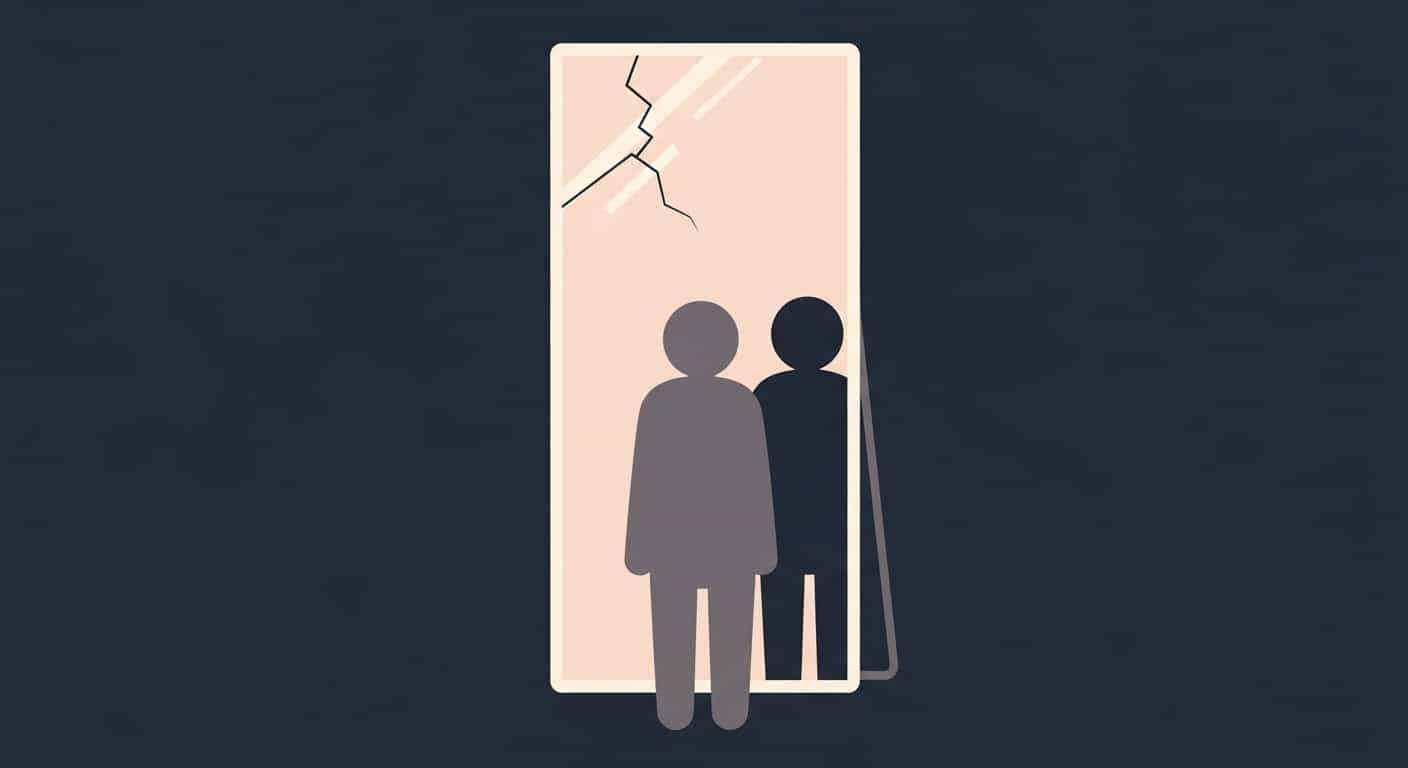
If you have woken up in a cold sweat, your heart pounding, after staring into a mirror that looked wrong—or if you have grown tired of the same reflective surface haunting your sleep—you are not alone. Recurring mirror dreams are among the most common yet deeply unsettling patterns in the dream world. Unlike a random nightmare you forget by breakfast, these dreams loop, repeat, and evolve, leaving you with a nagging question: What is wrong with me?
The answer, according to dream analysts and psychologists, is usually nothing. Instead, your subconscious is sending a signal so important that it refuses to shut up until you listen. Understanding the recurring mirror dream meaning is often the first step toward breaking the cycle. In this article, we will explore why these dreams happen, the six core reasons your mind keeps using mirrors as a messenger, and how to finally decode—and stop—the repetition.
What Makes a Recurring Dream Different From a Regular Dream?
To understand why a mirror dream keeps coming back, you first have to understand the mechanics of recurring dreams in general. A regular dream is often a processing tool. Your brain takes the events of the day, files them away, and tosses you a random narrative involving flying cats or showing up to work without pants. It is fleeting.
A recurring dream, however, is a persistent alert system. It is not filing away yesterday’s data; it is trying to fix a corrupted file. When a dream repeats with the same theme—such as a mirror, a house, or a pursuer—it indicates that the underlying issue has not been resolved in your waking life.
Recurring dreams act like a post-it note stuck to your forehead. Your conscious mind ignores the issue during the day, so your subconscious forces you to confront it at night. The mirror, in particular, adds a layer of complexity because it deals with the self. While a recurring dream about being chased might represent an external fear, a recurring dream about a mirror represents an internal reckoning. It is your psyche holding up a reflection and demanding: “Look. This is what you’ve been refusing to see.”
Why Mirrors Specifically Appear Again & Again
Mirrors are powerful symbols across nearly every culture and spiritual tradition. In ancient Greek mythology, Narcissus stared at his own reflection until he wasted away—a cautionary tale about self-obsession and the failure to see beyond one’s own image. In Jewish tradition, mirrors are covered during shiva, the period of mourning, to turn focus inward and away from vanity during grief. Across folklore, a cracked mirror is not merely a broken object but a fractured omen—a sign that the self, or even the soul, is in a state of disarray.
Carl Jung, the famous psychoanalyst, often referenced the mirror as a symbol of self-reflection and the shadow self—the parts of ourselves we hide, repress, or refuse to acknowledge. When a mirror shows up repeatedly in your dreams, it is not random. You are not dreaming about a mirror because you looked at one before bed. You are dreaming about a mirror because you are at a crossroads.
The mirror acts as a truth-teller. In waking life, we often lie to ourselves to maintain comfort. We tell ourselves we are happy when we are not, or that a toxic relationship is fine. The dream mirror, however, cannot lie. If you see a distorted reflection, a cracked mirror, or no reflection at all, your subconscious is showing you that the version of yourself you present to the world (your persona) is misaligned with who you actually are. The reason this dream repeats is simple: the misalignment is still there.
6 Reasons You Keep Dreaming About Mirrors
Decoding the recurring mirror dream meaning requires looking at the specific psychological and spiritual drivers behind the repetition. While the imagery may vary—from cracked glass to monstrous reflections—the underlying reasons usually fall into one of these seven categories.
1. An Unresolved Inner Conflict
One of the most common reasons for a recurring mirror dream is internal dissonance. You are likely holding two opposing beliefs or desires that are creating a war within your psyche. For example, you may want stability but also crave radical change. You may value honesty but find yourself telling small lies to keep the peace.
The mirror appears to force you to look at the contradiction. If in your dream you cannot look at the mirror, or you see two different faces staring back, it is a direct manifestation of this internal tug-of-war. Until you reconcile these opposing parts of yourself—or at least acknowledge them—the dream will continue to loop. Your mind is desperate for integration, and the mirror is the only tool it has to show you the fracture.
2. A Pattern in Your Life You Keep Repeating
Recurring dreams often mirror recurring life patterns. If you find yourself in the same type of toxic relationship, the same dead-end job, or the same self-sabotaging habit, the mirror dream will reflect that cyclical behavior.
Think of the mirror as a symbol of repetition. Just as a mirror reflects back the same image over and over, your life is reflecting back the same lesson. If you look into the dream mirror and see yourself aging rapidly, looking exhausted, or stuck in a loop—like seeing infinite reflections stretching behind you—your subconscious is saying: “Look at the pattern. You are repeating the same mistake, and it is costing you.” The dream will not stop until the pattern breaks.
3. A Spiritual Message That Hasn’t Been Heard
For those who lean into spirituality, recurring mirror dreams are often considered a call from the higher self. In spiritual contexts, mirrors are portals. They represent clarity, truth, and spiritual awakening.
If you are ignoring your intuition—if you feel a “gut feeling” about a person or situation but are rationalizing it away—the mirror dream will recur. Sometimes, the message is subtle, like a clean mirror with a slight fog. Other times, it is aggressive, like a mirror that shatters when you look at it. Spiritually, this is a demand for radical honesty. The universe, or your higher self, is using the mirror to say: “Stop pretending. You know the truth. Act on it.” Until you listen to that quiet voice inside, the spiritual alarm clock will keep ringing at 3:00 AM.
4. Anxiety, Trauma or PTSD Manifesting
From a clinical perspective, recurring mirror dreams are often linked to anxiety disorders, body dysmorphia, or post-traumatic stress disorder (PTSD) . Mirrors force confrontation with the self, which can be terrifying for someone who has experienced trauma, particularly trauma related to identity, abuse, or self-image.
If the recurring dream involves a mirror that shows a distorted, monstrous, or aging version of yourself, it may be a symptom of low self-worth rooted in trauma. Similarly, if you suffer from social anxiety, the dream might reflect your fear of being “seen” or judged. In these cases, the dream is not just a symbol—it is a symptom. It is your brain’s way of trying to process a threat that has become internalized. If this resonates, the repetition is a signal that the underlying trauma needs professional attention, not just dream journaling.
A Note on Clinical Concerns: While dream analysis is a powerful tool for self-reflection, recurring dreams about mirrors—especially those involving distorted perceptions of your body or face—can sometimes be associated with conditions like Body Dysmorphic Disorder (BDD) or the aftermath of trauma. If these dreams cause you significant distress, lead to compulsive mirror-checking in waking life, or are linked to a history of abuse, please consider speaking with a mental health professional. This article is a guide for self-exploration, not a substitute for clinical care.
5. A Deep Identity Question You’re Avoiding
Are you going through a major life transition? A divorce, a career change, an empty nest, or a spiritual deconstruction? These events force us to ask the terrifying question: “Who am I now?”
When you avoid this question, your subconscious forces it upon you via the mirror. If you dream that you look in the mirror and see a stranger—or a younger version of yourself, or a version of yourself that died—it is a direct commentary on identity crisis. You are no longer the person you used to be, but you have not accepted the person you are becoming. The recurring dream is an invitation to sit with that discomfort. It will not stop until you consciously define who you are in this new chapter of your life.
6. Fear of Aging and Mortality
Mirrors are the ultimate symbol of time’s passage. For many people, recurring dreams of seeing an aged, withered, or decaying self in the mirror represent an unprocessed fear of death, aging, or loss of vitality. This is a distinct anxiety that often does not fit neatly into “identity crisis” or “trauma” categories.
If you dream of wrinkles spreading across your face, hair turning white in an instant, or your reflection looking skeletal or corpse-like, your subconscious may be grappling with mortality awareness. This is especially common during milestone birthdays, after the loss of a loved one, or during periods when you feel time slipping away. The mirror in these dreams is not showing you who you are now—it is showing you what you are afraid of becoming. The recurring nature of these dreams suggests that the fear has not been faced or integrated.
7. Spiritual Activation — Your Intuition Is Strengthening
Not all recurring mirror dreams are warnings of trauma or crisis. Sometimes, they indicate that your psychic or intuitive abilities are awakening. In esoteric traditions, the mirror is a tool for scrying (divination). If you are going through a period of high sensitivity—feeling emotions more deeply, having prophetic thoughts, or feeling more connected to the spiritual realm—your dreams may use the mirror to reflect this new ability.
In these dreams, the mirror might glow, show you future events, or allow you to see “behind the veil.” While this can be frightening if you are not expecting it, the recurrence is simply your mind acclimating to a higher level of consciousness. Instead of trying to stop these dreams, the goal is to learn to navigate them without fear.
How to Decode Your Specific Recurring Mirror Dream
General meanings are helpful, but your dream is unique to you. To fully understand the recurring mirror dream meaning for your life, you need to become a detective of your own subconscious. Here are two practical methods to decode the specifics.
Dream Journaling Method
You cannot decode a pattern if you cannot remember the details. A dream journal is essential. Keep a notebook by your bed, and the moment you wake up from the mirror dream, write down everything you remember—even if you are groggy.
When journaling, focus on these specific elements:
| Element | Questions to Ask |
|---|---|
| Condition of the mirror | Is it clean, cracked, foggy, bloody, or missing? |
| Your reflection | Do you see yourself? A monster? A stranger? Nothing? |
| Your emotional state | Are you terrified, curious, relieved, or ashamed? |
| Actions | Are you trying to break the mirror? Can you look away? Are you forced to stare? |
Do not interpret the dream immediately. Just record it. Over the course of a week or two, you will begin to see a shift. Often, the emotions attached to the dream are more important than the visuals. If you notice that your fear level decreases over time, it may mean you are starting to confront the issue in waking life.
Pattern Recognition Across Multiple Dreams
Once you have three to five entries in your dream journal, look for the narrative arc. Recurring dreams rarely repeat identically. They evolve.
Ask yourself:
- Is the mirror getting clearer or more distorted over time?
- Are you getting closer to the mirror or backing away?
- Is the dream ending differently?
If the dream is progressing—if you finally looked into the mirror after weeks of avoiding it—your subconscious is showing you that you are making progress. If the mirror is cracking more each time, the issue is worsening. This pattern recognition tells you whether the “message” is being heard or ignored. It also gives you a timeline. The moment the dream changes drastically (or stops), you will know you have integrated the lesson.
How to Make the Recurring Dream Stop (If You Want To)
Not everyone wants to analyze their dreams. Sometimes, you just want a full night’s sleep without staring into an abyss of cracked glass. While stopping the dream entirely requires addressing the root cause, there are concrete steps you can take to disrupt the cycle.
1. Confront the reflection before sleep.
Recurring dreams thrive on avoidance. Before bed, stand in front of a physical mirror. Look at yourself for two minutes. Say out loud: “I am willing to see what I am hiding.” This sounds simple, but it signals to your subconscious that you are no longer running from the truth. Often, this act alone breaks the cycle because the dream no longer needs to force the confrontation.
2. Use lucid dreaming techniques.
If you can become aware that you are dreaming while you are in the mirror dream, you can change the outcome. Practice reality checks during the day (ask yourself, “Am I dreaming?”). When you find yourself in the mirror dream, try to control it. Tell yourself: “I am safe. I am ready to see the truth.” If you can change your emotional response within the dream from fear to curiosity, the recurrence often loses its power.
3. Engage in shadow work.
“Shadow work” is a psychological practice of integrating the parts of yourself you reject. If your dream mirror shows a scary or ugly version of you, that “ugly” part is likely a repressed emotion (anger, jealousy, grief). Set aside time to journal about what traits you hate in others—those are usually your shadow. By acknowledging these traits in yourself, you remove the mirror’s ability to shock you.
4. Seek therapy if the dreams are traumatic.
If the recurring mirror dreams are causing severe anxiety, sleep deprivation, or are linked to past trauma, do not try to solve this alone. A therapist trained in dream work or EMDR (Eye Movement Desensitization and Reprocessing) can help you process the root trauma. In cases of PTSD, the dreams will likely persist until the underlying trauma is treated clinically.
Conclusion
Recurring mirror dreams are rarely random. They are a persistent, often frustrating, form of communication from the deepest parts of your psyche. Whether the recurring mirror dream meaning in your life points to an unresolved conflict, a spiritual awakening, or a traumatic memory, the mechanism is the same: your mind is trying to show you something you are refusing to see.
The good news is that you are not a passive victim of these nocturnal visitations. You are the one who has been averting your gaze. By journaling, recognizing patterns, and summoning the courage to confront the reflection—in sleep and in waking life—you reclaim the narrative. You transform the dream from a haunting interrogation into a profound dialogue with yourself. And when you finally, truly listen to what the mirror has been trying to show you, it will no longer need to shatter your sleep. The repetition will cease, and in its place, you will find not just rest, but a clearer, more integrated sense of who you have become.