
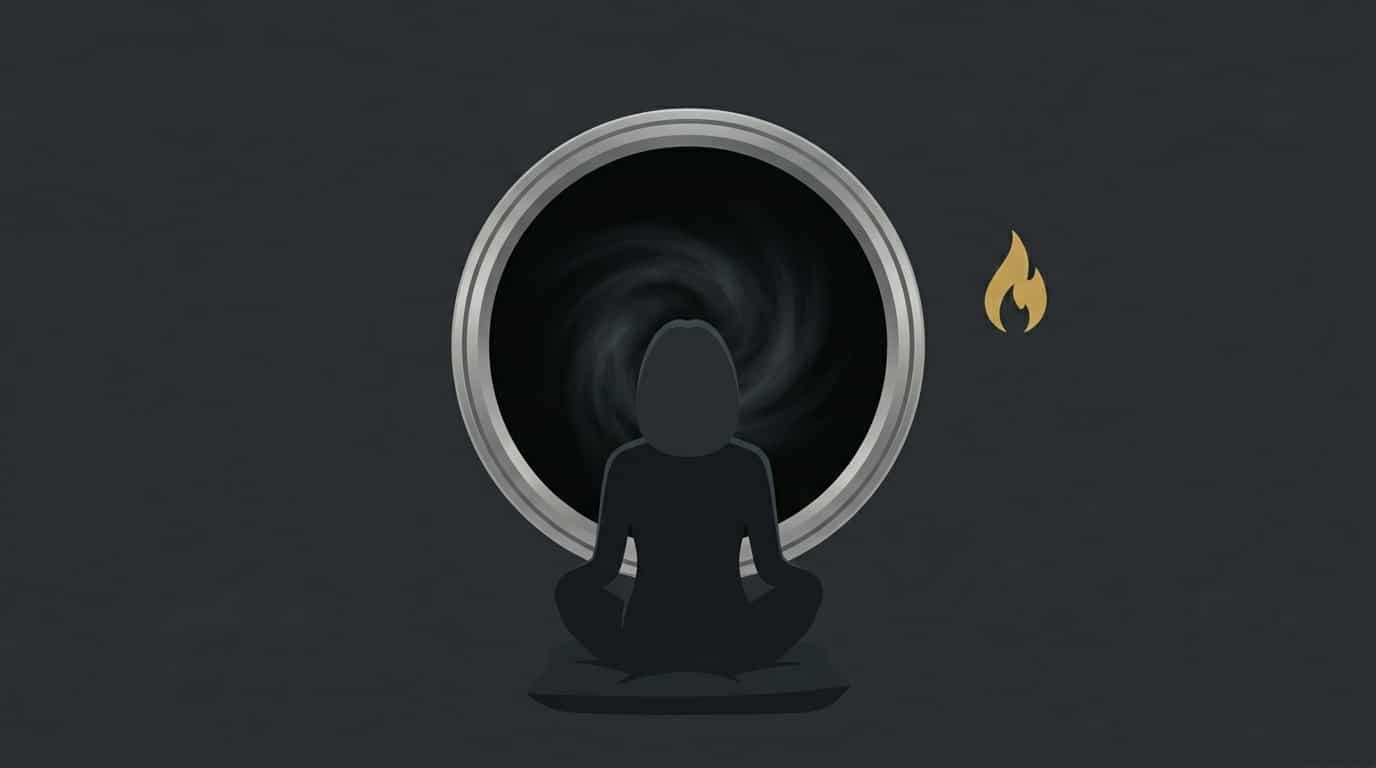
The concept of peering into a dark, reflective surface to glimpse the future or connect with the unseen has fascinated humanity for millennia. In the modern era, this practice is most commonly known as black mirror scrying. Whether you are drawn to it for spiritual exploration, divination, or psychological introspection, this black mirror scrying beginner guide is designed to walk you through everything you need to know.
For those new to the craft, the idea can seem intimidating—a relic of medieval sorcery or Hollywood horror. In reality, scrying is a meditative discipline that taps into the brain’s natural ability to find patterns in visual noise. By the end of this guide, you will understand the ancient history behind this tool, how to select or craft your own mirror, and the step-by-step process to conduct a session safely and effectively.
What Is Black Mirror Scrying?
Black mirror scrying is a form of divination (or “seeing”) that uses a dark, reflective surface as a focal point to achieve a trance state. Unlike a standard silvered mirror, which reflects the physical world clearly, a black mirror absorbs light and reflection, creating a void-like surface. It is within this “void” that the practitioner begins to perceive images, symbols, or impressions.
At its core, scrying is less about the mirror itself and more about the scryer’s mind. The mirror acts as a gateway—a technological aid to help the brain shift into theta brainwave states (the frequency associated with deep meditation and intuition). When you gaze into the darkness, your mind experiences a phenomenon called pareidolia, where it attempts to make sense of random patterns, pulling latent information from the subconscious or, depending on your belief system, spiritual realms.
Modern practitioners use black mirrors for various purposes:
- Divination: Answering specific questions about the future.
- Spirit Communication: Connecting with ancestors or spirit guides.
- Shadow Work: Confronting subconscious fears and hidden aspects of the self.
- Creative Inspiration: Accessing the “muse” for artistic or problem-solving insights.
History of Black Mirror Scrying
To appreciate the tool you are working with, it is essential to understand its rich and often secretive history. The black mirror is not a modern invention; it is one of the oldest tools of divination known to humanity.
John Dee & Edward Kelley’s Obsidian Mirror
Perhaps the most famous black mirror in Western esotericism belonged to Dr. John Dee, the court astrologer to Queen Elizabeth I. In the 16th century, Dee sought to communicate with angels to understand the divine nature of the universe. His scrying partner, Edward Kelley, used a polished disc of obsidian (a naturally occurring volcanic glass) to receive complex angelic communications.
This specific mirror, now housed in the British Museum, is arguably the most iconic artifact of scrying history. Dee believed the obsidian had been brought from the New World and that it held spiritual properties that made it superior to crystal balls. The partnership between Dee and Kelley highlights a critical aspect of scrying: it often involved two people—one to see and one to record—though solitary practice is far more common today.
Aztec Priests & the Obsidian Glass
Long before Dee and Kelley, the Mesoamerican cultures, particularly the Aztecs (Mexica) , utilized obsidian for divination. Obsidian was considered one of the most sacred materials, associated with Tezcatlipoca, the god of the night sky, sorcery, and fate—whose name translates to “Smoking Mirror.”
Aztec priests would use highly polished obsidian discs to prophesy, track celestial events, and perform rituals. For the Aztecs, the mirror was not merely a tool for seeing the future; it was a portal to the underworld and a direct line to the gods. The darkness of the obsidian represented the primordial void from which all creation sprang.
Medieval European Dark Mirror Practices
During the Middle Ages and Renaissance, scrying (often called “crystallomancy”) became a fringe practice. While crystal balls were popular among “cunning folk” and hedge witches, black mirrors were often used for more serious necromantic or demonic workings—at least in the literature of the time.
Dark mirrors were often made from polished jet, coal, or a glass backing painted black. These tools were used in rituals that were distinct from the lighter divination of crystal balls. The practice was shrouded in secrecy because the Church frequently condemned scrying as a form of witchcraft. Despite this, grimoires (magical textbooks) like The Key of Solomon detailed specific instructions for creating and consecrating mirrors for spirit conjuration, solidifying the black mirror’s place in Western occultism.
How to Choose & Prepare a Black Mirror
Before you begin scrying, you need a tool. Your relationship with your mirror is intimate; it becomes a partner in your practice. Here is how to acquire and prepare one.
Buying vs Making Your Own Black Mirror
You have two primary options: purchasing a professionally made mirror or crafting one yourself.
Buying a Mirror: If you choose to buy, look for a concave or convex shape. Convex (curved outward) mirrors are traditional because they create a distortion that aids the mind in letting go of physical reality. You can find high-quality black mirrors in occult shops or online marketplaces. Look for materials like obsidian (authentic stone is expensive but energetic) or high-quality black glass. Avoid cheap plastic, which tends to scratch easily and hold static energy poorly.
Making Your Own Mirror: Making your own mirror is a powerful way to imbue the tool with your personal energy. It is also significantly cheaper.
Materials Needed:
- A deep, black picture frame (wood or metal, avoid plastic).
- Black glass or a piece of glass cut to fit the frame.
- Black spray paint or black acrylic paint.
- A backing board.
Instructions:
- Remove the glass from the frame.
- If using clear glass, clean it thoroughly and spray the back side with several even coats of black paint. Let it dry completely. You want a perfect, dark black surface. (Do not paint the front).
- Alternatively, purchase a piece of black glass (often used for backsplashes or aquariums).
- Place the glass (painted side down or black side facing you) into the frame.
- Seal the back with the backing board.
- Optionally, glue a symbol on the back, such as an eye of Horus, a pentacle, or a personal sigil, before sealing it.
How to Cleanse & Consecrate It
A new tool carries the residual energy of everyone who touched it before you. Whether you bought it or made it, cleansing and consecration are vital steps.
Cleansing:
- Smudging: Pass the mirror through the smoke of sage, palo santo, or frankincense. Visualize any stagnant or foreign energy being wiped away.
- Moonlight: Place the mirror under the light of a full moon overnight to “reset” its energy.
- Salt: Bury the mirror in a bowl of dry salt (sea salt or Himalayan) for 24 hours. Salt is a classic purifier.
Consecration: Consecration is the act of dedicating the mirror to your specific purpose.
- Set the Intention: Hold the mirror in your hands. Clearly state what you will use it for (e.g., “I dedicate this mirror to the highest good, for guidance and shadow work”).
- The Four Elements: Pass the mirror through incense (Air), candle flame (Fire—carefully), sprinkle with salt water (Earth and Water), or simply visualize these elements cleansing and empowering the tool.
- The Seal: Mark the back of the mirror with a symbol of protection (if you haven’t already). This creates a barrier ensuring that only benevolent or high-vibrational energies come through.
Step-by-Step Black Mirror Scrying Guide
Now that you have your history and your prepared tool, it is time to sit for your first session. Scrying is a skill that requires patience. Do not expect immediate visions.
Setting Realistic Expectations: Your First 10 Sessions
It is crucial to understand that scrying is a skill, not a party trick. In your first 1-3 sessions, you will likely see nothing but the cloudy mirror and your own impatience. Sessions 4-7 may yield fleeting colors, shapes, or the sensation of movement in your peripheral vision. By sessions 8-10, you may begin to see brief flashes of symbols or faces. This is a normal, linear progression. If you see a full cinematic vision in your first try, it is the exception, not the rule. The real “vision” is often a deep, intuitive knowing that accompanies the imagery.
The Right Environment & Timing
Environment is key. You need a space where you will not be interrupted for at least 20 to 30 minutes.
- Lighting: The room should be dim. Candlelight is traditional. Place a single candle (preferably black or white) behind or beside you so that the flame does not reflect directly in the mirror. You want the mirror to look like a dark pool, not a reflective surface.
- Positioning: Sit comfortably with the mirror propped up slightly, or hold it in your hands. Ensure your spine is straight but relaxed. Place the mirror approximately 12 to 18 inches away from your face.
- Timing: The liminal times—dawn and dusk—are considered ideal because they represent the “in-between” moments. New moons are excellent for introspection and shadow work, while full moons are powerful for clarity and divination.
How to Enter the Scrying State
This is the core of the practice. You are moving from a normal waking state (Beta brainwaves) to a relaxed, receptive state (Alpha/Theta).
- Protection: Take three deep breaths. Visualize a sphere of protective white light surrounding you. If you work with deities, ancestors, or guides, invite them into the space now.
- Soft Focus: Gaze softly at the mirror. Do not “stare” intensely, as this causes eye strain and tension. Let your eyes unfocus, as if you are looking through the surface into a distant landscape.
- The Clouding: At first, you will likely see your own face or the room. Keep your gaze soft. Soon, the mirror should begin to “cloud” over. You may see smoke, mist, or swirling colors. This is the speculum—the transition point. Do not try to force clarity; simply observe the cloud.
- Passive Observation: As the clouds shift, images may begin to form. They might be fleeting—a flash of a face, a landscape, a symbol. Do not try to “catch” them. Maintain the soft gaze. If your mind wanders, gently bring your focus back to the cloud in the mirror.
- Inquiry: Once you feel stable in this state, you can ask a question. State it aloud or in your mind. Then, return to passive observation.
How to Interpret What You See
Interpretation is the most nuanced part of scrying. What you see is rarely literal. It is often symbolic, subjective, and filtered through your subconscious.
The Quality of the Image: Imagination vs. Vision
A common beginner question is, “Am I making this up?” Here is a simple way to discern:
| Imagination | Scrying Vision |
|---|---|
| Feels willed. You decide to see something, and a mental image appears. | Feels received. An image suddenly appears in the mist independently. |
| Often static and under your control. | May move, breathe, or turn its head independently of your will. |
| Comes with no distinct emotional shift. | Often comes with a sudden emotional or intuitive “ping” that feels distinct from normal thoughts. |
Trust the images that feel like they appear to you, not from you.
- Symbolic Language: If you see a snake, does it mean danger, healing (the caduceus), or transformation? The meaning is personal to you. Keep a journal to track your personal symbolism.
- Internal vs. External: Sometimes the images are projections of your own inner world (dreams, fears, hopes). Sometimes, practitioners believe they are external visions of spirits or future events. As a beginner, assume most images are from your subconscious. This is not a “lesser” form of scrying; it is the foundation of shadow work.
- Recording: Keep a scrying journal next to you. Immediately after the session (not during), write down everything you saw, felt, and heard. Note the time, date, moon phase, and your emotional state.
How to Close the Session Properly
Closing the session is just as important as opening it. You do not want to leave a “door” open.
- Clear the Mirror: Pass your hand over the surface of the mirror, palm facing down, in a clockwise motion. Visualize wiping away any lingering images or energy.
- Ground: Place your hands flat on the floor or on a table. Take three deep breaths. Feel your awareness return fully to your body and the room.
- Cover the Mirror: Never leave a black mirror uncovered when not in use. It is considered an active portal. Keep it wrapped in black silk, velvet, or stored in a drawer or box. This prevents accidental scrying and contains its energy.
- Thank You: Verbally thank your guides, the mirror, or your higher self for the session.
If You Become Overwhelmed: An Emergency Stop
If during a session you are confronted with an image that causes genuine terror, or you feel a presence that feels hostile, do not simply stop. You must actively close the space.
- State Your Authority: Firmly say aloud, “This session is over. You are not welcome here. You must leave.”
- Break Eye Contact: Physically look away from the mirror immediately.
- The Three-Candle Out: If using candlelight, snuff them out one by one, visualizing each flame closing a door.
- Wash and Ground: Go immediately to a sink and run cold water over your hands and wrists. This is a powerful way to “snap” your nervous system back to the present. Follow this with your standard grounding practice.
What Can You Actually See in a Black Mirror?
One of the most common questions in any black mirror scrying beginner guide is: “What am I supposed to see?” The experiences vary drastically from person to person.
- The Mist: Most beginners see smoke or mist. This is the first sign that you are entering the state.
- Colors: You may see flashes of color. Blue might indicate healing or spiritual presence; red might indicate passion or warning; gold often indicates higher guidance.
- Geometric Shapes: Sacred geometry, eyes, wheels, and spirals are common. These are often thought to be the “building blocks” of the astral realm.
- Faces: You may see faces—sometimes yours, sometimes strangers, sometimes ancestors. These can appear suddenly and vanish just as quickly.
- Symbols: Letters, numbers, or occult symbols (like pentagrams or runes) may appear.
- Vignettes: With practice, you may see short “movie-like” scenes: a location you have never seen, an event playing out.
- Physical Sensations: Many feel temperature changes (sudden cold), pressure, or a sense of being watched.
- Nothing: Seeing nothing is a valid experience. Sometimes the mirror acts as a deep meditative tool. The “nothingness” is actually the goal—a state of pure presence.
Realistic Expectations: It is unlikely you will have a clear, cinematic vision on your first try. Scrying is a muscle. The first ten sessions might yield only mist. That is normal. The goal is consistency. The visions typically start as “flashes” or “impressions” rather than clear images.
Common Beginner Mistakes & How to Avoid Them
When starting out, it is easy to fall into traps that can lead to frustration or fear. Avoiding these pitfalls will ensure a productive practice.
1. Mistake: Forcing the Vision
Beginners often strain their eyes, trying to make something appear. This leads to headaches and disappointment.
- Solution: Relax. Scrying is about receptivity, not effort. If your eyes hurt, stop. The images come when you are soft and open, not tense.
2. Mistake: Ignoring Protection and Closing
Treating scrying as a casual game without setting energetic boundaries can lead to feelings of unease, nightmares, or an overwhelming sense of a “presence” in the room.
- Solution: Always cast a protection circle or set a clear intention. Never skip the closing ritual. Covering the mirror immediately after use creates a psychological and energetic boundary.
3. Mistake: Lack of Journaling
Relying on memory is a trap. Visions fade within minutes. Without a record, you cannot track patterns or validate your progress.
- Solution: Keep a dedicated journal. Write down every detail immediately after closing the session, no matter how small or seemingly silly.
4. Mistake: Scrying When Emotionally Compromised
Scrying while angry, deeply depressed, or under the influence of alcohol or drugs can distort the visions and attract lower-vibrational energies. It also makes it difficult to distinguish between genuine insight and emotional projection.
- Solution: Only scry when you are calm, grounded, and in a neutral or positive emotional state.
5. Mistake: Fear of What You See
It is common for beginners to panic if they see something “scary,” like a skull or a shadowy figure. This often causes them to abandon the practice.
- Solution: Understand that symbols are neutral. A skull can represent transformation or the death of an old habit, not physical death. If you feel genuine fear, close the session immediately, ground yourself, and revisit the journal later to analyze the symbolism without the adrenaline.
6. Mistake: Using a Shared or Unclean Mirror
Using an antique mirror or a mirror that others have used for standard reflection without cleansing it can bring chaotic energy into your practice.
- Solution: If you are using a vintage mirror, cleanse it heavily. Ideally, have a mirror dedicated only to scrying.
Final Thoughts
Embarking on the path of black mirror scrying is a journey into the deepest parts of your psyche and, for many, into the spiritual realms beyond. This black mirror scrying beginner guide has provided you with the historical context, the practical steps to create and prepare your tool, and the safety protocols to ensure your practice is both productive and protected.
Remember that patience is your greatest asset. The ancients who used obsidian mirrors spent years mastering the art of the soft gaze. Start with short sessions—ten to fifteen minutes—and gradually increase the time as your focus and comfort grow. Whether you seek divine guidance, historical connection, or simply a deeper understanding of your own subconscious, the black mirror is a profound companion on that journey.
Respect the tool, respect the practice, and, most importantly, respect the visions that arise—for they are ultimately a reflection of you.