
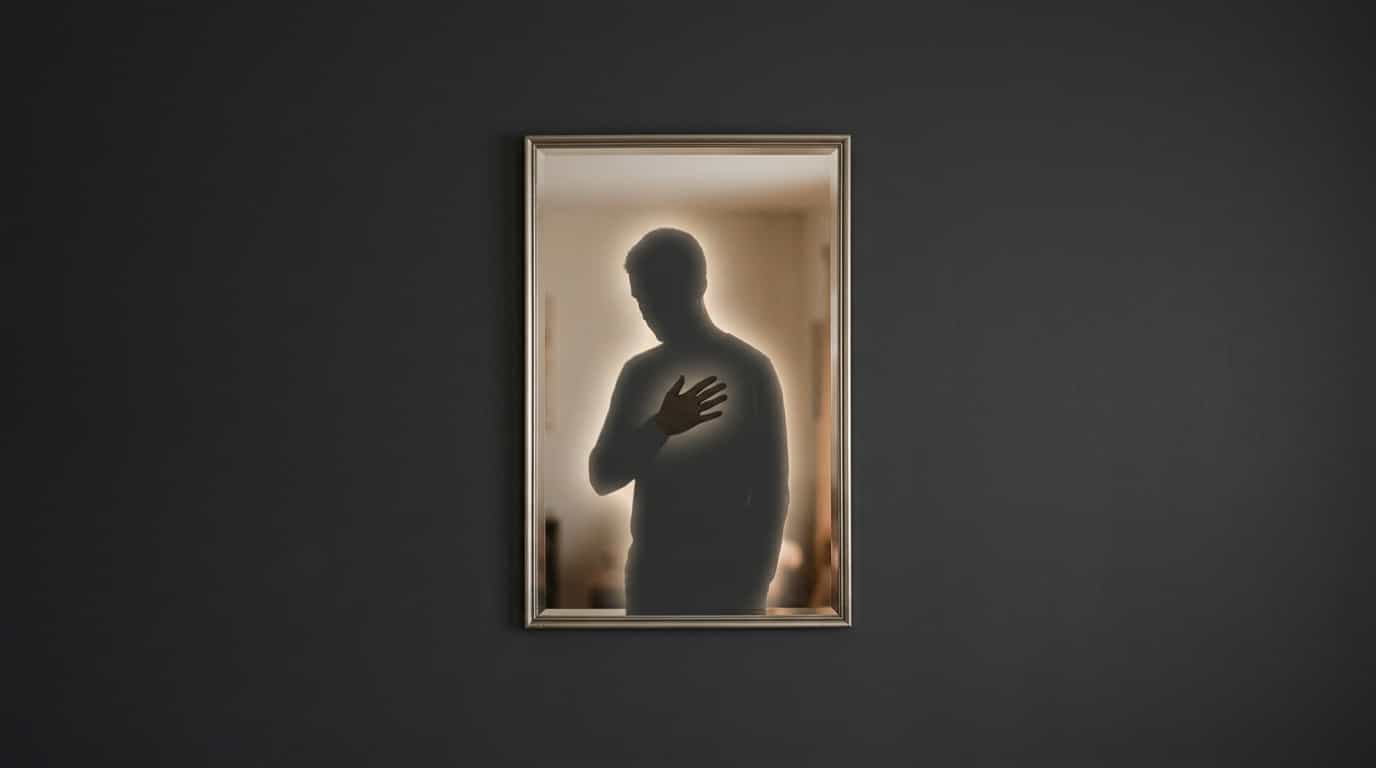
For centuries, mirrors have held a unique place in human culture. They are tools of vanity, portals to the spirit world in folklore, and, for a significant number of people, sources of profound unease. Whether it is the childhood habit of sprinting past a dark hallway mirror or the adult ritual of avoiding reflective surfaces after a traumatic event, the fear of mirrors is more common than most people admit.
But where is the line between a quirky superstition and a debilitating condition? For those experiencing eisoptrophobia—the clinical term for a fear of mirrors—the reflection staring back can feel like an enemy, a stranger, or a harbinger of bad luck. When this fear crosses from a passing belief into psychological distress, it can disrupt daily life, shatter self-esteem, and trap a person in a cycle of avoidance.
This article explores the full spectrum of mirror fear—from ancient superstitions to modern psychological disorders—and offers a compassionate roadmap for healing.
The Spectrum of Mirror Fear: Healthy Superstition to Phobia
Not all fear of mirrors is pathological. In fact, many cultures have long-standing traditions that treat mirrors with caution. In some Eastern European cultures, it is believed that looking into a broken mirror brings seven years of bad luck. In parts of Asia, mirrors in bedrooms are often covered at night to prevent the soul from being disturbed or trapped. These beliefs are usually harmless; they are cultural touchstones that add texture to our understanding of the world.
For most people, these superstitions function as a form of cognitive play. You might avoid breaking a mirror, but if you accidentally do, you might simply throw salt over your shoulder and move on. The fear does not dictate your behavior or cause significant distress.
However, mirror anxiety exists on a spectrum. When the fear begins to dictate behavior—when a person cannot enter a bathroom without a panic attack, covers every reflective surface in their home, or spends hours obsessively checking their reflection to ensure nothing “wrong” appears—it ceases to be superstition. It becomes a phobia, often categorized under specific phobias (such as eisoptrophobia) or as a symptom of a deeper underlying condition.
At the clinical level, this fear is characterized by:
- Avoidance: Rearranging living spaces to eliminate mirrors, or refusing to use public restrooms.
- Distress: Experiencing heart palpitations, sweating, dizziness, or derealization when confronted with a reflection.
- Dysfunction: The fear interferes with personal grooming, social outings, or professional life.
Psychological Roots of Mirror Anxiety
To understand why a simple reflective surface can trigger such intense reactions, we must look at the psychological mechanisms at play. Mirror anxiety is rarely about the glass itself; it is about what the reflection represents to the mind.
Body Dysmorphic Disorder & Mirrors
One of the most common drivers of mirror anxiety is Body Dysmorphic Disorder (BDD) . Individuals with BDD are consumed by perceived flaws in their appearance that are often invisible to others. For these individuals, mirrors become instruments of torture.
The relationship between BDD and mirrors is paradoxical. A person with BDD might engage in mirror checking—spending hours scrutinizing a perceived flaw, seeking reassurance that it has not gotten worse. Conversely, they might engage in mirror avoidance, terrified that catching a glimpse of themselves in a window or a car mirror will trigger a spiral of shame and disgust.
In this context, the mirror is not just a tool; it is a confrontation. The anxiety stems from a lack of control over one’s own image. The brain latches onto the reflection as proof of inadequacy, turning the simple act of looking into a mirror into a traumatic event that reinforces negative self-perception.
PTSD & the Mirror: When the Reflection Triggers the Past
For survivors of trauma, mirrors can serve as a trigger that reactivates the body’s fight-or-flight response. This is particularly common in cases of physical assault, sexual abuse, or accidents where the victim’s sense of bodily autonomy was violated.
When a person has Post-Traumatic Stress Disorder (PTSD) , the mirror often represents a loss of safety. Looking at the reflection may feel like looking at the “victim” they were during the trauma. For some, the mirror acts as a portal that brings the traumatic memory into the present moment. They may experience flashbacks while looking at their own face, or they may feel as though the person in the mirror is not them, but a vulnerable version of themselves they have worked hard to escape.
This response is physiological. The amygdala (the brain’s fear center) associates the mirror with the context of the trauma, flooding the system with cortisol and adrenaline upon sight.
Depersonalization: Not Recognizing Yourself
Perhaps one of the most unsettling forms of mirror anxiety occurs in the context of depersonalization-derealization disorder. Depersonalization is a state where a person feels detached from their own mind or body, as if they are an outside observer of their own life.
When someone experiencing depersonalization looks into a mirror, the result can be terrifying. They may feel that the face staring back is not theirs. The reflection might look distorted, flat, or foreign. This disconnect—known clinically as mirror gazing-induced depersonalization—can lead to severe panic. The individual may fear they are “going crazy” or losing their grip on reality.
For these individuals, the mirror becomes a symbol of dissociation. Avoiding it is not about vanity or superstition; it is a desperate attempt to maintain a fragile sense of self.
Superstition as a Coping Mechanism
While we often dismiss superstition as irrational, in the context of mirror anxiety, it often serves a very rational psychological purpose: control.
Why Believing in Mirror Danger Feels Protective
Anxiety thrives on uncertainty. If you have a phobia of mirrors, the fear is often amorphous—you do not know why the mirror scares you, just that it does. Superstition provides a narrative. It gives the fear a shape.
By believing that covering a mirror prevents spirits from following you, or that avoiding a reflection at night prevents bad luck, the individual transforms a chaotic anxiety into a manageable rule system. This is known as a safety behavior.
This is a form of magical thinking—a common cognitive distortion in anxiety where the mind creates a false cause-and-effect link between a behavior (covering a mirror) and an outcome (avoiding distress). Safety behaviors reduce anxiety in the short term but reinforce the phobia in the long term. If you believe that “I did not have a panic attack because I covered the mirror,” your brain learns that covering the mirror is essential for survival. You become trapped in a cycle where the superstition is no longer a quaint belief but a rigid requirement for functioning.
From a psychological standpoint, the superstition is a symptom of the anxiety, not the cause. It is the mind’s attempt to create order in the face of overwhelming fear.
| Superstition | Psychological Function | Potential Risk |
|---|---|---|
| Covering mirrors at night | Reduces immediate anxiety | Reinforces belief that mirrors are dangerous |
| Avoiding broken mirrors | Provides sense of control | Strengthens avoidance behavior |
| Tapping mirror before use | Creates ritualistic safety | Can evolve into compulsive ritual |
| Salt over shoulder after breaking | Offers quick resolution | Prevents habituation to accidents |
The Spiritual View of Mirror Fear
Beyond the clinical diagnosis, there is a spiritual and existential dimension to mirror anxiety. For those who are introspective or spiritually inclined, the fear of mirrors often points to a deeper internal conflict.
It is crucial to note that this spiritual dimension is distinct from the clinical conditions discussed above. For someone with BDD or PTSD, the fear is not about avoiding introspection, but is a direct and often involuntary trauma response. If you are experiencing symptoms of these conditions, this spiritual lens should be explored in conjunction with, not in place of, professional treatment.
Avoiding Your Reflection as Spiritual Avoidance
In many spiritual traditions—from the Greek myth of Narcissus to Sufi mysticism—mirrors are seen as tools of truth. They do not lie. They show you exactly what is there.
When a person has an intense fear of mirrors that is not rooted in BDD or psychosis, it can sometimes be a form of spiritual avoidance. You may be afraid of what the mirror represents: stillness, self-confrontation, and solitude.
In our fast-paced world, many people use distractions to avoid looking inward. A mirror forces you to stop. It demands presence. For someone who has spent years running from their own emotions, unresolved grief, or existential dread, the mirror becomes an adversary. The fear is not of the reflection, but of the silence and self-awareness that the reflection demands.
What You Fear in the Mirror You Fear in Yourself
Carl Jung, the famous psychoanalyst, spoke extensively about the “shadow” —the parts of ourselves we repress. He suggested that everything that irritates us about others can lead us to an understanding of ourselves. The same applies to mirrors.
If looking in the mirror fills you with anxiety, it is worth asking: What am I afraid of seeing?
For some, it is physical aging. For others, it is the recognition of their own mortality. For many, it is the fear of seeing sadness, exhaustion, or failure staring back at them. The mirror acts as a judge. Overcoming this fear often requires a shift in perspective—moving from viewing the mirror as a judge to viewing it as a compassionate witness.
When to Seek Help vs. When to Honor the Fear
One of the trickiest aspects of mirror anxiety is knowing whether the fear is something you can manage with self-help or whether it requires professional intervention.
| Honor the Fear When: | Seek Professional Help When: |
|---|---|
| It is linked to cultural or spiritual practices you freely choose. | You are skipping work, school, or social events to avoid mirrors. |
| You feel mild discomfort but can still use mirrors when necessary. | You engage in compulsive mirror checking for hours, causing distress. |
| The fear does not impact your hygiene, relationships, or career. | You experience panic attacks, dissociation, or suicidal ideation related to your reflection. |
| You can rationalize the fear without spiraling into panic. | You have been diagnosed with (or suspect you have) BDD, PTSD, or OCD. |
How to Find the Right Professional
If you recognize that your fear requires professional support, finding the right therapist is a crucial step. Here is how to begin:
- Search for specialists: Look for therapists who list anxiety disorders, OCD, trauma, or body dysmorphic disorder as their areas of focus.
- Check credentials: Common credentials include LPC (Licensed Professional Counselor), LCSW (Licensed Clinical Social Worker), or psychologist (Ph.D. or Psy.D. ).
- Ask the right questions: When calling a potential therapist, ask directly: “Do you have experience treating specific phobias like the fear of mirrors, or conditions like BDD and PTSD?”
- Use trusted directories: Platforms such as the Anxiety & Depression Association of America (ADAA) directory or Psychology Today allow you to filter for specialists in CBT (Cognitive Behavioral Therapy) and ERP (Exposure and Response Prevention) .
Treatment Options
Treatment for mirror anxiety varies depending on the underlying cause, but several evidence-based approaches have shown significant effectiveness:
- Cognitive Behavioral Therapy (CBT): Highly effective for phobias and BDD, CBT helps reframe the distorted thoughts associated with reflections.
- Exposure and Response Prevention (ERP): A form of CBT, ERP gradually helps individuals build tolerance to mirrors without resorting to safety behaviors.
- EMDR (Eye Movement Desensitization and Reprocessing): For trauma-related mirror anxiety, EMDR can help process the traumatic memory that the mirror triggers.
Healing Exercises: Looking Into a Mirror With Compassion
Recovering from mirror anxiety is not about forcing yourself to stare at your reflection until the fear goes away (that often backfires). Instead, it is about rewiring your relationship with your own image. The goal is to transition from confrontation to compassion.
Here are four therapeutic exercises designed to heal mirror anxiety:
1. The 3-Second Glance
For those with severe avoidance, even looking at a mirror feels impossible. Start by breaking the task into micro-steps.
- Step 1: Stand 10 feet away from a mirror.
- Step 2: Glance at your reflection for exactly 3 seconds.
- Step 3: Look away and notice your body’s reaction. Do not judge the anxiety; simply observe it.
- Step 4: Repeat daily, gradually increasing the time by 1 second each week.
The goal of this exercise is habituation. You are teaching your nervous system that the mirror is not a threat, one second at a time.
2. Compassionate Mirroring (Self-Compassion Break)
This exercise is particularly effective for those whose mirror anxiety is tied to body image or shame.
- Stand in front of a mirror at a comfortable distance.
- Instead of scrutinizing your appearance, place your hand on your heart.
- Look into your own eyes and say a simple phrase of kindness, such as: “I am here. I am safe. I am trying.”
- If this feels too difficult initially, write the phrase on a sticky note and place it on the mirror. Read the note aloud before looking at your reflection.
This exercise rewires the neural pathways associated with the mirror. Instead of activating the brain’s criticism center, it activates the brain’s caregiving system.
3. The “Whole Self” Visualization
People with mirror anxiety often hyper-focus on specific details—a perceived flaw, a distorted face, a scary expression. This exercise broadens the focus.
- Look in the mirror, but do not look at your face first.
- Look at your feet. Thank them for carrying you.
- Look at your hands. Acknowledge the work they do.
- Slowly move your gaze upward, acknowledging the history held in your body.
- When you reach your face, say: “This is the face that has survived everything.”
4. Journaling the “Why”
Before you attempt mirror work, spend 10 minutes journaling. Write down the earliest memory you have of being afraid of a mirror. Was it a scary story? A comment about your appearance? A traumatic event? Understanding the origin of the fear disarms its power.
Often, mirror anxiety is a symptom of an unmet need—the need for safety, validation, or peace.
Conclusion
Mirror anxiety exists in a complex space between superstition and psychology. For some, it is a harmless nod to folklore; for others, it is a daily battle against the intrusive symptoms of BDD, PTSD, or depersonalization. Whether your fear stems from a ghost story told in childhood or the lingering effects of trauma, the experience is valid.
The mirror is a powerful symbol. It can be a source of torment, but it can also be a tool for profound healing. By understanding the psychological roots of mirror anxiety, we strip the fear of its mystery and begin to see the reflection not as an enemy, but as a part of ourselves that is asking to be seen.
If your fear feels overwhelming, remember that you do not have to face it alone. Mental health professionals can provide the structure and safety needed to navigate this journey. Whether through therapy, self-compassion exercises, or simply allowing yourself to acknowledge the fear without judgment, healing is possible.
The goal is not to love everything you see, but to look at yourself with the same kindness you would offer a friend. In that shift—from judgment to compassion—the fear begins to fade, and the reflection finally becomes what it always was: simply you.
Disclaimer: This article is for informational purposes only and is not a substitute for professional medical or mental health advice. If you are experiencing severe anxiety, panic attacks, or thoughts of self-harm, please seek help from a qualified healthcare provider or contact a crisis helpline.