
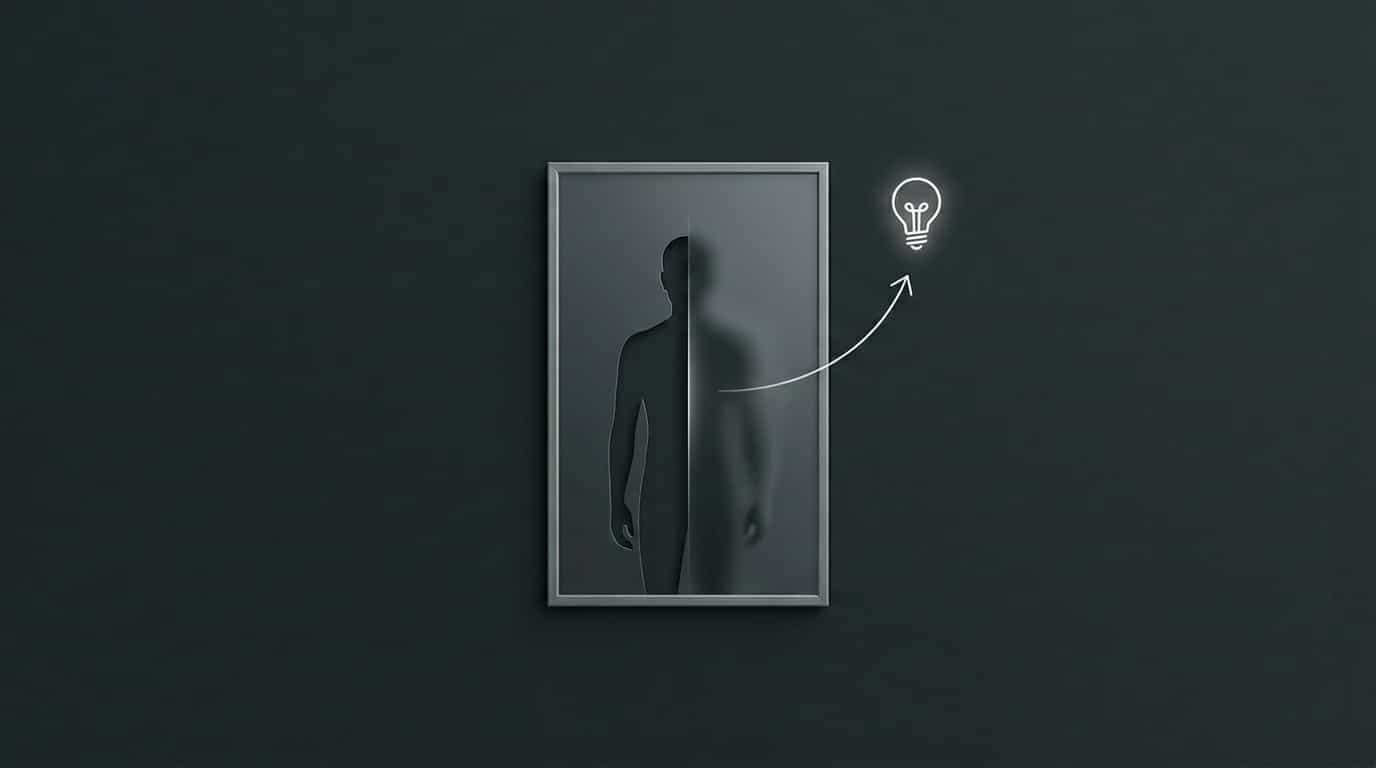
You stand in front of the bathroom mirror, fix a stray hair, and feel a flicker of confidence. You look acceptable—perhaps even good. But thirty minutes later, you catch your reflection in a store window or a rearview mirror, and your stomach drops. Your skin looks tired, your face seems asymmetrical, and your features appear oddly unfamiliar. You immediately ask yourself, why do I look worse in mirrors? You are not alone. This experience is so common that it has become a modern psychological paradox: the mirror is both our most trusted self-assessment tool and our harshest critic.
For many, the mirror is a source of anxiety rather than clarity. We obsess over the reflection, believing it to be an objective truth. Yet, the reality is that mirrors lie—or rather, they tell a story filtered through physics, neurology, psychology, and even spirituality. If you have ever felt that the mirror version of you is a cruel caricature of the person you see in selfies or the one your friends describe, this article is for you. We will dissect the mechanical reasons for this distortion, the psychological traps that magnify our flaws, and the surprising spiritual perspective that suggests the mirror might be showing you something deeper than your pores.
The Science of Mirror Distortion
To understand why do I look worse in mirrors, we must first accept that a mirror is not a camera. It is a piece of glass coated with reflective metal that flips your image horizontally. While this seems simple, the way your brain interprets that image is anything but.
Flat Mirrors vs Reality — The Lateral Inversion Factor
The most significant scientific reason you look “worse” in mirrors is what physicists call lateral inversion. When you look at yourself in a flat mirror, you are seeing a reversed version of your face. This is the version of you that you have stared at for thousands of hours over your lifetime—brushing your teeth, shaving, or applying makeup. To your brain, this reversed version is “correct.”
However, the rest of the world sees the un-reversed version of you. Because the human face is rarely perfectly symmetrical, this difference is jarring. A slight tilt to your nose, a higher eyebrow on one side, or a smile that pulls left rather than right looks natural in the mirror. When you see a photograph or a video of yourself—which shows the version the world sees—your brain registers it as “wrong” or “worse.”
Studies on self-perception have shown that people consistently rate their mirror image as more attractive than their true image, simply because they are more familiar with it. So, when you think you look bad in a mirror, you are likely reacting to a momentary shift in angle or lighting that disrupts the familiar “reversed” map your brain has constructed.
The Front Camera Confusion
You might be thinking: But I look fine in selfies—why not in mirrors? This is a common point of confusion. Most smartphone front-facing cameras default to a mirrored image—the same reversed version you see in your bathroom mirror. This is why selfies often feel “right” to you but look slightly off to your friends. When you switch to the rear camera or see a photo someone else took of you, you are suddenly facing the un-reversed version your brain is less familiar with. The jarring sensation returns.
Lighting, Distance & Angle Effect
If lateral inversion is a matter of familiarity, lighting and angle are matters of physics that can dramatically alter your appearance. The harsh, overhead lighting found in public restrooms, elevators, or department store fitting rooms is the enemy of facial aesthetics.
Lighting dictates the perception of facial structure. Overhead lighting casts shadows downward, accentuating dark circles under the eyes, highlighting nasolabial folds (the lines from nose to mouth), and making the brow ridge appear heavier. This is often referred to as “bathroom lighting syndrome.” In contrast, soft, front-facing light—like the diffuse light of a cloudy day or a ring light—fills in shadows, smooths texture, and creates an even complexion.
Similarly, distance and angle play crucial roles. Most people view themselves in a bathroom mirror from a distance of 12 to 18 inches. At this proximity, the mirror acts like a wide-angle lens, slightly exaggerating the size of the nose and forehead while minimizing the ears and jawline. When you step back three to five feet, the perspective normalizes, giving you a more accurate representation of how others see you. The angle of the mirror itself matters, too. A mirror tilted slightly downward can create a double-chin effect, while a properly aligned mirror will reflect a neutral posture.
The “Mere Exposure Effect” — Why You Prefer Your Mirror Image
Psychologists have long studied the mere exposure effect, a phenomenon where people develop a preference for things simply because they are familiar with them. This explains why do I look worse in mirrors when that mirror isn’t your mirror.
You have a “prototype” of your face stored in your brain. This prototype is built from thousands of reflections in your own bathroom mirror. When you see your reflection in a gym mirror, a car’s side mirror (which is often convex and distorted), or a friend’s bathroom mirror, the lighting, angle, and scale are different. Because the image doesn’t match your stored prototype, your brain flags it as “unappealing” or “off.” It’s not that you actually look worse; it’s that the context is foreign, and your brain is highly sensitive to deviations in a face it knows intimately.
The Psychology of Mirror Self-Evaluation
While physics explains the mechanics of the image, psychology explains why we react so negatively to it. The mirror is rarely a neutral tool; it is often a stage where our deepest insecurities perform.
Why We Are Our Own Harshest Critics
When you ask, why do I look worse in mirrors, you are often engaging in what psychologists call critical self-evaluation. Unlike viewing a friend, where we employ a “global” perception (seeing the whole person), viewing ourselves triggers a “local” perception. We zoom in. We don’t see the face; we see the pimple, the wrinkle, the asymmetrical nostril.
This is compounded by the spotlight effect—the tendency to believe that others are noticing these tiny flaws as acutely as we are. In reality, when others look at you, they are viewing a dynamic, animated, three-dimensional person in motion. The mirror freezes you (in your own mind) into a static object of critique.
Furthermore, your mood significantly impacts what you see. Studies in cognitive psychology have shown that when people are in a negative emotional state, they interpret their reflection more harshly. If you approach the mirror feeling anxious, tired, or frustrated, your brain will literally “look for” evidence to confirm that negativity, fixating on perceived flaws that might be invisible on a good day.
Mirror vs Photograph vs Reality
To fully understand why your reflection feels inconsistent, it helps to see how different representations compare:
| Representation | Orientation | Familiarity | Distortion Factors |
|---|---|---|---|
| Bathroom Mirror | Reversed | Very high (seen daily) | Close distance, overhead lighting |
| Front Camera Selfie | Usually reversed | High (matches mirror) | Lens distortion at arm’s length |
| Rear Camera Photo | True orientation | Low (unfamiliar) | Focal length varies; static image |
| How Others See You | True orientation | N/A (not your view) | Dynamic, three-dimensional, varied lighting |
This table helps explain why you might love your mirror reflection, tolerate your selfies, and cringe at candid photos—each version engages a different combination of familiarity, orientation, and optical distortion.
Body Dysmorphia & the Distorted Mirror
For a significant portion of the population, the question why do I look worse in mirrors transcends casual insecurity and enters the realm of clinical distress. Body Dysmorphic Disorder (BDD) is a mental health condition characterized by an obsessive focus on a perceived flaw in appearance that is either minor or not observable to others.
For individuals with BDD, the mirror is not just unkind—it is a source of terror. Neuroimaging studies suggest that people with BDD process visual information differently. While a healthy brain processes a face holistically, the BDD brain tends to focus on details with hyper-analytical intensity, driven by the amygdala (the brain’s fear center). The mirror becomes a tool of compulsion, where the person checks, rechecks, and still sees a distorted, grotesque version of themselves.
If your perception of yourself in mirrors causes significant distress, impacts your ability to leave the house, or leads to obsessive behaviors, it is crucial to seek support from a mental health professional. The distortion is not in the glass; it is in the neural circuitry, and it can be treated.
The Spiritual Dimension — What If the Mirror Is Showing Truth?
Beyond the science of photons and neurology lies a deeper, more unsettling possibility. What if the reason you look worse in mirrors isn’t just about lighting or lateral inversion? What if the mirror is functioning as a spiritual barometer, reflecting not just your physical face, but the state of your soul?
The Mirror Reflects Your Inner State, Not Just Your Face
Across various spiritual traditions—from Ancient Greece to Eastern mysticism—the mirror has been viewed as a symbol of truth. Unlike a camera, which captures a moment, a mirror requires your presence. It reflects the energy you bring to it.
Consider the difference between looking in a mirror when you are grounded, confident, and at peace versus looking when you are anxious, guilty, or angry. The image is technically the same face, but the perception of that image is radically different. Mystics argue that this is because the mirror reflects your energetic state. If you are carrying shame, the mirror will seem to highlight features you associate with that shame. If you are carrying exhaustion, the mirror will appear to show decay.
In this view, the discomfort you feel isn’t about a crooked nose or bad lighting; it’s about a soul that feels fragmented or unloved staring back at itself. This concept suggests that why do I look worse in mirrors is the wrong question. The right question might be: What am I feeling that makes me unable to see my own worth? The mirror, in this sense, is a teacher. It reveals where you are not yet whole. When you flinch at your reflection, the mirror is showing you the parts of yourself you have rejected—the tiredness you refuse to honor, the age you refuse to accept, or the vulnerability you refuse to show the world.
Wisdom from Spiritual Traditions
Spiritual traditions offer a radical alternative to the anxiety of mirror-gazing. They suggest that the path to looking better in mirrors is not better lighting or contouring, but inner work.
Buddhist philosophy warns against upādāna—clinging to a fixed self. When we look in the mirror and say “I look bad,” we are clinging to a concept of how we “should” look. The teaching is to view the reflection with equanimity, recognizing that the face in the mirror is a transient phenomenon, aging and changing moment by moment. Resistance to that change is the source of the suffering, not the reflection itself.
“The mirror of the heart must be polished.” — Rumi
The Sufi poet Rumi implied that the impurities of ego, jealousy, and self-judgment tarnish the mirror, preventing us from seeing the beauty of the divine within ourselves. When you hate what you see, it is a call to polish the heart—to clear out resentment and self-criticism so that you can see the light that inhabits your physical form.
Modern spiritual teacher Eckhart Tolle discusses the “pain-body” and the mirror. Tolle suggests that when you look in the mirror and immediately start criticizing your appearance, you are not looking at yourself; you are looking through the lens of the pain-body—the accumulated emotional pain from your past. The criticism is a habit of the ego trying to maintain its identity through negativity. The spiritual practice is to look without thinking—to see the face as a landscape, without labeling it “good” or “bad.”
How to Change How You Feel When You Look in the Mirror
Understanding why do I look worse in mirrors is empowering, but knowledge alone isn’t transformation. To change your relationship with your reflection, you must integrate the science, psychology, and spirituality into practical habits. Here is how to reclaim the mirror as a tool for self-connection rather than self-criticism.
1. Control the Variables
Since you now know that lighting and distance affect the image, optimize your environment.
- Install soft, diffused lighting around your bathroom mirror (think sconces on the sides rather than a single overhead light).
- Make it a rule to never judge your appearance from less than three feet away.
- If you are in a harshly lit public space, remind yourself: This is physics, not truth.
2. Break the Familiarity Trap
Because we prefer the “mirror” version of ourselves due to the Mere Exposure Effect, try to equalize your exposure.
- Spend a few minutes a week looking at a non-reversed image of yourself (a selfie taken on the front camera and then mirrored to “true” view using a photo editing app).
- This helps your brain build a second prototype—the one the world sees.
- Over time, the jarring sensation of seeing yourself “as others see you” will diminish.
3. Implement the “Neutral Witness” Practice
Borrow from mindfulness. Instead of stepping to the mirror with a goal (e.g., “I need to fix my face”), step in front of it with the intention of simply observing.
- Look at your reflection with the curiosity of a neutral witness—not to critique, but to simply observe.
- Notice the shapes, shadows, and colors without labeling them “good” or “bad.”
- When a critical thought arises—like “I look so old”—simply note it: “There is a thought about aging.” Then let it go.
- This practice separates your identity from the harsh internal commentary.
4. Look for the Person, Not the Parts
The psychological habit of zooming in on flaws is a distortion. Train yourself to take a “global” view.
- Look at your eyes—not the bags under them, but the windows to your consciousness.
- Look at your posture, your energy.
- Ask yourself: If I saw this person on the street, would I think they are kind? Interesting? Present?
- The answer is almost always yes. We are the only ones who view ourselves as a collection of disconnected, flawed parts.
5. Conduct a Spiritual Audit
If you consistently despise your reflection, ask yourself what your soul is trying to communicate.
- Are you exhausted but refusing to rest?
- Are you living inauthentically?
- Is there a resentment you are holding that is showing up as tension in your jaw?
Use the mirror as a prompt for journaling. Write down:
“When I look in the mirror, I feel __. What in my life needs to change for me to feel __ instead?”
6. Limit the “Checking”
For those prone to anxiety or BDD, the mirror becomes a compulsion. Set boundaries.
- Limit your unbroken mirror-gazing to two minutes total per day.
- If you find yourself checking your reflection compulsively in spoons, phone screens, or windows, consciously stop.
- The more you check, the more distorted the perception becomes.
- Trust the feedback of people who love you over the feedback of the reflection.
Conclusion
The question why do I look worse in mirrors is one of the most common, yet most complex, inquiries about self-perception. The answer lies at the intersection of hard science and deep soul-searching. Physically, you are battling lateral inversion, harsh lighting, and a brain that prefers the familiar. Psychologically, you are up against an internal critic that zooms in on flaws and ignores the whole. And spiritually, you may be facing a reflection that demands you confront your inner state—your exhaustion, your self-rejection, or your resistance to the natural flow of life.
Ultimately, the mirror is just a tool. It can be a weapon of self-destruction, or it can be a window to self-awareness. By understanding the distortions—optical, neurological, and emotional—you can begin to separate fact from perception. And by embracing the spiritual truth that the mirror reflects your relationship with yourself, you can transform the experience entirely.
The goal is not to find a mirror that finally makes you look “good.” The goal is to know your own worth so deeply that no reflection—in any lighting, at any angle—can ever shake it.
If your distress around mirrors is persistent, intrusive, or interferes with your daily life, please consider speaking with a mental health professional. You deserve support, and healing is possible.