
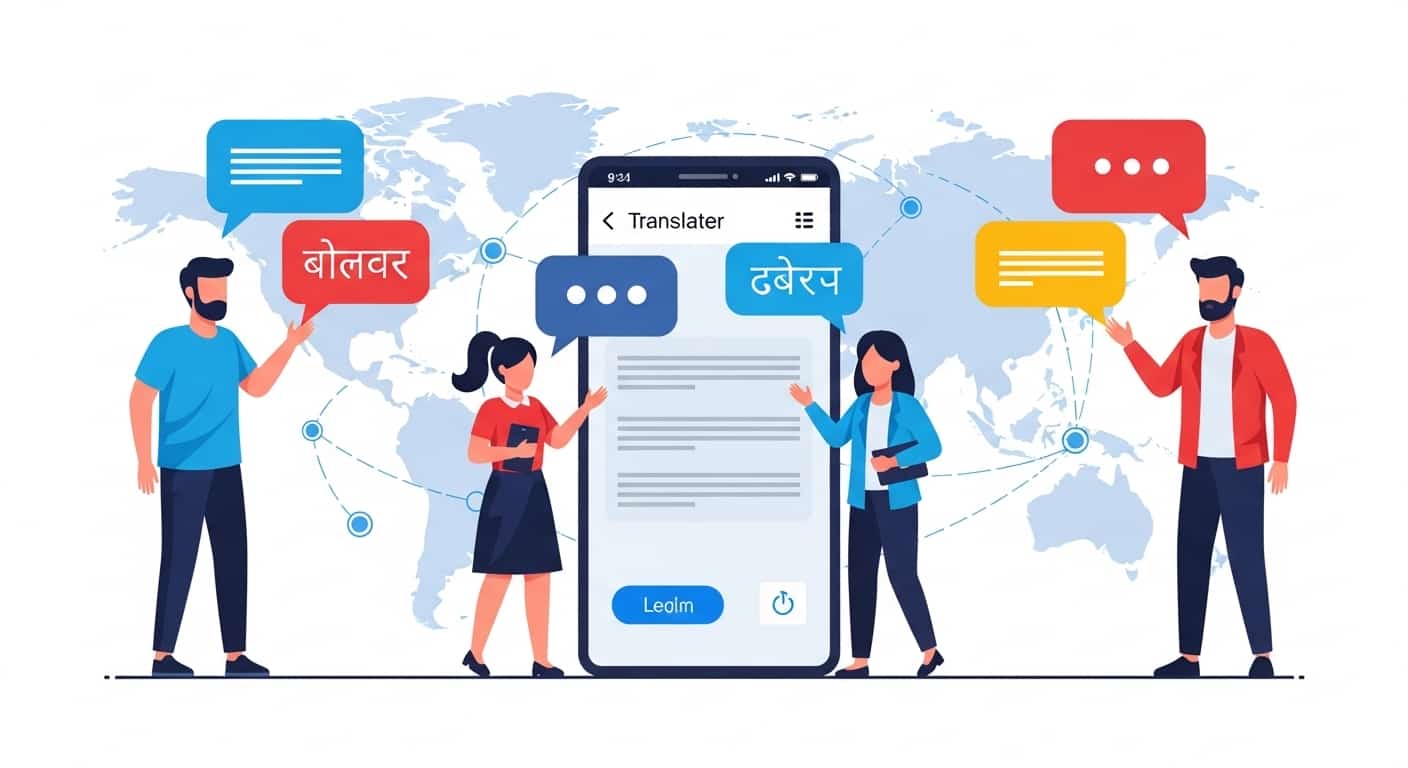
In our hyper-connected world, the barriers of geography have largely dissolved, but the barriers of language remain. With over 7,000 languages spoken globally, the need for a bridge between cultures has never been more critical. Whether through a professional linguist or a sophisticated digital tool, a language translator is no longer a luxury—it is a fundamental necessity for global progress.
Here is why language translation remains the backbone of modern society.
1. Enabling the Global Economy
Business today is international by default. From supply chains to tech hubs, commerce requires a common understanding to function effectively.
- Market Expansion: Companies cannot grow if they cannot communicate. Translators allow brands to localize their marketing, making a product feel “native” to a new audience.
- Legal Integrity: Contracts, trade agreements, and patents require absolute precision. A single mistranslated word in a legal document can lead to massive financial losses or years of litigation.
2. Preserving Cultural Heritage and Diversity
While some languages act as global connectors, they represent only a fraction of the world’s native speakers.
- Expressing the “Heart Language”: Language is tied to identity. Translators allow people to express complex emotions and cultural nuances that “universal” languages often miss.
- Access to Literature: Without translation, the world would lose access to the “treasures of the human mind”—the stories, poetry, and philosophy that define different civilizations.
3. Safety in Healthcare and Crisis Management
In high-stakes environments, translation is a matter of safety and survival.
- Medical Accuracy: In modern healthcare, doctors often treat patients who do not speak the local language. Accurate translation ensures that diagnoses, dosages, and surgical consents are perfectly understood.
- Disaster Response: During natural disasters or global health crises, safety instructions must be broadcast instantly in dozens of languages. Without rapid translation, aid cannot be delivered effectively.
4. Spreading Knowledge and Innovation
The most groundbreaking research in science, medicine, and energy is happening simultaneously in laboratories across the globe.
- Scientific Collaboration: Translators allow a researcher in one country to build upon a breakthrough made in another. By translating academic journals, we accelerate the collective progress of the human race.
- Educational Equity: Translation brings quality learning resources to underprivileged regions, ensuring that knowledge is not gated by a person’s native tongue.
5. Diplomacy and Global Peace
Miscommunication is one of the leading causes of conflict. In international relations, translators act as the ultimate neutral ground.
- Nuance in Negotiation: During peace talks or treaty negotiations, a translator’s job is to capture the intent behind a statement, not just the literal words. They prevent accidental insults and help find common ground.
Human vs. AI Translators: The Right Tool for the Job
As technology evolves, the choice between human and machine translation depends on the context and the level of risk involved.
| Scenario | Best Tool | Why? |
| Simple Travel/Menus | AI Apps | Instant, accessible, and sufficient for basic needs. |
| Legal/Medical Docs | Human Expert | Requires accountability, ethics, and zero-error tolerance. |
| Literary/Poetry | Human Artist | Replicates the rhythm, “soul,” and emotion of creative prose. |
| Mass Data/E-commerce | AI + Review | Combines speed with a final human “sanity check.” |
Conclusion
We need language translators because they do more than just swap words—they swap perspectives. They allow us to step out of our own world and witness life through the eyes of others. In an era defined by global challenges, translation is the tool that ensures we face those challenges together, rather than divided by silence.