
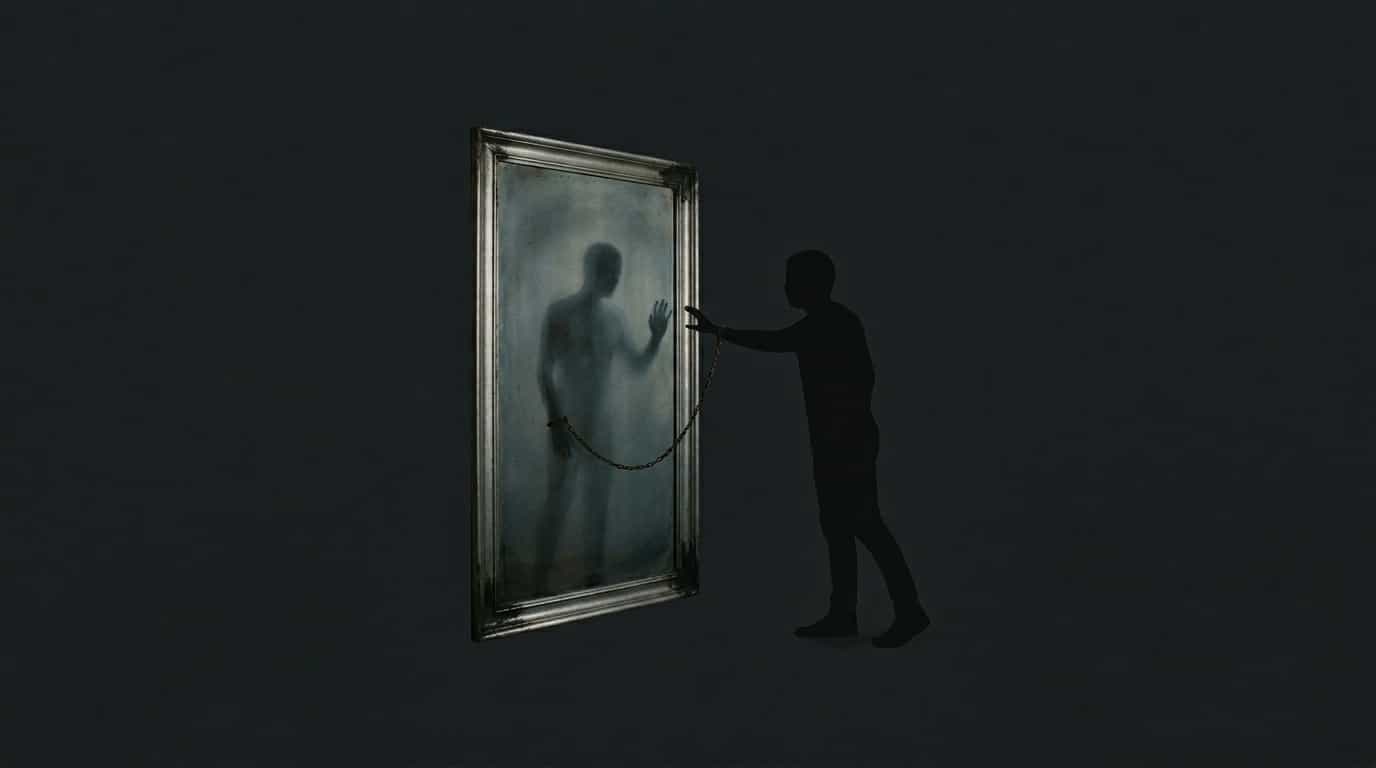
For centuries, the mirror has been more than just a tool for vanity. It is a portal, a boundary, and a mystery. From the moment early humans first gazed into the reflective surface of still water, a fundamental question arose: if the reflection looks like me, does it contain me?
The belief that mirrors can trap souls or spirits is one of the most pervasive cross-cultural fears in human history. Whether it is a grandmother covering her mirrors after a death in the family, or a paranormal investigator refusing to keep antique mirrors in their home, the question remains a source of deep spiritual anxiety.
If you have ever wondered can mirrors trap souls spirits, you are engaging with a tradition that spans millennia. This article explores the ancient evidence, the folklore that sustains this fear, and the modern spiritual perspectives that attempt to explain whether these beliefs are literal metaphysical dangers or powerful psychological metaphors.
The Soul-Trapping Mirror — A Universal Fear
Why does the mirror evoke such a primal fear? Unlike a photograph or a painting, a mirror offers a dynamic, interactive representation of the self. In spiritual traditions, this reflection is often considered the “double”—a separate entity that houses the essence of the individual.
The fear that a mirror can trap a soul typically stems from the idea that the mirror’s surface is a threshold. When a soul is vulnerable—such as during sleep, severe illness, or after death—it can accidentally cross into the mirror dimension and become stuck. Alternatively, malevolent entities can use the mirror as a gateway to cross into our world.
Unlike other superstitions, the mirror taboo is remarkably consistent. It does not belong to one religion or culture but seems to be a universal human archetype. The core fear is loss of self; the idea that something vital could be stolen, duplicated, or imprisoned within a cold, glassy void is a terrifying concept that has persisted through the ages.
Ancient & Historical Evidence of This Belief
To understand whether mirrors can trap souls or spirits, we must look at how our ancestors treated reflective surfaces. Historically, mirrors were not considered neutral objects; they were powerful spiritual tools that required respect and, often, fear.
Egyptian Ka & the Mirror
In ancient Egypt, the soul was complex, consisting of several parts, including the Ka (the life force) and the Ba (the personality). Mirrors, usually made of polished copper or bronze, were not merely cosmetic items; they were sacred objects associated with the sun god Ra and the goddess Hathor, the lady of the sky and love.
Egyptians believed that the mirror could capture the Ka. Tombs of the wealthy often contained highly polished mirrors, not for the deceased to check their appearance, but to act as vessels for the soul to inhabit or to use as a gateway to travel between the world of the living and the Duat (the underworld). If a mirror was broken or tarnished, it was believed that the soul fragment residing within could be damaged or lost. This is one of the earliest recorded instances of humanity treating a reflective surface as a potential prison or anchor for the soul.
Roman Soul & Reflection Theory
The Romans took the concept of the soul and the mirror a step further, associating the reflection directly with spiritual integrity. Roman folklore held that a person’s reflection was a literal extension of the soul. To see one’s reflection in a mirror was generally safe, but to have a distorted reflection—or to see a reflection at the wrong time—was an omen of death.
The most famous Roman superstition regarding mirrors is the belief that if a person looked into a mirror during a period of sickness or emotional distress, the mirror would “steal” the life force, accelerating the illness. This evolved into the practice of turning mirrors to face the wall during periods of mourning. The Romans believed that if a sick person saw their own pale, weakened reflection, the mirror would trap that weakened state, preventing the soul from recovering or returning to health.
The myth of Narcissus, a quintessential Roman-era tale, perfectly illustrates this fear: a young man becomes so entranced by his own reflection that he wastes away, his soul effectively imprisoned by the image in the water—a powerful metaphor for the soul-trapping potential of reflective surfaces.
Eastern European Spirit-Mirror Folklore
Perhaps the most influential traditions regarding soul-trapping mirrors come from Eastern Europe, particularly Slavic folklore. In countries like Russia, Poland, and Ukraine, mirrors are considered dangerous portals.
According to Slavic mythology, the mirror is a boundary between the world of the living (Yav) and the world of the dead (Nav). During the winter solstice (around Christmas), it was believed that the veil between worlds thinned, and mirrors became active portals. Young women would perform divination rituals involving mirrors to glimpse their future husbands, but they were warned that they might also glimpse a demon—or that the demon might step through.
This folklore directly feeds into the modern question of can mirrors trap souls spirits. In Slavic tradition, a spirit could easily become trapped in a mirror if it wandered too close to the portal. Conversely, a human soul wandering during sleep could be pulled into the mirror by malevolent forces, leaving the body soulless upon waking.
Why Mirrors Are Covered at Death (The Soul-Trapping Theory)
One of the most well-known traditions regarding mirrors is the practice of covering them when someone dies in the house. This custom is observed in Judaism (where mourners cover mirrors during shiva), as well as in Victorian England, parts of Germany, and many Latin American cultures.
There are three main reasons for this practice, all of which tie back to the idea of trapping souls or spirits:
- To Prevent the Soul of the Deceased from Getting Trapped: When a person dies, their soul is believed to be confused and disoriented. If it sees its reflection, it might mistake the mirror for an exit or a passage to the afterlife and become stuck inside, unable to move on. Covering the mirror ensures the soul leaves the house freely.
- To Protect the Living: Grieving family members are considered spiritually vulnerable. In a state of grief, one’s own soul is said to be “loose” or weakened. If a mourner looks into a mirror, the theory suggests that the mirror might absorb their vitality or that they might accidentally invite an entity in through their emotional distress.
- To Prevent the Spirit from Returning: Conversely, some cultures believe that a spirit might try to return to the house through the mirror. Covering the glass acts as a barrier, preventing the deceased’s spirit from re-entering the living space and disturbing the family, ensuring that the separation between life and death remains intact.
Can a Mirror Actually Trap a Living Person’s Soul?
While covering mirrors after death is a common practice, the fear that mirrors can trap the souls of the living is equally prevalent. This is not usually a concern for a casual glance, but rather during states of vulnerability.
The Fragmented Soul: Understanding Soul Loss
In many shamanic and energetic healing traditions, the soul is not viewed as a single, monolithic entity. Instead, it is understood to be composed of multiple parts or fragments. During traumatic events, extreme stress, or emotional shock, it is believed that pieces of the soul can splinter off as a coping mechanism—a phenomenon often called soul loss. These fragmented parts can become vulnerable to being captured or trapped by external forces, and a mirror, acting as a threshold, is considered a prime location where such fragments can become lodged, preventing the individual from feeling whole or grounded.
During Sleep — The Soul Wander Theory
Many cultures believe that during sleep, the soul leaves the body to wander, a concept often referred to as astral projection or “soul flight.” In this vulnerable state, the silvered surface of a mirror is considered a dangerous trap.
The belief is that when the soul returns to the body, if a mirror is facing the sleeping individual, the soul might see the reflection of the body and attempt to re-enter through the glass, becoming disoriented. Some spiritual practitioners insist that mirrors should never face a bed, as they can cause nightmares, sleep paralysis, or a feeling of lethargy upon waking—symptoms attributed to the soul being partially trapped or fragmented within the mirror during the night.
During Emotional Trauma & Mirrors
Emotional trauma is viewed in spiritual circles as a prime time for soul loss—a fragmentation of the psyche where pieces of the self break off to cope with pain. It is during these moments that mirrors are considered most dangerous.
If a person in the throes of extreme grief, shock, or anger looks into a mirror, it is believed that the mirror can capture and hold that emotional state, or worse, absorb the fragmented piece of the soul. This is why some spiritual healers recommend avoiding mirrors during periods of acute emotional distress. They argue that the mirror creates a feedback loop: the trauma is reflected, amplified, and then trapped, making it harder for the individual to heal and reintegrate their own energy.
Signs a Mirror May Have a Trapped Entity
Whether you are dealing with a soul fragment of a living person or a disembodied spirit, many paranormal investigators and spiritual practitioners believe there are signs that a mirror has become a vessel for a trapped entity.
Before considering the list below, it is worth noting that many of these signs can have mundane explanations—such as drafts, structural settling, natural gas leaks, or simple anxiety. However, when they occur persistently and without a clear physical cause, they are often considered potential indicators of spiritual activity.
If you are concerned about an antique mirror or one in your home, look for these indicators:
- Unexplained Cold Spots: Mirrors are often cited as sources of sudden temperature drops. If a specific area in front of a mirror is consistently colder than the rest of the room, it may indicate a portal or a trapped spirit drawing energy.
- Distorted Reflections: While antique mirrors naturally warp over time, sudden distortions where reflections appear to move independently, or shadows cross the glass when there is nothing behind the viewer, are considered red flags.
- Physical Reactions: Feeling dizzy, nauseous, or a sensation of being watched intensely when standing in front of a specific mirror. Some people report feeling an overwhelming urge to break the mirror or turn it away.
- Recurring Nightmares: If multiple people sleeping in a room with a large mirror report similar nightmares involving being pulled into darkness or feeling trapped, it is often attributed to the mirror’s influence.
- Malfunctioning Electronics: In modern paranormal theory, spirits are theorized to draw energy from their surroundings to manifest, affecting electromagnetic fields. If digital clocks, lights, or phones flicker or malfunction primarily when near a specific mirror, it may indicate a high level of spiritual activity.
How to Release a Spirit From a Mirror (Ritual Methods)
If you believe a spirit—whether a fragmented human soul or an external entity—is trapped within a mirror, there are several traditional methods to release it. These rituals are designed to “open” the portal so the entity can move on, or to sever the connection between the spirit and the glass.
1. The Unbinding Ritual (Smudging) This is the most common method. Using a smudge stick of white sage, palo santo, or cedar, light the end and allow the smoke to wash over the surface of the mirror. While doing so, visualize the smoke opening a doorway. Speak aloud with authority. A common phrase is:
“Any spirits, fragments, or energies trapped within this glass are hereby released to the light. This portal is closed.” It is crucial to visualize the smoke carrying the spirit away.
2. The Covering and Removal Method Sometimes, a mirror is too spiritually “heavy” to cleanse in place. In this case, cover the mirror completely with a black cloth or black paint. Black absorbs energy and is believed to sever the connection between the trapped entity and the physical plane. Once covered, the mirror should be removed from the home without uncovering it.
3. The Water Wash In some folk traditions, water is the antidote to the mirror’s “dry” trapping nature. Washing the mirror with blessed water or salt water while stating the intention of release is believed to dissolve the energetic bonds holding the spirit. This is often combined with placing the mirror in direct sunlight, as sunlight is believed to dispel negative energies and free trapped souls.
4. Breaking the Mirror (With Caution) In extreme cases, practitioners may suggest breaking the mirror. However, this is a last resort. If a spirit is trapped in the glass, breaking it can either release it—or shatter the spirit into pieces, creating a fragmented haunting. If you break a mirror believed to contain a soul or spirit, it is imperative to immediately cleanse the area, collect the pieces with gloves, and bury them in consecrated ground (like a churchyard) or cast them into running water to ensure the fragments cannot reassemble.
Modern Spiritual View — Are These Beliefs Metaphorical or Literal?
The question of can mirrors trap souls spirits ultimately forces us to consider the nature of reality itself. In the modern spiritual community, there is a divide between the literalists and the metaphoricalists.
The Metaphorical View: Many psychologists and neo-spiritualists argue that the belief in soul-trapping mirrors is a metaphor for self-confinement. When we look in a mirror, we are confronted with our own image. If we are suffering from trauma or grief, we might become “trapped” in our own reflection—obsessing over our appearance, our past, or our pain. From a Jungian perspective, the mirror forces an encounter with the shadow self—the parts of our psyche we repress. The folklore surrounding mirrors serves as a warning: confronting this inner world without preparation can be psychologically destabilizing. In this view, covering mirrors during mourning isn’t about trapping a ghost; it’s about forcing the living to focus inward on their grief without the distraction of vanity.
The Literal (Energetic) View: On the other side of the spectrum are energy workers, occultists, and paranormal investigators who maintain that mirrors are literal energetic portals. From a quantum physics perspective, proponents argue that glass is a supercooled liquid that holds a crystalline structure capable of holding memory. This “memory” can trap consciousness—much like a hard drive traps data.
In this literal view, the mirror acts as a capacitor for spiritual energy. If a mirror witnesses a traumatic event (like a death or violent act), it absorbs that energy. If that energy has a consciousness attached to it (a soul fragment or a ghost), the mirror can act as a prison, holding the entity against its will until the glass is broken or ritually cleansed.
Conclusion
Whether you view it as ancient superstition or a valid energetic phenomenon, the belief that mirrors can trap souls and spirits is one of humanity’s most enduring spiritual concepts. From the Egyptian Ka seeking refuge in polished bronze to the Slavic warnings about mirrors during the solstice, the fear of the reflection is universal.
So, can mirrors trap souls spirits? The answer depends largely on your worldview. If you are a skeptic, you may see these traditions as powerful psychological tools designed to help humans cope with death, trauma, and the mystery of the self. If you are a spiritual practitioner, you likely treat mirrors with the respect they deserve—covering them during times of vulnerability, ensuring they do not face your bed, and cleansing them regularly.
Ultimately, a mirror forces us to confront a fundamental truth: we do not fully understand consciousness, nor do we fully understand the nature of reality. Until we do, it may be wise to treat the looking glass not just as a tool, but as a threshold—a place where the soul, whether trapped or merely reflected, must be handled with care.