
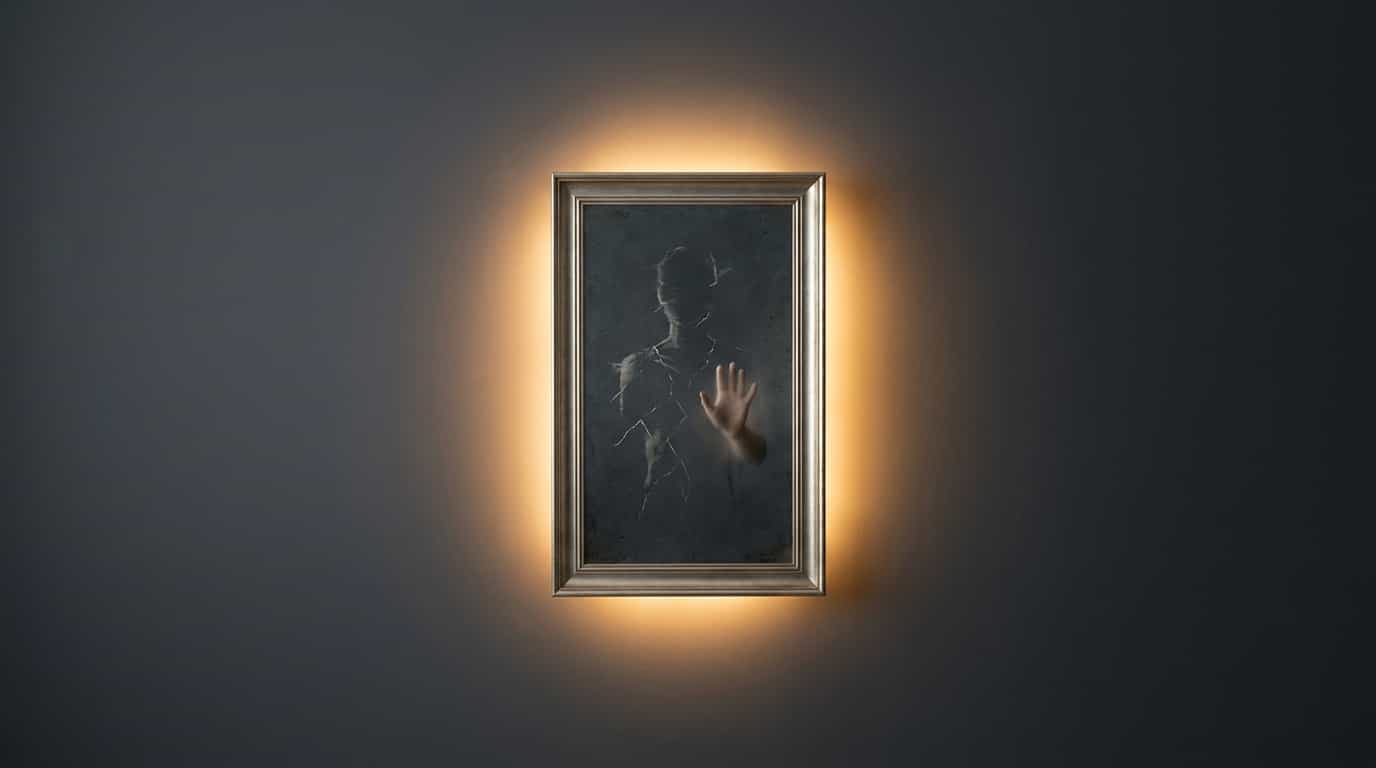
In this article: Learn to distinguish between a simple unease and eisoptrophobia, uncover whether your fear stems from trauma or spiritual disconnection, and discover a step-by-step path to reclaim your reflection.
For most people, a mirror is a mundane object—a tool for checking an outfit or fixing hair before leaving the house. But for those living with eisoptrophobia, the fear of mirrors is not just a simple discomfort; it is a consuming, often debilitating condition. The mere sight of a reflective surface can trigger a cascade of anxiety, panic, and dread that disrupts daily life.
If you find yourself covering mirrors in your home, avoiding public restrooms, or feeling a wave of terror when you accidentally catch your own reflection, you are not alone. While eisoptrophobia is a recognized psychological condition, its roots often go deeper than a simple fear of glass and silver. For many, the fear of mirrors is a spiritual crisis—a sign of disconnection from the self.
In this comprehensive guide, we will explore the eisoptrophobia fear of mirrors spiritual connection, dissect the psychological causes, and provide a roadmap for healing that addresses the mind, body, and soul.
What Is Eisoptrophobia?
Eisoptrophobia (also known as catoptrophobia) is an intense, irrational fear of mirrors. The term derives from the Greek words eisoptron (mirror) and phobos (fear). While it is common to feel startled by a sudden reflection in a dark room, eisoptrophobia goes far beyond a fleeting shock. It is a specific phobia that can dictate how a person lives their life.
Note: You may also see this condition referred to as catoptrophobia. While the terms are often used interchangeably, eisoptrophobia specifically emphasizes the fear of seeing one’s own reflection, whereas catoptrophobia broadly covers the fear of mirrors and reflective surfaces.
For those with this phobia, the fear is not merely about the object itself but what the mirror represents. Sufferers often fear seeing something frightening in the reflection—such as a ghost, a distorted version of themselves, or a demonic presence. Others fear that looking into a mirror might trap their soul, shatter their identity, or reveal a truth about themselves they are not ready to face.
Because the condition is relatively rare and often misunderstood, many sufferers suffer in silence, feeling embarrassed or believing their fear is “crazy.” However, eisoptrophobia is a real and treatable condition that often signals deeper emotional or spiritual wounds.
Symptoms of Eisoptrophobia
The symptoms of eisoptrophobia can range from mild anxiety to full-blown panic attacks. They typically occur upon seeing a mirror, thinking about a mirror, or even entering a space where mirrors are present (like a salon or hotel room). The symptoms are broadly categorized into physical reactions and behavioral patterns.
Physical Symptoms
When confronted with a mirror, the body’s “fight or flight” response activates, flooding the system with adrenaline. Common physical symptoms include:
- Rapid heartbeat and palpitations: The heart races as if facing a physical threat.
- Shortness of breath: A feeling of suffocation or chest tightness.
- Dizziness or lightheadedness: Feeling faint or unsteady.
- Trembling or shaking: Uncontrollable shaking in the hands or legs.
- Nausea: Stomach discomfort or a feeling of “butterflies” turning into sickness.
- Sweating: Profuse sweating even in cool environments.
- Dissociation: A sense of unreality, as if the world is distorted or they are detached from their body.
Behavioral Avoidance Patterns
To manage the intense fear, individuals develop elaborate avoidance strategies. These behaviors often reinforce the phobia, making it stronger over time. Common patterns include:
- Covering or removing mirrors: Sufferers often cover all mirrors in their home with sheets, towels, or paint, or remove them entirely.
- Avoiding reflective surfaces: Beyond traditional mirrors, they may avoid windows, shiny appliances, polished furniture, car mirrors, and even still water.
- Altered routines: They may shower in the dark, refuse to carry a compact mirror, or avoid shopping in stores with large dressing room mirrors.
- Hypervigilance: Constantly scanning environments to ensure no reflective surfaces are present.
Psychological Causes of Mirror Phobia
Understanding the origin of eisoptrophobia is the first step toward dismantling it. While every individual’s experience is unique, psychological experts point to two primary pathways for the development of this specific phobia.
Traumatic Experiences Involving Mirrors
Often, eisoptrophobia stems from a direct traumatic event. Because mirrors are often associated with childhood fears (the Bloody Mary legend, for instance), a frightening experience can become deeply embedded in the psyche. Examples include:
- A terrifying experience with folklore: A child forced to participate in a “Bloody Mary” ritual (chanting in front of a mirror in the dark) may carry that terror into adulthood.
- A sudden fright: Seeing a shocking reflection—such as a stranger behind them or a sudden change in their appearance—can create a conditioned fear response.
- Mirror-related accidents: Breaking a mirror and receiving a severe cut, or having a mirror fall and shatter nearby, can create a lasting association between mirrors and danger.
- Witnessing something disturbing: Seeing something unsettling reflected in a mirror during a traumatic event (like an act of violence) can cause the mirror to become a psychological trigger.
Childhood Conditioning & Superstition Exposure
Even without a single traumatic event, phobias can develop through cultural conditioning. Many cultures hold deep superstitions about mirrors. If a child is raised in an environment where mirrors are treated with fear or superstition, they may internalize those beliefs.
Common superstitions that contribute to eisoptrophobia include:
- The belief that breaking a mirror brings seven years of bad luck.
- The tradition of covering mirrors during a death in the house to prevent the soul from being trapped.
- Folklore suggesting mirrors are portals for spirits or demons.
- The fear that looking into a mirror at night invites evil entities.
When these beliefs are reinforced by anxious caregivers, the developing mind may construct a framework where mirrors are dangerous, supernatural objects rather than simple reflective surfaces.
Spiritual Meaning of Eisoptrophobia
While psychology addresses the mind, healing from eisoptrophobia often requires exploring the soul. The eisoptrophobia fear of mirrors spiritual dimension is perhaps the most profound aspect of this condition. From a metaphysical perspective, mirrors do not just reflect the face; they reflect the soul.
Fear of True Self-Recognition
At its core, a mirror shows us who we are. For many, eisoptrophobia is not a fear of the mirror itself but a fear of the person in it. This manifests as a deep-seated fear of self-recognition. When we look into a mirror, we are forced to confront our own identity.
If you struggle with low self-esteem, identity issues, or a sense that your “true self” is somehow flawed or monstrous, the mirror becomes an enemy. It demands that you see what you are trying to hide. This is often tied to:
- Identity crises: Feeling you don’t know who you are anymore.
- Self-loathing: An inability to look at yourself with compassion.
- Denial: Avoiding the mirror because it reflects a life situation (aging, weight gain, failure) that you are not ready to accept.
In spiritual terms, the mirror acts as a truth-teller. The phobia is a resistance to that truth.
Past Life Trauma & Mirror Fear
Some spiritual practitioners and energy healers believe that intense, unexplainable phobias often have roots in past life experiences. The concept of “soul memory” suggests that the spirit carries the residue of traumatic deaths or events from previous incarnations.
A fear of mirrors in this life may stem from a past life where:
- You were killed or harmed while looking into a mirror.
- You used scrying (mirror gazing) for divination and encountered a terrifying entity.
- Mirrors were used as tools of imprisonment or torture in a previous culture.
If you have tried traditional therapy for eisoptrophobia without success, exploring past life regression or somatic healing modalities might uncover hidden layers of the fear that reside not in your current biography, but in your spiritual history.
Cultural & Folkloric Perspectives
Mirror恐惧 appears across cultures, and understanding these perspectives can help normalize the experience. In many traditions, mirrors are viewed with deep respect rather than fear, yet the power attributed to them can inadvertently fuel phobic responses.
| Tradition | Belief About Mirrors |
|---|---|
| Feng Shui | Mirrors are powerful tools that double energy. A mirror facing the bed or front door is believed to cause restlessness, anxiety, or “chi” drainage, which can manifest as nervousness around reflections. |
| Latin American Folklore | Legends such as El Silbón warn that mirrors can reveal or trap malevolent spirits, leading to cultural caution around reflections, especially at night. |
| Korean & East Asian Traditions | Folklore speaks of Cheonyeo gwisin (virgin ghosts) and other entities believed to appear in mirrors, reinforcing the idea that mirrors are thresholds between worlds. |
| Victorian Era Customs | During mourning periods, families would cover mirrors to prevent the deceased spirit from becoming trapped or to avoid seeing the corpse reflected. |
If a person was raised with these stories, their phobia may be a form of ancestral or cultural reverence for the mirror’s power, rather than an irrational fear. Recognizing this can help separate inherited caution from paralyzing terror.
Unprocessed Shame or Unworthiness
Perhaps the most common spiritual root of eisoptrophobia is unprocessed shame. Shame is distinct from guilt. Guilt says, “I did something bad.” Shame says, “I am bad.”
When a person carries deep, unprocessed shame—often stemming from childhood neglect, abuse, or harsh criticism—the mirror becomes a symbol of judgment. Looking into a mirror feels like looking at something defective, something unworthy of love. The avoidance of mirrors becomes a subconscious attempt to avoid confronting the wounded self.
This shame can also be ancestral. In some spiritual frameworks, we inherit the unhealed shame of our ancestors. If your lineage carries a history of trauma, secrecy, or shame, the fear of “looking too closely” at oneself can manifest as a literal phobia of one’s own reflection.
Psychological Treatment Options
Healing from eisoptrophobia requires a holistic approach. While exploring the spiritual meaning is powerful, it is essential to address the neurological and behavioral patterns that keep the phobia active. Professional psychological treatment can provide the tools needed to rewire the brain’s fear response.
CBT & Exposure Therapy: Rewiring the Brain’s Fear Response
Cognitive Behavioral Therapy (CBT) is considered the gold standard for treating specific phobias. CBT helps individuals identify the irrational thoughts that fuel their fear and replace them with realistic, grounded thinking.
For eisoptrophobia, a therapist might help you challenge thoughts like, “If I look in the mirror, something evil will appear,” and replace them with, “A mirror is an inanimate object that reflects light. I am safe.”
Exposure therapy is a specific type of CBT that involves gradual, systematic exposure to the feared object. For mirror phobia, this is done in a controlled, hierarchical way:
- Stage 1: Looking at a picture of a mirror.
- Stage 2: Being in the same room as a covered mirror.
- Stage 3: Looking at a small, handheld mirror for one second.
- Stage 4: Gradually increasing the time spent looking into a full-length mirror.
This process desensitizes the amygdala (the brain’s fear center) to the stimulus, proving to the nervous system over time that the mirror is not a threat.
EMDR for Mirror-Related Trauma
For those whose phobia is rooted in a specific traumatic event, Eye Movement Desensitization and Reprocessing (EMDR) therapy can be incredibly effective. EMDR uses bilateral stimulation (such as side-to-side eye movements) to help the brain reprocess traumatic memories.
If the mirror phobia is linked to a childhood event—such as being frightened by a reflection or experiencing abuse in front of a mirror—EMDR can help “unstick” the trauma from the nervous system. Once the memory is reprocessed, the mirror no longer holds the same emotional charge.
Bridging Clinical Work with Spiritual Healing
While clinical modalities like CBT and EMDR are essential for calming the nervous system and reprocessing trauma, many people find that these therapies work best when paired with soul-level work. If the phobia persists even after the brain has learned the mirror is “safe,” it may be because the spirit is still waiting for reconciliation.
The following spiritual practices are designed to complement—not replace—the clinical work you are doing. Together, they address the whole person: mind, body, and soul.
Spiritual Healing Path — Learning to Face Your Reflection
Ultimately, true healing from eisoptrophobia requires you to make peace with the one person you have been running from: yourself. The spiritual healing path is about transforming the mirror from an object of terror into a tool for self-love, introspection, and empowerment.
1. Reclaim Your Space with Intention
If you have removed all mirrors from your home, the journey begins with re-introducing them—but with intention. Instead of viewing a mirror as a portal for fear, you can reclaim it as a sacred object.
- Bless your mirror: Smudge it with sage, palo santo, or incense. Set a clear intention: “This mirror reflects only love. This mirror shows me my truth. I am safe in my reflection.”
- Placement matters: Start with a small mirror in a safe, comfortable space—perhaps your bedroom where you feel secure. (In Feng Shui, avoid placing mirrors directly facing the bed, as this is believed to disrupt sleep and energy.)
2. Practice Mirror Gazing (With Support)
Mirror gazing, or scrying, is an ancient spiritual practice used for self-discovery. While this may sound terrifying to someone with eisoptrophobia, it can be adapted into a gentle healing ritual.
- Start small: Begin with one minute a day. Look at your own eyes.
- Use affirmations: As you look, whisper kind affirmations. If shame arises, counter it. Say, “I am worthy of seeing myself. I am safe. I love what I see.”
- Sit with discomfort: The goal is not to force a feeling of love immediately, but to build tolerance for your own presence. Over time, the discomfort will subside.
3. Shadow Work Integration
In spiritual psychology, the “shadow” refers to the parts of ourselves we reject—our anger, our grief, our perceived flaws. Eisoptrophobia is often a fear of the shadow self.
- Journaling: Write about what you fear you will see if you look into a mirror. What is the worst thing that could appear? Often, the answer is “the real me” or “my ugliness.” Recognizing this allows you to begin a dialogue with your shadow.
- Inner Child Work: Speak to the child within you who first became afraid of mirrors. What did they see? What did they need to hear? Offering reassurance to your inner child can dismantle decades-old fear.
4. Energy Healing Modalities
Sometimes, the spiritual root of eisoptrophobia requires the help of a practitioner.
- Reiki or Energy Healing: A practitioner can help clear stagnant energy around the throat chakra (which relates to truth and self-expression) and the third eye (which relates to inner vision and self-perception).
- Past Life Regression: If you suspect a past life origin, a hypnotherapist specializing in past life regression can guide you to the source of the fear, allowing you to release it from a soul level.
5. The Ultimate Healing: Radical Self-Acceptance
The spiritual antidote to eisoptrophobia is radical self-acceptance. The mirror is a neutral object; it does not create beauty or ugliness, truth or lies. It merely reflects what is.
Healing happens when you stop trying to escape yourself and start the journey of coming home to yourself. Every glance in the mirror is an opportunity to practice self-compassion. The goal is not to love your reflection every single day—that is an unrealistic expectation for anyone—but to stop being afraid of it.
Conclusion: From Fear to Reflection
Eisoptrophobia, the fear of mirrors, is a complex condition that sits at the intersection of psychology, spirituality, and personal identity. Whether your fear was born from a childhood trauma, inherited superstition, or a deep spiritual aversion to seeing your own truth, the path to healing is available to you.
By addressing the psychological patterns through CBT or EMDR, you can calm the nervous system and break the cycle of avoidance. By exploring the eisoptrophobia fear of mirrors spiritual dimension—confronting shame, healing past life wounds, and practicing mirror gazing with intention—you can transform your relationship with yourself.
Remember, the mirror is not your enemy. It is a tool. The face looking back at you is not a monster; it is a survivor. It is a soul having a human experience, deserving of love, safety, and the freedom to look at itself without fear.
If you are struggling with this phobia, consider reaching out to a mental health professional who specializes in anxiety disorders, as well as a spiritual guide or energy healer who can support the deeper soul work. You have the power to turn the mirror from a source of terror into a portal for profound healing. The reflection waiting for you is not something to fear—it is someone ready to be embraced.
Disclaimer: The information provided in this article is for educational and informational purposes only and is not intended as a substitute for professional medical advice, diagnosis, or treatment. Eisoptrophobia can be a severe anxiety disorder. If you are experiencing panic attacks or significant distress, please consult a licensed mental health professional.