
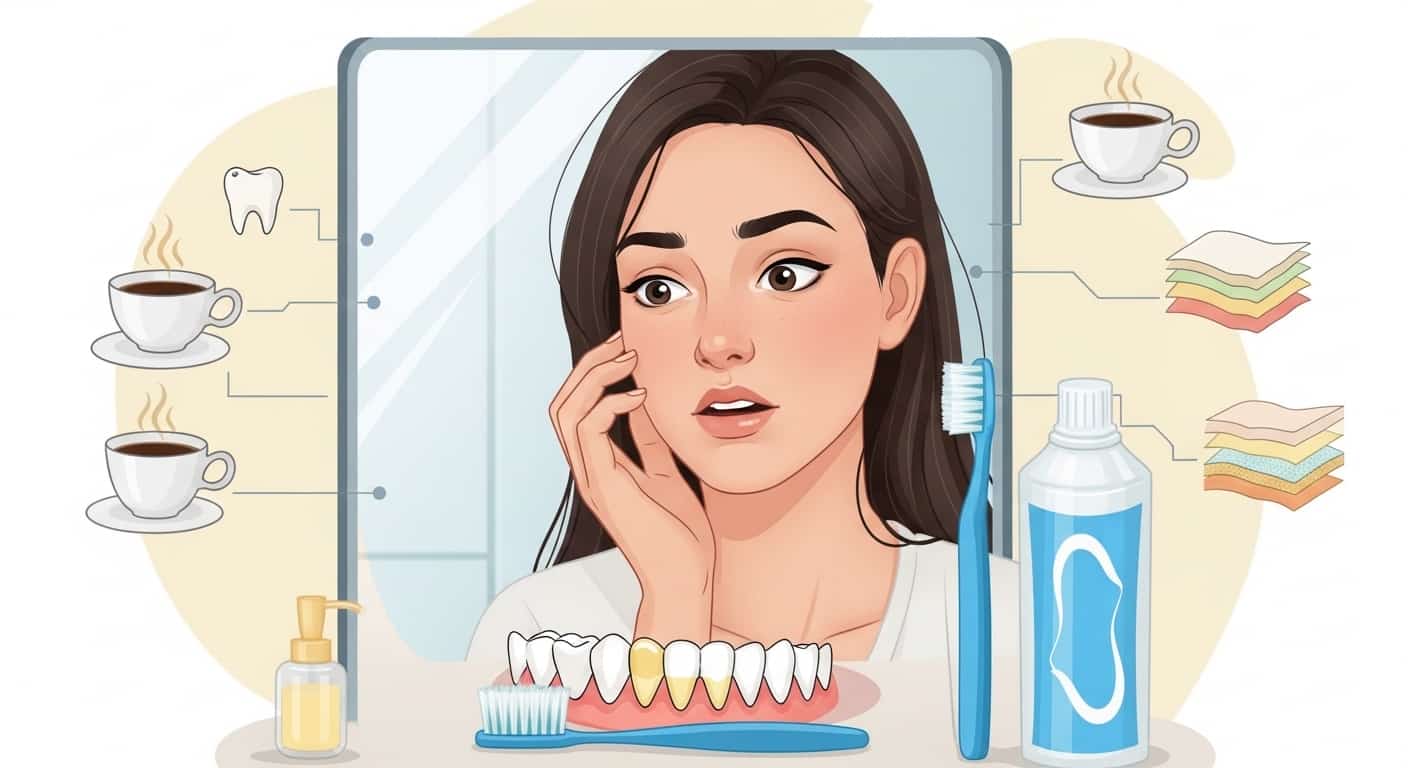
It is one of the most common frustrations in dental care: you follow the “two minutes, twice a day” rule religiously, yet your reflection still shows a yellowish tint rather than a pearly white glow.
The truth is that brushing is designed to remove plaque and surface bacteria, but it cannot always change the fundamental color of your teeth. Here is a professional breakdown of why your teeth might remain yellow despite excellent hygiene.
1. The “Dentin” Factor (Biology)
The most common reason for yellow teeth has nothing to do with hygiene and everything to do with anatomy.
- Enamel vs. Dentin: Your teeth are composed of layers. The outer layer, enamel, is naturally white or bluish-white. Beneath it lies dentin, a hard tissue that is naturally yellowish or even brownish.
- Thinning Enamel: If your enamel is naturally thin (due to genetics) or has worn down over time, the yellow dentin underneath starts to show through. No amount of brushing can “whiten” dentin, as it is inside the tooth structure.
2. Extrinsic Staining (Diet and Lifestyle)
Even with daily brushing, certain microscopic pigments called chromogens can bond to your enamel.
- Tannins: Found in coffee, tea, and red wine, tannins make it easier for stains to stick to your teeth.
- Acidic Erosion: Sodas and citrus fruits can temporarily soften your enamel. If you brush immediately after consuming them, you might actually be brushing away your enamel, making the yellow dentin more visible.
- Tobacco: Nicotine and tar seep into the tiny pores of your enamel. These stains are “extrinsic” but become deeply embedded, often requiring professional cleaning rather than standard toothpaste to remove.
3. Intrinsic Staining (Internal Factors)
Some discoloration happens from the inside out. Brushing only cleans the surface, so it has no effect on “intrinsic” stains.
- Medication: Use of certain antibiotics (like tetracycline or doxycycline) during childhood or pregnancy can permanently discolor the developing permanent teeth.
- Trauma: If a tooth is injured, the internal pulp can “bruise” or die, turning the tooth a greyish-yellow color from within.
4. Plaque vs. Tartar
While you brush to remove plaque (a soft, sticky film), if any plaque is missed, it can mineralize into tartar (calculus) within 24 to 72 hours.
- The “Yellow Crust”: Tartar is porous and absorbs stains much faster than enamel. Most importantly, tartar cannot be brushed away. Once it forms, only a dental hygienist with professional tools can remove it.
How to Improve Your Results
If you are brushing every day but still seeing yellow, consider these expert-backed adjustments:
- Switch to an Electric Toothbrush: Studies consistently show that electric toothbrushes remove significantly more plaque than manual ones, preventing the buildup of yellow tartar.
- Wait 30 Minutes After Eating: To protect your enamel, don’t brush immediately after acidic meals. Rinse with water first, and wait for your saliva to re-mineralize your enamel.
- Use a Straw: For coffee or tea, using a straw bypasses the front of your teeth, reducing direct contact with staining agents.
- Professional Cleaning: A twice-yearly “Scale and Polish” is the only way to remove hardened tartar that makes teeth look dull and yellow.
Summary Table: Brushing vs. Reality
| Symptom | Why Brushing Doesn’t Fix It | Solution |
| Yellowish Hue | Usually revealed Dentin (inner layer). | Professional whitening or veneers. |
| Rough Yellow Spots | Hardened Tartar (calculus). | Professional Scale & Polish. |
| Dark Cracks/Lines | Deep Extrinsic Staining (Tobacco/Coffee). | Professional cleaning + whitening. |
| Uniform Yellowing | Naturally thin enamel (Genetics). | Enamel-strengthening pastes. |
Conclusion
Brushing your teeth is essential for health, but it isn’t a guarantee for whiteness. If your teeth are yellow despite your best efforts, it is likely due to the natural color of your dentin or a buildup of tartar that requires professional intervention.