
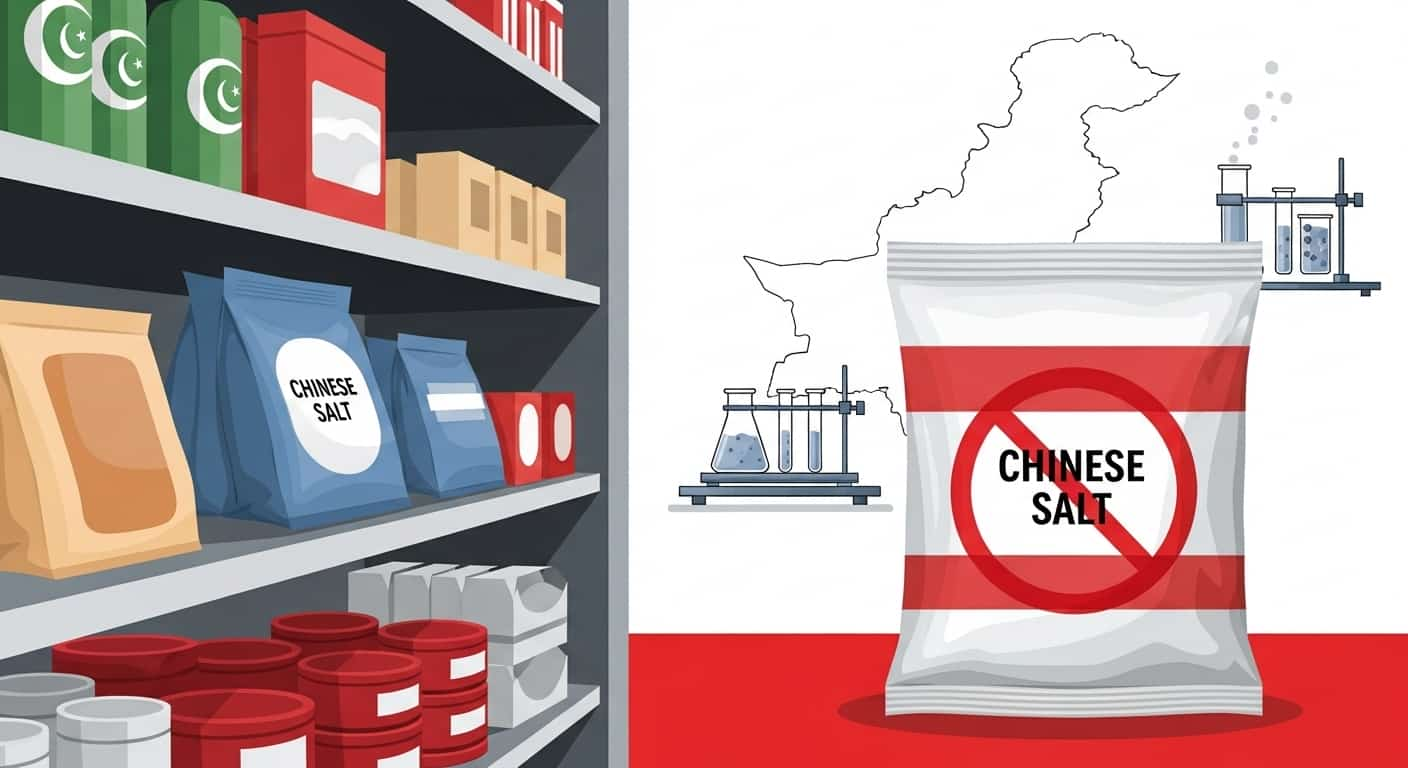
If you’ve noticed the absence of “Ajinomoto” or “Chinese Salt” from Pakistani grocery shelves over the last few years, you are witnessing the result of a landmark legal and health-safety battle. In Pakistan, the seasoning commonly known as Chinese salt is actually Monosodium Glutamate (MSG).
While it is a staple in many global cuisines, its status in Pakistan changed dramatically in 2018. Here is the definitive guide to why Chinese salt was banned and what the current status of MSG is in the country.
1. The 2018 Supreme Court Ban
The primary reason Chinese salt is considered banned in Pakistan is a 2018 ruling by the Supreme Court.
- The Verdict: Following a series of hearings, the then-Chief Justice of Pakistan ordered a nationwide ban on the sale, import, and export of Ajinomoto (MSG).
- The Reasoning: The court’s decision was based on reports stating that the salt was hazardous to human health, specifically citing risks to pregnant women and children.
2. Findings of the Punjab Food Authority (PFA)
Before the Supreme Court’s intervention, the Punjab Food Authority (PFA) was the first to take action. Their scientific panel conducted a detailed study on MSG and concluded that it could cause several “Chinese Restaurant Syndrome” symptoms, including:
- Headaches and Palpitations: Frequent consumption was linked to irregular heartbeats and severe migraines.
- Neurological Concerns: Some reports suggested that MSG could act as an “excitotoxin,” overstimulating brain cells.
- Hypertension: High sodium content in MSG, combined with regular table salt, was found to contribute to high blood pressure and heart issues.
3. The “Flavor Trap” and Addiction
One of the most significant reasons regulators targeted Chinese salt was its ability to “trick” the brain. MSG enhances the Umami (savory) taste of food.
- Overeating: By making low-quality food taste exceptionally good, it can lead to overconsumption and obesity.
- Masking Quality: Authorities were concerned that restaurants were using Chinese salt to mask the taste of stale or poor-quality ingredients, posing a broader risk to public food safety.
Is Chinese Salt Still Banned in 2026? (Current Status)
The status of MSG in Pakistan has become a subject of intense debate in recent years. As of early 2026, there have been significant updates:
- The Government’s Review: In late 2024 and throughout 2025, the Federal Cabinet authorized a review petition against the 2018 ban.
- Scientific Re-evaluation: A new committee featuring experts from the Pakistan Council of Scientific & Industrial Research (PCSIR) and the National Agriculture Research Center (NARC) recently declared that MSG is safe for human consumption when used in moderate amounts.
- The Current Reality: While the legal “review” is ongoing, the strict 2018 ban remains the primary legal precedent. However, enforcement has shifted toward regulation rather than a total blackout, with authorities focusing on labeling and quantity limits rather than outright seizures.
Global Perspective: Is MSG Actually Dangerous?
It is important to note that international bodies, including the U.S. Food and Drug Administration (FDA) and the World Health Organization (WHO), classify MSG as “Generally Recognized as Safe” (GRAS).
| Feature | Pakistan’s Historical Stance | International Health Stance (FDA/WHO) |
| Safety Rating | Hazardous (2018 Ruling) | Safe for general consumption |
| Health Risks | Linked to headaches & palpitations | Symptoms only occur in “sensitive” individuals at high doses |
| Legal Status | Banned/Restricted | Legal and widely used |
How to Identify MSG in Food Labels
If you are looking to avoid Chinese salt for health reasons, check food labels for these alternative names:
- Monosodium Glutamate
- E621 (International food additive code)
- Hydrolyzed Vegetable Protein
- Yeast Extract
Conclusion
Chinese salt was banned in Pakistan primarily due to health concerns regarding neurological impact and hypertension, as well as the potential for masking poor food quality. While the government is currently moving toward a more regulated, science-based approach to allow MSG back into the market, the 2018 Supreme Court ban remains the most famous chapter in Pakistan’s food safety history.