Recurring Mirror Dreams: Why the Mirror Keeps Appearing and What Each Type Means

Recurring mirror dreams repeat because the sleeping brain keeps reaching for the same symbol to flag the same unresolved concern — and will keep doing so until something actually changes in waking life. The dream is not stuck. You are. That is the most honest starting point for understanding why dreams of mirrors return night after night.
Here is what the specific type of mirror image signals, why the brain chooses this particular symbol over and over, and what the research says about stopping the loop.
Why Recurring Dreams Happen at All

A regular dream processes the day's emotional material and moves on. A recurring dream is something different — it is the sleeping brain returning to the same unprocessed concern because the previous attempt to surface it produced no response during waking hours.
According to the Sleep Foundation's overview of recurring dreams, recurring dreams are strongly associated with stress, anxiety, and unresolved psychological conflicts. They tend to persist as long as the underlying condition remains active. When the source issue changes — when a conflict resolves, a transition completes, or a fear is directly addressed — the recurring dream usually stops on its own.
This matters for how you read a recurring mirror dream. The repetition is not a malfunction. It is a signal that something the dream has been pointing to has not yet been addressed. The APA's overview of dream research frames dreams as processors of current emotional concerns rather than predictors of the future — which means a recurring mirror dream is not warning you about what is coming. It is persistently reporting something that is already present.
Why the Mirror Symbol Specifically Keeps Returning
Most recurring dream research focuses on the recurrence mechanism — why any dream repeats. What that research cannot answer is why your recurring dream features a mirror rather than, say, a hallway or a vehicle.
Mirrors in dreams function as self-perception objects — the mind's shorthand for "how I currently see myself" and "how I believe I am being seen." When the underlying unresolved concern is about identity, self-image, or the gap between how you present yourself and how you actually feel, the mirror is the most precise symbol available to the sleeping brain. No other image in the dream vocabulary does this particular job as directly.
This is why dreams of mirrors tend to recur specifically during identity transitions, periods of self-doubt, and times when the gap between public and private self has grown wide. The mind does not switch to a different symbol when the message is not received. It comes back to the mirror because the mirror is the right tool for the work.
Seven Recurring Mirror Dream Types — and What Each One Is Pointing To

The specific image matters. These seven types each carry a different signal.
1. You can see yourself clearly, but something feels wrong
The reflection is accurate — it looks like you — but the dream carries a feeling of wrongness or unease that the visual does not explain. This is usually the mind flagging a gap between how you appear to others and how you feel inside. The surface is intact; something underneath is not aligning. This dream tends to recur during periods when you are maintaining an image that costs you something.
2. Your reflection distorts, morphs, or changes as you watch
A face that shifts, ages, darkens, or becomes someone else entirely is among the most unsettling recurring mirror images. It typically points to an unstable or actively questioned sense of identity — who you are is genuinely in flux, and the mirror cannot produce a stable image because the self it is reflecting is not stable right now. This dream often accompanies major transitions: a relationship ending, a career shift, a significant loss.
3. The mirror is foggy or steamed and you cannot see clearly
A foggy mirror appearing repeatedly signals transition rather than crisis. The fog is the mind's representation of a period where the self-image has not yet settled into a new form. When this dream recurs, the useful question is not "what is hidden?" but "what transition am I in the middle of that I haven't fully acknowledged?"
4. The mirror is cracked or broken
A cracked mirror that keeps returning in dreams is the mind's persistent report that something structural — in self-image or a close relationship — has been fractured and is still waiting to be addressed. The recurrence indicates the fracture has not been repaired. A single crack in a dream is one specific conflict; a spider-web pattern points to multiple simultaneous pressures.
5. You look in the mirror and find no reflection
A recurring no-reflection dream is among the more pointed identity signals. It tends to correlate with extended periods of role ambiguity — times when the version of yourself you have been living no longer fits but a clear new version has not emerged. The mirror shows nothing because the self-image it is asked to reflect has not yet solidified. This dream stops when the identity question it is asking begins to be answered in waking life.
6. Someone else's face appears where yours should be
When another person's face consistently appears in your place in the mirror, the dream is pointing to over-identification: you are currently reflecting someone else's image of yourself — their expectations, their values, their version of who you should be — more than your own. The face that appears matters. If it is recognizable, the dream is naming the influence. If it is a stranger's, it often represents a part of your own personality that feels unfamiliar.
7. The mirror appears in an impossible or wrong location
A mirror in the middle of a forest, underwater, or in a room that makes no spatial sense carries the same self-perception meaning but with a layer added: the context in which you are being asked to look at yourself is disorienting or unfamiliar. This image often appears during periods when the environment around you has changed significantly — a new city, a new role, a new relationship stage — and the usual anchors for self-understanding are not where you expect them.
The Troxler Effect: A Biological Reason the Distorted Mirror Loops
Here is the detail most articles about recurring mirror dreams omit entirely, and it is worth understanding because it changes what you do about the dream.
The Troxler Effect describes what happens when you fix your gaze on a stationary point in a stable visual field: the surrounding image begins to blur, shift, and in some cases, appear to transform. It is a genuine neurological phenomenon — your brain stops rendering what it has decided is unchanged, and the resulting instability can make faces blur, features shift, and expressions change in ways that feel alarming.
If you have ever stared at yourself in a bathroom mirror in low light while half-awake, you may have experienced this directly. The brain logs this as a genuine sensory event, and under certain conditions it can incorporate it into dream material. A recurring dream of a morphing or distorted mirror face may be the sleeping brain replaying a Troxler Effect experience — the face shifting is optics, not omen.
This does not invalidate the psychological reading — it adds to it. If the Troxler Effect is triggering the image, the dream is still being shaped by the mind that chose to keep staring. But it is worth knowing that the distortion has a biological mechanism, and that mechanism can be reduced by not engaging in prolonged mirror gazing in dim light before sleep.
What Different Traditions Say About Recurring Mirror Dreams

Different traditions interpret the recurring mirror in dreams differently, and none of them converge on the same explanation.
Buddhist and Hindu philosophy treat the mind as a mirror that becomes agitated when desire or aversion is active — it can only show a clear reflection when still. A mirror that keeps appearing in dreams is, in this framework, the mind's own report that it has not yet settled: the same restlessness that produces the dream is what the mirror is showing. The recurrence ends when the underlying restlessness resolves.
In Sufi and Islamic poetry, the heart's mirror is polished by sincere practice and dulled by distraction. A mirror appearing persistently in dreams has traditionally been read as an invitation to examine whether the heart's mirror is being attended to — not a judgment, but a repeated call toward honesty.
In Jungian psychological tradition, the mirror is connected to the Shadow — the unintegrated aspects of personality that are denied or suppressed. A recurring mirror dream that produces fear or disgust often points toward traits or truths about oneself that have been most forcefully rejected. The shadow material keeps returning because it has not been acknowledged. Acknowledgment — not resolution — is what tends to change the dream.
For the full survey of mirror symbolism across different cultural traditions and what each says about the mirror's spiritual meaning, the mirror dream meaning guide covers those variations in one place.
How to Stop Recurring Mirror Dreams — What Actually Works
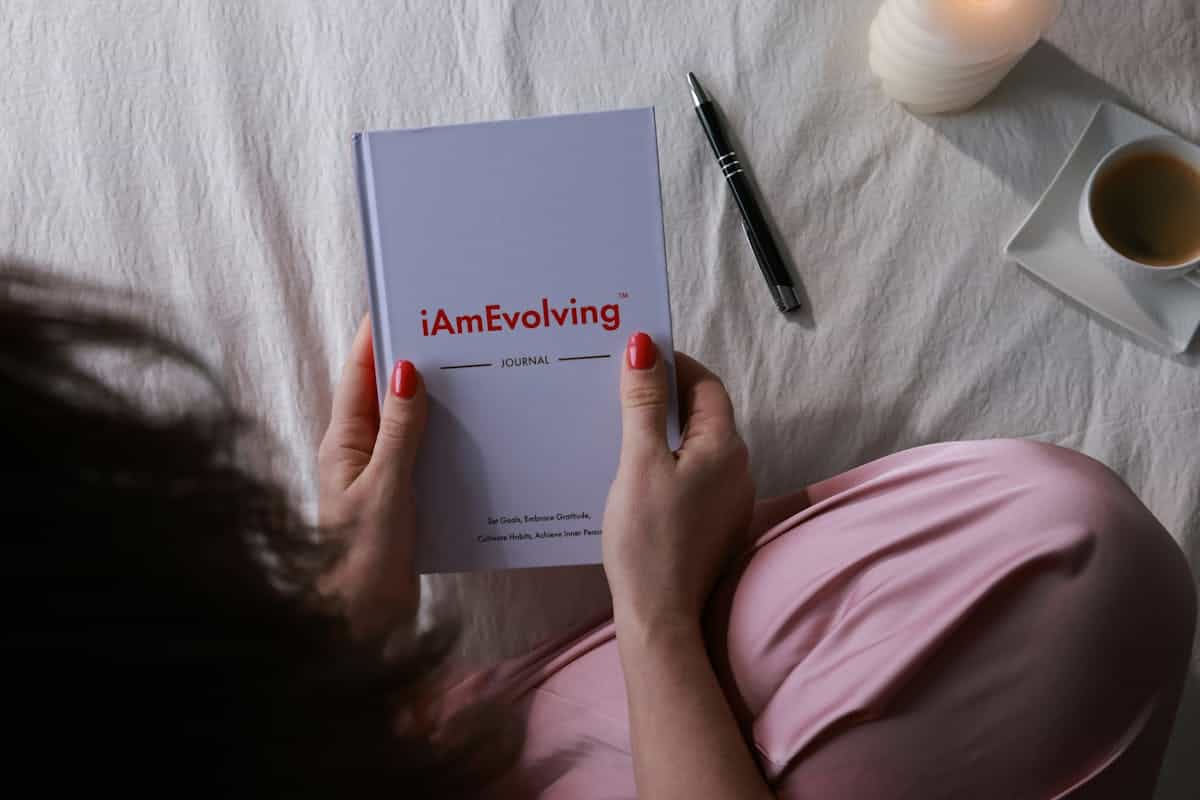
The honest answer, which most articles avoid: the dream stops when something in waking life changes, not when you understand the dream more thoroughly. Understanding what the mirror is pointing to is only the first step. The second step — the one that actually stops the loop — is doing something about it.
That said, here is what is actually useful.
Keep a brief dream log focused on change, not content. Write down what the mirror looked like this time — its condition, what it showed, the emotional quality — and compare it to previous entries. If the mirror image is evolving (becoming clearer, the distortion easing, the crack shrinking), the underlying issue is moving. If it is identical each time, nothing has changed in waking life and the dream is accurately reporting that.
Name the waking-life pressure the dream maps to. Most people can identify the underlying concern within the first honest minute of thinking about it. A recurring cracked mirror and a relationship you know is under strain. A recurring no-reflection dream and an extended period of identity ambiguity. Name it specifically, not generally. "I'm stressed" is not specific enough. "The version of myself I've been performing at work doesn't match who I actually am anymore" is specific enough to act on.
For distressing recurring mirror dreams, Imagery Rehearsal Therapy (IRT) has documented effectiveness. Psychology Today's overview of dreaming notes that IRT — a technique where you rewrite the dream's ending during waking hours and rehearse the new version — has been shown to reduce both the frequency and distress of recurring nightmares. This is worth knowing because it gives the sleeping brain a different script to run rather than repeating the one it has been running.
A reader who spent six months avoiding mirrors entirely after intense self-criticism about her appearance described what happened when she finally looked with a therapist's guidance: the most striking thing was not what she saw. It was how distorted her mental image of herself had become compared to the actual reflection. The fear had grown; the face had not changed. The same pattern applies to recurring mirror dreams — avoiding what the dream is pointing to does not reduce the anxiety. It tends to let the imagined version of the problem grow larger than the actual waking-life issue.
Dreams of mirrors repeat for the same reason any recurring dream repeats: the sleeping brain is accurate. Whatever it flagged the first time is still there. The mirror keeps appearing because the question it is asking has not yet received an honest answer.
The dream is not the problem. The problem is whatever the mirror has been trying to show you — and the loop ends when you finally look at it directly in the light of day.
Mirror FAQ
Why do I keep dreaming about mirrors?
Recurring mirror dreams happen because something connected to self-image, identity, or a close relationship has not been resolved in waking life. According to the Sleep Foundation, recurring dreams persist as long as the underlying emotional concern remains unaddressed — the sleeping brain reuses the same imagery because its previous attempt to flag the issue did not produce a response. The mirror specifically repeats because no other dream symbol is as precise for self-perception work: the mind reaches for the mirror when it wants to say "look at yourself" and keeps reaching for it until you do.
What does a distorted mirror mean in a recurring dream?
A recurring dream of a distorted or morphing reflection almost always points to an unresolved question about how you see yourself versus how you are actually being seen — or a persistent gap between the version of yourself you present and the one you actually feel yourself to be. The distortion may also have a biological component: the Troxler Effect causes faces to blur and shift when gazed at steadily in low light, and the sleeping brain can loop this sensory experience as a recurring image if it occurred during a half-awake mirror encounter. If the distortion is frightening, the emotional tone usually tracks with internalized shame or anxiety about self-perception that has not been directly examined.
How do I stop recurring mirror dreams?
Recurring mirror dreams stop when whatever they are pointing to changes in waking life — not when you understand the dream more thoroughly. The most effective approaches are: identifying the specific waking-life pressure the dream maps to and addressing it directly; dream journaling to track whether the mirror image stays the same or evolves (evolution usually means the issue is moving); and if the dream involves distress, working with a therapist using Imagery Rehearsal Therapy (IRT), a technique with documented effectiveness for reducing recurring nightmare frequency.
Is dreaming of mirrors a spiritual sign?
Different traditions interpret recurring dreams of mirrors differently, and the readings do not converge into one conclusion. In Buddhist and Hindu philosophy, the mirror appears repeatedly in dreams when the mind is persistently agitated — unable to show a clear reflection because something is unresolved. In Islamic and Sufi tradition, a mirror that keeps appearing in dreams may be read as an invitation to sincere self-examination. In some West African and Afro-Caribbean traditions, a mirror appearing repeatedly in dreams is treated as contact with ancestral guidance rather than purely an internal signal. The common thread across traditions: the mirror repeats because something is asking to be looked at.
What does it mean to see no reflection in a recurring mirror dream?
A recurring dream of looking into a mirror and finding no reflection is among the more specific mirror dream images — it points to a persistent question about identity or visibility. The most common waking-life correlate: a sense that the version of yourself you have been living does not feel authentically yours, or that you are not being seen clearly by people around you. This dream is more common during sustained identity transitions — long periods of role ambiguity, major life changes, or extended time spent performing a version of yourself for external requirements. The image recurs because the underlying question ("who am I in this period?") has not settled.
What does it mean when someone else appears in your mirror in a recurring dream?
When another person's face consistently appears where yours should be in a recurring mirror dream, the reading depends on who appears. If it is someone you know, the dream may be pointing to over-identification with that person's expectations or values — the mirror is showing you that you are currently reflecting someone else's image of yourself rather than your own. If the face is a stranger's, the dream often points to a part of your own personality or identity that feels unfamiliar or unintegrated. Recurring appearances of the same stranger's face in the mirror tend to map to recurring avoidance of a particular trait or truth about yourself.