Mirror Meaning in the Bible: What Scripture Really Says About Reflection

The mirror meaning in the Bible has nothing to do with checking your appearance. Across both Testaments, the mirror appears as a metaphor for human limitation, the function of Scripture, and the soul's encounter with God. Biblical mirrors were bronze and dim — giving a blurred, incomplete reflection. That physical imperfection was precisely the point. What you could not see clearly in the mirror became the central image for what humanity cannot see clearly about the divine. Every major reference in Scripture turns on that gap.
The bronze mirror was the sharpest image the ancient writer could choose for describing the difference between what we know now and what we will one day know fully. To read the biblical mirror passages without that material context is to miss most of what they are saying.
What follows is what Scripture actually says about mirrors — verse by verse, with the historical and theological context that makes each passage worth understanding.
What Does the Bible Actually Say About Mirrors?
The answer surprises most readers: the Bible mentions mirrors more often and in more varied ways than almost anyone expects. But not in the way modern readers assume. The physical object appears; so does the metaphor. Understanding which is which is the first step.
The key passages, in canonical order:
- Exodus 38:8 — Women donate bronze mirrors to build the tabernacle's bronze basin for priestly washing.
- Job 37:18 — Elihu compares the summer sky, hard and spread out, to a cast metal mirror.
- Isaiah 3:23 — Listed among the luxury items God says he will take from the women of Jerusalem: "the mirrors."
- Ecclesiasticus 12:11 (Deuterocanonical) — A polished bronze mirror must be constantly maintained to keep away rust and corrosion — a metaphor for wariness toward an enemy.
- Wisdom of Solomon 7:26 (Deuterocanonical) — Wisdom is described as "a spotless mirror of the working of God."
- 1 Corinthians 13:12 — Paul's most famous mirror verse: "For now we see through a glass, darkly."
- 2 Corinthians 3:18 — "We all, with unveiled faces, beholding the glory of the Lord, are being transformed."
- James 1:23-24 — The man who hears the Word but does not act is like a man who looks in a mirror and immediately forgets his face.
These references establish a clear theological trajectory. In the Old Testament, physical mirrors are surrendered, compared, and catalogued. In the Deuterocanonical books, mirrors become metaphors for purity and wisdom. In the New Testament, they become the primary image for human limitation, Scripture's function, and spiritual transformation. What begins as a physical object becomes the organizing metaphor for some of the most profound claims in the Christian tradition.
The Historical Context: Why Ancient Mirrors Were So Different
Before reading a single verse, it helps to know what a mirror actually was in the ancient Near East — because the gap between then and now is enormous, and it shapes every image in the text.
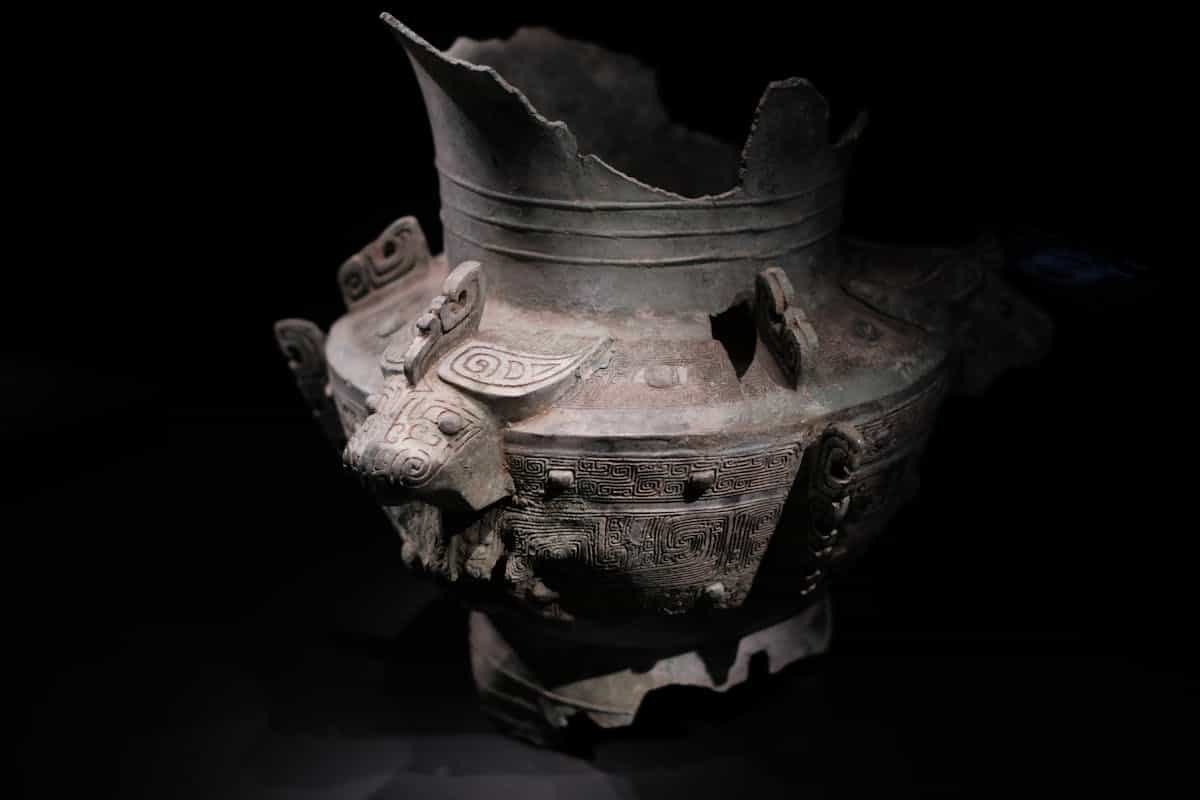
Biblical mirrors were not glass. They were made of highly polished bronze, copper, or sometimes obsidian — held in the hand, oval or round, with a decorated handle. Bronze corrodes. It requires constant polishing. Even a freshly polished bronze mirror gave a reflection that was recognizable but dim — you could see your outline, major features, and color, but fine detail was blurred. In poor light or without recent polishing, the reflection degraded considerably.
This is the object Paul had in mind. The Corinthians were familiar with bronze mirrors: Corinth was a major trade center, and Corinthian bronze was particularly prized for its quality. When Paul wrote that we see en ainigmati — in a riddle or obscurely, often translated "darkly" — he was describing an experience his readers knew from daily life.
Glass-backed silver mirrors — the kind that give clear, true reflections — did not exist until the first century AD at the earliest, and were not widely available until the late medieval period in Europe. The Bible Gateway Encyclopedia entry on mirrors notes that the KJV translations of "looking glass" and "glass" are anachronisms precisely for this reason: glass mirrors were simply not part of the world the biblical authors inhabited. Every biblical author who wrote about mirrors was imagining a dim, imperfect reflection. When modern readers picture a crisp mirror and then apply Paul's metaphor, they lose the point. The whole force of the image depends on the mirror's inadequacy.
This historical context also explains why the women's mirror donation in Exodus 38:8 was so significant — and why it was controversial.
1 Corinthians 13:12 — What "Through a Glass, Darkly" Really Means
The thirteenth chapter of 1 Corinthians is commonly called the "Love Chapter" — Paul's sustained meditation on charity and its superiority to every spiritual gift. The mirror verse comes at its conclusion, as Paul shifts from describing what love is to describing what love will one day allow us to see.
The full verse in the King James Version reads: "For now we see through a glass, darkly; but then face to face: now I know in part; but then shall I know even as also I am known."
Breaking down the language:
- "Through a glass" — di' esoptrou in Greek. Esoptron was the standard Greek word for a hand mirror. The preposition dia means "by means of" or "through." Paul is saying we perceive divine truth by means of a mirror — indirectly, not directly.
- "Darkly" — en ainigmati, meaning "in a riddle" or "in an enigma." The same root gives us the English word "enigma." Paul is not just saying things are dim — he is saying they are puzzling, partially understood, requiring interpretation.
- "But then face to face" — this echoes Moses, who spoke with God "face to face, as a man speaks with a friend" (Exodus 33:11), a privilege denied to ordinary Israelites. Paul is saying the ultimate clarification — direct, unveiled access to God — lies ahead.
Paul's argument is theological and humbling: no matter how much we study, how deeply we pray, how much spiritual experience we accumulate, our present knowledge of God is fragmentary. We are looking at a dim bronze reflection of an infinite reality. This is not a cause for despair. It is a call to humility — and to hope. The reflection, however dim, is real. And the promise is that it will one day be replaced by something far better.
James 1:23 — The Mirror of God's Word
Where Paul uses the mirror to describe how we see, James uses it to describe what we are supposed to do with what we see.
James 1:23-24: "Anyone who listens to the word but does not do what it says is like someone who looks at his face in a mirror and, after looking at himself, goes away and immediately forgets what he looks like."
James has a concrete, almost impatient style. His point is blunt: Scripture is a mirror. When you read it, you are supposed to see yourself — your actual spiritual condition, with its flaws, its sins, its misalignments with God's character. The purpose of looking is not admiration. It is honest assessment followed by action.
The forgetful mirror-gazer is James's portrait of someone who hears without integrating. They encounter truth, register it briefly, then resume their life unchanged. James calls this self-deception — not just ineffectiveness, but an active lie told to the self.
What makes this metaphor precise:
- A mirror does not interpret. It shows exactly what is in front of it. Scripture, in James's framework, functions the same way — it reveals the soul as it actually is, not as we have rationalized it.
- Looking in a mirror is usually motivated by the desire to see accurately. James notes the absurdity of looking at an accurate mirror and then doing nothing with the information. The purpose of the mirror is lost entirely.
- The "perfect law of liberty" mentioned in James 1:25 is the mirror that actually helps — the one the reader stays with long enough to act on its reflection.
The mirror of James 1 is ultimately about the integrity gap between knowledge and action. It is one of the sharpest practical applications of any metaphor in the New Testament.
2 Corinthians 3:18 — Gazing at Glory, Being Transformed

In 2 Corinthians 3:18, Paul uses the mirror image a second time — but in a completely different direction. Here, the mirror is not a symbol of limitation or diagnosis. It is a tool of transformation.
"And we all, who with unveiled faces contemplate the Lord's glory, are being transformed into his image with ever-increasing glory, which comes from the Lord, who is the Spirit."
The key phrase is katoptrizomenoi — a form of katoptrizo, which means either "to see as in a mirror" or "to reflect as a mirror reflects." Ancient scholars and modern translators are divided on which meaning Paul intended. Some versions render it "beholding" (RSV), others "reflecting" (NEB, JB text). The ambiguity is likely intentional: in Paul's theology, the two actions are inseparable. When you truly behold Christ, you begin to reflect him.
The context matters here too. Paul is contrasting the old covenant (where Moses had to veil his face after meeting God, because the glory was fading — 2 Corinthians 3:13) with the new covenant, where believers have no veil. The old covenant restricted access. The new covenant gives full, unmediated exposure to the glory of God in Christ.
The result is progressive transformation: "from one degree of glory to another." This is not instant. It is a process — the sustained, ongoing result of consistently directing the gaze toward Christ rather than toward the self. Paul is describing what spiritual formation actually looks like from the inside: not effort-based self-improvement, but transformation by sustained attention to the One whose image is being formed in us.
Hebrews 1:3 and Wisdom of Solomon 7:26 — The Mirror That Never Distorts
Two passages that rarely appear in popular discussions of biblical mirror symbolism deserve specific attention, because they frame the entire trajectory of the metaphor.
Wisdom of Solomon 7:26 (a Deuterocanonical text recognized as Scripture by Catholic and Orthodox traditions) describes divine Wisdom in these terms: "For she is a reflection of eternal light, a spotless mirror of the working of God, and an image of his goodness."
This is a remarkable statement. Wisdom here is described not as a participant in divine activity but as its mirror — the surface through which the eternal light of God is made visible without distortion. The spotless mirror is contrasted implicitly with the ordinary bronze mirror: it shows exactly what is there, without rust, without blur, without the limitations of the material.
Hebrews 1:3 picks this up and applies it to Christ: "The Son is the radiance of God's glory and the exact representation of his being, sustaining all things by his powerful word."
The Greek word translated "exact representation" is charakter — the same word used for the impression left by a seal in wax, or an engraving in metal. It implies precise, faithful duplication of an original. Christ is not like God in a general sense. He is the exact correspondence to God's nature — the perfect reflection.
Put the two passages together and the theological logic becomes clear: the bronze mirrors of the ancient world were always gesturing toward something they could never achieve. They pointed to the possibility of a perfect reflection — one that shows the original without distortion. The Wisdom of Solomon said that divine Wisdom fulfills this. Hebrews says that Christ is the ultimate fulfillment. Every bronze mirror in the ancient Near East was, theologically, a promissory note for the incarnation.
Mirrors and Vanity in Scripture: Where the Warning Comes From

Despite the positive uses of mirror imagery in the New Testament, the physical mirror in Scripture carries a consistently cautionary weight — particularly in the Old Testament and in the early church tradition that followed it.
Isaiah 3:23 lists mirrors among the luxury items God threatens to take from the proud women of Jerusalem, alongside fine clothing, jewelry, and ornaments. Mirrors appear alongside objects associated with status, beauty, and self-display — not neutral possessions but symbols of the culture's misplaced priorities.
Proverbs 16:18 does not mention mirrors directly, but the principle it encodes — "Pride goes before destruction, a haughty spirit before a fall" — was consistently applied to them. In patristic literature (the writings of the early church fathers), mirrors were frequently cited as tools of vanitas — the Latin concept that gives us the English word "vanity," which Ecclesiastes uses repeatedly: "Vanity of vanities, all is vanity."
The early church was specific about the danger: it was not that mirrors were inherently sinful. The danger was the capacity of the mirror to become an idol — a surface that drew the gaze inward and downward (to the earthly self) rather than outward and upward (to God). When the mirror becomes a site of worship rather than honest self-assessment, it inverts its proper function. It was this inversion that some monastic traditions took seriously enough to remove mirrors from their spaces entirely.
The theological logic here echoes through to the New Testament: the mirror that shows you your own face is valuable only if you use what you see to conform yourself more closely to the image of Christ. If you stop at your own reflection, you have missed the point.
The Women's Mirrors at Sinai: What Exodus 38:8 Actually Reveals
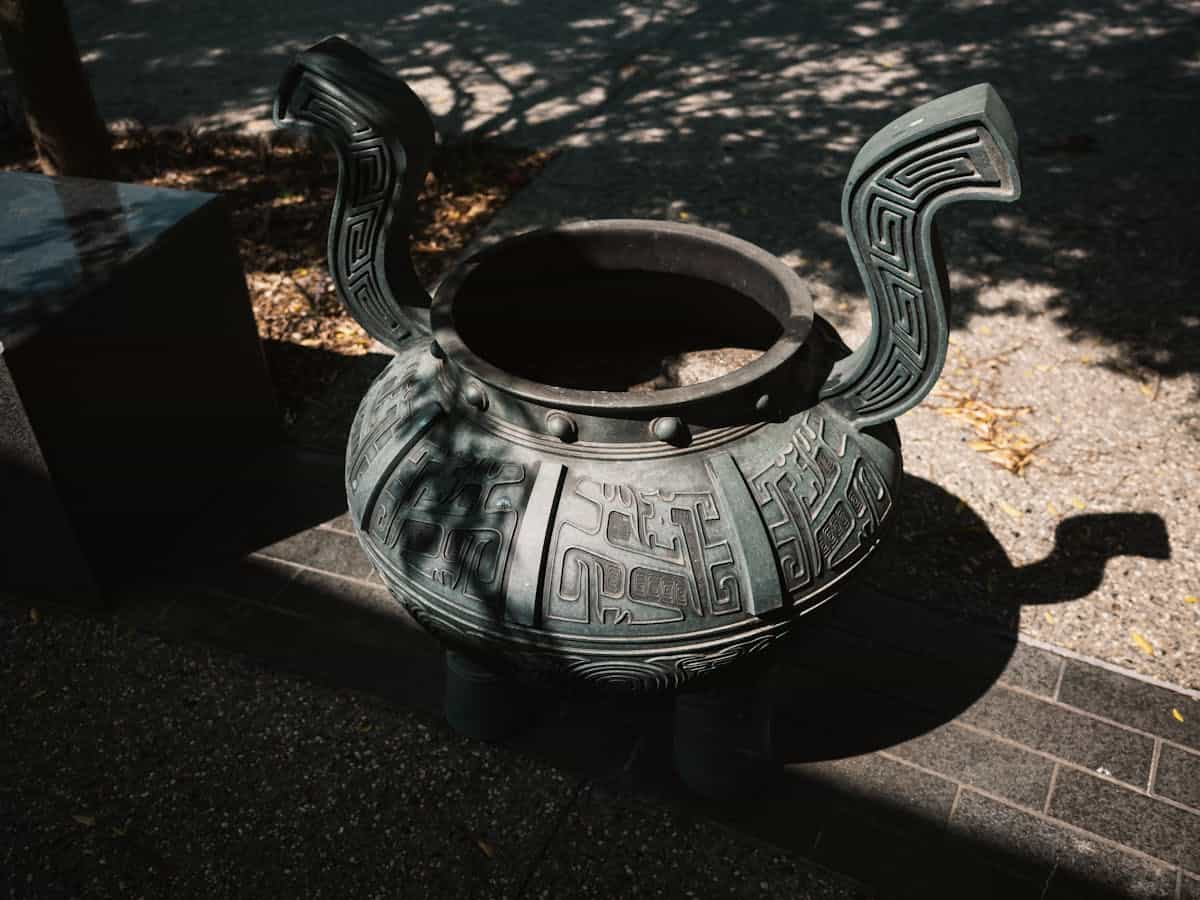
Exodus 38:8 is a brief, easily-overlooked verse: "He made the bronze basin and its stand from the mirrors of the women who served at the entrance to the tent of meeting."
Most readers note this is a record of construction materials and move on. But there is a rich tradition — in Jewish Midrash and later rabbinic commentary — that describes a dispute between Moses and God over whether to accept these mirrors, and it changes how the verse reads.
The account, found in the Midrash (Tanchuma, Pekudei 9 and other sources), goes like this: when the women brought their mirrors as an offering for the Tabernacle, Moses hesitated. He associated bronze mirrors with vanity and self-display — inappropriate objects for sacred construction. He was prepared to refuse them.
But God told Moses to accept the mirrors — and not grudgingly. God declared these mirrors among the most beloved of all offerings, because of their history. During the years of slavery in Egypt, when the men were crushed and exhausted, the women had used these mirrors to encourage their husbands. They would bring food to the fields, and use the mirrors to show their husbands their own faces — reminding them that they were still men, still worth caring for, still capable of love and hope and the future. Through this use of the mirrors, the women had helped maintain not just morale but the continuation of the people of Israel in captivity.
God told Moses: these mirrors built the nation. They deserve to build the sanctuary.
This is not a minor midrashic embellishment. It reveals something about how the biblical tradition understood the neutrality of objects and the importance of intent and use. The same bronze surface that Moses feared would introduce vanity into the holy space was, in God's reckoning, already a sacred object — because it had been used for love, survival, and the preservation of a people in their darkest hour.
Covering Mirrors in Mourning: The Biblical Thread

The practice of covering mirrors during a period of mourning — most visible in the Jewish tradition of sitting shiva, but also present in Victorian European customs and various folk practices across cultures — has no explicit biblical command behind it. Yet it connects to several core biblical themes.
The tradition draws from different wells depending on the tradition:
-
In Jewish practice, the shiva period is a time of intense inward focus on the deceased and on grief. Mirrors are covered because self-preoccupation — with appearance, with the daily routine of self-presentation — is considered incompatible with the work of mourning. The mirror is a symbol of the living self, and death demands that the self step aside.
-
In broader Christian folk tradition, covered mirrors during mourning connect to 1 Corinthians 13:12: in the presence of death, we are acutely aware that we see "dimly." The physical reflection suddenly feels irrelevant against the backdrop of eternity. Covering the mirror is a bodily acknowledgment of Ecclesiastes' refrain: "Vanity of vanities, all is vanity."
-
In some older superstitions (which overlap with folk Christianity), covered mirrors were also believed to prevent the soul of the deceased from becoming trapped in the reflection. This is not a biblical belief, but it grafted itself onto biblical mourning practices over centuries. The distinction is worth making: the biblical thread is about redirecting attention, not about protecting souls from reflective surfaces.
For more on the intersection of mirror superstitions and cultural tradition, the overlap between religious practice and folk belief runs deep across many cultures.
The Mirror of Scripture in Daily Practice

Having traced the biblical mirror through Exodus, Corinth, Jerusalem, and the Deuterocanon, it is worth asking what the combined weight of these passages suggests for practical life — because the biblical authors did not write theology for its own sake.
The three key mirror passages of the New Testament each suggest a specific posture:
| Passage | Mirror Direction | What It Produces |
|---|---|---|
| James 1:23-24 | Look at yourself in God's Word | Honest diagnosis — see what does not match; change it |
| 1 Corinthians 13:12 | Acknowledge the limits of what you see | Humility about theology; hope for future clarity |
| 2 Corinthians 3:18 | Look at Christ, not the self | Transformation — resemblance to what you behold |
Together, these passages suggest a movement: first diagnose honestly, then release the need to fully understand, then keep the gaze directed upward rather than inward. The mirror of Scripture is most useful when it is used to move from self-observation to God-directed action, not when it becomes a surface for prolonged self-analysis.
Four practical applications rooted in the text:
-
Read Scripture with diagnostic intent — not just for information, but asking "Where does my life diverge from this?" James's mirror only works if you stay long enough to answer that question honestly.
-
Practice epistemic humility in theology — 1 Corinthians 13:12 is a standing check on certainty. Every theological position you hold confidently is, in Paul's framework, a bronze-mirror perception of an infinite reality. This is not a call to abandon conviction; it is a call to hold it without arrogance.
-
Use Scripture as a spiritual tool for self-examination before significant moments — 1 Corinthians 11:28 instructs believers to examine themselves before Communion. The principle extends to any moment of significant decision, repentance, or spiritual transition.
-
Direct the gaze toward Christ more than toward the self — 2 Corinthians 3:18 does not say "examine yourself more carefully." It says "behold the Lord's glory." The transformation that Paul describes happens not by sustained self-scrutiny but by sustained attention to the person in whom God is fully mirrored.
Conclusion
The mirror meaning in the Bible traces a coherent arc. In the Old Testament, physical mirrors are donated for holy use, compared to the grandeur of God's sky, and listed among the vanities that distract from righteousness. In the Deuterocanonical wisdom literature, the mirror becomes a metaphor for divine Wisdom itself — spotless, clear, the perfect medium for reflecting the nature of God. In the New Testament, the image becomes fully theological: Paul uses the imperfect bronze mirror to describe human limitation, James uses it to challenge the reader to act on what they see, and Hebrews identifies Christ as the mirror that finally shows the original without distortion.
The bronze mirror that the ancient reader held was always inadequate. It showed the face, but not fully. It reflected light, but dimly. It served its purpose, but it could not be the final word.
What the mirror meaning in the Bible offers is not just a series of metaphors. It is an invitation to keep looking — past the dim reflection of the present toward the clarity that the text consistently promises lies ahead.
For now, we see in a riddle. But we press on.
Mirror FAQ
What does the Bible say about mirrors?
The Bible references mirrors in several key passages. Exodus 38:8 describes women donating bronze mirrors to build the tabernacle basin. Job 37:18 compares the summer sky to a cast metal mirror. In the New Testament, 1 Corinthians 13:12 uses the mirror to describe the limits of human knowledge of God. James 1:23 compares Scripture to a mirror. And 2 Corinthians 3:18 describes believers gazing at God as in a mirror and being transformed into his image.
What does through a glass darkly mean in 1 Corinthians 13:12?
In 1 Corinthians 13:12, Paul uses the image of a dim, ancient bronze mirror to describe how humans understand God in this life. The Greek phrase en ainigmati means in a riddle or obscurely. Paul is saying that current knowledge of God is incomplete and partial, like looking at a blurred reflection. The promise is that one day believers will see God face to face with perfect clarity, without the distortion that limits earthly understanding.
What is the meaning of the mirror in James 1:23?
In James 1:23-24, the mirror represents Scripture itself. James says that anyone who hears the Word of God but does not act on it is like a person who looks at their reflection, walks away, and immediately forgets what they looked like. The mirror shows the truth of the spiritual condition. The point is not merely to see but to respond. Hearing without doing is, in James view, a form of self-deception.
Why did Israelite women give their mirrors for the tabernacle in Exodus 38:8?
Exodus 38:8 records that women who served at the tent of meeting donated their bronze mirrors, which were melted down to create the bronze basin for priestly washing. In Jewish midrashic tradition, Moses initially resisted accepting these mirrors, seeing them as tools of vanity. But God instructed Moses to accept them, declaring them among the most beloved of all offerings, because the women had used them during the slavery in Egypt to encourage their husbands and maintain hope for the future.
What does 2 Corinthians 3:18 mean about beholding glory?
In 2 Corinthians 3:18, Paul writes that believers with unveiled faces behold the glory of the Lord as in a mirror and are being transformed into the same image from one degree of glory to another. Instead of looking at themselves, believers are to gaze at Christ. As they do, the Holy Spirit gradually conforms them to resemble what they behold. The mirror here is a tool of transformation, not merely of diagnosis.
What does Hebrews 1:3 say about the mirror meaning of Christ?
Hebrews 1:3 describes Jesus as the exact representation of God being and the radiance of God glory. This fulfills the symbolic role that ancient mirrors played in worship. While bronze mirrors gave dim, imperfect reflections, Christ gives the perfect, undistorted reflection of who God is. No theological study or spiritual experience provides a clearer image of God than looking at the character, teaching, and actions of Jesus.
What does the Bible say about mirrors and vanity?
The Bible consistently warns against the self-obsession that mirrors can encourage. Proverbs 16:18 warns that pride goes before destruction. In early church and monastic tradition, mirrors were sometimes removed from places of worship because they were seen as tools of the old self. Scripture does not condemn caring for appearance, but it warns that fixation on the external self crowds out attention to the inner spiritual condition.
Why do people cover mirrors when someone dies and is this biblical?
Covering mirrors during mourning is practiced in Jewish tradition (sitting shiva), Victorian European custom, and various folk traditions. There is no explicit biblical command to cover mirrors at death. However, the practice connects to biblical themes: Ecclesiastes 1:2 on the vanity of earthly things, 1 Corinthians 13:12 on the inadequacy of reflection in the face of eternity, and the broader scriptural call to focus on the soul rather than physical appearance during grief.