Mirror Superstitions: The Complete Encyclopedia of Global Mirror Folklore and Beliefs
Mirror superstitions are among the most universal beliefs in human history. The core idea appears in ancient Rome, medieval Europe, classical China, Slavic villages, West African traditions, and the modern American suburb simultaneously: a mirror is not just a reflective surface. It is something alive. It holds the soul. It can trap the dead. Break it and suffer the consequences. The details differ by culture, but the underlying unease about our own reflection runs through all of them.
Most articles on this subject list the superstitions without asking where they came from or why they persisted across cultures that never interacted. That is the part worth understanding. This guide covers the major beliefs in detail — their origins, the cultural variations, what different traditions still practice today — and adds two angles most treatments miss: the famous mirrors that people have claimed were genuinely haunted, and the good-luck mirror beliefs that rarely get mentioned alongside all the warnings.
Why Mirrors Became the Most Superstitious Object in Human History
Before understanding the superstitions, it helps to understand what mirrors were, historically, and what encountering one actually felt like.
The earliest mirrors were pools of still water. The first manufactured mirrors — polished obsidian discs from Anatolia — date to around 6000 BCE. For the overwhelming majority of human history, mirrors were rare, expensive, and inaccessible to most people. A peasant in medieval Europe might never once own a mirror. When they did encounter their reflection, it was in a moment of genuine rarity.
That rarity produced fear. The reflection looked like you, moved like you, and yet existed on the other side of a surface that could not be crossed. It was you, but not you. A double. In many early belief systems, the double was dangerous. It could be stolen. It could act independently of you. It was, in the terminology of folk belief, your soul made visible — and therefore terribly vulnerable.
Mirrors did not merely show reality. They duplicated it. That duplication is the root of almost every superstition that followed.
The Psychology Behind Mirror Fear
Even today, staring into a mirror for an extended period in low light produces measurable psychological effects. Psychologists refer to the most documented one as the strange-face illusion: when you fix your gaze on your reflection for several minutes in a dim room, the brain's facial recognition system begins to fail. Your features appear to shift, warp, or morph into unfamiliar or disturbing shapes. The effect is entirely neurological — the visual system is not designed to process a single face with unbroken attention — but the experience feels deeply uncanny.
This neurological glitch almost certainly fuelled the earliest fears about mirrors as gateways to other dimensions. Ancient people had no framework for understanding what was happening to their perception. A mirror that seemed to show you something other than yourself was doing something no ordinary object could do.
There is also the uncanny valley effect: the discomfort we feel when something is almost human but not quite. Our reflection is close enough to us to feel familiar, but the reversed image, the slight delays in poorly polished surfaces, the slightly wrong angles — all of these produce a low level of unease that never quite disappears. For people living before the era of mass-produced mirrors, encountering a clear, well-polished reflection may have been a genuinely startling experience.
The Soul Theory: Where the Deep Belief Begins
The idea that a reflection contains the soul is not unique to any one tradition. It appears in ancient Greece, where the philosopher Pythagoras warned against looking into a mirror beside still water because the image was visible to spirits who might seize it. It appears in Roman practice, where polished shields were sometimes used as protective screens precisely because they held the enemy's gaze rather than letting it fall on the bearer's unguarded face. It appears in Slavic, Japanese, Chinese, and West African traditions independently.
The persistence of this idea across unconnected cultures suggests it taps into something genuinely deep about human psychology. We experience our reflection as intimately connected to our identity. When folklore says the mirror holds the soul, it is, in its way, describing something real: the mirror holds the image we experience as self.
The Eight Most Widespread Mirror Superstitions
These eight beliefs appear, in some form, in virtually every culture that has had access to mirrors. The details shift, but the core of each one is recognizable worldwide.
1. Breaking a Mirror Brings Seven Years of Bad Luck
This is the most universally recognized mirror superstition. The origin of the seven-year timeframe is specifically Roman. The Greek physician Hippocrates had theorized that human life renewed itself in seven-year cycles — a concept the Romans adopted and expanded. When a mirror broke, the Romans believed the soul reflected within it was damaged. Since the soul regenerated on a seven-year cycle, the damage would take a full cycle to heal. The bad luck was not punishment. It was simply the consequence of a wounded soul moving through the world.
Later interpretations added more layers. Romans also believed human health cycled every seven years. A broken mirror became an omen of illness or death within the current cycle. To neutralize this, ancient counter-rituals emerged: grinding the shards into dust so they could never reflect a face again, touching a piece of the broken mirror to a tombstone to symbolically "bury" the bad luck, or throwing the pieces into a south-running stream.
What is worth noting is that the seven-year figure came first — from Hippocrates — and the mirror association came after. The superstition was built on a pre-existing framework of how the soul healed, not the other way around. For more on what to do if you break a mirror, the history and the folk remedies are covered in full detail there.
2. Covering Mirrors After a Death
The practice of veiling mirrors in a house where a death has occurred is observed across Jewish, Slavic, Victorian English, and Southern American traditions, among others. The specifics vary, but the core reasons cluster around three concerns.
The first is the soul of the deceased. In many traditions, the soul lingers in the house for some period after death — hours, days, or weeks depending on the belief system. A mirror could confuse or trap the wandering soul, preventing its passage to the afterlife. The second concern is the living. The mirror could act as a portal through which the deceased might appear to the living, or worse, tempt the living to follow. The third reason is the simplest: to discourage vanity during a period of grief.
In Jewish mourning practice — the period of shiva, which the practice of covering mirrors during mourning is most commonly traced to — the primary rationale has always been discouraging focus on physical appearance during a time dedicated to mourning. The shiva practice and the mirror covering are inseparable in the historical record. In Slavic traditions, the period of covering extends to 40 days — the period believed necessary for the soul to fully depart — and covers all reflective surfaces including televisions and polished furniture.
3. Never Sleep Facing a Mirror
The mirror at bedtime superstition appears in European folklore and Feng Shui, and both traditions agree on the danger, even if they explain it differently.
In folk belief, sleep is a state of spiritual vulnerability. The soul was believed to leave the body during sleep — the concept that later became known as astral projection in modern spiritual parlance. If the soul exited the body and immediately encountered its own reflection, it might become startled, trapped in the glass, or confused about which body was the real one and which was the reflection.
In Feng Shui, the reasoning is energetic rather than spiritual. Mirrors in a bedroom bounce chi (life force energy) around the room. The bedroom should be a space of yin (quiet, restful) energy. A mirror facing the bed creates excessive yang (active) energy, disrupting sleep, causing nightmares, and in some interpretations introducing a "third party" energy into the relationship of a sleeping couple — which is why feng shui practitioners link bedroom mirrors to marital discord.
4. Two Mirrors Facing Each Other Create a Spirit Trap
Placing two mirrors directly opposite one another creates an infinite hallway of reflections. In most folk traditions, this is considered one of the most dangerous mirror configurations possible. Known as a spirit trap or vortex, the infinite corridor of reflections is believed to open a portal to the spirit world that cannot be closed without deliberate ritual intervention.
In Hoodoo and Southern folk magic, this configuration is sometimes created intentionally to trap a malevolent entity. The entity, drawn to the energy, enters the infinite corridor and becomes unable to find its way out. But when created unintentionally in a household, folk wisdom warns that it causes confusion, arguments, a constant sense of being watched, and disrupted sleep for everyone who lives there.
Feng Shui treats this as a structural flaw of similar severity to a missing corner or a door that opens directly onto a wall. The two mirrors facing each other configuration is classified as a generator of sha chi — killing or disruptive energy — and is corrected by repositioning one of the mirrors or covering it permanently.
5. Bloody Mary: Summoning Through the Glass
The Bloody Mary legend instructs a participant to stand before a mirror in a darkened room — traditionally lit only by a single candle — and chant "Bloody Mary" three times. According to the legend, this summons a vengeful spirit, most commonly associated with Queen Mary I of England, though the figure has been identified as many different women in different regional variants.
The figure reportedly appears in the glass, bloodied or distorted. In some variants she reaches through. In others she screams. In others she shows the gazer an image of their own death. The Bloody Mary folklore has been documented across Western countries since at least the 19th century, and its roots appear to lie in earlier divination practices in which young women would look into a darkened mirror by candlelight on Halloween night to see the face of their future husband. The mischievous inversion — summoning a terrifying figure instead of a romantic one — follows the pattern of folk belief naturally.
From a psychological standpoint, the ritual works because it deploys exactly the conditions the strange-face illusion requires: darkness, a fixed mirror, prolonged staring, and heightened expectation. What the participant perceives is almost guaranteed to be disturbing.
6. Never Look in a Mirror After Dark
In rural Ireland, Scotland, and across much of Eastern Europe, covering or turning mirrors to face the wall after sunset was a household rule. The belief was that the veil between the living and the dead was thinnest at night, and that the mirror — already a portal of uncertain reliability — became genuinely dangerous after dark. Looking into a mirror at night risked seeing a spirit standing behind you. A worse variant warned that you might see a spirit's face instead of your own, which was interpreted as a sign that death was imminent.
A secondary version warned specifically against looking into a mirror by candlelight. The flickering flame distorts the reflection naturally, and in many European traditions this was interpreted as the glass showing you something it should not: the face of your future spouse, the face of your enemy, or, in more severe tellings, the Devil himself.
7. Gifting a Mirror Brings Misfortune
Across many Asian cultures, particularly in China, Korea, and Japan, giving a mirror as a gift is considered unlucky. The reasons vary. In China, the concern is that mirrors are fragile, and a broken gift symbolizes a broken relationship. In Korea, giving a mirror is akin to gifting someone bad luck because the mirror may reflect misfortune back to the giver. In general Asian cultural tradition, mirrors are also associated with spirits and the soul — giving one as a gift is giving someone a spiritually loaded object that carries risk.
In some European traditions, particularly from the Victorian era, giving a mirror as a wedding gift was considered bad luck unless the recipient was careful never to break it.
8. A Mirror That Falls from the Wall Predicts Death
In France and Germany, a mirror that falls off a wall by itself — without any visible disturbance — is interpreted as an omen of imminent death in the family. The belief is that the soul's connection to the mirror is severed by the approaching death. The mirror, no longer needed as a container, releases itself. This is distinct from the seven-year bad luck belief, which applies specifically to broken mirrors. A fallen but intact mirror in this tradition is an omen, not a curse.
Mirror Superstitions by Culture and Country
The same fundamental fear — that mirrors are spiritually dangerous — expresses itself very differently depending on the cultural tradition. Here is how specific regions developed their own frameworks.
Western Europe
In Great Britain and Ireland, mirror divination was a serious folk practice. The most common method was to eat an apple by candlelight in front of a mirror on Halloween. The face of your future spouse was believed to appear in the glass over your shoulder. This was sincere belief in a time before secular entertainment, not a children's game. The Bloody Mary inversion of this ritual — replacing the romantic vision with a terrifying one — emerged later as a darker play on the same framework.
In France and Germany, mirrors were routinely removed from the rooms of the sick or dying. The practical reasoning was psychological: a person who saw their own pale, emaciated reflection might lose the will to fight, misinterpreting the gaunt image as a ghost of themselves already. But the spiritual dimension was also present — a dying person's soul was considered particularly vulnerable, and the mirror could take it before its natural time.
Eastern Europe and the Slavic World
Slavic mirror superstitions are among the most detailed and strictly observed in the world, shaped by a combination of Orthodox Christian and pre-Christian pagan traditions.
| Tradition | Practice | Belief |
|---|---|---|
| Russia | Never let an unbaptized baby look in a mirror | The soul is unprotected; the mirror could steal it or cause muteness |
| Poland, Ukraine, Russia | Cover mirrors for 40 days after a death | Prevents the soul from being trapped; looking in during this period invites death to mark you |
| Slavic (general) | Look in a mirror before speaking when you return from a funeral | Prevents death from following you inside the house |
In Russia, the mirror is specifically associated with the Devil — seen as one of his tools for drawing souls away from bodies. This makes mirrors objects of particular caution in devout Orthodox households. Covering them during thunderstorms, before sleep, and after deaths is standard practice in traditional Russian families to this day.
China and the Principles of Feng Shui
In Chinese tradition, mirrors are active agents of energy management. They do not merely reflect — they redirect, amplify, and in some configurations destroy the energetic balance of a space. The central principle is chi (life force energy), which flows through a home the way water flows through a landscape. Mirrors either support that flow or disrupt it catastrophically.
Convex mirrors placed above front doors are used to deflect sha chi — disruptive energy from sharp corners, opposing road edges, or threatening structures. Concave mirrors are considered dangerous in amateur hands and are used only by trained Feng Shui masters. The most commonly observed rule is that a mirror should never face the front door directly. This is believed to reflect the incoming positive energy back outside, preventing prosperity from entering the house.
Japan: The Sacred Mirror
Japan treats mirrors with more reverence than fear. In Shinto tradition, the yata no kagami — the Eight Span Mirror — is one of the three Imperial Regalia, representing wisdom and honesty. The mirror does not reflect appearance; it reflects the truth of the soul. This elevates the mirror above the status of a dangerous object and into the category of a sacred one.
Japanese mirror superstitions tend toward careful handling rather than avoidance. Careless disposal of a mirror, leaving one dirty for a long period, or breaking one is considered spiritually disrespectful as well as unlucky — not because the mirror holds bad energy, but because it is a sacred object that deserves proper care.
Latin America and the Caribbean
Latin American mirror beliefs blend Indigenous, African, and Spanish Catholic traditions into a remarkably varied set of practices. In Mexico, mirrors are incorporated into Día de los Muertos (Day of the Dead) altars, placed so that returning ancestor spirits can see themselves and remember who they are. This is one of the few traditions in which mirrors are actively used in death rituals for the benefit of the deceased rather than to protect the living from them.
In Afro-Brazilian Candomblé practice, mirrors are used in rituals to communicate with orixás (deities). A cracked mirror is interpreted as a sign of spiritual attack or a warning that an enemy has placed a curse. In Caribbean Santería, mirrors are central to both love and protection spells, and their care is considered part of basic spiritual hygiene.
Africa and the Middle East
In parts of North Africa — Morocco, Egypt — mirrors are associated with the Jinn, spirits made of smokeless fire that are believed to be attracted to reflective surfaces. Covering mirrors in bathrooms and bedrooms to avoid attracting or encountering a Jinn in your own reflection is a common household practice in traditionally religious families.
In the Jewish tradition, particularly among Mizrahi and Sephardic communities, the covering of mirrors during shiva carries the additional dimension of protecting mourners against the ayin hara — the evil eye. The mirror during grief is doubly dangerous: it exposes the mourner's vulnerability to external negative energy at precisely the moment when their spiritual defenses are weakest.
South Asia
This is a tradition that most encyclopedias of mirror superstition overlook almost entirely. In Indian folk belief, mirrors are treated with considerable caution during transitional life events — births, deaths, and marriages. Pregnant women in many parts of India, particularly in rural communities, are advised to avoid mirrors after dark and during eclipse periods. The belief is that the mirror's reflective quality can capture the unborn soul or imprint a negative image onto the developing child.
In several Indian traditions, mirrors are also considered tools of protection rather than danger. Small mirror pieces sewn into clothing, particularly in parts of Rajasthan and Gujarat, are believed to deflect the evil eye. The logic is that the mirror reflects the evil gaze back at its source before it can land. This is one of the oldest protective uses of mirrors in any tradition — and one of the few where a fragment of a broken mirror is not a source of misfortune but of protection.
Mirror Placement Rules for the Home
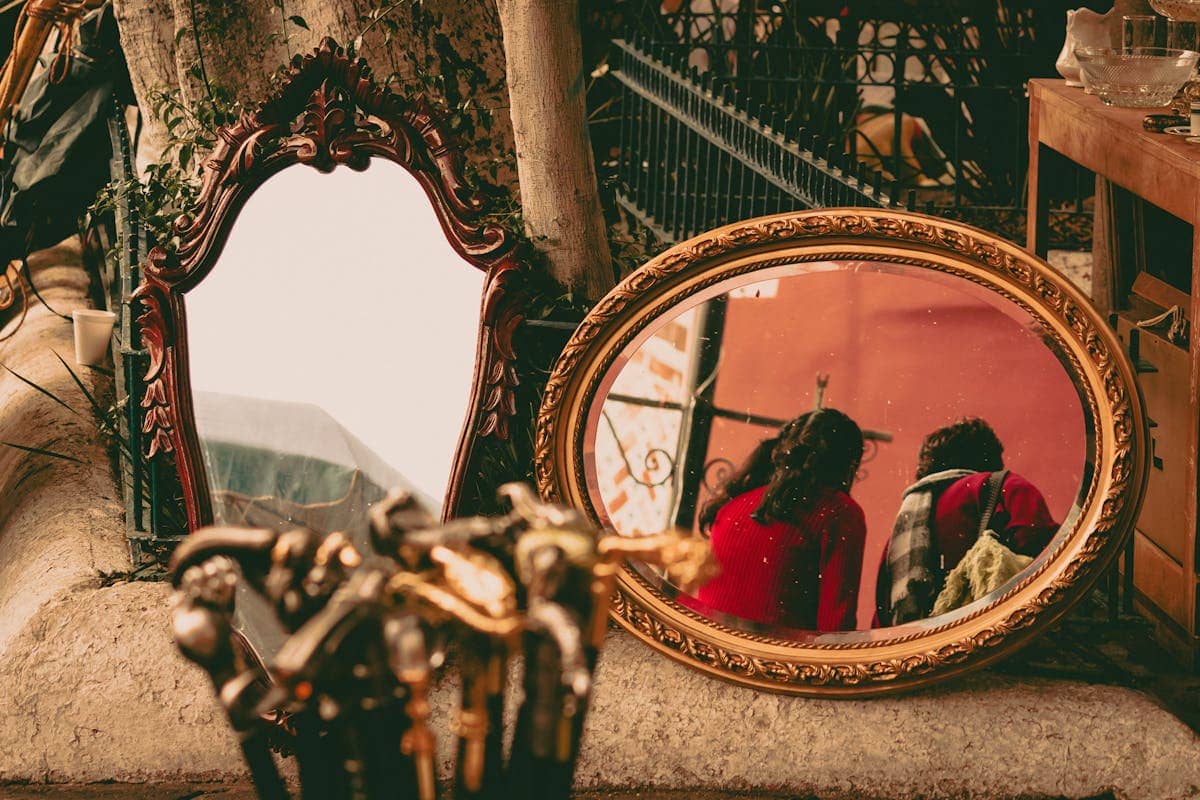
In folk tradition, a mirror's effect on a household is determined not just by its presence, but by precisely where it is placed. Here are the placement rules that appear most consistently across traditions.
Bathroom Mirrors
The bathroom is a space of physical cleansing but also, in folk belief, of spiritual vulnerability. Water is a conductor of energy in most traditional systems, which makes the bathroom drain a site of particular concern.
- Mirror directly facing the toilet: Considered very bad luck in multiple traditions. The belief is that the mirror will reflect your energy and fortune directly into the toilet bowl, where it will be flushed away. In Feng Shui, this is a serious placement error.
- Mirror facing the shower or bath: Thought to "wash away" vitality and personal energy rather than preserving it.
- A mirror that cracks spontaneously in the bathroom: Interpreted in two ways depending on tradition. The optimistic reading: negative energy has been expelled from the house through the bathroom drain. The pessimistic reading: a health issue is about to manifest.
Bedroom Mirrors
The bedroom mirror superstitions are the most widely observed in modern households, even by people who do not consider themselves superstitious. The rule is simple in most traditions: a mirror should not face the bed.
| Scenario | Folk/Feng Shui Concern |
|---|---|
| Mirror directly facing the bed | Doubles the energy in the room; in Feng Shui, specifically linked to marital problems and a "third party" energy |
| Mirror reflecting the bed for a single person | Said to "double" the loneliness by reflecting the empty space beside you |
| Mirrored wardrobe doors facing the bed | Manageable — doors can be closed at night, hiding the reflective surface during sleep |
If a mirror must remain in the bedroom, practitioners of most traditions agree on one rule: it should reflect something beautiful — a window, a piece of art, a plant — rather than the sleeping body.
Entryway and Front Door Mirrors
The front door is where energy enters the home. Placement here is considered one of the highest-stakes mirror decisions in folk tradition.
A mirror on the perpendicular side wall of an entryway is generally considered beneficial — it allows you to check your appearance before leaving and does not interfere with the flow of incoming energy. The problem is a mirror placed directly facing the front door. In Feng Shui, this sends all incoming positive chi directly back outside before it can circulate through the house. It is linked to financial instability and missed opportunities.
In European folk tradition, a mirror facing the front door is simply considered bad luck. Any entry mirror should be kept spotlessly clean — a dirty or foggy entry mirror suggests the household is "not seeing things clearly" and is prone to confusion and arguments.
Mirror Superstitions Around Life Events
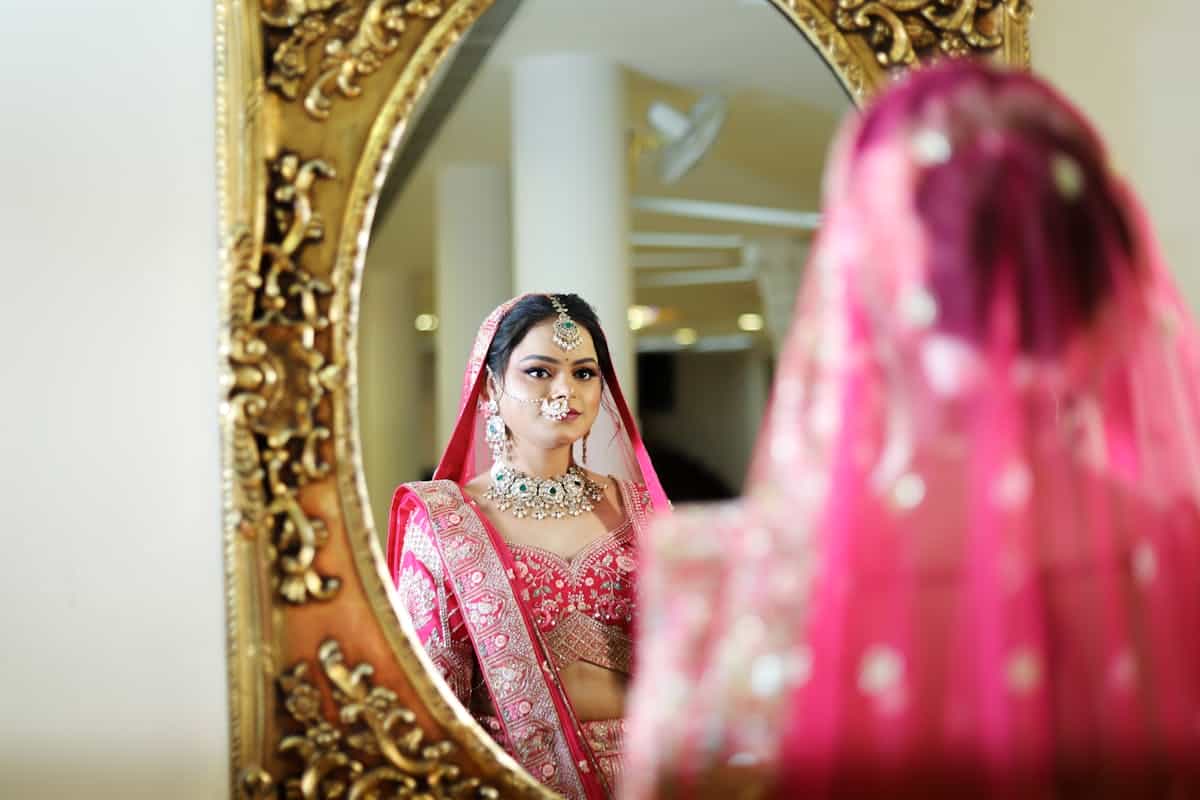
Mirrors are not passive objects in folk tradition. They actively participate in the major transitions of human life.
Weddings and Marriage
Weddings are considered times of heightened spiritual vulnerability, when protective barriers are temporarily lowered and bad luck can enter easily. Mirror superstitions around weddings reflect this anxiety.
The most widely observed Western rule is that a bride should not see her full reflection — dressed completely in wedding clothes — before the ceremony. The belief is that she will see something in the mirror that she should not: possibly a vision of loss or an omen of the marriage's failure. If she must use a mirror to check her appearance, she should remove one item from her outfit first — which is also the origin of the "something borrowed" tradition in some interpretations.
In Eastern European tradition, the couple is advised to remove or cover mirrors from the wedding venue. A broken mirror at a wedding or in a newlywed's home is considered one of the most serious omens possible — frequently interpreted as a sign of a pending separation or the death of one partner.
Pregnancy and Newborns
Pregnancy amplifies the soul's vulnerability in folk belief. Across Hispanic, Slavic, and Southeast Asian traditions, pregnant women are cautioned against looking into mirrors for extended periods, particularly at night. The specific fears vary: the mirror might capture the baby's soul before birth, or the baby might be born with a reflection of whatever the mother saw in the mirror — a birthmark, a deformity, or an expression of fear.
After birth, the rules intensify further. In Russia, allowing an unbaptized baby to look into a mirror is considered a serious spiritual risk. The infant's soul is unprotected, and the mirror could steal it. In Latin American tradition, keeping a baby away from mirrors for the first year of life is common practice, with the belief that the child might become confused or frightened by the reflection.
Death, Funerals, and Mourning
We have covered covering mirrors after death, but the practices extend further. In many traditions, if someone is dying, mirrors in the room should be turned to face the wall before the moment of death — not after. This is to prevent the dying person's soul from seeing itself in the glass, which is believed to cause a painful or confused passing.
After the funeral, the uncovering of mirrors is its own ritual in several traditions. In Irish folk practice, the family knocks on the frame of the mirror three times before removing the covering cloth, to ensure no spirit has become trapped within. In the rural American South, the tradition is to avoid looking into any mirror in a house of death until after the burial is complete — the fear being that you will see the face of the deceased standing behind you.
What Mirror Dreams Signal in Folk Tradition
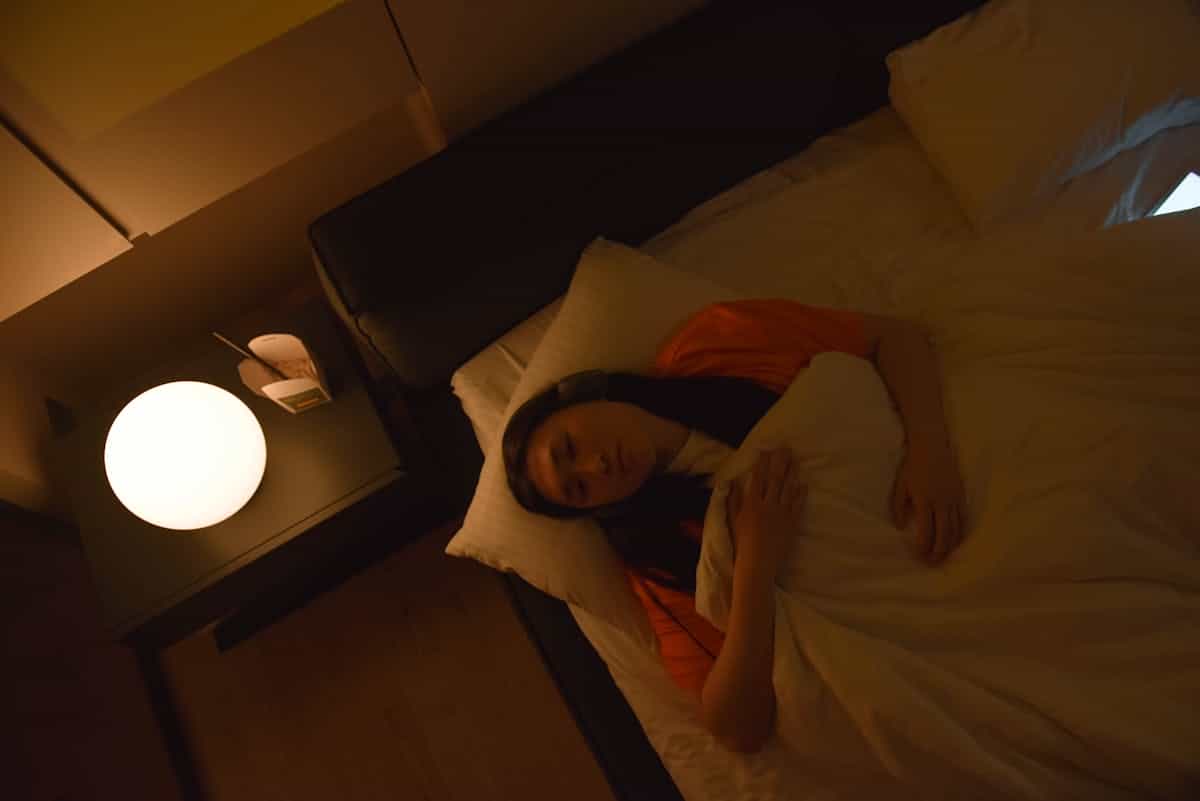
Mirror superstitions extend into the unconscious. In Slavic and Germanic folklore, dreaming of a mirror was treated with the same gravity as encountering one in waking life.
| Dream Image | Traditional Interpretation |
|---|---|
| Seeing yourself clearly in a mirror | Self-awareness; approaching period of personal growth |
| A cracked or broken mirror | Warning of upcoming disappointment or fractured relationships |
| A distorted or warped reflection | External pressures distorting your true self; confusion about identity |
| An empty mirror with no reflection | Dire omen in most traditions; spiritual disconnection or loss of identity |
| A dark figure behind you in the glass | In folk belief, a warning of death approaching or unseen enemies at work |
| A bright, clean mirror | Coming clarity; resolution of a long-standing problem |
Dreamers in Slavic tradition were advised to turn their pillow over upon waking from a dream involving a mirror, as a way of "reversing" any negative omen carried into waking life. The logic follows the wider principle that the dream state is a genuine encounter with the spirit world, not merely a psychological phenomenon.
Famous Haunted and Cursed Mirrors in History
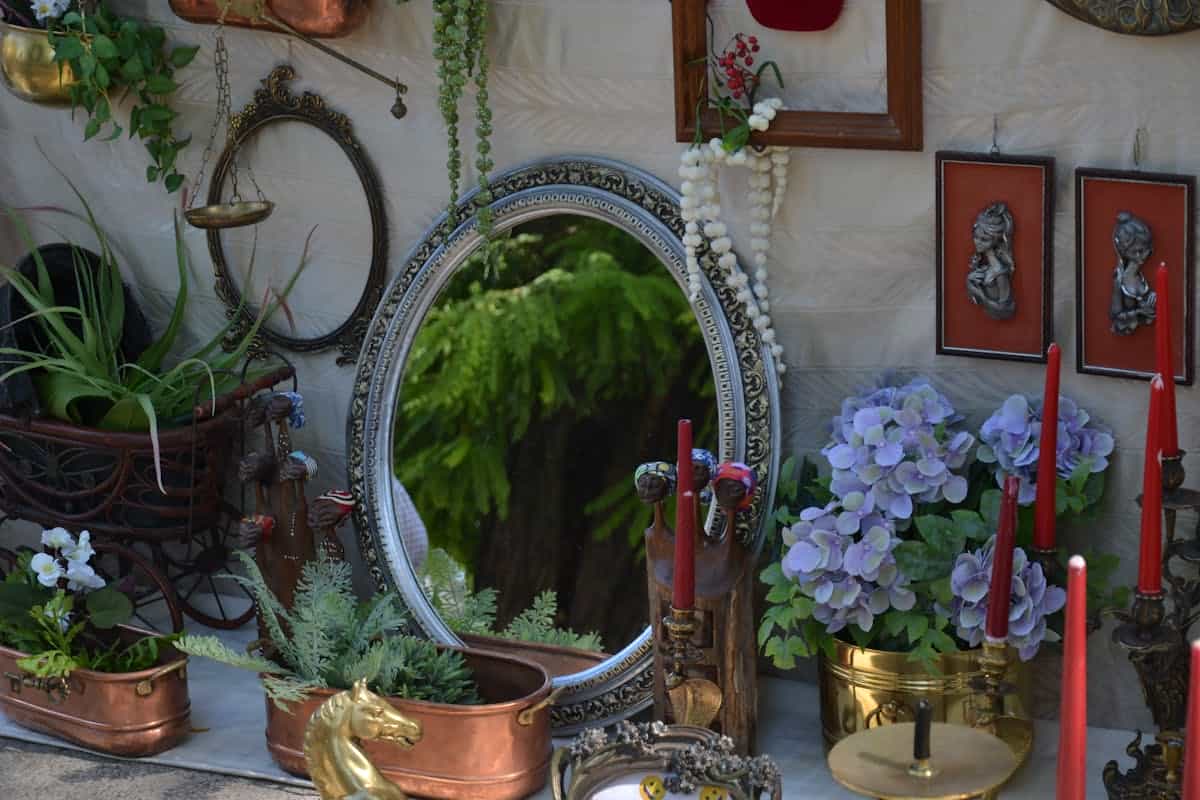
One category of mirror superstition that most encyclopedias handle too briefly is the tradition of specific mirrors — individual objects with documented histories of disturbing phenomena. Whether or not you accept the supernatural dimension, these cases show how powerfully the mirror superstition translates into material objects.
The Myrtles Plantation Mirror
The Myrtles Plantation in St. Francisville, Louisiana, is frequently cited as one of the most haunted houses in America. Its most famous object is a large antique mirror in the foyer, said to hold the trapped souls of Sarah Woodruff and her children, who were poisoned on the property in the 19th century. Visitors report seeing handprints in the glass that appear without explanation and cannot be cleaned away, as well as shadowy figures that do not correspond to anyone in the room. Whether the accounts are credible or not, the mirror has become one of the most famous objects in American paranormal folklore.
John Dee's Obsidian Scrying Mirror
John Dee, court astrologer to Queen Elizabeth I of England, used a polished obsidian disc — a gift reportedly brought from Mexico — as his primary tool for communication with what he described as angels. The disc is now held by the British Museum. In his diaries, Dee describes in detail the visions he witnessed in the black surface during sessions conducted with his associate Edward Kelley. Whether one reads this as genuine spiritual encounter, deliberate fraud, or the psychological effects of prolonged obsidian gazing, the object itself is historically significant. The practices John Dee and Dee established directly influenced the development of modern ritual magic, including the ceremonial use of black mirrors in contemporary occult practice. Ancient Origins covers the fuller history of mirrors as paranormal objects in significant depth.
The eBay Haunted Mirrors
From the late 1990s onward, listings for "haunted mirrors" appeared regularly on eBay and similar platforms. Sellers described specific objects — often ornate Victorian-era pieces found in estate sales — as carrying documented paranormal activity: cold spots, disturbing dreams in the home where they were kept, or objects moving near them. Most were dismissed as marketing. Some attracted serious buyers and significant prices. The phenomenon reflects how the ancient belief in mirrors as soul-containers transfers naturally into the modern marketplace — the superstition does not require tradition to sustain it. It regenerates wherever mirrors are sold.
What Modern Spiritualists Actually Take Seriously
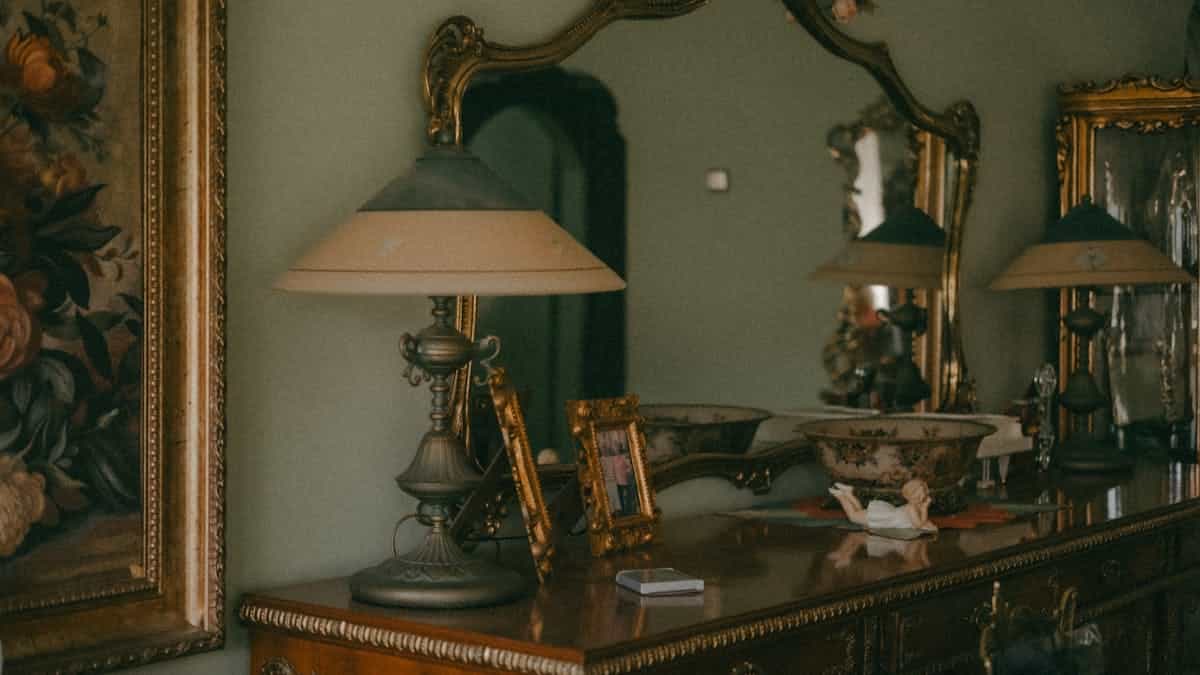
Not all mirror superstitions are treated equally by people who practice spiritual traditions seriously. Among practitioners of modern paganism, Wicca, Hoodoo, and traditional Feng Shui, several mirror beliefs are not superstitions at all — they are protocols.
Second-Hand Mirrors and Absorbed Energy
Almost universally, serious practitioners warn against introducing a second-hand or antique mirror into a home without first cleansing it. The belief is that mirrors absorb the emotional and spiritual energy of everyone who has ever looked into them. A mirror from a house where significant trauma occurred carries that residue. A mirror from an estate sale carries the energies — including the deaths — of its previous owners.
Cleansing methods vary by tradition but typically involve smoke (sage, cedar, or incense), salt water, intention-setting rituals, and sometimes leaving the mirror in sunlight for a period. The practical attitude among experienced practitioners is: you would not wear a stranger's clothes without washing them first. The same logic applies to mirrors.
Scrying as Serious Practice
While casual folk belief avoids staring into mirrors, practitioners of scrying — mirror-based divination — actively cultivate the practice under controlled conditions. The black mirror scrying guide covers the modern practice in full. The difference between scrying and the Bloody Mary ritual is primarily one of intention and protection. Scrying practitioners cast protective circles, call upon specific spiritual entities, and treat the practice as a structured spiritual exercise rather than an open-ended invitation to unknown forces.
The psychological mechanics of why scrying produces visions are reasonably well understood. Prolonged, low-stimulus gazing on any uniform surface (including a dark mirror) induces a state of reduced visual processing that allows subconscious imagery to surface. Whether that imagery is purely psychological or involves genuine contact with external entities is the question each tradition answers differently.
Mirror Sealing
A practice found in modern witchcraft — and in older protective folk magic — is mirror sealing. This involves taking a mirror, particularly in the bedroom, and stating a deliberate intention while tracing its edges. The purpose is to dedicate the mirror to a specific function: reflecting only love and positivity into the room, acting as a protective barrier rather than a passive surface, or neutralizing any trapped energies that may have accumulated over time.
Some practitioners mark the back of the mirror with a protective sigil. Others apply salt to the edges. The common thread is the transformation of a passive object into an active tool — which is, ultimately, what distinguishes spiritual practice from superstition.
The Three-Mirror Rule in Feng Shui
In classical Feng Shui, experienced practitioners observe the rule of never having more than three mirrors in a single line of sight. Mirrors are powerful corrective tools used to fix structural problems in a floor plan — a missing corner, a narrow corridor, a room that does not receive natural light — but overusing them creates sha (killing energy) that agitates rather than calms the inhabitants.
The three-mirror rule reflects a principle found throughout Feng Shui: every correction creates new problems if applied without restraint. A mirror that solves one energy problem while creating another has not improved the space.
The Overlooked Side: Positive Mirror Superstitions
The vast majority of mirror superstition literature focuses exclusively on danger, bad luck, and avoidance. But mirrors appear in good-luck traditions too, and these deserve equal coverage.
Mirrors in the Dining Room Double Abundance
In Feng Shui, a mirror placed to reflect the dining table is considered one of the most auspicious placements possible. The mirror doubles the visual abundance of the table — the food, the flowers, the family gathered together. Because the dining table represents the family's nourishment and prosperity, doubling its image is believed to double the household's good fortune. This is one of the few universally positive mirror placements in the Feng Shui tradition.
The Couple Who Gazes Together
In some European and East Asian traditions, a couple who gazes into the same mirror together in the early days of their marriage is believed to unite their souls. The reflection shows them as one — two faces in the same frame — which the tradition interprets as a spiritual merging. This stands in contrast to the more widely known belief that seeing the wedding dress in a mirror is bad luck, and suggests that the mirror's power is directional: it responds to the intention with which it is used.
Mirrors in Indian Embroidery as Protection
In the textile traditions of Rajasthan and Gujarat, small mirror fragments — shisha — are sewn into clothing, bedding, and wall hangings. The function is protective. The mirror pieces reflect the evil eye back toward its source before it can attach to the wearer. This tradition is thousands of years old and remains active in contemporary Indian folk art and fashion. The protective logic is the same as the convex mirror above the Chinese doorway: the mirror does not absorb harm, it redirects it.
Gifting a Mirror for Clarity of Vision
In several African traditions, a mirror given as a gift carries the wish for the recipient to "see themselves clearly" — to have good self-knowledge and clear perception. This is the opposite of the bad-luck-gift interpretation found in East Asian tradition, and it reflects the mirror's use in those cultures as a tool of truth and self-knowledge rather than a container of spiritual risk.
Mirror superstitions are not relics. They are living beliefs, still practiced with genuine seriousness in traditions spread across every inhabited continent. From the Slavic family that covers every reflective surface for 40 days after a death to the Feng Shui practitioner who repositions a bedroom mirror to improve a client's marriage, these beliefs are not merely inherited habits. They represent a sustained attempt to understand the relationship between the visible self and the self we cannot see.
The mirror, in every tradition that has wrestled with its meaning, is not just glass. It is the object we use to confront the question of who we actually are — and that question, in every era, turns out to be one of the most unsettling humans can ask.
The beliefs presented in this article are cultural and folkloric in nature. They are documented here for their historical, anthropological, and spiritual interest. Whether any individual belief is literally true is a matter each reader can assess for themselves.
Mirror FAQ
What does breaking a mirror mean spiritually?
In most traditions, breaking a mirror signifies seven years of bad luck because mirrors were believed to hold a fragment of the soul. Shattering the mirror was thought to damage the soul, which then required a full seven-year cycle to heal. Spiritually, some traditions interpret a broken mirror as a sign of imminent change, a warning, or the release of trapped negative energy depending on cultural context.
Why do we cover mirrors when someone dies?
Covering mirrors after a death is rooted in ancient Jewish mourning practice and broader folk belief. The reasons include: preventing the soul of the deceased from becoming trapped in the reflective surface, stopping the mirror from acting as a portal through which the spirit might return, and discouraging vanity during a period of grief. In Slavic traditions, mirrors are often covered for 40 days, the period believed necessary for the soul to fully depart.
What is the Bloody Mary mirror ritual?
The Bloody Mary ritual involves standing before a mirror in a darkened room and chanting Bloody Mary three times. According to folklore, this summons the vengeful spirit of a woman, most often identified with Queen Mary I of England. The figure reportedly appears bloodied or distorted in the glass. The legend persists across Western cultures and has roots in earlier Victorian-era divination practices involving mirrors and candles.
Why should you not sleep in front of a mirror?
In Feng Shui, a mirror facing the bed creates excessive yang energy in a space that should promote restful yin energy, which practitioners link to insomnia, nightmares, and relationship problems. In folk belief, the concern is that during sleep the soul temporarily leaves the body and may be startled or trapped by its own reflection. European and Asian traditions share the rule that bedroom mirrors should either face away from the bed or be covered at night.
What do mirrors symbolize in different cultures?
Mirrors symbolize different things across cultures. In Chinese Feng Shui, they amplify and redirect energy. In Japanese Shinto tradition, the sacred mirror represents wisdom and divine truth. In European folklore, mirrors hold the soul and can trap spirits. In the Islamic and Jewish traditions, mirrors are associated with spiritual vulnerability during grief. In African and Caribbean traditions, mirrors are used in protective rituals against the evil eye and curses.
Is it bad luck to have two mirrors facing each other?
In most folk traditions, two mirrors facing each other are believed to create a spirit trap or vortex. The infinite reflections are seen as a portal to the spirit world that cannot be easily closed. In Hoodoo, this is sometimes done intentionally to trap malevolent entities, but unintentionally in a home it is said to cause confusion, arguments, and a feeling of being watched. Feng Shui considers this configuration a source of chaotic energy that destabilizes the household.
What does dreaming of a mirror mean in folklore?
In folk tradition, dreaming of a clear mirror is a positive omen associated with self-awareness and approaching growth. A cracked or broken mirror in a dream warns of fractured relationships or shattered self-image. An empty mirror showing no reflection is considered a dire omen in many traditions, signaling spiritual disconnection. A dark figure visible behind you in a dream mirror was historically interpreted as a warning of death approaching.