Two Mirrors Facing Each Other: Superstition, Feng Shui, and the Physics Explained
Two mirrors facing each other do not open a supernatural corridor. They obey the laws of optics: light bounces repeatedly between reflective surfaces while losing a fraction of energy each cycle, producing the familiar regress of smaller copies of the room. Alongside those facts, Feng Shui and related traditions treat the doubling as restless qi bouncing between amplifiers, and some modern superstitions call it an invisible doorway. You can honor your comfort and your worldview by adjusting placement without rewriting physics.
Opposing mirrors stir arguments online because half the replies stop at folklore and the other half stop at skepticism with no acknowledgement of lived unease or cultural context. The useful answer holds both halves: optics explains the pattern your eyes insist is endless, Feng Shui encodes pragmatic cautions about visual chaos and amplification, while portal language maps the same perceptual weirdness onto spirit beliefs you may or may not accept.
Why do people say two mirrors facing each other are dangerous?
Readers usually arrive afraid of spirits, restless energy, or bad luck—not because optics failed them, but because human spaces feel personal. The brain treats repeated reflections like a glitch: where should attention land when every surface echoes the last?
For a fuller map of folk belief across cultures, including mirror taboos unrelated to Feng Shui, see the encyclopedic overview in mirror superstitions from around the world. For placement doctrine framed in qi language, companion reading is Feng Shui mirror placement rules: where never to put a mirror.
Those pages cover broader mirror lore while this article zooms into the narrow geometry of opposing surfaces.

What is the physics behind the infinite regress of reflections?
When two planar mirrors lie parallel—or nearly parallel—each reflection contains a smaller image of the opposite mirror carrying another image behind it. At every bounce the angle of incidence equals the angle of reflection, the core rule spelled out plainly in introductions to geometric optics such as Wikipedia’s overview of reflection in physics.
The chain resembles the way light resonates inside an optical cavity, where radiation can circulate between mirrored ends under strict conditions summarized in encyclopedia discussions of resonators (optical cavities). Household mirrors rarely form a laser cavity, but the looping intuition is borrowed from exactly that family of setups.
Silvered mirrors in ideal metallic coatings can return on the order of 95–99% of visible light, while common aluminum household coatings are often closer to 88–92%—so perfection is nowhere near total. Enough light returns for illusion, yet each round-trip removes a noticeable slice compared with the dazzling first surface.
Modern mirror manufacturing replaced mercury amalgams with safer vacuum-deposited metals in the twentieth century, while ancient Rome seeded ideas that mirrors snag something of the human self—seven years bad luck survives from that worldview—even though that story attaches to breakage more than parallelism.
Why do the reflections darken and vanish if the chain feels infinite?
The tunnel looks endless because symmetry tempts extrapolation; physically the series converges visually long before metaphysics intervenes.
Each traversal loses luminance partly because mirrored surfaces are imperfect reflectors; partly because scattering and absorption dirty the margins; partly because successive images shrink beneath your visual angle and camera noise on phone sensors.
Perceptually, micro head movements jitter which faint copy you notice, deepening the dizzy sense that no stable depth exists—which is fertile ground for superstition even when nothing paranormal occurs.
Mirror surfaces must be smoothed finer than wavelengths of visible light (roughly 380–700 nm) so specular reflections stay coherent. That polishing precision is astounding if you stare into it scientifically, though it rarely comes up beside ghost stories unless someone writes with both optics and folklore in frame.
What does Feng Shui say about mirrors bouncing energy?
Classical-derived Feng Shui writers treat mirrors as energetic multipliers reflecting whatever sits in sightline—clutter doubles, sharp corners amplify, vistas stretch. Opposition multiplies duplication itself, risking what popular blogs label chaotic chi.
Daniel Hanna summarizes the practical warning plainly on Feng Shui Web’s mirror primer: never place two mirrors opposite each other because they endlessly bounce qi between them rather than coaxing harmonious motion through the corridor or room.
Contemporary summaries echo that language: Feng Shui beginner articles describe infinite reflection bouncing light and qi until residents feel argumentative or foggy-headed; whether you credit qi literally or read it metaphorically for overstimulation, repeated mirrored hallways objectively increase visual chatter.
Indian Vastu commentary sometimes follows a parallel intuition: mirrored walls doubling a cramped entry or cluttered view can symbolize duplicated disorder rather than orderly flow. Newspaper explainers for contemporary apartments describe the same layout fear in modern jargon—whether you embrace that doctrine fully or skim it skeptically is less important than noticing how doubling noise can fray attention.
Treat that teaching as experiential interior psychology plus cultural grammar, not cosmic legislation. Mirrors still reflect photons regardless of cures or crystals attached later.

Where does the portal and spirit-passage belief come from?
Parallel beliefs appear where mirrors symbolize unseen worlds: stage magic, cinematic horror halls, social clips, forum threads insisting something watched from the farthest shrunken doorway.
Separate from optical facts, folklore maps mirrors onto thresholds—which is why the dedicated portal roundup on this site catalogs mythic precedents honestly in mirror as a portal: mythology, folklore, and spiritual beliefs.
Some writers claim opposing mirrors carve an unseen passage for unnamed entities—a spiritual gloss atop the visceral creep of regress. No controlled study validates entity traffic, yet the symbolism stays consistent with older anxieties: Romans linked mirrors to the self and to omens—ideas that mutated into later breakage taboos—and mirrored scrying rituals worldwide invite visions, while modern ghost tours stage candlelit corridors of glass.
Interpretation forks: folklore encodes perceptual ambiguity; physics encodes diminishing ray intensity. Respect both without forcing them onto the same ontology.
Can the setup affect sleep, nerves, or concentration without invoking spirits?
Yes, through ordinary sensory channels: doubled motion from ceiling fans late at night, ambiguous depth cues stressing vestibular balance, obsessive checking of reflections during anxious periods—not because spirits slid through stacking glass.
Peer-reviewed work on mirror gazing has shown that extended self-focused looking can lower appearance satisfaction even in people without body dysmorphic concerns, which implies long tunnels of copies could hijack attention unintentionally.
If your bedroom alcove nests two wardrobes fitted with mirrored doors, glare at dawn may shred sleep inertia more than folklore ever could. Anxiety-prone brains sometimes misread shimmering copies as intrusion; naming the neuroscience does not negate the adrenaline spike—it reframes workable adjustments.
Clinical guidance on mirror-related anxiety often warns that total avoidance tends to widen distress over time, so humane fixes prioritize softer lighting and graduated contact where safe—not rigid banning unless trauma care explicitly calls for it.

What are practical layout fixes that address belief and optics?
Neutral tactics satisfy engineers, decorators, Feng Shui students, and uneasy renters alike:
- Pivot one mirror five to fifteen degrees until regress collapses aesthetically while keeping sparkle.
- Hang sheer fabric to veil one surface at night if bedroom calm matters more than daytime brightness.
- Frost or tint one panel to scatter specular copies while retaining light.
- Break the axis with tall plants, bookshelves, or artwork—qi writers call it interrupting the ping-pong corridor; acousticians echo “diffusion.”
- Remove redundant mirrors in tight apartments where square footage myths encourage mirrored walls doubling every IKEA shelf.
- For intentional decor—salons, choreography studios—keep symmetrical mirrors but add matte panels adjacent so eyes anchor on material depth cues.
Portable folding screens echo older traditions of draping reflections after mourning or death, which links psychologically, if not literally, to restless nights under doubled glass.
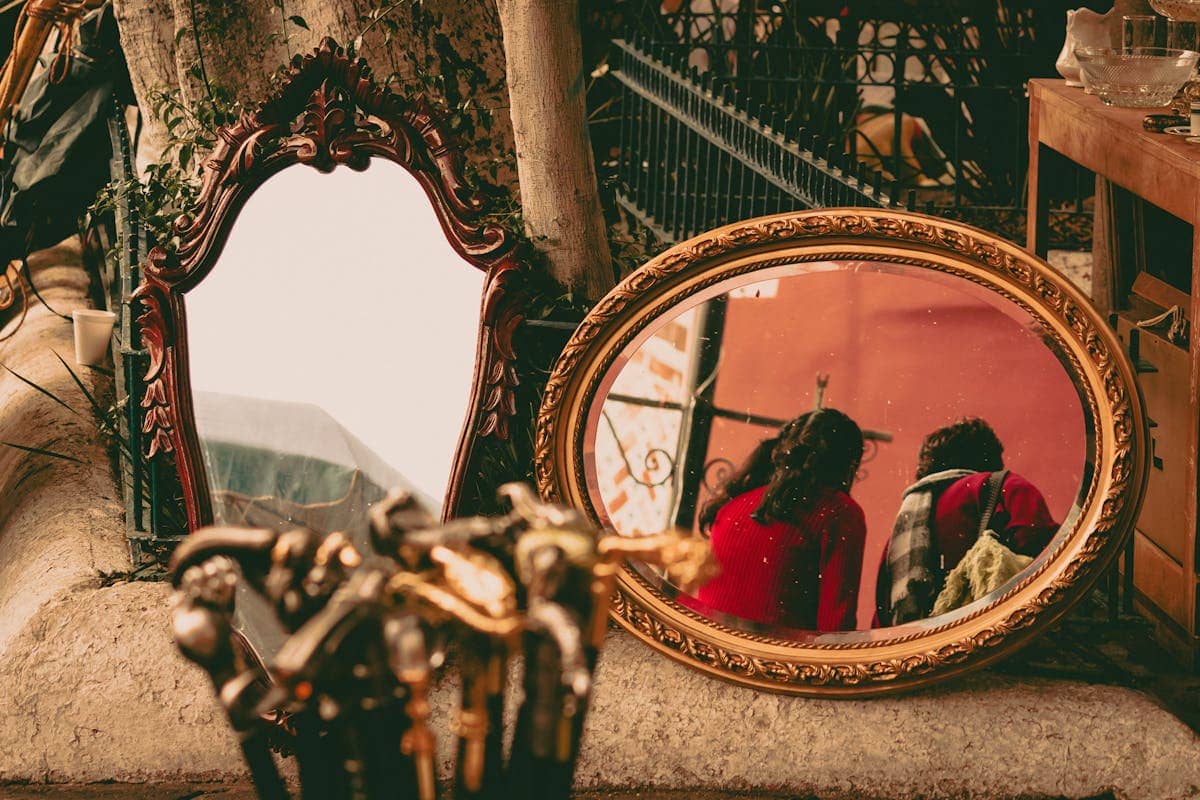
When is two mirrors facing each other probably harmless?
Dressing rooms doubling closet doors deliberately stage symmetrical reflections—designers crave infinite runway drama.
Dance rehearsal cubes need facing mirrors so angles stay visible simultaneously; athletes study form the same way. Retail corridors engineer dazzle intentionally.
Problems cluster where sleep, mourning, obsessive self-scrutiny, migraine triggers, or motion sensitivity already strain nervous systems—not because perpendicular glass possesses agenda.
Cross-cultural breakage lore shows the wider pattern: identical glass has meant curse in one city and cleanse in another, so opposition sits in that same argumentative category—not a physics verdict, but a reminder that symbolism stays local even when optics stay global.
If you love the look and feel grounded, keep it. If you flinch walking past late at night, soften one surface without apologizing to either tradition.
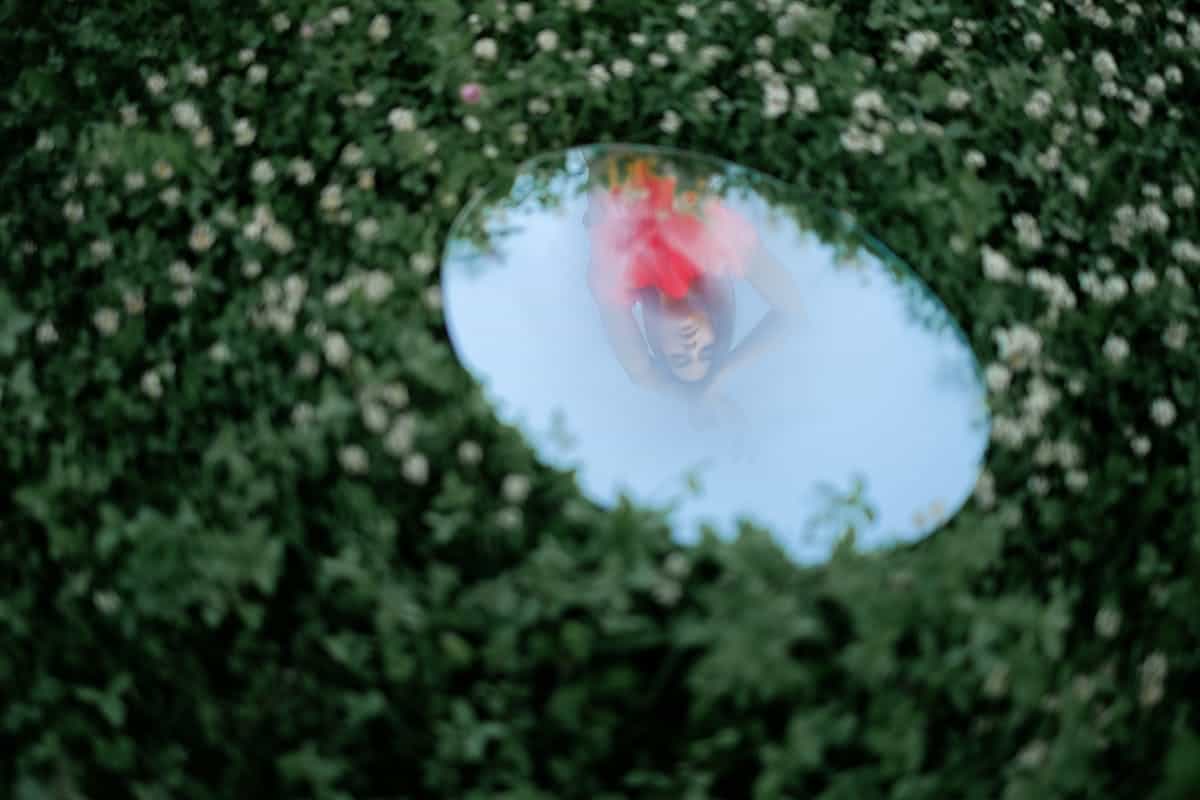
How can you hold optics and tradition in the same room without contradiction?
Science answers what photons do; cultural systems answer what repeated copies mean to people who must live beside them. Collapse is optional.
You can accept infinite regress as geometry while still avoiding doubled mirrors in bedrooms if rest matters more than showroom glam. You can dismiss portal talk yet recognize friends spooked by childhood memories—humility costs little.
If one strong opinion belongs here, it is this: superstition often flags sensory overload before language catches up, and Feng Shui sometimes encodes ergonomic wisdom in energetic vocabulary. Neither replaces the other; both inform humane rooms.
The mirror industry already treats glass as atmosphere—decorative wall mirrors alone represent a $14.8 billion global market in 2024 with mid-single-digit yearly growth as suppliers chase compact urban housing—so treat your own threshold as data. Adjust until walking through the door feels like coming home, not stepping onto a film set you never auditioned for.
Light keeps reflecting until surfaces absorb it; stories keep echoing until someone pauses the bounce. Whether you move the glass or only the story you tell about it, the outcome you want is the same: a corridor you can walk through without bracing.
Mirror FAQ
Is it bad to have two mirrors facing each other?
Feng Shui and related home traditions often discourage it because mirrors are treated as amplifiers, and opposing mirrors are said to bounce qi or multiply visual noise. Scientifically it is harmless in terms of health, though it can feel disorienting in tight spaces.
Does two mirrors facing each other create a portal?
That idea appears in folklore and popular superstition, not in measurable physics. The repeating tunnel you see comes from successive reflections obeying the law of reflection.
What does Feng Shui say about mirrors opposite each other?
Common teaching is that they reflect energy between each other in a restless loop rather than guiding qi smoothly through the room, which practitioners associate with strain and disharmony.
Why does the infinite mirror effect look darker in the distance?
Each round trip loses intensity because mirrors reflect only part of the light and absorption happens at surfaces. Your eyes also strain to focus on progressively smaller images.
How do you fix two mirrors facing each other?
Angle or move one mirror, cover one at night, break the sight line with sheer curtains, greenery, furniture, frosted film, or remove one placement unless you deliberately want symmetry for design.