Feng Shui Mirror Placement: Where to Hang, Where Never to Put, and What a Mirror Facing a Window Actually Means
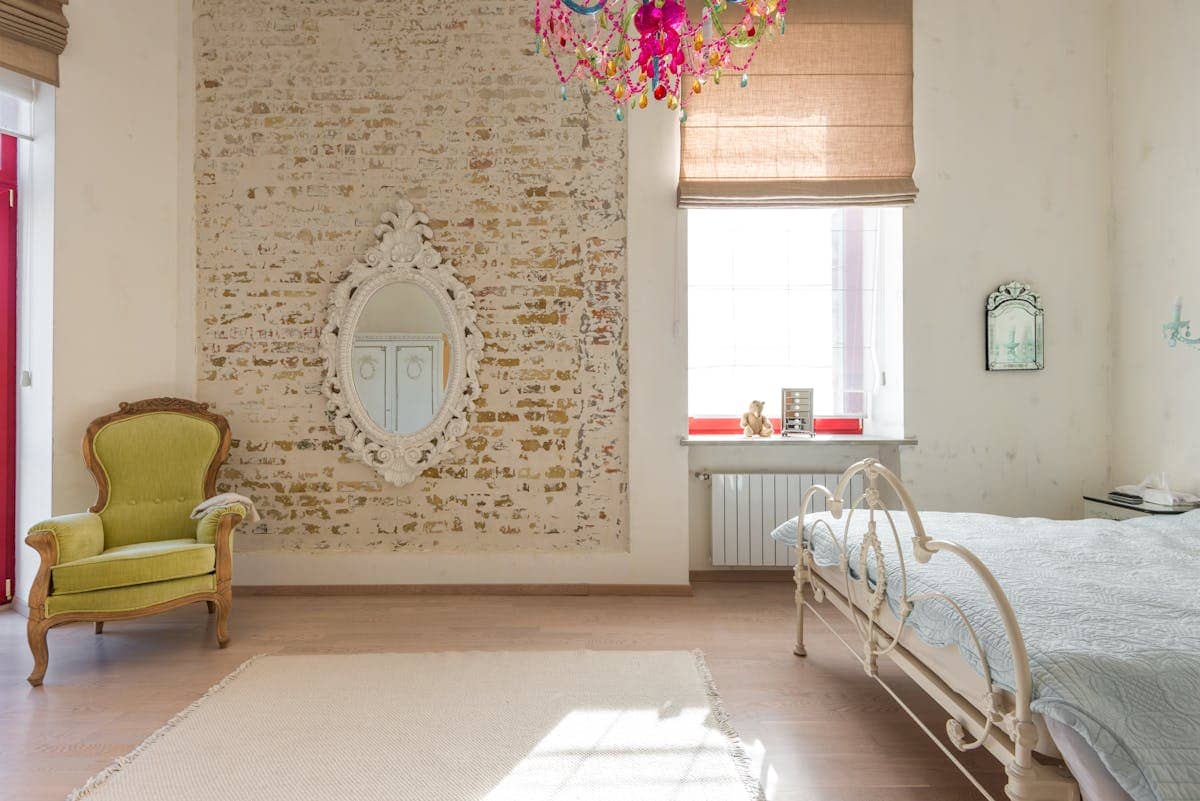
You want to know where to hang mirrors in your home according to Feng Shui — and more specifically, which placements are going to cause problems. The practical guidance is below. But one thing is worth saying upfront, because it changes how useful the rules are.
Feng Shui mirror placement rules are not all the same type of claim. The rule against mirrors facing the bed has independent psychological support — the Troxler Effect explains why a stationary reflection in dim light disrupts sleep, regardless of any cosmological framework. The rule against a mirror facing the front door rests on the classical Feng Shui concept of Qi (Chi) circulation — a traditional principle that cannot be measured by current instruments. Both rules are worth knowing about. But they deserve different kinds of respect.
This distinction is almost never drawn in Feng Shui mirror content. Here is an attempt to draw it clearly.
What Feng Shui Mirror Placement Is Actually Based On
Feng Shui — the Chinese practice of spatial arrangement — operates on the concept of Qi (also written Chi): the life energy that flows through spaces, bodies, and landscapes. Mirrors are classified as activators in this framework: objects that redirect, amplify, or symbolically double whatever energy or imagery they reflect.
The Bagua is the map that divides any space into eight zones, each governing a different life area (wealth, relationships, health, career, and so on). Feng shui mirror placement guidance typically specifies which zones benefit from activation and which benefit from quiet.
Two things are worth being clear about. Qi is a traditional concept with millennia of consistent use and a substantial body of practice behind it. It is also not a documented physical phenomenon in the sense that electromagnetic radiation is. Both facts are true. The psychological research on spatial arrangement is genuinely interesting, and some Feng Shui and mirrors principles — particularly around light, visual depth, and reflection — map onto that research in ways that do not require the Qi framework to explain. The bedroom mirror rule is the clearest example, covered below.
The Five Placements Worth Knowing
The dining room — the most recommended location in classical Feng Shui
A large mirror reflecting the dining table is considered the most powerful wealth cure in most schools. The logic: by reflecting the food and the gathering, you symbolically double abundance. The practical note: the mirror should be high enough to reflect the full table rather than cutting off the heads of people seated there.
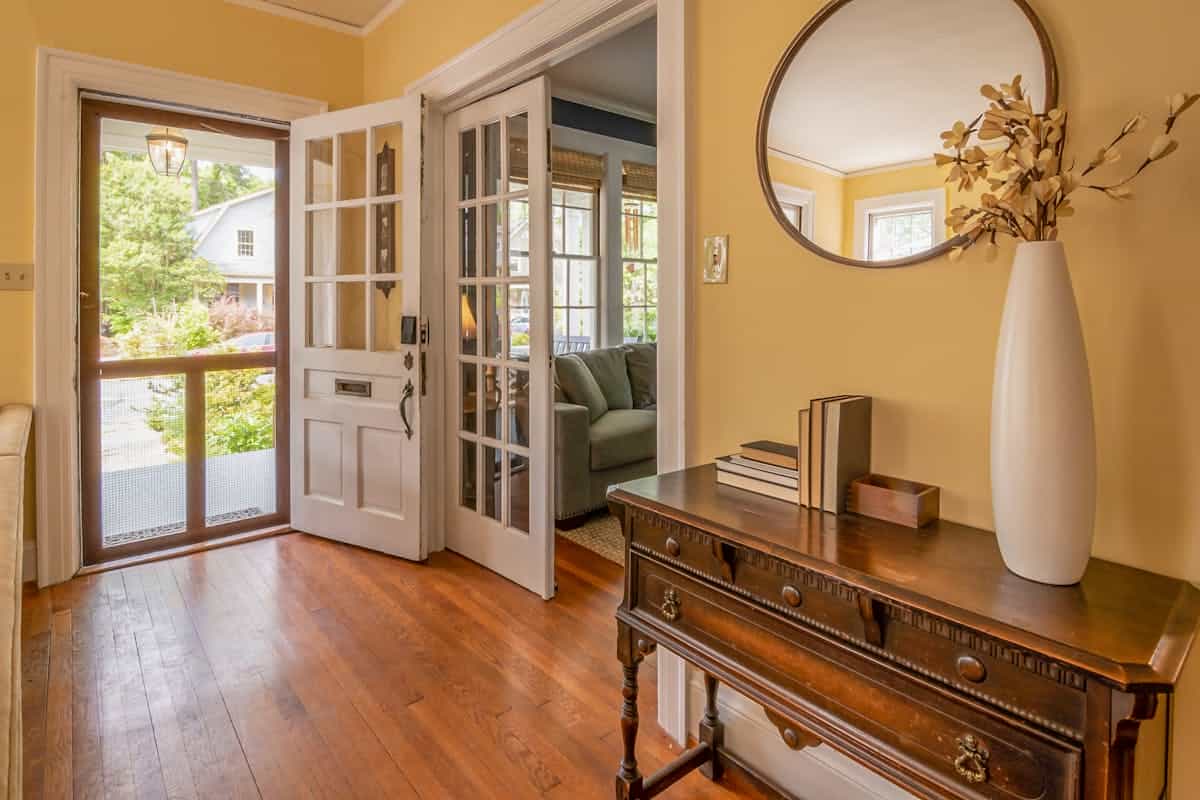
The entryway — on the side wall, not facing the door
The entryway is described in Feng Shui as the "mouth of Chi." A mirror here expands a narrow entrance and invites energy inward. The essential feng shui mirror entryway rule: place the mirror on a side wall perpendicular to the door. A mirror directly facing the entrance reflects incoming energy back out — covered in the next section.
At the end of a narrow hallway
Long corridors are described as spaces where Chi moves too fast to benefit the rooms on either side. A mirror at the end of a hallway feng shui practitioners recommend slows that flow — the mirror bounces energy back so it spreads through the space rather than exiting. If the hallway leads directly to a bedroom door, use a side-wall mirror instead to avoid reflecting the sleeping area.
The home office — the commanding position
If your desk puts your back to the door, a small mirror positioned to show the door's reflection places you in the commanding position — the psychologically secure orientation of being able to see who enters without turning. The mirror in office feng shui guides consistently recommend this as a low-cost adjustment that reduces the chronic low-level vigilance of working with your back to movement. The mechanism is practical regardless of cosmological framework.
The north or east wall
In Bagua mapping, north governs career and east governs health and family. Mirrors on these walls activate those zones. The south wall, associated with fire energy, is generally considered less suitable — mirrors in that location are thought to dampen the sector's energy rather than amplify it.
A note on feng shui mirror over fireplace rules: placing a mirror above a fireplace reflects the fire element back into the room, considered warming and activating. The caution: the mirror should reflect the room itself rather than a blank wall — doubling emptiness is not an improvement.
Where Feng Shui Says Never to Put a Mirror
Facing the bed — the rule with independent support
This is the most consistent restriction across every Feng Shui school, and the one worth acting on even if you hold no cosmological beliefs. The classical explanation: during sleep the soul leaves the body, and seeing its own reflection, the soul becomes startled and restless. That is a metaphysical claim.
The independent explanation involves the Troxler Effect: when you gaze at a fixed point in dim light, the surrounding visual field begins to blur and shift. A bedroom mirror reflecting your face as you drift toward sleep can activate this response — a low-grade visual disturbance that keeps the nervous system aroused rather than settling into deep rest. This has been reproduced in controlled conditions. The practical fix: position bedroom mirrors on a wall that does not face the bed, or cover them at night.
Directly facing the front door
A mirror opposite the entrance reflects incoming Chi straight back out. In Feng Shui terms: energy enters and immediately exits without circulating through the home. The practical reading: a mirror facing you at the moment of entry creates a visual stop, reducing the sense of depth and invitation that a well-designed entrance should cultivate. Side-wall placement avoids both concerns.
Reflecting the toilet
Bathrooms are described as areas where energy drains. A mirror reflecting the toilet is thought to double the draining effect. The practical dimension: bathroom mirrors positioned to reflect the toilet also create uncomfortable sightlines. Place bathroom mirrors to reflect the sink and face rather than the toilet.
Two mirrors facing each other
Two mirrors set opposite each other create an infinite corridor of reflections with no visual endpoint. Feng Shui practitioners describe feng shui mirrors facing each other as producing chaotic, bouncing Chi — associated with mental restlessness and an inability to settle. The sensory effect is real regardless of framework: perpetual visual depth with no resolution is genuinely disorienting in a room where people spend significant time. Avoid placing mirrors directly opposite each other in any occupied space.
What a Mirror Facing a Window Actually Means in Feng Shui
The mirror facing window spiritual meaning question comes up constantly, and the honest answer is more nuanced than most guides admit.
In classical Feng Shui mirror facing window guidance, the placement is treated contextually — not as an absolute prohibition or an absolute recommendation:
When it is considered beneficial: If the window faces a pleasant natural view — trees, water, open sky, a garden — a mirror opposite that window draws the living energy further into the interior. You are doubling what is desirable. Most Form School practitioners consider this auspicious.
When it is considered problematic: If the window faces a harsh environment — heavy traffic, sharp architectural angles from a neighbouring building, a dead tree, a narrow dark passage — the mirror doubles and amplifies the negative rather than the positive. The same mechanism works in both directions.
The spiritual reading across traditions beyond Feng Shui is consistent with this logic. The mirror facing a window is a conduit. What it reflects is what it amplifies. That principle — before placing a mirror opposite a window, check what the window actually shows — is more useful than any categorical rule about window-facing mirrors.
The mirror location feng shui guidance on windows also depends on the room. In a bedroom, even a window with a lovely view may not justify a facing mirror, because the bedroom mirror prohibition (sleep disruption via Troxler Effect) typically outweighs the benefit of the view. In a living room or dining room, a facing mirror for a pleasant view is generally encouraged.
The Octagon Bagua Mirror — What It Is and Where It Actually Goes
The octagon mirror Feng Shui question has one clear answer that online content frequently handles poorly: the Bagua mirror belongs outside the home, not inside.
The octagonal Bagua mirror features the eight trigrams of the I Ching arranged around a central reflective disc. It is a protective tool designed specifically for exterior use — to deflect "poison arrows," which in Feng Shui refers to sharp corners of neighboring buildings, roads that point directly at the home, or hostile architectural features that concentrate aggressive energy toward the entrance.
Positioned above the front door on the exterior wall, the Bagua mirror deflects external energy. Positioned inside the home, the same deflective force is directed at the occupants rather than at external threats. Classical texts are consistent on this point: the Bagua mirror is not interior decoration. Its function is deflection, not amplification.
For interior use, flat standard mirrors placed according to room-specific guidance are appropriate. The Bagua mirror is a specialised exterior tool.
What to Do When You Cannot Move a Mirror
Mirrored wardrobe doors, built-in bathroom mirrors, and fixtures in rented spaces often cannot be relocated. Three adjustments practitioners commonly recommend:
Cover at night. A cloth or decorative screen over a bedroom mirror that faces the bed eliminates the Troxler Effect concern while you sleep. Simple, reversible, effective.
Angle rather than cover. A freestanding mirror can be tilted so it reflects the ceiling rather than the bed or the door. The reflection shows a neutral surface rather than a person or an entrance.
Break the reflection with greenery. A healthy plant placed in front of a problematic mirror interrupts the reflection at floor level, reducing the clarity of whatever the mirror is doubling. Feng Shui practitioners also note that living plants introduce their own positive energy into the space, regardless of the mirror.
When Mirrors Were Rare Enough to Place Deliberately
Here is context that changes how you read these rules.
The classical texts that contemporary Feng Shui with mirrors guidance draws from were written in an era when a household mirror was not a bathroom fixture or a wardrobe door. It was a significant object. Clear, flat, accurate mirrors were a luxury unavailable to ordinary people until the 19th century. Before that, polished metal gave a rough, imperfect image, and still water gave less than that. A household mirror was an acquisition worth deliberating over — in both China and Europe at the same period, mirrors were expensive enough that their placement genuinely determined what those objects amplified day after day.
In that context, asking "where should this mirror go?" had more weight than the same question today. The rules were developed for a world where you owned one or two mirrors, not twelve. Translating them to a world of bathroom fixtures and mirrored wardrobe doors requires some adjustment — but the underlying principle (check what a mirror doubles before placing it) is worth keeping.
| Placement | Feng Shui guidance | Type of claim |
|---|---|---|
| Dining room reflecting the table | Recommended — doubles abundance | Cosmological belief |
| Entryway side wall | Recommended — welcomes Chi | Cosmological belief |
| End of narrow hallway | Recommended — slows fast Chi | Cosmological belief |
| Facing the bed | Strongly avoided | Cosmological + psychological (Troxler Effect) |
| Directly facing the front door | Avoided — reflects Chi back out | Cosmological belief |
| Facing a pleasant window view | Beneficial — doubles positive energy | Cosmological belief |
| Facing a harsh window view | Avoided — doubles negative energy | Cosmological belief |
| Two mirrors opposite each other | Avoided — chaotic bouncing Chi | Cosmological + sensory design |
| Bagua mirror inside the home | Never — deflects toward occupants | Classical Feng Shui principle |
The single most useful Feng Shui mirror rule — if you follow only one — is the bedroom one. It rests on a psychological mechanism that holds regardless of your position on Qi. The rest are principles from a coherent traditional framework that takes spatial arrangement seriously. Whether you use the whole framework or just the parts that have independent grounding is a choice the rules themselves cannot make for you.
The mirror you can see from your bed is the one worth dealing with first.
For related mirror placement traditions, compare Feng Shui mirror guidance with Hindu Vastu mirror rules, ancient Egyptian mirror ritual, and the broader world survey of mirror symbolism.
Mirror FAQ
What is the best place to hang a mirror according to Feng Shui?
The dining room is the single most recommended location for a mirror in classical Feng Shui — a large mirror that reflects the dining table is considered a wealth cure, symbolically doubling the resources and family gathered there. After that, the entryway side wall (never facing the front door directly) and the north or east wall in any room are considered auspicious. Where to hang a mirror in Feng Shui ultimately depends on what the mirror reflects: the general principle is that it should double something positive — natural light, greenery, the dining table, or a pleasant view — not an entrance, a toilet, or a blank wall.
What does a mirror facing a window mean spiritually and in Feng Shui?
A mirror facing a window is treated contextually in Feng Shui, not as an absolute rule in either direction. If the window faces a pleasant natural view — trees, water, open sky — the facing mirror is considered beneficial, drawing that living energy deeper into the interior. If the window faces a harsh or chaotic environment — heavy traffic, sharp architectural angles, a dead tree — the mirror amplifies that negative rather than positive energy. The broader spiritual reading across traditions is consistent: the mirror facing a window is a conduit, not a source. What it reflects is what it amplifies. That principle is more useful than any blanket rule about windows.
Is a mirror at the end of a hallway good or bad Feng Shui?
In most Feng Shui schools, a mirror at the end of a hallway is considered beneficial. Long, narrow corridors are described as spaces where Chi moves too fast to benefit the rooms along the way — the mirror at the far end bounces energy back, slowing it and encouraging it to spread. The exception: if the hallway leads directly to a bedroom door, some practitioners advise a side-wall mirror instead, to avoid reflecting the sleeping area. A side-wall mirror in a long hallway avoids both concerns.
What is the octagon Bagua mirror and where should it be placed?
The Bagua mirror is an octagonal mirror featuring the eight trigrams of the I Ching arranged around a central reflective disc. It is a protective tool specifically designed for exterior use — meant to deflect "poison arrows" (sharp corners of neighboring buildings, roads aimed at the home, harsh architectural features). Classical Feng Shui texts are clear: the Bagua mirror belongs outside the home, above the front door or on an exterior wall. Used indoors, its deflective force is directed at the people living in the home rather than at external threats. For interior use, standard flat mirrors placed according to room-by-room guidance are appropriate.
What do two mirrors facing each other mean in Feng Shui?
Two mirrors facing each other — creating an infinite corridor of reflections — are considered highly disruptive. Feng Shui practitioners describe this arrangement as producing chaotic, bouncing Chi with no anchor point, associated with mental restlessness and agitation. Outside the Feng Shui framework, the visual experience of infinite depth with no resolution is genuinely disorienting in a living space — a real effect regardless of the cosmological explanation. The consistent advice across schools: avoid placing mirrors on directly opposite walls in any room where people spend significant time.
What are the Feng Shui rules for mirrors in the bedroom?
The core rule is that mirrors should not directly face the bed. Classical Feng Shui holds that the sleeping soul becomes startled by its own reflection, leading to disturbed rest. Separately from the metaphysical explanation, the Troxler Effect provides an independent reason: staring at a stationary reflection in dim light causes peripheral features to shift and distort, producing a low-grade visual stress that prevents deep sleep. A mirror reflecting the bed as you fall asleep can trigger this response. The practical fix: position bedroom mirrors on a side wall that does not reflect the bed, or cover them at night with a cloth or screen.