Black Mirror Scrying: A 7-Step Beginner Guide to Safe Practice
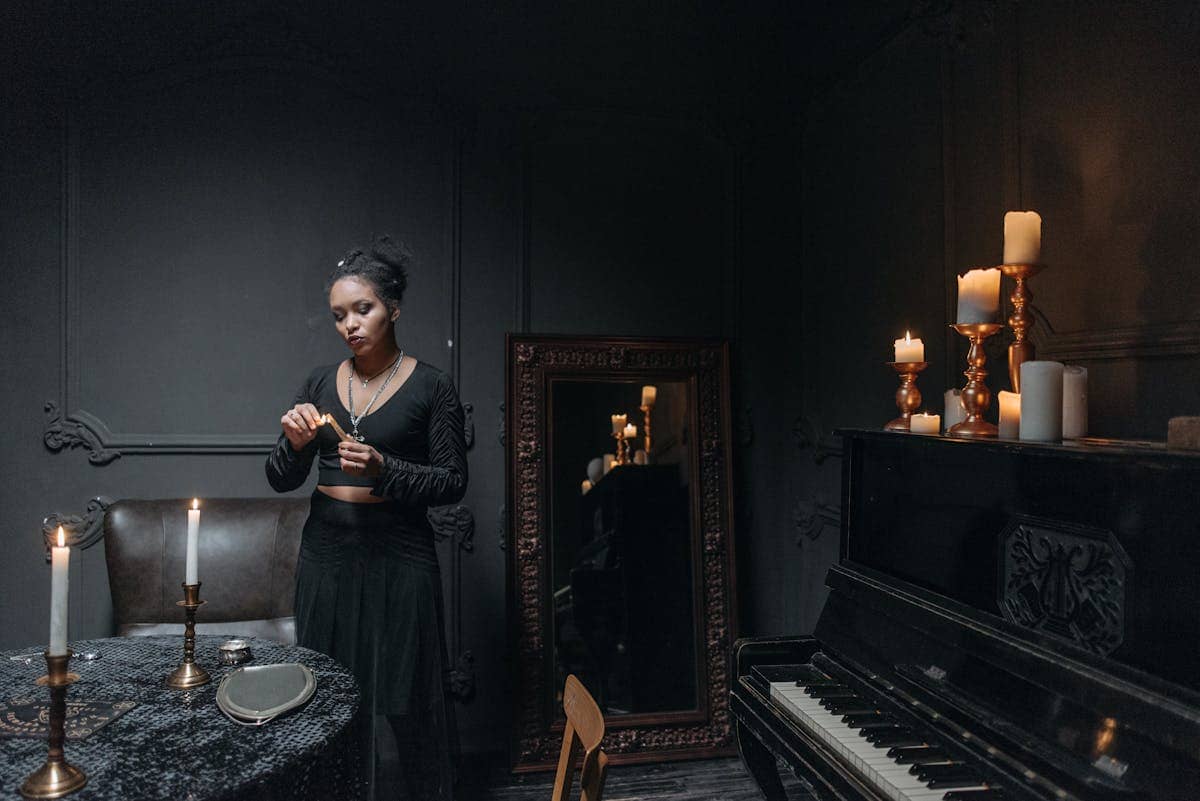
Black mirror scrying is a form of divination that uses a dark, non-reflective surface as a focal point for meditation and intuitive insight. To do it: dim the room to a single candle, prop your mirror at arm's length, soften your gaze until the surface blurs slightly, breathe slowly, and watch without forcing anything. Most beginners see mist or gentle movement within the first few sessions; clear imagery comes with practice over weeks. This guide covers the full 7-step method, the history, the psychology of why it works, and how to practise safely.
Scrying sounds more complicated than it is. The word just means "seeing" — and the dark mirror is a tool that helps the mind settle into a quieter, more receptive state than everyday attention allows. People have done this for thousands of years across cultures that never met, and the core method has barely changed: find a dark surface, soften your attention, and notice what arises.
If you are new to it, here is a method you can repeat, honest expectations for what to experience, and enough history and psychology to understand why the dark surface does what it does.
What Is Black Mirror Scrying?
Black mirror scrying is divination by gazing into a dark, reflective surface until impressions arise. Those impressions might be visual — shapes, colours, faces, symbols, brief scenes — or felt: a sudden knowing, an emotional shift, a word that surfaces without being deliberately thought.

The mirror is a support, not a source. It holds your attention on a single, unchanging field long enough for the mind to drop out of ordinary verbal thinking into something quieter and more associative. What happens in that state — whether you frame it as intuition, altered consciousness, or contact with something beyond the self — is a matter of your own beliefs. The technique itself works regardless of how you interpret what arises.
People use it for several purposes: divination (questions about direction or timing), inner work (noticing symbolic material that surfaces as imagery), creative insight (letting non-verbal impressions emerge), and spiritual practice (contact with ancestors or guides, or contemplative prayer). The honest framing here matters: this is a learnable skill, not a guaranteed window into the future.
What Does a Black Mirror Mean Spiritually?
A black mirror is not a mirror in the everyday sense. It does not show your reflection — it absorbs light rather than returning it, and that absence is the entire point.
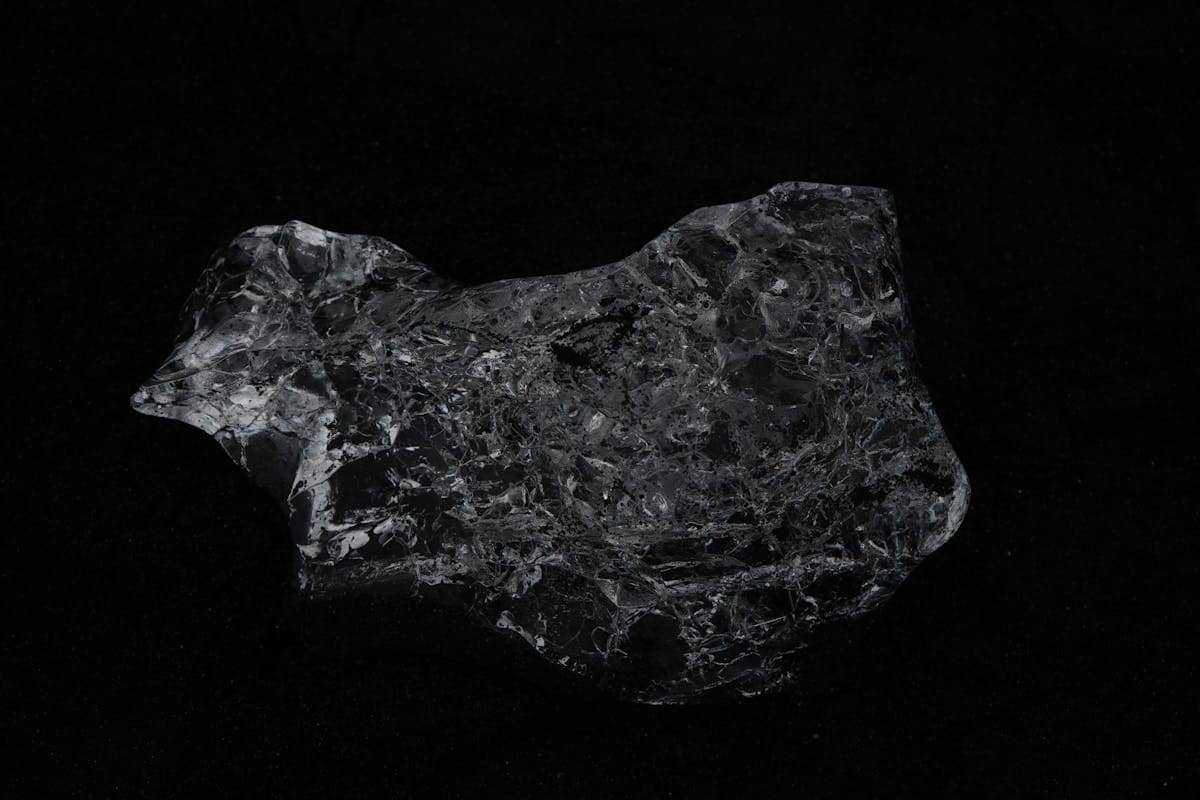
An ordinary mirror serves the ego: it shows your face, your appearance in the world. A black mirror is designed to bypass that layer. By removing the constant feedback of "this is what you look like," it creates a perceptual void — and in that void, practitioners report, other kinds of perception become possible. In metaphysical traditions the black mirror aligns with the element of water and the direction of the West: water as the unconscious, emotion, and the receptive capacity of the spirit.
The symbolism rests on three ideas. The void — in esoteric thought, darkness is not evil but the condition of potential, the formless ground from which everything emerges before it takes form. The shadow — in Carl Jung's sense, the disowned parts of the self that the dark surface can surface for integration. And mystery — the acknowledgement that some truths are intuited rather than analysed. Sitting with a black mirror is, in a culture that demands instant data, an act of deliberate patience with the unknown.
Black Mirror vs. Regular Mirror: Why the Darkness Matters
The difference is not decorative. It is functional, and it explains why folk rituals that use ordinary mirrors can go wrong.
| Quality | Regular Mirror | Black Mirror |
|---|---|---|
| Reflectivity | High — returns a clear physical image | Low — absorbs light, minimises reflection |
| Energy direction | Projects outward — bounces energy back | Absorbs inward — draws energy into the surface |
| Divination | Unprepared portal; harder to defocus | Consecrated tool; intentional, controlled access |
| Psychological function | Reinforces physical identity and ego | Bypasses ego to access subconscious material |
The practical implication: using a regular mirror for scrying — as in the Bloody Mary ritual — is using a bright, unprepared surface with no intentional filter on what the loosened perceptual state allows in. That is part of why those casual rituals occasionally produce genuinely unsettling experiences. The dark surface, by contrast, gives your eyes almost nothing to grip, which is exactly the condition the technique needs.
A Brief History: Tezcatlipoca, John Dee, and the Grimoires
This is not a modern internet trend. Dark reflective surfaces appear in scrying traditions across Egyptian, Greek, Celtic, and Mesoamerican cultures — and the cross-cultural convergence is worth taking seriously. When civilisations that never met independently reach for a dark, still surface to seek vision, the practice is closer to a human universal than a local invention.

The most thoroughly documented ancient tradition belongs to Mesoamerica. The Aztecs prized obsidian, and their central deity of the dark mirror was Tezcatlipoca — his name literally translates to "Smoking Mirror." He was no minor figure but one of the supreme creator deities, god of the night sky, sorcery, and destiny, with a black obsidian mirror in place of one foot. Priests used polished obsidian discs for prophecy and divine communication, treating the smoky, shifting surface as the deity's presence made perceptible.
The most documented European case belongs to Dr John Dee, mathematician and astrologer to Elizabeth I, who worked with the seer Edward Kelley from the 1580s. Over years of sessions they produced the Enochian system — an angelic language with its own grammar and alphabet — received entirely through scrying. Here is the specific detail worth holding onto: Dee's mirror, a disc of polished obsidian believed to have come from Mexico after the Spanish conquest, still exists, catalogued today in the collection of the British Museum. The later Hermetic Order of the Golden Dawn — whose members included W.B. Yeats — formalised black mirror work into structured ceremonial practice. That entanglement with suppressed occult tradition is why black mirrors carry a heavier reputation than crystal balls — not because the practice is darker, but because its recorded European history sat alongside everything the authorities of the day wanted to suppress.
The Science: Why a Dark Surface Produces Visions
Most guides skip this, and that is a mistake — understanding the mechanism makes you a better practitioner, whatever you believe about the larger questions. Here is what is actually happening when you gaze softly into a black mirror in a dim room.
The Ganzfeld effect. Given a uniform, featureless field — a dark surface with little variation — the visual system begins to "fill in" with internally generated content. Documented in perceptual psychology since the 1930s and studied in parapsychology from the 1970s, Ganzfeld conditions reliably produce hallucination-like imagery in ordinary, non-clinical participants. A dark mirror in a dim room creates a partial Ganzfeld condition: just enough uniformity to suppress visual processing without eliminating it.
Pareidolia. The brain is powerfully wired to find patterns — especially faces — in ambiguous visual noise. The face-recognition system errs on the side of false positives, because missing a real face was historically more costly than seeing one that was not there. In the dim, faintly reflective surface, the small variations in the glass and the play of candlelight give that system just enough raw material to start producing figures and shapes.
Alpha-wave states. Soft, unfocused gazing shifts brainwave activity from busy beta toward slower alpha waves — the relaxed, associative band linked to daydreaming, creative insight, and the hypnagogic edge of sleep. That is the state where intuitive material surfaces, the kind of answer that arrives in the shower rather than at the desk. The scrying posture is, in effect, a reliable technique for inducing it.
None of this explains away the experience or settles the deeper questions. What it does is confirm that the visual impressions produced during sustained scrying are neurologically real — not imagined, not fabricated, not simple suggestion. The mirror is not magic. It is a tool that creates the conditions for the mind to do something real it cannot easily do in ordinary waking attention. What that something is — insight, intuition, symbolism, contact — you decide.
How to Choose or Make Your Black Mirror
The surface you work with matters more than most beginner guides admit. A flimsy plastic disc or a scratched phone screen creates a different quality of attention than a weighted object with presence. Treat this as a long-term tool.
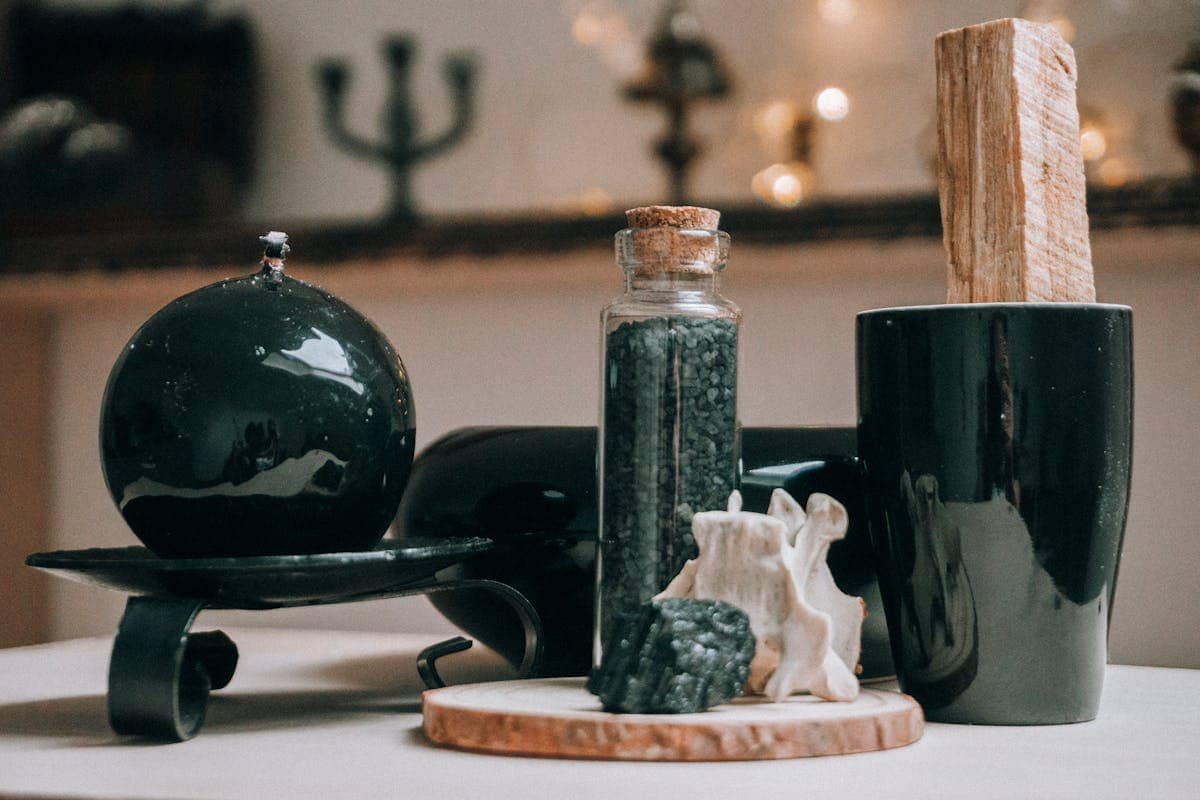
If you are buying, the common options are flat black glass (a frame backed in matte black), convex black glass (a slight distortion that some find relaxes the eyes faster), and polished obsidian — the historically authentic, denser, costlier choice, with natural surface variation no two pieces share. Shungite and cannel coal (the material of Dee's own mirror) are also used. Choose something at least 15–20 cm across: large enough to hold attention, small enough to position comfortably.
Making your own is inexpensive and gives you a relationship with the object from its creation:
- Take a sturdy picture frame with glass — round or oval is traditional. Remove and clean the glass until streak-free; let it dry.
- Apply two to three even coats of matte black paint to the back of the glass only, letting each coat dry fully.
- Hold it to the light to confirm the paint is fully opaque — thin patches make distracting light spots.
- Replace the glass in the frame, painted side away from you. Seal the backing.
The result reflects faintly from the front — enough to be a focal surface, not enough to show a clear reflection of the room. That is exactly what you want.
Cleansing and Consecrating Your Mirror
A new mirror — bought or made — may carry impressions from handling, manufacturing, or shipping. Cleansing clears that; consecration sets purpose. Neither needs elaborate ritual. What matters is intention.

To cleanse, choose what fits your practice: pass the mirror through smoke (frankincense, sandalwood, mugwort, or sage); leave it under moonlight overnight (a waning or dark moon to release and reset); or wipe it with lightly salted water, avoiding the frame and backing. For a deep reset after heavy work, some practitioners wrap and bury it in soil for 24 hours.
To consecrate, hold the mirror in both hands and state your purpose aloud — for example, "I dedicate this mirror as a tool for honest insight and inner clarity." Place a candle before it (white for clarity, black for protection) and hold your intention steadily for a few minutes. Then cover the mirror with a dark cloth between sessions to keep it from passively gathering impressions. Repeat a brief, thirty-second cleansing before each session: it trains the mind that what follows is deliberate, bounded work — not casual staring.
The Black Mirror Scrying Method: 7 Steps
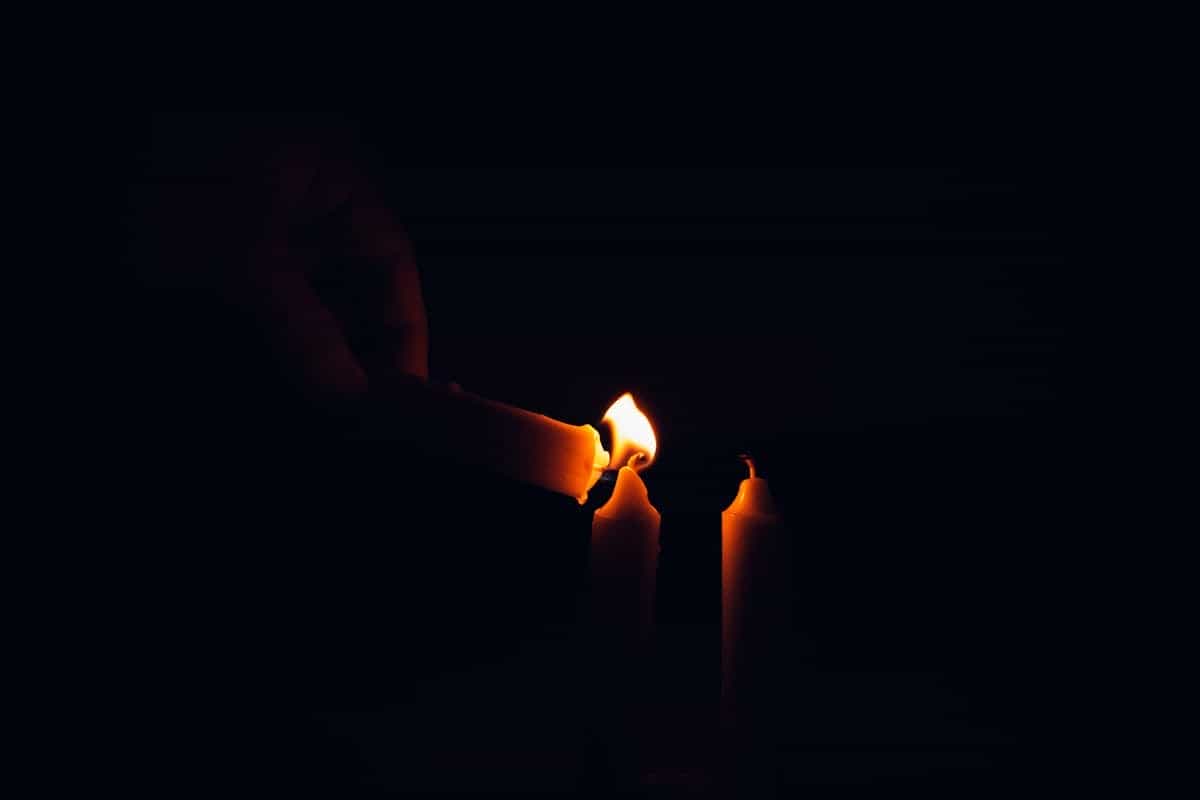
Scrying rewards patience and repetition more than intensity. One focused fifteen-minute session a week develops the skill faster than one dramatic two-hour attempt a month. Set up first: a quiet room, notifications silenced, a single candle placed behind or to one side so its flame does not reflect directly in the glass, and the mirror propped at roughly arm's length, tilted so you see a dark void rather than your face.
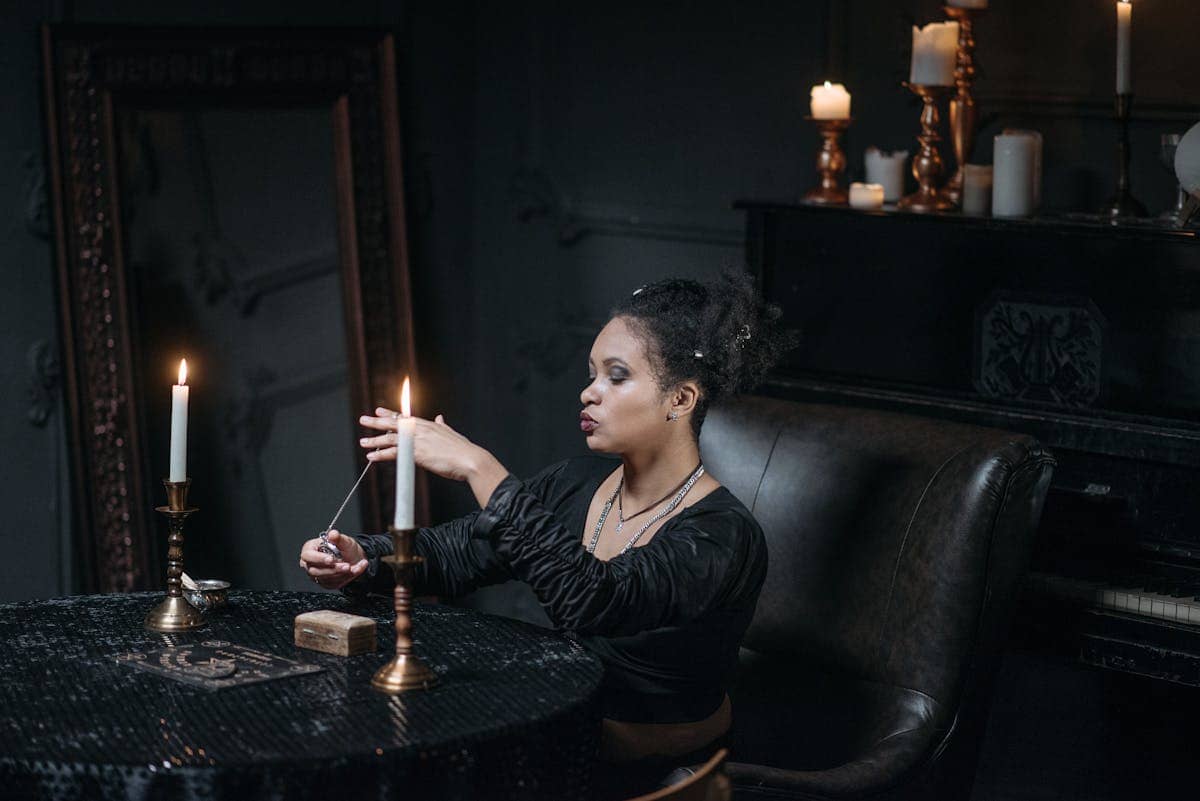
- Ground yourself. Take three to five slow breaths and feel your weight settle into the floor or chair. If you use a circle or protective prayer, do it now.
- Set your intention. Hold the mirror briefly and name your purpose, silently or aloud. A specific question — "I seek clarity on…" — produces more pointed material than open-ended gazing, which tends to invite anxiety rather than vision.
- Soften your gaze. Look through the glass into the middle distance, not at the surface. Let your eyes relax. Tension in the eyes is the most common beginner error — it produces headaches, not visions.
- Observe the clouding. Within a few minutes many practitioners notice the surface seems to mist or deepen into a velvety quality, sometimes called the speculum. Do not reach for it; let it develop.
- Receive what comes. Shapes, colours, faces, or symbols may appear. The instruction is receive, not look for — actively hunting creates the wrong posture. When attention wanders, return gently to the dark field.
- Stay for the duration. Fifteen minutes minimum. The material often surfaces in the last third, after the mind has genuinely quieted.
- Close deliberately. Pass your palm across the glass, state that the session is complete and any presences are thanked and released, notice the room, extinguish the candle safely, and cover the mirror. A verbal close — "the gate is closed" — is a boundary-setting act, not a magic formula, and it works because it orients you toward completion.
What You Will Actually See

Honest expectations save beginners from quitting too soon. In weeks 1–2, the surface may simply look dark and still — impatience is the main feature, and a subtle shimmer is the foundation being laid. In weeks 3–6, the misting becomes consistent and flashes of colour or brief geometry appear. From week 6, partial faces, charged symbols, and short scenes that feel received rather than constructed begin to arrive. The single most useful calibration: flashes and impressions before full scenes, and consistency across many sessions over one dramatic night. Imagery is almost always symbolic — a skull reads as an ending more than a death — so the question is never "what does this mean in a dictionary?" but "what does this mean to me, given what I came to ask?" Record everything immediately afterward; impressions fade like dreams within minutes.
Protection and Shadow Work With a Black Mirror
Two other uses deserve naming, because they are where the practice turns from divination into something more personal.
Protection. Because a black mirror absorbs light, folk and witchcraft traditions treat it as a "catch basin" for energy rather than a projector. Placed near an entrance — facing the door rather than reflecting back toward it — it is believed to draw hostile intention into the dark surface instead of letting it settle in the space. A protective mirror is a working tool, not a permanent fixture: signs it needs cleansing include a feeling of heaviness, a dull or clouded look despite being physically clean, or restless sleep in the room. For the wider cross-cultural picture, see how mirrors have been used for protection against the evil eye.
Shadow work. What begins as divination often becomes an encounter with the self. In the Jungian reading, the menacing figure that appears at the edge of the glass is usually not an external entity but a projection of the shadow — a disowned part of you asking to be acknowledged. The experienced instruction is not to flee it but to observe it calmly: what are you, what do you represent, what do you need? These orient your attention so the emotional information can surface. What integration produces, in both the psychological and spiritual readings, is less unconscious fear driving reactive behaviour. The mirror as a spiritual tool guide goes deeper into these contemplative practices.
Beginner Mistakes and Safety
A few errors account for most early frustration — and a few cautions keep the practice grounded.

- Forcing visions. Squinting and leaning in produces eye strain and nothing else. Receptivity is the skill; effort is its enemy.
- Skipping the close. Walking away without a deliberate close leaves the transition abrupt and sometimes unsettling. Even thirty seconds matters.
- Not journaling. Without notes you lose most of the material within minutes, and the patterns that only appear across sessions stay invisible.
- Expecting too much too soon. This is a skill built through repetition. Twenty quiet minutes twice a week for three months beats two intense sessions and a shrug.
On safety: do not scry when emotionally destabilised, sleep-deprived, or intoxicated — the loosened filters that help a grounded practitioner will amplify an unstable state. If you sit demanding a specific answer, your unconscious will obligingly supply it; that is confirmation bias with a mystical aesthetic, not revelation. Black mirror scrying is never a substitute for professional support: if something is overwhelming, persistent, or interferes with daily life, the next step is a qualified therapist, not another session. If imagery turns frightening mid-session, break eye contact, cover the mirror, turn up the lights, and rinse your hands in cold water.
Mirrors as divination tools sit in the oldest layers of human spiritual practice — the obsidian disc in John Dee's study, the polished surfaces of Aztec priests, the dark bowls of the Greek oracles. All rest on the same recognition: a dark, still surface does something to human attention that ordinary conditions do not. What you make of that is yours to decide. The method is real, the history is long, and the skill is genuinely learnable. Start short, keep your journal close, and cover the mirror when you are done. To explore the symbolic side further, the spiritual meaning of mirrors in dreams and the broken mirror meaning across cultures are worth reading alongside this guide.
The information in this article is intended for cultural, historical, and spiritual educational purposes. Scrying and related practices are not substitutes for professional psychological, medical, or mental health support.
Frequently Asked Questions
Does black mirror scrying actually work?
Black mirror scrying works as a disciplined meditative practice. The dark surface acts as a focal point that encourages a soft, defocused gaze. Over time, this activates natural brain processes such as pareidolia, the Ganzfeld effect, and alpha-wave states, producing real visual and intuitive impressions. Whether you interpret these psychologically or spiritually is your own choice. The skill is real and learnable with consistent practice.
What should I see when scrying in a black mirror?
Beginners most commonly see mist or a clouding of the surface, followed by flashes of colour, geometric shapes, or indistinct faces. Brief symbols or partial scenes come with more practice. Many experienced practitioners describe a felt knowing or intuitive impression alongside the visual. Expecting a cinematic scene on the first attempt sets you up for disappointment. Subtle impressions are normal and meaningful.
What does a black mirror mean spiritually?
Spiritually, a black mirror represents the threshold between the conscious and subconscious mind, the material world and the spirit realm, and the ego and the shadow self. It is associated with the element of water and the direction of the West, and is used for divination, protection, ancestral contact, and shadow work. It symbolises the void — the formless space of potential from which vision and intuition arise.
Can I use a phone screen as a black mirror for scrying?
You can use a phone screen turned off in a dim room as an improvised black mirror, since the reflective surface functions similarly. However, most practitioners find dedicated mirrors more effective because a phone carries associations with distraction and notification anxiety that work against the focused, receptive state scrying requires. A purpose-made tool helps train the mind into ritual mode faster.
How long should a black mirror scrying session last?
Beginners should keep sessions to 15 to 20 minutes. Longer sessions tend to produce eye strain and mental fatigue rather than better results. As your ability to hold a soft, receptive gaze improves over weeks of practice, sessions can naturally extend to 30 or 40 minutes. Always close the session intentionally, regardless of length.
How do I make my own black mirror for scrying?
Take a picture frame with glass (round or oval is traditional), remove and clean the glass, then apply two to three even coats of matte black paint to the back of the glass only. Let each coat dry fully, confirm the paint is fully opaque against the light, and replace the glass in the frame with the painted side facing away from you. The unpainted front becomes your scrying surface — faintly reflective, not clear.
Is black mirror scrying safe?
Black mirror scrying is generally safe when practised with clear intention and proper grounding. Risks arise when you scry while emotionally unstable, intoxicated, or sleep-deprived, or without any closing practice. If strong fear, panic, or intrusive imagery arises, stop the session, cover the mirror, and ground yourself. Most unsettling imagery is symbolic, not literal — treat it as internal material to interpret calmly later, and seek a therapist if it is overwhelming.
Are black mirrors evil?
No. A black mirror is a neutral tool, no more malevolent than a sharp knife. Its effect is shaped by the intention of the practitioner. When used with respect, clear purpose, and proper grounding, it is an instrument of clarity and protection, not a source of harm.
What is the difference between a black mirror and a regular mirror for scrying?
A regular silvered mirror reflects bright, detailed images of the room, which makes defocusing and entering a receptive state much harder. A black mirror absorbs most ambient light and presents a dark, void-like surface, giving the eyes almost nothing specific to grip onto. That emptiness is exactly the condition required for the soft gaze and mental quieting that scrying depends on.