Black Mirror Spiritual Meaning: Ancient Symbolism, Scrying and Protection
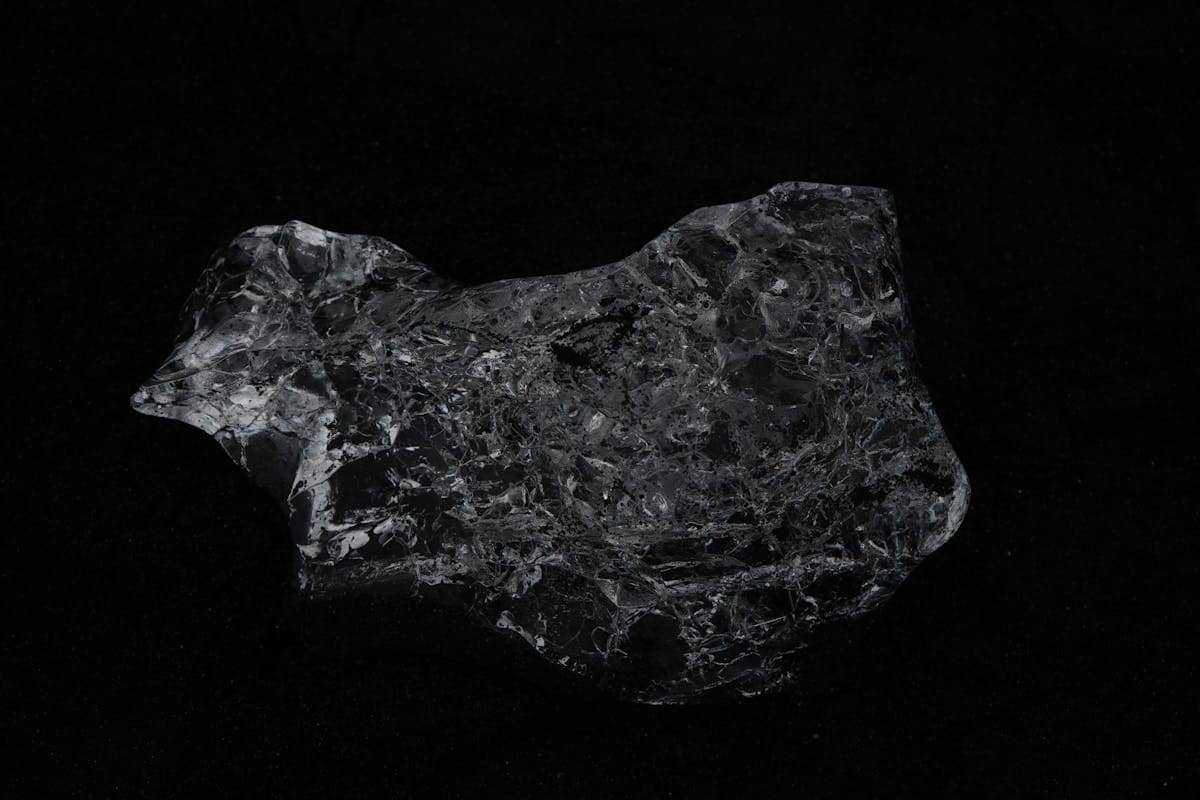
A black mirror is not a mirror in the conventional sense. It does not show your reflection. It absorbs light rather than returning it, which is precisely why it has been used for thousands of years by Aztec priests, Renaissance occultists, Taoist practitioners, and modern witches for the same purpose: to see what ordinary sight cannot reach. Spiritually, a black mirror represents a portal between the conscious and subconscious mind, a tool for divination through scrying, a shield against hostile energy, and a surface for shadow work — the deliberate confrontation with the parts of yourself you have not yet integrated.
Most articles on this subject either treat the black mirror as an esoteric curiosity or as a shopping category. This guide does neither. It covers the genuine history, the spiritual meaning in depth, the step-by-step practice of scrying, and something few treatments of this subject address honestly: the neuroscience of why sitting before a dark surface in a dim room actually produces visions — and what that tells us about the practice.
What Is a Black Mirror? Definition and Spiritual Meaning

In the most literal sense, a black mirror is any dark, non-transparent reflective surface used for spiritual, divinatory, or protective purposes. The surface is typically made from polished obsidian, black glass, or darkened stone — materials chosen because they absorb rather than bounce back light. Where a standard mirror returns a clear image of what stands before it, a black mirror offers near-darkness. That darkness is the point.
Spiritually, the black mirror operates on a different principle than the mirrors we use every morning. An ordinary mirror serves the ego. It shows you your physical self, your face, your appearance in the world. A black mirror is designed to bypass that layer. By removing the constant visual feedback of "this is what you look like," the black mirror creates a perceptual void — and in that void, practitioners report, other kinds of perception become possible.
In metaphysical traditions, this is described as the mirror aligning with the element of water and the direction of the West. Water represents the unconscious, emotion, and the receptive capacity of the spirit. The black mirror is considered a "catch basin" for subtle information — visions, symbolic imagery, messages from guides or ancestors, and impressions from the deeper self.
The spiritual meaning of the black mirror can be understood through three distinct functions, each of which has its own deep history:
As a portal for divination (scrying): The mirror creates the conditions for a trance-like state in which the brain's rational filters loosen and allow images to surface. This is used for seeking guidance, answers to specific questions, or contact with non-ordinary intelligence.
As a tool for protection: Black mirrors absorb hostile energy rather than reflecting it. Placed strategically — near an entryway, or used in a dedicated protective ritual — a black mirror is believed to act as a spiritual shield, drawing negative intentions into the dark surface and neutralizing them.
As a surface for shadow work: In the Jungian sense, the shadow is everything about yourself that you have denied, repressed, or refused to acknowledge. A black mirror, through prolonged gazing, can surface these denied aspects — not always comfortably, but with the potential for genuine psychological integration.
These three functions are not separate. They arise from the same quality: the black mirror's ability to show what the ordinary eye passes over.
Black Mirror Symbolism: The Void, the Shadow, and Hidden Truth
To understand why the black mirror has been revered across cultures, it is necessary to understand what darkness represents in serious spiritual thought — which is not what popular culture has made of it.
In Western folklore, darkness became synonymous with evil through centuries of theological conditioning. But in the esoteric and mystical traditions that produced the black mirror, darkness carries a different meaning: it is the condition of potential. Before anything exists, there is darkness. Before a thought takes form, it is darkness. The universe was born from what creation mythology calls "the void" — the formless, unmanifest ground from which everything emerges.
The black mirror represents this void. When you gaze into it, you are not looking at something dark and threatening. You are looking into the space of pure possibility — the reservoir from which all vision, intuition, and perception arises before it reaches the conscious mind.
The Shadow Self
The most psychologically loaded dimension of black mirror symbolism is its connection to what Carl Jung called the shadow — the parts of the personality we have rejected, suppressed, or denied. The shadow is not evil. It is simply unintegrated. It contains repressed desires, unacknowledged fears, dormant capacities, and buried memories that the ego found too uncomfortable to hold.
In folk and occult tradition, gazing into a dark mirror was associated with encountering frightening or disturbing figures. In the Jungian framework, this makes obvious sense: the figures that appear in the black surface are not external entities but internal ones — the disowned parts of the self, given form by the loosened perceptual state.
This is why genuine practitioners treat encounters with disturbing imagery in the black mirror not as evidence of malevolent intrusion, but as an invitation. The image that frightens is often the one that carries the most useful information.
Mystery and the Limits of Knowing
The third dimension of black mirror symbolism is one the modern world finds genuinely uncomfortable: the acknowledgment that not everything can be seen, explained, or verified. The black mirror is a symbol of patience with mystery. It does not offer immediate answers. It offers glimpses. It teaches that some truths must be intuited rather than analyzed.
In a culture that demands data and clarity, working with a black mirror is an act of deliberate counter-conditioning — a practice of sitting with the unknown, waiting, and developing trust in forms of knowing that cannot be reproduced on demand.
The Ancient History of Black Mirrors Across Cultures
The use of dark reflective surfaces for spiritual vision appears independently across civilizations that had no contact with each other. This cross-cultural convergence is worth taking seriously. It suggests that the intuition underlying the practice — that a dark, still surface opens access to non-ordinary perception — is not a cultural invention but something closer to a human universal.
The Aztecs and Tezcatlipoca
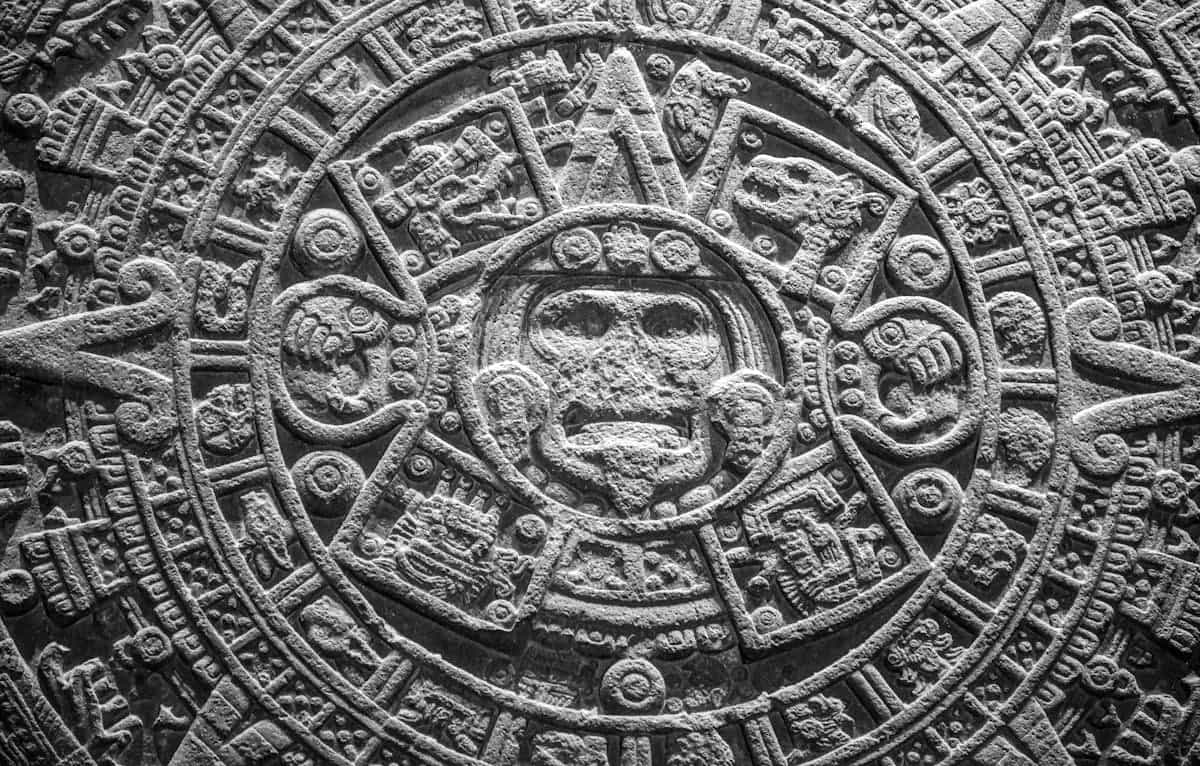
The most thoroughly documented ancient tradition of black mirror use belongs to Mesoamerica. The Aztecs prized obsidian — itztli in Nahuatl — for its sharpness and its ceremonial significance. Among their sacred objects were polished black obsidian mirrors used exclusively by priests for divination, spiritual rites, and communication with the gods.
The central deity of the black mirror was Tezcatlipoca, whose name translates to "Smoking Mirror." Tezcatlipoca was not a minor figure. He was one of the supreme creator deities of the Aztec pantheon — god of the night sky, sorcery, destiny, memory, and conflict. His defining attribute was the black obsidian mirror that replaced his foot, reportedly lost in the act of creation. Through this mirror, the Aztec priests believed, Tezcatlipoca could see all that transpired in the world and communicate his judgments to those capable of receiving them.
The obsidian mirrors used in these rituals were not passive objects. They were treated as living instruments — stored in specific conditions, handled only by initiated priests, and activated through elaborate ceremonial protocols. The smoky, shifting quality of the obsidian surface was not seen as a visual artifact. It was interpreted as the deity's presence making itself perceptible.
John Dee and the European Tradition
In 16th-century England, John Dee — mathematician, astronomer, and court advisor to Queen Elizabeth I — used a black mirror as the primary instrument of his most significant work. Dee's mirror was not made of obsidian but of polished cannel coal, a shiny black stone. It came to him through his associate Edward Kelley, who claimed to have received it from an angel.
What Dee and Kelley accomplished with the mirror is historically remarkable regardless of how one interprets its spiritual dimension. Over years of sessions, they produced the Enochian language — a detailed angelic communication system with its own grammar, vocabulary, and alphabet, received entirely through scrying. Dee considered the mirror a sacred tool of the highest order: a direct communication channel to celestial intelligence. His mirror now rests in the British Museum.
The Golden Dawn — the influential occult order of the late 19th century, whose members included Aleister Crowley, W.B. Yeats, and Arthur Machen — formalized the use of black mirrors within a structured ceremonial practice. They developed specific protocols for consecration, session timing aligned with planetary hours, and structured techniques for interpreting received visions.
Egypt, China, and the Celtic World
The same intuition appears elsewhere. In ancient Egypt, priests used bowls of black water and polished dark stone discs as reflective surfaces in temple divination. In Taoist China, bronze mirrors lacquered black on the back were used to ward off malevolent spirits and receive visions. In the Celtic world, the tradition of scrying by firelight in still, dark water was practiced by seers known as váteis among the Gauls and völur in Norse tradition — both using dark, still, reflective surfaces as their medium.
The universality of this practice across cultures that never interacted is itself a significant fact. Scrying as a formal category of divination encompasses all of these traditions.
The Science and Psychology Behind Why Scrying Works
Most guides to black mirror scrying describe the practice in purely spiritual terms and leave out an important dimension: there are neurological and psychological mechanisms that explain why prolonged gazing into a dark surface in low light reliably produces unusual visual experiences. Understanding these mechanisms does not diminish the practice. It makes it easier to work with effectively.
Alpha Wave States and the Meditative Threshold
When you fix your gaze on a uniform, low-stimulus surface — a dark mirror, a blank wall, an overcast sky — and hold it there without blinking frequently or shifting your focus, the brain's visual processing load drops dramatically. With less visual information to process, the dominant brainwave frequency shifts from the busy beta waves of ordinary waking attention toward alpha waves: the slower, wider waves associated with relaxed alertness, meditation, and the edge of sleep.
Alpha wave states are the entry point to the hypnagogic zone — the territory between waking and dreaming where the brain generates spontaneous imagery without the constraints of sensory reality. This is the state scrying practitioners are trying to access. The black mirror is, in effect, a technology for inducing it reliably.
The Ganzfeld Effect
A related phenomenon is the Ganzfeld effect, studied in parapsychology since the 1970s. When the visual field is uniformly and completely occluded — for example, by placing halved ping-pong balls over the eyes under a red light — many subjects begin to experience spontaneous visual hallucinations within minutes. The brain, deprived of meaningful sensory input, begins generating its own visual content from internal sources.
A dark mirror in a dim room creates a partial Ganzfeld condition. The surface provides just enough uniformity to suppress visual processing without eliminating it entirely. This partial suppression appears to be the ideal condition for the emergence of internally generated imagery.
Pareidolia and the Face-Recognition System
The third mechanism is pareidolia — the brain's tendency to find meaningful patterns, especially faces, in ambiguous or low-information visual fields. The brain's face-recognition system (centred in the fusiform face area) is one of the oldest and most sensitive detection systems in human neurology. It is wired to err on the side of false positives: it is safer to see a face in a shadow that is not a face than to miss a face in a shadow that is.
In the low-information field of a dark mirror, this system fires on its own pattern-recognition history, producing faces, figures, and scenes that the conscious mind then interprets. Whether the content of these images is purely generated by the unconscious, or whether it can also carry information from non-ordinary sources, is a question that the neuroscience alone cannot resolve.
What the neuroscience does confirm is that the visual experiences produced during genuine, sustained black mirror gazing are neurologically real — not imagined, not fabricated, not the result of simple suggestion. They arise from actual changes in brain state.
How to Use a Black Mirror: A Step-by-Step Scrying Guide

The practice of scrying with a black mirror is not complicated to begin. It does require patience, consistent practice, and a willingness to sit with the unfamiliar. Here is how it is done.
Setting Up the Space
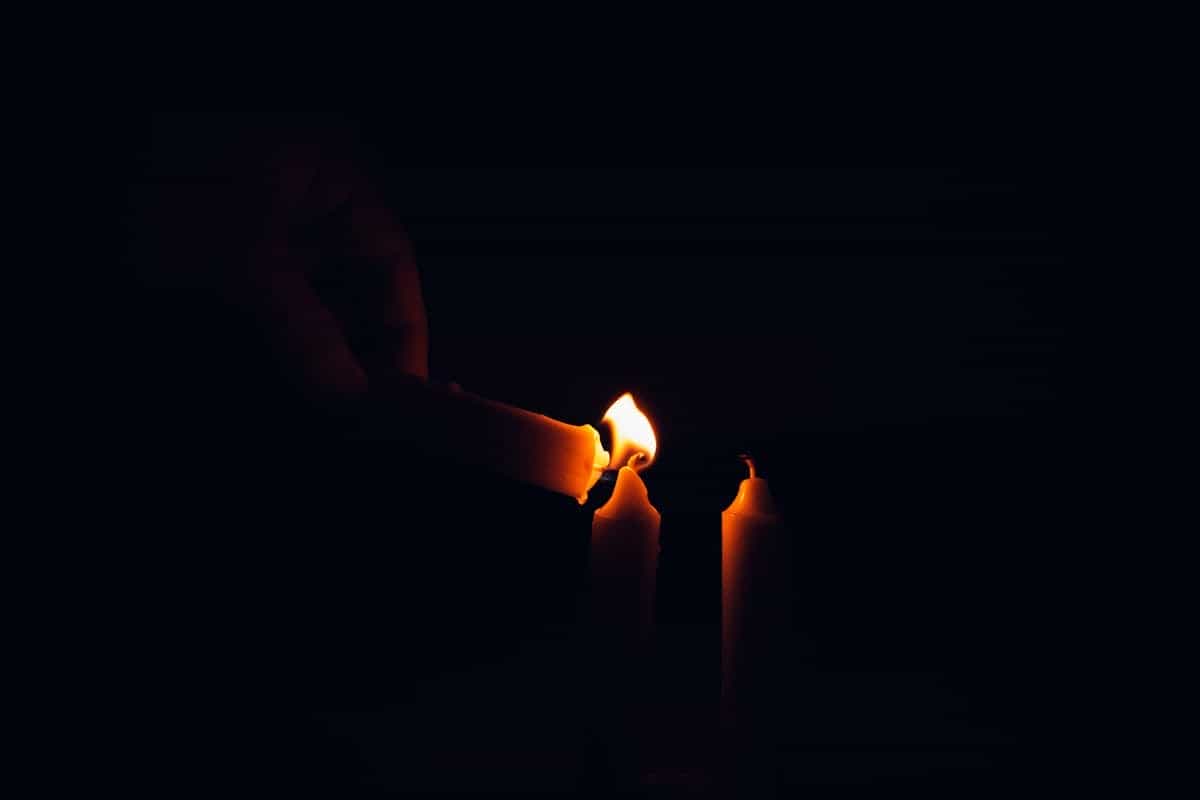
Choose a room where you will not be disturbed for at least 30 minutes. The lighting should be dim but not completely dark — candlelight placed slightly behind and to the side of you is traditional. The candle should not reflect directly off the mirror's surface. Many practitioners place the mirror on a black cloth to absorb any ambient reflections.
Silence is preferable, though some practitioners use slow instrumental music or ambient sound. Incense — particularly frankincense, sandalwood, or mugwort — is used by many traditions to mark the transition from ordinary space to sacred work.
The Session
1. Grounding: Before beginning, sit with your eyes closed and take several slow, deep breaths. Feel the weight of your body against the surface beneath you. The purpose of grounding is to be fully present before you begin opening any kind of perceptual space.
2. Setting intention: Hold the mirror briefly in your hands and state your purpose clearly — silently or aloud. Your intention acts as a filter. A clear, specific intention prevents the kind of open-ended, anxious gazing that tends to produce fear rather than vision. Something as simple as "I seek clarity on [specific question]" or "I open to receive what is true and useful" is sufficient.
3. Softening the gaze: Begin looking into the mirror. The key instruction, consistently given across traditions, is to look through the mirror rather than at it. You are not examining the surface. You are using it as a focal point to let the background fade. Let your eyes go slightly out of focus. Do not blink aggressively or stare with effort.
4. Waiting: Most practitioners report that the first sign of activation is the appearance of a shifting mist or the darkening of the surface into an almost velvety quality. This is the alpha wave state beginning to establish itself. Do not interpret this as failure or success — simply continue.
5. Receiving: Images, symbols, faces, or scenes may emerge. They can be subtle — a suggestion of a figure, a flash of color, a geometric shape — or vivid. Do not grasp at them or try to force them into immediate meaning. Let them pass through your awareness like a slow river. Your task is to observe, not to analyze in real time.
Session length: Beginners should keep sessions to 10–15 minutes. Longer sessions can produce fatigue or a dissociative quality that is unpleasant and counterproductive. Regularity matters far more than duration.
Interpreting What You See
After the session, cover the mirror and record everything you saw immediately — in writing or in spoken notes. The images and symbols of scrying are personal. There is no universal code. A snake means one thing to a person raised in one tradition and something entirely different to another. Over time, through consistent recording and reflection, your personal symbolic vocabulary will become clear.
What scrying does not produce reliably is literal, specific prediction. The images are almost always symbolic and require interpretation. Practitioners who approach the mirror demanding a clear answer to a concrete question often end up either seeing nothing or seeing what their own anxiety projects. The practice rewards the open hand, not the clenched fist.
Using a Black Mirror for Spiritual Protection

The protective dimension of the black mirror is distinct from the scrying practice and has its own history. In folk magic and witchcraft traditions, mirrors are understood as "catch basins" for energy. A standard mirror can inadvertently trap and circulate negative energy in a home because it projects energy outward — bouncing hostile intentions back and forth rather than neutralizing them.
A black mirror operates differently. Because it absorbs light, it also absorbs energy. This makes it useful for protection in two ways.
Passive protection: A black mirror placed near an entrance to the home — particularly one facing the front door, rather than reflecting back toward it — is believed to absorb hostile intentions, ill-will, or psychic attacks before they can settle into the space. It is not redirecting the negative energy at its source. It is drawing it into the void.
Active return-to-sender work: In some traditions, practitioners deliberately program a black mirror to absorb a specific hostile energy and transmute it — returning it neutralized, or returning the energetic consequences to their source. This type of working requires clear intention-setting and specific ritual protocols depending on tradition.
Psychic self-defence: A visualization practice used by many energy workers involves imagining a black mirror surrounding the aura. The mental image creates a psychological and energetic boundary: inward-facing so that you can still receive and perceive, outward-facing so that hostile projections are absorbed at the perimeter rather than reaching your core.
For a full treatment of how mirrors have historically been used for protection against the evil eye across different cultures, that is covered in a dedicated guide.
When Protection Mirrors Need Cleansing
A black mirror used for protection is a working tool, not a permanent installation. It accumulates what it absorbs. Signs that a protective black mirror needs cleansing include a feeling of heaviness when near it, the mirror appearing dull or clouded despite being physically clean, or an increase in unsettling dreams or fatigue in the room where it is placed.
How to Cleanse and Activate Your Black Mirror
A black mirror, like any spiritual tool, requires regular maintenance. The cleansing clears accumulated energy. The activation aligns the mirror with your intention and establishes what might be called your psychic signature within the object.
Cleansing Methods
Smoke: Pass the mirror through the smoke of frankincense, sandalwood, or mugwort. These are traditionally associated with divination, purification, and psychic opening. The smoke permeates the energetic field of the object and carries residual energy away.
Moonlight: Place the mirror under a waning moon to release accumulated negative energy, or under a new (dark) moon to reset it to a neutral state. Avoid sustained direct sunlight — it is believed to energetically bleach the mirror's receptive quality.
Salt water: Wipe the surface carefully with lightly salted water. Avoid submerging the mirror if it has a wooden frame or delicate backing. Salt is one of the oldest purifying agents in folk magic across every tradition.
Earth burial: For a deep cleanse after intense work, wrap the mirror in cloth and bury it in soil for 24 hours. The earth absorbs residual energy naturally and is particularly effective for mirrors that have been used in heavy protective or banishing work.
Activation Ritual
After cleansing, hold the mirror in both hands. State your intention clearly. Traditional phrases include something along these lines: "This mirror is a sacred tool. It is aligned with my highest good. It reveals truth and shields from harm." The phrasing matters less than the clarity and sincerity with which it is stated.
Place a candle in front of the mirror — black for a protection focus, white for a clarity and vision focus — and let the light reflect softly off the surface while you hold your intention steadily for several minutes. Some practitioners anoint the back of the mirror with a drop of mugwort oil or frankincense oil to seal the working.
Finally, cover the mirror with a black cloth when not in use. This keeps the mirror energetically dormant between sessions and prevents it from accumulating ambient impressions passively.
Shadow Work with the Black Mirror
The psychological dimension of black mirror work is the one most practitioners reach eventually, and often unexpectedly. What begins as a divination practice becomes something more personal: an encounter with the self.
Carl Jung's concept of the shadow describes the aspects of the personality that the ego has refused to accept. This is not limited to what most people think of as negative traits. The shadow can contain repressed creativity, suppressed anger, denied vulnerability, ungiven tenderness, or unacknowledged power. The shadow is everything that the ego decided was not allowed to exist in the open.
The black mirror, by loosening the ordinary filters of perception and presenting a dark, open surface to the unconscious, frequently surfaces shadow material. The figure that appears in the glass and feels menacing — the dark shape at the edge of vision — is often not an external entity. It is, in the Jungian reading, a projection of the shadow asking to be acknowledged.
Working with shadow material in the mirror involves a specific approach. When a disturbing image appears, the instruction from experienced practitioners is not to flee or dismiss it, but to observe it with calm attention. "What are you? What do you represent? What do you need from me?" These are not questions for the image to answer verbally. They are questions that orient your attention in a way that allows the emotional information carried by the image to surface.
The mirror as a spiritual tool guide covers the deeper contemplative practices around self-perception and mirror work if this psychological dimension interests you.
What integration through shadow work produces — in both the psychological and spiritual readings — is a reduction of the unconscious fear that drives defensive and reactive behaviour. What you have seen and named no longer controls you from the dark.
Safety, Grounding, and When Not to Scry
The question "are black mirrors evil?" comes up frequently. The answer is no — but it deserves a more complete response than that.
A black mirror is a tool. It is not inherently malevolent any more than a sharp knife is. What it does is open perceptual space — it creates conditions in which the ordinary filters of consciousness are loosened. That is genuinely useful in many circumstances. It is also genuinely risky in a few specific situations.
When Not to Scry
When emotionally destabilized: If you are in acute grief, panic, rage, or a dissociative state, do not open a scrying session. The loosened perceptual filters that make scrying useful for a grounded practitioner will amplify an already unstable state. The images that surface will be colored and intensified by your emotional condition.
When sleep-deprived: Extended tiredness puts the brain in a state close to the hypnagogic zone by default. Adding scrying conditions can produce vivid but essentially meaningless imagery — noise rather than signal.
When seeking a specific outcome: If you sit before the mirror wanting a particular answer, you will find it. The unconscious is remarkably accommodating to suggestion. This is not revelation. It is confirmation bias with a mystical aesthetic.
As a substitute for professional support: This needs to be stated plainly. Shadow work surfaces real psychological material. If you encounter content that is overwhelming, persistent, or that interferes with your daily functioning, the appropriate next step is support from a qualified therapist — not another scrying session.
Grounding After Sessions
After any session, take deliberate steps to return fully to ordinary awareness. Eat something. Drink water. Stand barefoot on a floor or outdoors if possible. State clearly — aloud if necessary — that the session is closed. Cover the mirror. Write your notes. The physical anchoring is not merely ceremonial. It supports the neurological transition back out of the alpha-wave state.
The most important closing protocol is the verbal one: "The gate is closed. Only that which serves my highest good remains." It is a boundary-setting act, not a magical formula, and it works precisely because it orients the practitioner's attention toward completion rather than leaving the session suspended.
Choosing the Right Black Mirror: Types and Materials
Understanding the materials that different black mirrors are made from can help practitioners choose the right tool for their specific work. Not all black mirrors are spiritually identical, even when they serve the same function.
Obsidian: The oldest and most traditionally significant material. Obsidian is volcanic glass — formed when lava cools rapidly, producing a naturally glassy, highly polished surface. It is traditionally associated with protection, grounding, the revealing of truth, and the absorption of hostile energy. Obsidian mirrors are the standard recommendation for practitioners new to black mirror work because the material has the deepest documented history and the broadest range of protective qualities.
Black glass: A modern and practical alternative. Black glass mirrors are often more affordable than obsidian, easier to produce in larger sizes, and highly consistent in surface quality. From a purely practical standpoint, they perform well for scrying. Traditionalists sometimes argue that the manufactured material lacks the natural energy of volcanic stone, but there is no consensus on this in any tradition.
Cannel coal (or shungite): John Dee's mirror was made of polished cannel coal. Shungite, a carbon-based mineral with a naturally deep black sheen, has become popular in modern practice for its reported electromagnetic protective properties. These materials carry their own energetic qualities and are favoured by practitioners whose work emphasizes ceremonial magic or communication.
Size and setting: For personal scrying sessions, a mirror of 4–8 inches is standard. Large enough to fill the visual field without requiring uncomfortable proximity. Smaller mirrors work for travel or personal carry. Larger mirrors — 10 inches and above — are used for group work and can produce more intense altered states due to the expanded uniform visual field. The setting (frame, cloth, placement) contributes to the ritual environment but is not spiritually significant in itself.
Black Mirror vs Regular Mirror: The Core Spiritual Difference
The distinction is not merely material. It is functional and intentional.
| Quality | Regular Mirror | Black Mirror |
|---|---|---|
| Reflectivity | High — returns a clear physical image | Low — absorbs light, minimizes physical reflection |
| Energy direction | Projects outward — bounces energy back | Absorbs inward — draws energy into the surface |
| Divination | Unprepared portal; can attract unintended contact | Consecrated tool; intentional, controlled access |
| Protection | Can redirect negativity chaotically | Absorbs and neutralizes hostile energy |
| Psychological function | Reinforces physical identity and ego | Bypasses ego to access subconscious material |
The practical implication is important: using a regular mirror for scrying — as in the Bloody Mary ritual or similar folk practices — is using an unprepared, unconstructed portal. The high reflectivity and lack of consecration means there is no intentional filter on what the loosened perceptual state allows in. This is one of the reasons these casual rituals occasionally produce genuinely disturbing experiences.
For a deeper treatment of how black mirror scrying works as a beginner practice, including specific beginner protocols and what to expect in the first several sessions, that guide covers the practical foundation in full.
The black mirror has survived thousands of years and dozens of entirely distinct civilizations for a reason. It works — in the sense that sitting before a dark, still surface in a dim room reliably produces altered perception, surfaces psychological material, and creates a container for spiritual inquiry that most people find genuinely productive. Whether you read the mechanism as neurological, spiritual, or both simultaneously is, in the end, a question of framework. The experience itself is consistent across frameworks.
Approach it with intention. Maintain your grounding. Keep the sessions short until you know what the practice produces in you specifically. And cover it when you are done.
The information in this article is intended for cultural, historical, and spiritual educational purposes. Scrying and related practices are not substitutes for professional psychological, medical, or mental health support.
Mirror FAQ
What does a black mirror mean spiritually?
A black mirror is a sacred portal, scrying tool, and psychic shield. Spiritually, it represents the threshold between the conscious and subconscious mind, the material world and the spirit realm, and the ego and the shadow self. It is used for divination, protection, ancestral communication, and accessing deep inner truth.
What does a black mirror symbolize?
A black mirror symbolizes the infinite void, hidden truth, the shadow self, and the mysteries of creation. It represents the space where all possibilities exist before they take physical form. Spiritually, it is a symbol of mystery, patience, and the courage to face what is unseen.
Is it safe to use a black mirror spiritually?
Yes, when used responsibly. Safety comes from setting clear intentions, performing proper grounding before and after sessions, regularly cleansing the mirror, and always closing the portal when finished. Avoid scrying when emotionally destabilized, and never use a black mirror as a substitute for mental health care.
What is a black mirror used for in witchcraft?
In witchcraft, a black mirror is used for scrying, ancestor communication, psychic protection, banishing negative energy, and shadow work. It is a staple altar tool associated with the element of water and the direction of the West.
How is a black mirror different from an obsidian mirror?
An obsidian mirror is one specific type of black mirror made from volcanic glass. All obsidian mirrors are black mirrors, but not all black mirrors are obsidian. Black mirrors can also be made of polished cannel coal, black glass, or other darkened stone. All share the same core spiritual purpose: a portal for vision and protection.
What culture used black mirrors in ancient times?
Multiple cultures used black mirrors historically. The Aztecs used polished obsidian mirrors associated with Tezcatlipoca, their god of sorcery. In European occultism, John Dee used a black stone mirror to communicate with angels. The Hermetic Order of the Golden Dawn incorporated black mirrors into advanced scrying practices. Ancient Egypt, Greece, and China also used dark reflective surfaces for divination.
How do I activate a black mirror spiritually?
To activate a black mirror, first cleanse it using moonlight, smoke, or salt water. Then consecrate it by holding the mirror and stating your intention aloud. Charge it by placing a candle before it and meditating on its purpose. Anoint the back with mugwort or frankincense oil to seal your psychic bond with the tool.
Are black mirrors evil?
No. A black mirror is a neutral tool. Its nature and effect are shaped entirely by the intention of the practitioner. When used with respect, clear purpose, and proper grounding, a black mirror is a powerful instrument of spiritual clarity and protection, not a source of harm.