Is It Bad to Sleep Facing a Mirror? Feng Shui, Folklore, and Sleep Science Explained
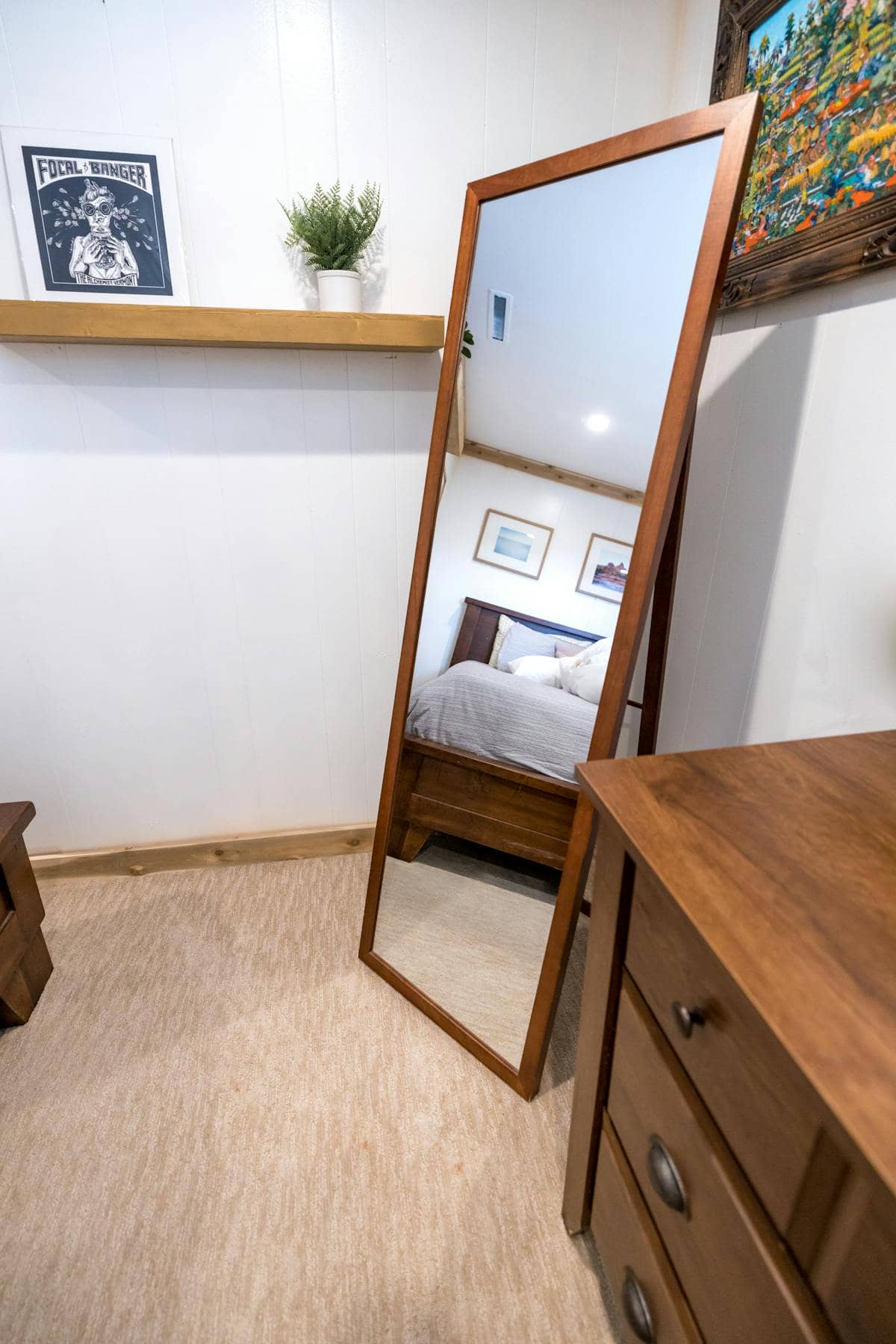
The mirror facing bed superstition is not one belief — it is three different frameworks reaching the same conclusion through different reasoning. Feng Shui says a mirror opposite the bed keeps chi too active for sleep. Vastu Shastra says it disturbs the body's energetic field during rest. Folk traditions across multiple cultures say the soul, which travels during sleep, may become confused or startled by its own reflection. Sleep psychology adds a fourth angle: a mirror in the direct line of sight gives peripheral vision something to track in the dark, producing micro-awakenings that fragment sleep without the sleeper knowing why.
If you have woken at 3 a.m. with the immediate, irrational sense that something was in the room — only to recognise your own arm in the wardrobe mirror — you have felt the most practical version of this. But the traditions that warn against sleeping facing a mirror are not primarily about startle responses. They are about something older: the idea that a bedroom with a mirror in the wrong position is not properly at rest.
What the Mirror Facing Bed Superstition Actually Claims
The mirror facing bed superstition appears independently across traditions that had no contact with each other. That is the detail worth starting with, because it tells you this is not a localised quirk of one culture's folklore — it is a pattern.
In Chinese folk tradition, a mirror opposite the bed is said to invite a "third presence" into the sleeping space — not necessarily a spirit in the dramatic sense, but an active reflective energy that the relationship between two people does not need. In Eastern European folklore, sleeping with a mirror facing you is believed to leave the soul vulnerable during the hours it travels out of the body. In parts of India, the same position is considered inauspicious in Vastu Shastra, the ancient system of spatial arrangement — not for supernatural reasons, but because of how it affects the body's energetic state during sleep.
The mirror as a portal in mythology and folklore runs through all of these frameworks. The specific claim varies: bad luck, spiritual vulnerability, disrupted relationships, poor health. But the underlying premise is the same. A mirror is not a neutral object. In a space meant for rest and recovery, a mirror actively facing the sleeper is a threshold left open when it should be closed.
Feng Shui: Why a Mirror Opposite the Bed Disrupts Rest
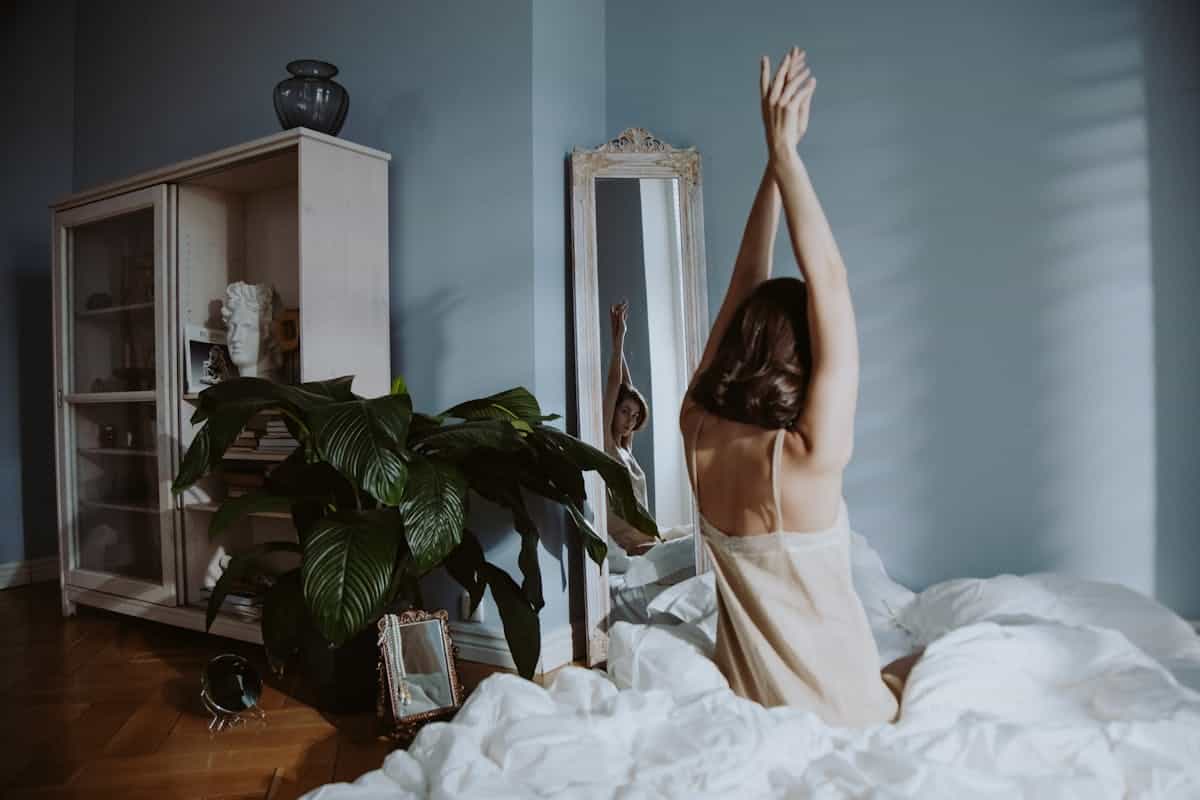
Feng Shui — the Chinese practice of arranging spaces to optimise the flow of chi, or life-force energy — has a consistent and specific position on mirrors facing the bed. It is one of the clearest prohibitions in the entire system.
The reasoning begins with what a mirror does to chi. In Feng Shui, mirrors are considered powerful energy conductors. They do not simply sit in a room — they redirect, amplify, and accelerate the movement of chi through a space. This makes them useful in dark hallways or small rooms that need energetic opening. In a bedroom, which should function as a space of slow, restorative yin energy, an active mirror opposite the bed works against the room's purpose.
The bedroom is meant to be a container — a space where energy settles and the body can repair itself during sleep. A mirror directly facing the bed creates what Feng Shui practitioners describe as a leak in that container: chi bounces back at the sleeper rather than settling around them. The nervous system, which is trying to power down into a state of deep rest, is instead being stimulated by the energetic return.
The "third person" interpretation in Feng Shui goes further. A mirror opposite the bed doubles the energetic presence in the sleeping space by reflecting the sleepers back into the room. This is described as inviting outside energy — or, in the more folkloric interpretation, third-party interference — into what should be a private, contained space. For couples, this is often cited as a relationship concern. For anyone sleeping alone, the effect is the same: an energetic presence that belongs to the world of the active, not the sleeping.
For the full Feng Shui guidance on where mirrors should and should not be placed throughout the home, the Feng Shui mirror placement rules cover this in detail. The bedroom mirror prohibition is the strongest and most consistent of all the placement rules — more specific, and more widely agreed upon across different Feng Shui schools, than almost any other mirror guideline.
Vastu Shastra: The Indian Tradition on Bedroom Mirrors
Vastu Shastra — the ancient Indian system of architecture and spatial alignment — treats mirrors in the bedroom with similar caution, though the reasoning is distinct from Feng Shui.
In Vastu, the sleeping body is understood to be in an energetically receptive state. During sleep, the body is not simply resting — it is absorbing and processing the energetic qualities of the space around it. A mirror facing the bed reflects the sleeping form back at itself, which is considered an amplification of the body's own energy field. This amplification is not seen as neutral. It is described as creating a disturbed energetic environment that interferes with the body's restorative processes.
The specific Vastu concern about "mirrors in bedroom superstition" relates to the north and east walls. Vastu guidelines generally permit mirrors on these walls, where they are considered harmonious with the directional energy flows described in the system. Placing a mirror directly opposite the bed — regardless of which wall it is on — is the position most consistently flagged as problematic. The body should not face its own amplified reflection during sleep.
Vastu Shastra is not scientific in the sense of producing testable, falsifiable predictions. But like Feng Shui, it encodes centuries of observed correlations between spatial arrangements and wellbeing. The bedroom mirror prohibition appears in both systems independently, which is worth noting.
Folklore: Why Sleeping Facing a Mirror Is Considered Spiritually Dangerous
The folklore tradition on sleeping opposite a mirror is older than both Feng Shui and Vastu, and it draws on a belief found across cultures: that the soul leaves the body during sleep.
In this framework, sleep is not unconsciousness. It is a state in which the conscious self — the soul, or whatever term a given tradition uses — travels outside the body, typically returning before waking. The sleeping body is essentially unoccupied. This makes it vulnerable in ways it is not when awake.
A mirror facing the sleeping body presents a specific risk in this framework. If the wandering soul returns to the room and encounters its own reflection, it may become startled or confused — mistaking the reflection for another presence, or becoming drawn into the glass rather than returning to the body. The result, in different versions of the belief, is either a difficult awakening, a sense of spiritual exposure, or the vague malaise that some people attribute to having "slept badly" without knowing why.
This is also why many traditions extend the mirror-facing-bed concern to questions of bad luck. The idea that it is bad luck to sleep with a mirror facing you is not strictly about supernatural punishment — it is about the cumulative effect of repeatedly disrupting the soul's nightly journey. A mirror in the wrong position is not a one-time problem; it is a nightly one.
What Sleep Science Says About Sleeping with a Mirror Facing You
The psychological and neurological explanation for why sleeping in front of a mirror disturbs sleep does not require any supernatural framework. It is rooted in how the human visual system operates during lighter sleep stages.
The mechanism is Troxler's fading, identified by Swiss physician Ignaz Paul Vital Troxler in 1804. When peripheral vision monitors an unchanging but reflective surface — a mirror — neurons begin to habituate. The image starts to shift. Your own form, partially visible in the glass, loses definition. In a dimly lit room, shadows acquire shape. A slight movement of light — a passing car, a breeze moving a curtain — can animate the reflection in a way that the brain registers as movement in the room.
The brain is evolved to detect movement during sleep. It does not fully disengage this function even in deeper sleep stages. A mirror opposite the bed gives this threat-detection system something to monitor throughout the night. The result is micro-awakenings: brief, partial surfacings from deep sleep that the sleeper rarely remembers but that accumulate into a night that feels, by morning, less restorative than it should have been.
This is the honest answer to "what happens if you sleep with a mirror facing you": most people will not notice a dramatic effect. But the cumulative disruption of peripheral tracking, combined with the periodic startle response when light moves in the mirror, does appear to affect sleep quality in ways that are consistent with what the spiritual traditions describe — just through a different mechanism.
The body image research is separately relevant here. A 2024 study found that 73.03% of participants had a negative perception of their own body image after extended periods of mirror exposure. The bedroom is meant to be the one space where the performance of daily life is suspended. A large mirror facing the bed reintroduces an audience — yourself, reflected — at the moment the body is trying to stop performing.
Is It Actually Bad Luck to Sleep with a Mirror Facing You?
The direct answer: there is no documented physical mechanism by which a mirror facing the bed produces bad luck in the fatalistic sense.
What is real is the disrupted sleep, the peripheral tracking, the Troxler distortions in low light, and the psychological effect of sustained self-awareness in a space meant for rest. If these effects accumulate — across weeks and months of fragmented sleep — the downstream consequences are real: impaired concentration, elevated cortisol, reduced emotional resilience. In that indirect sense, consistently poor sleep from any cause is a form of bad luck.
The spiritual frameworks do not claim to operate through physical mechanisms. They claim to describe energetic and spiritual dynamics that are real within their own terms. Dismissing the mirror facing bed superstition as superstition alone misses the point. The traditions are describing something — a bedroom that feels too active, a sleep that is too shallow, a persistent low-level unease in a room that should be the most restful in the house — and attributing it to a cause that their framework provides. Whether or not you accept that cause, the pattern they are describing is consistent with what the psychology also finds.
What to Do If Your Mirror Faces Your Bed
The practical guidance from Feng Shui, Vastu Shastra, and sleep-focused interior design converges on the same options:
Move the mirror to a perpendicular wall. A mirror on a wall beside the bed — rather than opposite it — opens the room without reflecting the sleeping area. This is the preferred solution in all three frameworks.
Angle the mirror away from the bed. If the mirror is on a wardrobe or closet door and cannot be relocated, tilting it so it reflects the ceiling or the floor rather than the bed eliminates the direct line of sight without removing the mirror from the room.
Cover it at night. The simplest solution with the most cross-cultural support. An opaque cloth over the mirror before sleep is recommended in Feng Shui, consistent with Vastu principles, and psychologically effective at removing the peripheral tracking stimulus. The brain is told: the detector is off.
The goal is not to remove mirrors from bedrooms entirely. It is to ensure that while sleeping, the mirror's reflective surface is not aimed at the bed. Mirrors are appropriate in bedrooms — positioned thoughtfully, they open the space, increase light, and serve their function. The concern is specifically about the mirror facing bed position during sleep.
For a broader understanding of why mirrors are considered significant in so many contexts — from bedrooms to places of grief to ritual use — mirrors at night and their effect on perception addresses the full range of traditions and their reasoning.
The Takeaway
The mirror facing bed superstition has survived across Feng Shui, Vastu Shastra, and folk traditions on multiple continents because it is describing something real — a bedroom with an active mirror opposite the bed is a bedroom that asks the sleeping mind to remain alert when it should be at rest.
Whether the mechanism is disrupted chi, a reflected soul, or peripheral vision tracking a reflective surface in the dark, the practical effect described across these traditions is consistent: shallower sleep, more vivid and unsettling dreams, a morning that feels less restorative than it should. The traditions differ in their explanations. They agree on the observation.
The mirror has not changed. What a bedroom needs has not changed either: stillness, containment, and the quiet permission to stop watching yourself.
Mirror FAQ
Is it bad to have a mirror facing your bed?
Three different frameworks say yes, for different reasons. Feng Shui holds that a mirror opposite the bed keeps chi energy too active for restful sleep. Vastu Shastra warns that a mirror reflecting the sleeping body amplifies energy in a way that disturbs rest and health. Folk traditions across cultures say the soul — believed to leave the body during sleep — may be startled or trapped by its own reflection. Sleep psychology adds that a mirror gives peripheral vision something to track in the dark, causing micro-awakenings.
What happens if you sleep with a mirror facing you?
In practice, many people report disrupted sleep, more vivid dreams, or a vague sense of unease in a bedroom where a large mirror directly faces the bed. The psychological mechanism is real: peripheral vision continues monitoring the reflective surface during light sleep stages, and any movement of light or shadow in the mirror can trigger partial awakenings. Whether the spiritual frameworks add to this effect depends on the individual's beliefs.
Is it bad luck to sleep with a mirror facing you?
In various folklore traditions, yes — though the reasoning differs by culture. In some Eastern European traditions, a mirror facing the bed while sleeping is believed to invite spirits or allow the soul to become lost. In Chinese folk belief, it can attract negative energy or third-party interference in a relationship. In Vastu Shastra, it is considered inauspicious for health. None of these are documented physical mechanisms, but the beliefs are consistent and widespread enough to be worth understanding on their own terms.
Why can't you sleep with a mirror facing you in Feng Shui?
Feng Shui holds that mirrors are energy amplifiers — they speed up and redirect the flow of chi in a room. In a bedroom, which should be a space of slow, restorative yin energy, an active mirror opposite the bed is considered a stimulant. It prevents the nervous system from settling into the quiet state needed for deep, cellular repair. The bedroom is meant to contain energy, not bounce it.
Should you sleep in front of a mirror?
Most Feng Shui practitioners, Vastu Shastra guidelines, and sleep-focused interior designers advise against it. The most straightforward fix is to move the mirror to a wall perpendicular to the bed, where it opens the room without reflecting the sleeping area. If moving it is not possible, covering it at night is a widely recommended alternative.