Mirror at Night Superstition: The Beliefs, the Rules, and the Science Behind the Fear
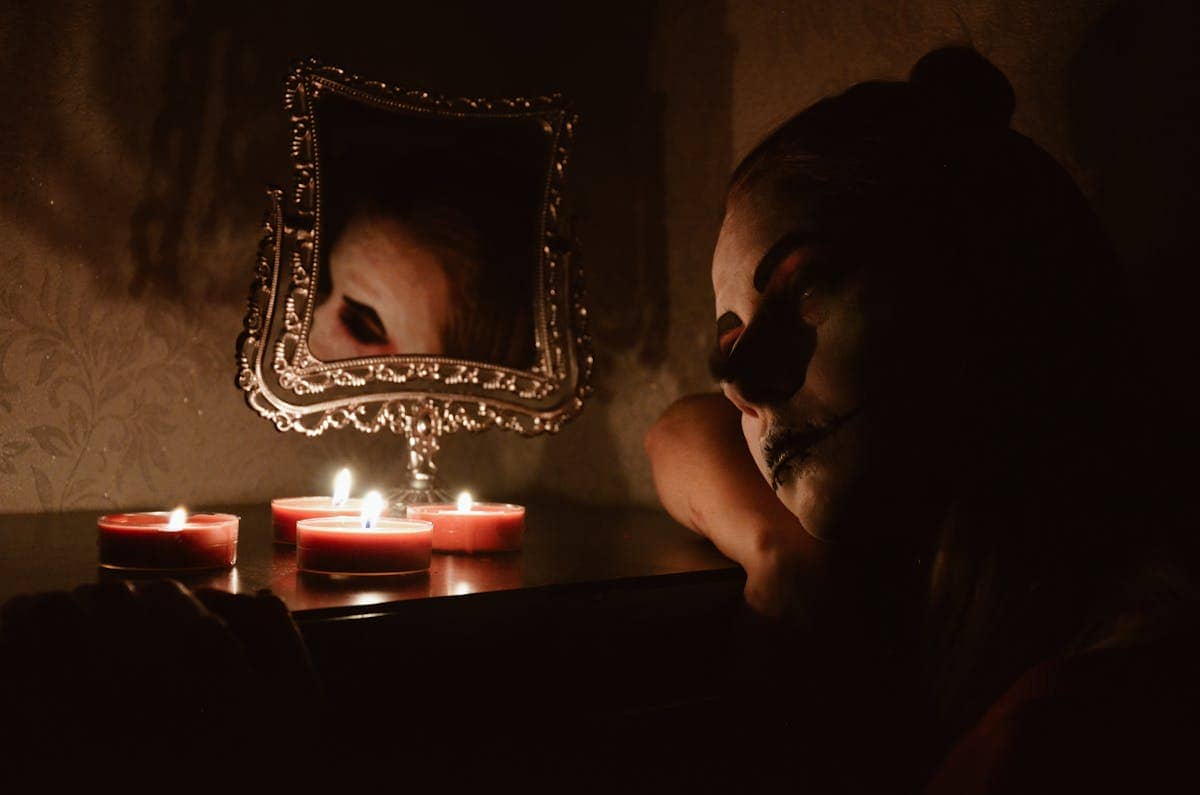
Across dozens of cultures and centuries, looking into a mirror at night has been treated as dangerous, unlucky, or spiritually risky. The specific beliefs vary — trapped souls, malevolent spirits, disturbed sleep energy, or summoned ghosts — but the pattern is consistent: mirrors behave differently after dark. There are both cultural and neurological reasons why a mirror in a dimly lit room genuinely feels different to the human brain, and understanding both sides explains why these superstitions emerged and why, centuries later, they still persist.
Before electric lighting became standard in the early 20th century, every mirror after sunset was a mirror by candlelight. The image in the glass was dim, flickering, and unreliable — a shifting version of the face that never appeared in daylight. That physical reality was the seed from which dozens of traditions grew their own distinct interpretations.
Why Mirrors Were Treated as Dangerous After Dark in the Ancient World
The earliest mirror superstitions predate glass mirrors entirely. Polished metal and still water — the first reflective surfaces — were already associated with the soul long before Venetian glassmakers produced the first clear flat mirrors in the 13th century. The reflection was understood, in many early cultures, not as an optical phenomenon but as a double: a second version of the self inhabiting the surface.
In ancient Rome, that double was thought to be part of the soul. Breaking a mirror damaged the soul, and the seven-year-bad-luck superstition followed directly: Romans believed life renewed itself every seven years, so a damaged soul would take seven years to recover. That belief spread through Europe and outlasted the empire by centuries.
Night intensified all of it. Darkness was understood as the time when the boundary between the living and the dead grew thin. A mirror positioned after sunset became a reflective surface at precisely the wrong moment — when the soul was most exposed and the world beyond the glass was most accessible.
Mirrors as Portals After Dark — The Core Belief Across Multiple Traditions
The idea that mirrors open onto another world — and that the opening widens at night — appears in traditions that had no contact with each other.
In Russian and Slavic folk tradition, it is explicitly forbidden to look into a mirror by candlelight. The belief holds that candlelight conditions allow malevolent spirits to enter through the mirror's surface. During thunderstorms, many Slavic households covered mirrors entirely — the light of lightning reflected in a mirror was thought to attract misfortune. This prohibition is specific to night and specific to fire-based light, which is notable: it maps exactly onto the conditions the Caputo strange-face research would later document as neurologically disorienting.
In certain West African and Caribbean spiritual traditions, mirrors are used deliberately as thresholds for spirit contact — not avoided but worked with intentionally. The same surface that some traditions fear, others treat as a tool. In Chinese metaphysics, mirrors are among the most energetically powerful objects in any space because they double whatever they reflect. A mirror facing the front door pushes good energy back out. A mirror facing the bed creates restless energy during sleep.
Different frameworks, one consistent structure: the mirror as a boundary object, and that boundary as more permeable after dark.
Bloody Mary and What the Caputo Effect Actually Explains

The Bloody Mary ritual — standing in a darkened room, chanting the name three times, waiting for a figure to appear in the mirror — is the most widely known nighttime mirror ritual in the English-speaking world. It is usually performed as a children's dare. The mechanism behind it, however, is documented science.
In 2010, Italian psychologist Giovanni Caputo published research on what he named the strange-face-in-the-mirror illusion. Participants stared at their own reflection in a dimly lit room for ten minutes. The majority began perceiving distorted or unfamiliar faces — faces of strangers, monstrous features, animals, historical-looking figures. The effect was consistent and reproducible across participants.
The explanation is neurological. Under low-contrast conditions, the brain's face-recognition system loses the sharp visual input it normally has and begins pattern-matching against its internal library — generating images that are not present in the actual reflection. The mirror is doing nothing unusual. The brain, deprived of clear information, starts producing its own.
Bloody Mary is a culturally encoded version of this experiment. Dim the lights, stare long enough, and something will appear. That is not evidence of a ghost. It is evidence of how the brain handles visual ambiguity under conditions of low contrast and expectation.
Covering Mirrors After a Death — Victorian Custom and the Jewish Shiva Tradition
Two traditions that approached mirror-covering after death from very different theological directions arrived at the same domestic practice.
Victorian mourning custom held that the soul of a recently deceased person might become confused and trapped in a mirror if it caught its own reflection before the body was buried. Covering all mirrors in the household for three days after a death was standard practice, particularly in England and the United States during the 19th century. The practice was intensified at night, when the soul was thought to move freely through the house.
Jewish mourning tradition — sitting shiva — also involves covering mirrors during the seven-day mourning period. The reasoning, though, is different: the concern is not trapping the soul but redirecting the mourner's attention away from physical appearance during a period meant to be devoted entirely to grief. The 11th-century Talmudic scholar Rashi connected the practice to avoiding vanity in the face of death.
Two theologically distinct frameworks producing the same object covered with the same cloth. The mirror, in both cases, becomes temporarily inappropriate — not because of what it shows, but because of what it represents at the wrong moment.
Feng Shui Rules: Why a Mirror Facing the Bed Is Discouraged
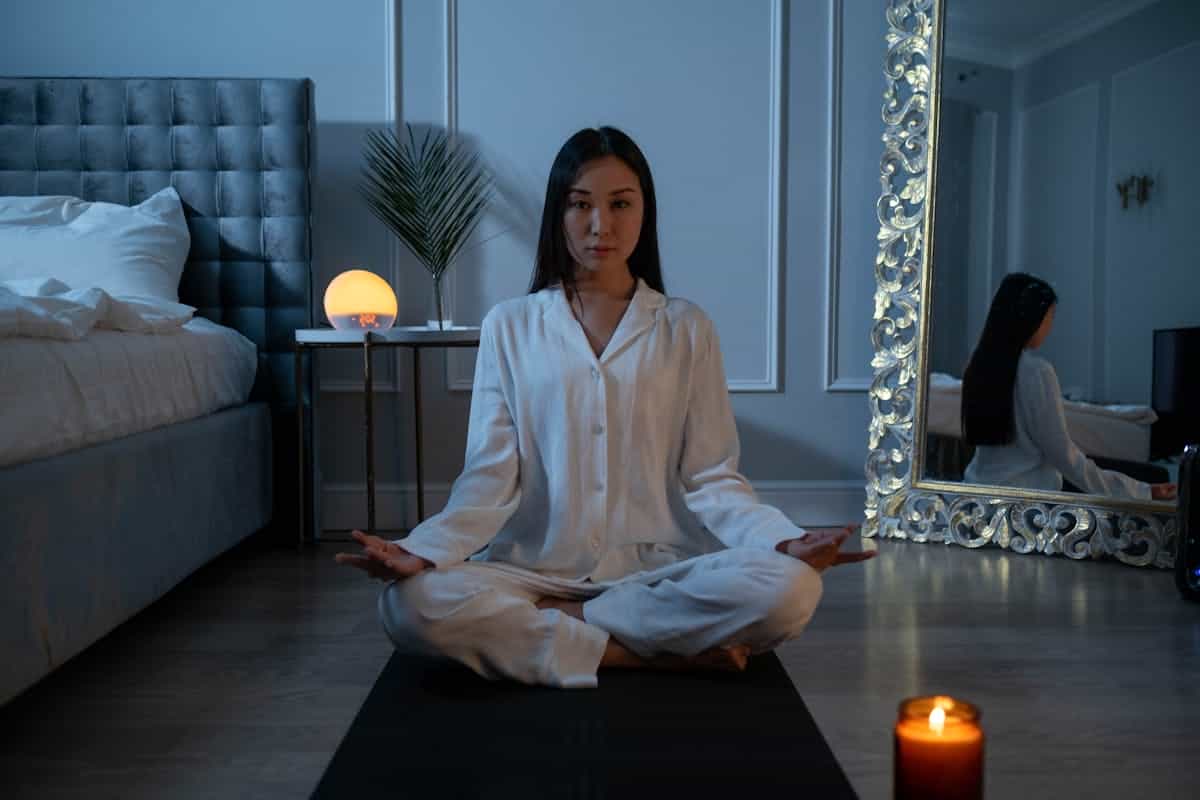
Classical Feng Shui treats mirrors as among the most powerful objects in any space because they double whatever they reflect — including energy. A mirror facing the bed is discouraged in most Feng Shui schools for two reasons.
First, during sleep the body is at its most energetically vulnerable. A mirror facing the sleeping person activates the space rather than allowing it to rest, creating an unsettled quality in what should be a restorative environment. Second, waking in the night and unexpectedly catching your reflection creates a physiological startle response — a real, documented effect — that interrupts deep sleep.
Practical Feng Shui recommendations include covering bedroom mirrors at night with cloth, repositioning free-standing mirrors so they face a wall rather than the bed, or choosing bedroom furniture that does not include large reflective surfaces. Different schools within Feng Shui vary in how strictly they apply this principle, but the core concern — that mirrors in sleeping spaces create conditions incompatible with rest — is consistent across most of them.
For a broader survey of how mirror placement and spiritual significance intersect across world traditions, the mirror superstitions encyclopedia on this site covers the full range.
The Strange-Face Illusion: What the Brain Actually Does in a Dark Mirror
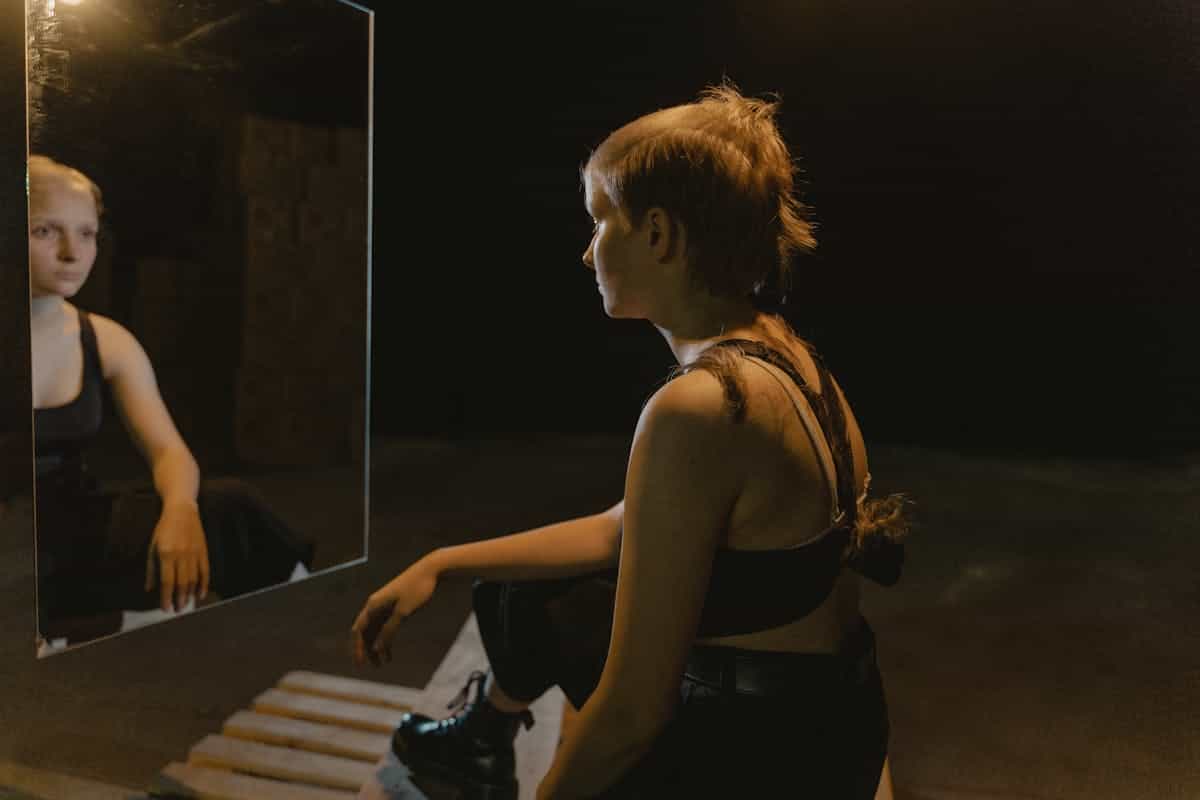
Spectrophobia — the clinical fear of mirrors — often begins with a single disturbing experience: seeing something unexpected in a mirror under low light. The Caputo research explains why this happens, but the history of the phenomenon goes back much further than any laboratory.
Before electric lighting, every person who looked into a mirror after sunset was, unintentionally, running something close to Caputo's conditions. The strange things people reported seeing were real perceptual experiences. The supernatural explanation they attached to those experiences was simply the most available framework.
This is the more interesting observation about mirror-at-night superstitions: they were not invented from nothing. They were grounded in a genuine perceptual phenomenon that people encountered regularly and had no neurological vocabulary to explain. The brain, seeing a shifting, dim version of its own face by candlelight, reported something unsettling. Culture gave that unsettling something a name — spirit, demon, double, omen — and the belief persisted across generations.
The neurological explanation does not make the experience less real. It makes it more explicable.
Catoptromancy: When Mirror-Gazing at Night Was a Practice, Not a Fear
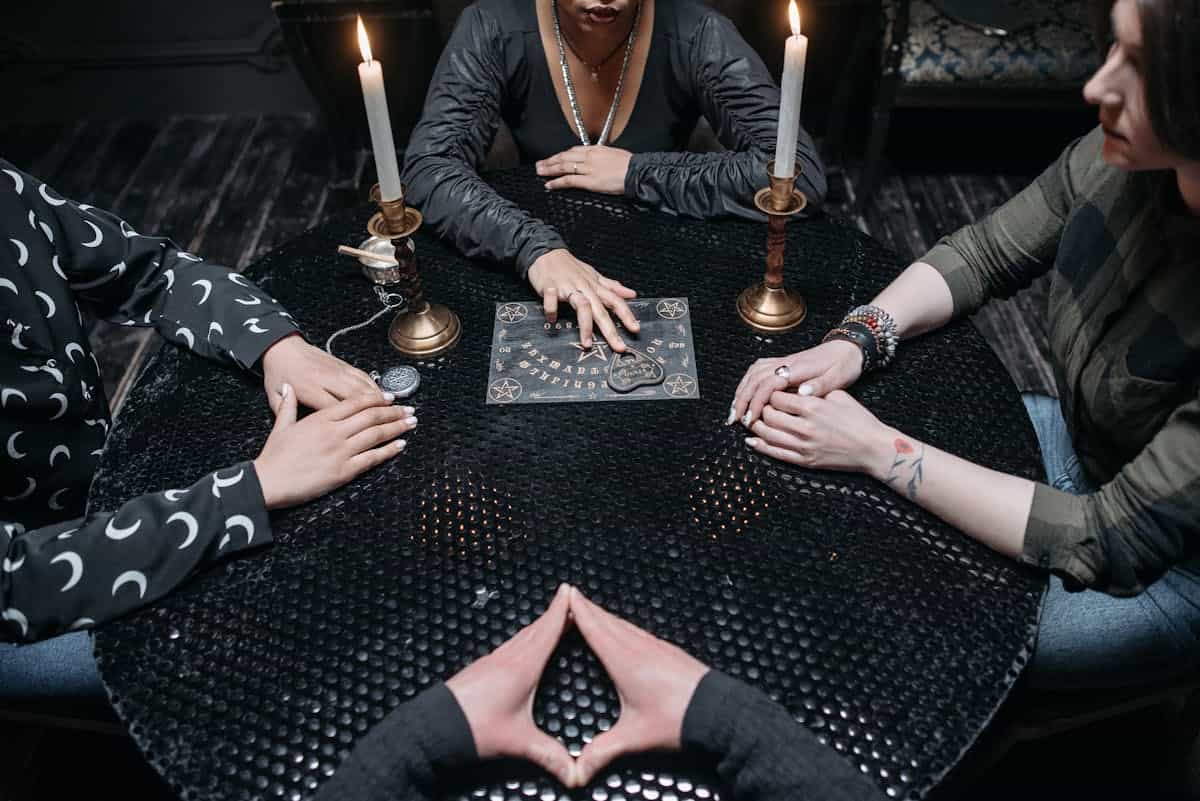
Not all traditions treated the strange visions a dark mirror produced as something to avoid. Catoptromancy — divination through mirror-gazing — treated those same conditions as deliberate tools.
Ancient Greek catoptromancers gazed into mirrors positioned over wells or bowls of water. The darkness was not incidental — it was required. John Dee, the 16th-century English occultist and adviser to Elizabeth I, used a polished black obsidian mirror for sessions he conducted at night, by candlelight, in near-darkness. The same conditions that generated fear in one context were the conditions practitioners sought out in another.
Catoptromancy persisted for centuries because it worked, in the sense that it reliably produced visions. The Caputo mechanism explains how: low contrast and prolonged staring cause the face-recognition system to generate imagery. Whether those visions were meaningful in any predictive or spiritual sense is a separate question. That they occurred, and that practitioners interpreted them as contact with another realm, is documented history.
The same mirror. The same darkness. The same neurological mechanism. One tradition called it danger. Another called it knowledge. The complete history of black mirror scrying on this site covers the divination tradition in full.
Should You Actually Cover Your Mirrors at Night?
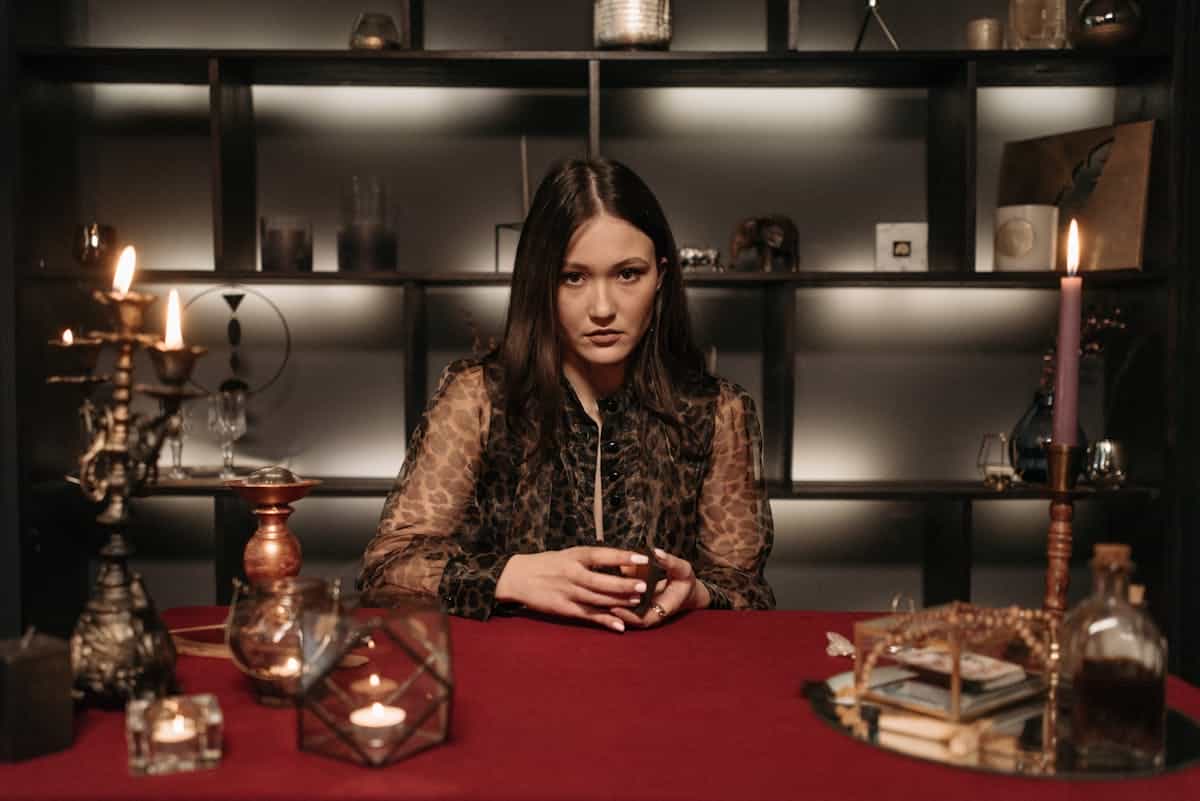
The honest answer is: it depends on why you are considering it.
If covering mirrors at night is part of a mourning practice or a spiritual tradition that carries meaning for you, there is nothing irrational about it. These are practices with documented histories and real cultural weight. Following them is a form of participation in something larger than individual preference.
If you are covering mirrors because looking into them at night has started to cause genuine anxiety — disrupting sleep, creating intrusive thoughts — that is a different situation. Avoidance tends to amplify anxiety rather than reduce it. The mental image of what you might see in the mirror grows more distorted the longer you avoid looking, not less. That process is covered in more detail in the eisoptrophobia and mirror fear guide on this site.
If you are simply curious whether mirrors are spiritually active at night — different traditions will give you different answers, and none of them are established facts. What is established is that the human perception of mirrors changes meaningfully in low light, and that this perceptual change has a documented neurological explanation. That reality is real whatever framework you use to interpret it.
What the Consistency of Mirror Night Superstitions Actually Tells Us
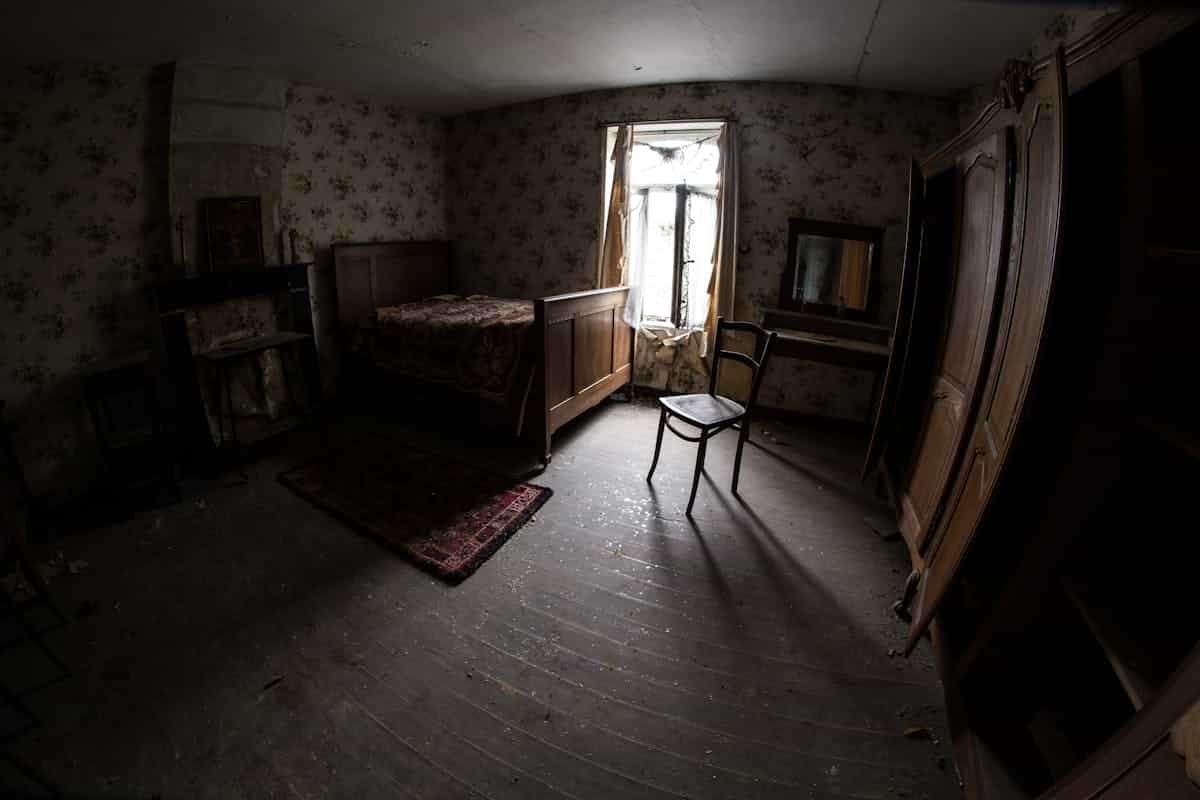
The most significant thing about these superstitions is how consistent they are across cultures that had no contact with each other. Russian folk tradition, Victorian mourning custom, Jewish shiva practice, Chinese Feng Shui, West African ritual, ancient Roman soul theory — all of them treat the nighttime mirror as requiring special attention.
That consistency is not evidence that the beliefs are true. It is evidence that they are responsive to something real: the genuinely different perceptual experience of a mirror in low light, combined with the genuinely different psychological weight that darkness carries in human experience.
For most of human history, before electric lighting made every room reliably bright at midnight, looking into a mirror at night meant looking into a mirror in candlelight. The image flickered. The face shifted. The brain, deprived of sharp visual input, filled in what was missing — and what it filled in was often disturbing. The superstitions were, in that sense, the pre-scientific documentation of a real neurological phenomenon.
The mirror has not changed in two thousand years. What changed is the lighting. The beliefs, having been encoded across generations of genuine perceptual experience, have a considerably longer half-life than the candlelit conditions that created them.
Mirror FAQ
Is it bad luck to look in a mirror at night?
In many traditions, yes. Russian and Slavic folklore holds that looking into a mirror by candlelight invites malevolent spirits. Victorian and Jewish mourning customs covered mirrors after a death to prevent souls from becoming trapped. Chinese Feng Shui discourages mirrors facing the bed at night. These are cultural beliefs with specific historical origins — not established facts — and they vary significantly by region and era.
Why do you see strange things in a mirror in the dark?
Italian psychologist Giovanni Caputo documented what he called the strange-face-in-the-mirror illusion: when a person stares at their own reflection in a dimly lit room for 10 minutes or more, the brain begins to perceive distorted or unfamiliar faces. This is a real neurological phenomenon caused by low-contrast conditions causing the face-recognition system to misfire — not a supernatural event.
Should you cover mirrors at night?
There is no scientific reason to cover mirrors at night. The practice originates from mourning traditions — Jewish shiva and Victorian custom — where mirrors were covered to prevent the soul of a recently deceased person from becoming trapped. If the practice fits your spiritual beliefs or mourning tradition, there is no harm in it. If it is driven by anxiety, that anxiety is worth addressing directly rather than through avoidance.
What does Feng Shui say about mirrors in the bedroom at night?
Classical Feng Shui advises against placing a mirror where it faces the bed. The concern is that mirrors in the bedroom activate energy during sleep, potentially disturbing rest or inviting unsettled energy. Practitioners sometimes recommend covering bedroom mirrors at night or repositioning them so they do not reflect the sleeping person. This is a Feng Shui principle, not a universal rule.
What is the Bloody Mary mirror ritual?
Bloody Mary is a folk ritual where a person stands in front of a mirror in a darkened room and chants the name three times. The belief is that a ghostly female figure will appear in the reflection. The ritual is documented from the 1970s onward in English-speaking countries. The vision, if it occurs, is explained by the Caputo strange-face illusion — the brain misfiring under low-contrast conditions after prolonged staring.
Why did Victorians cover mirrors after a death?
Victorian tradition held that the soul of a recently deceased person might become confused and trapped if it caught its reflection in a mirror. Covering all mirrors in the household for three days after a death was a practical expression of this belief. Jewish mourning tradition also covers mirrors during shiva, though the reasoning there is primarily about avoiding vanity and redirecting attention away from the self during grief.
What is catoptromancy?
Catoptromancy is the ancient practice of divination using mirrors or other reflective surfaces. Ancient Greek practitioners gazed into mirrors held over wells or bowls of water to receive visions. John Dee, the 16th-century English occultist, used a polished obsidian scrying mirror in rituals conducted at night by candlelight. Mirror divination was practiced deliberately after dark because darkness was thought to thin the boundary between visible and spiritual realms.
Do mirrors really trap spirits?
Trapping spirits in mirrors is a belief found across multiple cultures — Roman, Chinese, African, Caribbean, and Slavic traditions all include versions of it. It is a belief, not a documented physical phenomenon. What is documented is that mirrors have historically been treated as symbolically significant objects closely associated with the soul, the double, and the boundary between the living and the dead.