Eisoptrophobia (Fear of Mirrors): Spiritual Meaning, Symptoms, and Gentle Paths Toward Relief
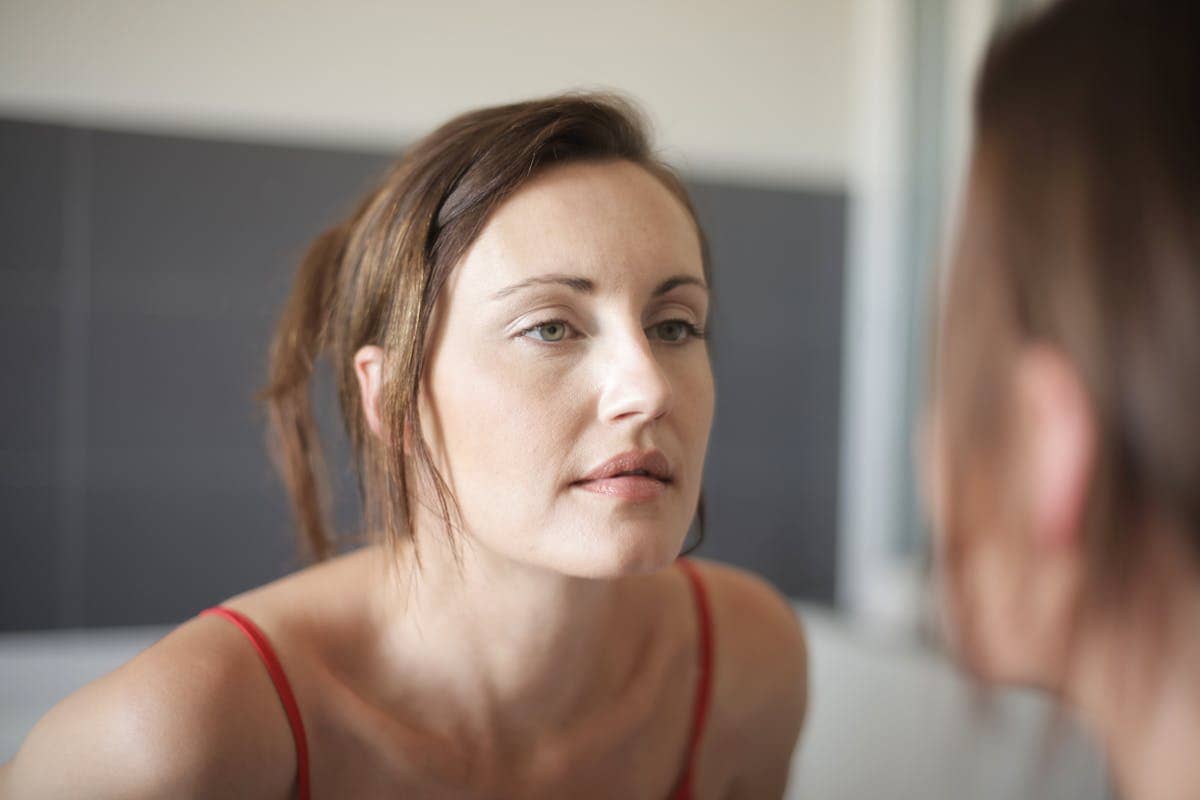
Eisoptrophobia is clinically treated as an intense fear of mirrors or reflections that outruns real danger — part of phobia-related anxiety patterns where mirrors become a feared cue, graded exposure plus cognitive work is the backbone of relief, and spiritual or cultural interpretations can sit beside (not replace) diagnosis and licensed care.
If brushing your teeth means angling away from gleam, skipping social events because of restroom mirrors, or feeling your chest tighten whenever glass catches movement, your experience overlaps what specialists describe — not as moral failure but as predictable human alarm wiring reacting to cues that feel loaded. Naming that plainly often matters as much as any technique afterward.
Major medical summaries describe how everyday objects like mirrors anchor identity and safety (think rearview reflections) yet can provoke disproportionate distress when avoidance widens faster than reassurance does. Institutions such as Cleveland Clinic summarize eisoptrophobia as avoidance patterns that remake daily life alongside physical panic symptoms tied to mirrored environments (my.clevelandclinic.org — Eisoptrophobia overview).
Readers often land here while searching phrases like mirror anxiety spirituality because the bodily reaction and symbolic meaning meet. If you worry that fear makes you irrational, pause: phobic anxiety usually comes with mismatch insight — knowing glass is benign while physiology insists otherwise — which resembles other anxiety physiology described on federal mental health portals (nimh.nih.gov — Anxiety disorders). Anxiety disorders broadly are framed as persistence and impairment beyond ordinary worry (psychiatry.org — What are anxiety disorders). For fuller context on psychological versus spiritual wording, see mirror anxiety, superstition, and phobia.
How Does Fear of Mirrors Actually Show Up in Real Life?
Fear attaches to behaviours more than diagnoses at first glance. Typical patterns resemble what specialist articles group into avoidance and arousal buckets: skipping rooms housing floor-length panels, tossing vanity products with embedded mirrors, feeling dread before hairdresser appointments because of surrounding chrome, leaning away from car windows late at night, or rehearsing intrusive thoughts — will the angle distort, duplicate, invert something identity-fraught?
Some people tolerate small mirrors briefly while large panes provoke collapse into panic sensations. Others feel anticipatory jitters scrolling past reflective footage in thrillers hours later. Chronic avoidance often tightens suspense about what avoided reflection supposedly hides; one reader once described muffling bathroom glass for six months until gradual exposure corrected the exaggerated mental likeness more than harsh lighting ever did — a pattern consistent with avoidance feeding distortion.
Psychological inventories matter when avoidance migrates outward from privacy into vocation, intimacy, grooming, driving, medical exams. At that tipping point informal reframes alone rarely suffice. If you resonate with escalating retreat, skim how mirror symbolism and modern mind science overlap in Mirrors Mind Soul Psychology Spirituality Self-Reflection.
Why Do People Say Spectrophobia, Catoptrophobia, or Catoptophobia Instead?

Language drifts faster than DSM categories. Alternate labels reference Greek roots for reflective surfaces and fear. Editors sometimes mash terms because internet search patterns do. Clinically, the detail that matters rests on specificity of trigger paired with exaggerated threat appraisal.
When spiritual language enters — fear of phantom doubles, folklore about souls lingering at glass — outsiders may wrongly label existential dread as spectacle-only superstition. Yet spiritual narrative can amplify arousal biochemically identical to medically studied phobia. Disentangling does not negate meaning; it maps where pacing tools begin.
Where Does DSM-Style Specific Phobia Logic Fit Mirror Fear?

Clinicians map most mirror-specific terror under specific phobia within anxiety-related disorders (psychiatry.org — Anxiety disorders overview), meaning phobic fear targets discrete cues and often drives behavioural disruption or marked distress disproportionate to objective risk. Ordinary discomfort about appearance differs from visceral avoidance that restructures commuting routes.
Public education pages emphasise psychotherapy — especially thoughtfully sequenced exposures — ahead of imagining quick pharmaceutical fixes unless comorbidity complicates stabilization (my.clevelandclinic.org — Eisoptrophobia treatment notes). DSM labels exist to align treatment fidelity, they do not morally rank you against someone with mild embarrassment.
Population surveys often find widespread appearance dissatisfaction, and reflective surfaces can concentrate that discomfort into panic-level avoidance layered atop temperament and cultural pressure toward scrutiny.
Why Do Spiritual and Folkloric Mirror Narratives Amplify Anxiety for Many People?
Stories treat mirrors like thresholds — Roman-era beliefs echoed through broken-mirror folklore, mourning customs flipping panels away from the bereaved worldwide, speculative cinema insisting glass surfaces hide duplicate selves. Narrative power does not convert belief into optics fact; optics remain reflection physics. Narrative nonetheless shapes prediction templates inside an anxious amygdalar chorus.
Interpretive angles matter ethically: folkloric soul ideas describe cultural sense-making; Can Mirrors Trap Souls or Spirits? pairs well here. Theology and philosophy historically treated mirrors imperfectly unveiling truth metaphorically versus literally. Respect those layers while reserving clinical escalations — breath coaching, pacing scripts, therapist-led hierarchy — when avoidance wins.
Spiritual openness can augment healing when it emphasises embodied safety: candlelit breathing before brief mirror contact, scripted gratitude toward the nervous system protector trying too hard — such rituals differ from insisting mirrors alone cause fate.
Which Psychological Threads Most Often Knot Around Mirror Terror?

Probable strands interlace instead of obeying monocausal fantasies:
- Traumatic or vivid learned associations. Bullying anchored to reflective dressing rooms or jump-scares from films weld mirrors to fear scripts.
- Generalized vigilance. High baseline anxiety hunts confirmatory stimuli; mirrors spotlight appearance unpredictability magnifying catastrophe forecasts.
- Body image wounds. Mirrors become adversarial arenas; research underscores how self-directed mirror gaze can worsen appearance satisfaction transiently — relevant even outside body dysmorphic disorder.
- OCD spectra. Checking compulsions paradoxically escalate doubt; avoidance compulsions corrode behavioural experiments that teach habituation.
Body dysmorphic disorder affects roughly 1.7–2.9% of the general population per community estimates canonically cited in psychiatric literature; when mirror loops fixate perceived flaws outsiders rarely notice, BDD-informed or OCD-informed protocols outperform generic affirmation alone.
Spiritual amplification surfaces when symbolism turns mirrors into existential tests; gentle inquiry separates somatic arousal spikes from doctrinal mandates.
When Is Mirror Discomfort Ordinary — and When Does It Signal Something Clinically Serious?
Everybody negotiates stray dissatisfaction staring back from polished metal or phone glass. Ordinary unease dissipates quickly. Phobia-level arcs persist months, escalate, sabotage necessities, provoke panic sensations, induce shame spirals about irrationality, yet rarely stop avoidance once fear has claimed territory.
Separate camera versus mirror divergence anxiety (optical normals) from terror at any reflective instantiation. Separate dysmorphic preoccupations — hours studying perceived flaws invisible to outsiders — from classic phobia that fears the mirrored encounter itself regardless of nuanced facial critique.
Professionals discriminate because modalities diverge — exposure hierarchies tuned to feared catastrophe thought for pure phobia, perceptual retrains and response prevention hybrids for obsessive appearance loops, trauma processing if PTSD anchors reflective triggers.
What Evidence-Informed Moves Help Fear of Mirrors (Without Replacing Therapy)?

Educational scaffolding never substitutes individualized treatment plans; still, behavioural science converges on a few humane principles:
Gradual exposure ladders teach mismatch tolerance safely. Blocking mirrors endlessly often magnifies catastrophic predictions; compassionate pacing matters more than speed. CBT tracks catastrophic thoughts and trials gentler forecasts tied to resilience evidence (my.clevelandclinic.org — Exposure emphasis). Grounding — feet pressing the floor, naming textures — lowers arousal so skills can engage. Pair therapy with treatment for PTSD, depression, eating disorders, or BDD when they sit underneath (nimh.nih.gov — Anxiety research context). Temporary environmental tweaks help short term; lasting change usually reconnects you to manageable reflection gradually. Spiritual practices framed as grounding or values-based compassion can complement care when mentors avoid shaming medical treatment.
Where Does Gentle Spiritual Framing Align With Responsible Clinical Ethics?

Open Bible journaling or devotional metaphor around partial knowledge through dim glass lands differently than insisting mirrors broadcast literal spiritual verdicts nightly. Honour metaphor while anchoring behavioural experiments.
When tradition encourages covering mourning mirrors empathically recognise grief ritual without letting cloth become decade-long bunker against self-recognition if panic drives extension beyond communal mourning timelines.
Partnerships succeed when therapists respect worldview language and spiritual companions avoid substituting mystical diagnostics for suicidal risk assessment escalation paths.
How Do You Know It Is Time to Call a Therapist or Physician?

Panic storms eroding sleep, substance misuse masking mirror panic, escalating appearance rituals that injure skin, job-threatening absences, or dissociative flickers merit professional triage. Use local crisis protocols if suicidal thoughts appear (psychiatry.org — Anxiety disorders primer).
If immediate self harm thoughts intrude cease reading and contact emergency responders or jurisdictional equivalents.
Recovering sovereignty over reflective encounters rarely demands loving every angled capture — it invites bodies that cease treating familiar glass like enemy ambush nightly. Mirrors stay physics; narratives stay negotiable — and your nervous system, with scaffolding, remembers that distinction steadily.
*General information only — not individualized medical counsel. Coordinate diagnosis and interventions with licensed mental health and medical professionals.
Mirror FAQ
What is eisoptrophobia?
Eisoptrophobia is an intense fear of mirrors or seeing your own reflection, often categorized as a specific phobia inside the broader anxiety-disorder family. The fear may show up near actual glass, reflective surfaces, or even when imagining looking at yourself.
Is eisoptrophobia the same as spectrophobia?
Many articles and clinics use overlapping language. Strictly speaking, eisoptrophobia emphasizes fear of mirrors, while spectrophobia is sometimes used for fear tied to ghosts or supernatural associations with reflections. In practice, definitions blur — what matters clinically is whether the fear is persistent, exaggerated, and life-limiting — not which Greek prefix appears on the page.
What causes fear of mirrors?
Causes typically combine temperament, genetics (anxiety vulnerability can run in families), learning history (films, trauma, embarrassment in front of a mirror), body-image distress, intrusive thoughts associated with disorders like OCD, and culturally learned beliefs about mirrors as thresholds for spirits or souls. None of those causes requires you to be weak or irrational on purpose.
What are symptoms of mirror phobia?
Common signs include avoidance (covering mirrors, dodging restrooms, skipping grooming), sweating, dizziness, tightening in the chest, nausea, intrusive mental images about what reflection might reveal, guilt about the fear, and panic sensations that outweigh the realistic danger of polished glass.
How is fear of mirrors treated?
The most established paths are psychotherapy, especially gradual exposure practiced with pacing and coping skills, and cognitive behavioral approaches that soften catastrophic predictions while your body relearns safety. Providers sometimes pair short-term medications with structured therapy when panic or depression complicates participation — medication does not erase a phobia by itself.
Can spiritual meaning and clinical treatment coexist?
Yes. Spiritual framing asks what a mirror represents in belief, mourning customs, folklore, or personal prayer life. Clinical care asks whether avoidance is narrowing your days and whether evidence-based therapies can widen them again. Trusted spiritual support and secular therapy often work side by side when everyone respects boundaries and safety.
When should someone seek professional help for mirror fear?
Seek help when avoidance blocks hygiene, relationships, leaving home, or work, when panic dominates, when self-harm thoughts appear, when compulsions escalate, or when you feel stuck despite self-guided exposure. Matching care to probable co-occurring conditions (such as PTSD, eating disorders, or body dysmorphic disorder) improves outcomes substantially.