Mirror Test in Animals: Self-Awareness, Science, and What It Can Mean for Humans
The mirror self-recognition test asks a narrow but sharp question: when an animal sees an unexpected mark on its body in a mirror, does it respond as if it understands the reflection is itself? Passing does not prove human-like consciousness in full, and failing does not prove its absence—but the mark protocol is still one of the clearest standardized tools comparative psychology has for visual self-recognition.
If you landed here from a search about mirrors and spirituality, you are probably carrying two honest curiosities at once: what the experiments actually show, and what that might mean for how we talk about awareness, identity, or the self. The useful move is to keep those threads separate while letting them speak to each other. Science can describe behavior under controlled conditions. Spiritual language often points at something science cannot measure directly. This article stays with the evidence first, then labels the interpretive bridge for what it is.
What Is the Mirror Test, and Where Did It Come From?

Long before psychology laboratories, people noticed that some animals react to mirrors as if meeting a stranger: threats, avoidance, curiosity. Others eventually seem to treat the glass as a tool for inspecting parts of the body they could not otherwise see. The formal “mark test” crystallized that observation into something reproducible.
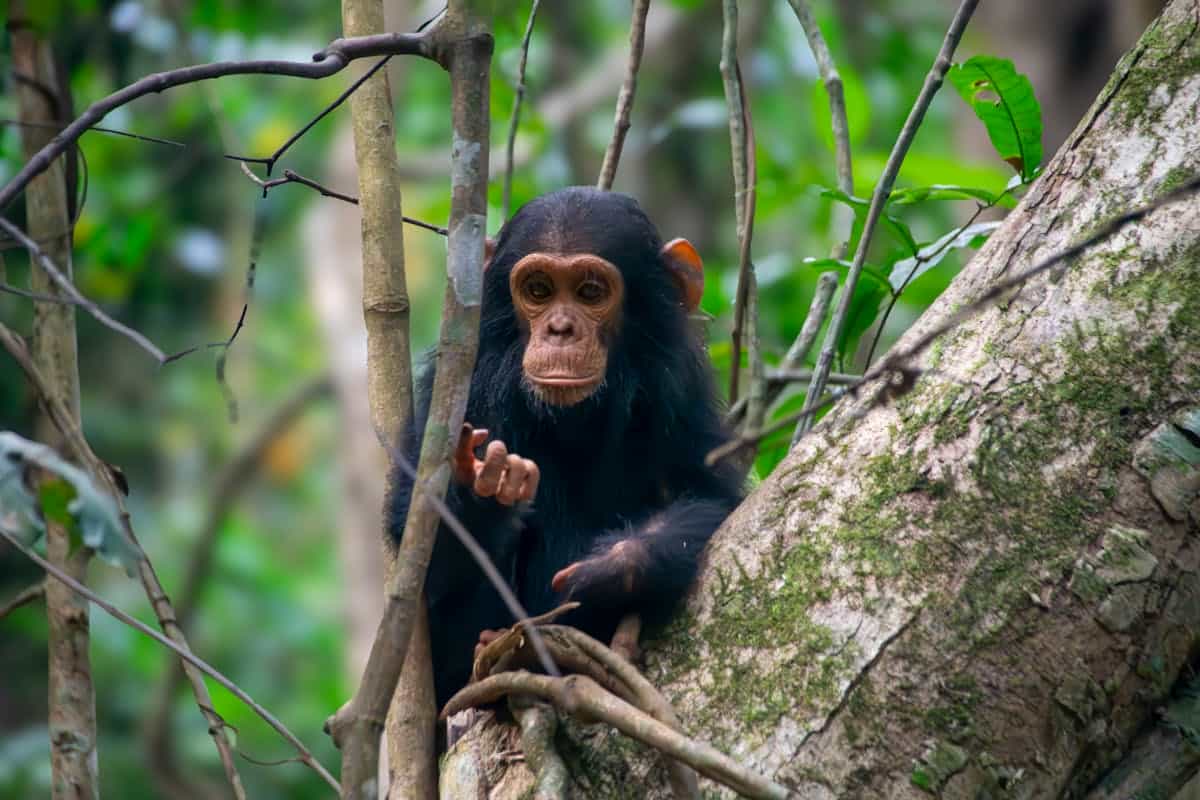
In 1970, Gordon Gallup Jr. reported experiments with wild-born young chimpanzees that had limited exposure to mirrors. After a habituation period, the animals shifted from social displays toward self-directed behaviors such as using the reflection while grooming areas they normally could not monitor visually. Gallup then introduced the controlled manipulation: anesthetize, apply a visible mark the animal could not feel in a alerting way, remove the mirror until recovery, then observe whether mark-directed touching increased when the mirror returned. That comparison is the conceptual core of the protocol as most people mean it when they say “mirror test.” A concise historical overview appears in the Wikipedia article on the mirror test.
How Does Gallup’s Mark Protocol Work in Practice?
Method details matter because many internet summaries skip them, and those details are exactly where critiques live.
A classic design aims for a visible mark on a location the subject cannot see without reflective assistance—often the face or head—while minimizing confounds. Gallup’s early work used a red alcohol-soluble dye on the eyebrow ridge and ear region and emphasized that the dried dye should carry little meaningful odor or tactile alerting compared with sham conditions. Trials compare behavior with and without a mirror, and often add sham marks or invisible control marks so researchers can separate simple irritation from mirror-guided investigation.
Controls are the spine of the inference. If a subject touches its head more often when a mirror is present, skeptics rightly ask whether something else changed—stress, handler movement, residual scent from the dye, or a tactile cue from dried paint. Strong protocols therefore build counterfactuals into the same session: colorless marks, marks on the wrong side, mirrors replaced with clear glass, or baseline periods without marks. When behavioral patterns track the interaction between mark visibility and mirror access, not the mere presence of color on skin, the interpretation gains weight. When they do not, the honest response is to withhold the headline “passed.”
Animals often pass through recurring behavioral phases when mirrors are introduced: social responses, inspection of the mirror surface, repeated “testing” movements, and eventually self-directed use in species that continue engaging long enough. Human infants have a loosely parallel developmental arc, which is why child versions of the test (“rouge tests”) track when children start touching their own faces after seeing a spot in a mirror. For a biographical anchor on the researcher most associated with the standard, see Gordon Gallup’s Wikipedia entry.
Which Species Have “Passed,” and Why Is the List Controversial?

This is the section where careful wording saves you from overstating.
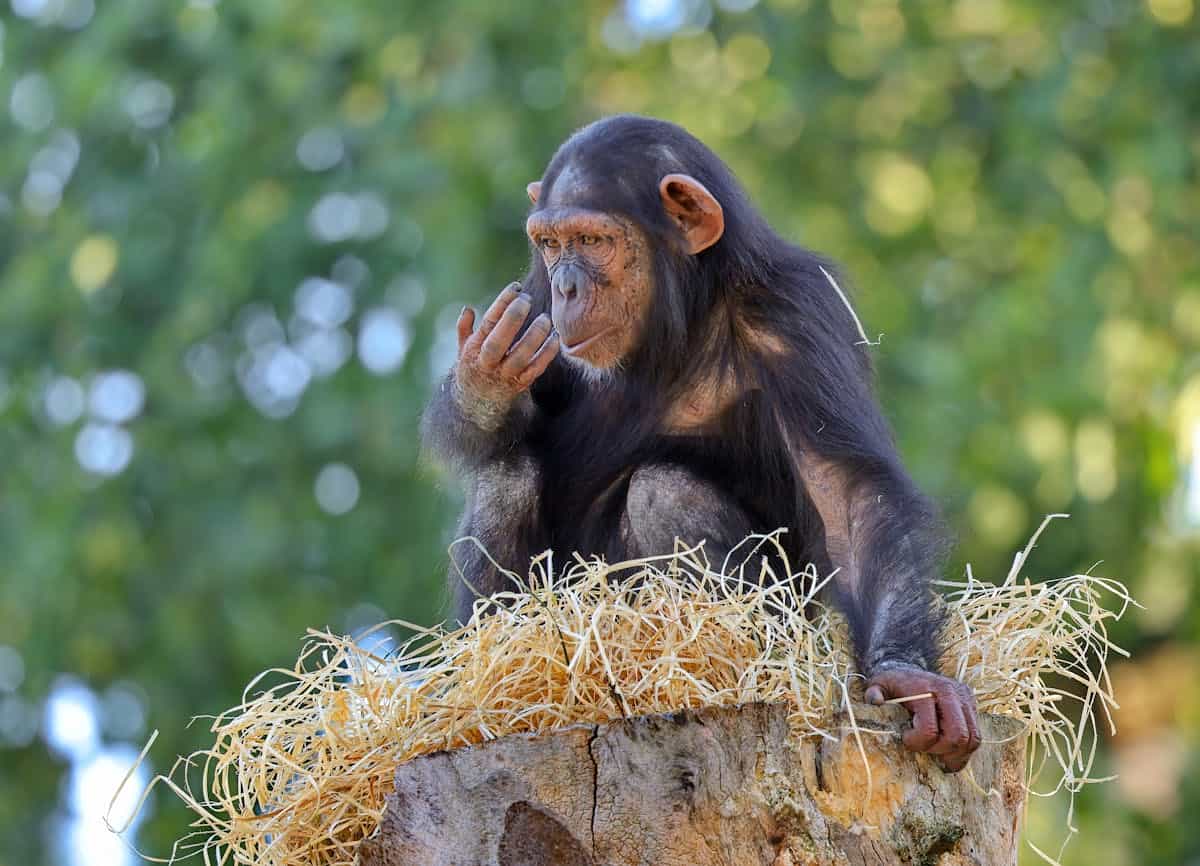
Great apes dominate the early literature: chimpanzees are the classical positive case, with repeated reports of mark-directed behavior. Bonobos and orangutans have also met criteria in multiple programs. Gorillas are famously mixed; some individuals fail or avoid close inspection, while others pass under conditions that reduce social stress (for example, extended habituation or procedures that avoid extra fear triggers).
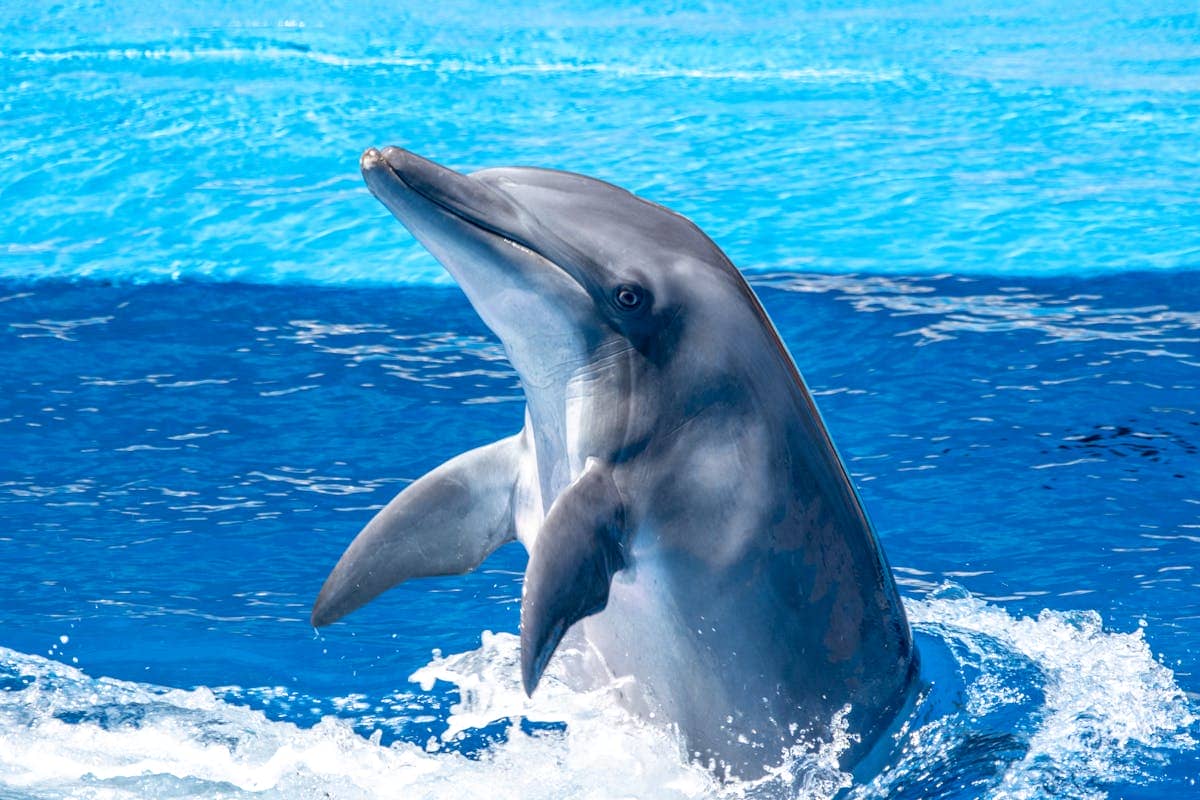
Beyond mammals, bottlenose dolphins have been studied with modified mark paradigms suited to aquatic anatomy and movement; researchers have reported behaviors interpreted as self-directed inspection around marked areas. Because cetaceans cannot sit still in front of wardrobe glass the way a juvenile ape can, much of the signal comes from prolonged orientation toward marked regions, circling, and close approaches that differ from baseline social swimming—a reminder that “the same test” is rarely literally identical across bodies.
Asian elephant work has shown that even within a small sample, some individuals may meet criteria while others do not—raising questions about motivation and methodology rather than “species IQ.” Mirror size, group dynamics, and prior exposure can swamp a binary verdict even when cognition is present.
Among chimpanzees—still the most heavily sampled great ape—reviews often emphasize that not every individual demonstrates clear mark-directed performance, and age matters. In practical terms, when someone says “chimps pass,” they are usually summarizing population tendencies, not promising a universal reflex like a knee tap.
Bird results drew enormous attention when Eurasian magpies were reported to pass in 2008 using colored stickers placed where birds could see them only via a mirror; later replication attempts were unsuccessful enough that many scientists now treat the original claim as promising but not settled. Fish studies—especially cleaner wrasses—sparked debate between authors who see mark-directed scraping as self-recognition and skeptics who argue professional “parasite inspection” motivations can mimic some criteria. The takeaway is not cynicism; it is epistemic humility. Pass lists in popular articles run ahead of consensus lists in specialist literature.
The mirror test Wikipedia page collects citations across taxa and is a practical starting point if you want primary sources, with the caveat that encyclopedia summaries still lag behind active debate.
Why Do So Many “Failed” Results Not Mean What They Sound Like They Mean?

Here is the most important corrective for a reader who wants a spiritual reading of mirrors without mangling biology.
Some failures are plausibly perceptual mismatch: if a species does not prioritize vision when answering “what is me,” a vision-only test can undersell its capacities. Dog cognition researchers have explored odor-based analogues to the mark concept because domestic dogs often treat mirrors with indifference after habituation, yet can discriminate their own scent marks from those of other dogs in controlled work.
Macaques complicate the story further: classic mark-test negatives coexist with observations that some individuals use mirrors to inspect body parts they otherwise cannot see, including areas made visible only by reflective surfaces. That pattern feels, from the outside, like partial self-information use even when the full Gallup criteria are not met—a live illustration of why Frans de Waal’s “graded” language resonates with field researchers.
Other failures look like emotion and social structure problems, not cognition limits. Species that treat direct eye contact or a same-sized frontal face as an imminent fight may never quietly discover mirror contingency. For an animal locked in threat mode, the mirror is an adversary, not a tutor.
Still other failures may be motivational. If the mark does not bother the subject, it may not care enough to touch it even if it understands the mirror. Researchers have attempted clever child paradigms where motivation is scaffolded before testing—a reminder that the procedure measures behavior under incentives scientists choose.
Frans de Waal and others have argued for treating self-awareness as graded, not a single on-off trait unlocked by one assay. That framing matches how mirrors function in human life, too: not everyone uses reflective surfaces the same way, and distress can change what we are willing to see. For broader terminology on how “self-awareness” is discussed across fields, the self-awareness Wikipedia overview is a stable orientation page—still an encyclopedia, not a scripture.
What Are the Alternate Explanations Researchers Still Argue About?
Even when an animal touches a mark while looking toward a mirror, not everyone agrees on the inner story.
Daniel Povinelli and others have suggested behaviors could sometimes reflect learning that “that odd symmetrical being copies my movements” without a full-blown concept of self. The dispute is not insulting to animals; it is about how much psychological machinery a result requires. Good experiments try to separate contingency learning from mark-specific responding, but perfect separation is hard.
Odor and tactile leakage remains a design headache: if the subject can sense the mark without the mirror, the mirror becomes an ornament to an alarm that would have happened anyway. That is why careful studies emphasize sham controls, invisible marks, and sometimes video or delayed mirror presentations—each tweak tries to close another loophole.
If you appreciate why mirrors tempt metaphor, this is the scientific mirror-image of the same idea: reflections are easy to misread when you forget what stands between you and the glass.
How Does Human Mirror Recognition Connect—Without Turning Animals into Moral Props?

Human infants typically begin showing mark-directed behavior in mirrors around the second year of life, though exact ages vary by cultural context and task details—another clue that the test is not culture-free even for humans. Developmental psychologists connect passing to emerging self-representations linked to language, play, and social mirroring within families.
For adults, mirrors sit at the intersection of body image, identity, and habit. Many spiritual traditions treat disciplined self-observation as ethical training; modern psychology treats the same surface as a trigger for shame or reassurance depending on context. Neither branch of discourse needs a chimpanzee’s MSR score to be meaningful—but when people do mention animals in spirituality, they are often reaching for a moral intuition: that awareness might obligate compassion. Science can inform that intuition without pretending to certify it.
For a wider map of how mirrors show up where psychology and spirituality overlap, mirrors, mind, soul, and self-reflection collects the themes in one place.
What Is a Spiritually Honest Way to Read the Mirror Test?

Labeling matters, so here is the split I recommend memorizing.
Science layer: Under specified conditions, some animals behave as if they link a reflected image to their own bodies. Failures are ambiguous. Passes are meaningful but contested in interpretation.
Philosophy and religion layer: Traditions disagree about what consciousness is, what survives death, and whether non-human beings possess whatever word your lineage uses for an indestructible self. Those are questions mirrors cannot adjudicate.
Bridge layer (explicitly interpretive): When people say mirrors reveal truth, they are often talking about moral honesty—the willingness to see oneself without flinching. MSR research is unrelated to that moral project in method, yet it can still echo it in prose, as long as you never confuse the echo for evidence. Dreams of seeing oneself reflected carry their own interpretive language; if that is your entry point, seeing yourself in a mirror: dream meanings keeps the conversation in symbolic territory without pretending it is primatology.
One human story captures why the science still lands emotionally. A very young child may reach toward the mirror as if meeting another child; months later, the same child wipes a streak of food from her own cheek after noticing it in the glass. Nobody writes her a proof first. The connection arrives. MSR work with apes and other animals is, at its best, a disciplined attempt to watch that kind of shift from the outside—imperfectly, patiently, and without claiming to capture everything inner experience might be.
Why “The Mirror Shows the Truth” Is a Different Claim in Physics Than in Ethics

This site returns often to a physics fact worth repeating: a flat mirror is not a neutral window onto “truth.” It produces a particular optical mapping that your brain learned to treat as familiar. A photograph differs; another person’s eyes differ. None is a privileged soul-print.
That optical modesty pairs oddly with the mirror test’s cultural weight. The test does not show whether an animal “knows itself” in the poetic sense. It shows whether an animal can close a loop between unseen body state and reflected light in one constrained task. Both humility and wonder fit that sentence at once.
If you want mirrors framed explicitly as symbols of truth and portals across cultures—without erasing the physics—read mirror spiritual meaning: truth, portal, and self-reflection.
What Should You Carry Away If You Care About Both Science and Meaning?
First, treat pass-or-fail lists as headlines, not verdicts. Second, treat alternate senses—especially smell—as reminders that intelligence is not one channel. Third, when spiritual language enters, let it name longing and ethics, not laboratory proof.
The mirror in your house is still doing what mirrors always did: returning an image you learned to call “me.” The mark test, for all its limitations, studies a related but narrower wonder: the moment a mind might connect that image with the unseen mark on the skin. However you read that moment, it is worth describing accurately before you decide what it means for your beliefs.

When you next hear someone cite the mirror test in a debate about souls, you now have a calmer reply: it measures a behavior linked to visual self-recognition under conditions researchers argue about honestly. That precision protects both science and spirituality from each other’s worst habits—the first from flattening inner life into a score, the second from borrowing credibility it never earned.
Mirror FAQ
What is the mirror test in animals?
The mirror test, also called the mark test or mirror self-recognition test, is a behavioral procedure where an animal is marked on a body area it cannot see without a mirror. If it uses the mirror to locate or investigate the mark on its own body, researchers interpret that as evidence of visual self-recognition.
Who invented the mirror self-recognition test?
Psychologist Gordon Gallup Jr. developed the experimental mirror mark test with chimpanzees in 1970, building on centuries of informal observations about how animals respond to reflections.
Which animals have passed the mirror test?
Several species have produced mark-directed behavior in studies, including chimpanzees, bonobos, orangutans, some gorillas under certain conditions, bottlenose dolphins, orcas in some reports, Asian elephants in at least one study, Eurasian magpies in an influential 2008 study with mixed replication, and a few others where interpretation remains debated.
Why is the mirror test criticized?
Critics argue it can produce false negatives for species that rely on scent or sound, that social fear can block calm mirror use, that motivation to groom a mark varies, and that some alternative explanations do not require a full self-concept—so a pass is informative but not absolute proof of human-like self-awareness.
Do dogs and cats fail because they lack self-awareness?
Not necessarily. Dogs often rely heavily on olfaction, and controlled odor tasks suggest they can discriminate their own scent from other dogs in ways the visual mirror test does not capture. Failure on one visual task does not close the case on inner experience.
Does passing the mirror test prove an animal has a soul?
No scientific test can prove or disprove a soul; that category belongs to philosophy and religious tradition. What the mirror test can show is narrower: whether, under specific lab conditions, an animal behaves as if it connects the mirror image with its own body.