Mirror Superstitions From Around the World: Rare and Regional Beliefs Explained

Mirror superstitions appear in almost every culture on earth, and most of them cluster around the same three fears: the soul, the dead, and the unsettling quality of seeing a lifelike copy of yourself that has no breath. The specific beliefs differ by region — seven years of bad luck in Western tradition, covering mirrors after a death in Jewish and Irish custom, the baby looking in mirror superstition in South and East Asian households, mirror divination in ancient Greece and Rome — but the underlying anxiety is consistent: a mirror is not quite an ordinary object, and treating it carelessly has consequences.
Most articles about mirror superstitions recycle the same five entries. This one goes further: rarer regional beliefs, what they actually say (not a sensationalised version), where they came from, and what they share with traditions that had no historical contact. The mirror superstitions encyclopedia covers the well-known classics. This article covers the quieter register.
What Mirror Superstitions Share Across Cultures
Before going region by region, it is worth naming what the myths about mirrors have in common. Three patterns repeat so consistently that they appear to reflect something about the psychology of mirrors rather than any particular culture's theology.
First: the soul double. Reflections are convincing copies of a face that the owner has never directly seen without help. That copy moves when you move, yet it has no breath, no weight, no independent existence. Most mirror superstitions build on this uncanniness — treating the reflection as a soul, a double, a spiritual hostage, or a threshold where something might look back.
Second: death and mourning. Across cultures that had no contact with each other — Jewish Shiva, Irish wakes, Slavic mourning periods, Victorian England — the instinct to cover or remove mirrors when someone dies appears independently. The specific reason differs by tradition, but the impulse is the same: a house of grief is not the right place for reflective surfaces.
Third: economic history wearing spiritual clothing. When mirrors were rare and expensive — before Venice's 13th-century glassmaking monopoly collapsed and before mass production made them ordinary — breaking a mirror was a genuine financial catastrophe. Bad luck stories often encoded social regulation long before they became purely spiritual beliefs. As the history of mirrors shows, the object moved from polished obsidian in 6000 BCE to cheap consumer product in the 20th century; the superstitions lagged behind, still priced in soul currency long after the glass became affordable.
The Britannica entry on superstition makes the point well: culturally inherited fears rarely announce themselves as irrational to the people who hold them. They arrive embedded in ritual comfort, family story, and community memory. Mirror myths deserve the same respectful reading.
Ancient Rome and Southern Europe: Where the 7-Year Myth Began
The seven-year bad luck superstition for breaking a mirror has Roman roots. Romans believed the human body and soul renewed themselves on a seven-year cycle — break the mirror that held your soul's image, and the damage would last until the next natural reset. That belief merged with Greek catoptromancy — mirror divination — which treated a broken reflective surface as the worst possible reading on your future.
Southern European domestic lore adds several rarer beliefs to the record. Spanish and Italian regional traditions warn against staring too long at your own reflection — not from vanity concerns, but from an older worry about extended eye contact with your own double destabilising something. Adolescents in some Mediterranean towns historically dared each other to look backward into glass after midnight, a dare structure that appears across Slavic and Anglo traditions with different saints and festivals attached.
Portuguese and Greek village memory carry a specific noontime caution: staring into a bright hand mirror when the sun throws hard glare can produce afterimages — a foreign face seeming to sit atop your own. The optics are real (sustained glare does produce afterimages); the interpretation as a second presence is the superstition. This is a useful illustration of how many mirror myths begin with something physically real and acquire a spiritual explanation.
North African and Andalusian-influenced households sometimes keep small reflective amulets intended to send the evil eye back to its source. That is not framed as superstition in those households — it sits beside ordinary décor. The mirror becomes an active participant: not a tool for looking at yourself, but a tool for deflecting what looks at you.
Slavic and Eastern European Night Rules
If you read 19th-century folklore collectors working in Russia, Ukraine, Poland, and the Baltic coast, night is when mirrors allegedly misbehave. Some households still cover looking glasses before sleep or angle them away from the bed — not because every family holds strong supernatural beliefs, but because the habit travels in luggage alongside recipes and lullabies.
Slavic mirror superstitions often bundle the glass with threshold anxiety: doorways, windows, and reflective surfaces treated as parallel openings where something might enter. Two mirrors facing each other — which bounce light into an endless corridor — show up in both interior design debates and older warnings about unbounded space. The optics genuinely unsettle: peripheral vision catches movement in reflections more easily when lamplight flickers, and the half-awake brain supplies whatever narrative is culturally available.
Polish and Lithuanian All Souls season sometimes revives mourning-adjacent mirror discipline outside explicitly Jewish or Irish frameworks. Fasting households turned mirror frames toward walls so the newly remembered dead were not distracted by their own doubled image. Baltic communities sometimes added salt lines near thresholds at the same time — the salt binding nothing in physics, but providing a cheap, repeatable domestic ritual when grief and bad weather arrive together.
Romantic-era Russian painters staged catoptromancy scenes — women leaning toward dim glass — because the image united spiritual danger with fashionable melancholy. The historical practice of mirror divination runs much further than Slavic villages. Greek ritual at Patras, Roman specularii, Egyptian funerary imagination, Chinese soul language, Indian epic scenes where mirrors forecast battle — the Wikipedia entry on catoptromancy collects these with appropriate scholarly caution.
Jewish, Irish, and Scottish: Covering Mirrors After a Death
Mourning customs are where mirror superstitions stop being abstract. This is the one area where the belief has a visible, living practice in many households today — and where the reasons differ enough between traditions to be worth distinguishing carefully.
In Jewish Shiva, mirrors are covered for the seven-day mourning period beginning at the moment of death. The reasons are specific: to prevent vanity from pulling the mourner's attention away from grief and prayer; because Jewish law prohibits praying before a mirror, and the home becomes a continuous space of prayer during Shiva; and as a theological gesture acknowledging that the divine image carried by the deceased has been diminished in the world. The full reasoning is covered in the why cover mirrors after death article.
Irish and Scottish mourning custom follows a different reasoning: the soul of the recently dead lingers in the home until burial. Covering mirrors prevents that soul from becoming confused by its own reflection or trapped in the glass. Victorian England amplified the theatrical dimension — draped glass, stopped clocks, elaborate formal mourning — but the impulse came from the same older belief.
What these three traditions share is an insistence that attention in a house of grief should face outward toward the dead and inward toward conscience, not sideways toward one's own face. An uncovered mirror in a house of mourning is, in all three frameworks, a distraction that the occasion does not permit.
The Baby Looking in Mirror Superstition
One of the less-discussed but surprisingly widespread mirror superstitions involves very young infants. In several cultures that had no historical contact with each other, showing a baby its own reflection before a certain age is considered inauspicious — and the threshold age and specific concern varies by community.
In Bangladeshi and West Bengali rural tradition, very young infants are sometimes kept away from mirrors until they begin to speak. The belief is that the soul of a very young child is not yet fully settled in the body, and encountering its own double before that settlement is complete may interfere with its development — particularly speech. Paediatricians would describe this as parental love expressed as caution. Anthropologists would describe it as a fragile-soul premise related to the vulnerability of infancy.
Chinese diaspora households in Southeast Asia and the Caribbean carry a parallel warning: mirrors should be avoided before the first birthday. The specific concern shifts — some versions emphasise speech, others emphasise general developmental vulnerability — but the underlying logic is the same. The soul of an infant is not yet stable enough to meet its own reflection.
Jamaican older-generation warnings sometimes use the baby-and-mirror image not as a strict prohibition but as a way of communicating a broader concern about premature self-awareness in very young children. The mirror becomes a proxy for the larger question of when a person becomes ready to face their own reflection.
What is consistent across these traditions is the recognition that mirrors are not neutral objects for everyone at every life stage. The baby looking in mirror superstition is less about the mirror being dangerous and more about the infant being in a state of particular spiritual fragility — a liminal condition that many cultures mark with specific restrictions on reflective surfaces, new experiences, and public presentation.
Modern science does not find any harm in showing infants mirrors — mirror self-recognition is actually a developmental milestone used in psychology research, with most infants recognising themselves by 15–18 months. The superstition predates that research, but its concern with developmental vulnerability is not irrational in its own terms.
Persian, Anatolian, and the Middle East
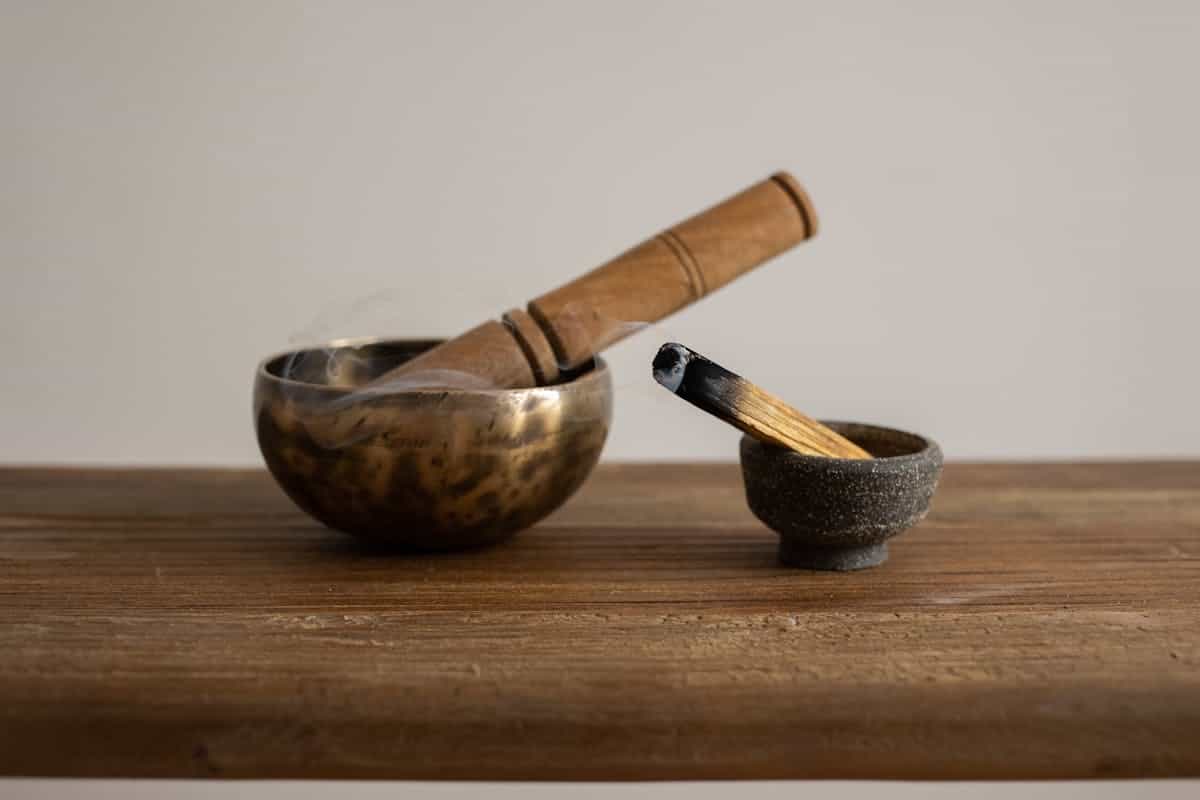
Iranian Nowruz tradition presents an interesting counterpoint to most mirror superstitions: a mirror placed among the haft-sīn festival symbols is auspicious, a gesture toward clarity and renewal. The same culture holds certain bedroom mirror cautions. This coexistence — mirror as hopeful on the spring table, mirror as potentially disruptive in the sleeping room — is a reminder that superstitions about mirrors are not uniformly negative. The context determines the meaning.
Turkish and Greek border communities share overlapping evil-eye beliefs where reflective objects are used to send ill intent back toward its source. The mirror is not possessed — it is a directional device, an ethical tool in a specific folk framework.
Anatolian bridal lore includes a warning against weeping into a mirror before the wedding veil is put on. Tears imprinted on the glass were read as an omen. The Levant carried related "first look" etiquette: the mirror testifies, so how you appear to it at significant moments carries weight. Persian poetry treats mirrors as truth-tellers — not neutral tools, but honest witnesses. That literary framing shaped popular belief in ways that continue in household advice today.
South Asian Mirror Beliefs: Auspice and Release
South Asia is the most useful corrective to any single story about mirrors. In some Hindu households, a shattered mirror is read as the discharge of accumulated energy — unfortunate financially but spiritually neutral or even clarifying. That interpretation sits alongside epic material in which mirrors reveal futures and forecast battles. The same object, the same act of breaking, carries opposite meanings within the same broad cultural tradition.
Wedding customs in several South Asian regions place a brass or steel mirror where the couple first sees one another — a deliberately auspicious framing. Conversely, widowhood restrictions in some communities historically discouraged reflective grooming during periods of formal mourning, not because mirrors were evil, but because visible ornamentation was itself temporarily forbidden.
Jain and Buddhist monastic circles historically kept ornate mirrors out of meditation cells — not because mirrors steal souls, but because they steal attention. That is a psychological reading that rhymes precisely with what modern mindfulness practice says about mirrors, which suggests some of these traditions were describing something real about human cognition rather than inventing purely magical claims.
East Asia and Southeast Asia
Chinese mirror superstitions are layered across time periods and contexts. Bronze mirrors entered burial and temple use millennia ago, carrying associations with the soul's journey and the afterlife. Domestic Feng Shui later developed the bed-facing mirror prohibition — more architectural psychology than ghost panic, though ghost explanations arrived to justify the architectural preference. Bagua mirrors placed above doors serve a different function: outward deflection of harmful energy, pointed away from the household rather than inward.
Thai and Lao spirit houses occasionally incorporate mirror scraps as reflective elements on small façades. The sparkle is practical — it confuses phi, or wandering spirits, by disorienting them — and continues a broader Southeast Asian use of flashing surfaces as apotropaic tools.
Japanese mirror culture has two registers. The Yata no Kagami — one of the three Imperial Treasures of Japan — is a sacred Shinto object, treated with reverence rather than superstition. Contemporary Japanese horror cinema has exported a very different register: the bathroom mirror as a stage for supernatural appearances, a genre that has circulated globally through streaming and shaped teenagers' mirror anxiety worldwide without any connection to the original Shinto tradition.
Vietnamese Tet décor includes polished surfaces for their brightness — auspice rather than curse. Korean apartment lore sometimes echoes the Chinese bed-facing caution with local vocabulary for restless sleep. The axis runs positive to negative across the region, not negative only.
The Americas: Migration, Mourning, and Urban Legend
Mexican regional lore around Día de los Muertos varies by village on the question of mirrors near or away from ofrendas. Some communities place mirrors to welcome returning presence; others remove them to prevent unwanted attachments. Journalism tends to flatten this variation. Respectful writing preserves it.
West African and Afro-Caribbean traditions use reflective surfaces — mirrors, water, polished metal — in ways that are not reducible to superstition in the dismissive sense. Mirrors appear in some Umbanda, Candomblé, and Vodou practices as surfaces where intention is doubled and directed. These are active spiritual tools in living traditions, not museum artefacts, and they should be described as such — named by tradition, not generalised into a pan-African category.
Mainstream US urban legends — Bloody Mary, sleepover dare games, bathroom mirror chants — are modern folklore. They are worth mentioning because they show how the same threshold grammar older societies mapped onto rivers and cave mouths now maps onto bathroom mirrors. Children use these games to negotiate fear in a controlled setting, which is exactly what older ritual traditions also did.
Reading Mirror Folklore Without Turning People Into Stereotypes
The honest last point about superstitions about mirrors is not which country wins at eeriness. It is about what responsible curiosity looks like when the subject is someone else's sacred practice.
Regional accuracy means refusing to treat Indigenous, African, and Afro-diasporic material as interchangeable cultural garnish. When trade routes moved cowrie, bronze, and silver across desert and ocean, reflective surfaces arrived with specific price tags and specific prohibitions that varied by port, community, and era. What is rare in one town may be ordinary household practice two valleys over.
Compare functions before comparing monsters. Mirror myths about grief discipline, marriage hope, infant protection, and night-time calm share a common function: they give communities a language for anxiety at moments when ordinary language fails — when someone dies, when a child is born, when two people marry, when the house is dark and the brain is half asleep.
The global mirror market now sits at $145.51 billion, projected toward $276.45 billion by 2034. Ordinary shoppers experience mirrors as cheap consumer items, which makes antique soul-language feel excessive — until a death in the family brings the cloth back out, and the impulse to cover the glass feels, suddenly, entirely natural.
Rare beliefs stay alive when they still answer a living question. The mirror myths that persist are not the ones preserved in museum archives. They are the ones that still mean something to someone at a moment when meaning is needed.
Mirror FAQ
What are the most common superstitions about mirrors?
The most widespread mirror superstitions involve breaking a mirror (seven years of bad luck in Western tradition), covering mirrors after a death (found in Jewish, Irish, Scottish, and Slavic cultures), and avoiding mirrors facing the bed at night (common in Feng Shui and Eastern European folklore). The baby looking in mirror superstition — warning against showing very young infants their reflection — appears independently in South Asian, East Asian, and Caribbean traditions.
What is the baby looking in mirror superstition?
In several cultures, including Bangladeshi, West Bengali, Jamaican, and older Chinese diaspora traditions, showing a baby its reflection before a certain age — typically before the first birthday or before the child speaks — is considered inauspicious. The belief varies by community: some say it delays speech development, others say the soul of a very young child is not yet settled enough to safely encounter its own double. Modern paediatrics does not support any harmful effect.
Where do mirror myths and superstitions come from originally?
The oldest documented mirror myths come from ancient Greece and Rome, where reflections were associated with the soul and mirror divination (catoptromancy) was practised at temples. The seven-year bad luck superstition has Roman roots. Mourning customs around mirrors appear independently across Jewish, Christian, and folk traditions. Most mirror myths cluster around the same three fears: the soul, the dead, and the uncanny quality of seeing a lifelike copy of yourself that has no breath.
Is breaking a mirror bad luck in every culture?
No. The seven-year curse is a Western — primarily Mediterranean and Northern European — tradition. In parts of India, breaking a mirror is read as releasing accumulated negative energy rather than inviting harm. In some South Asian communities, the broken mirror is an unfortunate financial event rather than a spiritual one. The object carries opposite meanings in different traditions, which tells you something important: the meaning comes from the culture, not from the glass.
What are some rare or unusual mirror superstitions?
Some lesser-known mirror superstitions include: Persian Nowruz tradition of placing a mirror on the festival table as a symbol of clarity and renewal; Anatolian bridal warnings against weeping into a mirror before the wedding; Slavic All Souls season practices of turning mirrors toward walls so the remembered dead are not distracted; Japanese shinkyo mirror reverence as an imperial and Shinto symbol; and West African use of reflective metals on regalia as wealth and status signals rather than personal vanity tools.