Why Cover Mirrors After Death? Origins, Traditions, and the Real Reasons
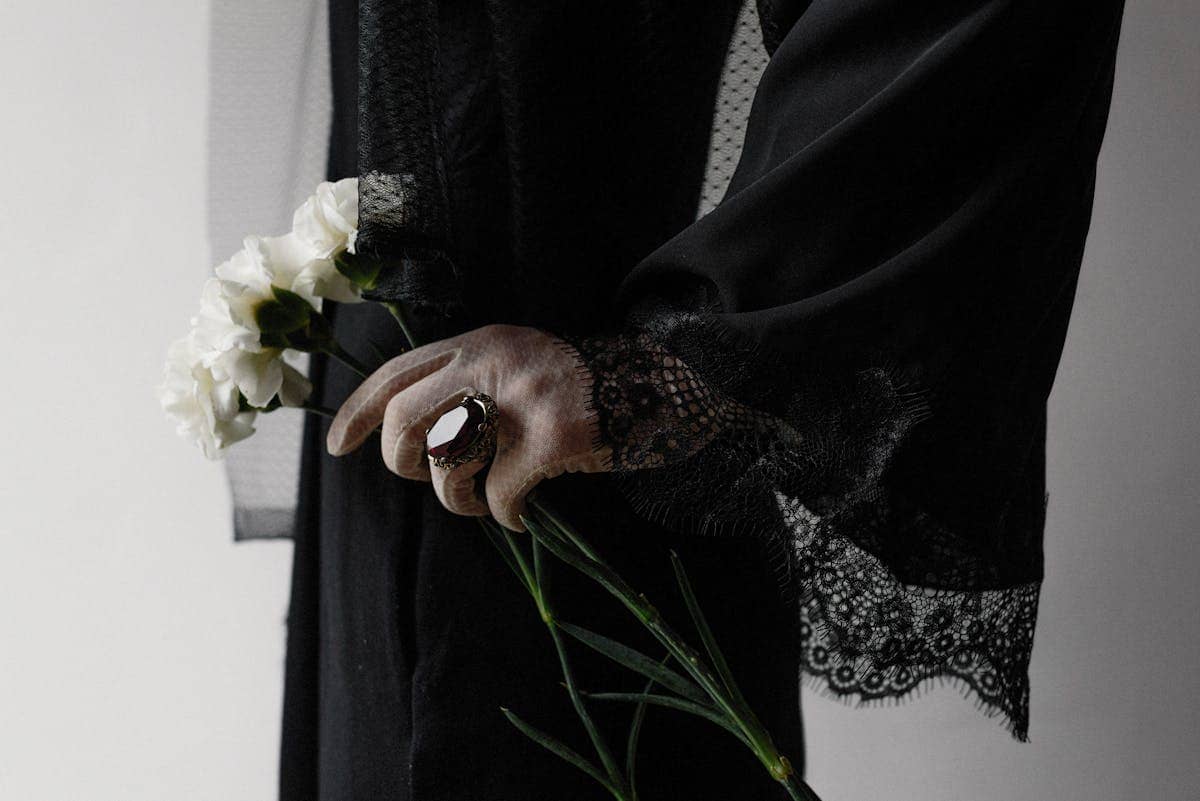
People cover mirrors after a death to prevent the soul of the deceased from becoming trapped in the reflection, to protect mourners from spiritual harm, and to remove the distraction of the ordinary world from a house that has temporarily become a space of grief and prayer. Each tradition holds a different specific reason — Jewish Shiva focuses on vanity and prayer; Victorian custom focused on soul capture and fate; Eastern Orthodox tradition follows the soul's 40-day earthly journey — but all of them treat the mirror as something that needs to be closed when death enters the home.
The practice of covering mirrors when someone dies appears in cultures that had no contact with each other: Jewish homes, Victorian England, rural Romania, Irish Catholic communities, parts of Scotland and the American South. When the same instinct surfaces independently across that many traditions, there is usually something real underneath it worth understanding.
The Core Belief: Why Mirrors Are Covered When Someone Dies
The belief that connects most of these traditions is that a mirror is a threshold. Not simply a reflective surface — a boundary between worlds.
In Irish, Scottish, and American Southern folklore, the soul of the deceased lingers in the home between death and burial. It moves through familiar rooms, is drawn to familiar objects, and is not yet oriented toward what comes next. If that soul encounters its own reflection, the belief holds that it may become confused — drawn into the surface rather than continuing forward. Covering the mirrors gives the soul a clear path out of the house.
The concern is not only for the dead but for the living. In many of these same traditions, the first mourner to look into an uncovered mirror in a house of death risks being marked as the next to die — that death, not yet finished with the household, uses the reflective surface to identify its next caller. This is why the covering was traditionally total: not just the looking glasses, but polished silverware, glass-fronted cabinets, anything that might hold a reflection.
To understand why mirrors specifically carry this weight — why the threshold metaphor appears in so many cultures without cross-pollination — the mirror as a portal in mythology and folklore addresses the full pattern. The short version: in almost every tradition that has thought carefully about mirrors, the glass is understood as something more than a surface.
Mourning customs vary widely across cultures, but the impulse to alter the domestic environment after a death — to signal that the ordinary rules of the household are suspended — is nearly universal. Covering mirrors is one expression of that impulse.
Jewish Tradition: Why Mirrors Are Covered During Shiva
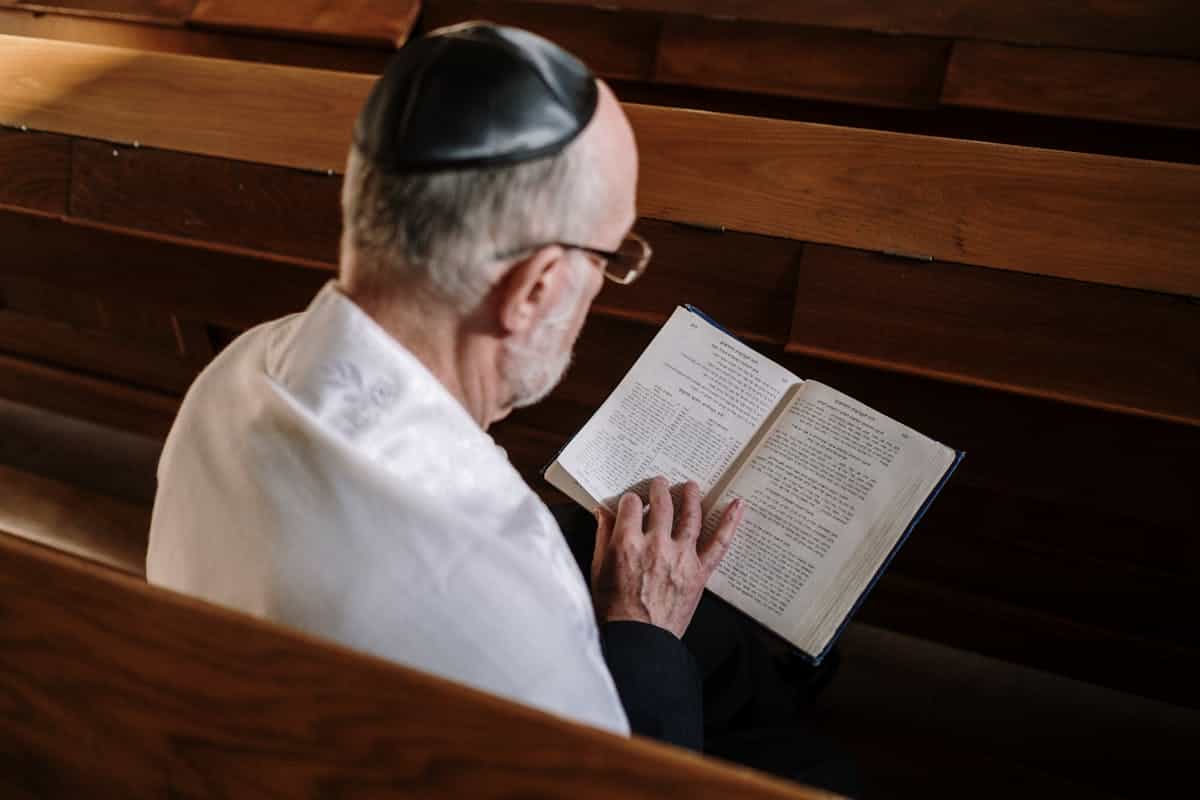
The Jewish practice of covering mirrors during Shiva is among the most formally documented of all these traditions — and it is also the one most frequently misunderstood. Many people assume the Jewish reasoning is the same as the folklore reasoning: prevent the soul from getting trapped. In traditional Jewish practice, the reasons are different and more specific.
According to the laws governing the Jewish Shiva mourning period, mirrors are covered for three distinct reasons, and none of them is primarily about soul-trapping.
First: the elimination of vanity. Shiva is a period of total inward focus. The mourner's attention belongs to their grief, to their memory of the deceased, and to God — not to their own appearance. A mirror invites self-assessment. During Shiva, that invitation is inappropriate. Covering the mirror is a physical act that reinforces the psychological instruction to stop performing for the world.
Second: the prohibition against praying before a mirror. Jewish law does not permit prayer in front of a reflective surface. During Shiva, the home functions as a continuous space of prayer from morning to evening. Every mirror must be covered before prayer can begin — and since prayer is continuous during Shiva, the mirrors stay covered for the full seven days.
Third: a theological acknowledgment. Human beings are said to be created in the image of God. When a person dies, that divine image is diminished in the world. Standing before a mirror in a house where that image has just been lost is considered an act of insensitivity to that loss. The mirror shows you your own face; but the house is in a state where such reflection has become inappropriate.
The covering begins at the moment of death — not at the funeral — and lasts for the full seven days of Shiva. Some communities extend the practice to photographs of people for the same reasons. The phrase "why do Jewish people cover mirrors when someone dies" produces searches precisely because the practice is formal, widely observed, and genuinely different in its reasoning from the folk traditions that most people associate with covered mirrors.
Why Did Victorians Cover Mirrors After Death?

Victorian England turned the covering of mirrors into one element of an elaborate, codified death ritual. Understanding why Victorians covered mirrors requires some context about the Victorian relationship with death — which was both more intimate and more theatrical than anything in modern Western culture.
Death in the Victorian era typically happened at home. The body was laid out in the parlour, sometimes for several days, while mourners came to pay their respects. The household transformed into a public space of grief. Within this framework, the mirror posed several problems simultaneously.
The primary Victorian belief was that an uncovered mirror in the presence of the deceased would capture the soul at the moment of death — holding it inside the glass rather than allowing it to pass on. Any mourner who subsequently looked into that mirror risked seeing the trapped soul, or worse, being marked by it as the next to die.
The secondary reason was social. Victorian mourning codes required the bereaved to look visibly grief-stricken — pale, unwashed, un-presented. The mirror was a temptation: it invited the mourner to assess and correct their appearance, which was considered a betrayal of grief's demands. Removing the mirror removed the temptation.
(This is the part that most articles on Victorian mourning skip: mirrors were, by Victorian standards, relatively new household objects for ordinary people. For most of human history, a clear, accurate reflection of your own face was a luxury available only to the wealthy. By the time mirrors became common enough to be in ordinary parlours, the Victorian era had already built its elaborate death rituals — and the newly-common mirror became part of them.)
The mirrors were typically covered for the duration of the body's time in the home. Queen Victoria herself wore black for 40 years after Prince Albert's death in 1861 — but even by Victorian standards, that was exceptional. Mirror covering was a practice of days or weeks, not years.
The Catholic Tradition: Covering Mirrors at a Wake
The "covering mirrors after death Catholic" search is almost always driven by the Irish Catholic wake tradition, which is distinct from the formal Victorian custom even if they overlap in some ways.
In Irish Catholic practice, the wake serves a specific theological function: it is a vigil, a night watch with the body, during which family and community pray continuously for the soul's safe passage. The home, during the wake, temporarily becomes a liminal sacred space — neither ordinary domestic life nor formal church — and the rules that govern ordinary domestic life are suspended.
Covering the mirrors is part of that suspension. A mirror reflects the ordinary world. During the wake, the household's attention is directed elsewhere: toward the body, toward prayer, toward the soul in transition. An uncovered mirror introduces a surface that belongs to the world of the living and the everyday, which is considered incompatible with the wake's sacred purpose.
The Irish tradition holds that the soul lingers close to the body until burial. The covered mirror prevents the soul from becoming distracted or — in the older folk belief — trapped. This is not a formal requirement of Catholic doctrine, but it is deeply embedded in Irish Catholic cultural practice, passed through families as part of how grief is managed.
The practice is not universal across Catholic communities. It is strongest in Irish, Irish-American, and some Eastern European Catholic contexts. In Spanish or Italian Catholic traditions, for example, mirror covering is much less common. The Catholic tradition on this is cultural, not theological.
Slavic and Eastern Orthodox Traditions: The 40-Day Rule
In Russia, Ukraine, and much of the Slavic world, mirrors remain covered for 40 days after a death — not for seven days, not until after the funeral, but for the full six weeks of the soul's earthly wandering.
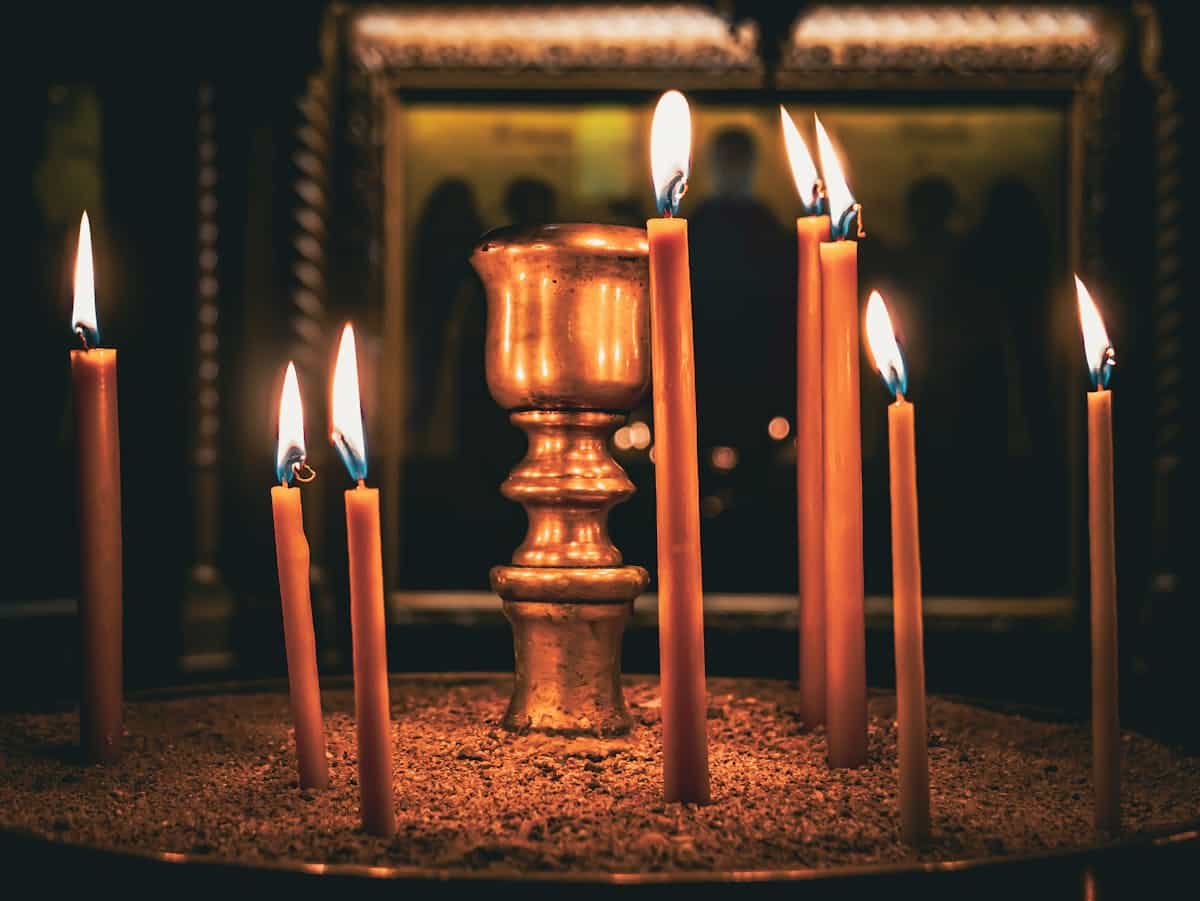
Eastern Orthodox Christianity teaches that the soul of the deceased travels the earth for 40 days following death, revisiting the places and people it knew in life, before undergoing its final judgment. The 9th day and the 40th day are marked with specific prayers — these correspond to transitions in the soul's journey. During the 40 days, the soul is understood to be genuinely present in the household, not metaphorically but specifically.
Within this framework, the covered mirror is protection against confusion. If the soul encounters its own reflection, it may not understand what it sees. It may become drawn into the glass. It may lose track of its 40-day journey. Covering the mirrors keeps the path clear.
Some traditional Romanian and Ukrainian practices extend the covering logic to other reflective surfaces. Clocks are stopped at the moment of death. Water basins are turned over. Anything that might reflect or mark time is neutralised — the goal is to freeze the ordinary world in place so the soul's transition is not interrupted by the rhythms of the living.
The 40-day period is not arbitrary. It appears across multiple religious and cultural traditions — 40 days of wandering, 40 days of testing, 40 days before a new beginning — and its presence in the Eastern Orthodox mourning framework reflects a cosmological understanding of death as a process rather than an event.
How Long Should Mirrors Be Covered After Death?
The duration varies significantly by tradition, and there is no single correct answer. Here is what each tradition actually prescribes:
- Jewish Shiva: 7 days, beginning at the moment of death — not the funeral
- Irish Catholic wake: Until after burial, typically 2–4 days
- Victorian English custom: While the body is in the home, usually several days to a week
- Eastern Orthodox (Slavic): 40 days, the full period of the soul's earthly journey
- Scottish and American Southern folklore: No fixed duration — typically until after the funeral and burial
If you are observing a specific religious tradition, the length is determined by that tradition's requirements. If you are following a general cultural instinct without a specific religious framework, covering the mirrors until after burial is the most widely observed informal standard.
The Psychology Behind Covering Mirrors After Death
There is a specific optical phenomenon that explains why mirrors feel threatening during grief — and why reports of seeing figures or distortions in mirrors are so common during wakes and vigils.
It is called Troxler's fading, first described by Swiss physician Ignaz Paul Vital Troxler in 1804. When the visual system is exposed to an unchanging image — your own face in a mirror, held in steady focus — neurons begin to habituate and stop processing the stimulus. The face starts to shift. Features appear to melt or distort. Shadows take on shape. The longer the gaze, the more pronounced the effect.
During grief, the conditions for Troxler's fading are almost perfectly met. Sleep deprivation is common — sometimes extreme. Emotional exhaustion flattens the brain's normal alertness. The rooms where wakes are held are often dimly lit. Mourners sit or stand still for long periods. In this state, a glimpse of one's own reflection is precisely the kind of stimulus that produces the "ghost in the mirror" experiences that folklore has been describing for centuries.
Covering the mirrors removes that trigger during the period of maximum vulnerability. Whether or not you hold any belief about souls and reflections, the practical psychological case for covered mirrors during acute grief does not require a supernatural framework to hold. The evidence on whether mirrors can trap souls or spirits is a separate question — but Troxler's fading explains why the belief is so persistent and so consistent across cultures that have no other connection to each other.
The Takeaway
The practice of covering mirrors after a death is not a single tradition with a single meaning. It is a convergence of separate traditions — Jewish, Christian, Slavic, Victorian, Celtic — that have each arrived, through different reasoning, at the same physical act.
What the traditions share is a recognition that mirrors are not neutral objects. In a house of grief, they present problems: distraction, spiritual risk, the intrusion of the ordinary world into a space that has become temporarily extraordinary. The act of covering them is an act of management — creating the conditions for grief, prayer, or spiritual transition to proceed without the mirror's interference.
Understanding mirror symbolism across the world's cultures and religions makes it clearer why the same object keeps appearing at these threshold moments. Mirrors sit at boundaries: between face and image, between self and world, between this side and whatever might be on the other. When death arrives and every boundary in a household becomes suddenly charged, the mirrors are the first thing people think to close.
Mirror FAQ
Why do people cover mirrors when someone dies?
Different traditions give different reasons. In Jewish Shiva, mirrors are covered to eliminate vanity, enable prayer, and honour the theological weight of death. In Irish and Victorian folklore, they are covered to prevent the soul from becoming trapped in the reflection or to stop mourners from seeing death marked in the glass. In Eastern Orthodox tradition, mirrors are covered so the wandering soul is not confused during its 40-day earthly journey before final judgment.
Why do Jewish people cover mirrors when someone dies?
In Jewish tradition, mirrors are covered during Shiva for three reasons: to eliminate the distraction of vanity during a period devoted entirely to grief and prayer; because Jewish law prohibits praying in front of a mirror, and the home becomes a place of constant prayer during Shiva; and as a theological gesture acknowledging that the divine image carried by the deceased has been lost from the world.
Why did Victorians cover mirrors after death?
Victorians covered mirrors because they believed an uncovered mirror in a house of death would "capture" the soul of the deceased — and that any mourner who glimpsed themselves in it risked being marked as the next to die. They also covered mirrors to prevent mourners from checking their appearance, which was considered inappropriate during formal mourning. The practice fit within a broader Victorian framework of elaborate death ritual and public grief display.
Why do Catholics cover mirrors at a wake?
The Catholic tradition of covering mirrors at a wake comes primarily from Irish Catholic practice. Mirrors are covered to prevent the soul from becoming distracted or trapped in the reflection during its transition, and to maintain the sacred character of the wake as a vigil — a period of prayer, not ordinary domestic life. The practice is not a formal Church requirement but a deeply embedded cultural custom in Irish and some Eastern European Catholic communities.
How long do you cover mirrors after death?
The duration varies by tradition. Jewish Shiva requires mirrors to be covered for 7 days from the moment of death. Eastern Orthodox and Slavic traditions cover them for 40 days, matching the soul's earthly journey before final judgment. The Catholic wake tradition typically lasts until after burial, around 2–4 days. Victorian households covered mirrors while the body was in the home — usually several days to a week.