Narcissus Myth Mirror Symbolism: Ovid, Echo, and the Pool

The Roman poet Ovid, in Book III of Metamorphoses, does not hand Narcissus a wall mirror. He bends him toward a pool until the boy mistakes his own reflected face for somebody else — a stranger worth desire — and dies still reaching for someone who is not there. That is the core mirror trick of the myth: reflection without relation, intimacy with an image. Add Echo (speech stripped to repetition), Nemesis (the balancing strike), and a prophecy about self-knowledge, and you get a story that is less about "being vain in general" and more about what happens when a person treats an appearance as a person.
For how mirrors accumulate meaning across cultures and religions, see mirror symbolism across world cultures and religions. For reflective language in scripture and parable, mirrors in the Bible offers a useful parallel frame.
How Does Ovid Tell Echo and Narcissus?
Ovid works from Greek sources but shapes them into a tight narrative sequence. Narcissus is the child of the river Cephissus and the nymph Liriope; the seer Tiresias answers the anxious question of Liriope with a paradox — the beautiful boy may live long if he never comes to know himself. That riddle hangs over everything that follows.
Echo enters as a talkative nymph punished by Juno (Roman Hera): she can no longer speak first, only repeat the ends of what she hears. She spots Narcissus in the hills, loves him, and approaches. Because she can only echo his words, the conversation collapses into tragic farce — he rejects her, she watches him walk away, and she wastes into an auditory shade, stone and voice only. The fuller story appears in standard summaries on Echo and Narcissus.
After those rejections — Echo is not the only one he wounds — a scorned youth prays that Narcissus may taste his own medicine. Nemesis hears the prayer and leads Narcissus to a clear pool. He drinks, sees a boy in the water, falls in love, tries to embrace him, and eventually dies at the bank. The mythological Narcissus figure is collected on Narcissus (mythology).
What Does Water Have to Do with Mirror Symbolism?

A calm surface gives the same lateral flip and stable pose you see in a modern mirror: light reflected at equal angles preserves the illusion of another space behind the glass — or below the water. Narcissus reaches into the medium and learns the limit the hard way: the beloved does not push back as a body would.
Historically, most people did not grow up with affordable flat glass mirrors. For millennia, polished metal and still ponds were how you might meet your face. So the pool is not a poetic downgrade from a "better" mirror. It is the mirror that nature supplied.
That matters when you connect the story to material mirror history: the spiritual vocabulary of reflection, inversion, and "true image" in traditions worldwide often rides on the same optical fact you can read throughout mirror symbolism across cultures — surfaces that double the world.
Why Pair Echo with a Boy Who Only Sees Himself?
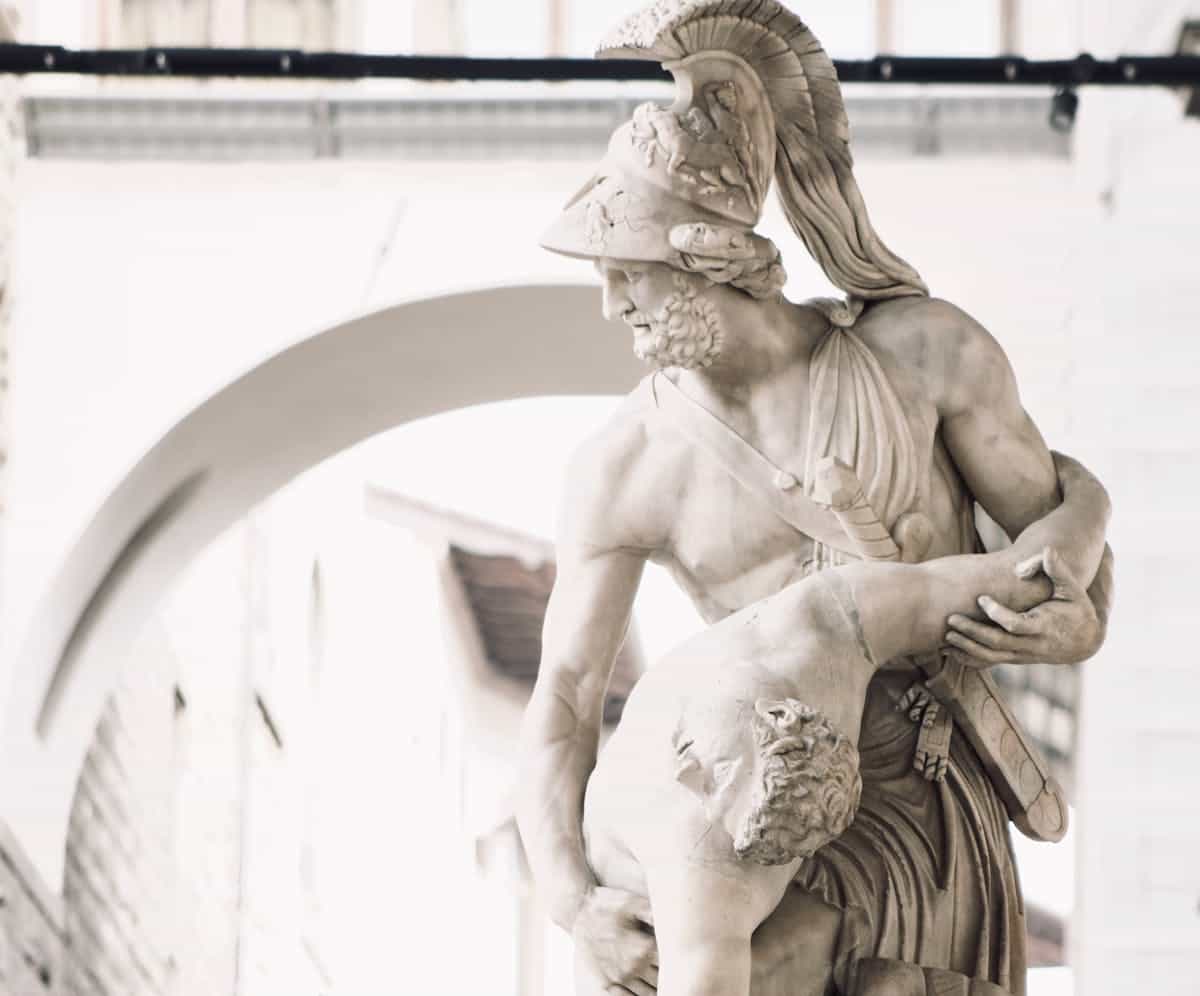
Echo literalises repetition without mutuality: her words are yours, replayed. Narcissus literalises fixation on a surface that repeats his likeness without mutuality. The structure rhymes. He hoards a one-sided "dialogue" with the pool; she once tried a one-sided dialogue with him.
Reading only the flower ending — narcissus the daffodil — risks missing Echo as half the emotional architecture. Ovid wants you to feel parallel loneliness: sound without origin, image without interior. The myth warns not only about self-admiration but about relationships reduced to feedback loops.
If you want a longer angle on how reflection plays in dreams and symbol systems, mirror dream meaning collects interpretive threads that often overlap with mythic mirrors.
Why Does the Narcissus Story Resurface Around Mirror Anxiety?

The myth is not a diagnosis. It is a warning tale about fixation — which is why people in real distress sometimes feel spoken to when they read it. If looking at reflective surfaces has stopped feeling neutral, the useful modern read is not "you are mythical Narcissus" but "your attention may be stuck on an image loop." Gentle, structured approaches beat prolonged avoidance; for the belief layer as well as the fear layer, mirror anxiety fear of mirrors and superstition walks through both.
How Does Nemesis Turn the Plot?

When modern readers call the myth about "vanity," they often skip the jurisprudence. Nemesis answers injury to others. Narcissus cruelty is not incidental backstory — it is why the world answers him with an image he cannot possess.
Spiritually, that reads as accountability for how you treat the hunger of other people while you guard your own hungers. Psychologically, it reads as consequence: contempt does not stay locked in a neat private box; it trains you to treat faces as disposable, including your own face when it appears as an object in water.
Is Clinical NPD the Same as Narcissus in the Myth?

The honest answer is no — overlap is real, identity is not.
Narcissistic personality disorder names a clinically defined personality pattern: pervasive grandiosity, constant need for admiration, and limited empathy, present across relationships and situations, assessed by trained clinicians using criteria and careful differential diagnosis. It is not a casual label for someone who posts selfies.
The myth gives you a literary scene about misrecognition — believing an image is other — dying of thirst beside water because he stares instead of drinks. Freud borrowed the name for drives around self-love, but that borrowing does not collapse two thousand years of storytelling into the DSM checklist.
When you need a bridge between psychology vocabulary and reflective objects, mirrors, mind, and soul walks the line where self-perception and meaning-making meet.
What Modern Parallels Match the Pool?

Replace the pool with any reflective rectangle you stare into long enough that the world narrows: phone front camera, wing mirror, filtered preview, gym mirror under hostile lighting. Each can become a second person you argue with or adore — not because optics lie more than any other image, but because the story you layer on top needs an audience of one.
Research on self-focused mirror gazing has found it can reduce appearance satisfaction even in people without body dysmorphic disorder — reflection is not neutral once attention clamps onto flaw scanning. Separately, studies on beauty filters point toward perceptual normalisation of altered faces. Those findings land in the same neighbourhood as the myth: the danger is not a single glance; it is the trance where the image replaces the relationship.
What Changes When the Pool Becomes a Feed?

Social feeds add Echo mechanically: the last phrases of strangers echo down the timeline, stripped of context, inviting imitation without contact. You can hate the moralism of that comparison and still recognise the pattern — repetition without mutuality scales better now than in the ancient hills.
Where Does Mirror Ethics Meet Daily Life?

You do not owe the myth agreement with any one theology to take its practical question seriously: when you look, what are you seeking — information, reassurance, comparison, a dopamine spike, proof you exist?
Mirrors and cameras are culturally framed as truth-tellers, but optics only deliver light paths. "Truth" is your interpretation layer — which is why this site keeps returning to the difference between physical reflection and moral metaphor. The Narcissus story punishes someone who mistakes a surface for a soul. The healthier modern move is not avoiding mirrors; it is refusing to let any single surface be the whole verdict on a life. If mirror anxiety is the obstacle, gradual exposure under skilled support beats long avoidance — avoidance tends to enlarge the imagined flaw.
What Stays When the Story Ends?

Narcissus becomes a flower nodding above water — an image of lowered head, shortened stature, beauty that no longer searches for an impossible embrace. Echo remains a voice in the rocks.
Carry one line from Tiresias without turning it into a fortune cookie: knowing yourself is not the same as staring until you are hypnotised. Knowing is relational, testable against feedback that can contradict the pool. The reflection can teach; it should not legislate.
The pool in Ovid does not judge your lighting. It only shows a face and quietly refuses touch. The myth endures because every culture that inherits mirrors and cameras inherits the same optical temptation — to mistake the copy for company, and to starve while the water stays right there. Drink first. Let the reflection be information, not a hostage taker.
Mirror FAQ
Did Narcissus look into a mirror in the original myth?
In Ovid Metamorphoses Book III, Narcissus stares into a pool and mistakes his reflected face for another person. Still water works like a specular surface, so the story functions as a mirror tale even though no polished glass appears. Later art often shows a mirror to make the motif obvious.
What role does Echo play in the Narcissus story?
Ovid ties the mountain nymph Echo to Narcissus: Hera had limited her speech to repeating the words of others, Echo loved Narcissus, he rejected her, and her unrequited suffering frames his later self-love as a kind of cosmic symmetry rather than a solo freak accident.
What is the moral of the Narcissus myth?
Readings vary, but a stable thread is the danger of loving an image you cannot reach, own, or truly know — a reflection that flatters without relationship. Tiresias prophecy even ties long life to not knowing oneself in a way that traps Narcissus precisely in false knowing.
Is narcissism the same as Narcissus in the myth?
No. The clinical construct narcissistic personality disorder names a persistent pattern of grandiosity, need for admiration, and low empathy across contexts. The myth is a literary episode about fixation on a reflected image. The words overlap; the phenomena are not identical.
Who punishes Narcissus in Ovid?
Nemesis, often summarized as retribution for hubris answers a prayer about Narcissus cruelty toward Echo and others by arranging his obsession with his own reflection.
Why does the myth use water instead of a mirror?
Still water predates affordable clear mirrors across most of history. Culturally, a pool is liminal — surface and depth, real image and copy — which makes it a strong symbol for unstable self-recognition.