Mirror as a Spiritual Tool: History, Practices, and What Actually Works
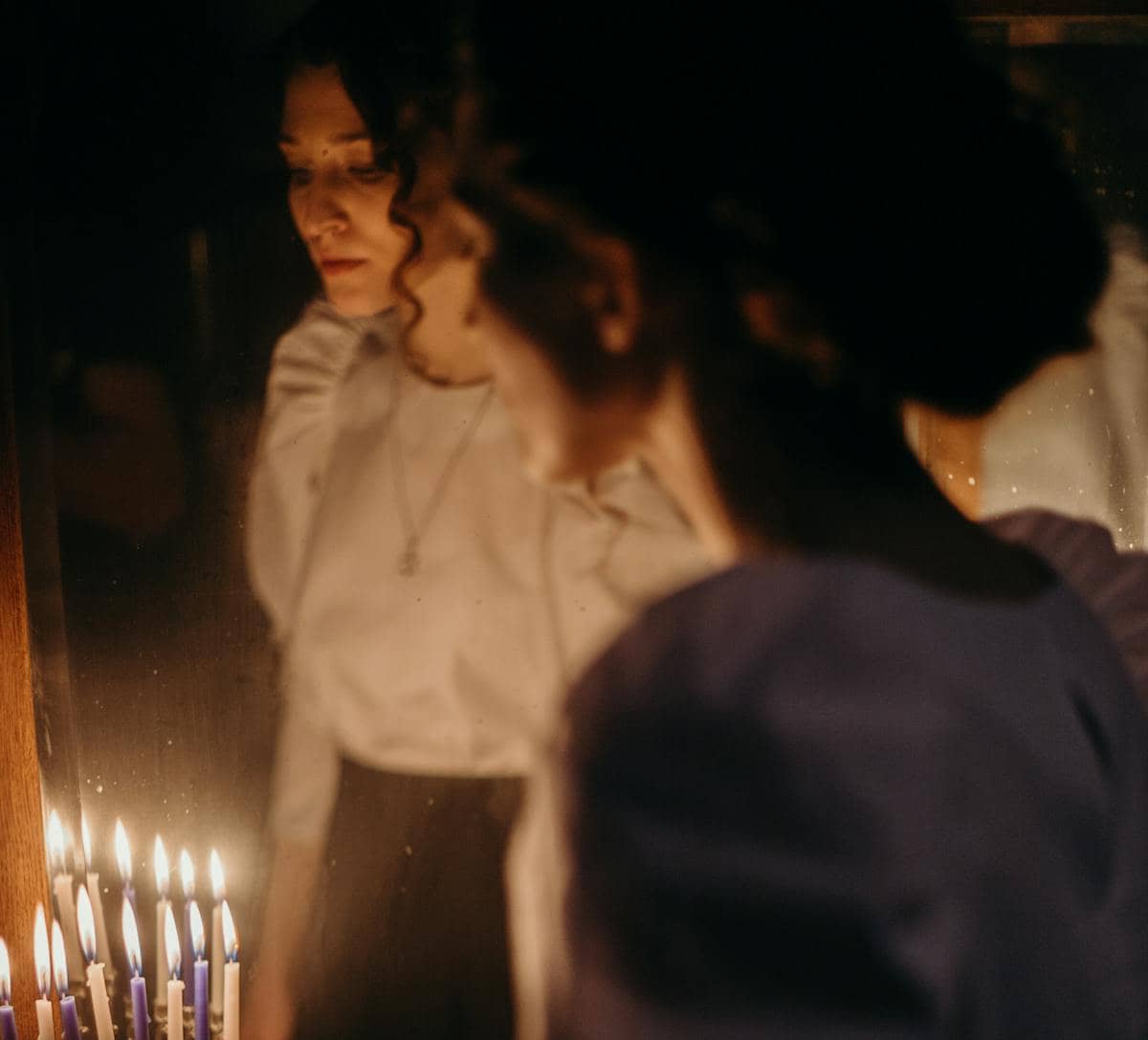
A mirror as a spiritual tool turns up in virtually every major culture: ancient Egypt buried them with the dead, the Aztecs used polished obsidian for prophecy, Japan enshrines one as a sacred object, and Buddhism uses the mirror as its central metaphor for enlightened mind. The shared idea is that a mirror shows what is actually there — which is precisely what makes it useful in practice. This guide is about the practice: the real history, the four types of mirror used, and how to use one for meditation, scrying, protection, and intention work today.
Most content on mirrors as spiritual tools either skims the cultural history without depth or presents one tradition as if it owns the meaning. Different traditions say genuinely different things about this, and the differences are worth knowing. What they agree on is more interesting than what they disagree on.
Why a Mirror Works as a Spiritual Tool
Before the methods, the one quality that makes a mirror useful in practice: it shows what is actually there, not what you wish were there. In traditions where truth is a sacred quality, that honesty makes the mirror a sacred object by extension — and its "here and not here" character (real but reversed, present but untouchable) is why it recurs in practices that reach toward thresholds, the soul, and other realms.
That is the practical foundation; the wider symbolism is a topic of its own. For what the mirror represents across traditions — truth, threshold, and partial sight — see the mirror spiritual meaning and symbolism pillar. This guide stays on the practice: the history of using mirrors deliberately, the tools, and the methods.
How Traditions Have Used Mirrors as Spiritual Tools: A History of Catoptromancy
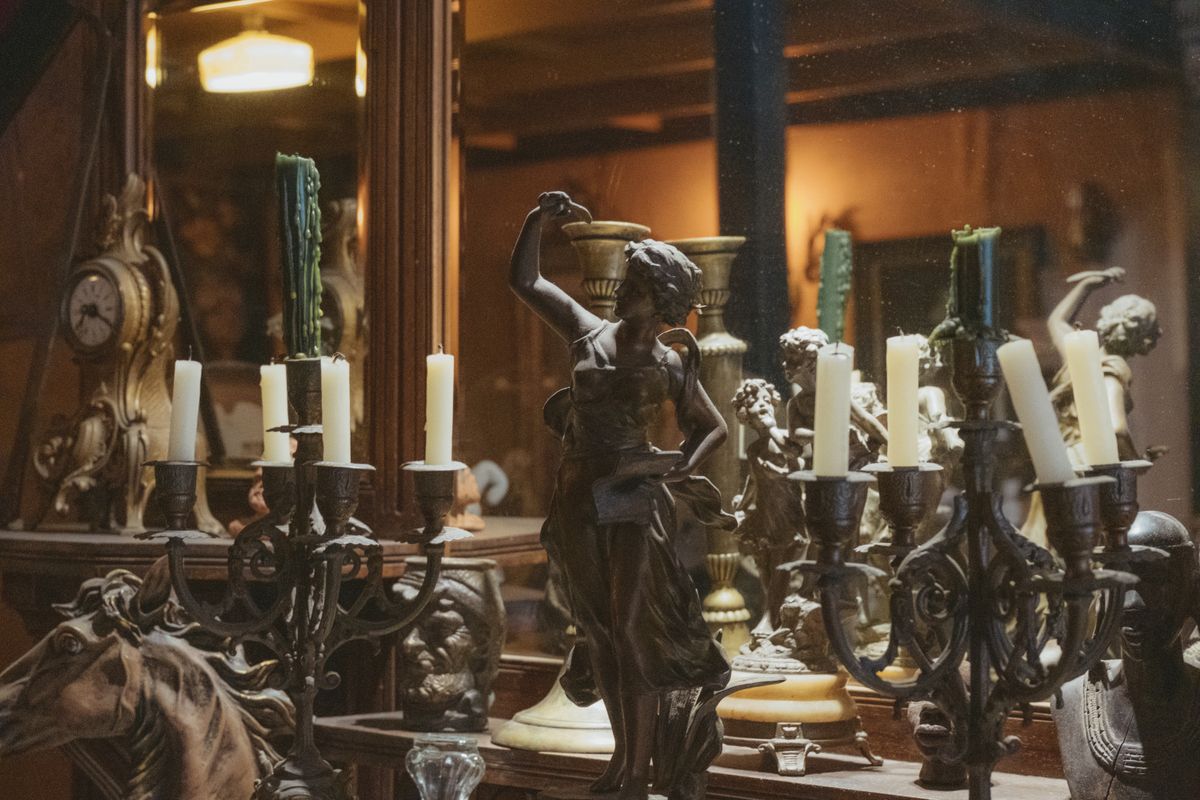
Catoptromancy — divination using mirrors or reflective surfaces — has a documented history stretching back thousands of years and appearing independently across cultures that had no contact with each other.
Ancient Greece and Rome: Greek oracles used water, oil, and polished metal for hydromancy and catoptromancy. Roman practitioners read omens in reflecting bowls of water. The connection between still reflective surfaces and divination was treated as practical knowledge, not superstition.
Mesoamerica: The Aztec god Tezcatlipoca — whose name translates as "Smoking Mirror" — was associated with polished obsidian discs used by priests for prophecy, night, and fate. Obsidian mirrors were ritual objects of the highest order, used by specialists within ceremonial contexts. This is the oldest continuous tradition of purposeful black mirror use in recorded history.
Persian tradition: The Jām-e Jam — the Cup of Jamshid — is a mythological scrying vessel described in Persian literature that could reveal everything happening in the world to whoever looked into it. The mirror as an instrument of comprehensive seeing appears throughout medieval Persian poetry, most famously in Rumi.
Renaissance England: Dr. John Dee, mathematician and astrologer to Elizabeth I, kept detailed records of sessions in which Edward Kelley scryed into a polished obsidian disc (and other "shewstones") to record communications he interpreted as angelic. Dee's journals are one of the most thorough primary-source accounts of systematic mirror work in Western history. The obsidian disc is held in the British Museum.
Victorian parlors and beyond: Scrying was trivialized in popular Victorian entertainment but never disappeared from serious occult practice. The underlying technique — soft gaze into a dark reflective surface — remained consistent across contexts that had very different theories about what the impressions meant.
The honest historical picture is that using a mirror as a spiritual tool is not a new-age invention. It is one of the older documented human practices, with a lineage running from Mesoamerican obsidian to Elizabethan angelic inquiry to contemporary meditation.
The Four Types of Mirrors Used in Spiritual Practice
Not every mirror functions the same way in practice. The choice of mirror shapes the experience, so understanding the differences matters before you decide which to use.
1. Black Obsidian Mirror: The historically authentic scrying surface. Obsidian is volcanic glass — dark, dense, and virtually non-reflective in ordinary light. Its surface absorbs most ambient light and presents a void-like field. Culturally, obsidian is associated with grounding, sharp discernment, and boundaries. In practice, the dark surface removes "face data" — the specific details of your appearance — which some practitioners find makes entering a receptive, defocused state significantly easier. Best used for: scrying, deep introspective work, and shadow integration. For a complete guide to working with a black mirror specifically, including step-by-step session method, that post covers it in full.
2. Clear Glass Mirror: The most widely available type. A standard silver-backed glass mirror reflects clearly and brightly, which makes it better suited to mirror meditation, affirmation work, and self-observation practices than for scrying, where the bright reflection is a distraction. Many practitioners keep one mirror dedicated to spiritual work, separate from the bathroom mirror used for grooming, on the principle that intention accumulates in objects used consistently for the same purpose.
3. Water Mirror (Bowl Scrying): Still water in a dark bowl functions as a mirror. Hydromancy — the use of water for divination — predates glass mirrors and produces a similar effect: a dim, slightly reflective surface that invites soft-gaze attention. Water has the additional quality of natural movement, which some practitioners find more responsive to subtle environmental shifts. Best used for: gentler divination, lunar-timed practice, and emotional or relational questions where the symbolism of water is relevant.
4. Convex and Concave Mirrors: Shaped mirrors redirect attention differently from flat surfaces. A convex mirror (curving outward) expands the field of reflection and in Feng Shui is placed facing outward to deflect perceived harmful energy — the bagua mirror hung above a door is the most recognizable example. A concave mirror (curving inward) contracts the field and is associated with drawing or concentrating energy in some traditions. Both types have practical home-protection uses, though their spiritual significance varies considerably by tradition.
Mirror Meditation: Using a Mirror for Self-Knowledge

Mirror meditation is the most accessible form of spiritual mirror work. It requires nothing more than a mirror, a few minutes, and the willingness to look without immediately making it mean something.
The practice is simple to describe and genuinely difficult to do. Most people cannot hold eye contact with their own reflection for two minutes without the mind firing a rapid series of judgments — too tired, too old, not like I imagined. The practice is not about suppressing those judgments. It is about noticing them, not following them, and returning to the simple act of looking.
A basic method:
- Sit 30 to 45 centimetres from a clean mirror in a dim room. Candlelight behind you is ideal — enough to see without glare.
- Take three to five slow breaths, feeling your weight in the chair.
- Open your eyes and make relaxed eye contact with your reflection. Many traditions suggest focusing on the left eye as an anchor.
- When your mind labels what it sees (tired, aging, wrong), notice the label and return to neutral presence. You are training observation, not evaluation.
- Start with five minutes. Extend to fifteen over several weeks.
What happens in the brain — and why it matters:
Two well-documented neurological phenomena occur during sustained mirror gazing that are worth understanding whether you frame the practice spiritually or scientifically.
The first is Troxler's fading: when the eye fixates on a single point for long enough, the surrounding visual field begins to fade or shift. In mirror gazing, features may seem to alter, drift, or briefly resolve into different faces. This is a perceptual phenomenon, not a supernatural one, but it is real and produces genuinely altered visual experience. Spiritual frameworks interpret this as "the mask loosening" or deeper layers of self becoming visible. Both descriptions are pointing at the same event.
The second is the activation of the fusiform face area — the region of the brain dedicated to face recognition. During extended self-gazing, this system is on, processing your face in real time. It is also the system that generates emotionally charged reactions to faces, including your own. This is why extended mirror gazing frequently produces unexpected emotion: you are engaging the part of your brain most directly wired to self-perception and social threat detection. Spiritual practitioners read those emotional releases as the ego structure relaxing. The neuroscience does not contradict that interpretation. For broader context on what mirror self-recognition reveals about consciousness — including which animals pass the test — the research is worth reading.
Scrying: Using a Mirror to Seek Insight
If mirror meditation tilts toward self-knowledge, scrying tilts toward questions. The distinction is in the intent you bring to the session: meditation observes the self without agenda; scrying brings a specific inquiry and watches for impressions that might speak to it.
The technique is the same — soft gaze, dim room, receptive attention — but the orientation differs. Before a scrying session, write one clear question. Not "what will happen to me?" but something specific: "What do I not see clearly about this situation?" or "What is the most important thing for me to understand about this relationship right now?"
The practical method:
- Cleanse the mirror before use (see below).
- Dim the room to a single candle. Position the mirror so you see a dark field, not your clear reflection.
- Ground with three to five slow breaths. If you use protective practice — a circle, a prayer, a statement of intent — establish it now.
- Hold your question lightly in mind. Do not force it; let it sit in the background.
- Soften the jaw. Let the mouth fall slightly open to release tension. Look at the mirror, not into it — let your gaze defocus.
- Observe without narrating. When impressions arise — colors, shapes, faces, a word that surfaces — label them simply: "blue," "doorway," "older woman." Resist interpreting immediately; interpretation happens in the journal afterward.
- Close the session deliberately. Thank whatever you work with, cover the mirror, and write notes immediately. Memory of scrying impressions fades as fast as dream memory.
Most images that arise in scrying are symbolic, not literal. A skull does not mean death; it more often represents endings, the unconscious, or fear of change. Interpretation comes from your life context, not from a dictionary of symbols. The received impression matters more than the prescribed meaning.
Mirrors for Home Protection and Energy Placement
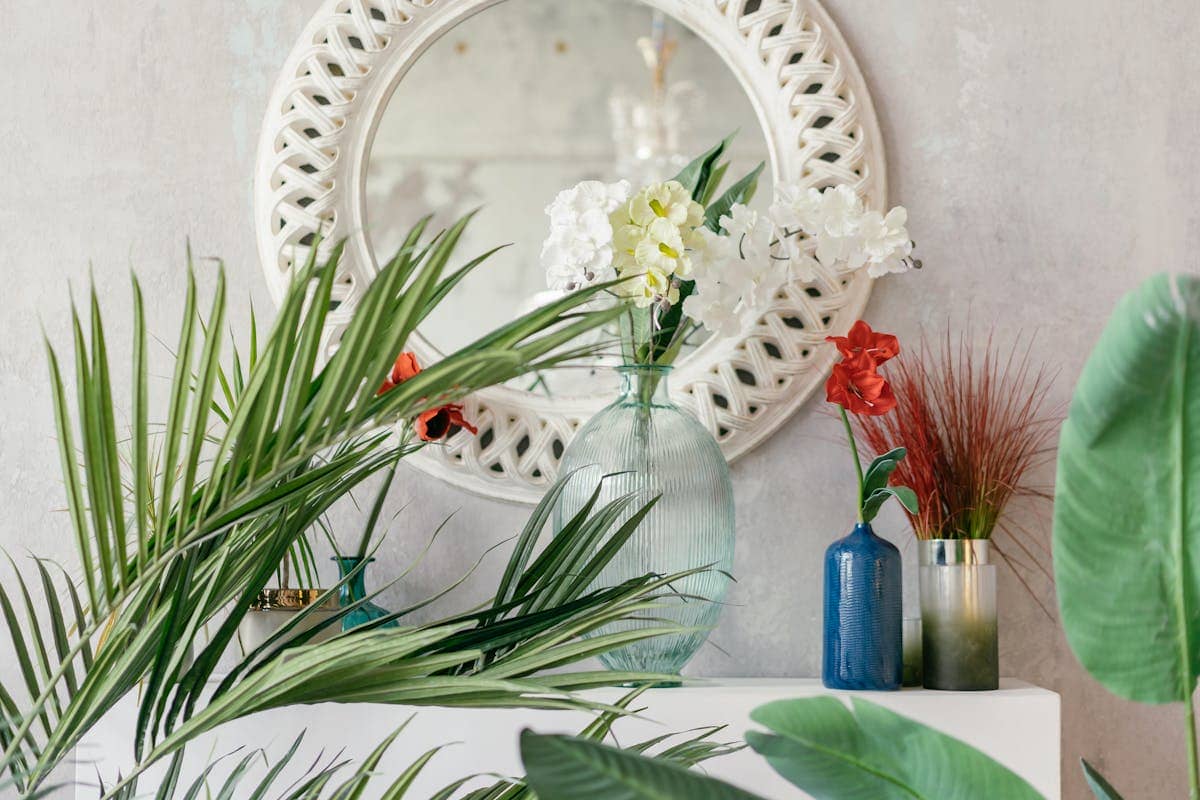
The use of mirrors to manage energy in a home draws from multiple traditions — most prominently Chinese Feng Shui — and does not require formal practice to apply. Placement is the simplest form of treating a mirror as a spiritual tool.
The logic is consistent across traditions: mirrors reflect what is in front of them, and in symbolic terms that means they can either amplify, deflect, or redirect energy depending on what they face.
Common placement principles from Feng Shui:
| Mirror placement | Traditional interpretation | Practical note |
|---|---|---|
| Facing main entrance from inside | Said to push welcoming energy back out | Avoid in most Feng Shui schools; outdoor convex differs |
| Facing the bed | Said to disturb rest and intimacy | Reposition or cover at night if it feels uncomfortable |
| Dining room, reflecting the table | Associated with doubling abundance | Use if the symbolism resonates and the sightline works |
| Facing a garden or pleasant view | Brings the outside in; expands the sense of space | Widely recommended — beauty multiplied is rarely a problem |
| Long hallway aligned with a door | Said to rush energy through the space | Offset with a plant or break the direct line of sight |
The convex bagua mirror — familiar from Chinese storefronts and apartments — is placed outside above a door, typically oriented toward a sharp corner, a busy road, or a perceived source of harmful energy. The convex curve disperses rather than absorbs; the intention is deflection, not containment.
Small mirrors placed with specific intent — a hand mirror on an altar, a reflective disc in a garden — follow the same logic at smaller scale. The tool is the intention more than the object. For a deeper look at how mirrors are used across different world cultures and religions, including Hinduism, Islam, and African traditions, that guide covers the breadth properly.
Mirror Work for Intention and Affirmation
Louise Hay popularized daily mirror affirmations in the late twentieth century, but the practice of speaking to one's reflection has roots in multiple traditions. The spiritual logic is congruence: the mirror reveals whether your spoken intention matches your body, face, and breath, or whether the words are an act.
Most people who try affirmations in front of a mirror encounter unexpected resistance — the face contracts, the voice sounds thin, something inside disagrees with what the mouth is saying. That resistance is the actual starting point. The practice is not to override it but to notice it honestly and ask what it is protecting.
A simple mirror affirmation practice:
- Choose one statement that is true and aspirational, not simply flattering: "I am learning to trust my judgment" is more honest and more effective than "I am perfect."
- Stand or sit before the mirror in ordinary lighting.
- Make eye contact with your reflection.
- Speak the statement aloud at a normal pace. Notice what the face does. Notice what the body does.
- Repeat three to five times. Write down any resistance that arose.
The power of this practice is not in the repetition of positive language. It is in the honest encounter with the gap between what you say and what you feel. Over time, that gap narrows — not because you talked yourself into believing something, but because you kept showing up to look at the gap honestly. That is what turns an ordinary mirror into a spiritual affirmation tool with real and measurable effects.
How to Cleanse and Consecrate a Spiritual Mirror
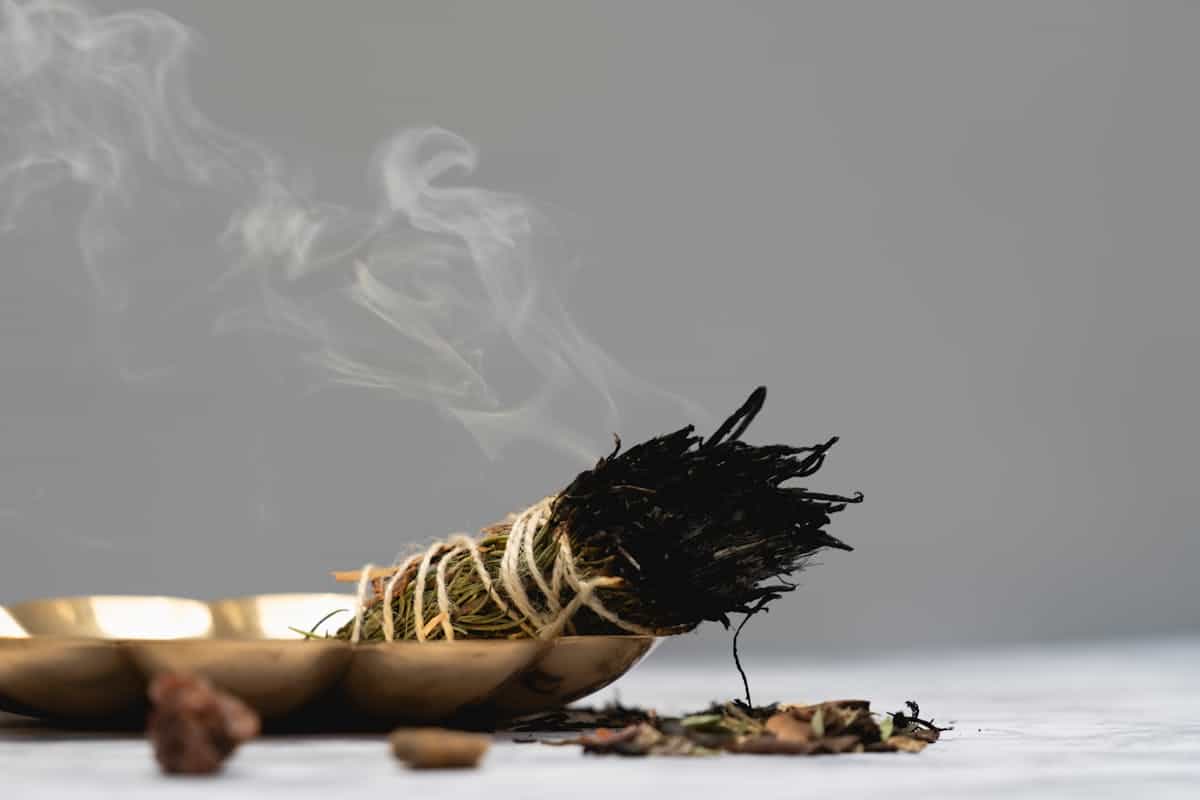
A mirror used as a spiritual tool benefits from regular cleansing. The reasoning is practical whether you hold it spiritually or psychologically: a mirror used for intense introspective or scrying work picks up the emotional atmosphere of those sessions. Clearing it before use signals to the mind that a new session begins fresh.
Three cleansing methods:
Smoke cleansing: Pass the mirror through sage, frankincense, or palo santo smoke while imagining stale energy leaving the surface. Move in slow, deliberate passes. State your intent aloud if that matches your practice.
Salt: Rest the mirror face-up on a layer of dry sea salt or Himalayan salt for twenty-four hours. The salt absorbs residue. Brush it off gently; do not wet the surface.
Moonlight: Place the mirror where it receives full moonlight overnight. The full moon is traditional but any strong moonlight works. This method is particularly suited to mirrors used for divination.
Consecration: After cleansing, state the mirror's purpose aloud. This step is not superstition — it is a cognitive anchor that trains the mind to recognize this object as belonging to a distinct class of activity. "This mirror is for honest self-seeing" or "this mirror serves clear insight" are both adequate. Specificity helps.
Dedicate one mirror to one purpose when possible. If you have only one mirror for all uses, a cloth cover — black for scrying and shadow work, white for meditation, other colors according to your symbolism — signals the opening and closing of the intentional work mode.
Warnings: When Mirror Work Stops Serving You
The mirror is a tool. Tools are powerful when used with skill and awareness, and risky when used carelessly or in the wrong state. Treating mirror work with respect is not timidity; it is proportional to what the practice actually does.
People with psychosis, severe dissociation, or active trauma should consult a qualified mental health professional before engaging in prolonged mirror gazing or spirit-focused scrying. Extended mirror gazing activates face-recognition systems, emotional processing, and altered visual states. For someone whose relationship with reality and self-image is already strained, this is not a neutral stimulus. The risk is real.
Signs that mirror work is producing overload rather than growth:
- Repeated nightmares involving mirrors or pursuit following sessions
- Persistent visual disturbance — movement or presence — connected to the mirror outside of sessions
- Life instability that began specifically with unbounded or unclosed scrying practice
- Compulsive need to check or stare into the mirror that feels anxiety-driven rather than intentional
What to do if this happens:
Cover the mirror completely with a heavy cloth. Cleanse the room with smoke or salt. Stop all mirror work for several weeks. Prioritise grounding activities: sleep, food, movement, time outdoors, and human contact. Speak with a therapist if the disturbances persist.
If you decide to discontinue a mirror that has been used heavily for spiritual work, do not shatter it. Wrap it in dark cloth, thank it plainly for its service, and remove it from the home. That closing gesture is for you, not the object — it marks a clear end to the practice rather than an ambiguous trailing off.
Quick Reference: Mirror as a Spiritual Tool by Purpose
| Purpose | Mirror type | Method |
|---|---|---|
| Self-knowledge and compassion | Clear glass | Soft gaze, slow breath, non-evaluative observation |
| Divination and scrying | Black obsidian or dark bowl | Dim light, soft focus, label impressions, journal after |
| Home protection and deflection | Convex bagua (placed outside) | Oriented toward perceived harsh energy |
| Affirmation and intention | Clear glass | Direct eye contact, spoken statement, honest noticing |
| Shadow work | Black obsidian or concave | Longer sits, emotional integration journaling |
| Cleansing and consecrating | Any | Smoke, salt, or moonlight, followed by stated purpose |
The mirror has not changed in six thousand years of spiritual use. What changes is what each tradition brings to it — the theology, the cosmology, the specific fears and questions of the era. Egyptian priests, Aztec ritual specialists, Renaissance astrologers, and contemporary meditators are all pointing a reflective surface at the same basic human situation: the difficulty of seeing oneself honestly, and the value of a practice that keeps trying. The mirror does not solve that problem. It just keeps the question honest.
For a broader look at what specific traditions believe about mirrors and their connection to souls, spirits, and the afterlife, the mirror symbolism across world cultures guide is worth reading alongside this one.
Frequently Asked Questions
What does a mirror symbolize spiritually?
Spiritually, a mirror symbolizes truth, self-knowledge, and the threshold between the visible and invisible worlds. In ancient Egypt it represented the soul and the afterlife. In Buddhism the mind is compared to a mirror, with clarity representing enlightenment. In Japanese tradition a mirror is one of the Three Sacred Treasures, symbolizing wisdom. Across most traditions the mirror carries the same core meaning: it shows what is actually there, without flattery or concealment.
How do I use a mirror for meditation?
Sit 30 to 45 centimetres from a clean mirror in a dim room, ideally with a single candle behind you. Breathe slowly, soften your gaze, and hold eye contact with your reflection without judgment. When your mind labels what it sees (tired, older, wrong), notice the label and return to neutral observation. Start with five minutes and extend gradually. The practice builds the capacity to observe yourself without the usual self-critical commentary.
Can mirrors attract spirits or negative energy?
Different traditions disagree. Some folk practices hold that mirrors can hold residual energy from past events or owners, and that a mirror left uncleaned may accumulate unsettled impressions over time. Others view mirrors as neutral objects that only carry the energy brought to them through intention. The more grounded position is that a mirror used carelessly for intense spirit-focused scrying without proper grounding or closing can leave a practitioner feeling unsettled, not because the mirror is dangerous, but because the mental state the practice induces has not been properly closed.
How do I cleanse a mirror of negative energy?
Three methods are widely used. The first is smoke cleansing: pass the mirror through sage, frankincense, or palo santo smoke while intending stale energy to leave the surface. The second is salt: rest the mirror on dry sea salt for twenty-four hours. The third is moonlight: leave the mirror facing the full moon overnight. After cleansing, consecrate the mirror by stating its purpose aloud. Repeat a light cleansing before each intentional use.
What is mirror work in spirituality?
Mirror work is a practice developed by Louise Hay and others involving daily intentional eye contact with your own reflection, paired with spoken affirmations. The premise is that sustained, non-judgmental self-observation trains the mind out of habitual self-criticism. Research on mirror exposure therapy for body dysmorphic disorder suggests that extended mirror practice with a non-evaluative stance can reduce distress around self-image over time, though the spiritual framing extends beyond clinical outcomes to include compassion, self-acceptance, and intentional identity work.
Which direction should a mirror face for good energy?
In Feng Shui, the most commonly recommended placement is a mirror that reflects something beautiful or meaningful from across the room, such as a garden view or a dining table. Mirrors facing the main entrance from inside are traditionally avoided because they are said to push welcoming energy back out. Mirrors facing the bed are also avoided, as they are said to disturb rest. These are cultural beliefs, not physical laws. Adjust placement based on what feels right for your space and whether the symbolism holds meaning for you.
Is mirror scrying dangerous?
Mirror scrying is not inherently dangerous. The risk is not in the mirror itself but in the practitioner state. Scrying when emotionally unstable, without any closing practice, or while pushing for dramatic results can produce unsettling impressions and lingering unease. People with psychosis, severe dissociation, or unprocessed trauma should consult a qualified professional before engaging in prolonged gazing or spirit-focused scrying. For most practitioners with a simple method and proper opening and closing, scrying is a safe contemplative practice.