Mirrors and Evil Eye Protection: Nazar, Folklore, and Cultural Respect
If you are asking whether mirrors and blue eye beads protect against the evil eye, the honest split is this: many cultures treat reflective surfaces and nazar charms as practical folk safeguards against envy, while optics and medicine describe mirrors as glass that returns light and amulets as symbols. Both can be true at once as long as you do not confuse tradition with laboratory proof.
People search this topic from wildly different places. Some grew up with a nazar charm on the pram or a tiny mirror by the door. Some are decorating a Mediterranean-style room and want the motif to mean something. Some are simply trying to understand a neighbour or inlaws without sneering. This guide stays in that space: specific about regions, clear about belief versus evidence, and careful not to treat any one country as the whole story.
What Is the Evil Eye, and Why Do People Still Talk About It?
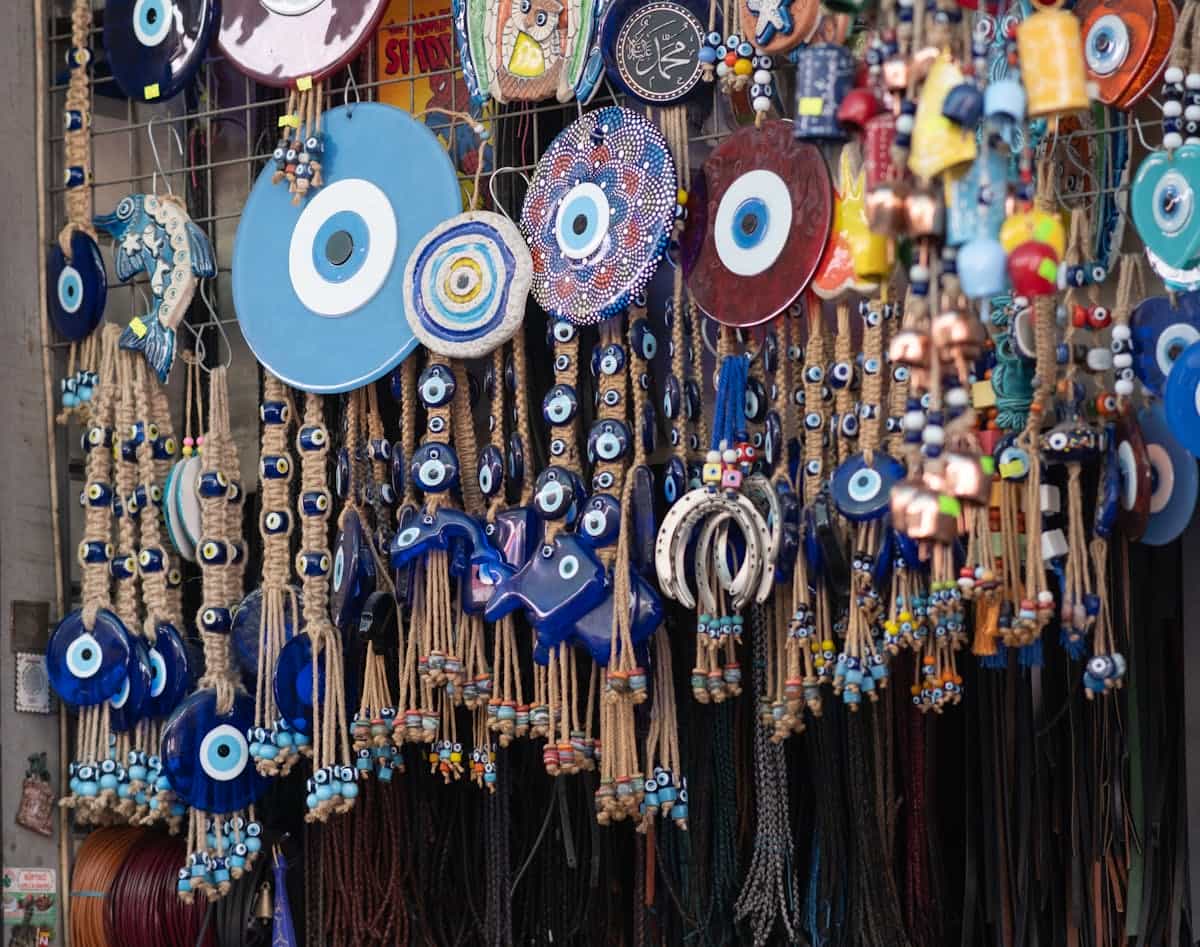
The evil eye is the idea that a look driven by envy or excessive praise can bring harm or bad luck. Encyclopedia entries map how far the belief travels: Greek and Roman antiquity, Jewish Islamic Hindu and Buddhist settings, rural Europe, West Asia, North Africa, the Caribbean, Latin America, and diaspora neighborhoods worldwide. Pregnant people, young children, and animals often sit at the center of protective worry in folk teaching because vulnerability reads louder there emotionally.
Britannica’s overview notes the recurring social logic: prosperity and beauty attract attention, and attention carries risk in communities that normalize envy as a kind of weather. Responses vary. Some people soften praise with religious phrases. Some hide good news. Some turn to objects they can touch.
That pattern belongs to cultural history and anthropology, not to a single lab test. Stating that plainly is not an attack on anyone’s grandmother. It is the distinction this site keeps elsewhere: traditions can be meaningful without doubling as laboratory results.
Where Does the Nazar Amulet Come From, and What Does Blue Signify?
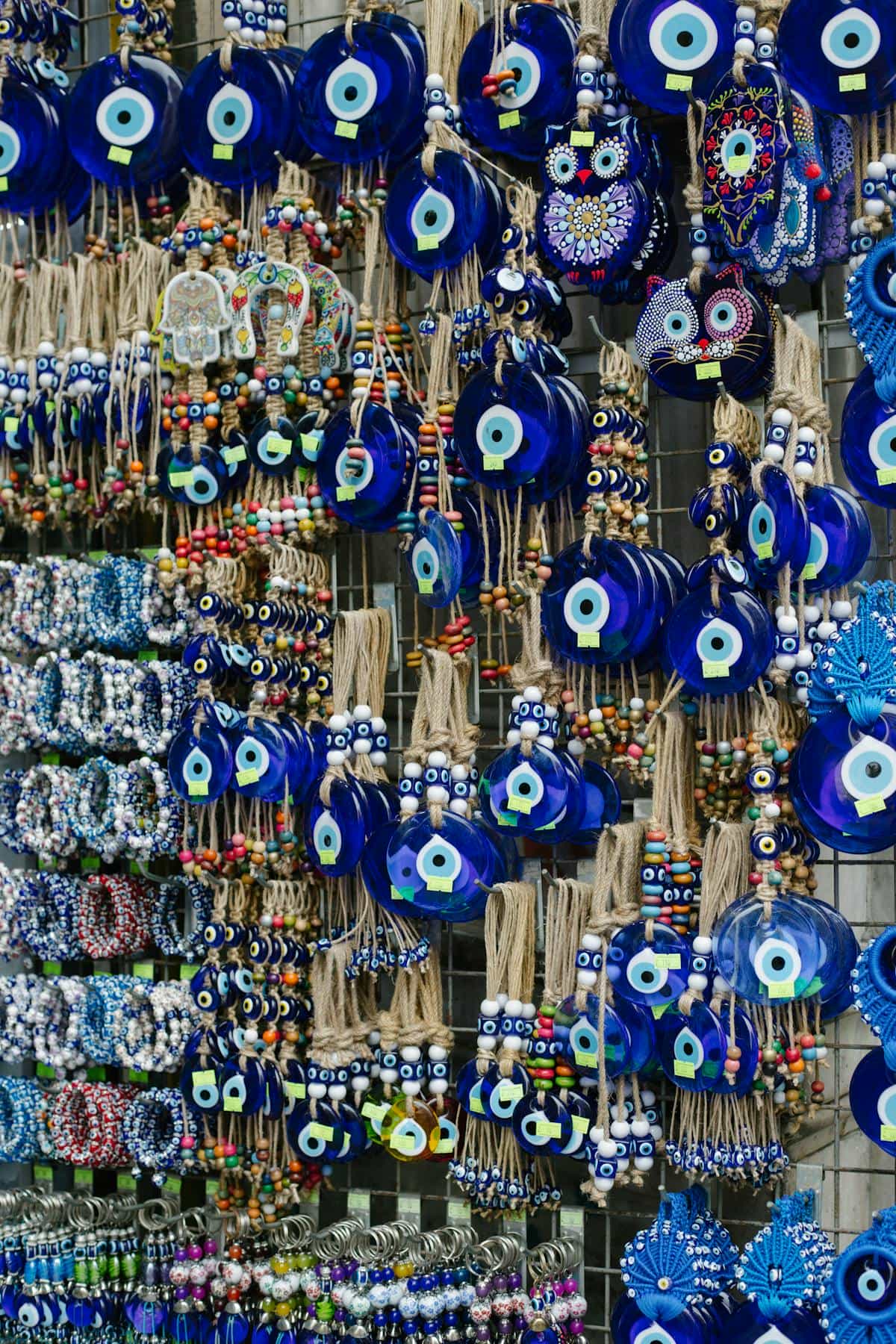
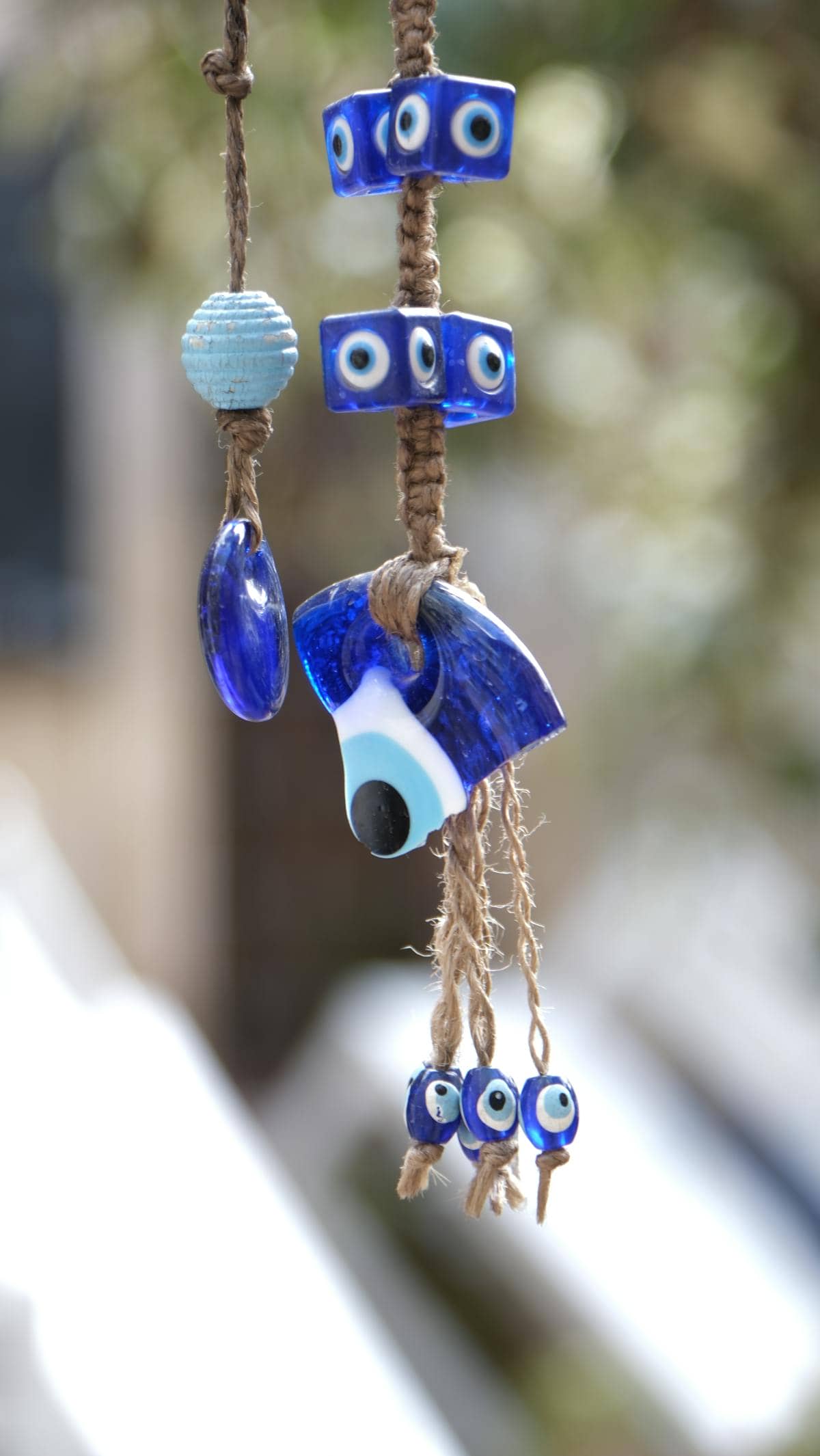
The nazar is the teardrop or eye-shaped charm you see on bracelets, rear-view mirrors, and baby pins. Handmade glass versions stack rings of dark blue, white, light blue, and black; sometimes a yellow or gold rim appears. The article on Wikipedia traces the word through Arabic and into Turkish, Greek, Persian, Urdu, Hebrew, and other languages, which already hints that no single nation owns the symbol.
Folk chemistry follows the craft: sand, metal oxides for color, salt, and water become a bead people treat as a capacitor for unwanted attention. Popular story lines say blue acts as a shield because deep blue resembles watchfulness, or because lighter eye colors once read as foreign and intense to passerby in parts of the Mediterranean and Middle East. Those are cultural explanations, not wavelengths with magical powers.
When a bead cracks, many families quietly swap in a new one and say the old one took a hit. That narrative does something practical: it turns an accident into continuity. Whether you read it symbolically or literally is a personal matter; either way, it is not a peer-reviewed outcome.
How Mirrors Enter the Picture in Protective Practice
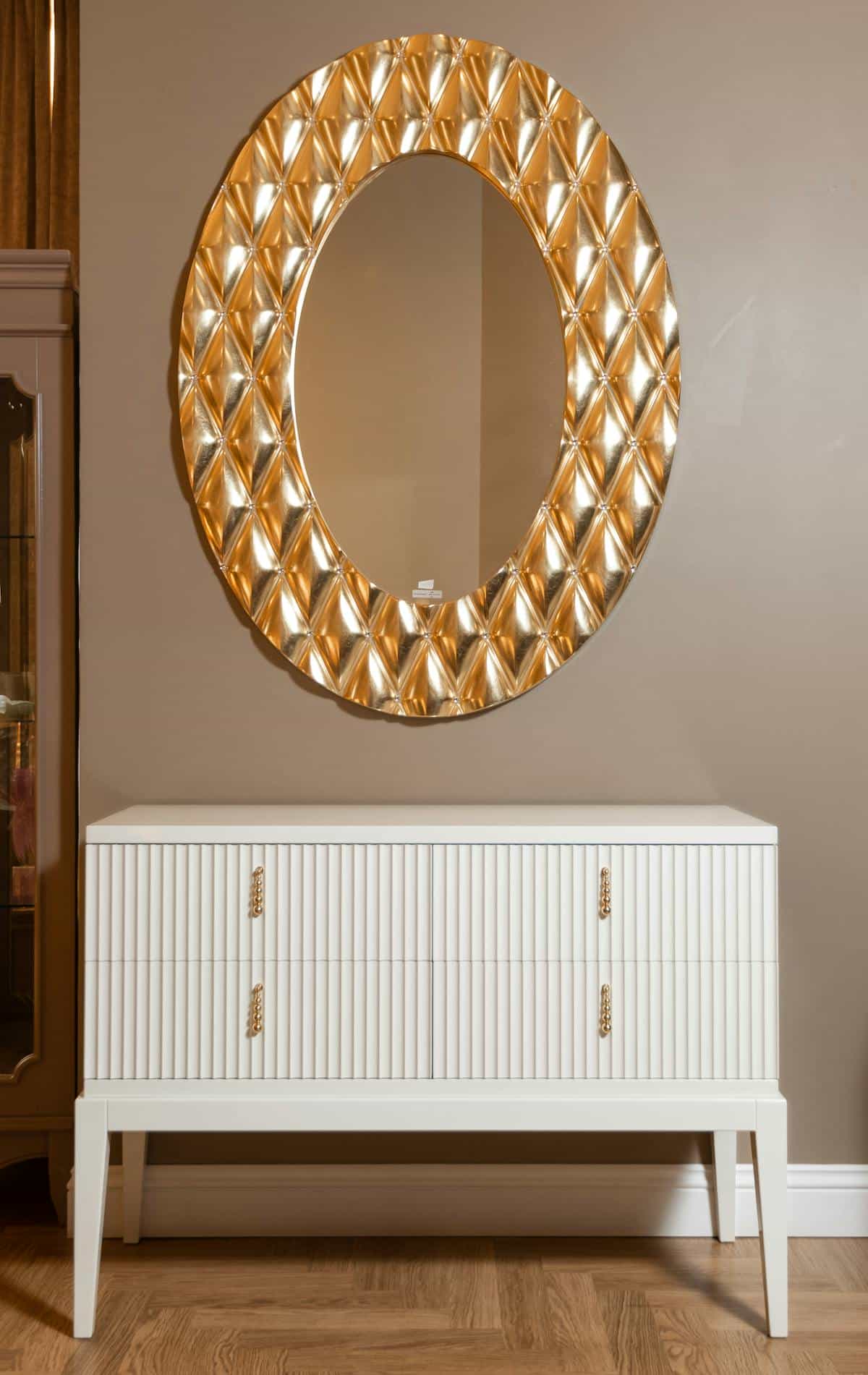
Mirrors show up next to evil-eye lore in two different ways, and conflating them creates confusion.
First, physics mirrors bend light back toward its source along predictable paths. That truth is why headlights, telescopes, and bathroom vanities work. It is not a certificate that a foyer mirror bounces metaphysical energy the same way.
Second, folk mirrors borrow the metaphor of bounce-back protection. Small mirrored discs appear alongside amulets, above doorways, or in vehicles not because every tradition agrees on placement, but because reflection reads intuitively as reversal. In that frame, the mirror is not a gadget that proves spirits exist; it is a cultural shorthand: what you send toward me might return to you.
If you already read mirrors as portals or storage for atmosphere, see how those threads connect in the broader guides on mirror as a spiritual tool and mirror superstitions worldwide. Evil-eye customs are one neighborhood on that larger map. Black mirror work for scrying and protection sits in another: introspection and ritual focus rather than warding off a relative’s compliment at a wedding.
Hands, Phrases, Hamsa Motifs, and Parallel Charms Across Regions
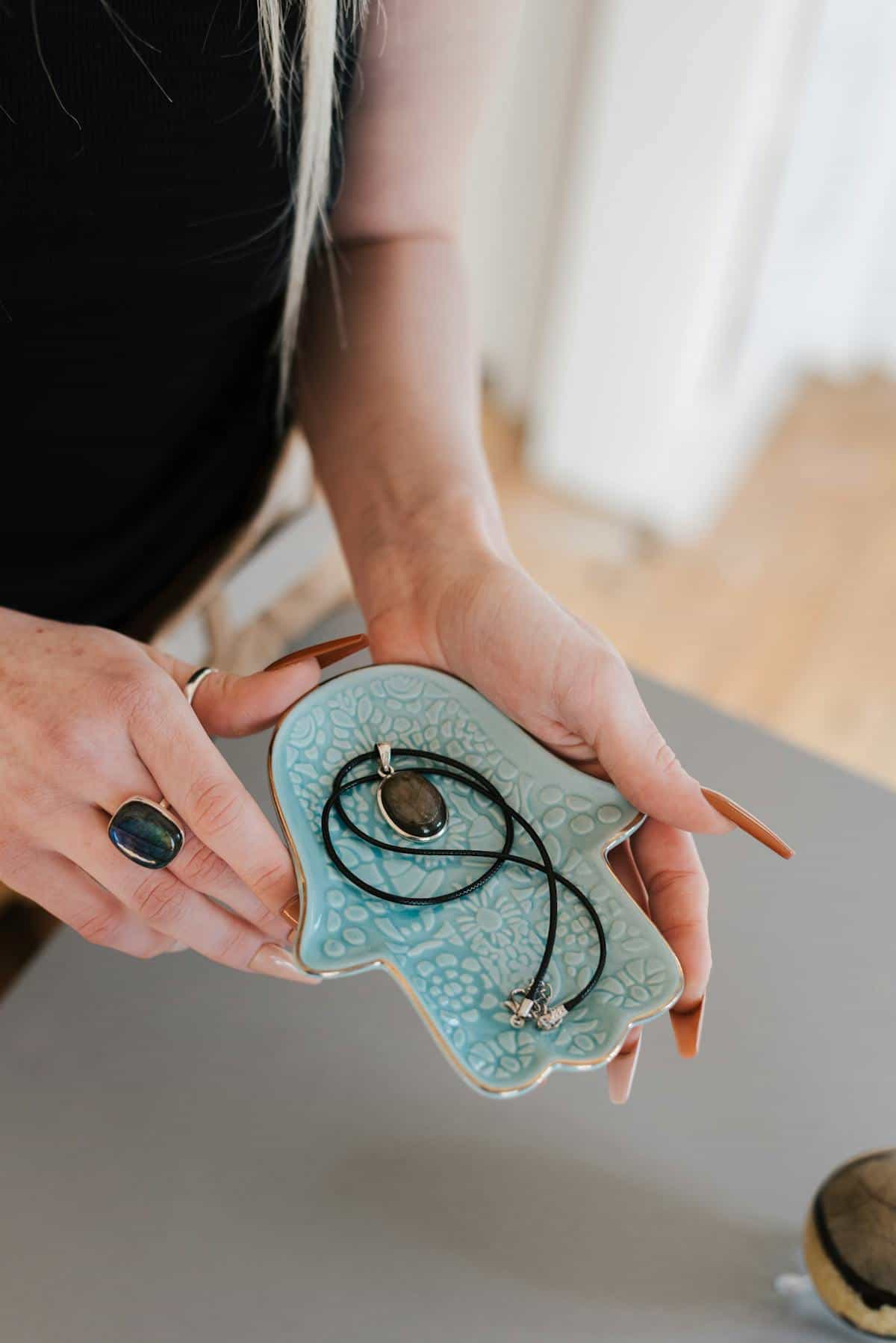
Objects rarely travel alone. The nazar often pairs with:
- Verbal habits: qualifying praise so it does not “stick,” a pattern documented across Middle Eastern, South Asian, and Mediterranean communities.
- Other symbols: the open hand or hamsa motif appears from North Africa through West Asia; red threads and chili-lime charms show up in South Asian doorways; religious verses go into lockets or car visors.
Gestural protection is quieter but widespread: hands extended palm-out, spitting lightly for theatrics, or touching wood. Each variant encodes the same instinct—manage envy before it lands.
The hamsa or hand-of-Fatima emblem often rides beside nazar jewelry in display cases and family albums. Visual culture stacks symbols the way languages borrow cognates. Whether you read the hand as divine shelter, feminist iconography, or heirloom metalwork, the emotional job overlaps: mark the boundary between self and envy. Mirrors sometimes appear inside those compositions—a shiny pupil set into a palm, a rearview charm doubled by glass. The design language still points to the same intuition: notice the gaze, misdirect it, keep moving.
In single-room village houses and apartment blocks alike, the anthropology matters more than any one “correct” spell. When entire neighborhoods share the same protective habit, the habit also signals belonging. That is worth respecting even when you do not share the ontology.
Mediterranean and Middle Eastern Contexts Without Flattening Them

Anatolian Greek Levantine Egyptian and North African lineages all touch the Aegean and Eastern Mediterranean, yet customs diverge street by street. Some households emphasize Qur’anic phrases; others lean on Greek máti beads; Armenian, Jewish, Coptic, and Kurdish practices each carry their own amuletic language.
When you decorate in a “Mediterranean” palette, you are borrowing aesthetics from a real place with real arguments about the evil eye. Credit the diversity: turquoise ceramics and cobalt glass are not generic Pinterest props—they echo workshops that have sold eye beads for centuries.
South Asian, African, and Diaspora Threads Worth Naming

South Asian languages encode the evil eye directly in idioms about nazar lagna—to feel looked at in the wrong way—and in cheshm-e-baddoor slogans that literally wish the bad gaze far away. Artists film directors and writers still use those lines because the social fear is contemporary, not museum relic.
Across the Horn of Africa, the Swahili coast, and Afro-Caribbean cities, variants of eye-jar amulets, mirrored cloth, and protective baths appear in market stalls where belief meets migration. Latin American botanicas often stock ojo bracelets beside Catholic medals; the mix is syncretic by history, not by accident.
If you compare regions, the through-line is social tension around visibility: who gets seen celebrating, who resents it, and how communities invent tools to cool the heat.
When the Small Mirror by the Door Is Philosophy, Not Proof

Psychologists study envy as an emotion with measurable correlates: comparison, shame, rumination. Anthropologists study the evil eye as a folk theory that names unfair harm when cause is unclear. Medicine sometimes sees psychosomatic stress after intense social pressure.
None of those fields certify that a convex mirror above the lintel reflects curses. What they do explain is why intelligent people still reach for tangible reassurance when life feels watched.
If distress tips into panic, obsession with omens, or health symptoms, evidence-based care matters more than any charm. The respectful stance is both: honor culture, recommend real help when needed.
Using These Motifs in Homes, Instagram, and Conversation

A few grounded habits keep the line between appreciation and caricature:
- Name the regions and histories you are echoing; “Mediterranean boho” is not a culture.
- Buy from craftspeople when you can; glass eye beads still come out of workshops, not only mass-market dropshippers.
- Do not film strangers’ children to show off “how cute”—ironically the kind of staring many families quietly worry about.
- If someone offers you a nazar, receive it as a relationship gesture even if you are skeptical.
Carrying the Question Without Losing the Physics
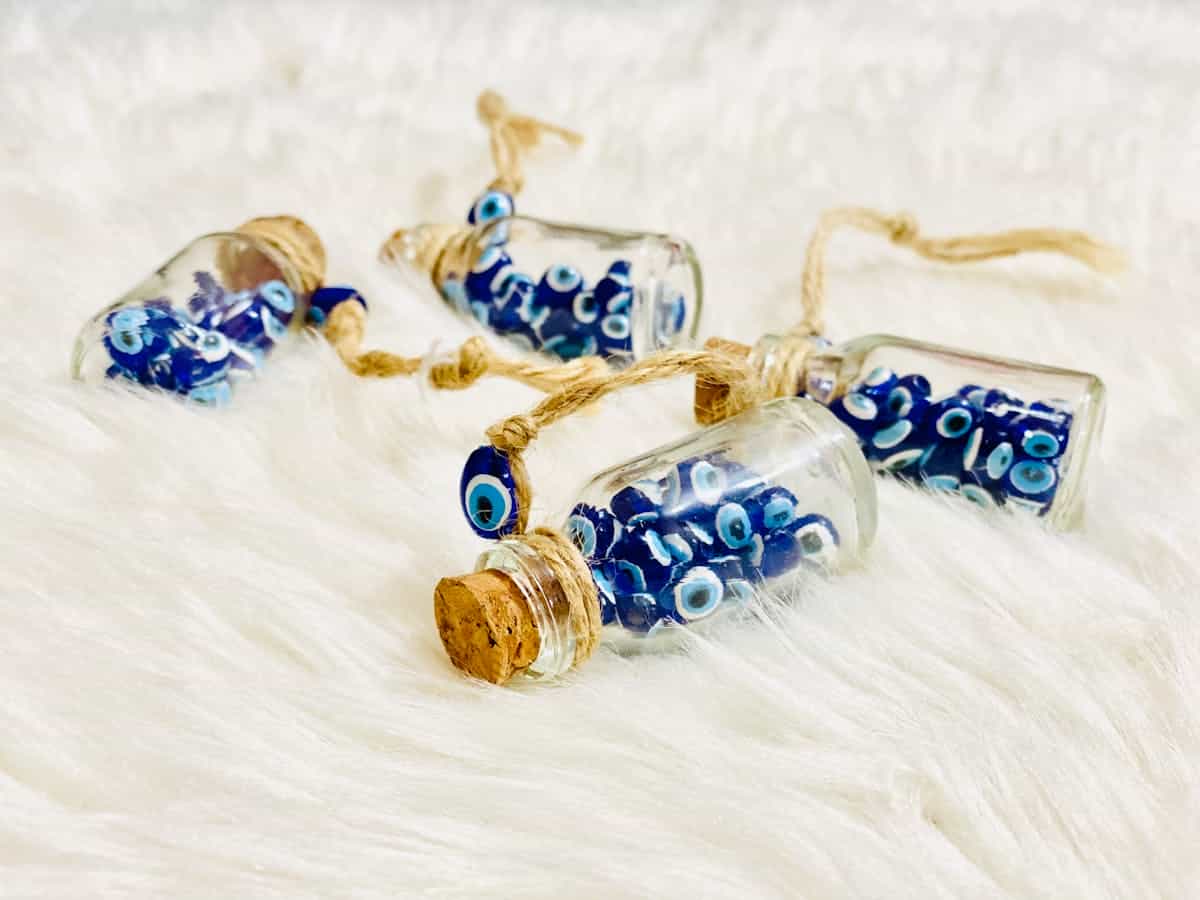
Mirrors remain humble hardware. They polish ancient obsidian into modern aluminum-backed glass, yet the social mirror—who is watching whom—predates industrial glass. Mythic mirror stories such as Narcissus frame fascination with the self rather than fear of another person’s eye—same object, different story.
Evil-eye amulets remain glass, clay, and string. They anchor memory, hospitality, and caution in communities that take envy seriously. If you honor that fact without inflating it into physics, you get the same outcome good ethnography aims for: the person across from you feels understood, not explained away.
The next time you notice a blue bead and a tiny mirror sold as a set, you can read the pairing for what it is—a folk technology of attention shaped by coastlines, migrations, and dining-table praise—and still know exactly how reflection works when the light switch flips on.
Mirror FAQ
Do mirrors scientifically block the evil eye?
No scientific study proves that mirrors or nazar beads deflect supernatural harm. Many people use them as cultural symbols and reminders of care. If you want protection from real-world harm, evidence-based steps such as hygiene, safety planning, and medical care address documented risks.
What is a nazar amulet?
A nazar is an eye-shaped glass or ceramic charm, often in concentric blue, white, and black, worn or hung to ward off the evil eye. The word comes from Arabic roots related to sight and looking. In Turkey it is widely called nazar boncuğu in Greek contexts people may say máti and in South Asia related phrases appear in Urdu and Hindi.
Why is the evil eye often shown as blue?
Folk explanations vary by region. One common story holds that lighter eyes were rarer in parts of the Middle East and Mediterranean so a startling blue gaze drew attention and was tied to the idea of a cutting look. The blue bead then acts as a decoy or shield in tradition not because blue has special physics.
How are mirrors used in evil-eye protection beliefs?
Beliefs differ. Some traditions hang small mirrors near doors or with amulets so envy or ill intent is reflected back or misdirected. Others treat mirrors mainly as household objects and rely on verbal formulas spices or religious texts. None of this replaces the optical fact that a mirror reflects light according to the law of reflection.
What does it mean when a nazar bead breaks?
In popular lore especially in Turkish and Greek-influenced circles a broken nazar sometimes means the amulet absorbed a strong eye and broke instead of the person. That is a belief not a measurable event. Replacing the bead is a cultural gesture like renewing a reminder of care.
Is talking about the evil eye disrespectful?
It becomes disrespectful when traditions are mocked or flattened into a joke. Fair treatment means naming regions noting variation and separating lived belief from universal truth claims. Compliments paired with protective phrases such as mashallah exist because communities take envy seriously.
How does this relate to other mirror spirituality on this site?
Mirrors as spiritual tools span scrying, cover rituals, and self-reflection. Evil-eye practices are one corner of that map and focus on social danger from envy more than on inner psychology. For broader mirror lore see the encyclopedia-style superstition piece and the mirror-as-tool overview linked in this article.
Where can I read neutral summaries of the evil eye belief?
Overview articles such as the Wikipedia entry on the evil eye the Britannica article on the evil eye and the Wikipedia entry on the nazar amulet summarize geographic spread and common protective customs. They describe culture and history they do not certify supernatural mechanism.