Someone Else in Mirror Dream Meaning: Psychological and Spiritual Interpretations
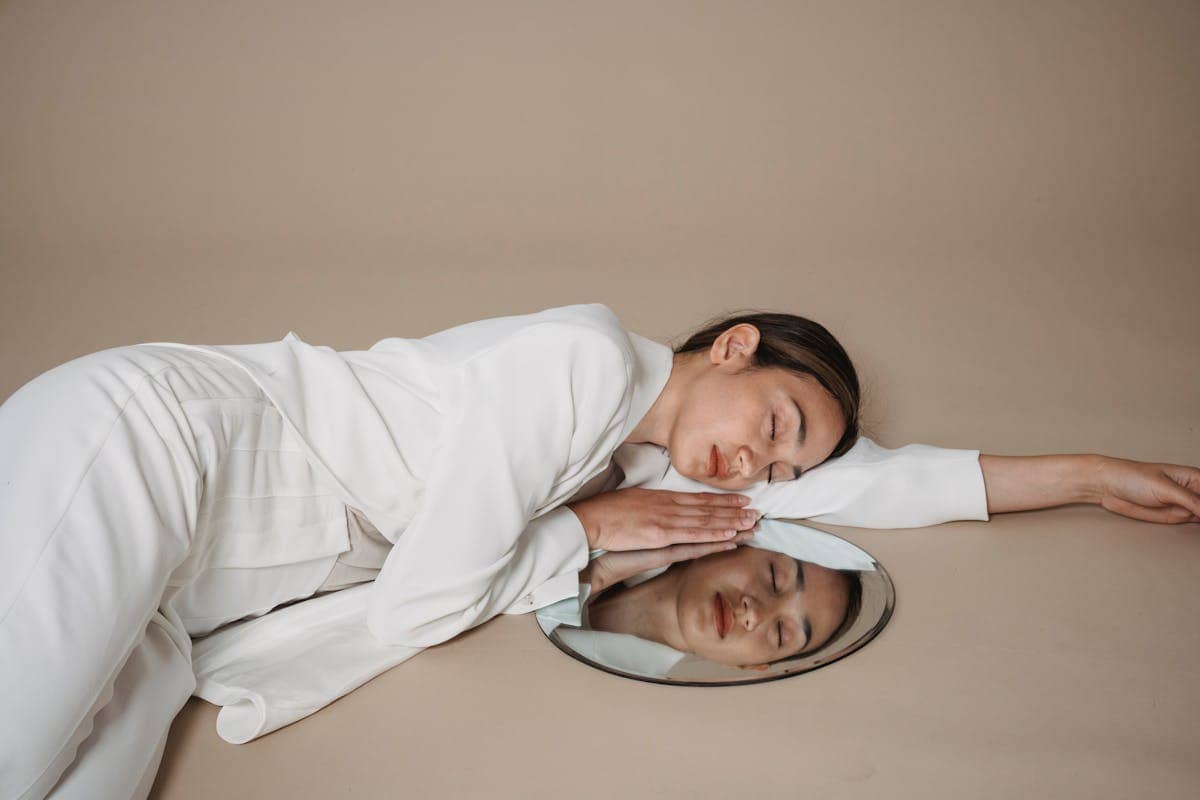
When you look in a mirror during a dream and find someone else looking back, the figure is almost never random. Dream researchers studying REM sleep have documented that the brain generates faces during this phase with high specificity, drawing from emotionally significant memory rather than invention. The person in your mirror is constructed from material your waking mind has not fully processed. Who they are, how they look, and how you feel in the moment tells you a great deal about what your subconscious is working through.
The mirror is not an ordinary dream prop. Unlike a chair or a door, which appear in dreams largely as background, mirrors carry symbolic weight in virtually every culture that has used them. They are objects that show you yourself — which means seeing something else in one is a direct confrontation with identity. That contrast is why this dream is so frequently reported and why people remember it with unusual clarity on waking.
The interpretations below draw from Jungian psychology, clinical dream research, and the specific beliefs of several spiritual traditions. They are not equivalent — a psychological explanation and a spiritual one are different kinds of claims. Both are worth knowing.
What Does It Mean When You See Someone Else in a Mirror Dream?

The most grounded place to start is with what dream research actually tells us. The Sleep Foundation notes that dream content is strongly linked to recent emotional experience, ongoing stress, and unresolved interpersonal conflicts. Faces in dreams are not random: they tend to belong to people who are emotionally significant, or to represent qualities we associate with certain kinds of people.
When the face in the mirror is not yours, the most consistent interpretation across both psychological and cultural frameworks is this: you are being shown an aspect of your identity that your waking consciousness has not engaged with. That could be something you want but have not claimed, something you fear but have not faced, or something from your past that still carries unresolved weight.
The specific figure matters considerably. A stranger, a deceased loved one, a threatening presence, an older version of yourself — each carries different content. The sections below address each in turn.
For the broader symbolic life of mirrors in dreams — what they mean beyond specific figures — the complete guide to mirror dream meaning and symbolism covers the wider framework.
Seeing a Stranger: What the Jungian Shadow Concept Explains
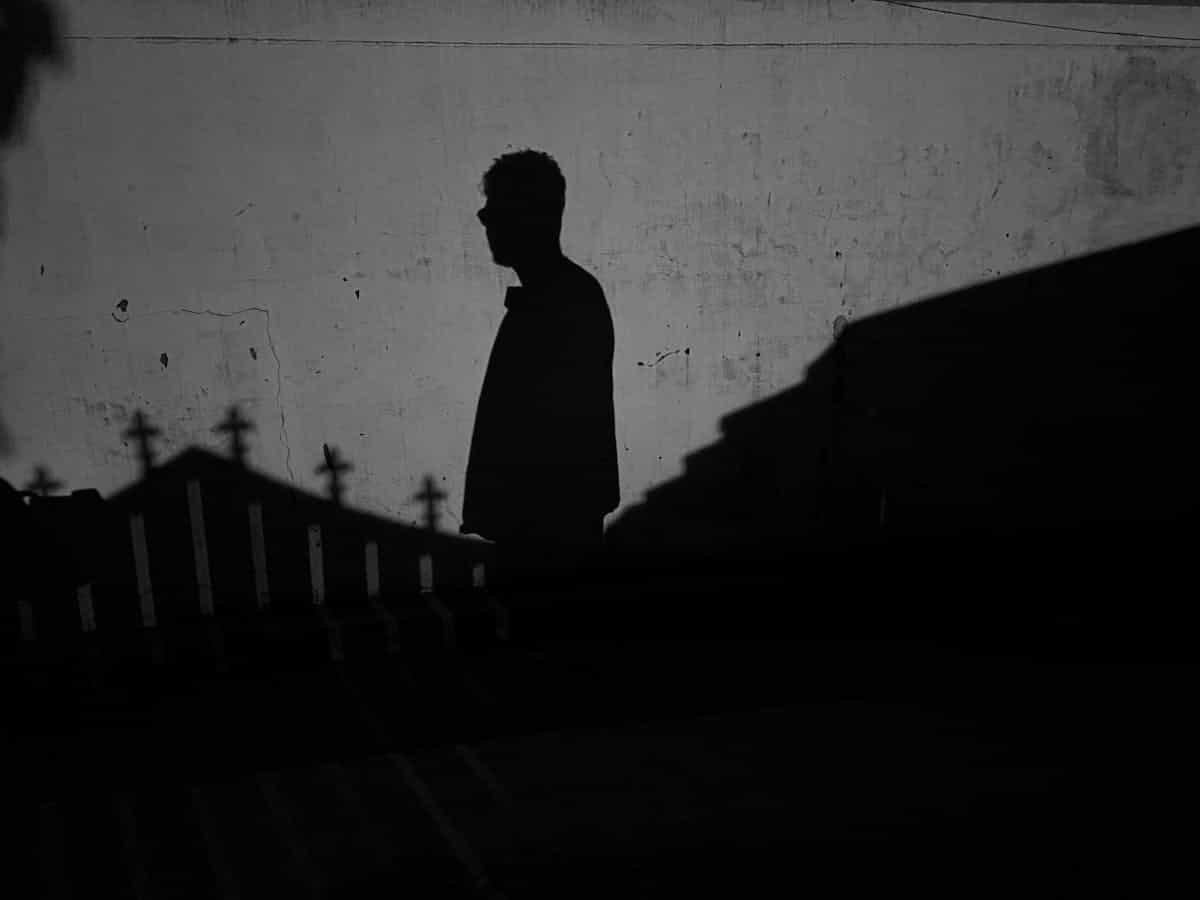
Carl Jung described the shadow as the collection of traits, impulses, and fears that the conscious self rejects or has never claimed. Not necessarily negative qualities — the shadow can contain creativity, passion, or strength that a person learned was unacceptable in their upbringing. What defines the shadow is that it is unlived, unacknowledged, and unintegrated.
When the mirror dream shows a stranger, this is the most consistent Jungian reading: you are encountering your own shadow. The stranger is unfamiliar precisely because these are parts of you that your conscious mind has not recognised. The more unsettling the stranger, the more charged the material.
This is not mysticism dressed up as psychology. Jung developed this framework from clinical observation of how people project their disowned qualities onto others — despising in another person exactly the trait they are most afraid to see in themselves. The mirror in the dream short-circuits projection: instead of seeing it in someone else, you see it in your own reflection.
The practical implication: this kind of dream tends to follow periods of significant stress or self-suppression. If you have been acting contrary to your values, or have been forced to play a role that does not fit you, the stranger in the mirror is likely to appear. It is less a warning than an invitation — the psyche asking you to recognise something it has been trying to show you.
Seeing a Deceased Loved One in Your Mirror

This is one of the most emotionally significant variations. Dreaming of a deceased parent, partner, or friend looking back from a mirror surface is extremely common in bereavement, often appearing months or years after a loss, and can feel more vivid than ordinary dreams.
Grief researchers at the American Psychological Association have documented that the bereaved brain frequently generates highly detailed re-encounters with lost people during REM sleep — the phase where emotional memory consolidation primarily occurs. These are sometimes called visitation dreams — not because they confirm supernatural contact, but because they feel qualitatively different from ordinary dreaming and carry a strong sense of presence.
The psychological explanation is that the face and emotional signature of someone deeply known remains extremely active in memory. The mirror context specifically places the deceased there when grief is tangled with questions of identity: who am I without this person, what did I inherit from them, what part of me did they represent?
Different spiritual traditions read this differently:
West African traditions — including Yoruba and Igbo practices — hold that mirrors are among the primary channels through which ancestors communicate with the living. A deceased relative appearing in a mirror dream is taken seriously as guidance, not reduced to grief processing.
Islamic dream interpretation treats such appearances as spiritually significant. Classical Islamic dream scholars including Ibn Sirin wrote about mirror dreams specifically. A deceased person appearing clearly is often interpreted positively — as evidence of their peace and a blessing to the dreamer.
Chinese folk tradition views seeing the dead in mirrors as a significant omen requiring attention. The degree of concern or reassurance depends on the relationship and the emotional quality of the encounter.
The honest answer is that no one can tell you which framework is correct. What is documented is that these dreams are real emotional events, they carry strong feeling on waking, and they often contain something the dreamer recognises as meaningful.
Seeing a Threatening or Distorted Figure
The threatening mirror figure — distorted face, dark shadow, something that moves differently from you — is one of the most commonly reported nightmare scenarios and is often what brings people to search for an explanation.
The psychological reading is consistent: a threatening figure in your own reflection represents internal conflict at high intensity. Something in your emotional life — suppressed anger, a situation you are avoiding, a fear you have not looked at directly — has enough charge that the dreaming mind has made it aggressive or distorted.
Psychology Today notes that threatening dream figures typically represent the dreamer's own anxieties rather than external threats. The mirror specifically amplifies this: the threat is not coming from outside. It is wearing your face.
Repeated threatening mirror dreams often follow sustained periods of stress, circumstances where you feel trapped, or situations involving significant dishonesty — either being deceived or deceiving others. The figure is not a prophecy. It is a signal that something emotionally significant is asking for direct attention rather than continued avoidance.
Seeing an Older or Younger Version of Yourself
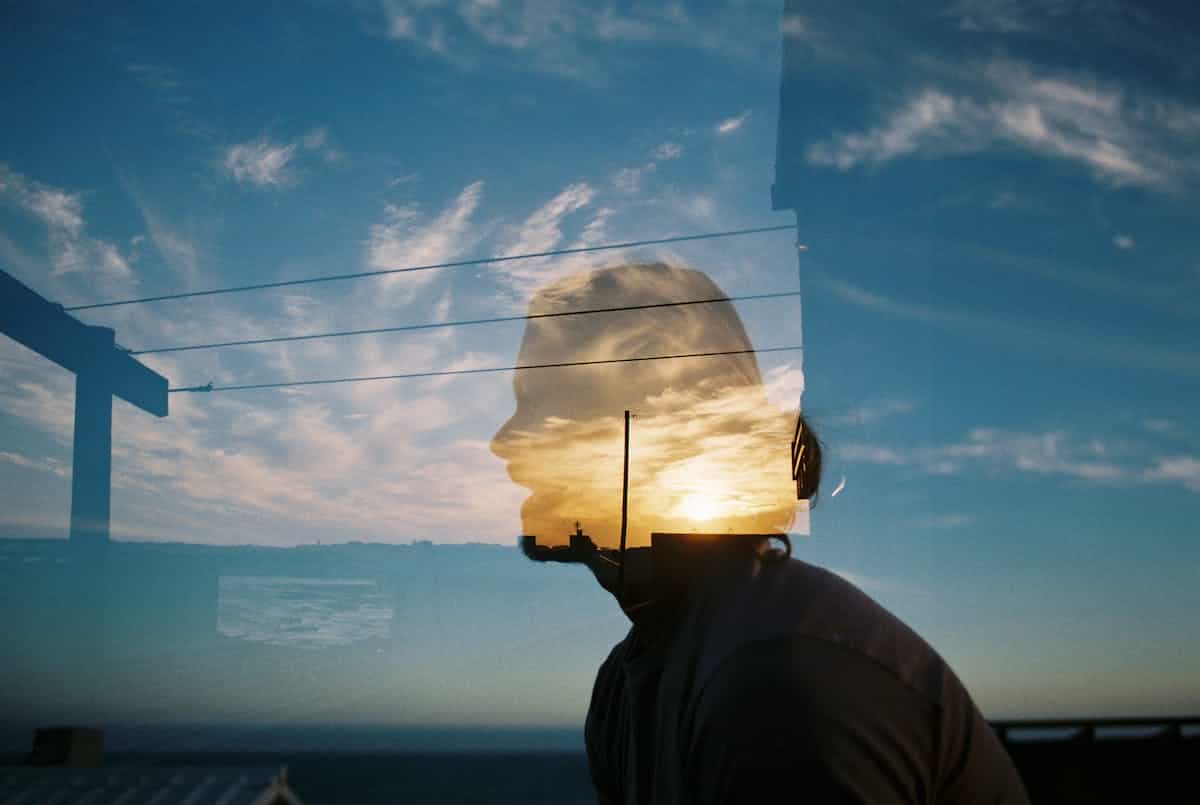
This variant is quieter than the others but often carries more lasting resonance on waking.
Seeing a younger version of yourself in a mirror dream — a child, a teenager, you at some earlier specific age — almost always relates to unfinished emotional business from that period. This is one of the cleaner interpretations in dream psychology: the dreaming mind returns to unresolved material. Something from that age has not been fully processed. The mirror shows it to you in the form of yourself at the time.
Seeing an older version carries a different quality. It tends to surface during periods of uncertainty about direction or identity — not necessarily depression, but a sense that your current life trajectory requires examination. The older self in the mirror is often experienced as either reassuring or deeply dissonant, depending on the emotional content.
Both variants share a structural similarity with the stranger dream — you are seeing a version of yourself that your daily self does not inhabit. The difference is that the age is specified, which usually means the relevant emotional material is also located in a particular time. That specificity is useful. It tends to make the content easier to identify and work with consciously.
Seeing No Reflection at All
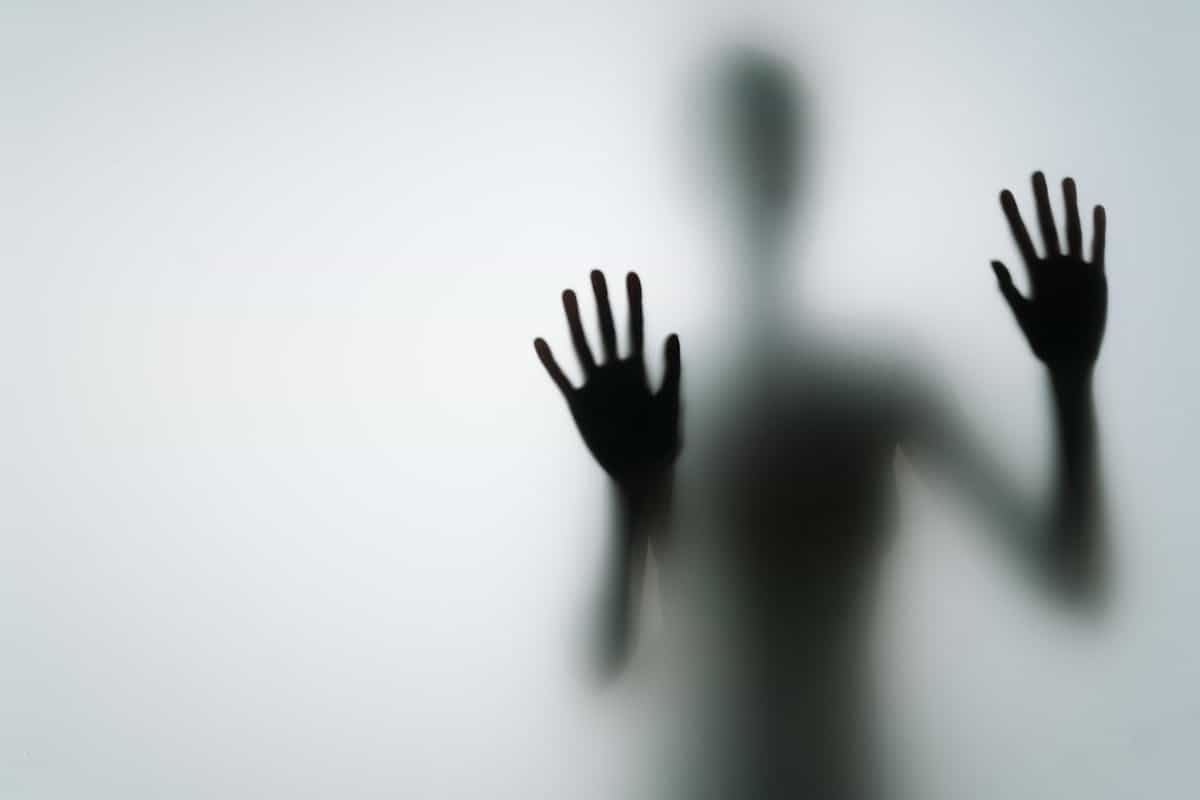
This is a different category from seeing someone else — but it belongs here because the absence is its own kind of presence.
Looking in a mirror and seeing nothing — no reflection, an empty glass, a blank surface — is one of the most disorienting mirror dream experiences. It is also one of the most specific in its interpretation: nearly every cultural and psychological framework connects this to identity crisis.
The psychological reading is that the self that normally occupies your conscious experience has temporarily lost coherence. This tends to happen during major life transitions: the end of a long relationship, the loss of a defining role, leaving a career or a belief system. The old identity has dissolved and the new one has not yet formed. The mirror shows you what is — nothing settled, nothing stable yet.
(This is the part most dream articles skip, and it is the most important: the empty mirror is not a sign of absence. It is a sign of transition. The self is between versions of itself.)
In folklore and spiritual traditions, a mirror with no reflection carries weight across multiple cultures. The most widespread association is with the soul — which is why covering mirrors after a death was common practice in Jewish, Victorian English, and several other traditions. The belief was that an uncovered mirror could trap or disorient the departing soul. A dream with no reflection carries the emotional texture of that symbolic association: a sense of being between states, not yet fully present in your own life.
This dream tends to stop when the new identity has enough material to stand on.
What Different Spiritual Traditions Say About Mirror Dreams

The psychological framework above is useful — but many people bring a spiritual or religious lens to this experience, and several traditions have developed specific, historically documented interpretations. For a fuller look at how mirrors are understood symbolically across world cultures, the mirror symbolism across world cultures guide covers this in depth.
A few traditions worth noting specifically in the context of seeing someone else:
Islamic tradition — Ibn Sirin, whose 9th-century dream dictionary remains widely consulted, wrote about mirrors as representing the clarity of the soul. Seeing a clear mirror is a positive sign. A foreign figure replacing your reflection indicates spiritual imbalance or a need for self-examination. The tradition places significant interpretive weight on the emotional quality of the dream.
West African and diaspora traditions — In Yoruba, Fon, and related traditions, mirrors occupy a specific ritual function as portals between the living and the ancestors. Practitioners in Candomblé and Vodou use mirrors explicitly as tools of ancestral contact. A dream in which a recognisable ancestor appears in a mirror is not alarming within these frameworks — it is an invitation or a message.
Chinese folk belief — Traditional Chinese interpretation treats mirror appearances in dreams as omens related to relationships and social standing. Seeing an unfamiliar face may carry implications about hidden enemies or concealed information. Seeing a known person is read in context of your relationship with them.
The pattern across these frameworks is that the mirror in dreams is never treated as a neutral surface. Every tradition examined here gives it heightened significance — a place where the barrier between ordinary experience and something less visible becomes permeable. For those interested in the mirror as a deliberate spiritual instrument, the black mirror spiritual meaning and scrying guide covers how that tradition specifically works.
The Psychological Explanation: What Is Actually Happening in REM Sleep

The neuroscience of why mirrors appear in dreams — and why they generate specific figures — is worth understanding directly. Not to dismiss the spiritual frameworks above, but to give all the interpretations proper grounding.
REM (Rapid Eye Movement) sleep is the phase in which vivid, narrative dreaming predominantly occurs. During REM, the prefrontal cortex — the area most responsible for rational evaluation and reality-testing — is significantly less active than in waking life. The emotional processing centres, including the amygdala, remain highly engaged. This is why REM dreams feel emotionally real: the part of your brain that would normally say "this does not make sense" is quieted, while the part that registers emotional significance is running at full capacity.
Faces are among the most neurologically significant stimuli the human brain processes. The fusiform face area in the temporal lobe activates strongly in response to faces — and this activation continues during dreaming. The brain generates faces in dreams from its own stored emotional material: people who matter to you, composite figures drawn from recent experience, archetypes encoded by your cultural exposure.
When the brain places a face in a mirror during a dream — specifically in a mirror, rather than across a room or at a table — it is placing something emotionally significant at the location where you expect to find your own identity. The displacement is the message. The brain is flagging: look at this in the context of who you are.
This is why so many people report these dreams as feeling more significant than ordinary dreams. The brain is not generating random imagery. It is placing a flag.
What to Do After This Dream

The most useful response to a mirror dream is engagement rather than dismissal. A few approaches with documented support:
Journal immediately on waking. The emotional tone of the dream — not just what you saw but how you felt — carries more information than the image itself. Write the feeling down before it fades. Was the figure threatening, neutral, sad, kind, familiar? That quality is usually the most direct signal about what the content relates to.
Ask what the figure represents rather than who they were. If the figure was your father, the relevant question might not be about your father specifically — it might be about authority, expectation, or an unresolved emotional pattern from that relationship. The figure is a symbol as much as a person.
Notice whether it recurs. A single mirror dream is probably just a dream. Recurring mirror dreams — the same figure, the same setting, the same emotional register — are worth examining carefully. Recurring dreams tend to stop when the emotional material they are pointing to receives conscious attention. They do not stop through willpower or avoidance.
If the distress is significant, consider professional support. A therapist familiar with trauma or grief can work with recurring distressing dreams in ways that are well-supported by evidence. Vivid, distressing recurring dreams are one of the clearer signals that something emotionally significant is asking for direct attention rather than continued avoidance.
The figure in your mirror dream is not an intruder from outside. It is something you already contain — a quality, a memory, a fear, a desire — that your waking mind has not yet given a proper hearing. The mirror in the dream is doing exactly what mirrors do: showing you something true. The question it is asking is whether you are prepared to look at it directly rather than turn away. Most people who work with these dreams find that the figure becomes less threatening once they stop running from it and start asking what it came to say.
Mirror FAQ
What does it mean when you see someone else in the mirror in a dream?
It typically signals a disconnect between your conscious identity and an unacknowledged part of yourself. The figure often represents a suppressed trait, an emotional pattern you have not yet confronted, or in some spiritual traditions, a visitation from an ancestor. The exact meaning depends on who the figure is and how you feel during the dream.
Is seeing a stranger in a mirror dream a bad sign?
Not necessarily. A stranger in your mirror dream is most commonly interpreted as your Jungian shadow self — the qualities, fears, or desires you have not yet acknowledged. It is unsettling by design. The discomfort is the point: your subconscious is flagging something that needs attention.
Why do I keep dreaming of a deceased loved one in my mirror?
Recurring dreams of a deceased person in a mirror are most often associated with unresolved grief, a sense of carrying their legacy, or in spiritual traditions including Islamic, West African, and Chinese beliefs, an ancestor making contact. From a psychological standpoint, the brain replays meaningful emotional material during REM sleep.
What does it mean when the figure in the mirror looks threatening?
A threatening or distorted figure in a mirror dream typically represents something in your emotional life that feels out of control or unacknowledged. In Jungian terms it is an encounter with the shadow at its most confrontational. The threat is internal, not external. Repeated dreams of this kind sometimes follow periods of high stress or suppressed anger.
What does seeing yourself older or younger in a mirror dream mean?
Seeing a younger version of yourself often relates to unresolved issues from that period of your life, or a longing for a quality you had then. Seeing an older version is more commonly associated with concerns about identity, mortality, or the direction your life is taking.
What does seeing no reflection in a mirror dream mean?
No reflection in a mirror dream is one of the more unsettling variations. It commonly represents a crisis of identity, feeling invisible in relationships or at work, or a period of profound personal transition where your old sense of self has dissolved but the new one has not yet formed.
How do I stop recurring mirror dreams showing someone else?
Recurring mirror dreams tend to stop once the emotional content they point to has been addressed. This does not mean the dreams stop through willpower alone. The underlying material — grief, identity conflict, suppressed fear — often needs conscious engagement through journaling, reflection, or working with a therapist.
What do different spiritual traditions say about seeing others in mirror dreams?
In West African spiritual traditions, mirrors are ancestral communication channels and a figure in a mirror dream may be an ancestor offering guidance. In Islamic interpretation, a foreign figure in a dream mirror can signal spiritual imbalance. Chinese folk tradition views seeing others in mirrors as an omen about relationships.