How High to Hang a Mirror in a Bedroom (Above the Bed, Dresser, and More)
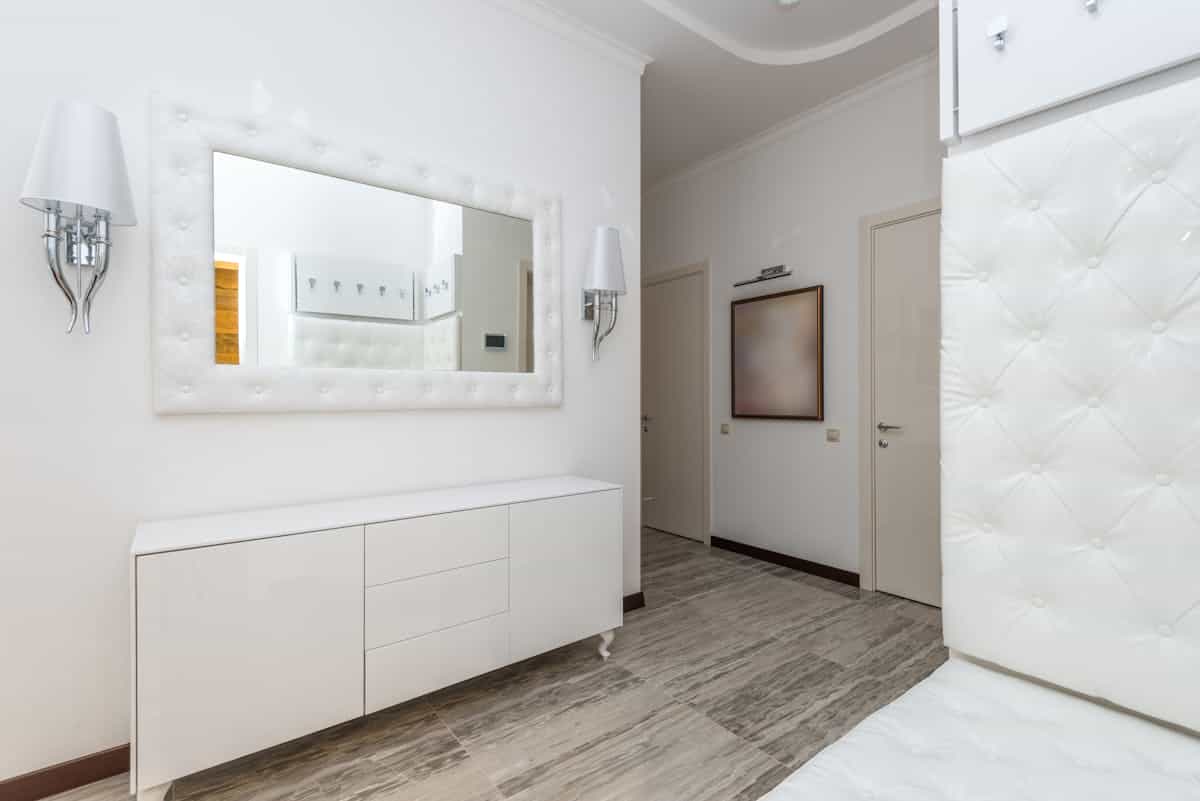
How high to hang a mirror in a bedroom comes down to one rule and a few exact numbers: hang it so its centre sits at eye level, between 57 and 65 inches from the floor. Over furniture, leave a gap instead — 4 to 8 inches above a dresser or nightstand, and 6 to 9 inches above a headboard. A full-length mirror sits 8 to 12 inches off the floor. Centre the mirror on the furniture below it, not on the wall.
There is one rule and a handful of exact numbers — and once you have them, every spot in the room is solved.
Most guides answer how high to hang a mirror for a dresser and stop there. But the most-searched version of this question is about the bed — so that is where we will start, because it is also the spot with the most at stake.
How High Should a Mirror Go Above a Bed?

For a mirror above the bed, the rule is set by the headboard, not the wall. Leave 6 to 9 inches between the top of the headboard and the bottom of the mirror. On a standard bed, that puts the mirror's centre roughly 60 to 66 inches from the floor — a little higher than the bare-wall eye-level rule, because the headboard raises the whole composition.
Three things matter as much as the number:
- Centre it on the bed, not the wall. The bed is the anchor; the mirror should sit directly above its midline.
- Keep it no wider than the headboard. A mirror that overhangs the bed looks unbalanced and puts glass over a wider stretch of sleeping area than necessary.
- Mind what it reflects. A mirror angled so it shows you lying in bed is the one configuration worth avoiding — more on that below.
For the full sizing, safety-glass, and styling detail on this spot, the dedicated guide on a mirror above the bed goes deeper than the height question alone.
The Eye-Level Rule That Governs Everything
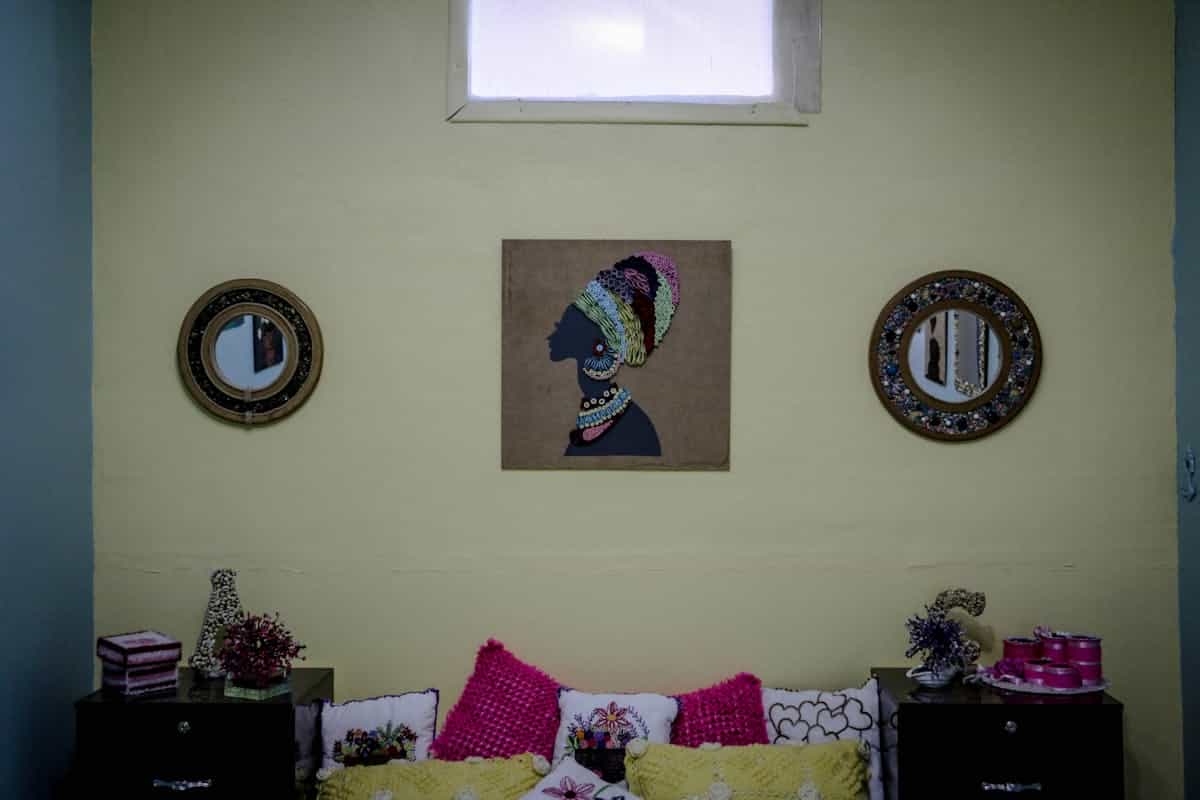
On a bare wall — no furniture beneath it — there is a single standard: the centre of the mirror sits at eye level, 57 to 65 inches from the floor. The 57-to-60-inch end is the gallery standard, the same height museums hang artwork so the average adult meets it comfortably without tilting their head.
Why this exact band? It is built around average standing eye height. Hang the mirror's centre there and most people see their face and chest without bending or stretching. Go higher and you catch the ceiling; go lower and you cut people off at the shoulders. If your household is notably tall or short, adjust toward your own eye line — the 57-to-65 range is an average, not a law.
This one rule is the parent of every other number in this guide. Over furniture, the gap takes priority, but you are still aiming to land the centre as close to eye level as the gap allows.
How High Above a Dresser, Nightstand, or Console?
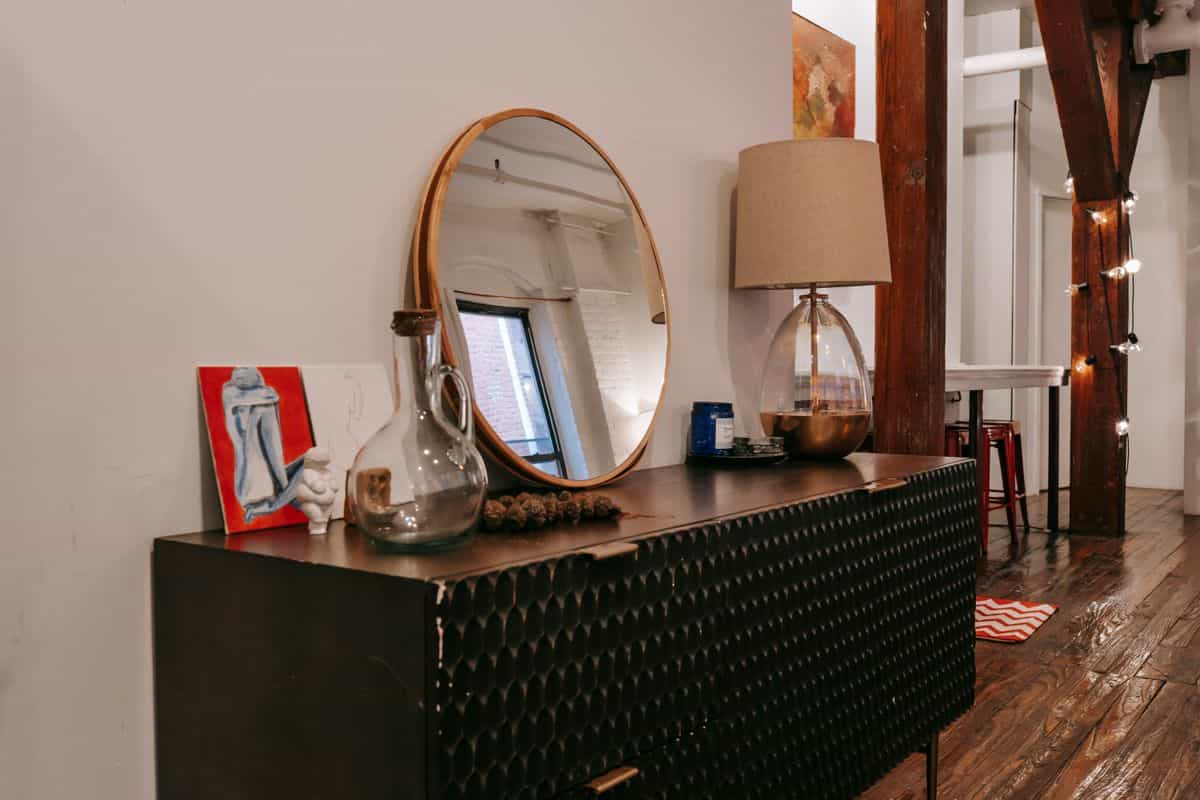
When a mirror hangs over a piece of furniture, the gap above the furniture matters more than the absolute height, because the eye reads the two as a single unit.
| Spot | Gap above the surface | Notes |
|---|---|---|
| Dresser (standard) | 4–8 inches | Centre near eye level, 57–65 in from floor |
| Low dresser (under 34 in) | 8–12 inches | Larger gap lifts the mirror to eye level |
| Tall dresser (over 40 in) | 3–5 inches | Smaller gap, or the mirror floats too high |
| Nightstand | 4–8 inches | Clear the lampshade by an inch or two |
| Console / vanity | 6–8 inches | Leave room for objects on the surface |
The gap does real work: it keeps the mirror and furniture connected rather than stranded apart, and it leaves room for lamps, trays, and bottles without them creeping into the lower edge of the reflection. For the bedside version of this, with the lamp-clearance detail, see the guide on mirrors over nightstands; for matching a mirror to the chest below it, the bedroom dresser with mirror guide covers proportion in full.
One proportion rule covers all of these: the mirror should be two-thirds to three-quarters the width of the furniture beneath it — never wider than the piece itself.
How High for a Full-Length Mirror?

A wall-mounted full-length mirror follows a different logic, because the job is a head-to-toe reflection. Mount it 8 to 12 inches off the floor — high enough to clear the skirting board and avoid scuffs and kicks, low enough that you still see your shoes. The top should clear the tallest regular user's head by a few inches.
A leaning floor mirror sits on the floor itself, tilted slightly back, which flatters by lengthening the reflection. The one non-negotiable: anchor it to the wall with a strap or bracket. A tall mirror resting unsecured against a wall is a genuine tip-over hazard, especially around children and pets.
How to Hang It Level and Secure
The right height is wasted if the mirror hangs crooked or comes off the wall. Four steps make it reliable:
- Mark before you drill. Cut a paper template the size of the mirror, or outline it on the wall with painter's tape, and live with it for a few minutes before committing. Reflections are easy to misjudge on paper.
- Find the studs. Anchoring into a wall stud is the most secure fixing. Where a stud is not in the right place, use wall anchors or toggle bolts rated for at least four times the mirror's weight.
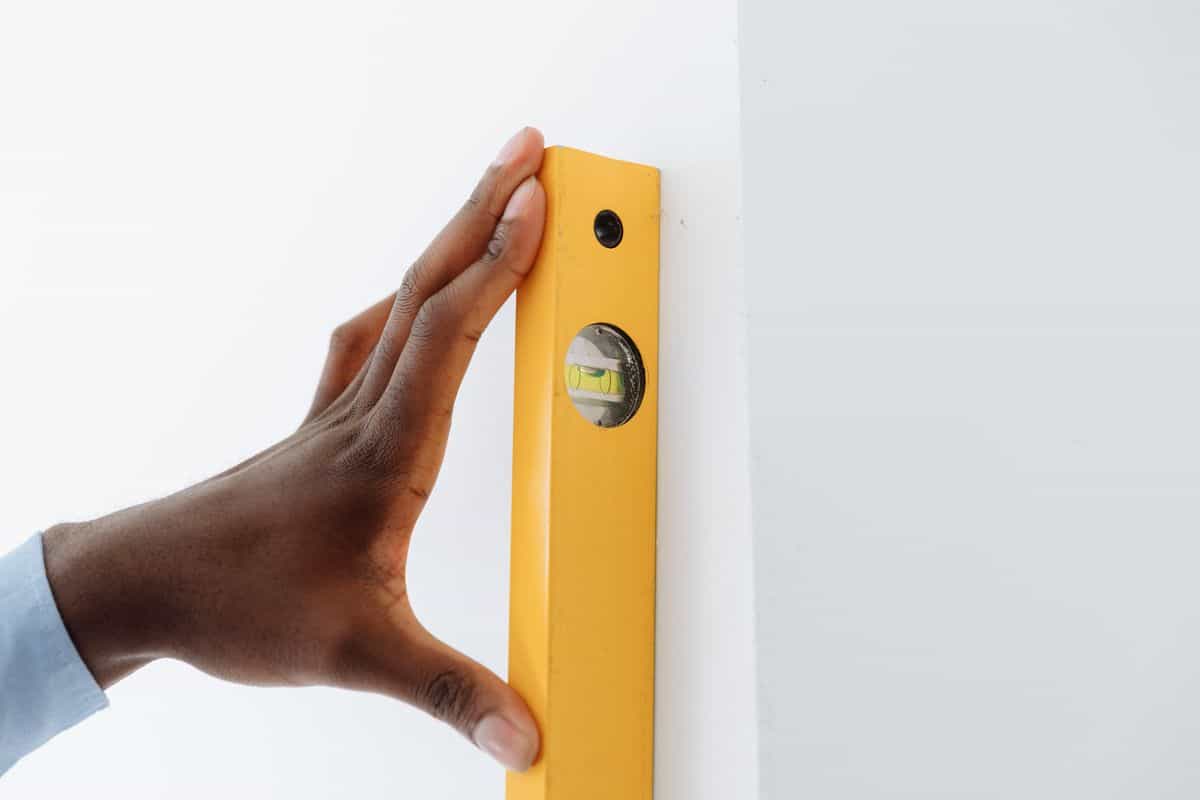
- Use two hanging points. Two points rather than one stop the mirror pivoting and keep it level over time. Check it with a spirit level before final tightening.
- Add bumpers. Small rubber bumpers on the bottom corners hold the mirror flat to the wall and stop it drifting out of true.
For anything heavy, D-rings or a French cleat spread the load far better than a single wire and hook.
The One Placement Rule Height Guides Skip
There is a reason bedroom mirror advice keeps circling back to one warning: a mirror you can see from the pillow can quietly cost you sleep. In feng shui, a mirror reflecting the bed is discouraged as disruptive to rest — a traditional belief, not a measured effect. Separately, there is a real mechanism: when you fixate in dim light, stationary objects in your side vision blur and seem to drift (an effect called Troxler's fading). A reflection half-seen from bed gives a half-asleep brain exactly that unstable signal.
So when you set the height, also check the angle: aim the mirror away from the sleeping area. It rarely costs you anything, since most mirrors sit on side walls anyway — and light, temperature, and what you see matter more for sleep than any single object does.
Recommended Products
Hanging a mirror at the right height is mostly about the hardware that holds it there. These are the tools worth having before you start. (Links go to Amazon search results so you can compare current options.)
- Stud finder — locate the framing so you anchor into something solid.
- Spirit level — the difference between a mirror that hangs straight and one that nags at you.
- Heavy-duty mirror hanging kit with D-rings — two-point hardware that keeps a mirror level.
- French cleat picture and mirror hanger — spreads the load for heavy framed mirrors.
- Anti-tip furniture and mirror strap — essential for a leaning full-length mirror.
- Rubber bumper pads — hold the mirror flat to the wall and stop it drifting.
How High to Hang a Mirror: The Numbers in One Place
Height in a bedroom is not really a matter of taste — it is a matter of eye level and a tape measure. Centre a bare-wall mirror at 57 to 65 inches. Leave 4 to 8 inches above a dresser or nightstand, 6 to 9 above a headboard, and stand a full-length mirror 8 to 12 inches off the floor. Centre it on the furniture, not the wall, and anchor it properly.
Get those numbers right and the mirror disappears into the room as if it were always meant to be there — which, when a mirror is hung well, is exactly the point. The best-hung mirror is the one you stop noticing and simply use.
Mirror FAQ
How high should a mirror go above a bed?
Hang the bottom of the mirror about 6 to 9 inches above the top of the headboard, and never lower than that — you want clear space so no one knocks the glass when sitting up. On a standard bed that usually puts the mirror's centre around 60 to 66 inches from the floor. Centre the mirror on the bed (not the wall), keep it no wider than the headboard, and angle or position it so it does not reflect you while you are lying down.
How high should you hang a mirror over a dresser?
Leave a gap of about 4 to 8 inches between the top of the dresser and the bottom of the mirror, so the two read as one unit. Adjust for dresser height: a low dresser under 34 inches can take a larger 8 to 12-inch gap, while a tall dresser over 40 inches needs only 3 to 5 inches. The mirror's centre should land near your standing eye level, roughly 57 to 65 inches from the floor.
What is the standard height to hang a mirror?
The standard is to centre the mirror at eye level — between 57 and 65 inches from the floor, with 57 to 60 inches being the gallery standard used in museums. This works for a mirror on a bare wall. When a mirror hangs over furniture, the gap above the furniture (4 to 8 inches) usually takes priority, but the centre should still land close to eye level wherever possible.
How high should a full-length mirror be off the floor?
A wall-mounted full-length mirror should sit about 8 to 12 inches off the floor — high enough to clear the skirting board and avoid kicks, low enough to show your feet and a full head-to-toe reflection. The top should reach at least a few inches above the tallest regular user's head. A leaning floor mirror rests on the floor itself but should always be anchored to the wall with a strap so it cannot tip forward.
Should a mirror be centred on the wall or on the furniture below it?
Centre the mirror on the furniture beneath it — the dresser, bed, or console — not on the wall, whenever the two differ. The eye reads the mirror and the furniture as one composition, so aligning their centres looks deliberate. A mirror centred on the wall but off-centre over its dresser looks subtly wrong even when people cannot say why.
How do you hang a heavy mirror so it stays level and secure?
Find the wall studs and anchor into them, or use wall anchors or toggle bolts rated for at least four times the mirror's weight. Use two hanging points rather than one so the mirror cannot pivot and stays level, and mark the positions with painter's tape and a spirit level before drilling. For heavy or framed glass, D-rings or a French cleat spread the load best, and rubber bumpers on the bottom corners keep it flat and stop it shifting.