Mirrors Over Nightstands: Placement, Height, and Style Ideas That Work
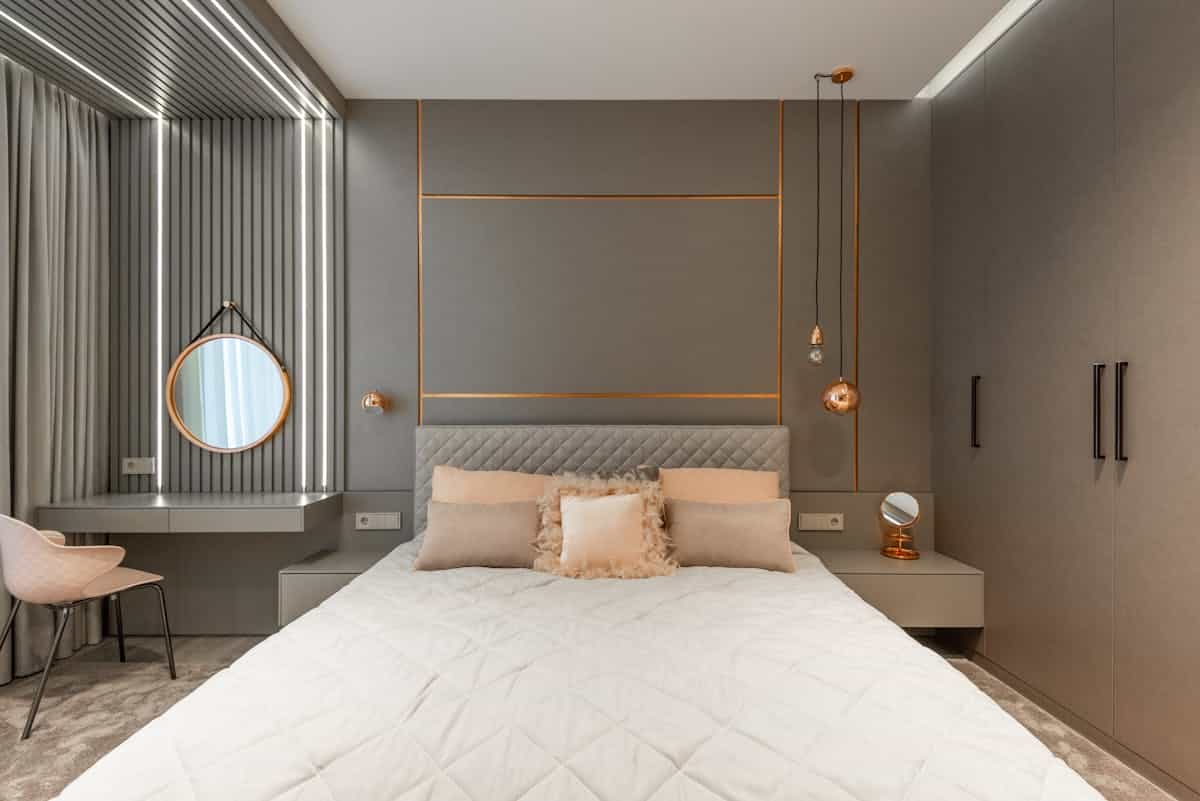
You have a nightstand, a lamp, and a blank stretch of wall above them — and you have seen the rooms where a mirror in that exact spot makes everything look considered and twice as bright. The question is how to get that result rather than a mirror that looks stuck on as an afterthought. The short answer first.
Mirrors over nightstands work best when the bottom of the mirror sits about 4 to 8 inches above the nightstand, the mirror is one-half to two-thirds the width of the table beneath it, and it reflects light or a pleasant view rather than the bed. Use a matching pair for symmetry over matching nightstands, or a single larger mirror when the sides differ. Get the height and the reflection angle right and the rest is styling.
Most guides on mirrors over nightstands jump straight to a gallery of pretty rooms. The pretty rooms all share a few measurements and one rule underneath them. Here is what they are.
Why a Mirror Over the Nightstand Works So Well
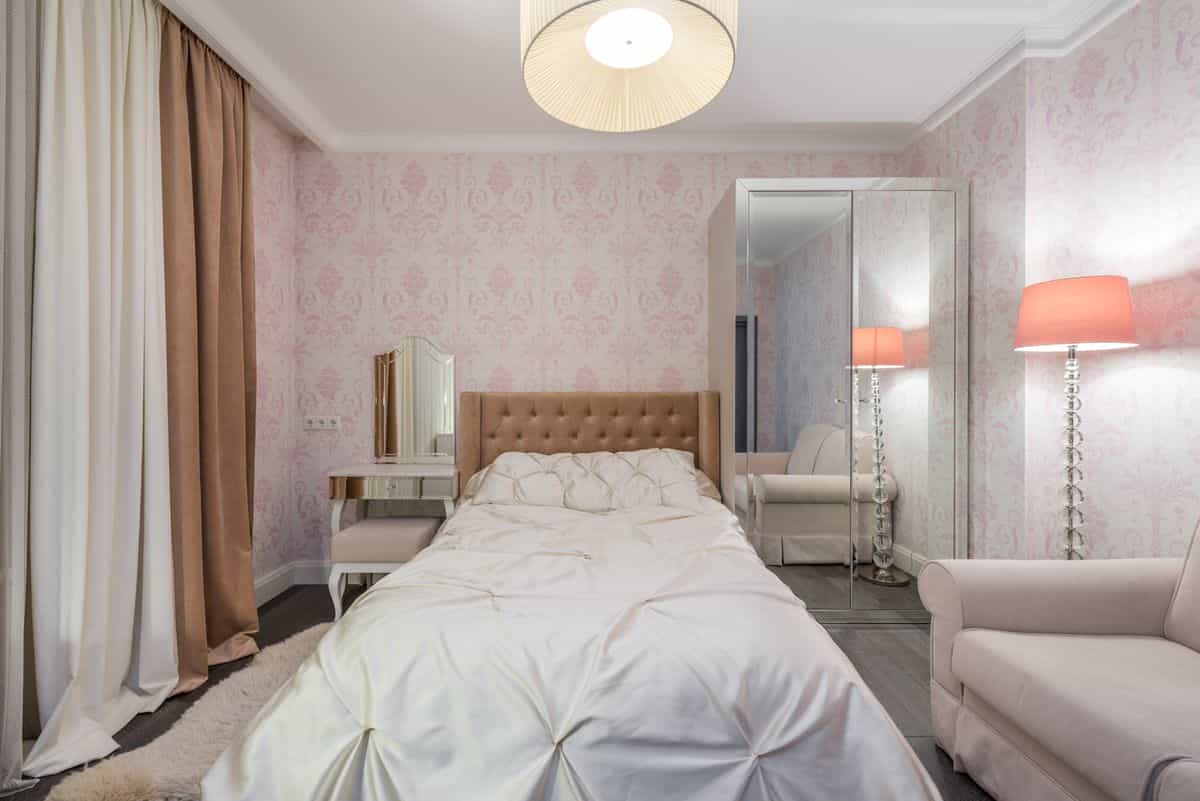
A mirror in this position does three jobs at once, which is why designers reach for it so often.
It reflects light. A bedside lamp throws most of its glow at the wall behind it. A mirror behind the nightstand catches that light and pushes it back into the room, roughly doubling the lamp's reach after dark. Place the mirror to catch a window during the day and it does the same with daylight.
It adds height beside the bed. Nightstands are low. A bed is low and horizontal. A vertical mirror above the nightstand draws the eye upward and gives the bed wall the sense of proportion that a tall headboard would, without the cost of one.
It makes a small room feel larger. This is the reason behind the rental-decorating trick you have seen everywhere: a mirror reflecting the opposite wall adds apparent depth, so a tight bedroom reads as more open. The effect is strongest when the mirror reflects an uncluttered surface or a light source rather than a busy shelf.
None of this is decorating folklore — it is just how reflection behaves. The light a mirror sends back is real light, and the depth it suggests is the same trick that has made mirrors a small-space staple since they became affordable in the 19th century. What changed is only the price of the glass, not the physics.
How High Should a Mirror Hang Over a Nightstand?
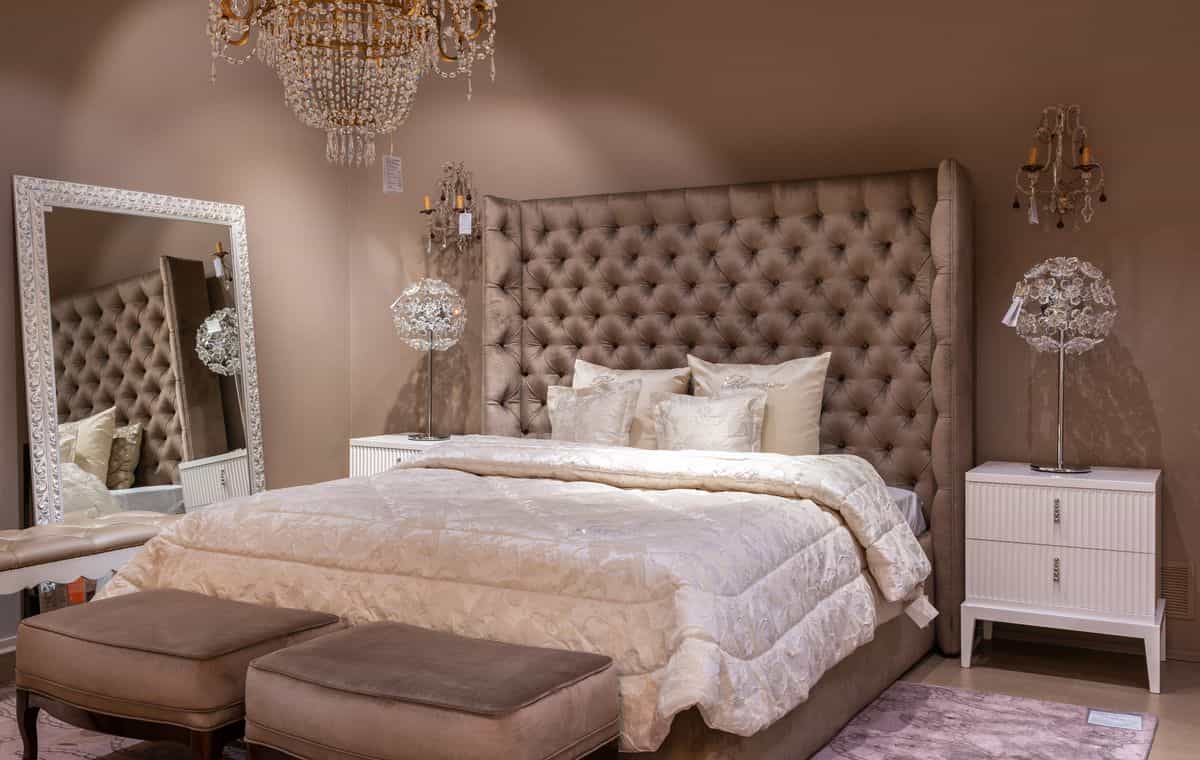
This is where most mirror over nightstand attempts go wrong — the mirror ends up too high, floating in a sea of wall with no relationship to the table below it.
Three numbers solve it:
- Bottom of the mirror: 4 to 8 inches above the nightstand surface. Close enough that the table and mirror read as one composition, with room for a lamp or a small object underneath. Closer to 4 inches for a tall mirror; up to 8 if the mirror is small and you want breathing room.
- Centre of the mirror: about 57 to 60 inches from the floor. This is standard gallery eye level — the same height museums hang art. It keeps the mirror in the natural sightline whether you are standing beside the bed or sitting against the headboard.
- Clear the lampshade. If a lamp sits on the nightstand, the base of the mirror should clear the top of the shade by an inch or two. A mirror that overlaps the shade looks crowded and the lamp blocks its own reflection.
On width, keep the mirror one-half to two-thirds the width of the nightstand. Wider than the table looks top-heavy; far narrower looks stranded. For a typical 18-to-24-inch nightstand, that means a mirror roughly 12 to 18 inches wide. If you are using a tall narrow mirror to add height, let it run tall but keep the width in that range so it still belongs to the table.
| Element | Target measurement | Why |
|---|---|---|
| Gap above nightstand | 4–8 inches | Ties mirror and table into one unit |
| Centre height from floor | 57–60 inches | Gallery eye level; natural sightline |
| Mirror width vs. nightstand | ½ to ⅔ of table width | Balanced, not top-heavy |
| Clearance above lampshade | 1–2 inches | Keeps the lamp and reflection uncrowded |
One Mirror or Two? The Symmetry Question
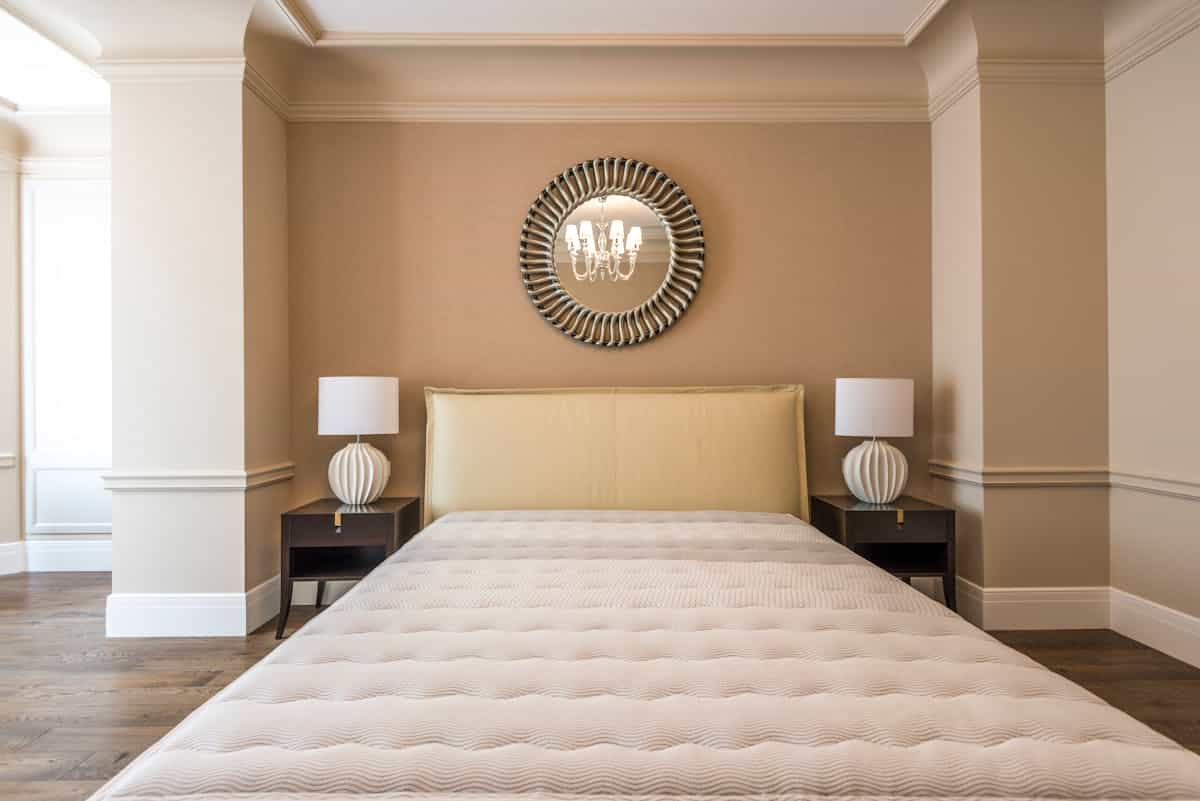
A matching pair of mirrors over nightstands — one on each side of the bed — is often the strongest version of the idea, and there is a reason it feels so settled.
The human eye reads symmetry as calm. A bed flanked by two identical mirrors and two matching lamps gives the brain a balanced, predictable composition, and balanced compositions are the ones we find restful. In a bedroom — the one room designed for rest — that is doing real work, not just looking tidy. It is the same instinct that makes a symmetrical face or a centred doorway feel "right."
So when does a pair beat a single mirror, and when is it the reverse?
Use a matching pair when: your nightstands match, the bed is centred on the wall, and both sides have equal wall space. This is the cleanest, most hotel-like result.
Use a single mirror when: the two bedside tables differ, only one side has usable wall, or you want one larger statement piece rather than balanced repetition. A single mirror can sit above one nightstand and be answered by art or a sconce on the other side — balance without matching.
If you want the symmetry but not perfect matching, hold one element constant: the same frame finish in two different shapes, or two sizes in the same material. The eye still groups them as a set. Two unrelated mirrors flanking one bed is the combination that reads as accidental.
The One Placement Rule That Matters Most
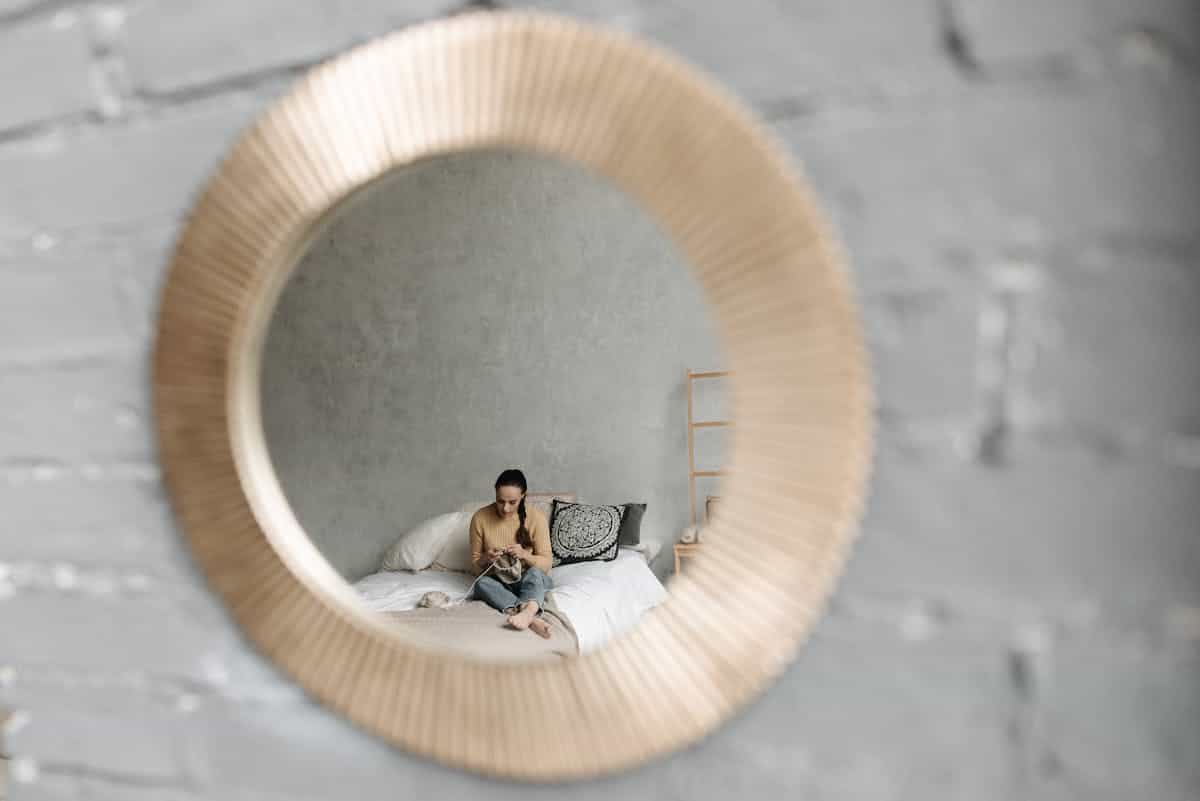
If you remember one thing from this page, make it this: position the mirror so it does not reflect you while you are lying in bed.
A mirror over a nightstand usually faces across or along the room, which is exactly why it is a safer bedroom placement than a mirror above or facing the bed — at table height, beside you, it tends to reflect the opposite wall rather than the pillows. But angle it wrong, or hang it large enough to catch the bed, and you reintroduce the problem that every tradition and a bit of perception research both warn about.
Here is the honest version of that warning, because it usually gets stated badly. In feng shui, a mirror reflecting the bed is discouraged because mirrors are thought to keep energy moving in a room meant for rest — a cosmological belief, not a measured effect. Separately, there is one mechanism with actual evidence behind it: when you fixate in dim light, stationary objects in your peripheral vision blur and seem to drift (an effect called Troxler's fading). A reflection you can half-see from the pillow gives a half-asleep, movement-sensitive brain exactly that kind of unstable stimulus. The two warnings arrive from completely different places and land on the same practical instruction: don't let the mirror reflect the sleeping you.
Over-nightstand mirrors pass this test easily as long as you keep them at bedside height and face them outward. For the full reasoning, the guide on whether it is bad to sleep facing a mirror covers both the folklore and the sleep science, and the room-by-room feng shui mirror placement rules explain where the bedroom guidance comes from. The broader point — that light, temperature, and what you see matter more for sleep than any single object — is worth keeping in proportion too.
8 Mirror-Behind-Nightstand Style Ideas That Work
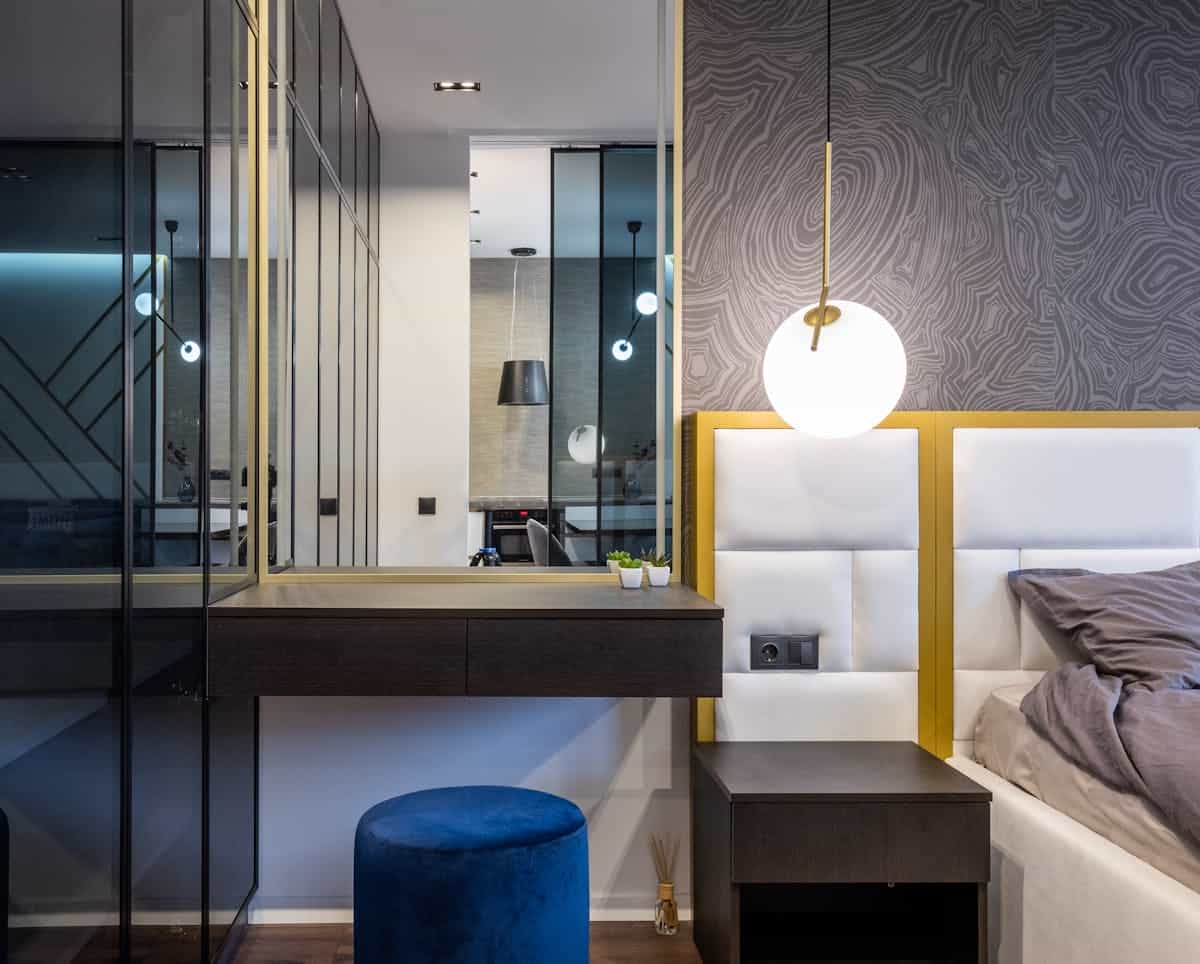
With the height and the reflection sorted, the styling is the fun part. These are the mirrors behind nightstands treatments that consistently look intentional.
- The matching pair. Two identical mirrors over matching nightstands and lamps. The most foolproof option — symmetry does the heavy lifting.
- The tall, narrow mirror. A slim vertical mirror on each side adds drama and height beside a low bed, mimicking a grander headboard wall.
- Round over rectangular. A round mirror above a rectangular nightstand softens all the straight lines of the bed, table, and lamp base. Easy contrast that calms a boxy room.
- Mirror plus sconce instead of a table lamp. Mount a wall sconce beside or above the mirror and free up the whole nightstand surface. The mirror doubles the sconce's glow and the bedside reads cleaner.
- The leaning look on a console-style nightstand. A small mirror propped against the wall behind the nightstand (secured so it can't slip) gives a relaxed, layered feel rather than a hung-just-so one.
- Reflect the window. Position the mirror to catch a window across the room. By day it pulls in light; the reflected view adds depth a solid wall never could.
- Frame it to the room's metals. Brass or gold for warm, traditional bedrooms; matte black or thin gunmetal for modern ones; raw or limewashed wood for organic, calm schemes. Match the lamp base and you get instant cohesion.
- The small gallery. Instead of one mirror, cluster two or three smaller ones with a piece of art above a single nightstand — useful when the wall is tall and one mirror would look lost.
A note worth making: the lamp and the mirror are a team. A warm-toned bulb (around 2700K) reflected in the mirror reads cosy; a cold white bulb reflected back can make a bedroom feel clinical after dark. Choose the bulb with the reflection in mind, not just the lamp.
What Shape and Frame Suit a Mirror Over a Nightstand?
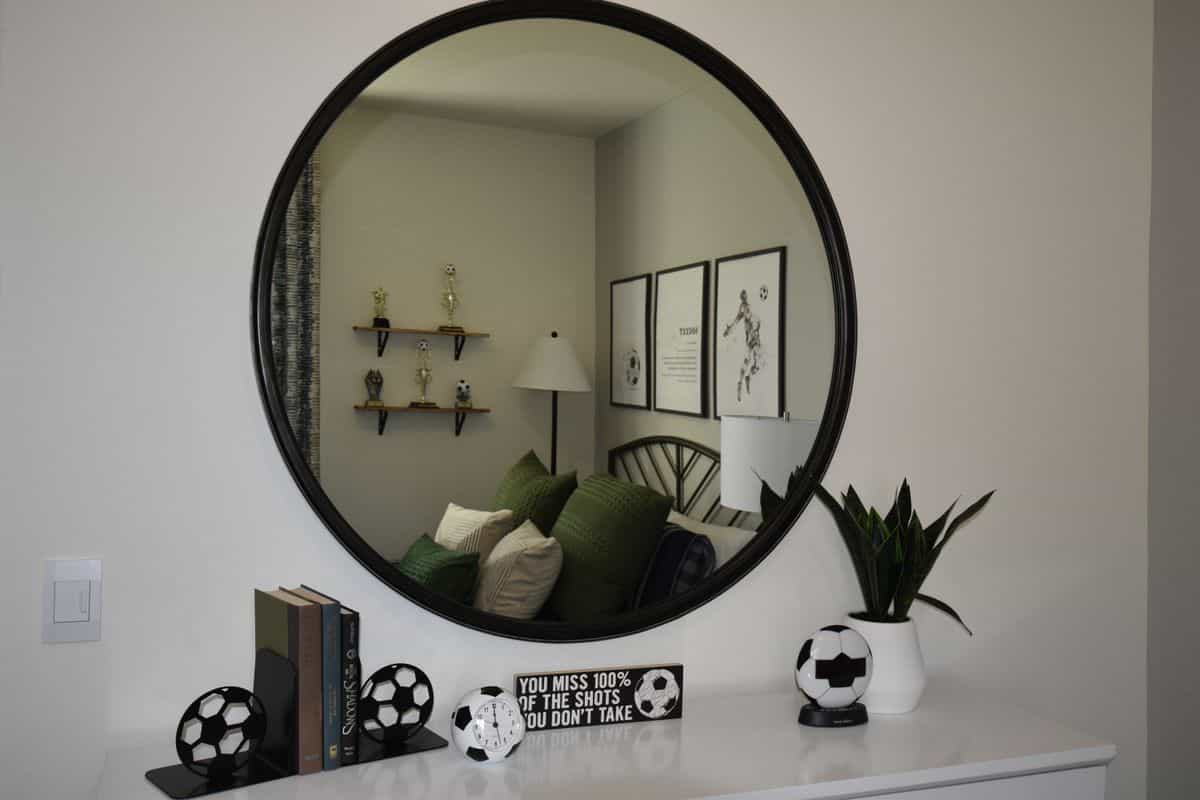
Shape should answer what the rest of the bedside is doing:
- Round or oval — the safest, most flattering choice over a rectangular nightstand. It breaks the grid of straight lines and feels soft and modern.
- Arched — adds gentle height and a touch of architecture; works beautifully as a pair flanking the bed.
- Rectangular (vertical) — reinforces height beside a low bed and suits minimalist or traditional rooms equally.
- Sunburst or organic — a single decorative statement for an otherwise plain wall; usually best as a solo mirror rather than a pair, which can feel busy.
On frames, the rule is simpler than it looks: the frame should talk to one other thing in the room — the lamp base, a drawer pull, a curtain rod, the bed frame. A bedside mirror that shares a finish with something nearby looks chosen; one that matches nothing looks bought in isolation. For a comprehensive take on size and shape over the bed itself rather than the nightstand, the companion guide on a mirror above the bed covers the larger-format version of the same decisions.
Recommended Products
These are the categories worth getting right for behind-nightstand mirrors — the priority is the right size, a secure hang, and a frame that coordinates with your lamps. (Links go to Amazon search results so you can compare current options.)
- Round wall mirror, 12–18 inch — the most versatile shape and size for above a standard nightstand.
- Matching pair of bedside wall mirrors — for symmetrical placement over two nightstands.
- Arched framed mirror — adds height and a soft architectural line beside the bed.
- Plug-in wall sconce for the bedside — pairs with a mirror to free up the nightstand surface.
- Warm 2700K LED bedside bulbs — so the lamplight the mirror reflects reads cosy, not clinical.
- Flush mirror mounting clips and D-rings — for a secure, level hang on the wall.
Putting It Together
A mirror over the nightstand is the rare decorating move that is functional and flattering at once: it brightens the bed wall, lifts a low room, and balances the space — provided you anchor it to the table with the right gap, keep it to two-thirds the nightstand's width, and turn its face away from the pillows.
The room you are picturing, the one that looks effortless, is just those few measurements followed and one rule respected. Hang the mirror to catch the light and not yourself, and the bedside takes care of looking intentional on its own.
Mirror FAQ
How high should you hang a mirror over a nightstand?
Hang the bottom of the mirror roughly 4 to 8 inches above the surface of the nightstand — close enough that the mirror and table read as one composition, with enough gap to fit a lamp or a few objects underneath. As a centring rule, the middle of the mirror should sit around 57 to 60 inches from the floor (standard gallery eye level), adjusted up slightly if you mostly view it standing. If a bedside lamp sits on the nightstand, raise the mirror so its base clears the top of the lampshade by an inch or two rather than overlapping it.
Should you put a mirror behind a nightstand?
Yes — a mirror above and behind a nightstand is one of the most effective small-bedroom moves, because it reflects lamplight and the opposite wall, making the room feel larger and brighter. The two conditions for it to work well: the mirror should reflect something pleasant (a window, the opposite wall, a light source) rather than clutter, and it should not be angled so that it reflects you lying in bed. Behind-nightstand mirrors are also renter-friendly, since the nightstand and lamp anchor the look even with a lightweight mirror.
Is it OK to have mirrors on both sides of the bed over the nightstands?
Yes, and a matching pair is often the strongest version of the idea. Two identical mirrors over matching nightstands create symmetry, which reads as calm and deliberate to the eye and frames the bed like a headboard arrangement. Use a pair when your nightstands match and the bed is centred on the wall. Use a single mirror when the bedside tables differ, when only one side has wall space, or when you want one larger statement piece instead of balanced repetition.
What size mirror goes over a nightstand?
Aim for a mirror roughly one-half to two-thirds the width of the nightstand. Wider than the nightstand looks top-heavy and unbalanced; much narrower looks lost on the wall. For a standard 18 to 24-inch nightstand, a mirror around 12 to 18 inches wide works well. If you are hanging a tall, narrow mirror to add height beside the bed, prioritise height over width, but keep the width within that one-half to two-thirds range so it still relates to the table beneath it.
Do the mirrors over nightstands have to match?
They do not have to be identical, but they should relate. If you use a pair, matching mirrors give the cleanest, most restful result. If you prefer variety, keep one element constant — same frame finish in two different shapes, or two different sizes in the same material — so the eye still reads them as a set. What looks accidental rather than designed is two mirrors with no shared frame, shape, or finish flanking the same bed.
Are mirrors over nightstands good feng shui?
Mirrors over nightstands are generally more acceptable in feng shui than a mirror directly above or facing the bed, because a mirror beside the bed at nightstand height does not usually reflect the sleeping body. The standing feng shui concern is any mirror that reflects you while you sleep. As long as the over-nightstand mirrors face across or along the room rather than down toward the pillows, they sidestep the main objection — which, notably, is also the placement that avoids the one effect with independent evidence behind it.