Wardrobe Mirror Ideas: Full-Length, Sliding, and Built-In Styles That Work
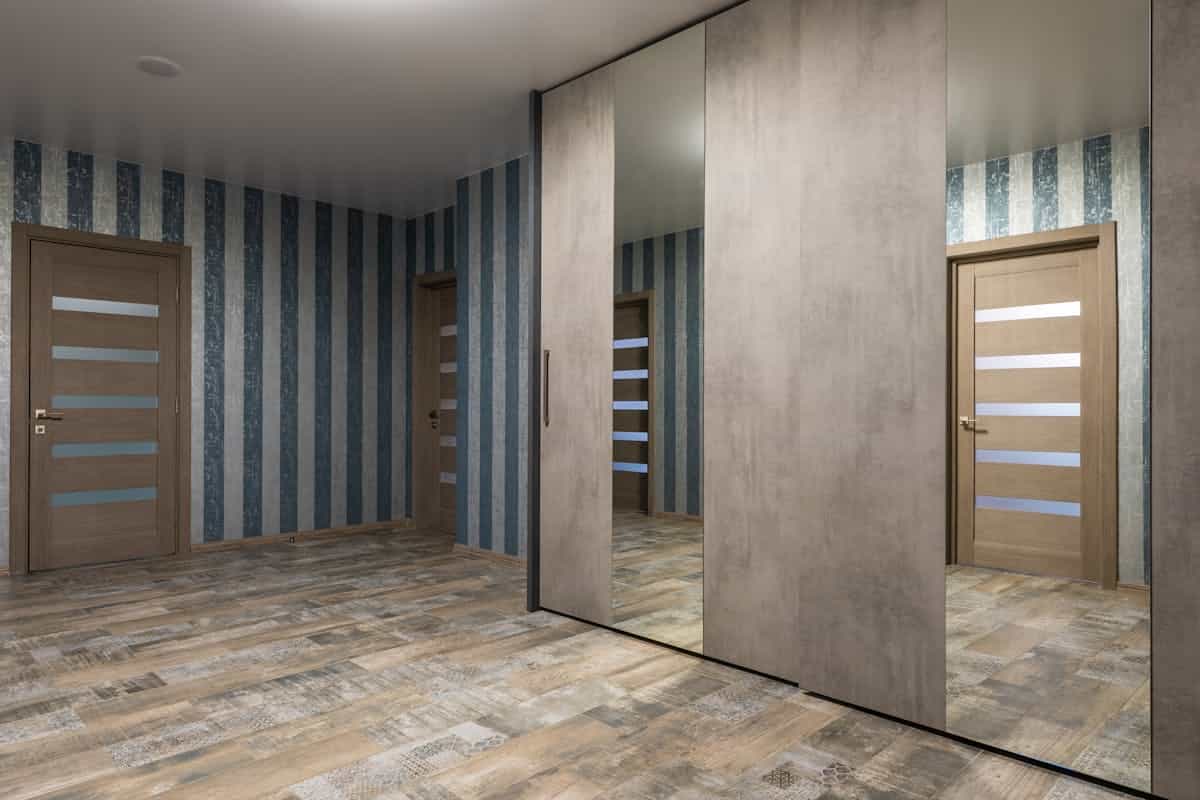
You have a wardrobe wall to plan, and you have seen how a mirror for wardrobe doors seems to do two things at once — give you somewhere to check your outfit and make the whole room feel bigger. The question is which version actually delivers that: sliding or hinged, full-length or panelled, built-in or freestanding. The short answer first.
The best wardrobe mirror for most bedrooms is a full-length mirror on sliding doors, because it gives you a head-to-toe dressing mirror with no swing space and reflects light to make the room feel larger — provided it does not face the bed. Built-in wins on storage and a seamless look; freestanding wins on cost and flexibility. Beyond that, the choice is about your room's size, your wall, and what the mirror will reflect.
Most wardrobe mirror guides are galleries of pretty rooms with no reasoning underneath them. The pretty rooms all made a handful of decisions correctly. Here is what those decisions are.
Why Choose a Mirror for Your Wardrobe?
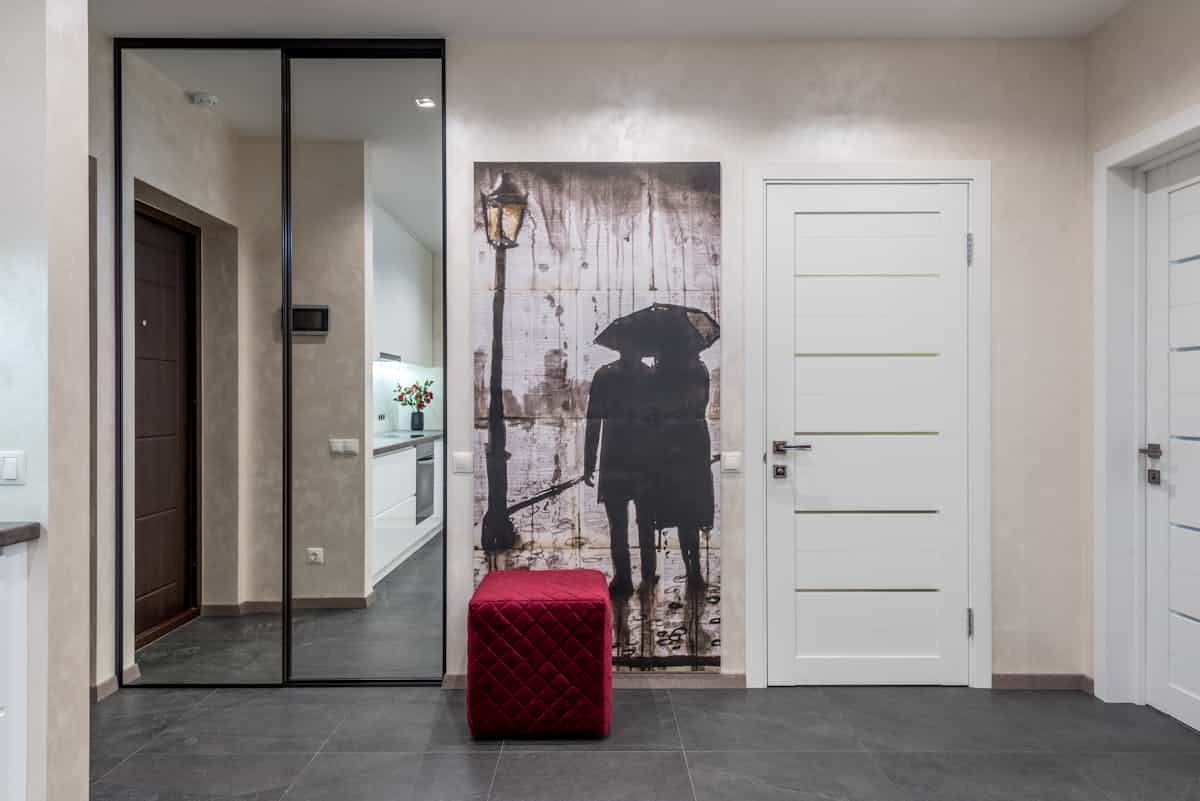
A mirror for wardrobe doors earns its place because it solves three problems with one surface.
It saves the floor space a separate mirror would take. A full-length mirror needs a wall or a stand. Put that mirror on the wardrobe doors and you reclaim the corner it would have occupied — the single biggest reason mirrored wardrobes are a small-bedroom staple.
It makes the room feel larger and brighter. A large mirror reflects the opposite wall and the light already in the room, adding apparent depth and roughly doubling how bright the space reads. This is not a sales line — it is how reflection behaves, the same optical effect that has made mirrors a small-space trick since clear glass became affordable in the 19th century. What changed is the price of the glass, not the physics.
It gives you a head-to-toe dressing check exactly where you get dressed, so final adjustments to an outfit happen at the wardrobe rather than across the room.
The honest limit worth naming: a mirrored wardrobe is, functionally, a very large mirror bolted to a wall. That is mostly an advantage — but it means what the mirror reflects matters more than with a small one, which is the point most guides skip and the one this guide returns to below.
Sliding, Hinged, or Bi-Fold: Wardrobe Mirror Door Types
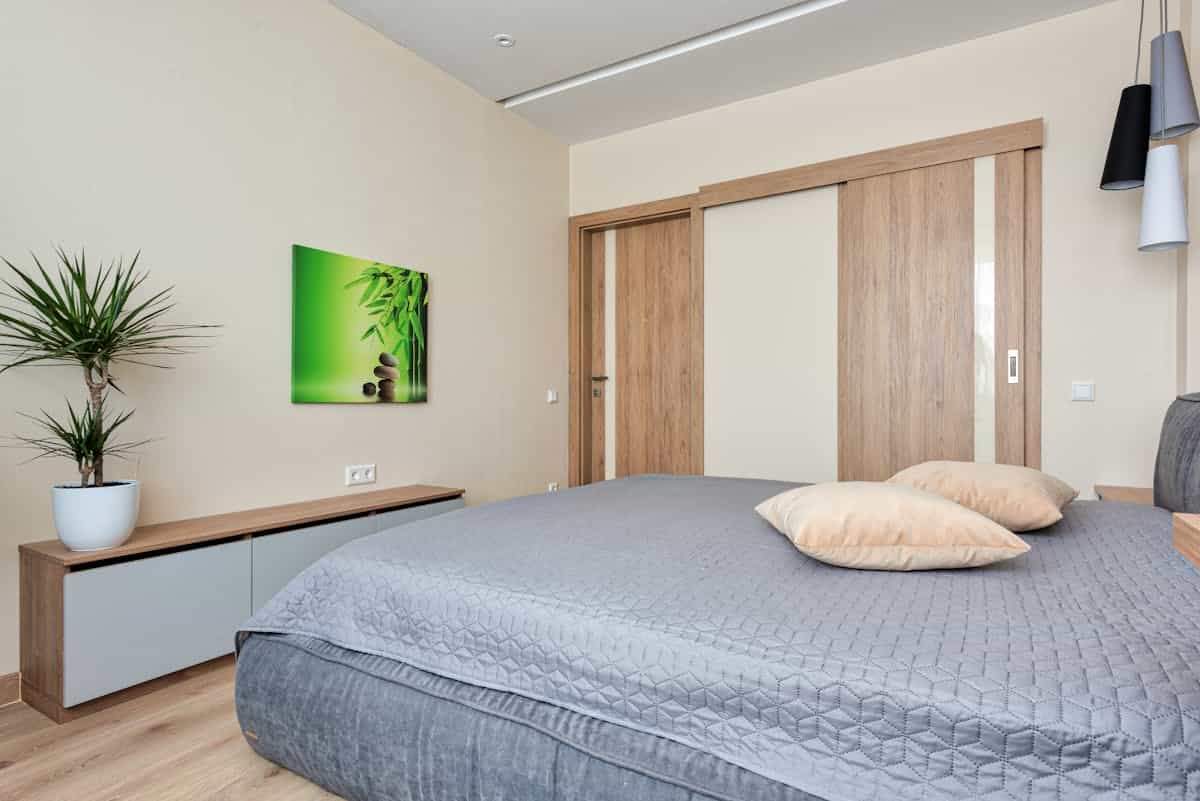
The door mechanism matters more than the mirror style, because it decides how the wardrobe fits the room.
Sliding doors glide along a track and never swing outward, so they need zero clearance in front. That makes them the default choice for small or narrow rooms where a bed or dresser sits close to the wardrobe wall. The trade-off: you can only ever see half the interior at once, since one door always overlaps another.
Hinged doors swing open like a cupboard, giving full, unobstructed access to the entire interior at one time and a more classic look. They need swing space in front — usually a clear 60–70 cm — so they suit larger rooms.
Bi-fold doors fold back on themselves, needing less swing space than hinged doors while still exposing most of the interior. A sensible middle option for medium rooms.
| Door type | Best for | Clearance needed | Access |
|---|---|---|---|
| Sliding | Small / narrow rooms | None | Half the interior at a time |
| Hinged | Larger rooms, full access | 60–70 cm swing | Entire interior at once |
| Bi-fold | Medium rooms | Small | Most of the interior |
Full-Length, Panel, or Fully Mirrored? Choosing the Layout
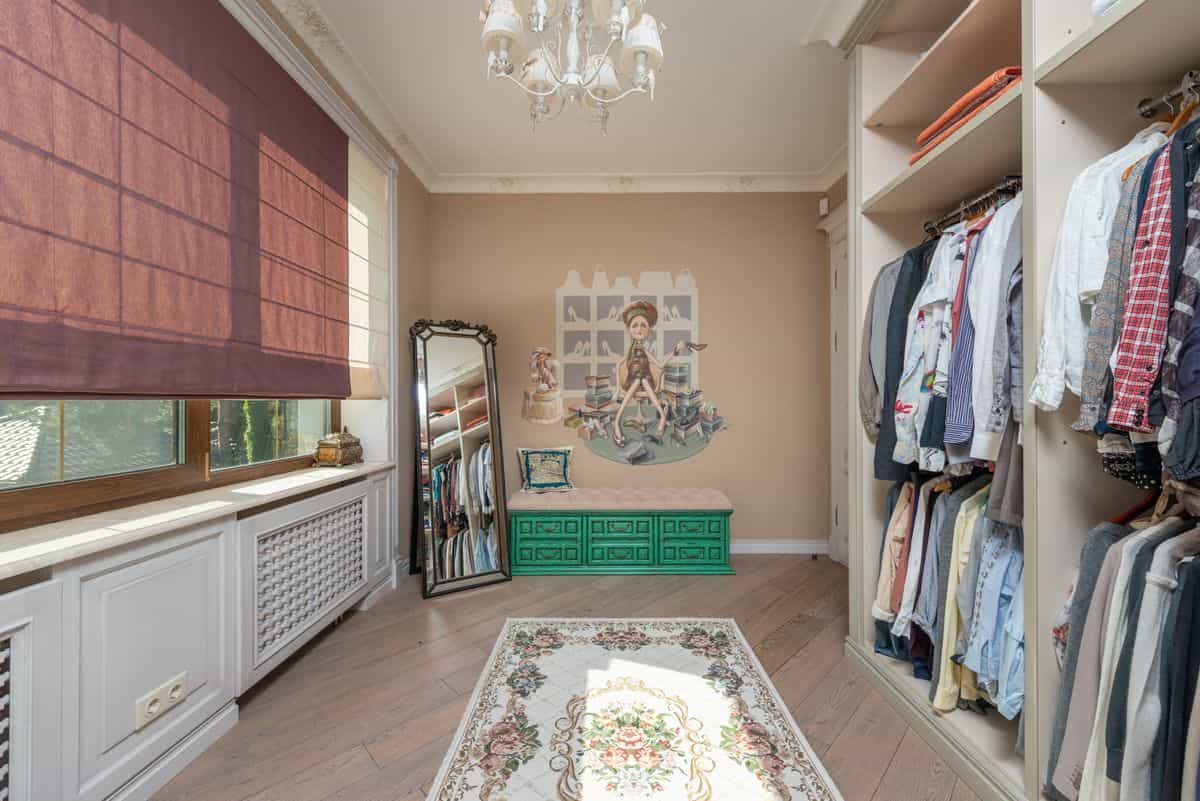
How much of the wardrobe is mirrored changes both the look and how the room feels.
- Fully mirrored doors — the whole door is a mirror. Maximum light, maximum sense of space, and a full-length reflection on every panel. The most dramatic option and the best for making a small room expand. It also shows the most fingerprints and reflects the most of the room, so placement matters most here.
- Panel or half-mirrored doors — a mirrored strip set into a wood or painted door. You get the dressing function and a slice of the light-bouncing benefit, with a calmer, less reflective wall. A good compromise when a fully mirrored wall would feel like too much glass.
- Inset (frameless) mirrors — a mirror set flush into the door surface for a refined, integrated finish, often with a thin shadow gap rather than a frame. The most contemporary look.
If your goal is to enlarge a small bedroom, go fully mirrored. If you want the function without a wall of glass, a single full-length panel on one door does most of the work.
Built-In vs Freestanding Mirrored Wardrobes
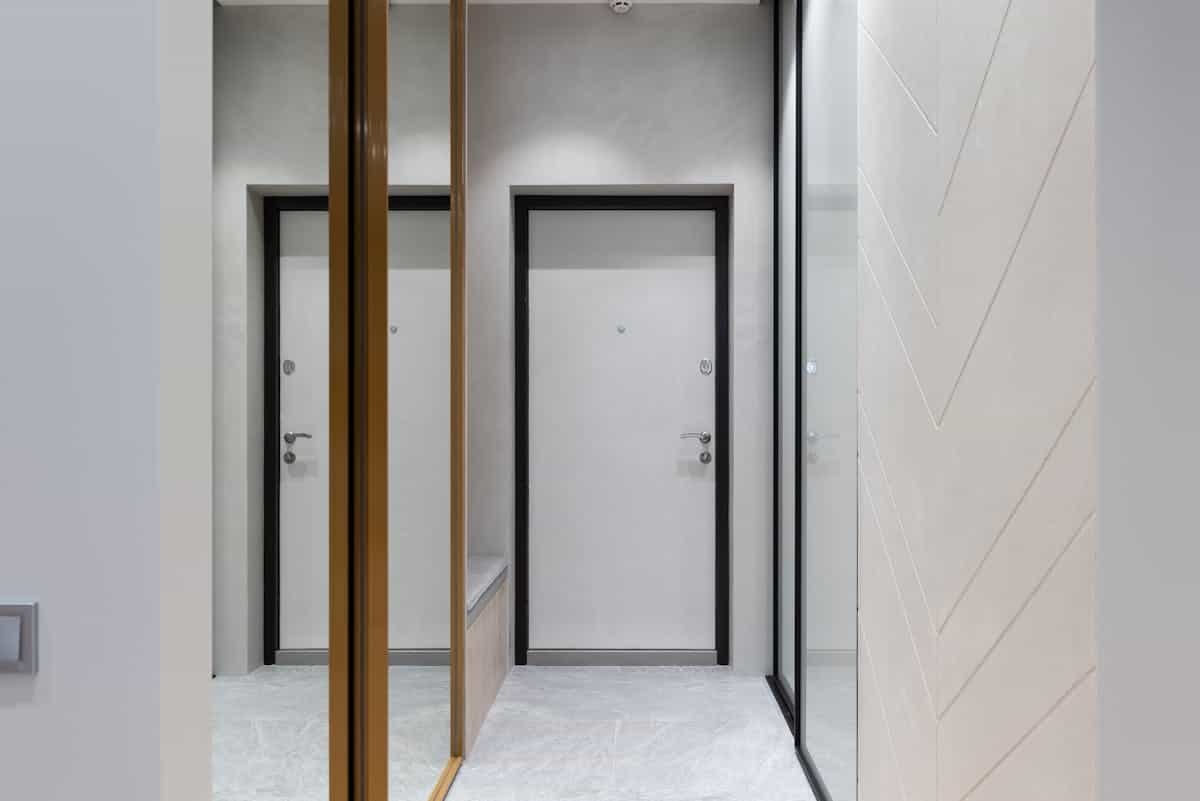
This is the decision that depends least on taste and most on your situation.
Built-in (fitted) mirrored wardrobes are constructed into the wall, usually floor to ceiling. They look seamless, use awkward alcoves and sloped ceilings that freestanding units waste, and give the most storage per square metre. The cost: they are a permanent installation, more expensive up front, and they stay with the house when you leave.
Freestanding mirrored wardrobes — and coordinated pieces like a mirrored bedroom set or a matching bedroom bureau with mirror — cost less, move with you, and assemble without a builder. The trade-off is the gaps they leave at the top and sides, and less storage overall.
The rule of thumb: if you own the home and want maximum storage with a built-in look, fit it. If you rent, want flexibility, or are furnishing on a budget, freestanding is the sensible call. A freestanding mirrored dresser for bedroom use can also stand in for wardrobe-door mirrors entirely if your wardrobe itself stays plain.
Styles and Finishes: Frames, Tints, and Wood
The finish is where a mirrored wardrobe stops looking like a builder's default and starts looking designed. A few combinations that consistently work:
- Black-framed mirror panels against pale walls — a clean, modern, almost industrial line that stops a wall of mirror feeling clinical.
- Walnut or oak with inset mirror — warm wood tempering the cold of the glass. The most forgiving look in a bedroom, because wood reads as restful where full mirror can read as busy.
- Frosted or tinted (grey/bronze) glass — a softer, privacy-conscious reflection that still bounces light but does not give a sharp head-to-toe image. Useful where a clear mirror would reflect too much (more on that below).
- Frameless floor-to-ceiling — the most expansive, light-maximising choice for a small modern room.
Whatever the finish, coordinate the frame or handle metal with one other thing in the room — the bed frame, the lamp bases, the door handles — so the wardrobe looks chosen rather than delivered.
Lighting a Mirrored Wardrobe
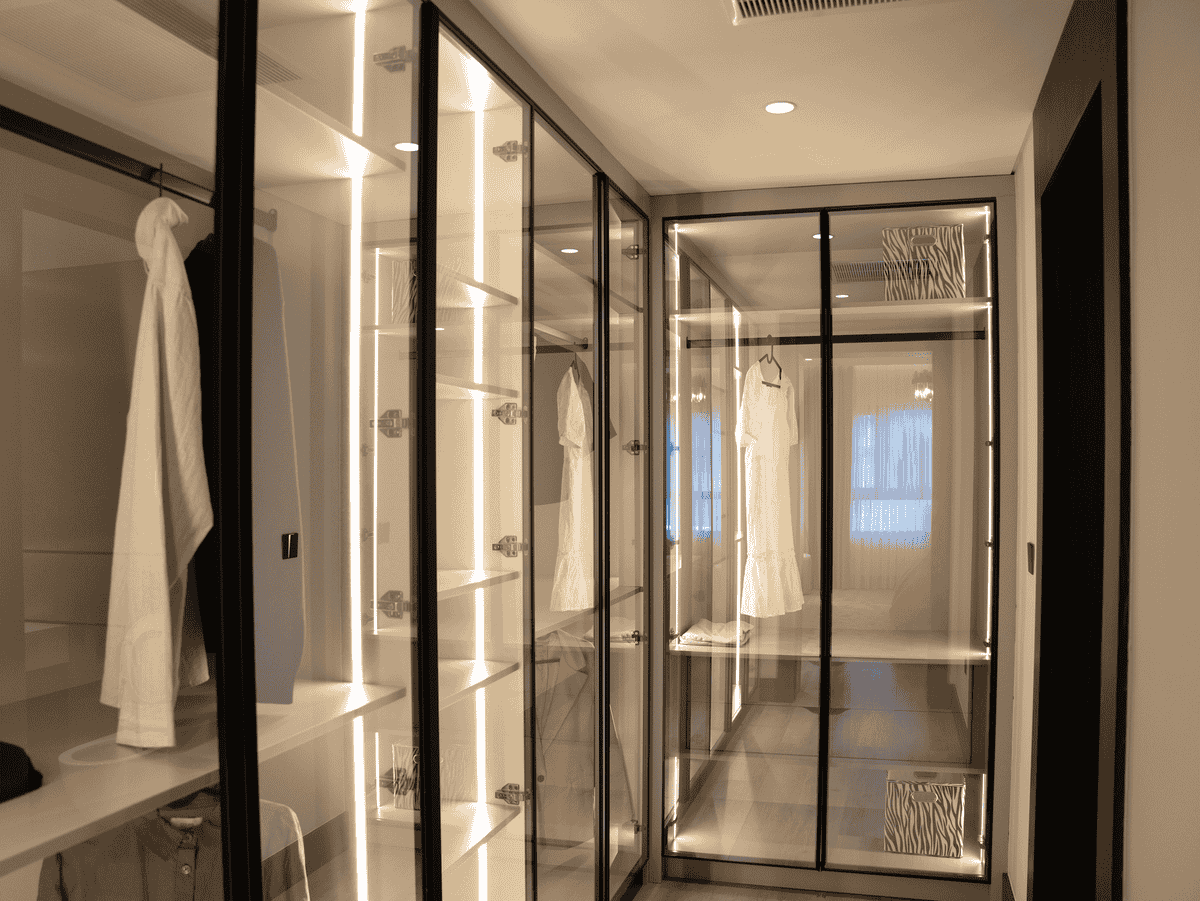
Lighting is what turns a mirrored wardrobe from functional to genuinely flattering, and it is the easiest thing to get wrong.
A mirror amplifies whatever light hits it, so the colour of that light matters. A warm bulb (around 2700–3000K) reflected in the doors makes the bedroom feel cosy; a cold, blue-white light bounced back can make the whole room feel like a changing room. Choose the warmer end for a bedroom.
Integrated LED strips along the inside edges or above the doors light the interior and wash the mirror with a soft glow that reads as luxurious. If you are using the wardrobe mirror to actually get ready, aim for light that falls on you from the front or sides rather than only from overhead — overhead-only light casts shadows down the face and is the reason changing-room mirrors are so unforgiving.
The Placement Rule Most Wardrobe Guides Skip
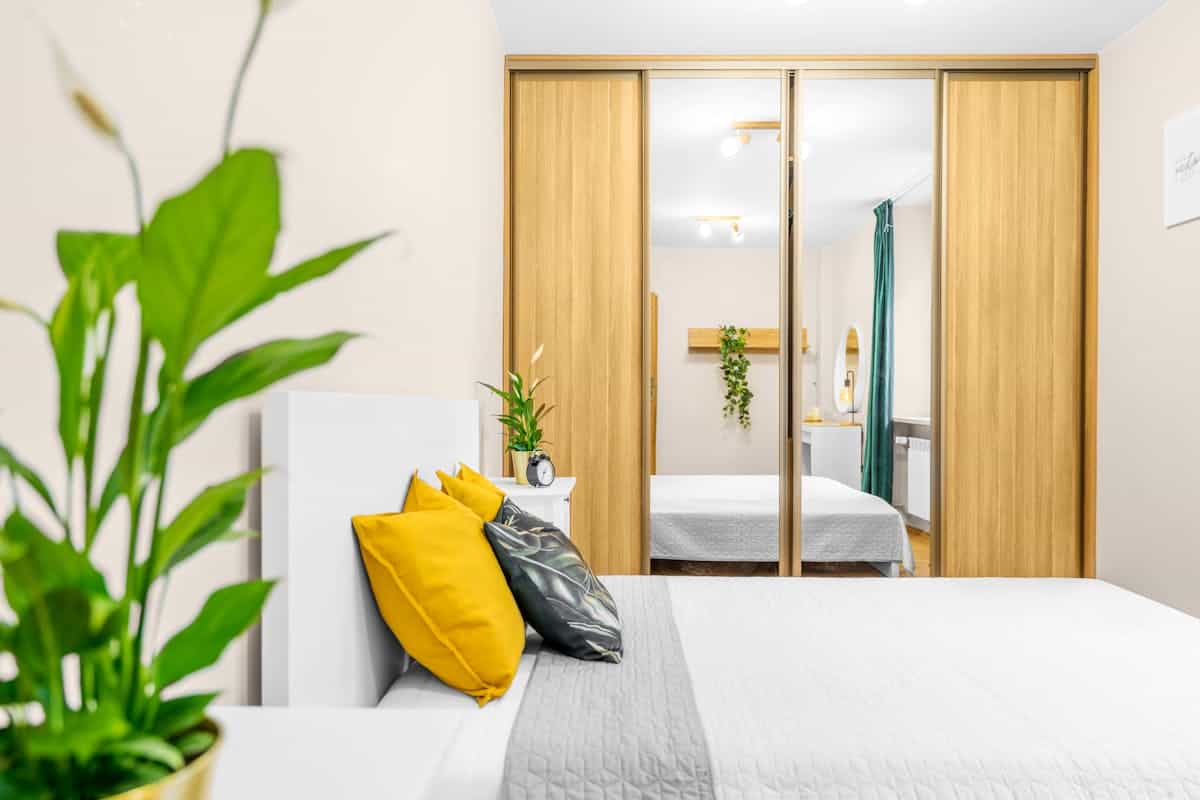
Here is the thing almost no wardrobe-mirror gallery mentions: a mirrored wardrobe is a large mirror, so where it faces is not just a decorating question.
The one configuration worth avoiding, where you have any choice, is a mirrored wardrobe that reflects the bed. Two separate reasons land on the same advice. In feng shui, a mirror reflecting the bed is discouraged because the bedroom is meant to be the room where energy settles — a cosmological belief, not a measured effect, and worth treating as such. Separately, there is one mechanism with actual evidence behind it: when you fixate in dim light, stationary things in your peripheral vision blur and seem to drift (an effect called Troxler's fading). A reflection you can half-see from the pillow gives a half-asleep, movement-sensitive brain exactly that kind of unstable stimulus. The two warnings arrive from completely different places and point the same way.
This is rarely a real constraint, because a wardrobe usually sits on a wall beside or behind the bed rather than facing it. But if your only wardrobe wall is the one your bed faces, you have good options that keep the storage without the reflection: frosted or tinted glass, panel mirrors set high on the doors, or wooden doors with a single inset mirror angled away from the sleeping area. Keep the broader point in proportion, too — light, temperature, and what you see matter more for sleep than any single object does.
For the full reasoning, our companion guides are the closest thing to a placement checklist: the room-by-room feng shui mirror placement rules and the deeper look at whether it is bad to sleep facing a mirror both work as a quick reference before you commit to a wall. And if the wardrobe mirror is your main bedroom mirror, the guide on a mirror above the bed covers the same safe-glass and placement logic for the larger format.
How to Choose — and the Safety Point Nobody Mentions
Pull the decisions together in order, and the choice makes itself:
- Measure the wall and the swing space. No swing room? Sliding. Plenty of room and you want full access? Hinged.
- Decide how much mirror you want. Enlarging a small room → fully mirrored. Want calm → panel or inset.
- Own or rent? Own → built-in for storage and finish. Rent → freestanding or a mirrored bedroom set.
- Check what the doors will reflect — and steer the mirror away from the bed.
- Specify safe glass. This is the part the design galleries never mention. Large mirrored doors are big sheets of glass at body height. Tempered or safety-backed glass crumbles into blunt granules instead of shards if it ever breaks, and a safety-backing film holds fragments in place. On a wardrobe a child or a vacuum cleaner will knock into, this is worth insisting on.
A useful reframe before you spend on a mirror for wardrobe doors: the mirror is not the expensive part. The doors, the track, and the carcass are. Buy the best track and hinges you can — a sliding door that judders or jumps the rail is the single most common regret with mirrored wardrobes, and it is a hardware problem, not a mirror one.
Recommended Products
These are the categories worth getting right for a wardrobe mirror — the priority is a smooth-running door, safe glass, and a finish that suits the room. (Links go to Amazon search results so you can compare current options.)
- Full-length stick-on wardrobe mirror panels — turn plain doors into a dressing mirror without replacing them.
- Sliding wardrobe door mirror kit — for retrofitting mirrored sliding doors onto an existing frame.
- Shatter-resistant acrylic full-length mirror — a lightweight, safe option for rental wardrobes.
- Warm 2700K LED wardrobe strip lighting — for the flattering glow that overhead light cannot give.
- Mirror safety backing film — holds the glass together if a door is ever knocked or cracked.
- Freestanding mirrored wardrobe — a movable, renter-friendly alternative to a fitted unit.
Putting It Together
A mirror for your wardrobe is one of the few decorating choices that is genuinely practical and genuinely transformative: it dresses you, doubles your light, and stretches a small room — all from a surface you were going to have anyway as a door.
Get the mechanism right for your space, the amount of mirror right for the mood, and the reflection pointed away from the bed, and the wardrobe stops being storage you tolerate and becomes the thing that makes the room look twice its size. The glass was always going to be there. The only real decision is what it shows you.
Mirror FAQ
Is a mirrored wardrobe a good idea?
For most bedrooms, yes. A mirror for a wardrobe does two jobs in one footprint: it gives you a full-length dressing mirror without taking extra floor space, and it reflects light and the opposite wall so the room looks larger and brighter. It is especially useful in small or narrow bedrooms. The two caveats are practical, not aesthetic: large mirrored doors should use safety-backed or tempered glass, and the wardrobe should not be positioned so the mirror reflects you while you are lying in bed.
Are sliding mirror wardrobe doors better than hinged?
Sliding mirror doors are better for tight rooms because they glide along a track and need no clearance to swing open, so you can place the bed or furniture close to the wardrobe. Hinged mirror doors give you full, unobstructed access to the whole interior at once and a more traditional look, but they need swing space in front. Bi-fold doors sit between the two. Choose sliding for small or narrow rooms, hinged where you have space and want complete access, bi-fold as a compromise.
Do mirrored wardrobes make a room look bigger?
Yes, genuinely — and the effect is optical, not a marketing claim. A large mirror reflects the opposite wall and whatever light is in the room, which adds apparent depth and roughly doubles the perceived brightness. A floor-to-ceiling mirrored wardrobe on one wall can make a small bedroom read as noticeably more open. The effect is strongest when the mirror reflects a window, a light source, or an uncluttered surface rather than a crowded one.
Is it bad to have a mirrored wardrobe facing the bed?
A mirrored wardrobe facing the bed is the one configuration worth avoiding where you can. In feng shui it is discouraged because a mirror reflecting the bed is thought to disturb rest — a traditional belief rather than a measured effect. Separately, there is a real perceptual reason: a reflection you can half-see in dim light can keep a half-asleep, movement-sensitive brain mildly alert. If your only wardrobe wall faces the bed, choose panel mirrors set high, frosted or tinted glass, or wooden doors with a single inset mirror, so the glass does not reflect the sleeping area.
How do you clean and maintain mirrored wardrobe doors?
Mirrored doors are low-maintenance: a microfibre cloth with a little glass cleaner or a vinegar-and-water mix keeps them clear, and fully mirrored doors only need wiping more often because fingerprints show. Spray the cloth rather than the mirror so liquid does not seep behind the glass and damage the silvering at the edges. For sliding doors, vacuum the bottom track occasionally and keep it free of grit so the rollers glide smoothly and the doors stay aligned.
Built-in or freestanding mirrored wardrobe — which is better?
Built-in (fitted) mirrored wardrobes give a seamless, floor-to-ceiling look, use awkward corners and alcoves efficiently, and typically offer the most storage, but they are a fixed installation you cannot take with you. Freestanding mirrored wardrobes and mirrored bedroom sets cost less, move with you, and suit renters, but they leave gaps at the top and sides and store less. Choose built-in if you own the home and want maximum storage and a polished finish; choose freestanding for flexibility, lower cost, or a rental.