Large Dining Room Mirror: Sizing and Placement Rules
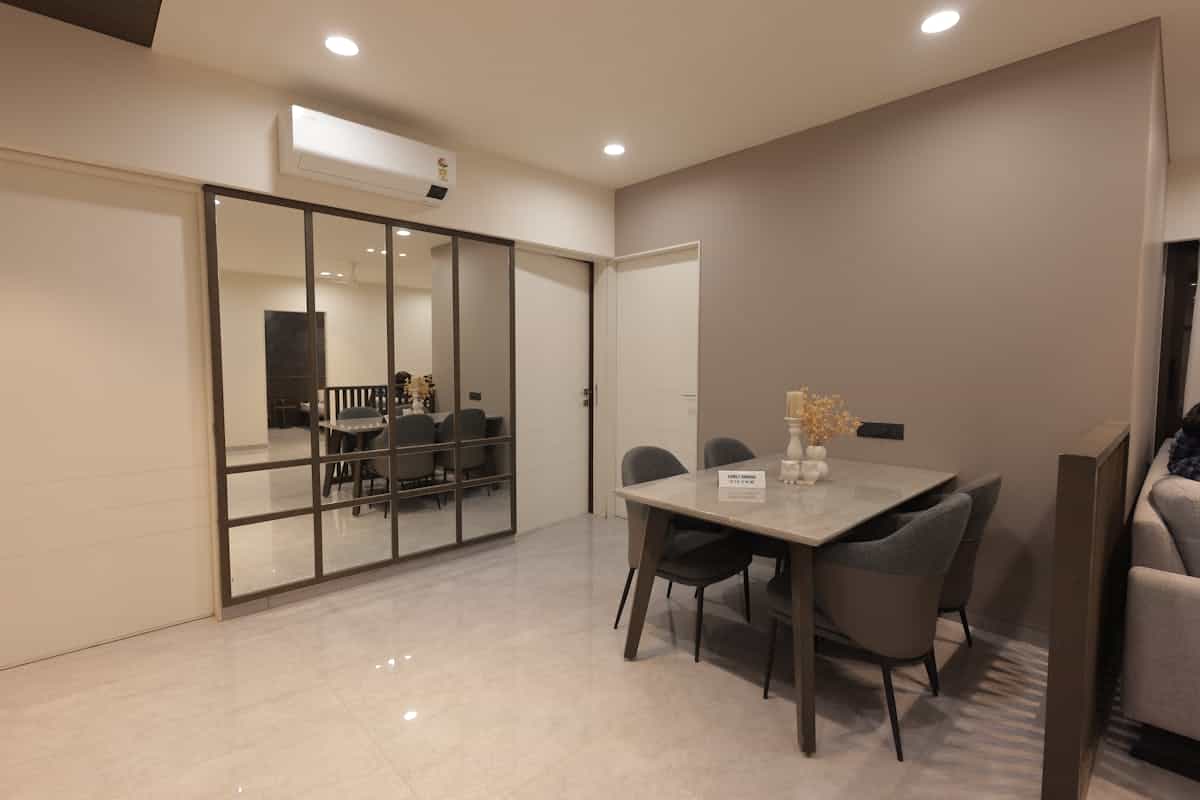
How big should a large dining room mirror actually be, and where exactly does it go? The mistake almost everyone makes is buying for the wall and ignoring the table and furniture — or the reverse. The size has to answer all three. Here are the exact numbers. The short answer first.
A large dining room mirror should be about two-thirds to three-quarters the width of the furniture beneath it (or 60–75% of the dining table width), fill roughly two-thirds of a bare feature wall, and hang with its centre at eye level — about 57 to 60 inches from the floor, with a 6 to 8-inch gap above a sideboard. Centre it horizontally, and never hang it wider than the furniture it sits above.
Most large dining room mirror advice gives you one ratio and stops. The size is actually a negotiation between three measurements, and the placement has one dining-specific rule the general guides miss. Both below.
What Size Should a Large Dining Room Mirror Be?
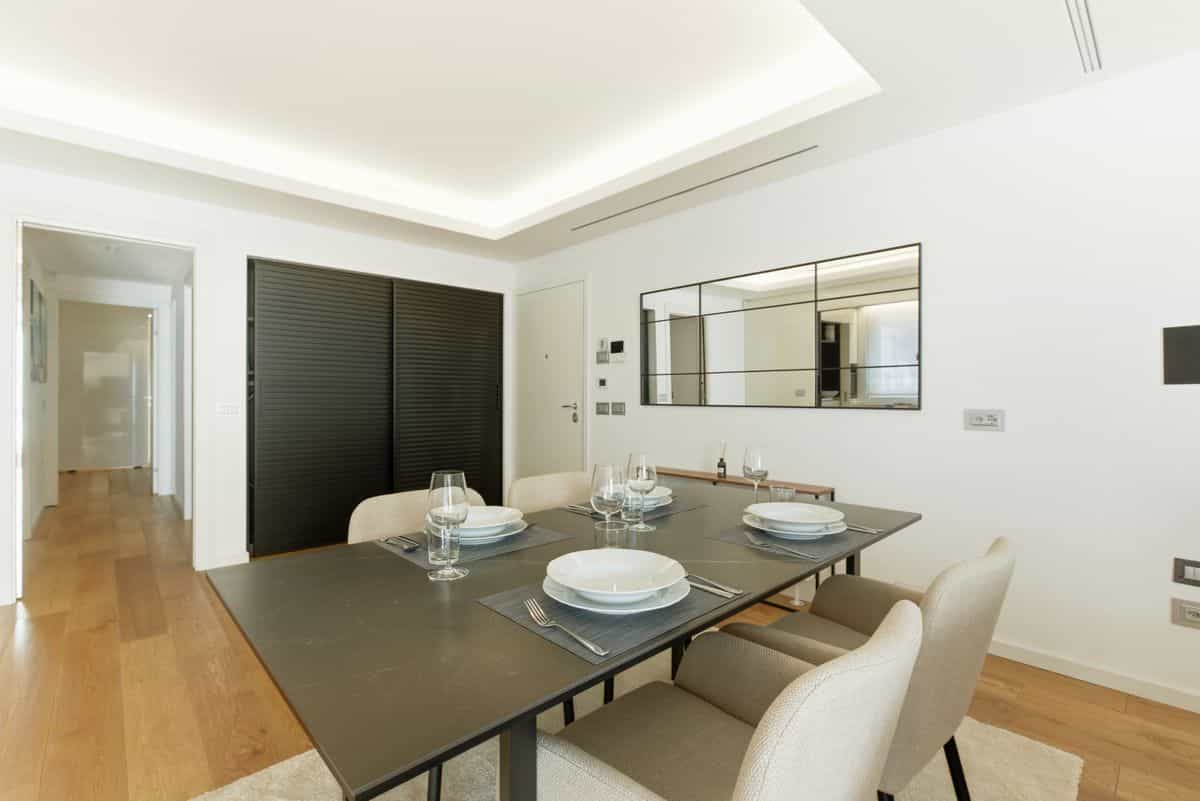
Size the mirror to whatever it relates to most directly — and in a dining room there are three references.
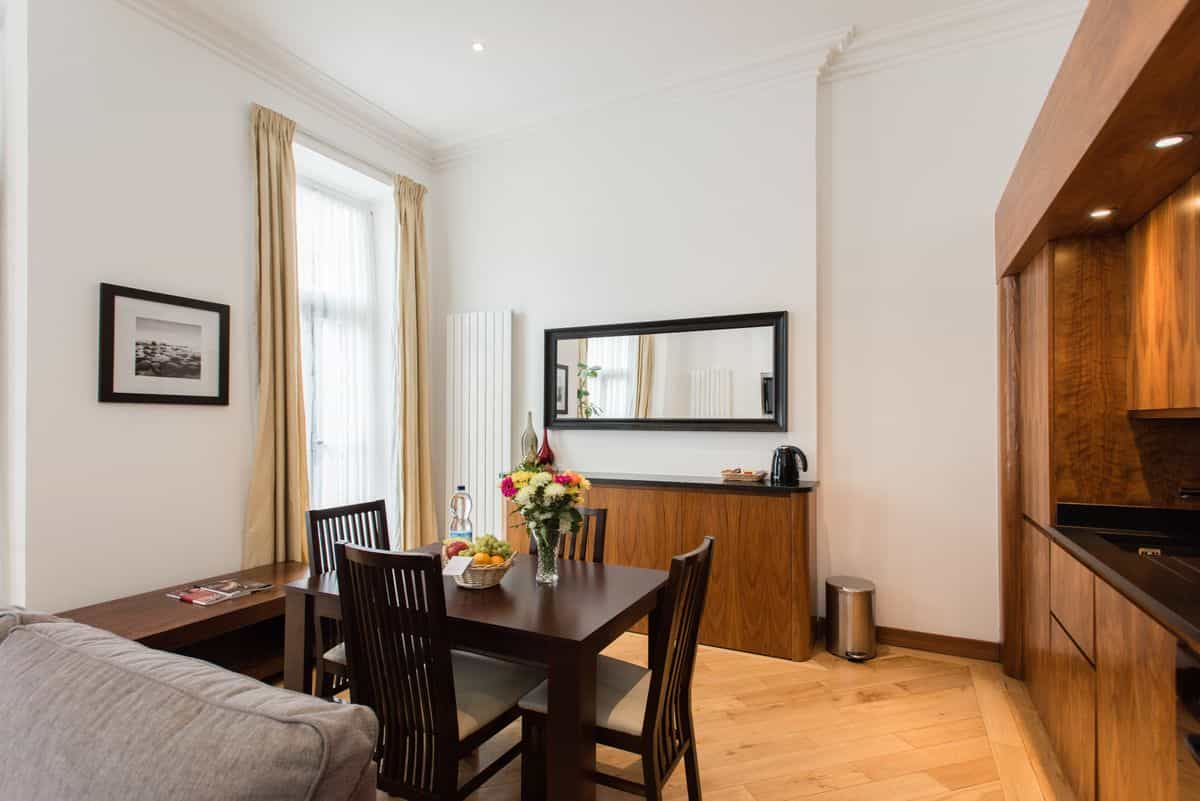
To the furniture below it: about two-thirds to three-quarters the width of the sideboard, buffet, or console. This is the single most reliable rule, because the eye reads the mirror and the furniture as one unit. Wider than the furniture looks top-heavy; less than half its width looks stranded.
To the dining table: roughly 60 to 75 percent of the table width when the mirror hangs on a wall the table sits against. A mirror much narrower than this gets visually swallowed by a big table.
To the wall: a large mirror on a bare feature wall should fill about two-thirds of the usable wall width — enough to feel deliberate, with breathing room on either side so it does not look wedged in.
Here is the sizing translated into inches, which is faster than doing the maths each time:
| Furniture / table width | Mirror width (⅔–¾) |
|---|---|
| 48 in | 32–36 in |
| 54 in | 36–40 in |
| 60 in | 40–45 in |
| 72 in | 48–54 in |
When the furniture and wall ratios disagree, follow the furniture — it is the anchor people actually see the mirror sitting above. A genuinely large dining room mirror can run tall without breaking these rules; it is the width that has to stay in the ratio.
How High to Hang It — and the Seated-Diner Rule
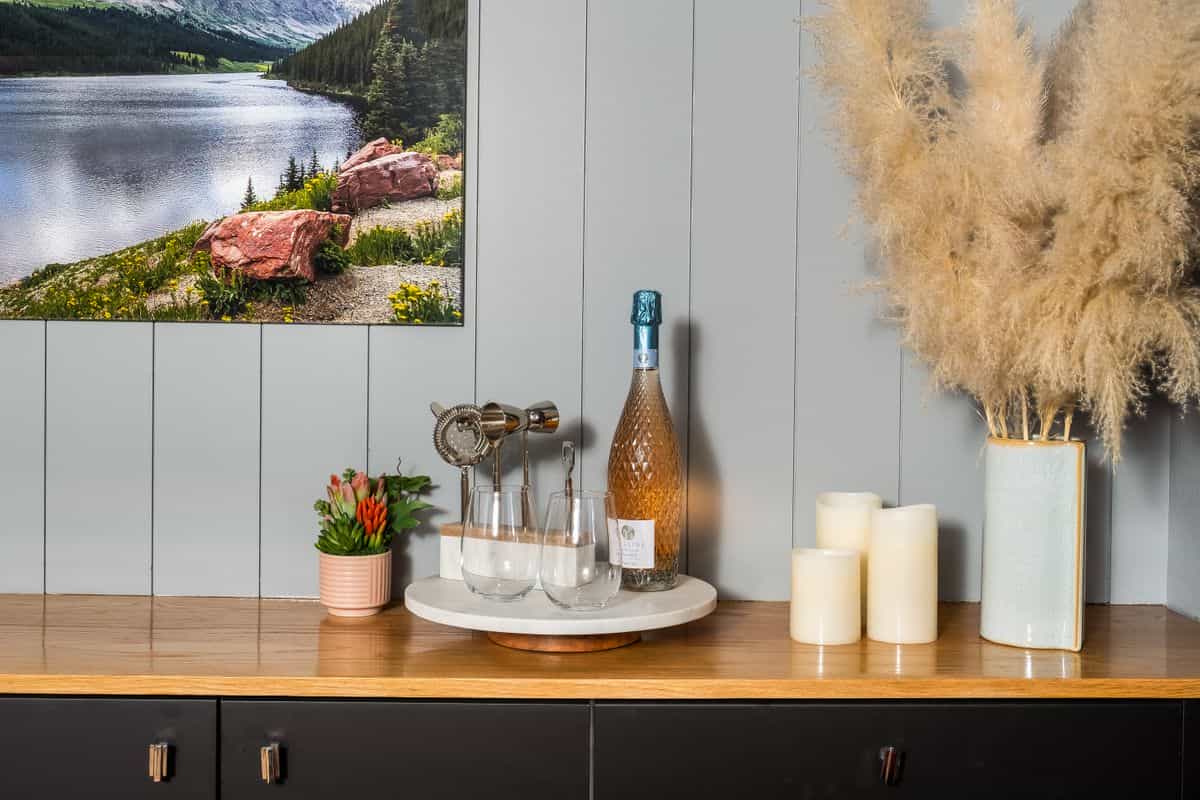
Height is where dining rooms differ from every other room, because people sit still and look around for an hour at a time.
The numbers: hang the mirror so its centre sits at standing eye level — about 57 to 60 inches from the floor. Over a sideboard or buffet, the gap takes priority: leave 6 to 8 inches between the top of the furniture and the bottom of the mirror so the two read as a single composition. The same eye-level logic governs how high to hang a mirror anywhere in the home.
The dining-specific rule: keep the reflective surface high enough that seated guests are not staring into their own reflection mid-meal. Hanging the centre at standing eye level usually solves this automatically — seated eye level is far lower, around 42 to 48 inches, so a mirror centred at 57 to 60 inches sits comfortably above the seated sightline. Hang it too low to "centre it on the table" and you reintroduce the problem. Height wins over centring here.
And centre it horizontally on the furniture or wall beneath it, not on the room. A large mirror centred on the wall but off-centre over its sideboard looks subtly wrong even when no one can name why.
One Large Mirror or Several Small Ones?
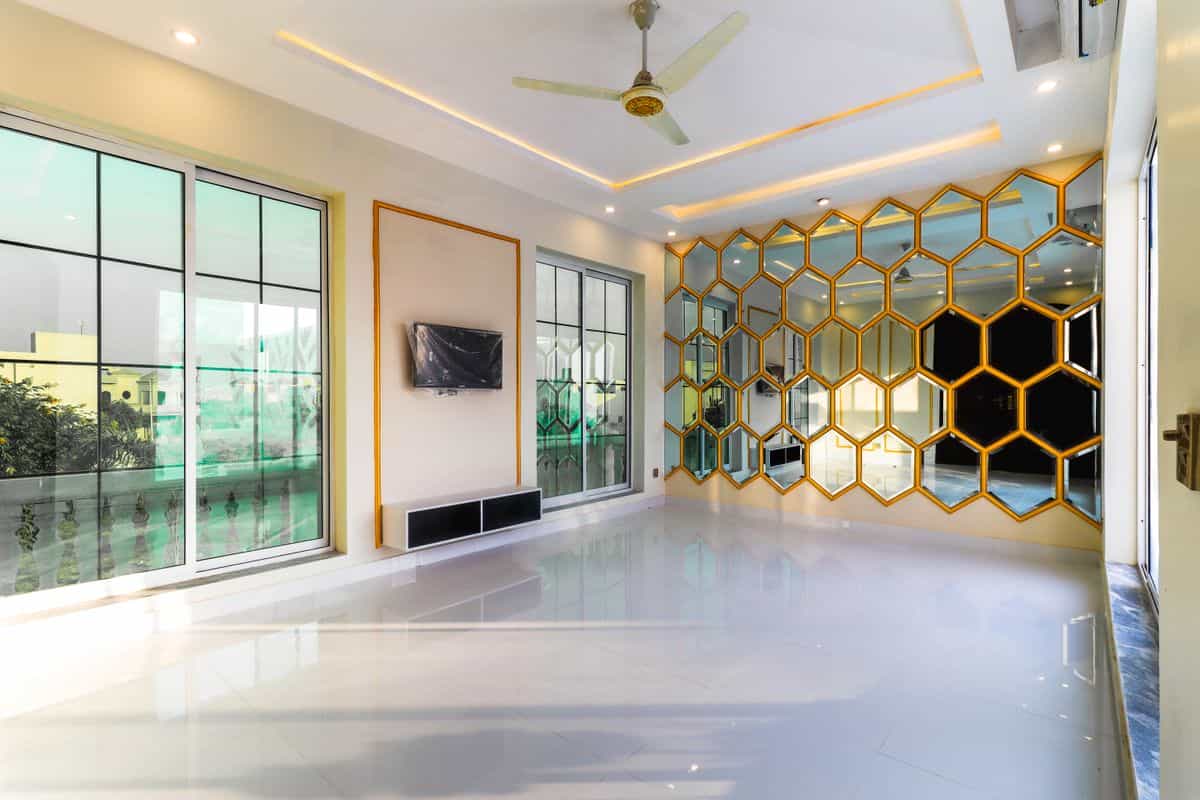
For a dining room, the honest answer is that one large mirror usually beats a cluster of small ones — and the reason is optical, not just aesthetic.
A single unbroken mirror reflects a continuous slice of the room: the light, the depth, the opposite wall, all in one sweep. That is what makes a small dining room read as larger. A group of small mirrors chops that reflection into fragments separated by frames, so you get sparkle but not the sense of expanded space. A large dining room mirror is the stronger move when the goal is light and openness.
Several small mirrors earn their place for a different goal — a collected, gallery, or eclectic look, where the variety is the point. But that is a styling choice, covered in the companion guide on styling mirrors for dining room walls. If you are here because the room feels small or dark, go big and go single.
Shape and Orientation: Match the Mirror to the Wall and Table
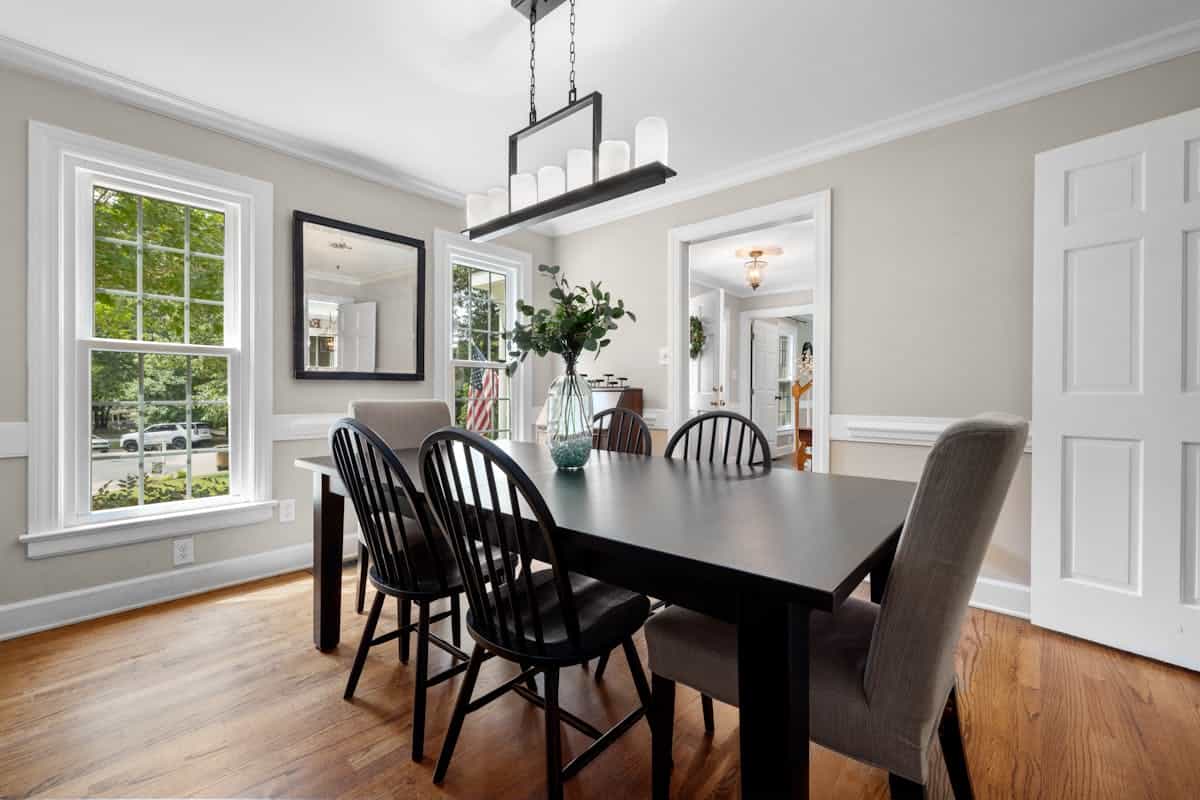
Once the width is right, orientation does the fine-tuning — and it is the part sizing guides skip.
- Landscape (horizontal) mirror over a long sideboard or behind a long rectangular table reinforces the horizontal line and widens the wall. The natural default for most dining rooms.
- Portrait (vertical) mirror on a narrow wall, or flanking a window, draws the eye upward and makes a low-ceilinged room feel taller. Two slim portrait mirrors can flank a buffet instead of one wide one.
- Round or oval over a round or oval table echoes the table shape and softens a room full of straight lines — best centred over a sideboard rather than stretched to fill a wide wall.
Match the mirror's long axis to the longest line you want to emphasise. A wide room that already feels sprawling does not need a wide landscape mirror; a tall, narrow mirror will balance it better.
How to Hang a Large, Heavy Mirror Safely
This is the section the "ideas" articles never include, and the one that matters most once a mirror gets large: a sizeable framed mirror can weigh 30 to 80 pounds, and that weight has to land on something solid.
Four rules make a large mirror safe:
- Anchor into studs. A heavy mirror should hang from hardware screwed into the wall studs, not into bare drywall. Where a stud is not where you need it, use wall anchors or toggle bolts rated for at least four times the mirror's weight.
- Use two hanging points. Two D-rings, or a French cleat, rather than a single central hook. Two points stop a wide mirror pivoting and keep it level over years.
- Prefer a French cleat for the heaviest mirrors. The interlocking rails spread the load across the entire top edge — the most secure method for a large framed mirror, and the easiest to get dead level.
- Mark and level before drilling. Tape the outline on the wall, check it with a spirit level, and live with it for a few minutes — a large mirror hung an inch off looks worse than a small one.
The reason any of this is worth the effort is the same reason the mirror works at all: it reflects real light and real space, exactly as the physics of reflection dictates. A large surface returns a large amount of light — which is the whole point, and also why it is heavy enough to deserve proper fixing.
What to Avoid With a Large Dining Room Mirror
A few sizing-and-placement mistakes show up again and again:
- Wider than the furniture. A mirror that overhangs its sideboard looks unstable. Stay within the ratio.
- Hung too low to centre it on the table. This puts seated diners face-to-face with themselves. Height beats centring.
- Stranded on a big wall. A mirror that fills far less than half the wall looks lost. Either size up or add flanking elements.
- Reflecting harsh direct sun. A large mirror doubles whatever it faces — including glare thrown across the table at certain hours. Reflect a window at an angle, or one that gets indirect light, instead. The full list of what a dining mirror should and should not reflect — clutter, doorways, and the feng shui wealth-cure logic — is covered in the companion dining room mirror ideas and placement guide.
Recommended Products
These are the categories worth getting right for a large dining room mirror — the priority is the correct size and a secure, level hang. (Links go to Amazon search results so you can compare current options.)
- Large rectangular wall mirror (40–60 in) — the statement size for a feature wall or long sideboard.
- Oversized arched floor/wall mirror — for maximum height and impact.
- French cleat heavy mirror hanging system — the most secure mount for a heavy mirror.
- Heavy-duty D-ring hangers with toggle bolts — two-point hardware rated for weight.
- Stud finder and spirit level set — to anchor into framing and hang it straight.
- Round oversized wall mirror — to echo a round dining table.
The One Rule Under All the Others
Every number here — the two-thirds ratio, the 57-inch centre, the 6-inch gap — is really one idea: a large dining room mirror should look like it belongs to the furniture and the wall, not like it was hung wherever the hook already was. Size it to the sideboard, lift it above the seated sightline, anchor it into something solid, and point it at the light.
Get the proportions right and a large mirror stops being a big piece of glass on a wall and becomes the thing that makes the whole room read as twice its size. The wall was always that big. The mirror just lets you see it.
Mirror FAQ
What size mirror should I get for my dining room?
Size the mirror to whatever it hangs above or near. Over a sideboard or buffet, choose a mirror about two-thirds to three-quarters of the furniture's width. Relative to the dining table, aim for roughly 60 to 75 percent of the table width. On a bare feature wall, the mirror should fill about two-thirds of the usable wall width. For a 60-inch sideboard that means a mirror around 40 to 45 inches wide; for a 72-inch table, around 48 to 54 inches.
How big should a mirror be over a dining room buffet or sideboard?
About two-thirds to three-quarters the width of the buffet, and never wider than the furniture itself. A mirror that matches or exceeds the sideboard width looks top-heavy; one less than half the width looks stranded. For a standard 54 to 60-inch sideboard, a mirror roughly 36 to 45 inches wide is the balanced range. Height-wise, the mirror can be tall — a large vertical or horizontal mirror both work, as long as the width stays within that ratio.
How high should a large dining room mirror be hung?
Hang it so its centre sits at standing eye level, about 57 to 60 inches from the floor. Over a sideboard or buffet, leave a 6 to 8-inch gap between the top of the furniture and the bottom of the mirror so the two read as one unit. In a dining room specifically, keep the reflective surface high enough that seated guests are not looking straight into their own reflection while eating — hanging at standing eye level usually achieves this automatically.
Is one large mirror better than several small ones in a dining room?
For most dining rooms, yes. A single large mirror creates a cleaner, calmer, more expansive effect and reflects more unbroken light and space than a cluster of small ones, whose frames chop up the reflection. Several small mirrors suit a deliberately eclectic or gallery look, but if your goal is to make the room feel bigger and brighter, one large dining room mirror does it better.
Where should a large mirror be placed in a dining room?
On the wall where it reflects the most light and the most pleasant view — typically opposite or adjacent to a window, or above a sideboard so it doubles the table and chandelier. Centre it horizontally on the furniture or wall beneath it. Avoid placing it where it reflects a cluttered corner, a doorway into a busy kitchen, or directly faces another mirror.
How do you hang a large, heavy dining room mirror safely?
Find the wall studs and anchor into them, or use wall anchors or toggle bolts rated for at least four times the mirror's weight. Use two hanging points — D-rings or a French cleat — rather than a single hook, so a large mirror cannot pivot or pull free, and check it with a spirit level. A French cleat is the most secure option for a heavy framed mirror because it spreads the load across the whole top edge.