Mirrors for the Dining Room: How to Style and Place Them
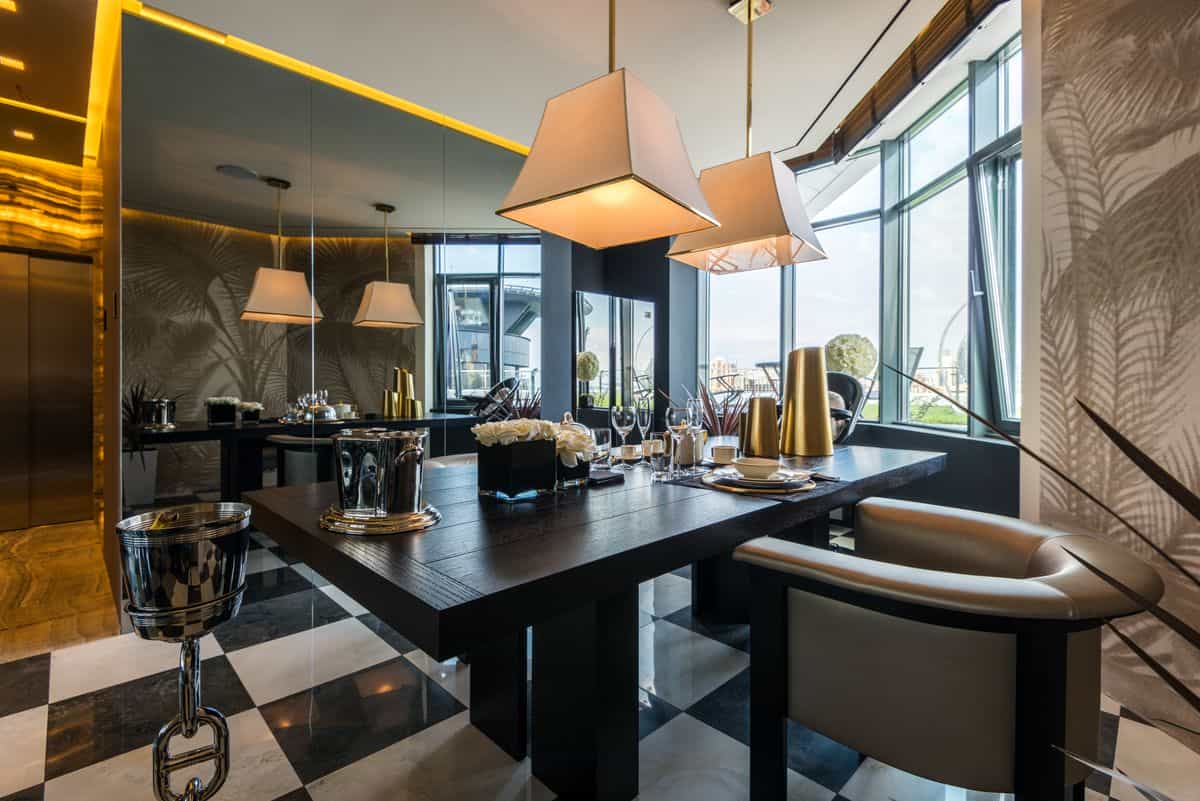
Mirrors for the dining room are the cheapest, fastest way to make the space feel bigger, brighter, and more finished — but only if you hang one in the right place, at the right height, facing the right thing. Get one of those wrong and it either blinds your guests with glare or makes them watch themselves chew. Here is how to get all three right. The short answer first.
Hang a dining room mirror at standing eye level — centre about 57 to 63 inches from the floor — on a wall where it reflects a window, light, or the table rather than clutter or a diner's chair. Over a sideboard, leave a 4 to 8-inch gap above the furniture and choose a mirror two-thirds its width. A single large mirror has the biggest space-expanding effect; a gallery of smaller ones adds character.
Most mirrors for dining room guides are galleries of pretty rooms. The pretty rooms all followed a few rules. Here they are, then the ideas.
Why Mirrors for the Dining Room Work So Well
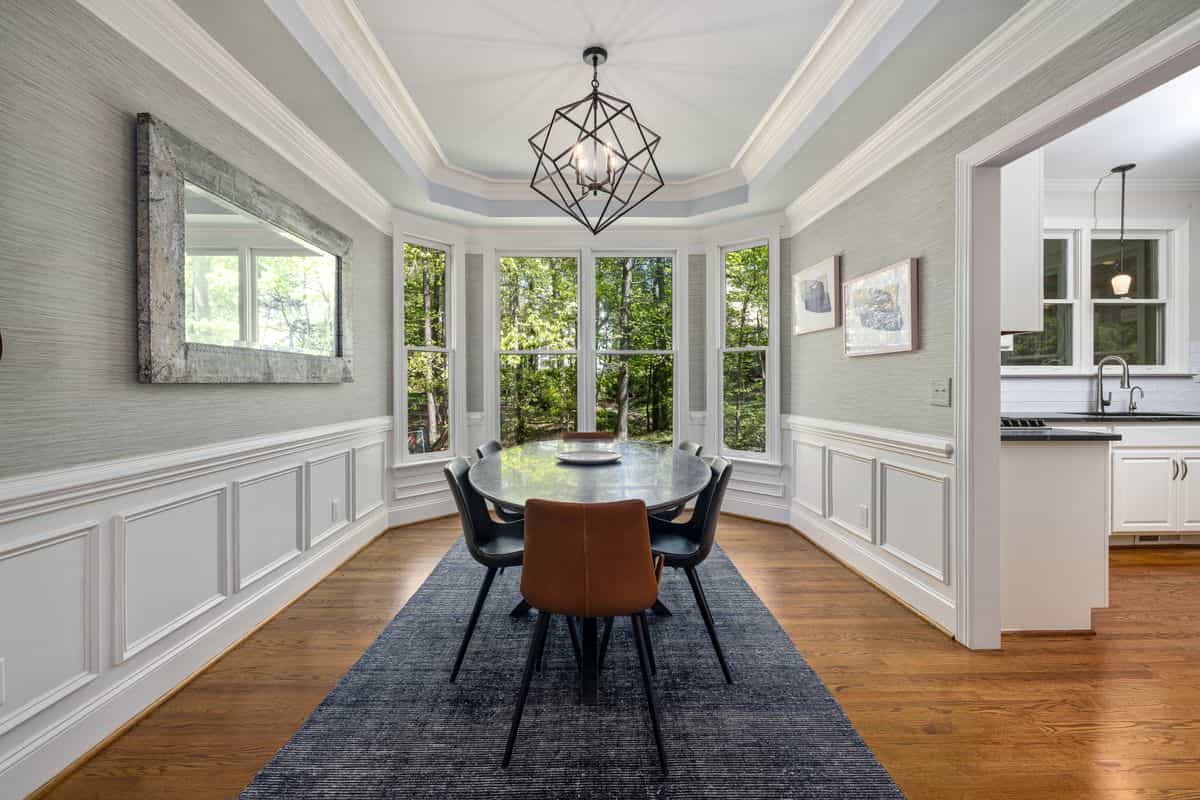
The dining room is arguably the best room in the house for a mirror, and the reasons are practical, not decorative.
It reflects light. A mirror opposite or adjacent to a window roughly doubles the daylight reaching the room, and at night it bounces candlelight and the glow of a chandelier back across the table. This is not decorating folklore — it is how reflection behaves, the same physics that makes any mirror return the light that hits it.
It makes the room feel larger. A large mirror reflecting the opposite wall adds apparent depth, so a cramped dining area reads as more open — the reason a large dining room mirror is a standard trick for small or windowless rooms.
It finishes the room. A dining room is often the most under-decorated room in a house — a table, chairs, and bare walls. A well-placed mirror gives the wall a focal point that a stretch of empty paint never will, which is why decorative mirrors dining room schemes lean on so heavily.
Where to Place a Dining Room Mirror — and the Height Rule
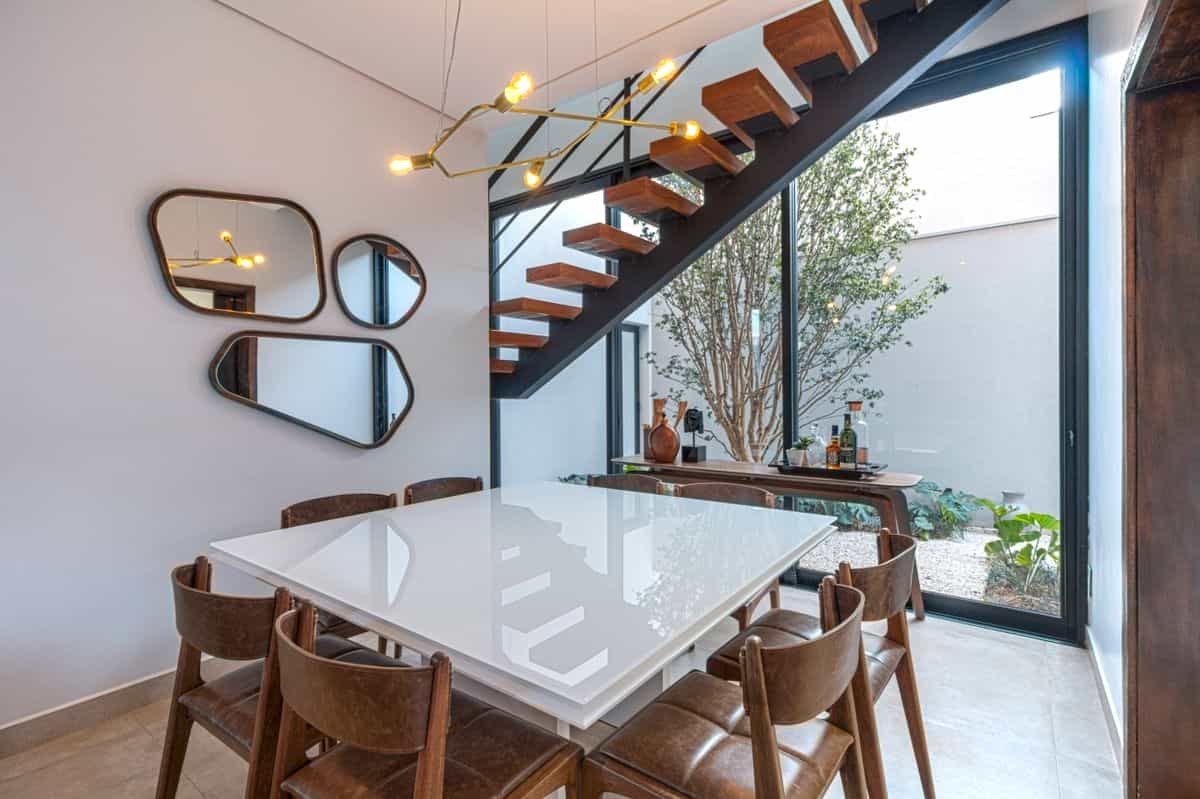
Placement is where dining rooms differ from every other room, because people sit still here for a long time and look around.
The height rule: hang the mirror so its centre sits at standing eye level — 57 to 63 inches from the floor. Over a sideboard, buffet, or console, the gap takes priority: leave 4 to 8 inches between the top of the furniture and the bottom of the mirror so the two read as a single composition. The same eye-level logic that governs how high to hang a mirror anywhere in the home applies here, with one dining-specific twist below.
The best positions:
- Above a sideboard, buffet, or console — the classic. The furniture anchors the mirror and the reflection lifts the whole wall.
- On a feature wall reflecting a window — pulls daylight and the view inward.
- Opposite or beside the table — doubles the light and the sense of space, as long as it is high enough (see below).
The dining-specific twist: set the mirror too low and seated diners are forced to watch themselves eat in it, which most people find subtly uncomfortable. Hanging the centre at standing eye level keeps the reflective surface above the seated sightline. This is the single most common dining-room mirror mistake.
Dining Room Mirror Ideas That Actually Work
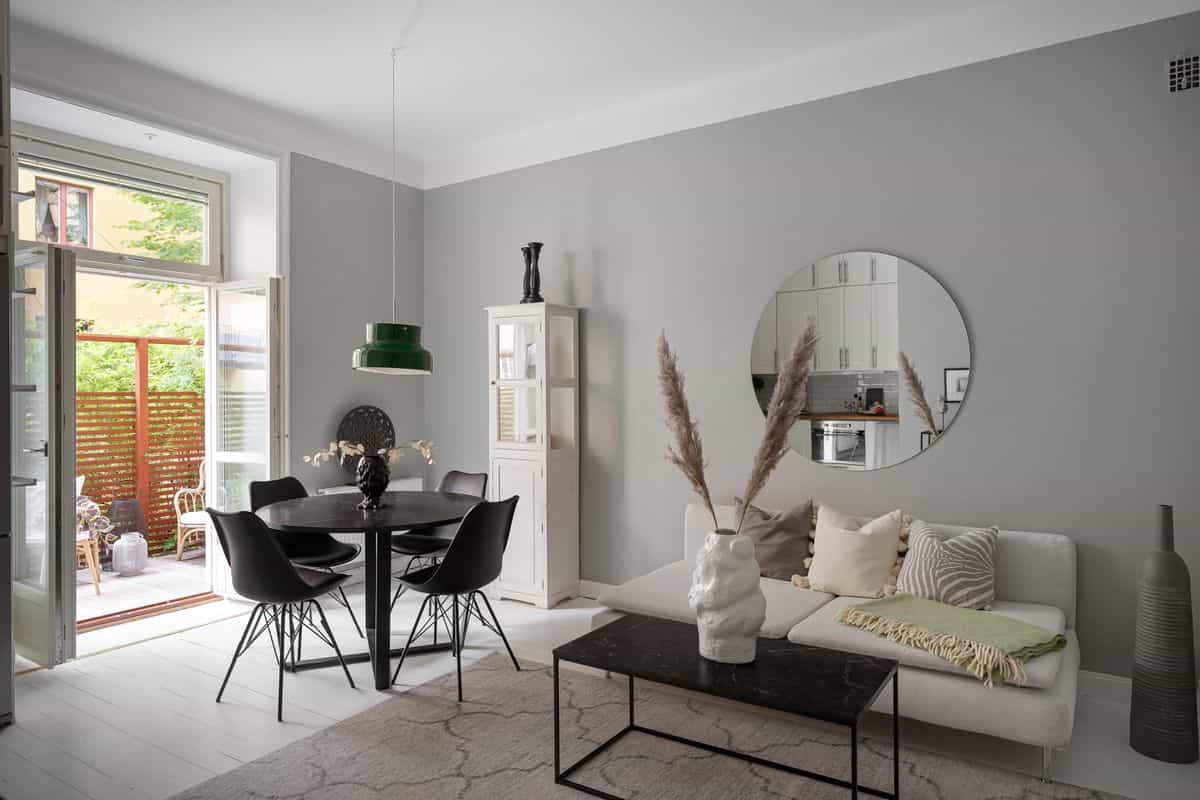
With the rules sorted, the fun part. These are the mirrors for dining room wall treatments that consistently look intentional:
- One large statement mirror. A single oversized mirror, even close to floor-to-ceiling, on one wall. Maximum impact and the strongest space-expanding effect. Position it slightly off-centre or centred on a sideboard rather than the wall.
- A gallery cluster. Several smaller mirrors in mixed shapes and frame finishes, arranged like art. Buildable over time and forgiving in narrow rooms — lay the arrangement on the floor first.
- A mirror over the sideboard or buffet. The most practical pairing; style the surface below with a lamp, a low vase, and one or two objects, no more.
- A pair flanking a window or artwork. Two matching mirrors add symmetry, which reads as calm and formal — well suited to a dining room.
- Antiqued or window-pane mirrors. Foxed, aged glass diffuses light softly and hides a busy reflection; divided "window" frames add architecture to a flat wall.
- A leaning floor mirror. A tall mirror propped in a corner adds height with zero wall damage — secure it to the wall so it cannot tip.
What Shape and Size Should a Dining Room Mirror Be?
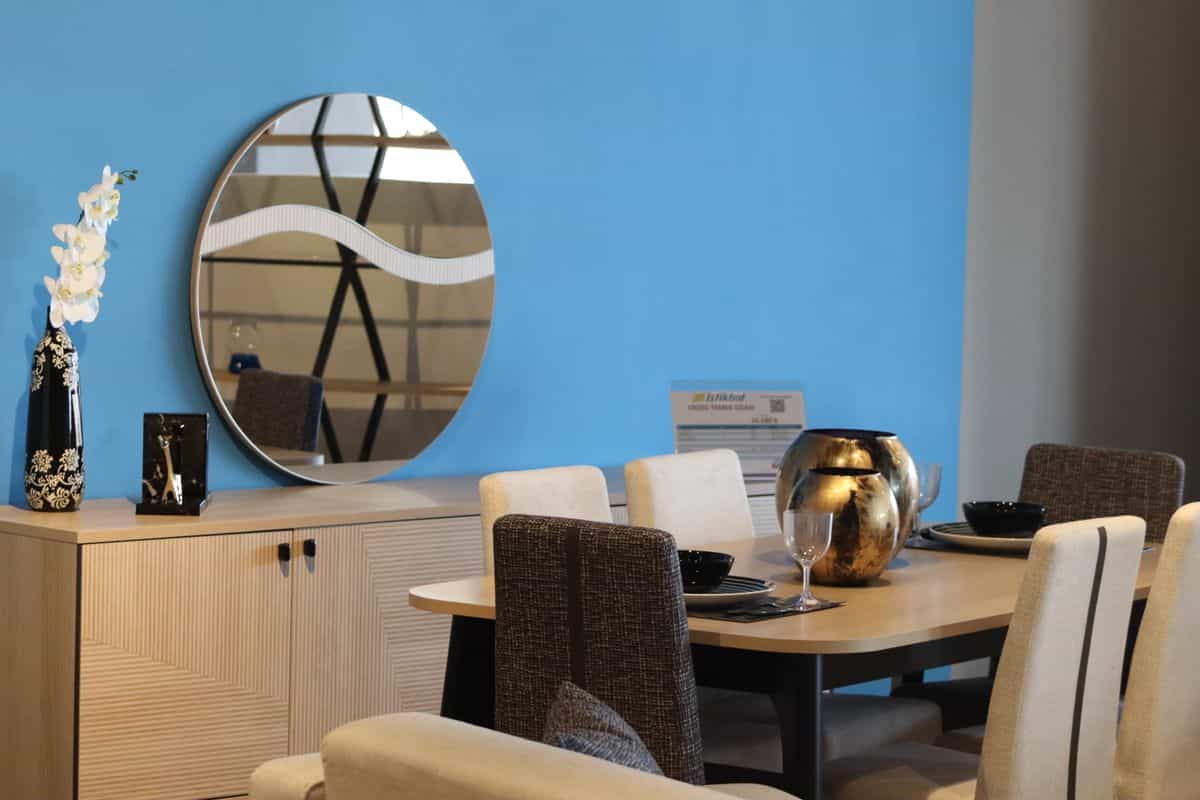
Match the shape to the wall, and the size to the furniture:
| Mirror shape | Best on | Effect |
|---|---|---|
| Rectangular / oval (vertical) | Narrow or tall walls | Adds height, draws the eye up |
| Rectangular (horizontal) | Above a wide sideboard | Reinforces and widens the furniture |
| Round / oval | Squarer walls, above round tables | Softens the room's straight lines |
| Square | Square wall sections | Clean, symmetrical, modern |
On size, the rule is simple: over furniture, the mirror should be two-thirds to three-quarters the width of the piece beneath it — never wider. On a bare feature wall, bigger is better for the space-expanding effect, provided the mirror is properly centred rather than stranded in a sea of wall.
The Dining-Room Trick Most Guides Miss: Mirror Plus Candlelight
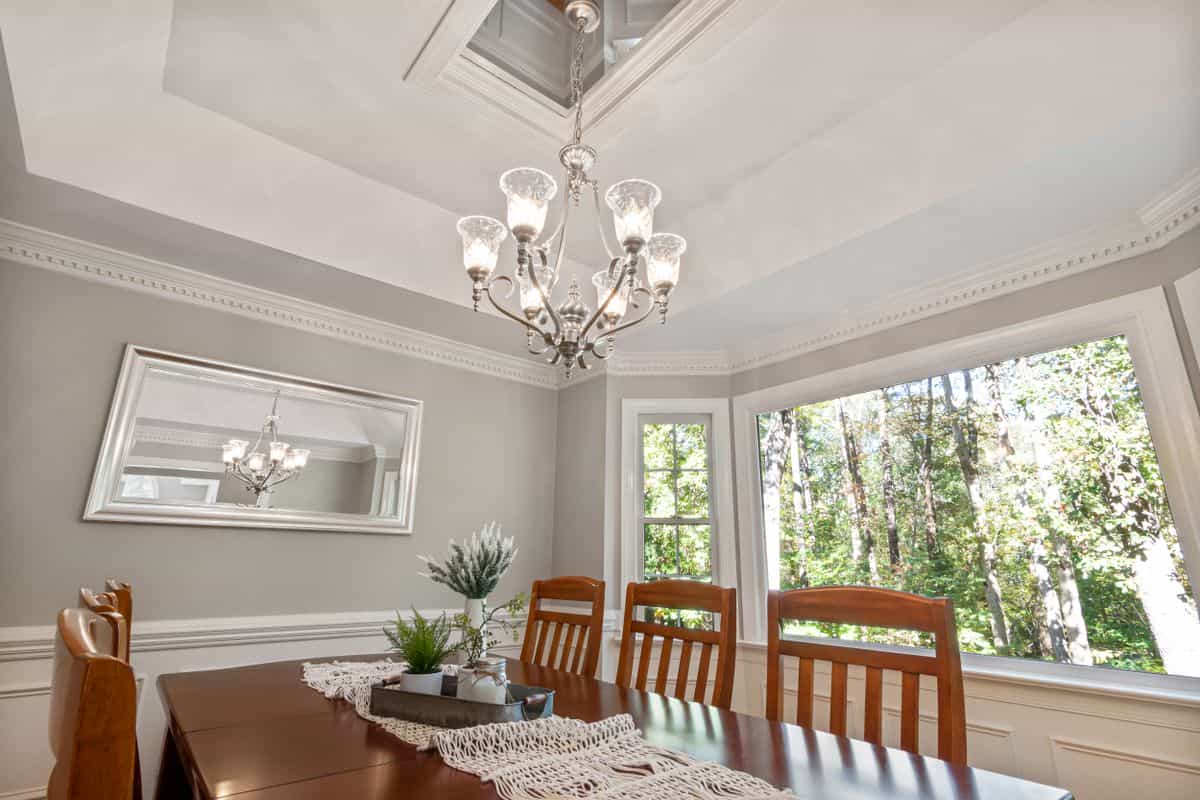
Here is the part the idea-galleries skip, and it is the one most specific to dining rooms: a mirror does its best work in this room after dark.
A dining room is one of the few spaces used as much at night as by day, and usually by warm, low light — candles, a chandelier, a dimmed pendant. A mirror positioned to catch that light doubles it, and warm light reflected back is the single most flattering thing you can do to an evening table. Place the mirror where it picks up the chandelier or a cluster of candles and the room gains depth and glow without a single extra bulb.
One tip that follows from this: choose warm-toned bulbs (around 2700K) for any dining fixture a mirror will reflect. A mirror amplifies whatever light it is given — warm light becomes warmer and cosier; cold, blue-white light bounced back makes a dinner table feel like a canteen.
What Feng Shui Says About a Dining Room Mirror
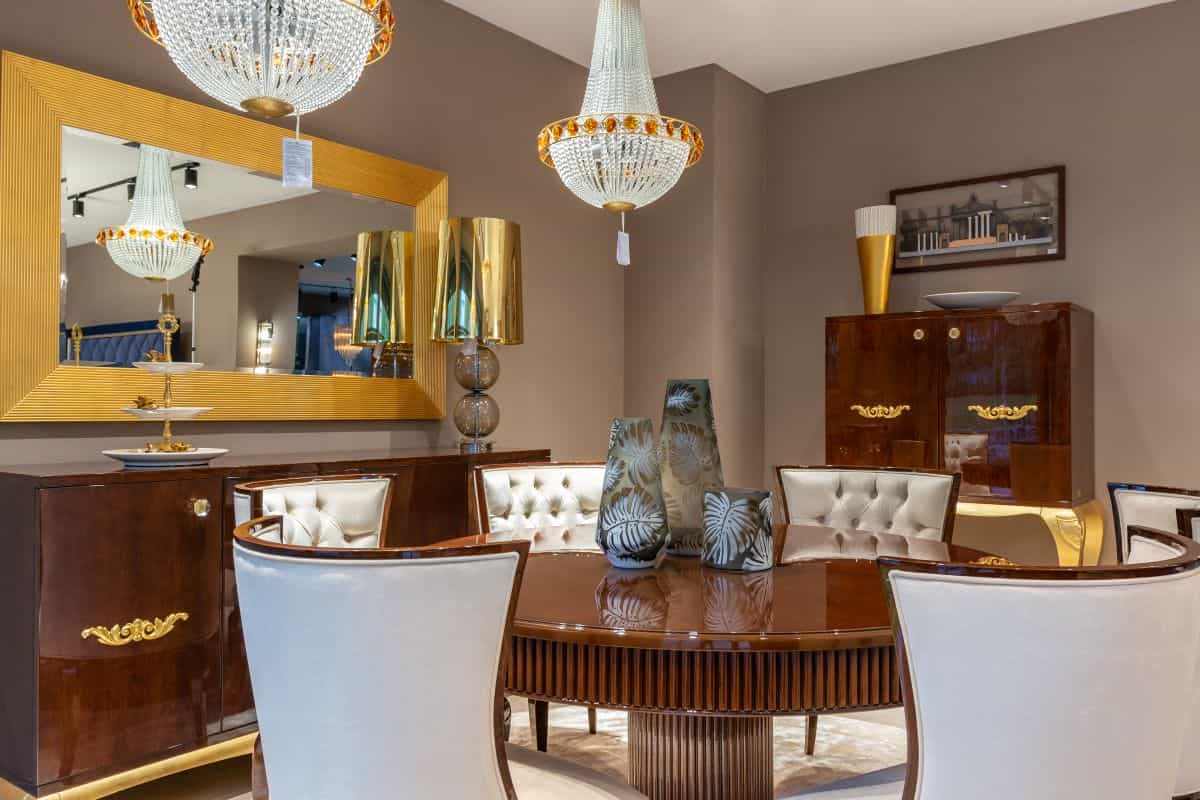
This is worth a mention because the dining room is the one room where the spiritual advice and the design advice actually agree.
In feng shui, a mirror reflecting the dining table is considered one of the most auspicious placements in the home — a "wealth cure" that symbolically doubles the food, abundance, and family gathered at the table. That is a cosmological belief, not a measured effect, and worth treating as exactly that. But notice where it lands: it tells you to point the mirror at the table, the light, and the gathering — which is precisely what good design says too. The traditions that take spatial arrangement seriously often encode real observations about comfort and warmth, and this is a clean example. For the full room-by-room breakdown, the feng shui mirror placement guide covers where mirrors help and where they are discouraged.
Where belief and design part ways is the overclaim. A mirror will not bring you wealth. It will make your dining room brighter, deeper, and warmer — which is a good enough reason on its own.
What a Dining Room Mirror Should Never Reflect
A mirror doubles whatever it points at, so the placement question is really a question of what you want twice as much of. Avoid pointing a dining room mirror at:
- A diner's chair or the seated sightline — no one wants to watch themselves eat.
- Clutter, a sideboard's worst corner, or a doorway to a busy kitchen — the mirror amplifies the mess.
- Another mirror directly opposite — two mirrors facing each other create an unsettling infinite corridor; the reasons are part physics, part perception, covered in the piece on two mirrors facing each other.
- Harsh direct sunlight — a mirror straight opposite a sun-facing window can throw glare across the table at certain hours. Reflecting the window at an angle, or a window that gets indirect light, avoids this.
Point it instead at light, a view, the chandelier, or the table itself, and the mirror earns its place.
Recommended Products
These are the categories worth getting right for mirrors for dining area walls — the priority is the right size, a secure hang, and a frame that suits the room. (Links go to Amazon search results so you can compare current options.)
- Large rectangular wall mirror — the statement piece for a feature wall or above a long sideboard.
- Round decorative wall mirror — softens a dining room of straight lines.
- Arched window-pane mirror — adds architecture and a soft, divided reflection.
- Set of decorative mirrors for a gallery wall — for a buildable cluster.
- Heavy-duty mirror hanging kit with D-rings — two-point hardware that keeps a large mirror level.
- Warm 2700K LED bulbs — so the light your mirror reflects reads warm at dinner.
The One Thing to Remember
A dining room mirror is not really a decorating decision — it is a lighting and space decision that happens to look good. Hang it at eye level so no one eats opposite their own reflection, point it at a window or the table so it doubles light and warmth rather than clutter, and size it to the wall or the furniture beneath it.
Do that, and a bare dining wall becomes the thing that makes the whole room feel larger and the evenings feel warmer. The mirror only ever gives back what you aim it at — so aim it at the light.
Mirror FAQ
Where should you place a mirror in a dining room?
The best spot is a wall where the mirror reflects something worth doubling — a window, natural light, a chandelier, or a pleasant view — rather than a blank wall or clutter. A mirror above a sideboard, buffet, or console is the classic placement because the furniture anchors it and the reflection bounces light across the table. Avoid hanging it directly behind a diner's chair or where seated guests are forced to watch themselves eat.
How high should a dining room mirror be hung?
Hang the mirror so its centre sits at standing eye level, roughly 57 to 63 inches from the floor. Over a sideboard or buffet, leave about a 4 to 8-inch gap between the top of the furniture and the bottom of the mirror so the two read as one unit. The height matters in a dining room specifically: set it too low and seated diners catch their own reflection mid-meal, which most people find distracting.
What size mirror is best for a dining room?
Over a sideboard or console, choose a mirror about two-thirds to three-quarters the width of the furniture beneath it. On a bare feature wall, a large dining room mirror — even close to floor-to-ceiling — has the strongest space-expanding effect, as long as it is centred on the wall or the furniture, not stranded. Match the shape to the wall: tall rectangular or oval mirrors suit narrow walls; round or square mirrors suit squarer spaces.
Is it good feng shui to put a mirror in the dining room?
The dining room is the one room where classical feng shui actively encourages a mirror. A mirror reflecting the dining table is considered a wealth cure — symbolically doubling the food and abundance gathered there. That is a cosmological belief rather than a measured effect, but it points to genuinely good design advice: position the mirror to reflect the table, the light, and the gathering, not a doorway, a bathroom, or a cluttered corner.
Should a mirror face the dining table or a window?
Either can work, with one nuance. A mirror reflecting a window pulls daylight and the outdoor view deeper into the room, which is usually the brightest, most pleasant option — but if the window catches harsh direct sun, a mirror straight opposite it can throw glare across the table. A mirror reflecting the table and chandelier doubles the evening ambience. The rule underneath both: reflect light and something pleasant, and check what the mirror shows at the times of day you actually use the room.
Can you have two mirrors in a dining room?
Yes — a pair of matching mirrors flanking a window or artwork, or a gallery cluster of several, both work well and add symmetry or character. The one arrangement to avoid is two mirrors directly facing each other on opposite walls, which creates a restless, infinite-corridor reflection that feels unsettling in a room meant for lingering over a meal.