Mirror Above Bed: Is It Safe, What It Means, and How to Style It
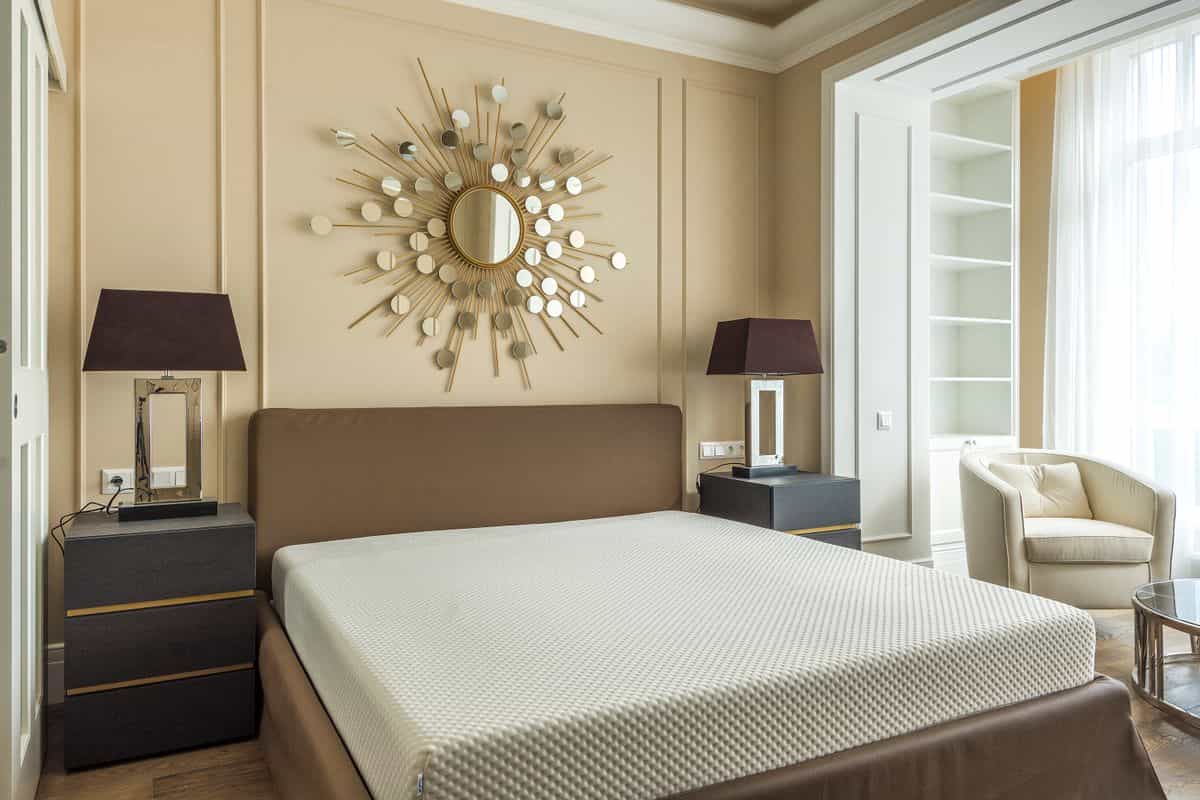
You want to hang a mirror above your bed — or you already have one and a friend, a feng shui article, or a 3 a.m. thought made you wonder whether that is a mistake. The short answer is below, and then the detail, because this question has three separate answers that often get tangled into one.
A mirror above the bed is safe and perfectly fine to style as long as it is mounted into wall studs with rated hardware and, ideally, uses tempered or shatter-resistant glass. The real risk is physical — a heavy glass panel falling — not bad luck. The feng shui and Vastu objections are traditional beliefs, not measured effects. The one concern with independent evidence behind it is about sleep: a reflection you can see from bed in dim light can keep your visual system mildly active. Sort out those three things separately and the decision becomes simple.
Most articles on the mirror above bed question blur the physical, the spiritual, and the psychological into a single vague warning. They deserve to be separated, because they call for completely different responses.
Is It Safe to Hang a Mirror Above the Bed?
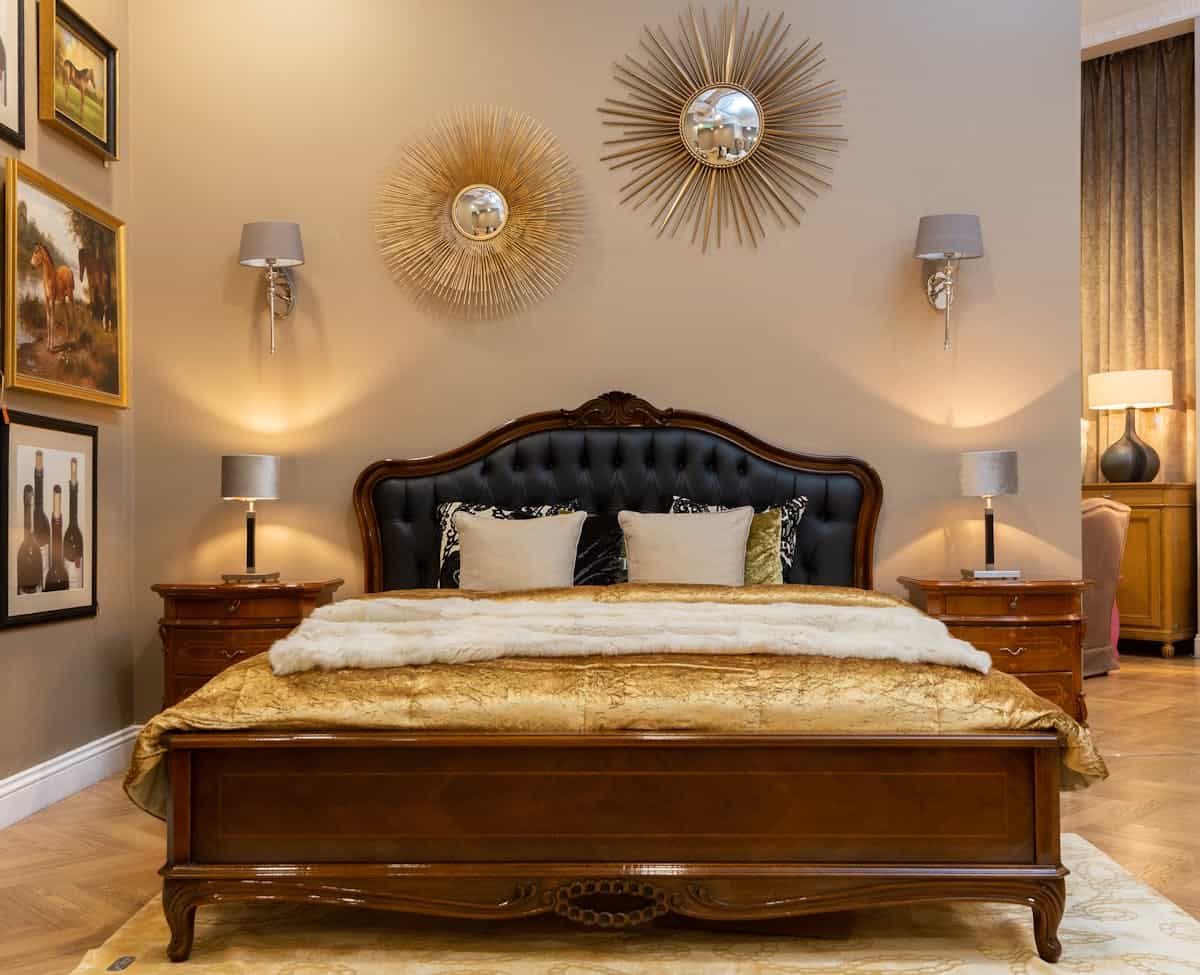
The honest answer: the safety of a mirror over the bed has almost nothing to do with the mirror and almost everything to do with how it is attached to the wall.
A mirror is heavy. A modest framed bedroom mirror can weigh 15–30 pounds, and a large statement piece can exceed 50. Suspended directly over the place where your head rests for eight hours a night, that weight is the entire safety question. The failure mode people imagine — the glass spontaneously shattering — is rare. The realistic failure mode is the fixing giving way: a single picture hook pulling out of drywall, an adhesive strip releasing in summer heat, or a wire fatiguing over years.
Three things make a mirror above the bed genuinely safe:
Anchor into studs, not just drywall. Drywall anchors are rated for light loads and degrade over time. A heavy mirror over a bed should hang from hardware screwed directly into the wall studs, or from a French cleat that distributes the load across a wide span. As a rule of thumb, mounting hardware should be rated for at least four times the mirror's weight.
Choose the right glass. Ordinary annealed mirror glass breaks into large, jagged shards. Tempered glass is treated so that if it ever breaks, it crumbles into small, blunt granules — roughly four times stronger and dramatically safer over a sleeping area. For anything large, tempered glass or a lightweight acrylic mirror is the responsible choice. A strip of mirror safety-backing film adds a further layer: it holds fragments together even if the glass cracks.
Respect the headboard gap. Leave clearance above the headboard — about 6 to 8 inches works well visually and means the mirror is mounted on solid wall, not floating awkwardly. It also keeps the glass out of range of an accidental knock from someone sitting up in bed.
Done this way, a mirror above the bed is no more dangerous than a framed canvas of the same weight. The widely shared fear is real only when the mounting is lazy.
What a Mirror Above the Bed Means in Feng Shui and Vastu
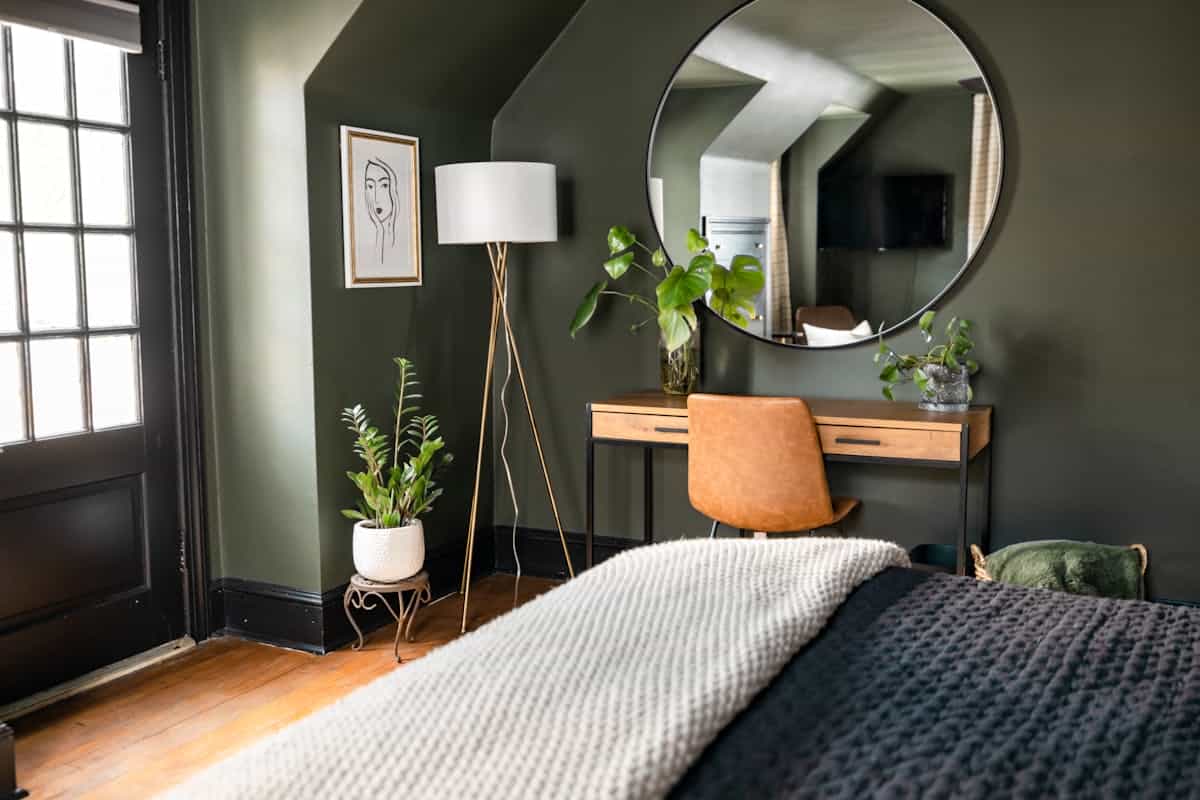
This is where most of the worry comes from, so it is worth being precise about what is actually being claimed.
In feng shui, mirrors are classified as activators — objects that keep Qi (life energy) moving and amplify whatever they reflect. A bedroom, in this framework, is meant to be the one room where energy settles so the body can rest. A mirror over or facing the bed is therefore discouraged: it is thought to keep energy circulating when it should be calm. Some practitioners add a relationship layer — a mirror reflecting a couple is said to invite a "third party" into the marriage. Vastu Shastra, the Hindu architectural tradition, reaches a similar conclusion through its own logic, generally advising that a mirror should not reflect the sleeping body.
Here is the distinction that matters: these are cosmological beliefs, internally coherent and centuries old, but not phenomena that can be measured with instruments. That does not make them worthless — traditions that take spatial arrangement this seriously often encode real observations about comfort and rest. But they should not be presented as physics. The same object means opposite things in different traditions, which is the strongest clue that the meaning lives in the culture, not in the glass.
If you find the feng shui framing useful, the practical takeaway is consistent and easy: do not let the mirror reflect you while you sleep. If you do not hold those beliefs, you can skip straight to the one objection that holds up regardless of worldview — covered next. For a fuller room-by-room breakdown, the feng shui mirror placement rules guide goes deeper, and the Vastu and Hindu mirror traditions are worth reading side by side.
The Sleep-Science Reason a Mirror Over the Bed Can Actually Disrupt Rest
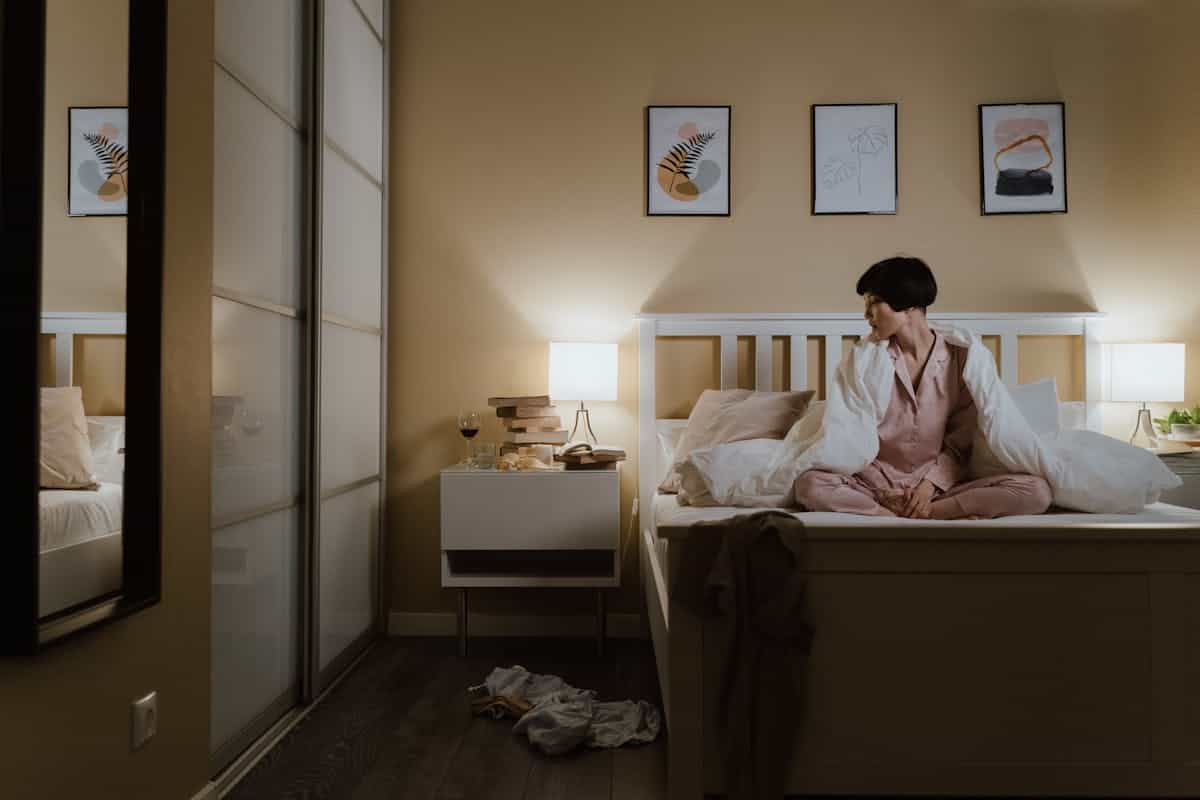
This is the part the top-ranking articles either skip or wave at vaguely, and it is the most genuinely useful thing on the page — because it explains why the bedroom-mirror advice survived across cultures that never spoke to each other.
When you fixate on a point in dim light, the stationary parts of your visual field begin to blur, drift, and distort. This is the Troxler effect — neural adaptation, well documented in perception research. A mirror positioned where you can see your own dim reflection as you drift toward sleep gives your visual system exactly the kind of low-contrast, semi-stable stimulus that triggers this. The reflection seems to shift. In a half-asleep brain primed to detect movement and faces, that low-grade visual noise can register as mildly unsettling and keep the nervous system a notch more aroused than it should be at the edge of sleep.
That is a mechanism, not a guarantee. Plenty of people sleep beside a mirror with no trouble at all. But it explains the pattern cleanly: the issue is not the mirror's existence, it is whether it reflects you in low light. A mirror above the bed, facing the ceiling or angled so it never catches the sleeping body, does not create this effect. A mirror facing the bed does.
Two further points worth keeping honest. First, the broader bedroom environment — light, temperature, and noise — has far more measured impact on sleep than a mirror does; the Sleep Foundation's guidance on the bedroom environment is the better place to start if rest is the real concern. Second, if mirrors in the bedroom have become a source of genuine distress rather than mild distraction, that is a different and well-understood experience — the piece on whether it is bad to sleep facing a mirror covers the folklore and the sleep science together.
The practical rule that emerges from all of this is the same one feng shui arrived at by a different route: hang the mirror where it does not reflect you in bed.
How to Hang a Mirror Above the Bed Safely, Step by Step
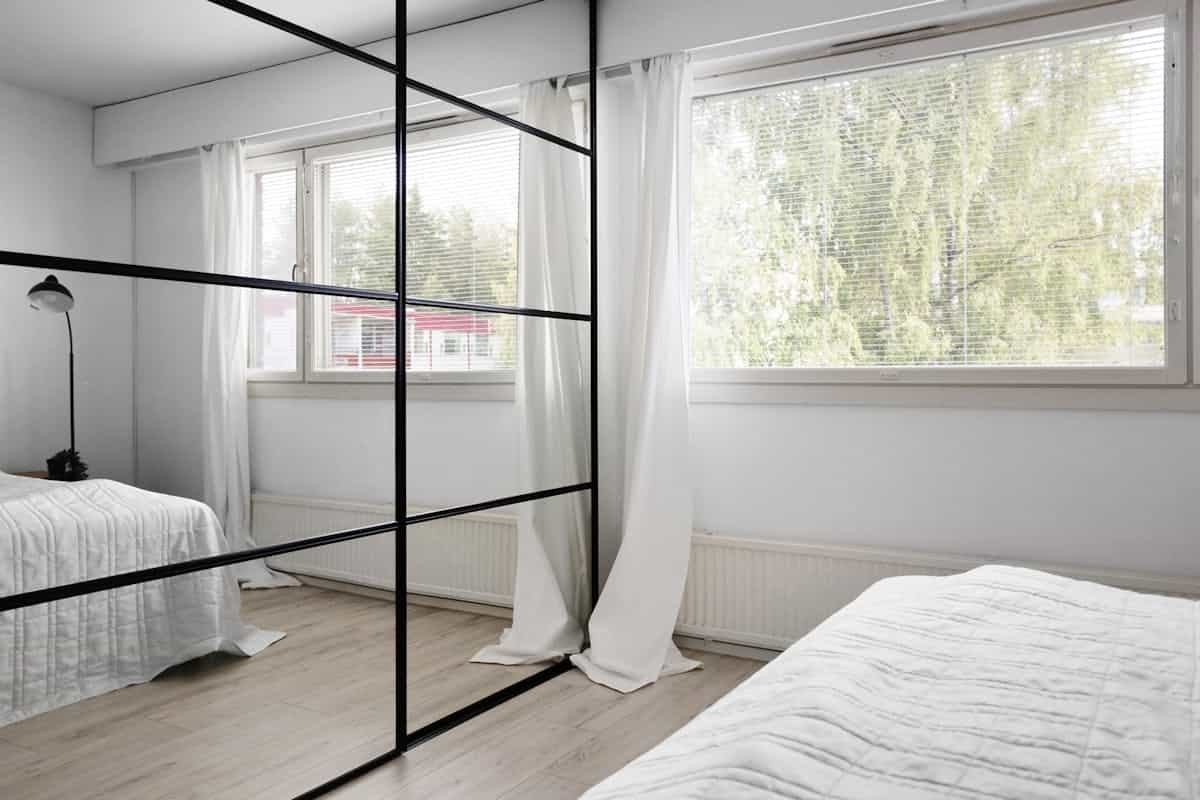
If you have decided to go ahead — and there is no good reason not to — here is how to do it so the mirror looks intentional and stays exactly where you put it.
- Weigh the mirror. Everything downstream depends on this number. Under 15 pounds gives you flexibility; over 30 pounds means studs and a cleat, no exceptions.
- Find the studs. Use a stud finder and mark them. Studs are typically 16 inches apart. Anchoring into a stud is the single biggest factor in whether the mirror is safe over a bed.
- Choose the hardware to match the weight. For lighter mirrors, two D-rings with screws into studs are fine. For anything heavy, use a French cleat — two interlocking angled rails, one on the wall and one on the mirror, that lock together and spread the load. It is the most secure method for a heavy mirror and forgiving to hang level.
- Set the height. Leave roughly 6 to 8 inches between the top of the headboard and the bottom of the mirror. Centre it on the bed, not the wall, if the two differ.
- Angle it flat, or tilt it away from the pillows. Mount the mirror flush to the wall, or with the top tilted very slightly forward so any reflection points toward the floor and the foot of the bed — never down toward your face on the pillow. This one adjustment resolves both the Troxler concern and the feng shui one at once.
- Add a safety margin. For a glass mirror over a bed, a layer of safety-backing film on the reverse holds the glass together if it ever cracks. For renters or anyone wanting maximum peace of mind, a shatter-resistant acrylic mirror removes the falling-glass risk almost entirely at a fraction of the weight.
That sixth step is what separates a mirror you can forget about from one you keep half-thinking about at night.
How to Style a Mirror Above the Bed: Ideas That Actually Work

A mirror above the bed earns its place in two ways: it bounces light around the room and it adds a sense of depth and height above a low headboard. Here is how to make mirrors above beds look designed rather than defaulted.
- One large statement mirror, centred. A single mirror roughly the width of the headboard (never wider than the bed) reads as deliberate and architectural. An arched or rounded top softens an otherwise boxy wall.
- A pair over the nightstands instead of over the centre. Two slim vertical mirrors above the nightstands flank the bed, add height, and crucially do not reflect the sleeping body — a neat way to keep mirrors in the scheme while sidestepping the sleep concern entirely.
- A gallery cluster. Group three to five smaller mirrors of mixed shapes at varying heights, the way you would hang art. It fills a tall wall above a low bed without the weight of one huge panel.
- Lean into shape contrast. A round or sunburst mirror breaks up the straight lines of the headboard, bedside tables, and window frames. Rooms made of right angles relax when something circular enters.
- Reflect something worth doubling. Position the mirror so it catches a window, a plant, or a soft lamp rather than a cluttered dresser or the open doorway. A mirror amplifies whatever it points at — give it something good.
- Match the frame to the room's metals. Warm brass for a layered, traditional bedroom; matte black or thin gunmetal for something modern; raw or limewashed wood for a calmer, organic feel.
- Light it on purpose. A mirror placed opposite or adjacent to a bedside lamp pushes that warm glow back into the room and makes a small bedroom read larger after dark.
What Shape and Size Mirror Works Best Above a Bed?
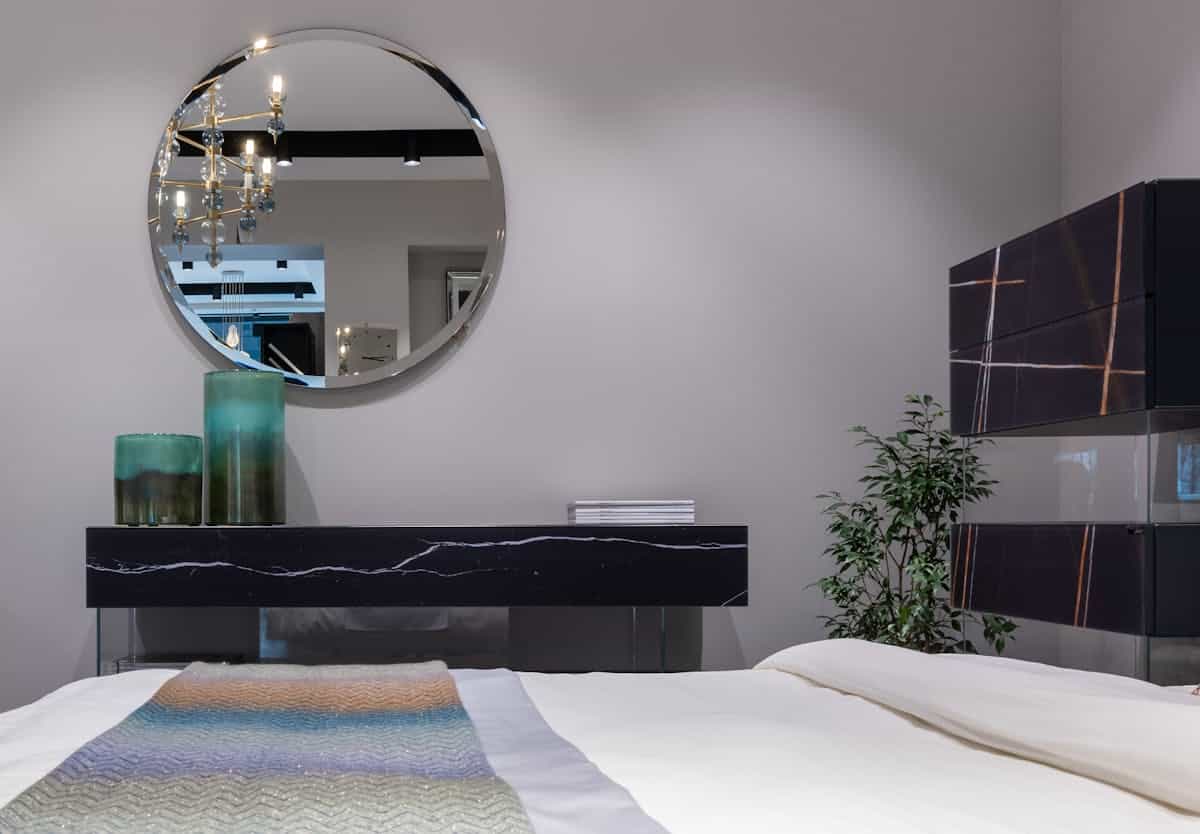
Size first: the mirror should be two-thirds to three-quarters the width of the headboard and never wider than the bed itself. A mirror that overhangs the bed looks unbalanced and, practically, puts glass over a wider stretch of sleeping area than it needs to.
Shape depends on what the rest of the room is doing:
| Mirror shape | Works best when | Effect it creates |
|---|---|---|
| Round / oval | The room is full of straight lines (rectangular headboard, square nightstands) | Softens the space, draws the eye, feels calm |
| Arched | You want a focal point without a hard rectangle | Architectural, gentle, gives height |
| Rectangular (horizontal) | The headboard is wide and low | Reinforces and widens the bed visually |
| Sunburst / starburst | The room is otherwise plain and needs energy | A single decorative statement |
| Cluster of small mirrors | The wall is tall and a single mirror would look lost | Fills vertical space, art-like |
For most bedrooms, a round or arched mirror about two-thirds the headboard width, centred and mounted flush, is the choice that looks intentional and ages well.
Recommended Products
These are the categories worth buying well for a mirror over a bed — the priority is safe mounting and shatter-resistance, not just looks. (Links go to Amazon search results so you can compare current options.)
- Shatter-resistant acrylic round wall mirror — the safest choice directly over a bed; a fraction of the weight of glass.
- French cleat picture and mirror hanging system — interlocking rails that spread the load and lock the mirror to the wall.
- Heavy-duty D-ring hangers with stud screws — for medium-weight framed mirrors anchored into studs.
- Mirror safety backing film — holds glass fragments together if the mirror ever cracks.
- Arched framed bedroom wall mirror — a flattering shape above a low headboard.
- Magnetic stud finder — the inexpensive tool that makes the whole job safe.
The Safer Alternative If You Are Still Unsure
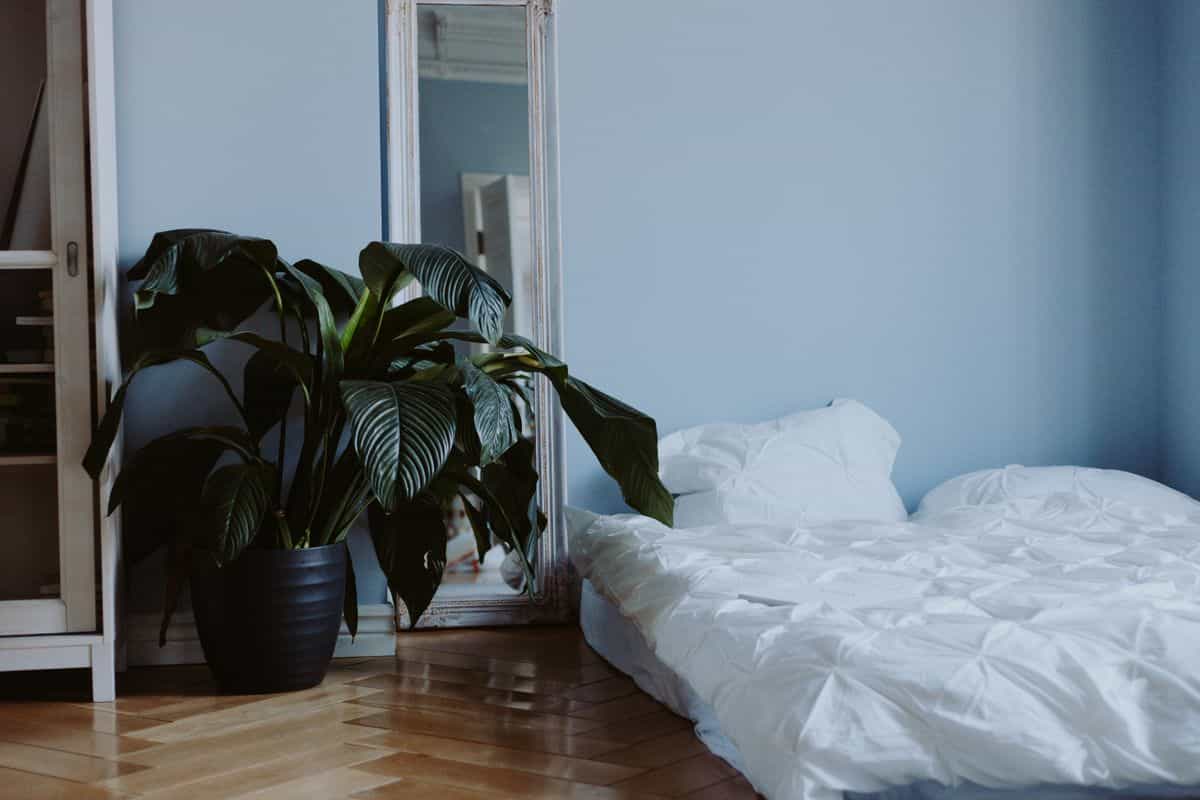
If the weight overhead bothers you, or you sleep lightly and the reflection question lingers, there are placements that give you every benefit of a bedroom mirror with none of the trade-offs:
- A side wall, perpendicular to the bed. Full-length visibility, light reflection, and zero reflection of the sleeping body. This is the position that satisfies designers, feng shui practitioners, and sleep researchers simultaneously.
- A leaning floor mirror. Propped securely against the wall (anchored with an anti-tip strap), it adds height and light with nothing suspended overhead.
- Over a dresser or vanity. The mirror does real work where you actually use it, and the reflection stays out of the bed.
- An over-the-door mirror. A simple over-the-door mirror handles the practical "check my outfit" job without putting anything on the wall above your head at all.
None of these is a compromise on style. They are simply the same idea, relocated to where the physics and the psychology both relax.
A mirror above the bed is not a luck problem to solve or a rule to fear. It is a weight to anchor and a reflection to aim. Get those two right — mount it into studs, and keep it from catching you as you sleep — and what is left is just a good-looking room. The mirror has never cared which way it faces. Everything that matters here is on your side of the glass.
Mirror FAQ
Is it bad to have a mirror above your bed?
It is not bad in any provable sense, but it carries one real concern and one debated one. The real concern is physical: a heavy glass mirror suspended over your head can fall, so it must be mounted into studs with rated hardware and ideally use tempered or shatter-resistant glass. The debated concern is sleep and feng shui: many traditions advise against it, and there is a genuine perceptual mechanism (the Troxler effect) by which a reflection you can see from bed in dim light may keep your visual system mildly active. If the mirror is mounted securely, does not reflect your face as you fall asleep, and you sleep well, there is no documented reason it is harmful.
Is it safe to hang a mirror over the bed?
Yes, if it is hung correctly. The safety of a mirror above the bed depends almost entirely on the mounting, not the mirror itself. Use a French cleat or D-rings anchored into wall studs (not drywall anchors alone) rated for at least four times the mirror's weight, choose a framed mirror with a solid backing, and prefer tempered or acrylic glass over plain annealed glass for anything large. Hung this way, a mirror over the bed is as safe as any framed art. The danger comes from a single picture hook in drywall holding a heavy glass panel.
What does a mirror above the bed mean in feng shui?
In feng shui, a mirror above or facing the bed is generally discouraged. The traditional explanation is that mirrors are activators that keep energy (Qi) moving, and a bedroom is meant to be a place of rest where energy settles. Some practitioners also link a mirror reflecting the couple to relationship interference. These are cosmological beliefs, not measured effects. Vastu Shastra gives similar guidance for similar reasons. The one part of the advice with independent support is about sleep, not luck.
Where should you not put a mirror in a bedroom?
The most consistent advice across both design and tradition is to avoid placing a mirror where it reflects you while you are lying in bed — directly above the headboard angled downward, on the ceiling, or on a wall facing the bed. Also avoid positioning a mirror so it reflects clutter, the bedroom door head-on, or a second mirror. The safest and most flattering position is usually a side wall perpendicular to the bed, or over a dresser or nightstands, where it reflects light and a pleasant view rather than the sleeping area.
How do you hang a heavy mirror above a bed so it will not fall?
Locate the wall studs and anchor the mounting hardware directly into them. Use a French cleat (an interlocking pair of angled rails) for the most secure hold on a heavy mirror, or two D-rings with screws into studs. Choose hardware rated for at least four times the mirror's weight, and if the back has two hooks, each one needs its own anchor. For added safety over a sleeping area, add a strip of mirror safety-backing film and choose tempered glass so that even in the rare event of breakage, it crumbles into blunt granules rather than shards.
Can I put a mirror over the bed if I am renting?
Yes, with renter-friendly methods. The safest renter option above a bed is a lightweight acrylic or shatter-resistant mirror, which weighs a fraction of glass and removes the falling-glass risk almost entirely. Mount it with a French cleat into at least one stud where possible, or use heavy-duty interlocking hook strips rated well above the mirror's weight for lighter pieces. Avoid hanging a heavy framed glass mirror on adhesive strips alone over a bed — that is the one combination genuinely worth avoiding.