Living Room Accent Wall Decor: 10 Ideas That Wow
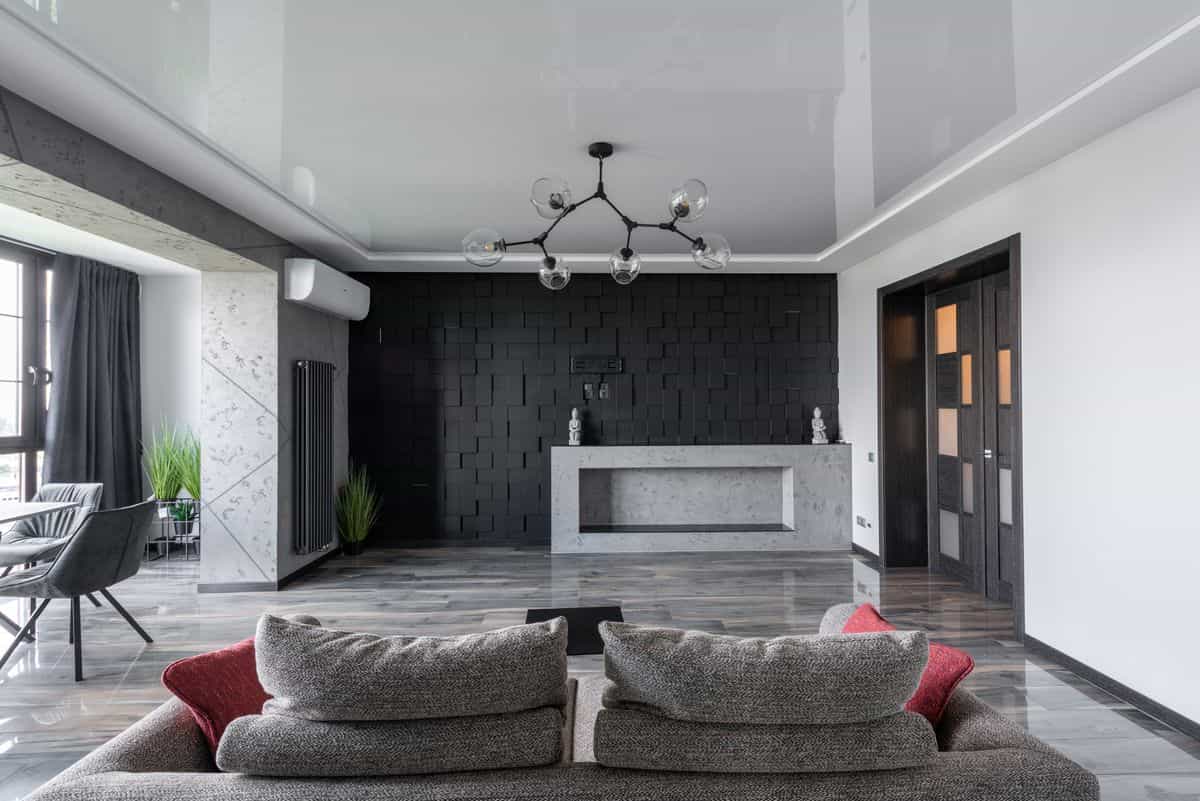
If your living room feels flat and you want one change that transforms it, an accent wall is the highest-impact move there is — and most people assume it means painting one wall a different color. It can mean a lot more than that. Here is the short version first.
The best living room accent wall starts by choosing the right wall — the one your eye lands on first, usually behind the sofa or around the fireplace — then committing to one strong treatment: bold paint, wallpaper, wood slats, brick, oversized art, shelving, or greenery. One wall, one idea, three calm walls around it.
A quick honest note before the ideas, because it is the thing that separates an accent wall that wows from one that just looks like a mistake. An accent wall only works if the rest of the room lets it. The whole effect depends on contrast — one wall doing something while the others stay quiet. Do all four and you have not made an accent wall; you have made a busy room. Pick one.
How to Choose Which Wall
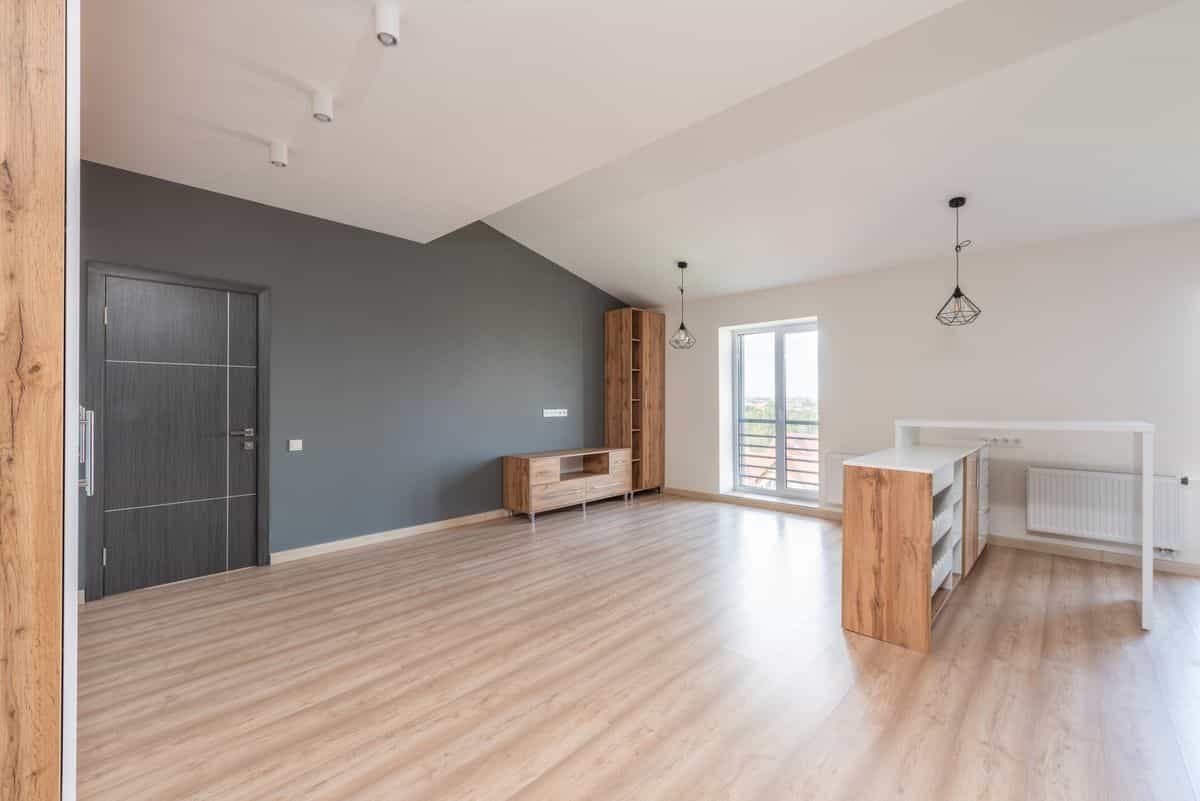
Before the decor, the wall. An accent wall only lands if it is the wall the room is already built around — so let the room tell you which one.
The reliable candidates are the wall behind the sofa, the fireplace wall, and the media/TV wall — each already has a reason to be the focal point. Choose a solid, mostly unbroken wall, not one chopped up by doors and windows, because the treatment needs continuous surface to read. And make sure it is the wall you actually see first from the doorway. Get the wall right and almost any of the ten ideas below will work; get it wrong and even the best treatment looks misplaced.
1. Paint a Bold Color
Paint is the cheapest, fastest accent wall, and still one of the best. You have two routes: high contrast — a charcoal, navy, or forest-green wall in an otherwise light room, for drama — or tone-on-tone, a deeper shade of the room's existing color, for a subtler, cohesive depth.
Warm colors (terracotta, clay, deep ochre) make the room feel cozier and pull the wall closer; cool colors (slate, sage, muted blue) feel calmer and more open. Whichever you choose, carry a small echo of it elsewhere — a cushion, a vase — so the wall looks intentional rather than orphaned.
2. Hang Statement Wallpaper
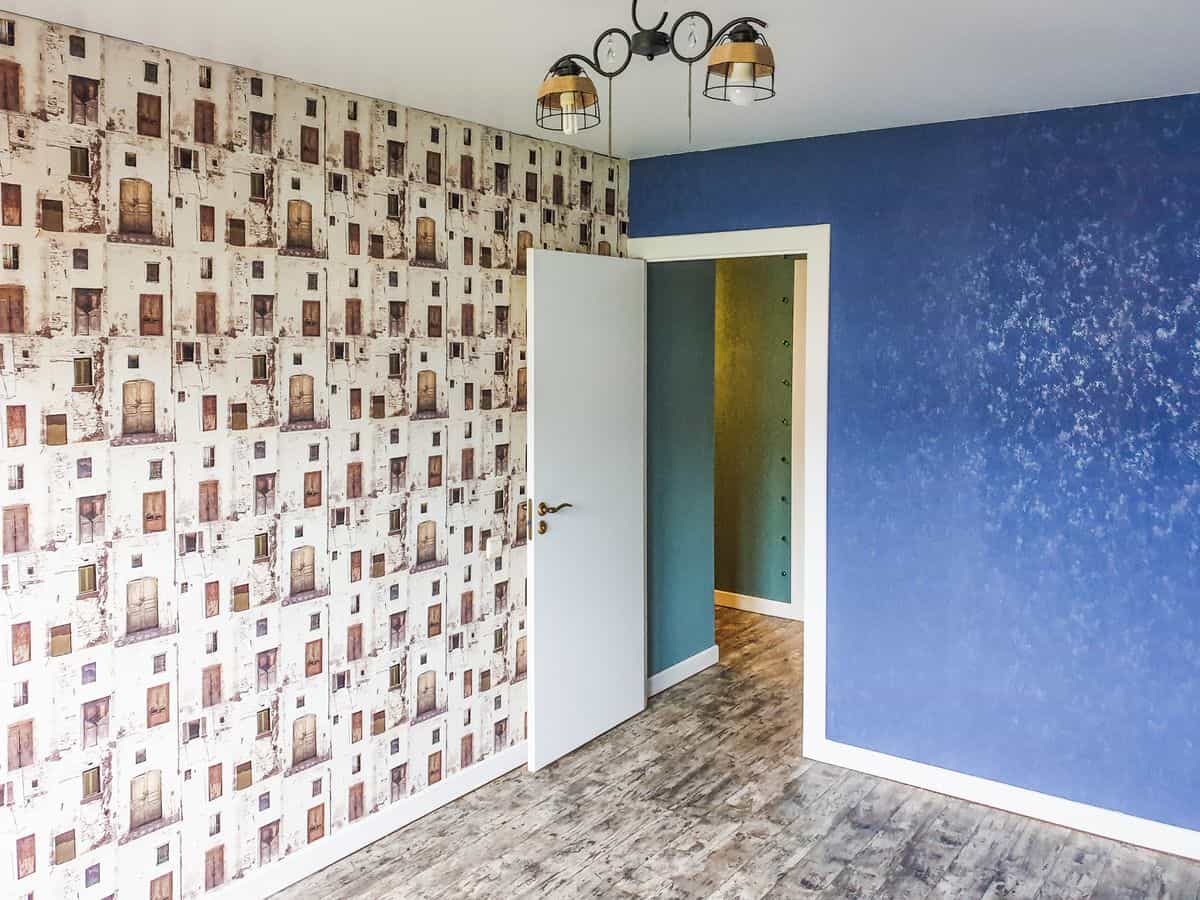
Wallpaper does what paint cannot: pattern, depth, and often a hint of texture. A single papered wall — geometric, botanical, mural, or a subtle grasscloth — becomes an instant focal point with more personality than a solid color.
The best part for the commitment-shy and for renters is peel-and-stick wallpaper, which goes up in an afternoon and comes off cleanly later. Keep the rest of the room quiet when the paper is busy, and let the wallpaper be the star.
3. Add a Wood Slat Wall

Wood slats are the accent wall of the moment, and for good reason: vertical timber battens add warmth, texture, and a subtle rhythm that draws the eye upward, making the room feel taller. They suit modern, Scandinavian, and mid-century rooms especially well.
Slat panels now come in peel-or-screw-on kits that make this a weekend project rather than a renovation. Behind a sofa or framing a TV, a slatted wall reads as architectural and crafted — a step up from flat paint without the cost of true joinery.
4. Try Shiplap, Board and Batten, or Panelling
Millwork is the accent wall with staying power. Shiplap (horizontal planks) reads coastal and farmhouse; board and batten (a grid of raised strips) is classic and architectural; and simple panel moulding adds quiet, traditional elegance. Painted a deep color, any of them looks high-end.
This is the most "built-in" of the painted options — it adds real dimension and shadow that flat color cannot — and it is forgiving of an older wall's imperfections, since the boards cover them. Choose horizontal planks to widen a wall, vertical to heighten it.
5. Go Natural with Brick or Stone
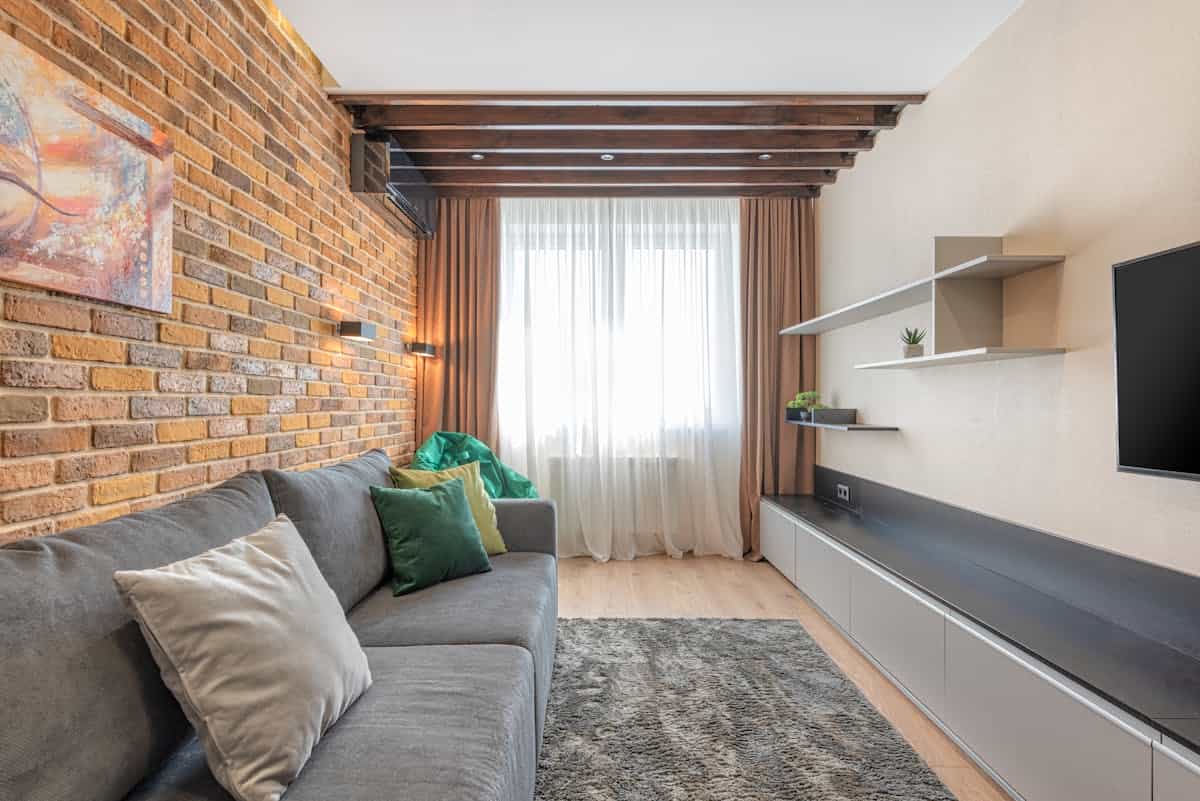
Brick and stone bring texture and warmth no paint can fake. If you are lucky enough to have original exposed brick, it is a ready-made accent wall; if not, thin brick or stone veneer and convincing faux-panel options deliver the look without the structural weight.
Brick reads industrial-loft or rustic-warm depending on its color and how it is finished — leave it raw for character, or limewash it white for a softer, modern take. A stone feature, especially around a fireplace, anchors a room with a sense of permanence.
6. Make Art the Wall: Oversized Pieces and Gallery Walls
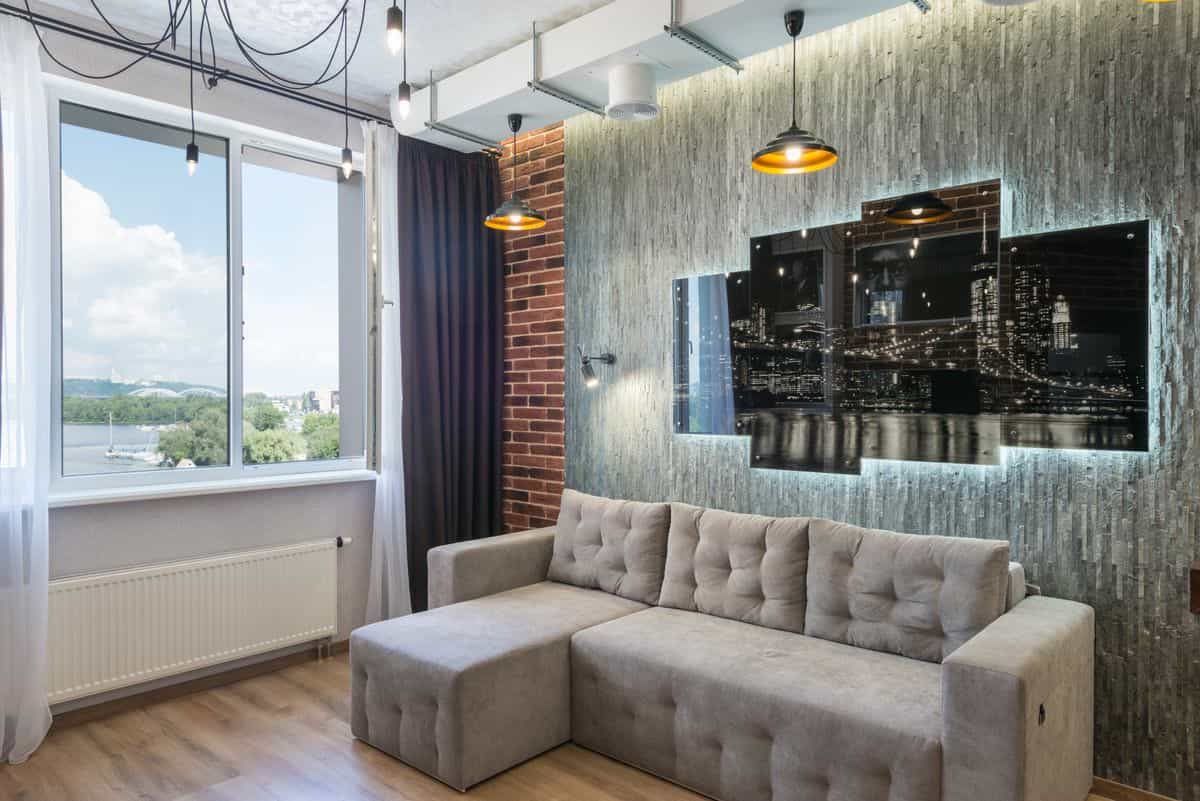
Sometimes the decor is the wall. A single oversized canvas or print above the sofa turns a blank wall into a gallery moment, and one big piece beats a scatter of small ones every time — size it to about two-thirds the width of the sofa.
The alternative is a gallery wall: a curated mix of framed art and photos. The trick is to lay it out on the floor first, keep a consistent 2–3 inch gap, and limit yourself to two or three frame styles so it reads as composed. Both approaches turn the focal wall into "decorative wall pieces" that show who lives there — and the sizing math is the same one in the magnolia wall art guide.
7. Build a Styled Shelving Wall
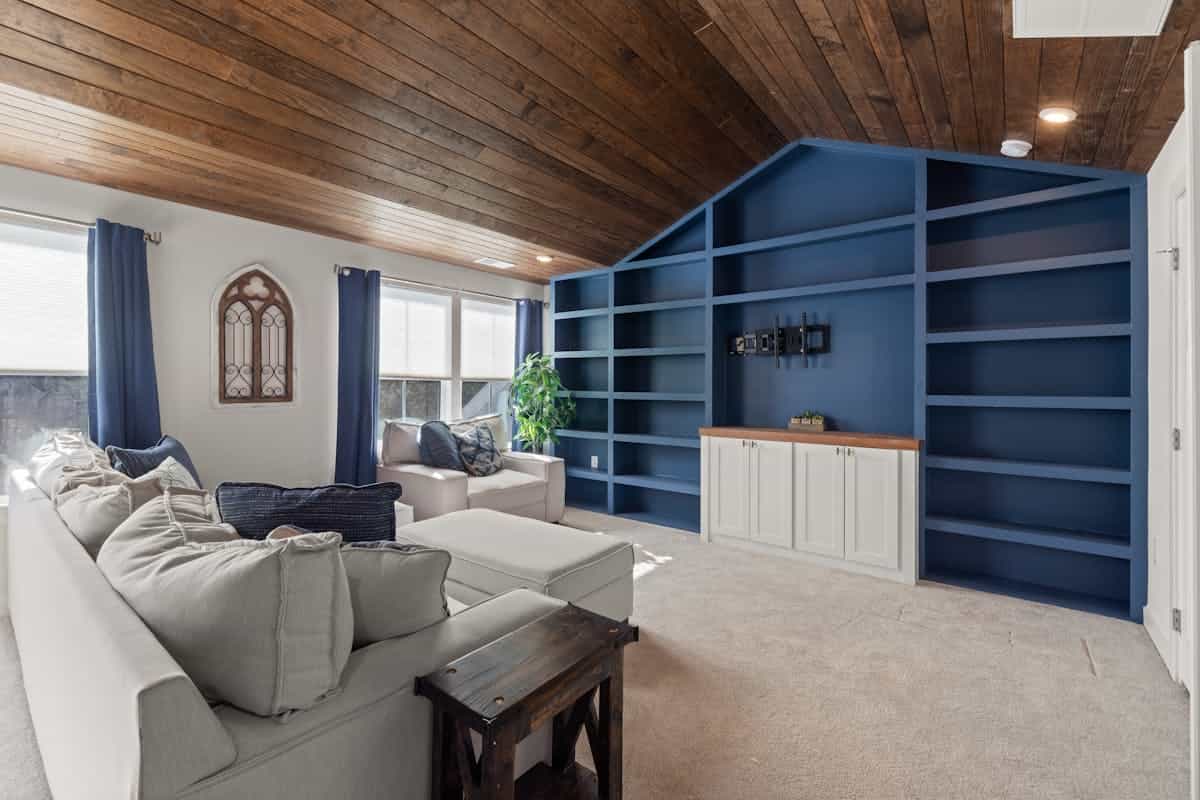
An accent wall can earn its keep. Floor-to-ceiling shelving — built-in or a wall of modular units — makes a wall a focal point and storage, which is the dream in a living room short on both.
The styling is what sells it: arrange the shelves in layers, mixing stacked and upright books with pottery, framed art, a small plant, and breathing room between groupings — not a wall of spines crammed edge to edge. Painting the back of the shelving a contrasting color turns a practical bookcase into a genuine design feature.
8. Anchor It with a Fireplace or Media Wall
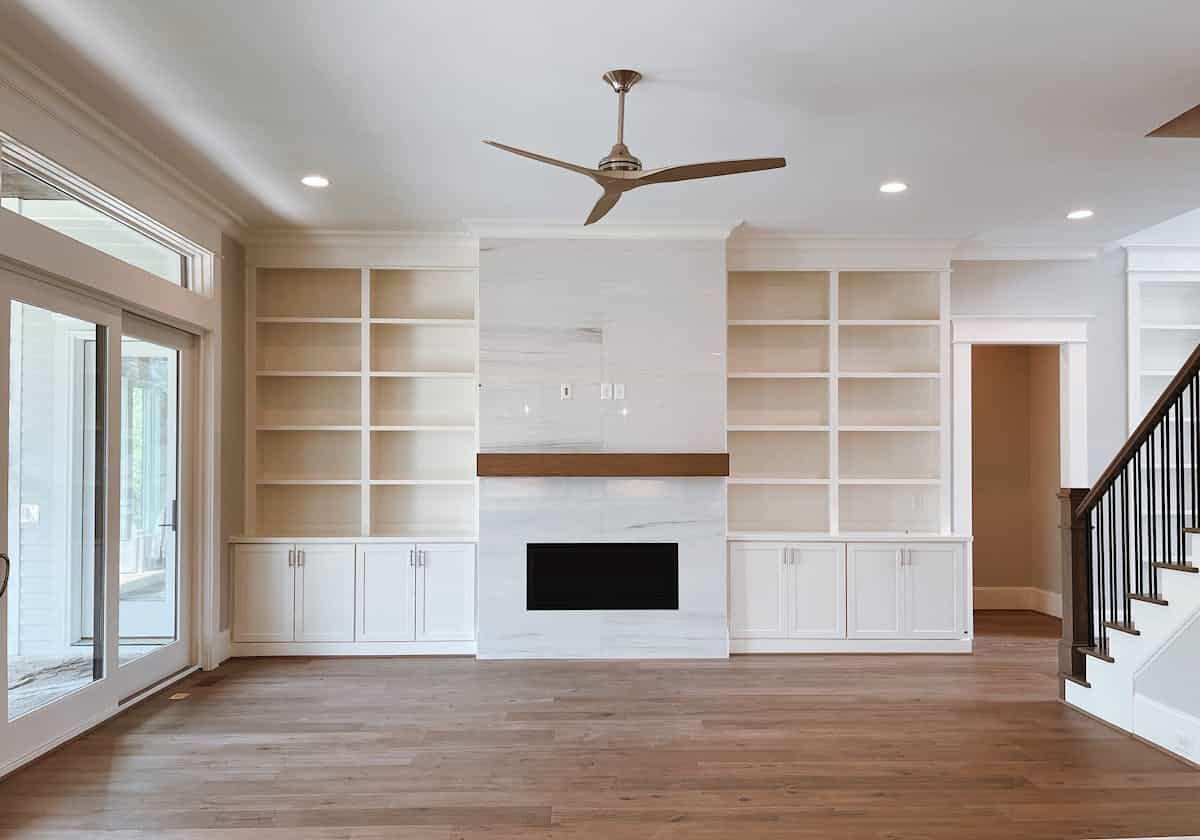
If your room has a fireplace or a mounted TV, that wall is already the focal point — so lean into it. A fireplace feature wall clad in stone, tile, slats, or a bold paint frames the hearth and makes it the room's anchor. A media wall with integrated panelling or shelving around the TV hides the "black rectangle" problem by making the screen part of a composed wall rather than a lonely fixture.
This is where the accent wall doubles as architecture, and where it pays to relate the treatment to how the living room is laid out — the focal wall and the seating should point at each other.
9. Bring in a Plant or Green Wall
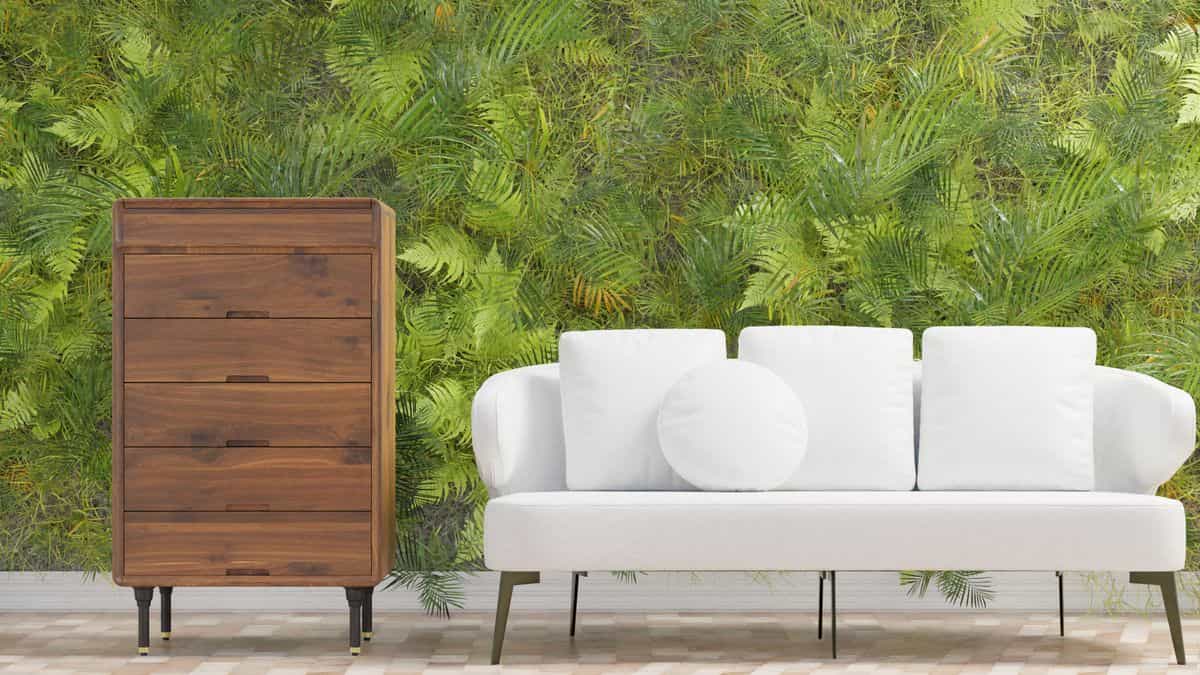
For a living, breathing focal point, greenery is hard to beat. Options range from a full vertical garden of real or high-quality faux plants, to a collection of hanging and shelved plants massed on one wall, to a simpler grouping of large floor plants against a painted backdrop.
A green wall brings color, softness, and a sense of calm that flat decor cannot. (One honest aside: the popular idea that a wall of plants will "purify" your air overstates the research, which was done in sealed lab chambers, not living rooms — keep the green wall for the beauty and the calm, not as an air filter.) Faux options are worth considering on a wall that gets little light.
10. Add Decorative Wall Pieces and Texture
The tenth idea is the catch-all that finishes any of the above: decorative wall pieces that add dimension — a large round mirror to bounce light, a metal or carved-wood sculpture, a woven hanging, or modern 3D and fluted panels that throw soft shadow. Limewash paint, which leaves a cloudy, chalky depth, is another low-effort way to add texture to a single wall. The most striking decorative wall designs usually layer two of these at once — texture plus a single bold object — rather than relying on one alone.
These are also the easiest way to refresh an accent wall you already have. A bold paint wall plus one well-chosen decorative piece — a mirror, a sculpture, a single dramatic light — is often all a wall needs to go from plain to "wow." For inspiration that carries between rooms, many of these same moves appear in the bedroom wall decor ideas guide.
The One Thing to Carry Away
Notice that all ten ideas obey the same single rule: one wall, one strong gesture, everything else calm. That is the entire secret of an accent wall that wows rather than clashes. The drama comes from the restraint around it, not just the boldness of the wall itself.
So before you pick a color or order a slat kit, choose the wall — the one you see first, the one the sofa already faces — and let that one wall carry the room. Decorate it like it matters, leave the others alone, and a single decision will do what rearranging the whole room could not.
Recommended Products
These are the categories that deliver the biggest living room accent wall transformation for the effort. (Links go to Amazon search results so you can compare current options.)
- Peel-and-stick wallpaper — a statement feature wall in an afternoon.
- Wood slat wall panels — modern texture without joinery.
- Faux brick or stone wall panels — the brick look without the weight.
- Large canvas wall art — the oversized focal piece above the sofa.
- Modular wall shelving unit — a shelving wall that stores and displays.
- 3D textured wall panels — dimensional texture for a feature wall.
- Large decorative wall mirror — a light-bouncing decorative wall piece.
Mirror FAQ
What is the best accent wall for a living room?
The best accent wall is almost always the natural focal wall — the one your eye lands on first when you walk in, usually the wall behind the sofa or the one with the fireplace or TV. For the decor itself, bold paint is the easiest high-impact option, wood slats and shiplap add warmth and texture, and an oversized piece of art or a gallery wall turns the wall into a display. Choose one wall, commit to one strong idea, and leave the other three walls calm so the accent actually stands out.
Which wall should be the accent wall in a living room?
Pick the wall that already draws the eye: most often the wall behind the sofa, the fireplace wall, or the media wall. A good accent wall has a reason to be the focal point — a piece of furniture anchoring it or an architectural feature on it — and it should be a solid, mostly unbroken wall rather than one chopped up by doors and windows. Avoid making a wall with lots of openings your accent wall; there is not enough surface for the effect to land.
Do accent walls make a room look bigger or smaller?
It depends on the color and treatment. A darker accent wall can make a room feel cozier and add depth, drawing the far wall closer for an enveloping feel, while a light or cool-toned accent wall can make the space feel more open and airy. Vertical elements like wood slats or tall shelving draw the eye up and add a sense of height. The accent wall mostly changes the room's mood and focal point rather than its actual size — use darker, warmer treatments for cozy and lighter, vertical ones for open.
Are accent walls still in style?
Yes, though the look has shifted. The flat single-color "paint one wall a different color" version of the 2010s has matured into accent walls built from texture and material — wood slats, shiplap, board and batten, limewash, stone, and full-height shelving — as well as art-led walls. The principle never went out of style: a room benefits from one deliberate focal point. What changed is that the most current accent walls add dimension and craft, not just a different paint color.
How do you decorate a large blank living room wall?
Treat it as your accent wall and give it one confident idea scaled to the space: an oversized piece of art or a balanced gallery wall, a full run of floating or built-in shelves styled in layers, a wood-slat or panelled treatment, or a bold paint or wallpaper. The mistake on a big wall is going too small — a lone small frame looks lost. Fill roughly two-thirds of the wall, center the arrangement on the furniture below it, and let one strong gesture do the work.