Feng Shui Living Room Layout: Sofa, TV & Furniture Placement
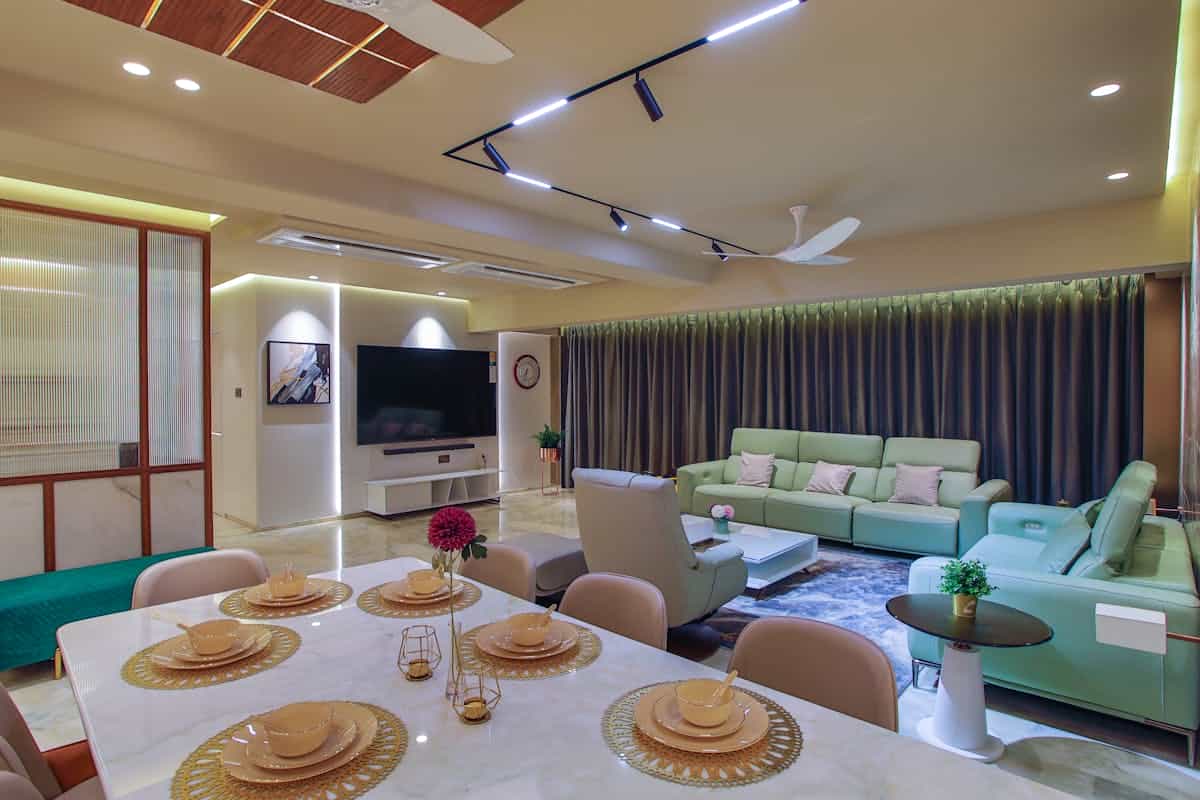
A good feng shui living room layout puts the sofa in the command position — against a solid wall, able to see the door without being in line with it — arranges the other seating in a conversation circle, keeps clear pathways for energy to move, favours rounded furniture, and contains the TV rather than letting it rule the room. Everything else is refinement.
If you are arranging a living room and feng shui keeps coming up, the question underneath is simple: where does the sofa go, what do I do with the TV, and how do I lay out the rest so the room feels right?
One thing worth saying before the layout, because it makes the whole guide more useful. The rules are not all the same kind of claim. Some — the command position, clear pathways, conversation-friendly seating — have real psychological support and help whatever you believe. Others — Qi flow, the bagua compass directions for your TV, the five-element balance — are traditional belief you cannot measure. This guide covers all of it and tells you honestly which is which.
The Principle Behind the Whole Layout
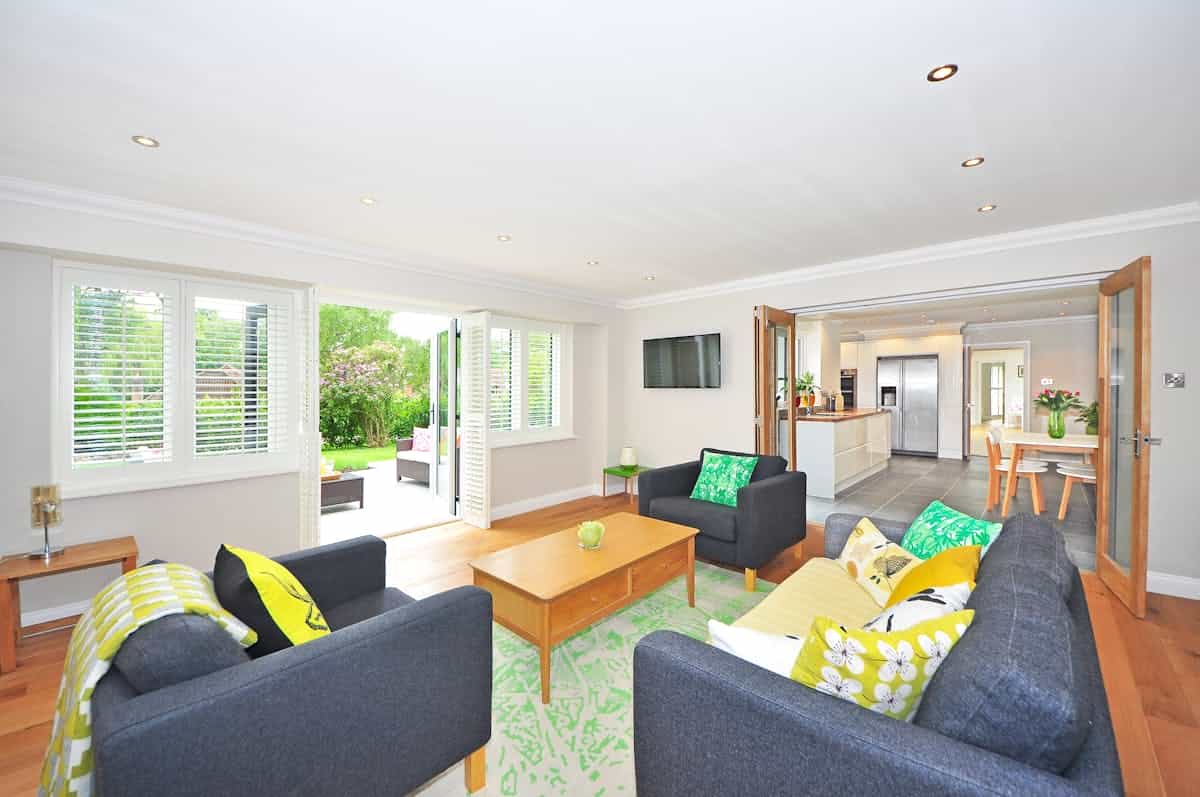
Every rule below comes from one idea. Feng shui arranges a space so that Qi — its life energy — can move and settle well. The living room is the most social, active (yang) room in the house, so unlike a bedroom, it is meant to support gathering, conversation, and flow rather than deep rest.
That gives you a test you can apply to any arrangement: does this layout let people and energy move freely, let everyone see the entrance, and bring people together to face one another? If yes, it is good feng shui. If furniture blocks the path, turns backs to the door, or scatters people facing a screen, it is not.
Two things are true at once, and both worth stating. Qi is a traditional concept, not a measurable force like light. But the layout it produces — clear sightlines, secure seating, a circle that invites conversation — is exactly what a designer or a psychologist would also recommend for a sociable room. That overlap is why a feng shui living room tends to feel better even to people who never think about energy.
Where to Put the Sofa: The Command Position
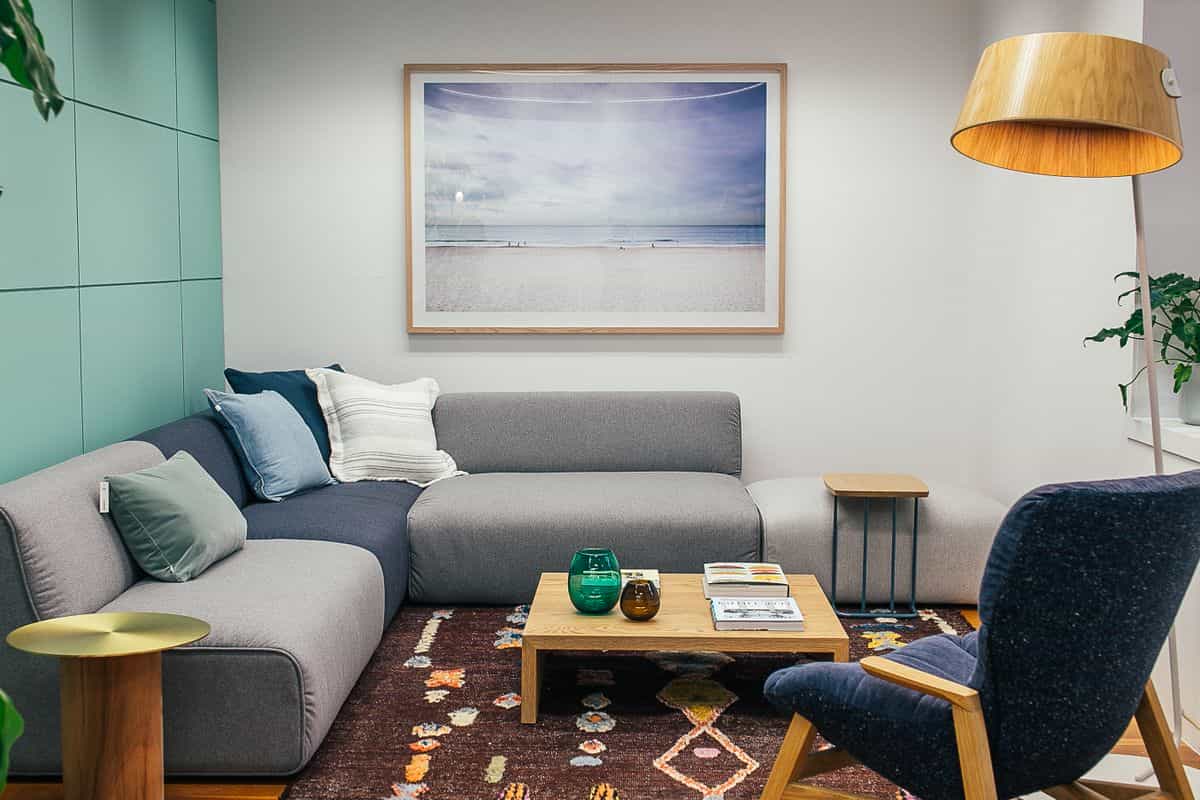
The sofa is the bed of the living room — the main seat, and the piece everything else arranges around. The rule is the command position: the sofa against a solid wall, placed so the people on it can see the main doorway without being directly in line with it.
This is the rule with the most support outside feng shui. A solid wall behind the sofa gives a sense of backing and security — the same instinct that wants a headboard behind a bed — and being able to see who enters a room lets the nervous system relax instead of monitoring the door. Avoid three things: floating the sofa in the middle of the room with its back to the entrance, placing it directly in front of or under a window (no solid support behind you, and the energy and light at your back), and putting it squarely in line with the door, where the energy rushes straight at the seat. Diagonally across from the entrance, spine to a wall, is the ideal. The full set of sofa rules — backing, the U-shape, balance, and what to do when no wall works — is in the dedicated feng shui sofa placement guide; the same logic is the living-room cousin of the commanding position for a bed.
How to Handle the TV
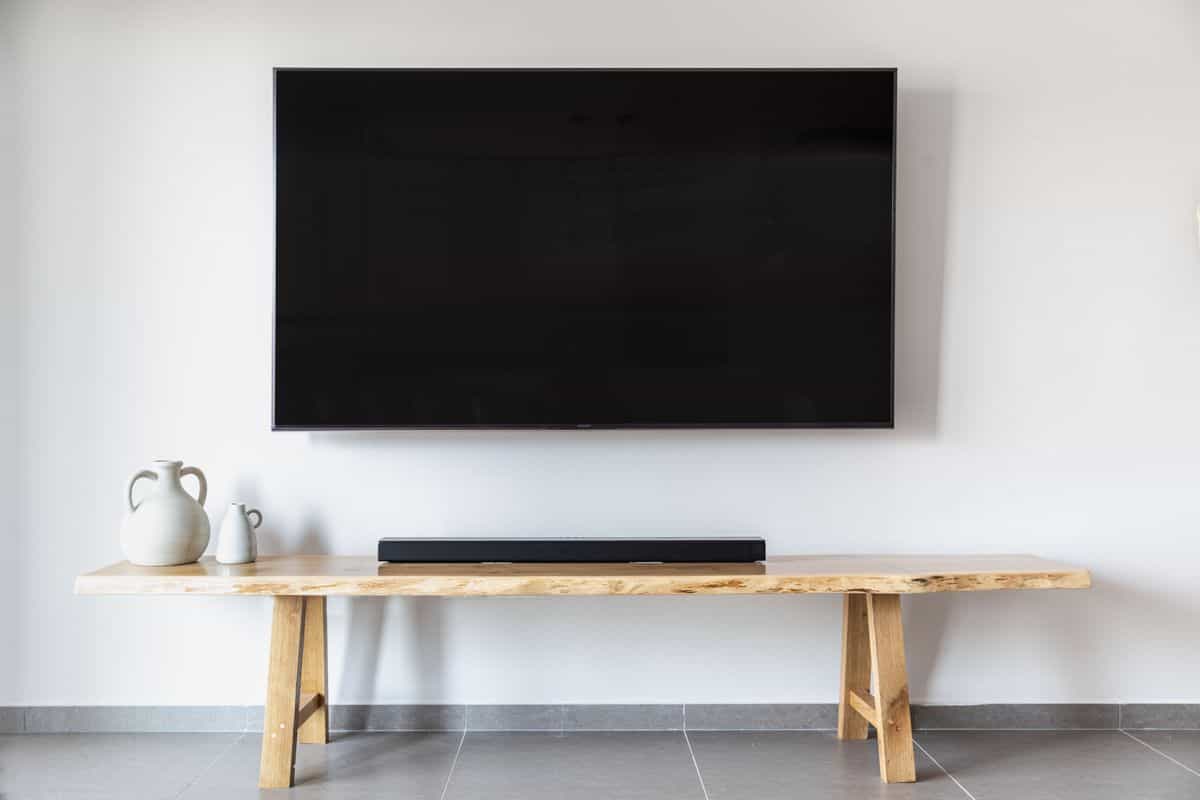
Here is where feng shui meets modern life with some friction — and where the honest answer matters most. Feng shui is wary of the television for two reasons: a dark screen behaves like a mirror, reflecting and bouncing the room's energy, and a large TV tends to become the single thing the whole room points at, draining the social energy a living room is meant to hold.
The practical feng shui approach:
- Contain it. A console with doors, a cabinet, or a cover lets you close the screen off when it is not in use, killing the mirror effect. A sleek wall-mounted TV is the harder case — at least keep it from dominating.
- Do not make it the only focal point. Balance it with art, a plant, or a fireplace so the room has more than one centre of attention, and arrange the seating for people first, the screen second.
- Mind the door. Avoid placing the TV directly opposite the main entrance.
- By the bagua, if you follow it: the north wall is linked to career and the south to recognition, so those are the traditionally favoured spots — useful as a tiebreaker, not a rule to rearrange your whole room around.
This is also the rule I would hold most loosely. A living room that works for the people in it beats one arranged around a superstition about screens — so contain the TV, then get on with your life. (The feng shui mirror placement rules cover the reflective-surface logic in full, since it applies to the screen too.)
Rounded Furniture and the Coffee Table
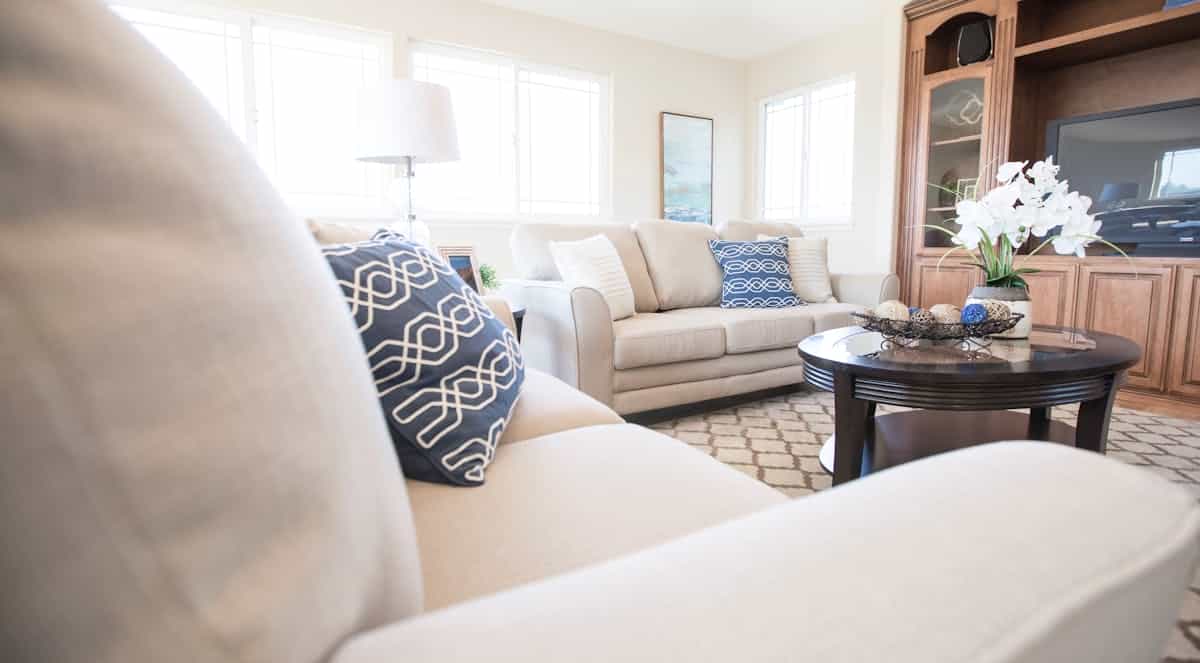
Feng shui prefers rounded and curved furniture over hard, sharp edges. The traditional reason is that sharp corners create "poison arrows" — lines of cutting energy aimed at wherever they point. The plainer reason is just as real: a sharp corner at shin or eye level in a busy, social room is genuinely a little hostile, and a softly curved coffee table is both safer to move around and calmer to look at.
In practice: choose a round or oval coffee table where you can, especially in a room where people circulate, and keep it a comfortable arm's reach from the sofa — close enough to use, far enough to walk past. This is also where feng shui is cautious about the L-shaped sectional: the inner corner can form a poison arrow, and the shape can feel incomplete. If you love your sectional, keep it — just soften the corner with a rounded cushion or a plant, and make sure its long back still meets a solid wall.
Arrange the Seating for Conversation
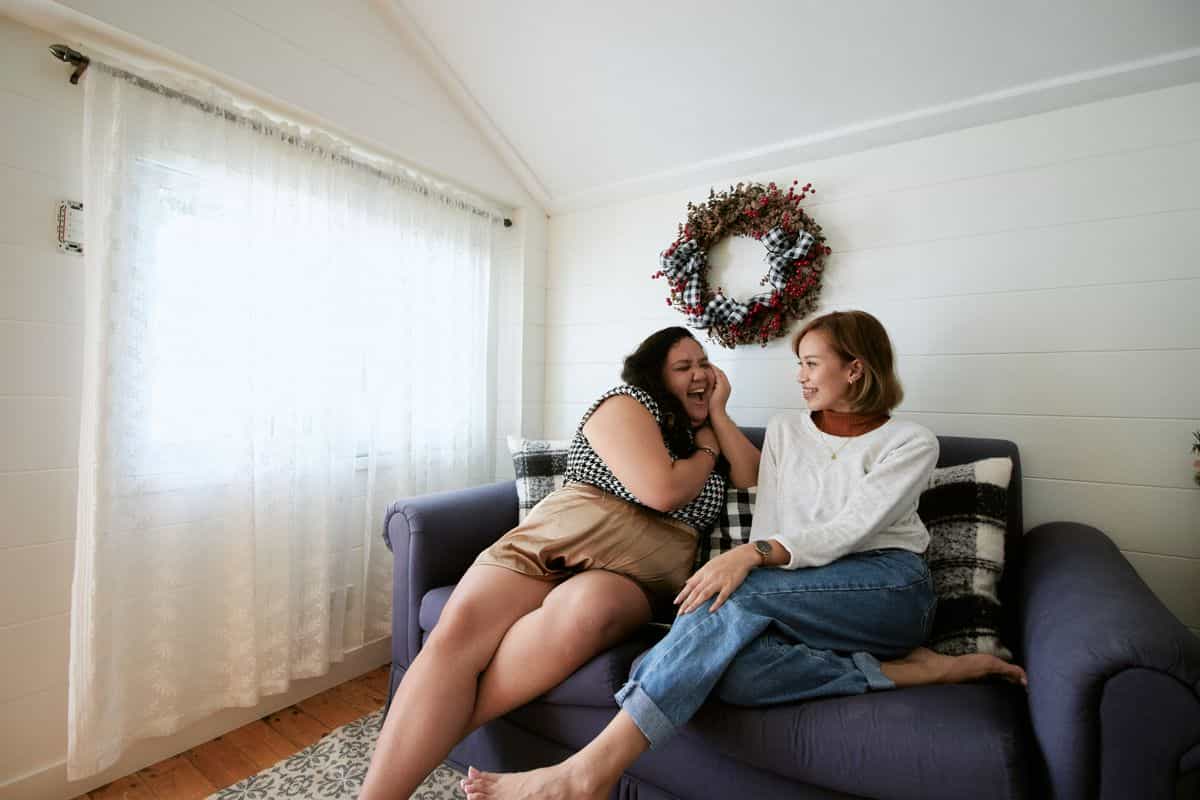
A feng shui living room is arranged for people facing people, not a row of seats all pointing at a screen. Pull the main sofa and the chairs into a loose circle or U-shape so everyone can see and talk to everyone else without craning or shouting across the room.
This one is almost pure psychology dressed as energy. Seating that faces inward invites connection; seating strung along the walls in a ring (the "skating rink" layout) forces conversation across an empty middle and quietly kills it. Keep the pieces close enough for an easy chat — a few feet apart, not a shout apart — and give the grouping a sense of balance, with weight on more than one side of the room rather than everything crammed against a single wall. Pairs help: two chairs, two lamps, two side tables read as calm and stable.
Keep the Pathways Clear
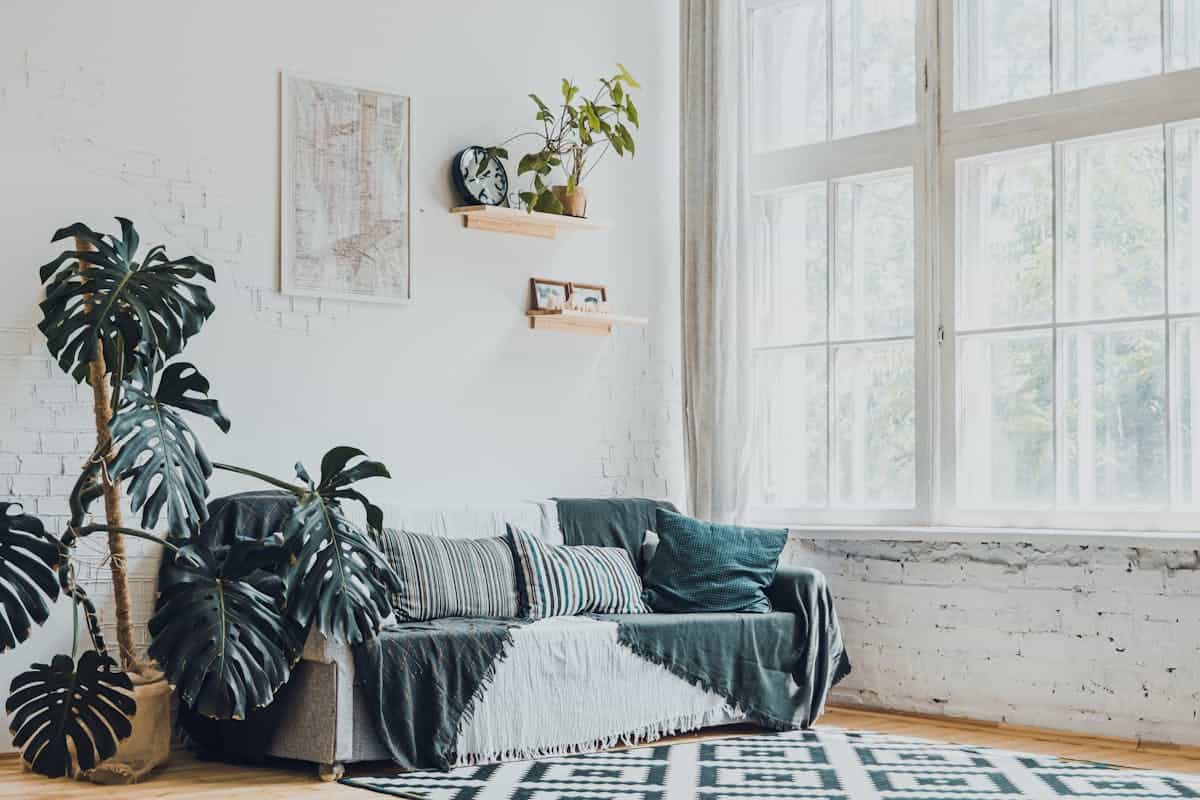
Placement is half the job; the space between the furniture is the other half. Feng shui asks you to picture Qi as a gentle stream that should wander through the room without rushing or stalling — which in practice means clear, generous pathways.
- Keep a clear route from the doorway into and through the room — aim for roughly 30 inches of walkway where people travel, so no one has to turn sideways or climb over a coffee table.
- Do not block the door's swing, and never let the first thing you meet on entering be the back of a sofa or a wall of furniture.
- Declutter. Feng shui holds that clutter traps stagnant energy; the plainer truth is that a cluttered, crowded living room feels stressful and stops people moving and gathering. Clear surfaces and floor make the whole layout work.
A healthy, soft-leafed plant or two supports the flow with living (Wood) energy — keep them lush, not sprawling, and skip spiky species. (The popular claim that houseplants "purify your air" overstates the research it rests on, which used sealed lab chambers, not living rooms — keep the plant for life and calm, not as an air filter.)
Balance the Five Elements and the Light
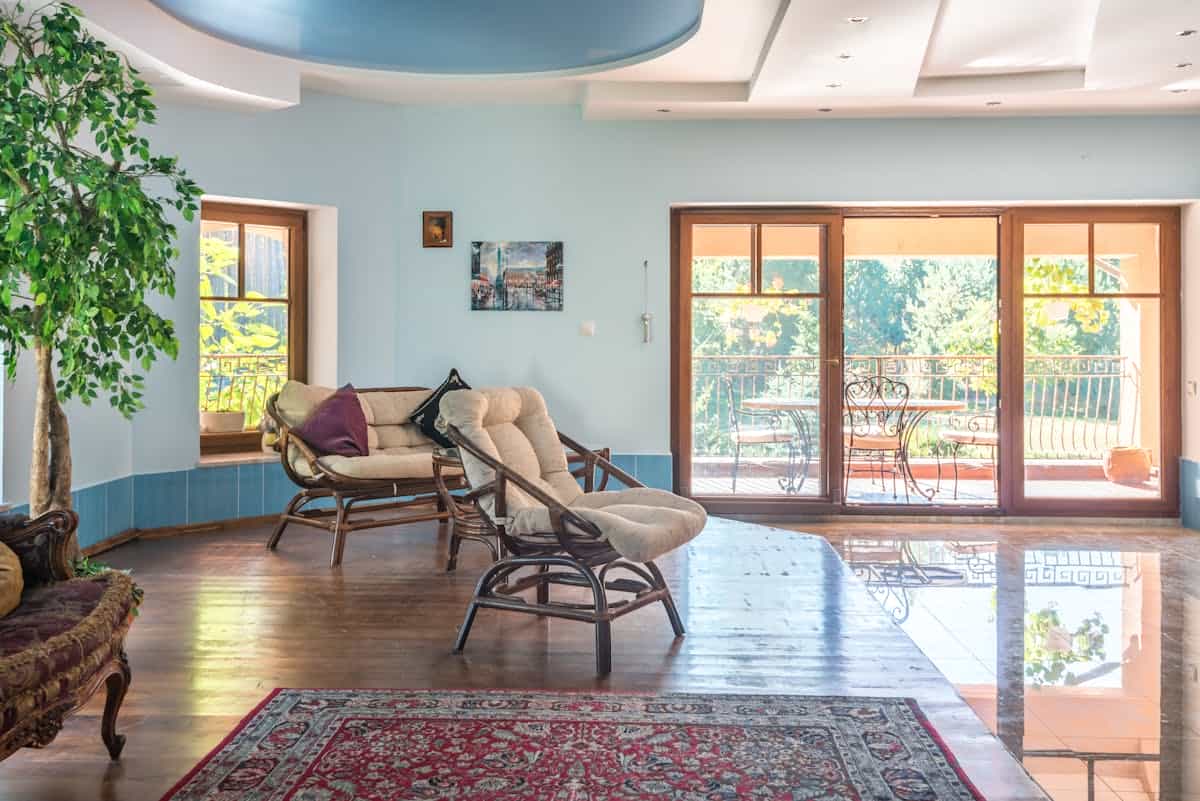
This is the most clearly traditional layer, and the most enjoyable. A balanced living room is said to hold the five elements — Wood, Fire, Earth, Metal, Water — in gentle proportion. In practice that just means variety of material and tone:
| Element | Brought in by |
|---|---|
| Wood | Plants, wooden furniture, greens |
| Fire | Candles, a fireplace, warm light, reds |
| Earth | Ceramics, earth tones, square shapes |
| Metal | Metal frames, white and grey, round shapes |
| Water | A small fountain or mirror, dark blue tones |
You do not need a compass to benefit — a room drawing on several materials simply feels layered and complete rather than flat. Pair that with layered lighting: a mix of overhead, table, and floor lamps so you can shift the room from bright and social to warm and low, rather than relying on one hard ceiling light. Warmth and a few levels of light do more for a room's feel than any single object.
Which Feng Shui Living Room Layout Rules Actually Matter
This is the section most layout guides skip, and the most useful. Sorting the rules honestly lets you follow the whole system, or just the parts that hold up.
Worth doing regardless of belief: the sofa in the command position with a wall behind it, clear 30-inch pathways, an unblocked door, and seating arranged for face-to-face conversation. These map onto real psychology and ergonomics — people relax when they can see the entrance and connect when they face each other. The broad case for an ordered, sociable, well-lit room is sound design, not superstition.
Traditional belief, not measurable: Qi flowing as an energy, the bagua compass directions assigning your TV to a "career" or "fame" wall, the five-element balance as a metaphysical force, and sharp-corner "poison arrows" as a real threat (though a hard edge in a busy room is mildly unpleasant for ordinary reasons). Coherent, harmless, worth following if you enjoy it — just not where the real gains are. For the room-by-room version of this same honesty, see the feng shui bedroom layout guide.
Recommended Products
These are the pieces that make a feng shui living room layout easiest to get right — the priority is a well-backed sofa and a contained, balanced room. (Links go to Amazon search results so you can compare current options.)
- High-back sofa with rounded arms — solid backing and soft edges, the command-position anchor.
- Round or oval coffee table — curves over corners in a room people circulate.
- TV console with doors — to contain the screen and kill the mirror effect.
- Pair of accent chairs — to close a conversation circle and add balance.
- Floor and table lamp set — for the layered lighting feng shui prizes.
- Large floor plant (fiddle-leaf or similar) — living Wood energy and a softening focal point.
The One Thing to Carry Away
Look again at the test that generates every rule here: does the layout let people and energy move freely, let everyone see the door, and bring people together to face one another? You can arrange an entire living room from that one sentence and never need the list.
Whether you call the result good Qi or good design, the furniture lands in the same places — a sofa you feel backed and safe on, a clear path through the room, a circle that invites people to stay and talk, and a screen that knows its place. The energy is debatable. A room people actually gather in is not.
Mirror FAQ
How do you arrange a living room for good feng shui?
Start with the sofa in the command position — against a solid wall, able to see the main door without being directly in line with it. Arrange the rest of the seating in a conversation circle facing inward, keep a clear pathway through the room and to the door, favour rounded furniture over sharp corners, and contain the TV in a console or behind doors when not in use. Then balance the space with a mix of the five elements, layered lighting, and a healthy plant or two. The sofa placement does most of the work.
Where should the sofa go in a feng shui living room?
Against a solid wall, positioned so the people sitting on it can see the main entrance to the room without being directly in line with it — the command position. A solid wall behind the sofa gives a sense of support and security, the same reason feng shui wants a headboard behind a bed. Avoid floating the sofa in the middle of the room with its back to the door, and avoid placing it directly under or in front of a window, which offers no support behind you.
Where should the TV go in a feng shui living room?
Feng shui has a slightly awkward relationship with the TV, since a black screen acts like a mirror and a large screen dominates the room's energy. Place it on a console or in a cabinet you can close, keep it from being the sole focal point, and avoid putting it directly opposite the main door. Traditionally the north of the room is linked to career and the south to fame, so those walls are favoured — but the practical priorities are containing the screen and keeping the seating arranged for people, not just for viewing.
Should the sofa face the door in feng shui?
It should face toward the door without being directly in line with it. The goal is for people seated on the main sofa to see anyone entering the room, which feels secure — but a sofa squarely in front of and facing the door sits in the rushing energy that comes straight through it. Diagonally across from the entrance, against a solid wall, is the ideal. A sofa with its back to the door is the placement to avoid.
What kind of sofa is best for feng shui?
A solid, comfortable sofa with a high back and rounded rather than sharp edges, big enough to seat people together and invite conversation. Feng shui is cautious about L-shaped sectionals because the inner corner can form a "poison arrow" pointing at the seating, and because the L-shape can feel incomplete. If you have a sectional, soften the corner with a rounded cushion or a plant and make sure the long side still has a solid wall behind it.
Do feng shui living room layout rules actually work?
Several do, for reasons outside the energy framework. The command position, a solid wall behind the sofa, clear pathways, and seating arranged for face-to-face conversation all map onto real psychology — people feel more at ease when they can see the entrance and talk without shouting across a room. The more cosmological parts (Qi flow as an energy, bagua compass directions for the TV, the five-element balance) are traditional belief rather than measured effect. A good feng shui living room usually feels more sociable and calm, and much of that is simply good spatial design.