Feng Shui Bedroom Rules: 15 Dos and Don'ts to Follow
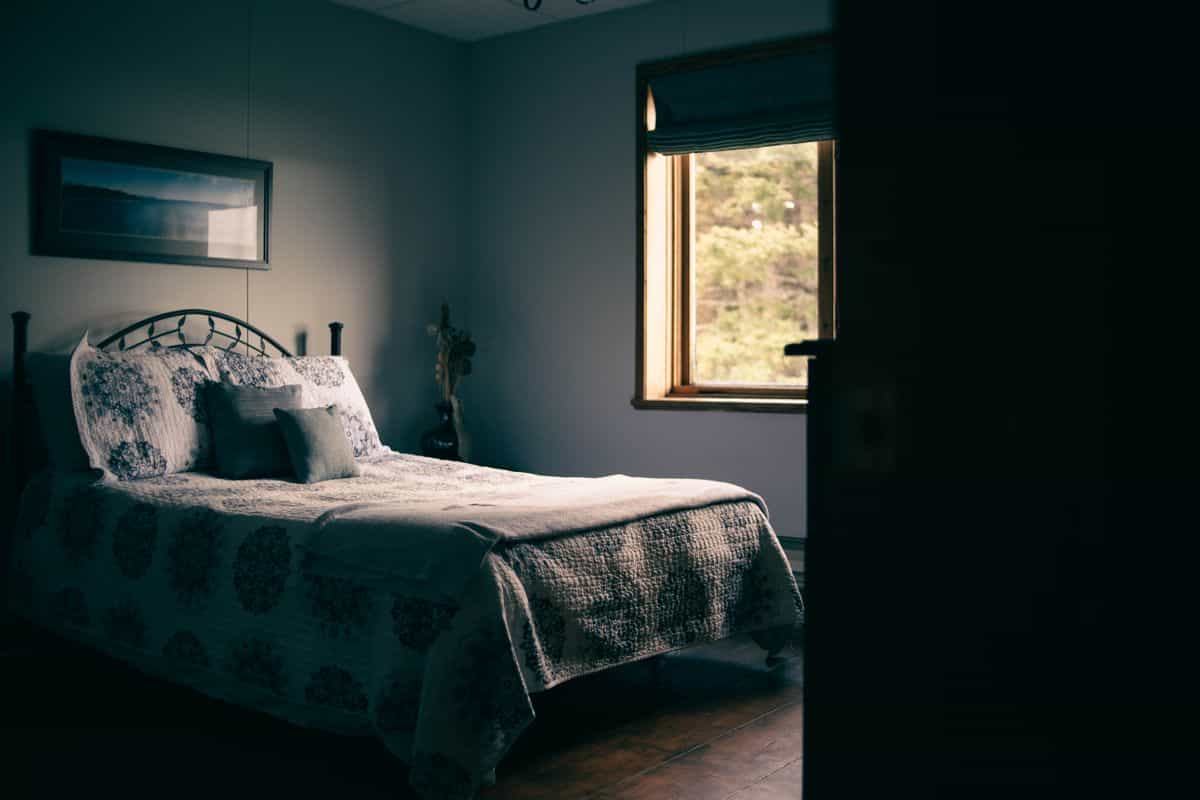
The feng shui bedroom rules come down to two lists. Do: put the bed in the commanding position against a solid wall, use a solid headboard, balance the room with a pair of nightstands and lamps, and keep the light warm and the colors soft. Avoid: a mirror facing the bed, electronics, clutter (especially under the bed), anything heavy overhead, and water features. Everything else is a refinement of those.
If you are setting up a bedroom and want the rules in plain terms — what to actually do, and what to avoid — here is the whole checklist, sorted the way you would actually use it.
| ✅ Do | ❌ Avoid |
|---|---|
| Bed in the commanding position | Mirror facing the bed |
| Solid headboard against a solid wall | Bed in line with, or back to, the door |
| Matching pair of nightstands and lamps | Clutter, especially under the bed |
| Warm, dimmable, layered lighting | TVs, laptops, phones, a desk |
| Soft, muted colors | Bed under a window, beam, or heavy fixture |
| Clear floor and walkways | Sharp corners and spiky plants aimed at the bed |
| A soft-leafed plant and natural textures | Water features, water imagery, and busy patterns |
One thing worth saying before the detail, because it makes the rules far more useful. They are not all the same kind of claim. Some — the commanding position, the solid headboard, decluttering — have clear psychological support and help whatever you believe. Others — compass directions, the five elements, the ban on water imagery — are cosmological principles you cannot measure. This guide covers all of it, and tells you honestly which is which. For the full room arrangement behind these rules, the complete feng shui bedroom layout guide walks through the whole floor plan step by step.
Where the Feng Shui Bedroom Rules Come From
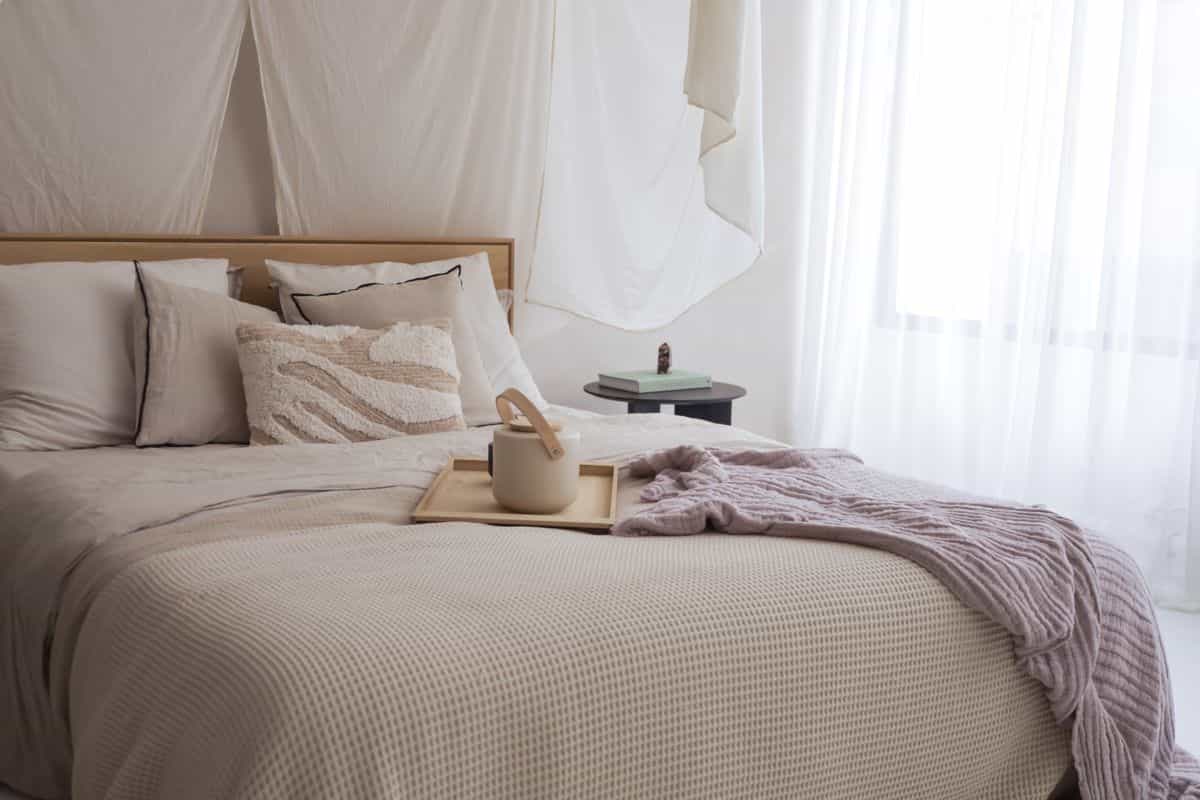
Every rule below comes from one idea, and the idea is worth understanding before the list — otherwise the rules look arbitrary.
Feng shui is the Chinese practice of arranging a space so that Qi, its life energy, moves and settles well. A bedroom, in this framework, is the most yin — passive, restful — room in the house. It is for sleep, recovery, and intimacy, so the goal is to calm energy down rather than activate it.
That single principle explains the entire checklist. Every "do" adds settling, protection, or balance. Every "don't" removes something stimulating, draining, or unsafe-feeling. Once you see that, you do not have to memorise twenty rules — you can ask of anything in the room: does this help me feel safe and let me wind down, or the opposite?
Two things are true at once, and both are worth stating plainly. Qi is a traditional concept with millennia of practice behind it; it is also not a measurable physical phenomenon like light or heat. The interesting part — and the reason bedroom feng shui rules have outlasted most decorating fashions — is how often the advice happens to line up with how humans actually rest.
The Commanding Position and a Solid Headboard
If you follow only one rule, follow this one. The commanding position is the core of every feng shui bedroom, and the rule with the strongest support outside the tradition.
Place the bed so you can see the door from it without being directly in line with it. Diagonally across from the doorway is ideal — you see who enters, but you are not in the path of anything coming straight through. The placement to avoid is the "coffin position": the bed squarely facing the door with your feet pointing straight out of it. Having the bed's back to the door is nearly as unsettling.
Here is why this is more than belief. A person who can see the entrance to a room without facing it head-on feels secure, and a brain that feels secure stops the low-level threat-monitoring that keeps you from settling. Feng shui arrived at this through Qi; psychology arrives at it through the nervous system; they point at the same bed. The best bed position for feng shui guide works through every wall-and-direction case in detail.
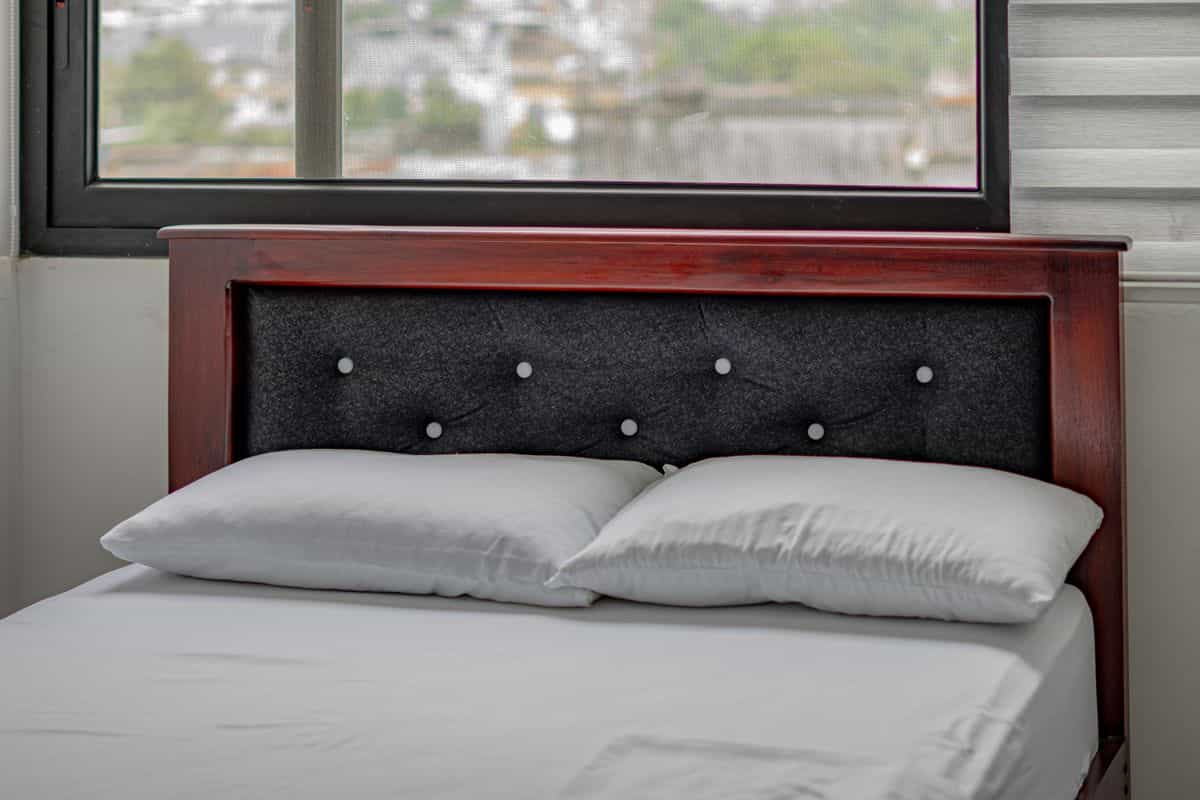
Then the bed needs backing: a solid headboard against a solid wall. Feng shui reads the headboard as a symbol of stability and support; the plainer reading is that a defined, protected boundary behind your head feels safer than an open gap or a slatted board you can see through. Choose a solid headboard with soft, rounded edges over sharp corners, and anchor it to a real wall — not under a window.
Pairs, Symmetry, and Soft Lighting
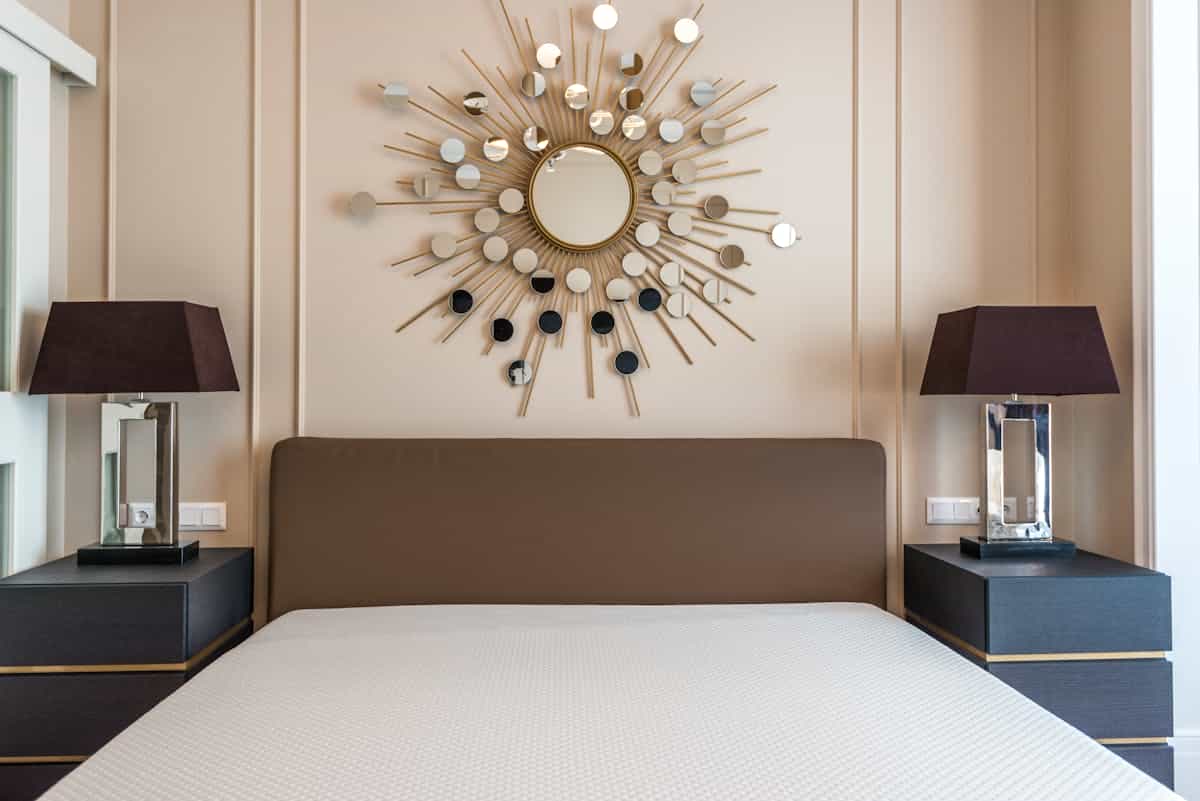
Feng shui loves pairs, and the bedroom is where it matters most: two matching nightstands, two lamps, balanced space on either side of the bed. The traditional reasoning is about relationship harmony — paired objects invite partnership, and a single nightstand quietly signals a single occupant. The simpler reason it works: the human eye reads symmetry as calm. A balanced arrangement gives the brain a stable, predictable composition, and stable compositions are restful. Outfit the room for two even if you sleep alone.
Lighting follows the same logic. A bedroom wants warm, layered, dimmable light — a lamp on each side beats one cold ceiling fixture, and a dimmer does more for a room's yin than almost any other change. Bright, overhead-only light pushes the room toward yang exactly when you want it to wind down.
Color belongs here too, and the rule is short: keep it soft and muted — gentle blues, greens, blush, and warm earth tones — and go easy on stark white and bold, saturated shades. (The full palette, including why pure white can read as too activating at night, is in the feng shui bedroom colors guide.)
Balancing the Five Elements
Several feng shui bedroom rules also draw on the five elements, which a balanced room is said to hold in gentle proportion. This is the part that is clearly tradition rather than measurable effect — useful as a checklist for variety, not as physics.
| Element | Brought in by | What it adds |
|---|---|---|
| Wood | Plants, wood furniture, greens | Growth, vitality |
| Fire | Candles, soft reds, warm light | Warmth, passion (sparingly) |
| Earth | Earth tones, ceramics, square shapes | Grounding, stability |
| Metal | White, grey, round metal objects | Clarity, calm |
| Water | Soft blues, dark tones, reflective glass | Rest, depth (sparingly) |
The practical reading is that a room drawing on several materials and tones — a little wood, some soft textile, a ceramic lamp, a touch of metal — simply feels layered and complete rather than flat.
What to Avoid: The Feng Shui Bedroom Don'ts
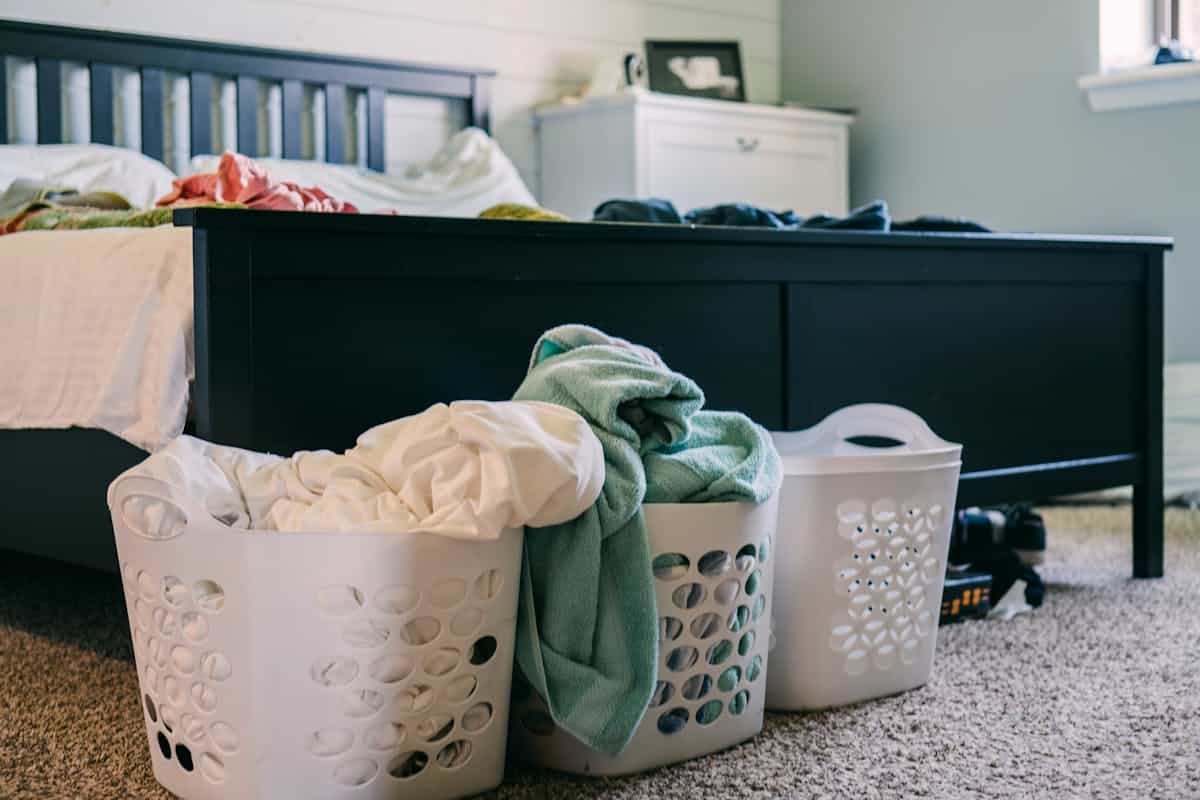
This is the half most people search for — what counts as bad feng shui in a bedroom. Here is the consolidated "avoid" list, with the honest reasoning for each:
- A mirror reflecting the bed. The most consistent rule across every school. The traditional explanation is that mirrors bounce and amplify energy and can startle the sleeping soul; the independent one is that a reflection half-seen in dim light keeps a half-asleep brain mildly alert. Keep mirrors on side walls or cover them at night — the feng shui mirror placement rules cover where reflective surfaces help and hurt.
- Clutter — especially under the bed. Feng shui holds that clutter traps stagnant energy and that the space under the bed should stay clear. The independent version is well established: a tidy, low-stimulus bedroom genuinely supports better sleep. If under-bed storage is unavoidable, limit it to soft items like spare linens — not paperwork or exercise gear.
- Anything heavy overhead. Avoid the bed directly under a ceiling beam, a sloped ceiling, a skylight, or a heavy light fixture. Feng shui calls this "oppressive" energy pressing down; the plainer truth is that sleeping under something visually heavy is subtly unsettling — and a poorly mounted fixture is a real hazard.
- The bed under a window or against a bathroom wall. A window puts glass rather than solid wall behind your head — less protection, more draft and light. A shared bathroom wall brings noise, plumbing, and damp behind you.
- Sharp corners aimed at the bed ("poison arrows") and spiky plants like cacti — both read as subtly aggressive in a room that should feel soft.
Electronics, Water Features, and Busy Patterns
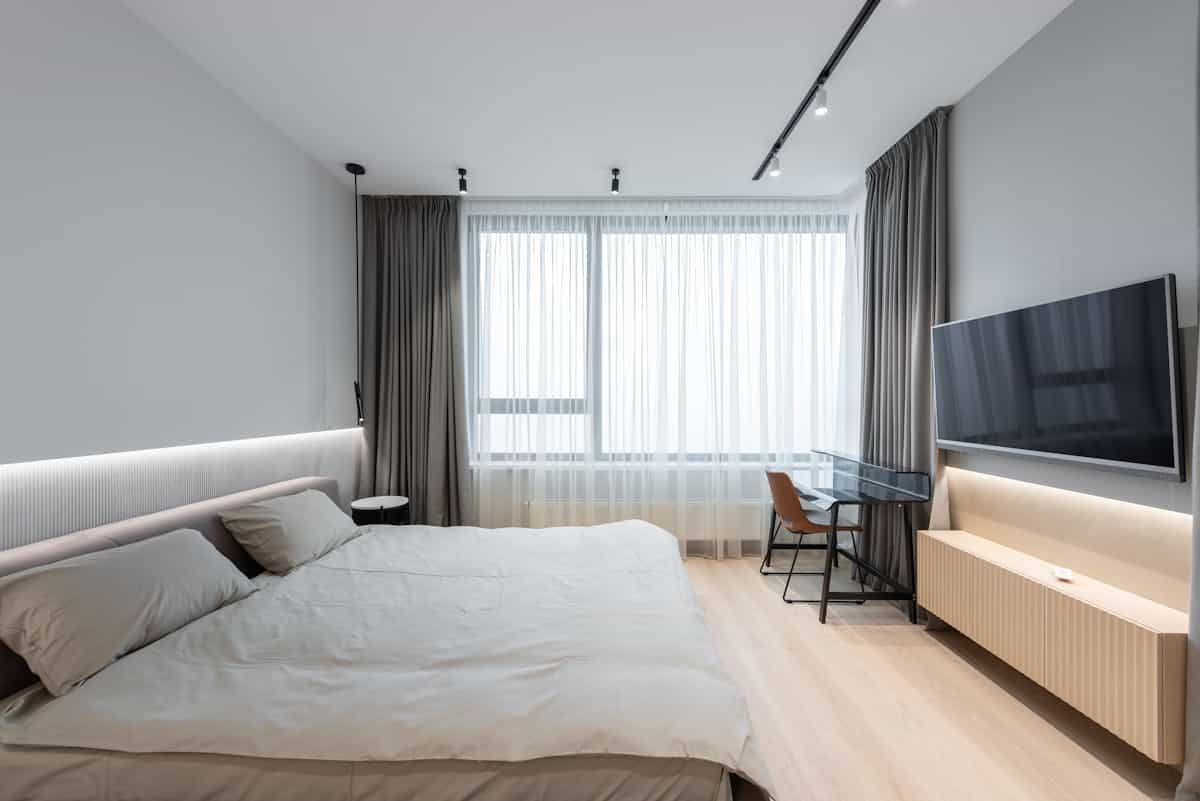
A few more "don'ts" round out the list, and these are where tradition and modern sleep advice agree most loudly.
Electronics and work materials. TVs, laptops, phones, and desks all import yang, stimulation, and the day's stress into a room meant for rest. This is also the rule with the firmest independent backing — the wider sleep environment research supports a dark, quiet, screen-free bedroom about as clearly as any sleep advice gets. One honest correction worth making: you will often read that the problem is the "electromagnetic radiation" devices emit. The evidence for EMF disrupting sleep at household levels is weak. The real culprits are the blue light, the notifications, and the mental pull of an unfinished day — which is more than enough reason to keep screens out. If one must stay, hide it in a cabinet or cover it at night.
Water features and water imagery. This one is pure tradition: feng shui treats a fountain, fish tank, or even a painting of water in the bedroom as a feng shui taboo, said to invite loss or instability. There is no measurable mechanism here — but if you follow feng shui as a coherent system, it is one of its firmer prohibitions, so it is worth knowing.
Busy patterns and high contrast. Even with calm colors, a loud, high-contrast pattern keeps the eye busy when it should be settling. Bedding and walls are where to choose quiet over loud.
Plants, Art, and the Senses
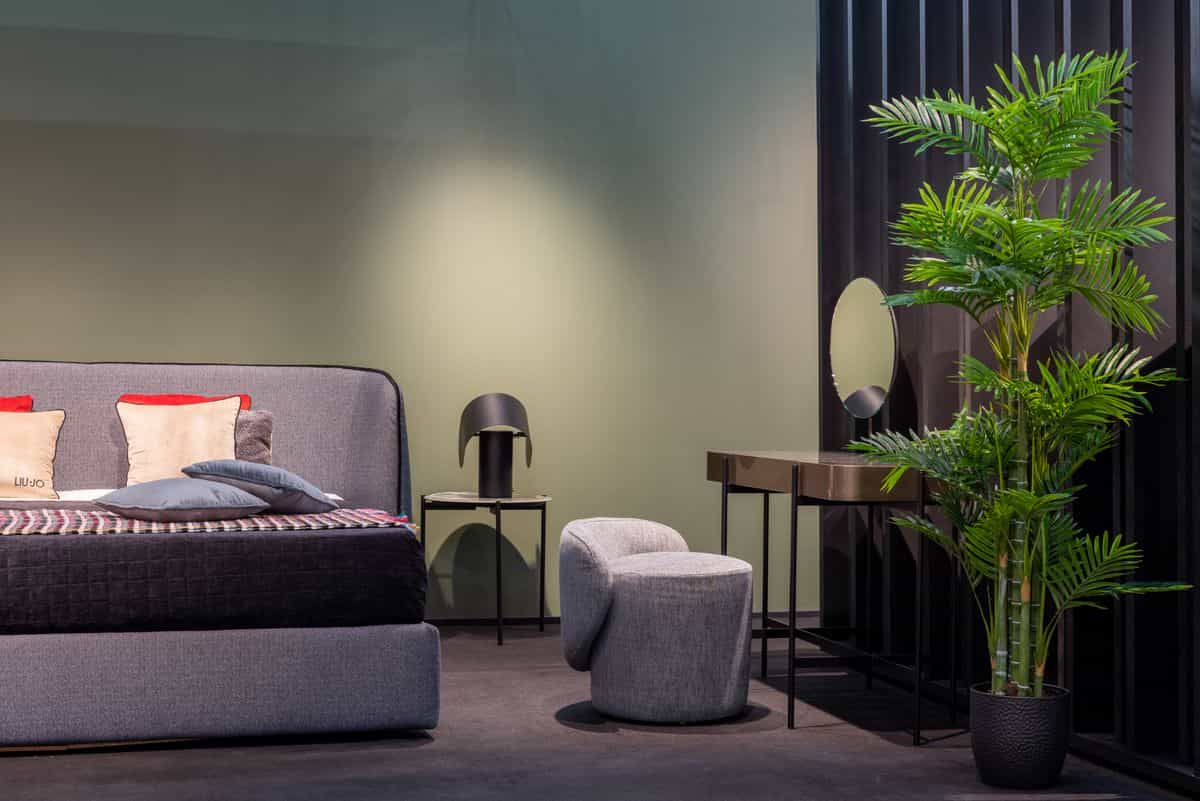
Not everything is a prohibition — a few additions actively help, as long as they stay gentle.
Plants, in moderation. One or two healthy, soft-leafed plants (peace lily, pothos, jade) bring living, growing energy. The cautions are real: avoid spiky plants, and avoid turning the room into a jungle, which over-activates a space meant to wind down. (The popular claim that a bedroom plant will "clean your air" overstates the evidence — the research it rests on was done in sealed chambers, not bedrooms. Keep the plant for calm and life, not as an air purifier.)
Art, chosen with care. Feng shui discourages heavy art directly above the bed and anything sad or aggressive in imagery; it favours calm, uplifting scenes placed where you see them on waking. The senses matter as much as the layout: soft textures underfoot, natural fabrics, and a calming scent like lavender are traditional cues that double as genuine, well-used sleep signals.
Which Rules Have Evidence, and Which Are Belief
This is the section most rules lists never write, and it is the most useful one. Sorting the rules honestly lets you follow the whole system, or just the parts that hold up, and know which is which.
Rules with independent support (worth doing regardless of belief):
- The commanding position and a solid headboard — security reduces the vigilance that blocks sleep.
- Decluttering, removing electronics, soft warm lighting — straightforward sleep hygiene.
- No mirror facing the bed — a half-seen reflection can keep you alert.
- Pairs and symmetry — the eye reads balance as calm.
Rules that are traditional belief (coherent, but not measurable):
- Compass-based bed directions and the bagua energy map.
- The five-element system as a metaphysical balance.
- The ban on water features and water imagery.
- Qi flow as an energy, as opposed to plain comfort and circulation.
Both columns can improve a room. The first improves your sleep through mechanisms we can name; the second arranges your space according to a tradition that takes rest seriously. Knowing the difference means you can follow the feng shui bedroom rules as a complete system, or keep only the half that holds up — and never move furniture for a reason you do not understand.
When You Can't Follow a Rule
Real bedrooms break the rules. The door, window, and closet often fight for the same wall, and the "perfect" placement may not exist. Feng shui has a triage order, and it is the right one.
- Protect the commanding position first — even a bed closer to one wall that can see the door beats a centred bed with its back to it.
- If the bed must go under a window, use a tall, solid headboard to break the line of the glass and heavy curtains at night.
- If a beam runs overhead, drape fabric to soften it or, ideally, shift the bed out from under it.
- If a mirror can't move, cover it at night with a cloth.
- Then fine-tune colors, elements, and the smaller cures — they matter least.
The first step does most of the work. Everything after is polish.
The One Thing to Carry Away
Strip the rules down and they answer a single question: what makes a person feel safe enough to fully let go at night? Put the bed where you can see the door, give it a solid wall at your back, clear the floor, balance the sides, and turn the lights low. Whether you call the result good Qi or good sleep design, the room does the same thing — it tells your nervous system it is safe to stop watching.
That is the part worth keeping, whichever rules you follow. The energy is debatable. The feeling of walking into a calm, ordered room and exhaling is not.
Mirror FAQ
What are the main feng shui rules for a bedroom?
The core feng shui bedroom rules are: put the bed in the commanding position (against a solid wall, able to see the door without being in line with it), use a solid headboard, balance the room with a pair of nightstands and lamps, keep the colors soft and the lighting warm, and leave clear space around the bed. On the avoid side: no mirror facing the bed, no electronics or work materials, no clutter (especially under the bed), nothing heavy overhead like a beam, and no water features. Almost every other rule is a refinement of those.
What is bad feng shui in a bedroom?
Bad feng shui in a bedroom is anything that keeps the room stimulating or unsettled when it should feel safe and restful. The classic culprits are a mirror reflecting the bed, the bed directly in line with the door (the "coffin position") or with its back to the door, clutter under and around the bed, TVs and phones, a bed under a window or a ceiling beam, sharp-cornered furniture aimed at the bed, spiky plants like cacti, and water features or water imagery. Most of these either over-activate the room or remove the sense of protection the bed needs.
Where should the bed be placed according to feng shui rules?
In the commanding position: against a solid wall, diagonally across from the door so you can see who enters without lying directly in line with the doorway. Avoid the bed facing straight out the door (feet first), the bed with its back to the door, the bed under a window, and the bed against a shared bathroom wall or under a ceiling beam. The goal is a bed that feels protected and lets you see the entrance — the rule with the most independent psychological support.
Is a mirror facing the bed really bad feng shui?
It is the most consistent "avoid" rule in feng shui. The traditional explanation is that a mirror bounces and amplifies energy and can startle the soul during sleep. There is also a plainer, independent reason to follow it: a reflection half-seen in dim light can keep a half-asleep brain mildly alert (the Troxler effect), and a mirror facing the bed can be genuinely disorienting if you wake at night. Either way, the fix is the same — move the mirror to a side wall or cover it at night.
Do feng shui bedroom rules actually work?
Some have clear independent support and some are traditional belief. The commanding position, a solid headboard, decluttering, removing electronics, soft lighting, and no bed-facing mirror all map onto real sleep psychology — they tend to help regardless of whether you accept the energy framework. Compass directions, the five-element system, the ban on water imagery, and Qi flow are cosmological principles you cannot measure. A feng shui bedroom usually feels calmer; how much of that is energy versus good sleep design is the honest open question.
What is the single most important feng shui rule for a bedroom?
The commanding bed position. If you do nothing else, place the bed against a solid wall where you can see the bedroom door without being directly in line with it. It is the rule every school of feng shui agrees on, and the one with the strongest support outside the tradition — a person who can see the entrance to a room without facing it head-on feels secure, and a brain that feels secure settles into sleep faster.