Feng Shui Bedroom Colors: Best Hues for Rest & Romance
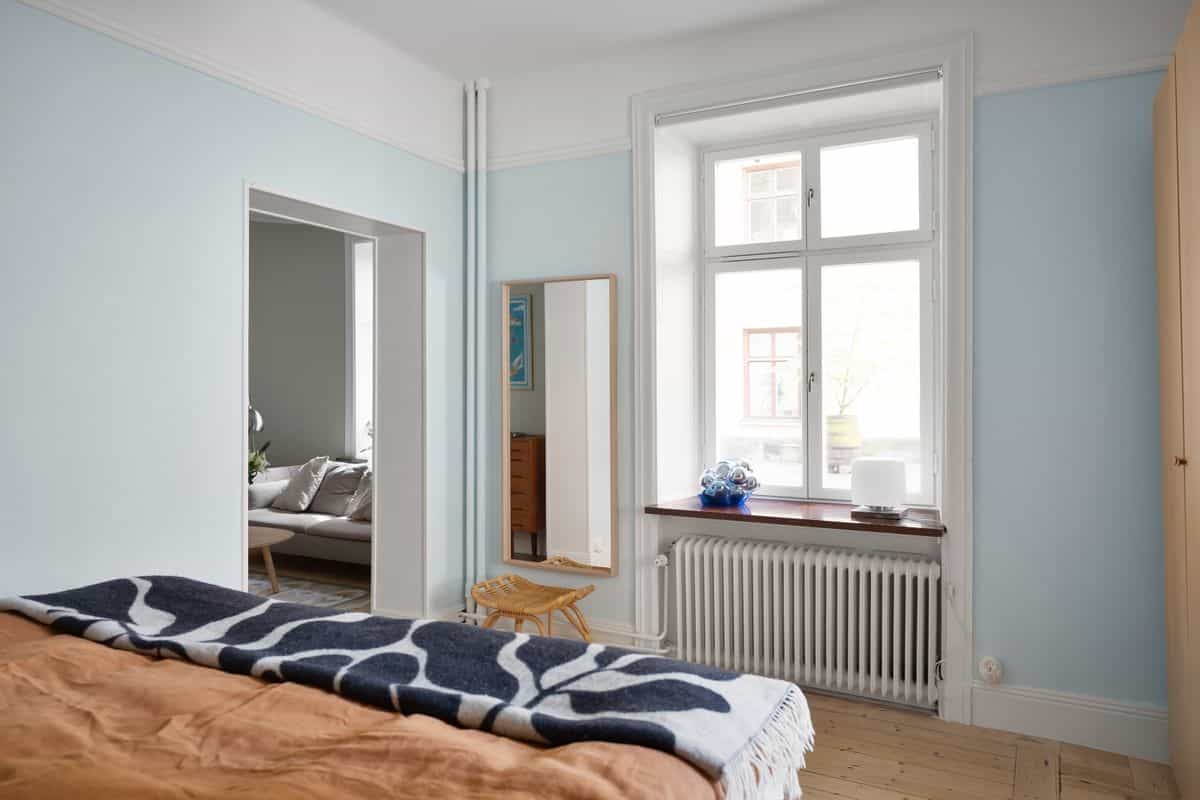
If you are trying to pick a bedroom color and feng shui keeps coming up, you want the same thing most people do: a short, trustworthy answer about which colors actually help you rest — and, often, which ones warm a room up for romance. Here is the direct version first.
The best feng shui bedroom colors are the soft, muted end of the spectrum: gentle blues and teals for calm, soft greens for renewal, warm earth tones for grounding, and blush or soft pink for romance. The bedroom is treated as the most yin — restful — room in the house, so the rule under every recommendation is the same: choose the quiet version of a color, and keep the loud, saturated versions out.
One thing worth saying before the list, because it makes the whole guide more useful. The color advice in feng shui is not all the same kind of claim. "Keep bedroom colors soft and low-contrast" lines up neatly with color psychology and sleep research. "Paint the east wall green because it governs the Wood element" is traditional cosmology you cannot measure. This guide covers the full system — and tells you honestly which part is which.
How Color Works in a Feng Shui Bedroom
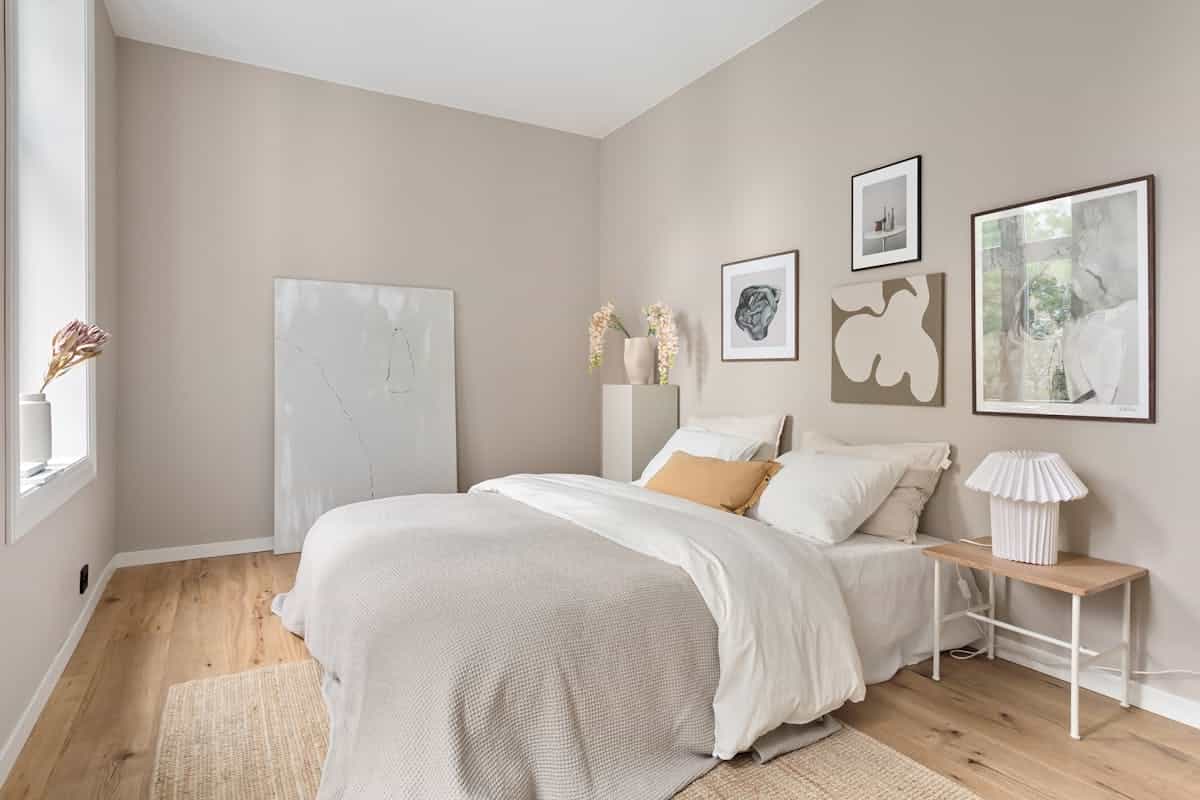
Feng shui is the Chinese practice of arranging a space so that Qi — its life energy — moves and settles well. Color is one of the main levers it uses, and the logic runs through two ideas.
The first is yin and yang. A bedroom is the most yin room you have: it is for rest, recovery, and intimacy, so its colors should calm energy down rather than fire it up. That single idea explains most of the palette — soft over bright, muted over saturated, warm over stark.
The second is the five elements — Wood, Fire, Earth, Metal, Water — each carrying its own colors and qualities. A balanced bedroom is said to hold them in gentle proportion rather than letting one dominate.
| Element | Colors | Quality it brings |
|---|---|---|
| Wood | Green, soft teal, brown | Growth, renewal, vitality |
| Fire | Red, orange, strong pink | Passion, warmth (use sparingly) |
| Earth | Beige, tan, terracotta, soft yellow | Grounding, stability, nourishment |
| Metal | White, grey, soft metallics | Clarity, calm, precision |
| Water | Blue, black, deep teal | Rest, depth, flow |
Two things are true at once here, and both are worth stating plainly. The element-color system is a coherent tradition with centuries behind it; it is also not a measurable physical mechanism. The interesting part — and the reason feng shui bedroom colors have outlasted most decorating fashions — is that the palette it lands on is, almost entirely, the palette a sleep scientist would also recommend.
Soft Blue: The Color for Deep Rest
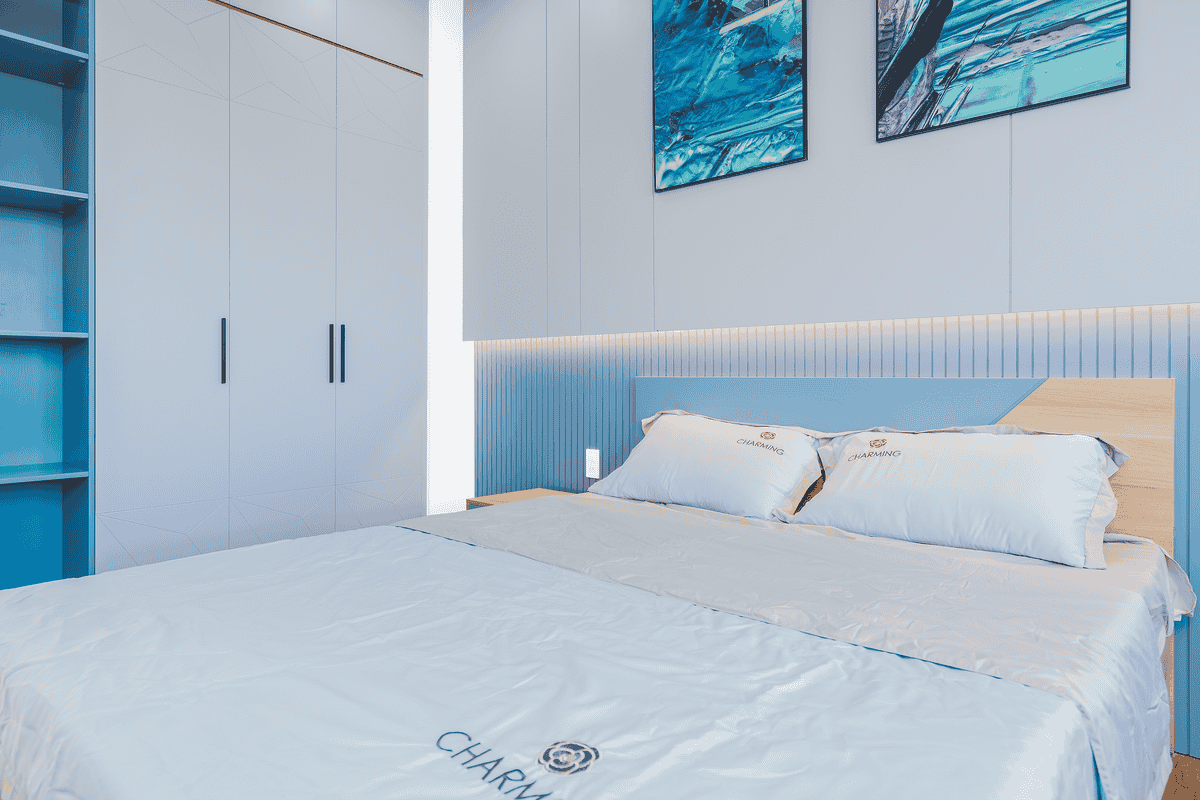
If you want one color and no debate, it is soft blue. It belongs to the Water element — calm, depth, and flow — and it is the single most consistent recommendation across every feng shui source, for one good reason: it works on people whether or not they believe in Qi.
This is where belief and evidence overlap most comfortably. Color psychology generally associates muted, cool tones with lower arousal — a slower, quieter internal state — which is exactly what you want at bedtime. Feng shui arrived at "blue for the bedroom" through the Water element; color research arrives at it through the nervous system; they point at the same wall.
The one caveat: keep it soft and warm-leaning. A pale, slightly greyed or hazy blue feels restful. A bright cobalt or an icy, clinical blue tips the room cold and stark — too much yang in disguise. If the swatch makes you think of a hospital corridor rather than a quiet evening, go softer.
Green: Growth, Renewal, and the Wood Element
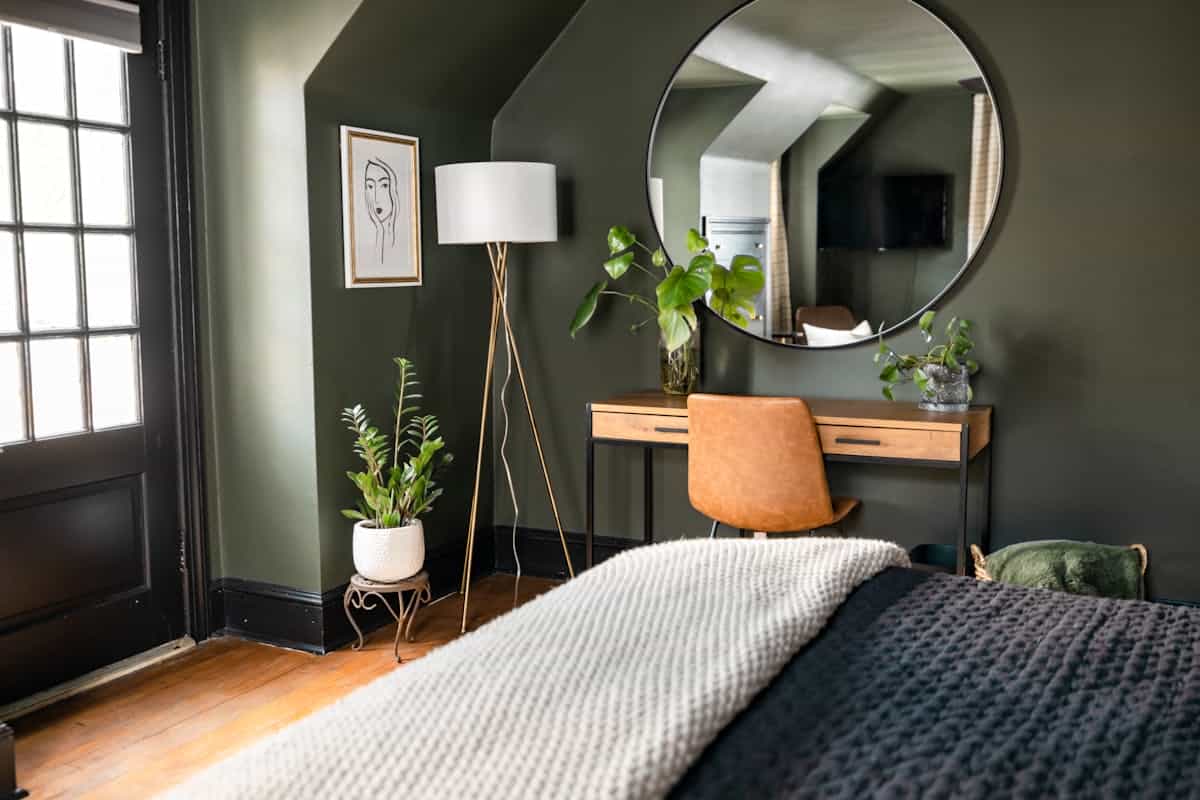
Green is the Wood element — growth, renewal, and vitality — and it is the color feng shui reaches for when a room feels stale or a sleeper feels stuck. Sage, eucalyptus, olive, and soft moss all sit in the restful range; they bring a little life into the room without the stimulation of a brighter hue.
Green has a practical advantage too. It is the easiest bedroom color to reinforce with actual plants, and feng shui treats a healthy, soft-leafed plant or two as a source of living, growing energy. Keep it to one or two — a jungle over-activates a room that is supposed to wind down — and avoid spiky plants like cacti, which read as subtly aggressive "poison arrows" in a space meant to feel soft.
The same warm-and-muted rule applies. A deep forest green can work as a grounding feature wall behind the bed; a bright lime or a glossy emerald across the whole room is too much energy for a bedroom.
Pink, Blush, and Peach: The Colors for Romance
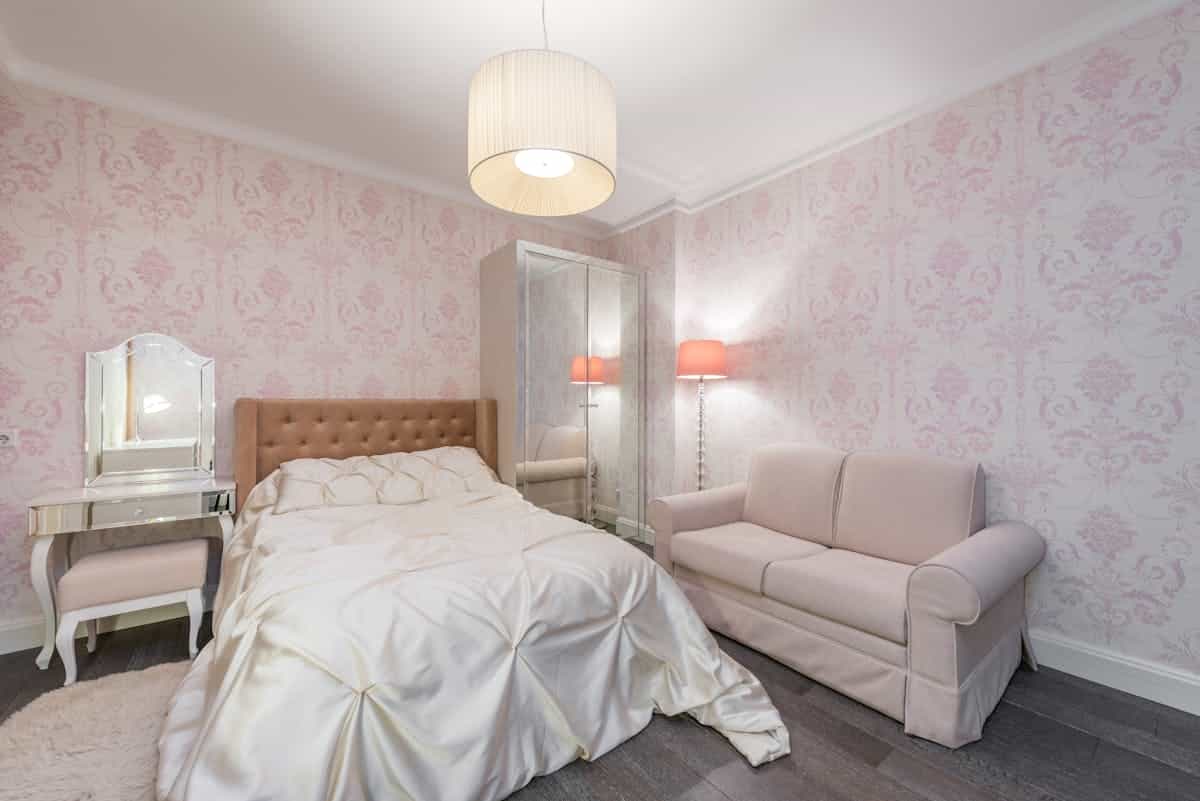
This is the half of the title most guides rush past. If the goal is warmth and partnership rather than just sleep, feng shui has a clear answer: blush, soft pink, and peach.
These sit in the gentle range between Earth and Fire — warm enough to feel tender and inviting, soft enough not to over-stimulate. In the bagua (the feng shui energy map of a room), pink is tied to the Kun area, which governs relationships and partnership, which is why it comes up so often for couples and for anyone hoping to invite a relationship in. The traditional reading is about receptivity and softness; the plainer reading is that warm, low-saturation pinks simply feel affectionate and calm at the same time.
A note for anyone who hears "pink" and pictures a child's room: you are not committing to it on the walls. A blush headboard, peach bedding, or a few warm-toned cushions carry the same intention without painting anything. And if you want a touch of passion, this is the place for a small dose of muted red or warm coral — in art or a throw, not across a wall.
Earth Tones and Neutrals: Grounding and Calm
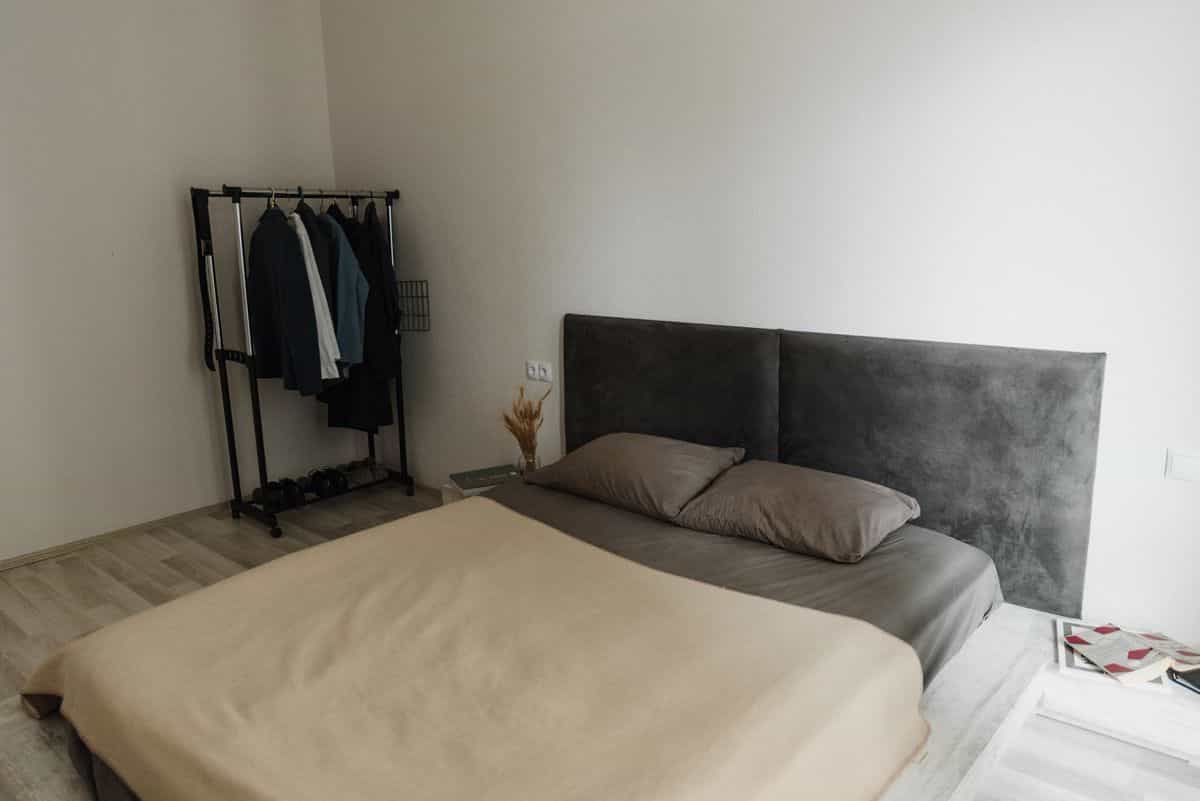
If a single color feels like a commitment, earth tones are the safe, deeply-on-brand feng shui choice. Beige, tan, taupe, sand, soft terracotta, and warm browns all belong to the Earth element — stability, nourishment, and grounding — which is precisely the quality a bedroom wants.
Earth tones are the workhorse of a feng shui bedroom palette because they ground the room without adding stimulation, and they let you bring color in through accents you can change cheaply — bedding, a rug, art. They also pair with everything: a beige room takes a blush cushion, a green plant, or a soft blue throw without a fight. For a deeper look at how color sits inside the wider arrangement of the room, the complete feng shui bedroom layout guide walks through how palette, bed placement, and symmetry stack together.
The only caution with neutrals is the same one designers give: a room of nothing but flat beige can feel lifeless. Layer warm and cool neutrals, add texture, and let one gentle accent color carry the personality.
White, Grey, and Soft Metal Tones
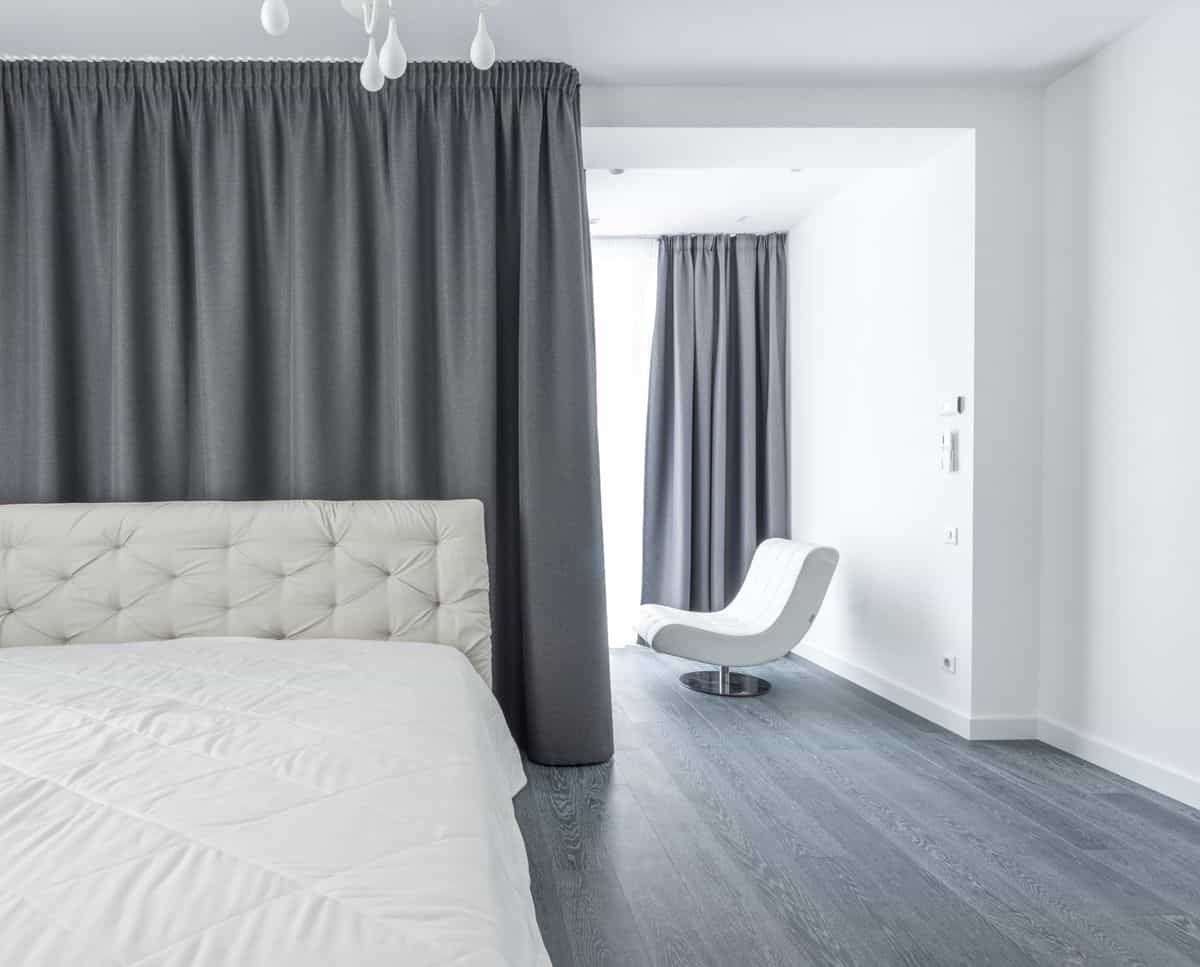
White, cream, and soft grey belong to the Metal element — clarity, calm, and a clean, precise quality. They are excellent supporting colors and make a room feel airy and uncluttered, which is itself good feng shui.
The honest caveat is that an all-white or all-grey bedroom can tip from "calm" to "cold." Pure, stark white reads more yang and clinical than restful, and a heavy, steely grey across every surface can flatten a room. The fix is warmth: choose a cream or a warm off-white over a blue-white, pick a grey with a soft, warm undertone, and ground it with wood, linen, or a single warmer color. Done that way, soft grey is genuinely restful — and a good answer to the common worry that grey is "bad feng shui." It is not; cold grey is.
The Colors to Use Sparingly
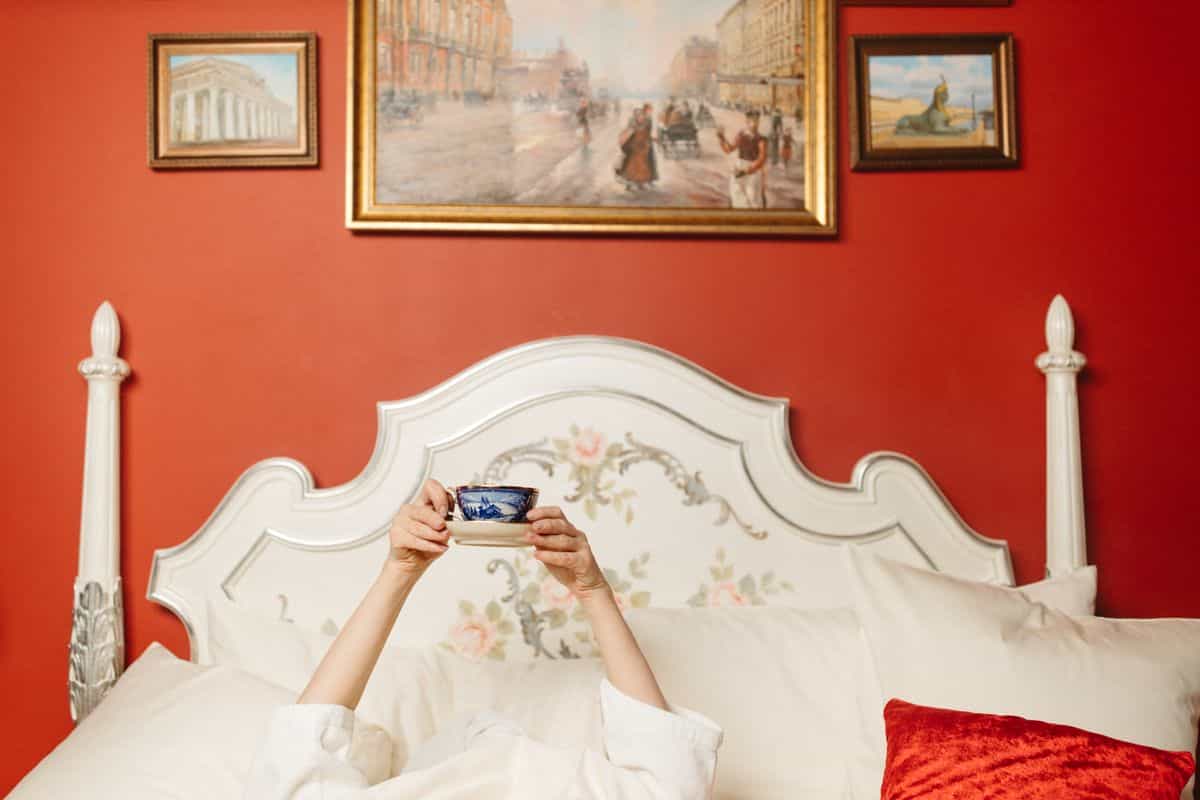
No color is forbidden in feng shui — but a few carry so much yang (active) energy that they fight the purpose of a bedroom when used across large surfaces.
- Bright red. The strongest Fire color — passion, intensity, alertness. Wonderful as a small accent for romance; exhausting as a wall color you are trying to fall asleep in front of.
- Vivid orange and intense yellow. Energising, sociable, and stimulating — better suited to kitchens and living rooms than a room meant to wind down.
- Large amounts of pure black. A Water color in small, grounding doses, but heavy and heavy-handed when it dominates, draining light and warmth from a space.
- Stark, high-contrast schemes. Even with "calm" colors, hard black-and-white contrast keeps the eye busy when it should be settling.
The feng shui move with all of these is the same: demote them from the main palette to small accents. A red cushion, a black picture frame, a sunny-yellow vase — fine, even lively. A bedroom painted in any of them works against the rest you are trying to build.
Matching Color to Direction (the Advanced Layer)
This is the part of feng shui that is most clearly tradition rather than measurable effect — and the part to treat as optional fine-tuning, not a master rule. In a more advanced practice, the bagua maps colors to the compass direction or area of the room:
| Direction / area | Element | Suggested colors |
|---|---|---|
| North | Water | Blue, black, deep teal |
| East & Southeast | Wood | Green, brown, soft teal |
| South | Fire | Soft red, pink, peach (gentle) |
| West & Northwest | Metal | White, grey, soft metallics |
| Southwest, Northeast, Centre | Earth | Beige, tan, terracotta, soft yellow |
If you find this system meaningful, use it to break a tie between two colors you already like. But when directional color advice collides with simply choosing a restful palette, choose rest — the calming-color principle is the part with independent support, and the compass layer is the part that is belief. The same logic applies to where the bed goes; the best bed position for feng shui guide handles that trade-off in detail.
How to Add Color Without Repainting
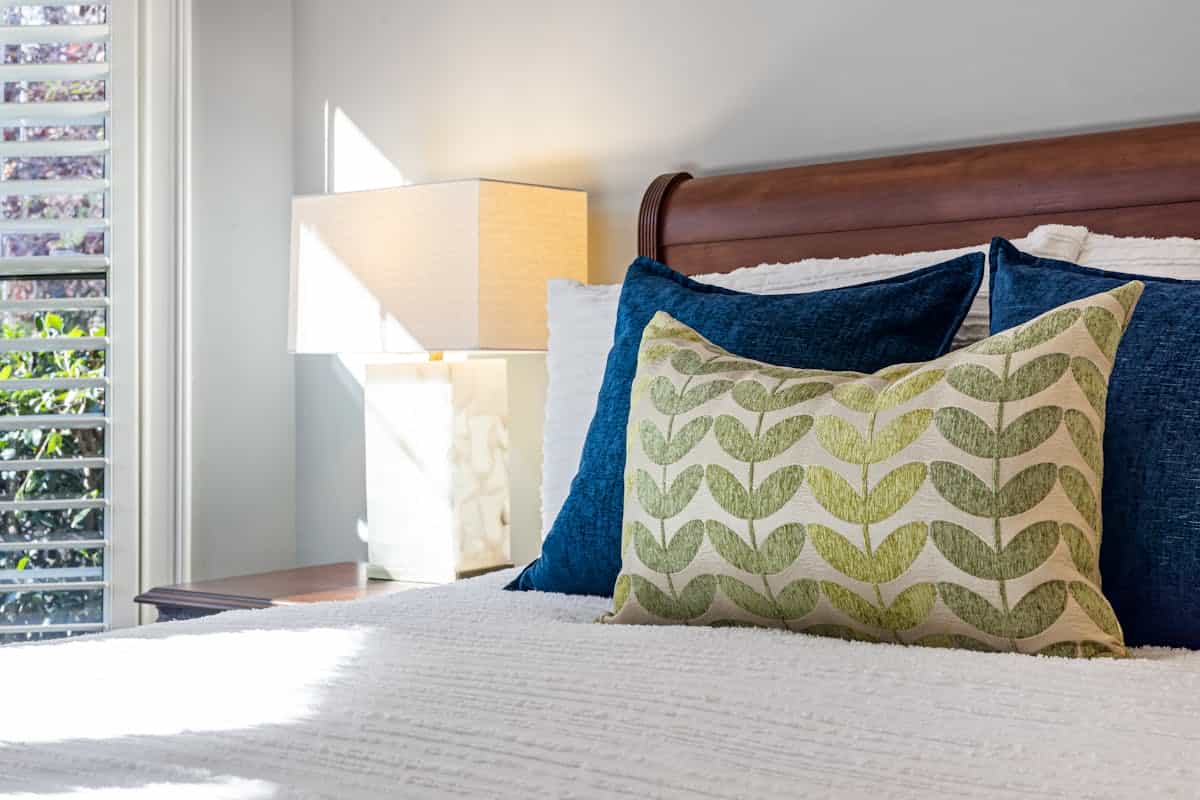
You do not have to repaint to work with feng shui color — and the tradition actively favors flexibility, because the energy you want in a room changes over time. The most practical way in is through what is easy to swap:
- Bedding and pillows carry the most color closest to where you rest — the highest-leverage change you can make in an afternoon.
- A rug grounds the room and is the easiest way to add an Earth or Water tone underfoot.
- Art and a throw let you place a small, deliberate dose of a stronger color — the safe home for that hint of romantic red.
- A lampshade or curtains shift the color of the light itself, which matters more for mood than most single objects.
There is one thing color cannot do, and it is worth being honest about: a perfect palette will not rescue a badly arranged room. Mirror placement, in particular, does more for a bedroom's feel than any paint chip — the feng shui mirror placement rules cover where reflective surfaces help and where they quietly work against rest.
Which Color Rules Hold Up, and Which Are Belief
This is the section most color guides never write, and it is the most useful one. Sorting the advice honestly lets you follow the whole system, or just the parts that hold up, and know which is which.
The part with independent support: the broad instruction to keep bedroom colors soft, muted, warm, and low-contrast. Color psychology associates calm, low-saturation tones with relaxation, and the wider sleep environment research backs a quiet, low-stimulation bedroom over a busy, high-energy one. Choose a gentle palette and you are helping your sleep whatever you believe.
The part that is tradition: the precise mapping of specific colors to compass directions, elements, and bagua areas. It is internally coherent and taken seriously by people who practise it — but it is cosmology, not a measured effect, and it is the layer to treat as optional.
Both can improve a room. The first improves your rest through mechanisms we can name; the second arranges your space according to a tradition that has taken rest seriously for a very long time. Knowing the difference means you are never following a color rule you do not understand.
Recommended Products
These are the easiest, lowest-commitment ways to bring feng shui bedroom colors into a room without repainting. (Links go to Amazon search results so you can compare current options.)
- Soft blue or sage linen duvet cover — the highest-leverage way to add a restful Water or Wood tone.
- Blush or peach throw pillows — warmth and romance without painting a wall.
- Warm-toned area rug — grounds the room in an Earth-element neutral.
- Easy-care snake plant or pothos — living green energy in a low-maintenance, soft-leafed form.
- Linen curtains in a soft neutral — shifts the color of the light itself.
- Warm 2700K dimmable LED bulbs — keeps even a cool palette feeling warm after dark.
The One Thing to Carry Away
Strip away the elements and the compass, and feng shui's color advice answers a simple question: what colors help a person stop, soften, and let go at the end of the day? The answer is the quiet end of every color — the blue dialled down, the green gone soft, the pink gone gentle, the neutral kept warm.
Whether you call the result balanced Qi or good sleep design, the room does the same thing. It lowers the volume. And a bedroom that lowers the volume is one you sleep better in — and, when the lights go warm and low, one you are happier to share.
Mirror FAQ
What are the best feng shui colors for a bedroom?
The best feng shui bedroom colors are the soft, muted, low-stimulation end of the spectrum: gentle blues and teals for calm, soft greens for renewal, warm earth tones (beige, tan, taupe, terracotta) for grounding, blush and soft pink for romance, and cream, white, or soft grey for clarity. Feng shui treats the bedroom as the most yin (restful) room in the house, so the rule of thumb is simple — choose the dialled-down version of any color, and let the bold, saturated versions stay out of the bedroom.
What is the best feng shui color for sleep?
Soft blue is the most consistent feng shui recommendation for sleep, and it is also the color with the most independent support. Blue is associated with the Water element — calm, depth, and rest — and color-psychology research generally links muted, cool tones with lower arousal. The key is keeping it pale and warm-leaning rather than a bright or icy blue, which can feel cold and stark. Soft green and warm earthy neutrals are close seconds.
What colors should you avoid in a feng shui bedroom?
Avoid using bold, saturated, high-energy colors across large surfaces — especially bright red, vivid orange, and intense yellow. These carry strong yang (active) energy and the Fire element, which over-stimulates a room meant for rest. Stark, high-contrast schemes and large amounts of pure black are also discouraged. None of these are forbidden — the feng shui approach is to use them only as small accents, not as the main wall or bedding color.
What feng shui color is best for love and romance?
Blush, soft pink, and peach are the classic feng shui colors for romance — they sit in the Earth and gentle Fire range and are associated with warmth, tenderness, and partnership, especially in the Kun (relationships) area of the bagua. Deep, muted reds and warm corals can add passion in small doses, such as in cushions or art, but feng shui keeps strong red out of the main palette so the room still calms you down at night.
Is grey good feng shui for a bedroom?
Yes, soft grey works well in a feng shui bedroom. It belongs to the Metal element — associated with clarity, calm, and precision — and a warm, muted grey reads as restful rather than cold. The caution is to avoid heavy, dark, or steely greys across every surface, which can make a room feel flat and lifeless. Pair grey with a warmer tone (wood, cream, blush) so the room stays grounded rather than chilly.
Do feng shui bedroom colors actually work?
Partly, and it depends on which claim you mean. The broad advice — keep bedroom colors soft, muted, and low-contrast — lines up well with color psychology and sleep research, which associate calm, cool, low-saturation tones with relaxation. That part tends to help whatever you believe. The precise system — mapping specific colors to compass directions and the five elements via the bagua — is traditional cosmology rather than a measured effect. A calming palette is worth choosing either way; the directional precision is belief.