Feng Shui Sleeping Direction: 4 Best Ways to Face for Rest

Feng shui sleeping direction is set by your personal Kua number: you should sleep with the crown of your head pointing toward one of your four favourable directions. As a broad rule, south and east are good for most people, and due north is the one to avoid. The personalised Kua answer is more precise, and worth the two minutes it takes to find.
If you are wondering which way your head should point when you sleep, feng shui has a clear answer — and it is more personal than most articles let on. This guide is about the compass: the directions, the Kua chart, and how to calculate yours. (For which wall the bed belongs against and the rest of the room, that is a placement question, covered separately below.)
One thing worth saying before the chart, because it decides how much weight to give the rule. Sleeping direction is the most cosmological part of feng shui — it rests on alignment with the Earth's energies, not on anything a sleep lab has measured. That does not make it worthless, but it does rank it below the placement rules that have real support. This guide gives you the full system and tells you honestly where it sits.
What "Feng Shui Sleeping Direction" Actually Means

First, a point of confusion worth clearing up. In feng shui, "sleeping direction" almost always means the direction the crown of your head points while you lie down — not the way your body faces or the way you walk into the room. Get your head pointing the right way and the rule is satisfied.
The idea sits inside feng shui's larger belief that a person rests and recovers best when aligned with the favourable flow of Qi for their own energy type. Each direction carries a quality, and each person has directions that support them and directions that drain them. The crown of the head is treated as the receiver — point it the right way, and you absorb supportive energy through the night.
That is the belief. Whether the Earth sorts your night out by compass bearing is exactly the kind of claim worth holding lightly — which the closing section does. For now, here is what the tradition actually prescribes.
The General Rule: South Good, North Avoided

If you want a quick answer without calculating anything, feng shui offers a general default — and it agrees, interestingly, with the older Indian tradition of Vastu shastra.
- South — widely considered the most broadly favourable head direction, associated with warmth, stability, and deep rest.
- East — linked to growth, health, and new beginnings; often recommended for the young or anyone recovering.
- West — neutral-to-good; associated with contentment and settling.
- North — the one to avoid for most people. Both feng shui and Vastu single out a due-north head position as draining, the body lying "against" the magnetic flow.
This default is a reasonable starting point. But feng shui's real answer is not one-size-fits-all — it depends on you.
Your Personal Best Direction: The Kua Number

Here is what most quick answers skip. In the Eight Mansions system, your birth year and gender give you a Kua number from 1 to 9, and that number sorts the eight directions into four favourable and four unfavourable for you specifically.
Everyone falls into one of two groups:
- East group — Kua 1, 3, 4, 9. Favourable directions: North, South, East, Southeast.
- West group — Kua 2, 5, 6, 7, 8. Favourable directions: West, Northwest, Southwest, Northeast.
Within your four good directions, the single best for restful, supportive sleep (the Sheng Chi, or "success," direction) depends on your exact number:
| Kua number | Group | Best head direction | All four favourable directions |
|---|---|---|---|
| 1 | East | Southeast | N, S, E, SE |
| 2 | West | Northeast | W, NW, SW, NE |
| 3 | East | South | N, S, E, SE |
| 4 | East | North | N, S, E, SE |
| 6 | West | West | W, NW, SW, NE |
| 7 | West | Northwest | W, NW, SW, NE |
| 8 | West | Southwest | W, NW, SW, NE |
| 9 | East | East | N, S, E, SE |
| 5 (M→2 / F→8) | West | NE (men) / SW (women) | W, NW, SW, NE |
Notice the implication: if you are West group, north is not your enemy — the general "avoid north" rule is overridden by your personal chart. That is the whole point of the Kua system.
How to Calculate Your Kua Number
It takes about a minute. Start by adding the last two digits of your birth year and reducing them to a single digit.
If you were born 1900–1999:
- Men: subtract that single digit from 10.
- Women: add 5 to it, then reduce to a single digit again.
If you were born 2000 or later:
- Men: subtract the digit from 9.
- Women: add 6, then reduce again.
Two rules to remember: a result of 5 becomes 2 for men and 8 for women; and if you were born before the solar new year (roughly February 4), use the previous year.
A worked example. A woman born in 1990: 9 + 0 = 9. She was born before 2000, so a woman adds 5: 9 + 5 = 14 → 1 + 4 = 5, which for a woman becomes Kua 8. She is West group, and her single best head direction is southwest. For how that direction then interacts with the rest of the room, the best bed position for feng shui guide carries it through.
When Direction Conflicts with the Commanding Position
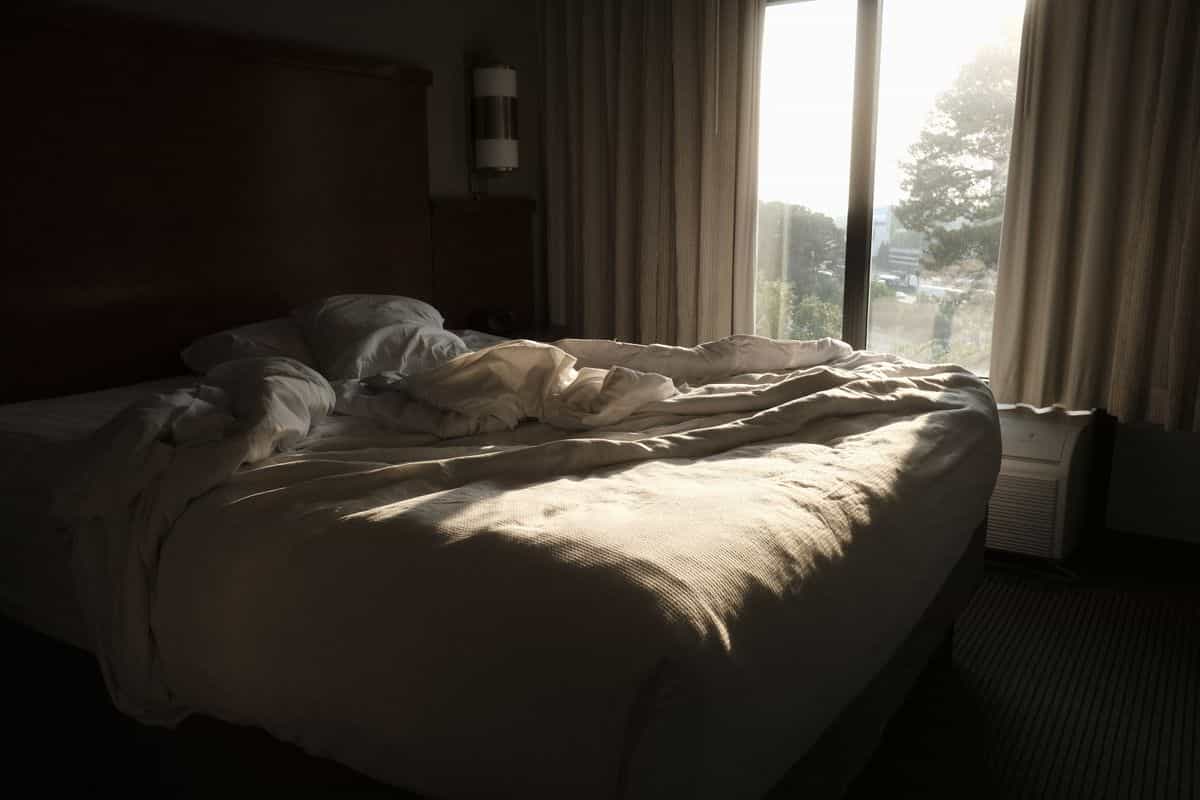
Here is the conflict almost everyone hits, and the answer that matters most in this whole article: your ideal Kua direction will often disagree with where the bed should actually go.
The commanding position — bed against a solid wall, able to see the door without being in line with it — is the rule with real psychological backing. The Kua direction is tradition. So when pointing your head toward your best direction would put the bed under a window, in line with the door (the "coffin position"), or floating away from a wall, the commanding position wins.
This is not a feng shui compromise so much as a feng shui priority order: a secure, well-placed bed pointing in a merely "okay" direction beats a perfectly oriented bed that feels exposed. Get the placement right first — the complete feng shui bedroom layout shows how the pieces stack — then choose the most favourable direction available within a good placement. Direction is the tiebreaker, not the master rule.
Couples, Cross-Traditions, and What the Evidence Says

Couples almost always have different Kua numbers, and sometimes different groups entirely. The standard compromise: orient the bed to one partner's favourable direction — often whoever sleeps worse — while making sure it is at least not in the other's worst category. Agreement and a good placement matter more than a perfect bearing for one person, which is why a step-by-step approach to the whole room tends to settle these arguments faster than the compass alone.
Across traditions, the pattern is consistent enough to be interesting. Feng shui and Vastu both prize south and east and both warn against due north. When two systems that developed separately land on the same advice, it is worth noticing — even if neither can prove it.
And the honest part. Does head direction measurably change your sleep? The research is thin and mixed. A small study has linked a north–south orientation to better sleep and lower blood pressure; other work found no effect from magnetic orientation at all. Sleep scientists are clear there is no definitive answer yet. The "Earth's magnetic field" explanation is belief, not established science.
So here is the reasonable position. Treat sleeping direction as a tradition worth honouring if it appeals to you, costs nothing, and helps you feel settled — and put your real effort into what demonstrably works: a dark, quiet, cool room and a bed that feels safe.
The One Thing to Carry Away
Feng shui sleeping direction is a precise, personal system wrapped around a claim no one has been able to measure — that the Earth itself favours your head pointing one way over another. You can follow it fully, follow the general south-is-good version, or skip it. None of those choices will make or break your sleep.
What will is the boring, well-evidenced part: a bed you feel safe in, a room that is dark and quiet, and a head — pointing whichever way the wall allows — that finally has nothing left to watch for.
Mirror FAQ
Which direction should your head face when sleeping in feng shui?
Feng shui ties the best head direction to your personal Kua number. As a general rule, pointing the crown of your head toward the south or east is considered favourable for most people, and pointing it due north is the one to avoid. For a personalised answer, calculate your Kua number from your birth year and gender: East-group numbers (1, 3, 4, 9) do best with the head toward north, south, east, or southeast, and West-group numbers (2, 5, 6, 7, 8) do best toward west, northwest, southwest, or northeast.
Is it bad to sleep with your head facing north in feng shui?
For many people, yes — feng shui generally discourages sleeping with the head pointing due north, and the idea also appears in Vastu, where north is the classic direction to avoid. The traditional reasoning involves the body's alignment with the Earth's magnetic field. The honest caveat: this is belief, not established science, and for West-group Kua numbers north is not actually a personal bad direction. If north is your only practical option, a solid headboard and good placement matter far more than the compass reading.
What is a Kua number and how do I find mine?
Your Kua (or Gua) number is a feng shui figure from 1 to 9, calculated from your birth year and gender, that sets your four favourable and four unfavourable directions. To find it: add the last two digits of your birth year and reduce to one digit. If you were born before 2000 — men subtract that digit from 10, women add 5 (reduce again if needed). Born 2000 or later — men subtract from 9, women add 6. A result of 5 becomes 2 for men and 8 for women. If you were born before early February, use the previous year.
Should your head point toward the door in feng shui?
No. Regardless of compass direction, feng shui never wants the bed in line with the door — with the head pointing out of it or the feet pointing straight at it (the "coffin position"). The bed should sit in the commanding position, against a solid wall where you can see the door without being aligned with it. When your ideal Kua direction would put the bed in line with the door or under a window, the commanding position wins — it has far more support than the compass rule.
Does sleeping direction actually affect sleep quality?
The evidence is limited and mixed. One small study linked a north-south sleeping orientation to better sleep and lower blood pressure; other research found no measurable effect from magnetic orientation. Sleep scientists are clear that there is no definitive answer yet. So treat feng shui sleeping direction as a meaningful tradition rather than a proven health intervention — and put your energy into the factors that demonstrably help sleep: darkness, quiet, a comfortable temperature, and a secure bed position.
What if my partner's best direction is different from mine?
This is common, since the Kua number depends on birth year and gender. The usual feng shui compromise is to orient the bed to the favourable direction of one partner — often whoever sleeps worse or wants support in a particular life area — while making sure the direction is at least not in the other partner's worst category. In practice, agree on a placement that keeps the bed in the commanding position with a solid headboard, then choose the most favourable shared direction within that constraint.