Feng Shui Living Room Colors for Harmony & Prosperity
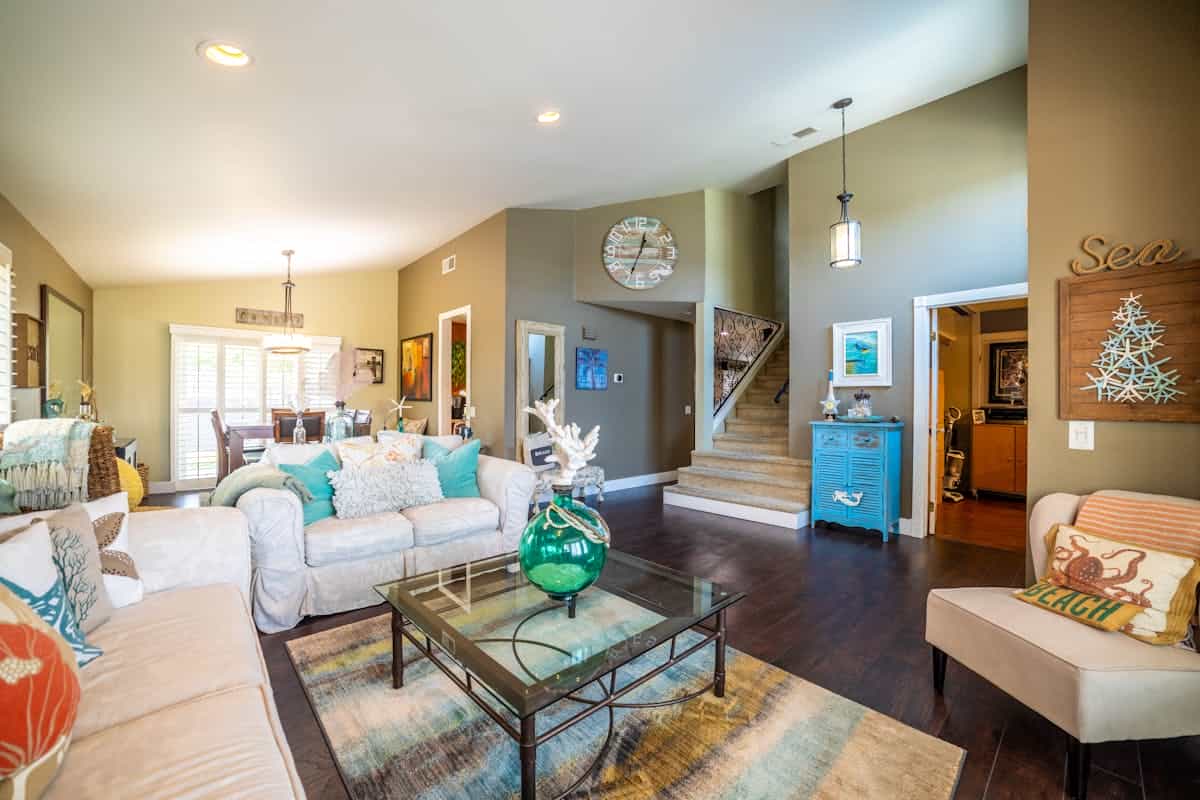
If you are choosing colors for your living room and want them to do two things at once — make the room feel harmonious and invite a little prosperity — feng shui has a clear framework. Here is the short version first.
The best feng shui living room colors are a grounded base of earth tones and neutrals, lifted by soft greens and blues for calm and warm hues for sociability — with green, purple, or gold concentrated in the wealth corner for prosperity. Because a living room is a social, active room, warm colors are welcome here in a way they are not in a bedroom.
One thing worth saying before the palette, because it tells you how literally to take it. The color advice in feng shui is two different kinds of claim. "A grounded base with warm accents makes a sociable room" lines up neatly with color psychology. "Put green in the southeast corner to activate wealth" is traditional cosmology you cannot measure. This guide covers the full system and tells you honestly which is which.
How Color Works in a Feng Shui Living Room
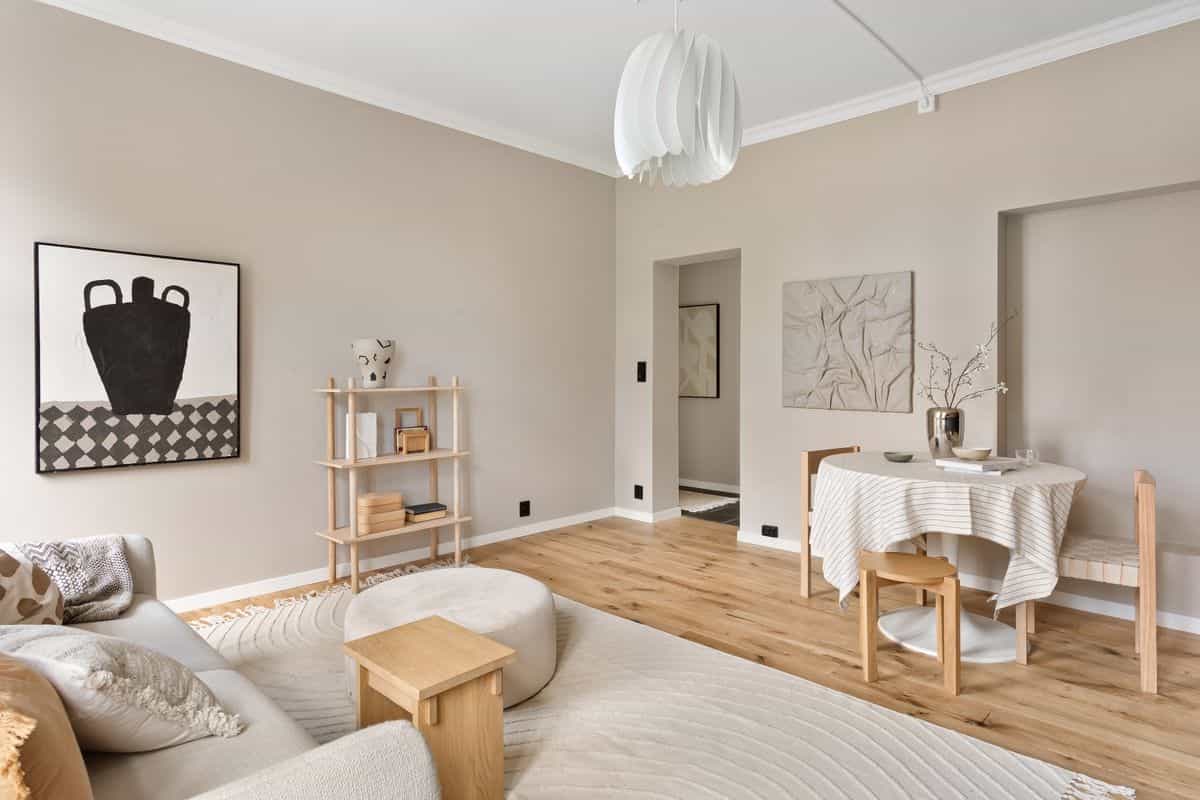
Feng shui arranges a space so that Qi — its life energy — moves and settles well, and it leans on two ideas for color. The first is yin and yang. Unlike a bedroom, which is the most yin (restful) room, the living room is meant to be moderately yang — sociable, lively, awake. So its palette can carry more warmth and energy than a bedroom's, as long as it stays balanced.
The second is the five elements — Wood, Fire, Earth, Metal, Water — each carrying its own colors and qualities. A balanced living room holds several in proportion rather than letting one dominate.
| Element | Colors | What it brings to a living room |
|---|---|---|
| Wood | Green, brown | Growth, vitality, renewal |
| Fire | Red, orange, purple | Warmth, sociability, recognition |
| Earth | Beige, tan, soft yellow, terracotta | Grounding, stability, togetherness |
| Metal | White, grey, metallics | Clarity, calm, order |
| Water | Blue, black, deep teal | Calm, depth, flow |
Two things are true at once. The element-color system is a coherent tradition; it is also not a measurable mechanism. The genuinely useful part — and the reason feng shui living room colors keep working — is that the palette it lands on, a grounded base warmed by sociable accents, is exactly what a color psychologist would recommend for a room built for gathering.
Earth Tones and Neutrals: The Harmonious Base
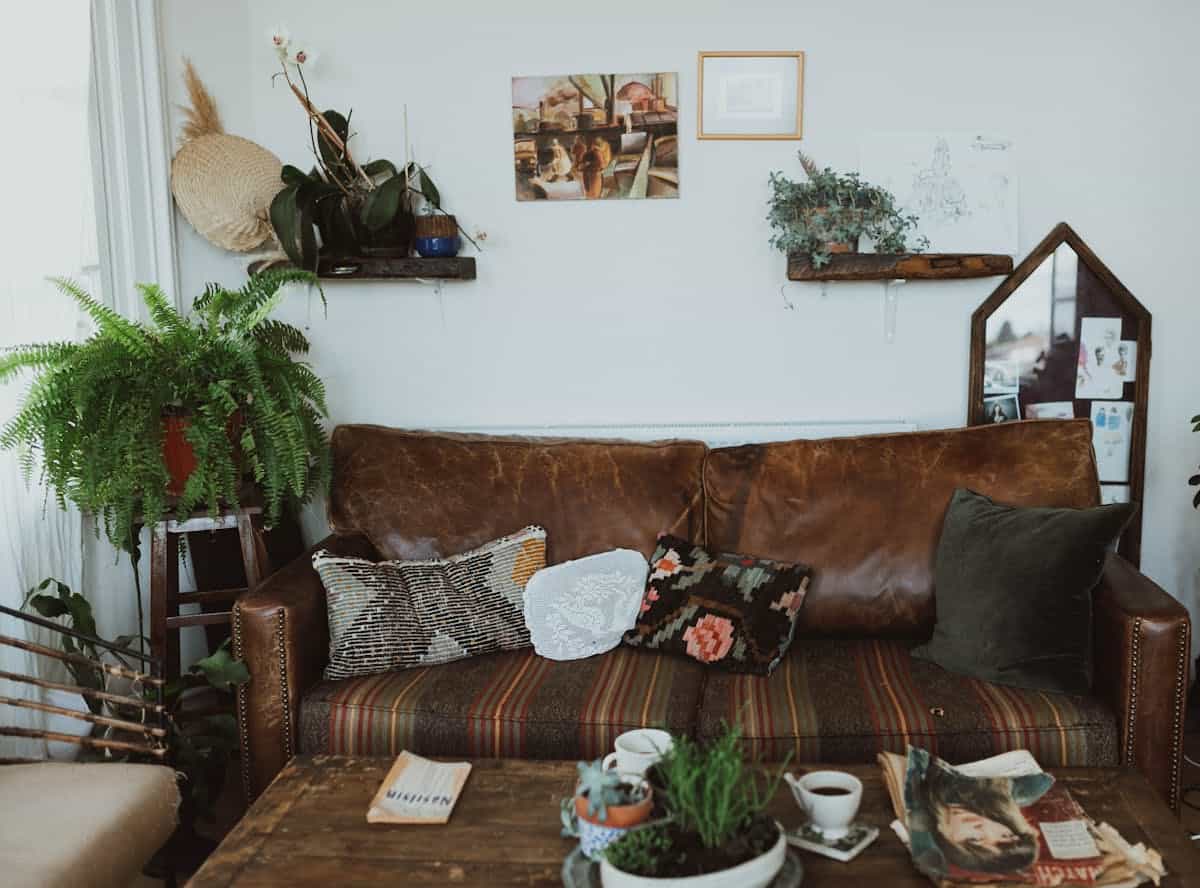
Start here, because the base color does most of the work. Earth tones — beige, tan, taupe, sand, soft terracotta, warm browns — belong to the Earth element, and they bring exactly what a living room's foundation needs: stability, nourishment, and a grounded calm that holds a room of people together.
Earth tones are the workhorse of a feng shui living room palette because they ground the space without shouting, and because they let you bring energy and prosperity in through accents you can change cheaply. A beige or warm-grey room takes a green plant, a terracotta cushion, or a gold lamp without a fight. The one caution is the designer's, not the mystic's: a room of nothing but flat beige can feel lifeless, so layer warm and cool neutrals and add texture. A grounded base is harmony; it is not the same as blandness.
Green and Wood: Growth and Renewal
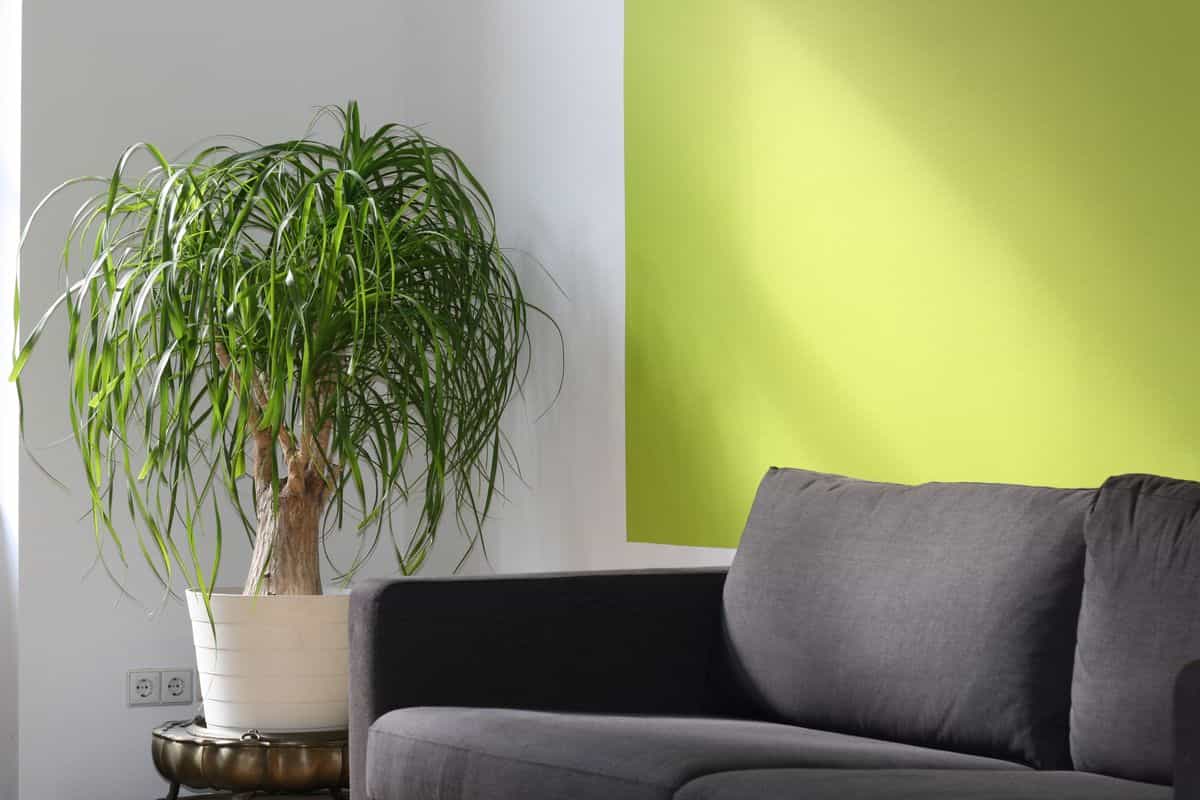
Green is the Wood element — growth, renewal, vitality — and it is one of the most useful living room colors because it bridges the room's two jobs. It is calming enough to support harmony and vital enough to feel alive, and it ties directly to prosperity through its link to growth and the wealth area.
Sage, olive, eucalyptus, and soft forest greens all work, on a feature wall, in upholstery, or simply through plants. Green has a practical edge here, too: it is the easiest color to reinforce with real foliage, and feng shui treats a healthy, soft-leafed plant as living Wood energy. Keep it lush rather than sprawling, and skip spiky species. (The familiar claim that houseplants "purify your air" overstates the research it rests on — the studies used sealed lab chambers, not living rooms — so keep the plant for life and calm, not as an air filter.)
Blue, Grey, and White: Calm and Clarity
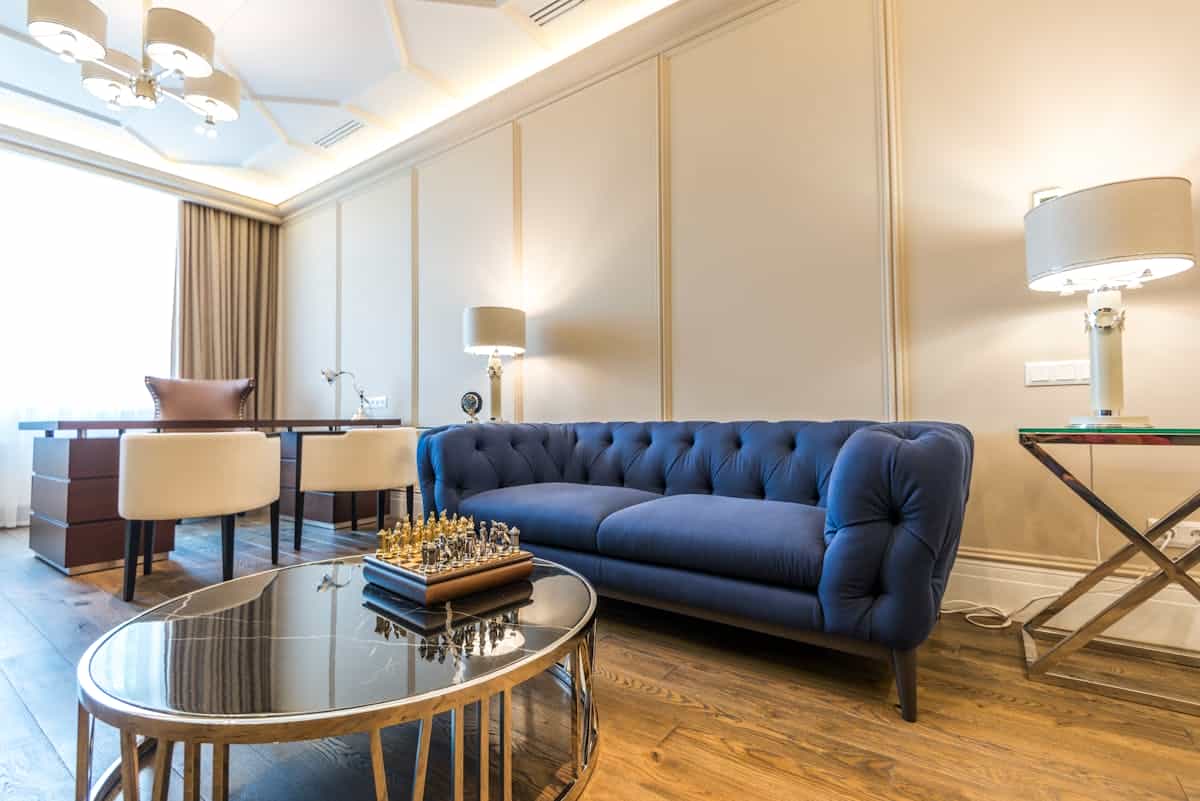
For a calmer, more serene living room, the cool end of the palette does the work. Blue (Water) brings depth, calm, and flow; grey and white (Metal) bring clarity, order, and a clean, airy quality. Together they suit a living room you want to feel restful and uncluttered rather than buzzy.
The refinements are the usual ones. Keep blues soft and warm-leaning rather than icy, so the room reads calm rather than cold. Choose a warm white or cream over a stark, clinical white, which can feel unwelcoming in a social space. And ground the cool tones with something warm — wood, a plant, an earth-tone rug — so the room feels held rather than chilly. A little of the cool palette balances a warm room; an entire room of it can tip toward sterile.
Warm Colors for a Social Room
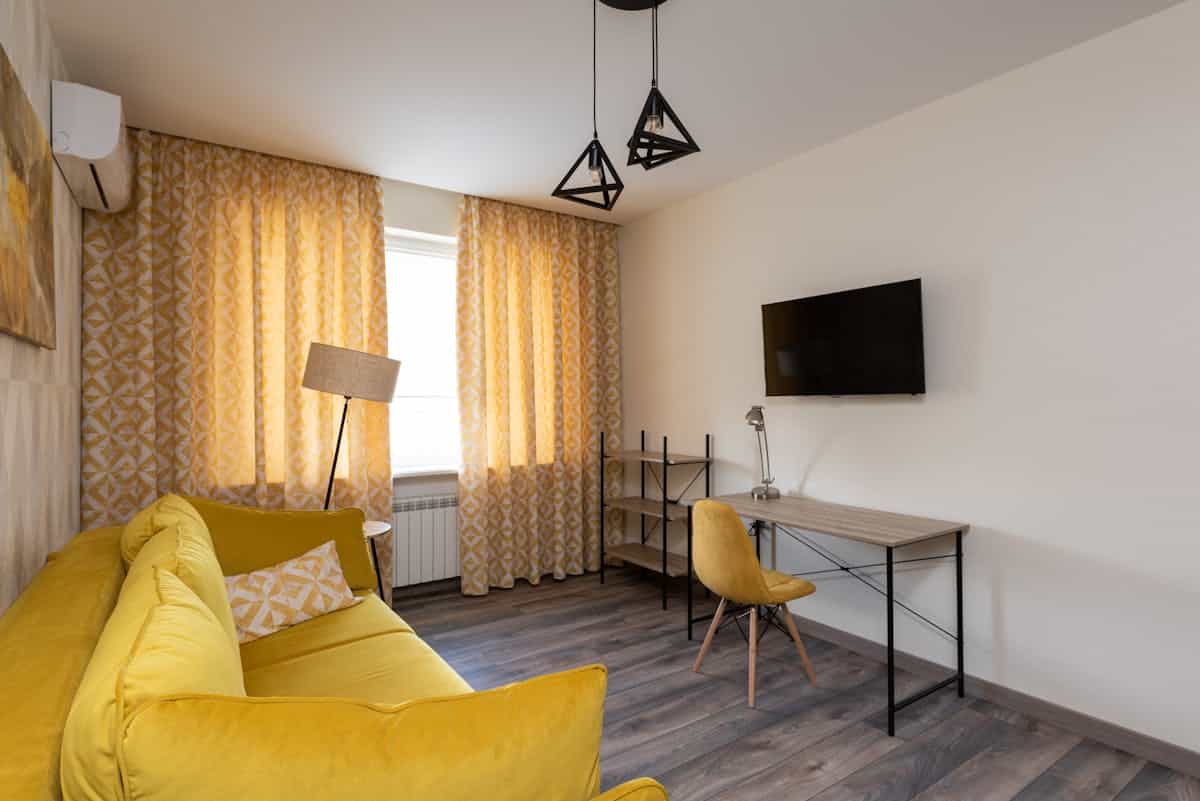
Here is where the living room departs from the bedroom — and where the feng shui bedroom colors advice flips. In a bedroom, warm, stimulating colors work against rest. In a living room, they are an asset, because this is a room for conversation and togetherness.
Soft yellow and ochre bring warmth and optimism. Terracotta and burnt orange create a grounded-but-lively, sociable feel — orange in particular is the classic "conversation" color. Gentle reds (the Fire element) add energy and, in Chinese culture, the most auspicious note of all. The key word is gentle: a warm ochre wall or a wall of terracotta is welcoming, but a whole room in saturated fire-engine red or bright orange over-activates the space and tips it from sociable to agitated. Use the warm hues generously as accents and selectively on walls — and let the boldest reds live in cushions, art, and throws.
Colors for Prosperity and the Wealth Corner
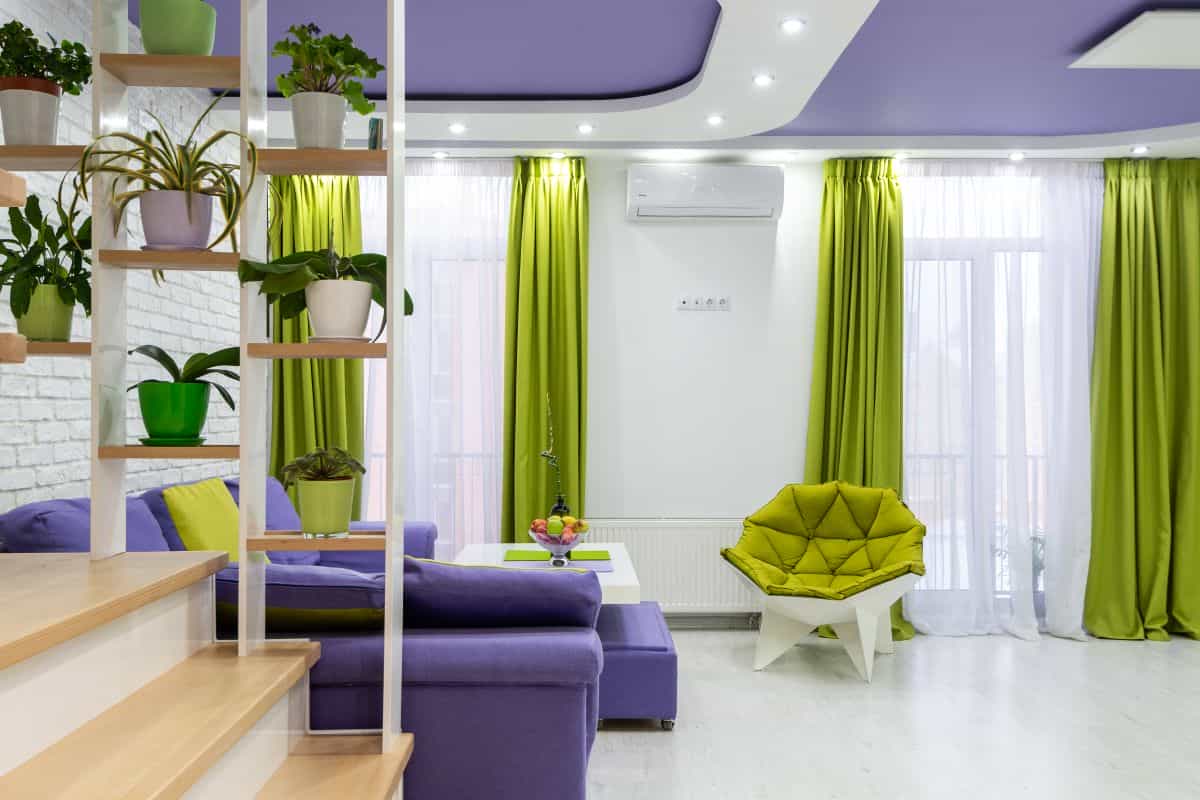
This is the half of the title most color guides skip. Feng shui ties prosperity to specific colors and a specific place: the wealth corner.
The prosperity colors are green and purple (both tied to the Wood element and growth), gold (abundance), and red (luck). The place to concentrate them is the wealth area — the southeast of the room in compass feng shui, or, in the simplified Western bagua map, the far left corner as you stand in the doorway looking in. Activate it with a healthy green plant, a touch of purple, a small water feature, or a gold accent.
Two honest caveats. First, this is the most clearly cosmological part of the system — there is no measurable mechanism by which a purple cushion in the southeast changes your finances. Second, even within feng shui the rule that matters most is mundane: keep that corner clean, lit, and clutter-free, because a neglected, junk-piled wealth corner is said to undermine the prosperity it represents. That part — tidy the corner you want to feel good about — needs no belief at all.
How to Use Color: The 60/30/10 Rule
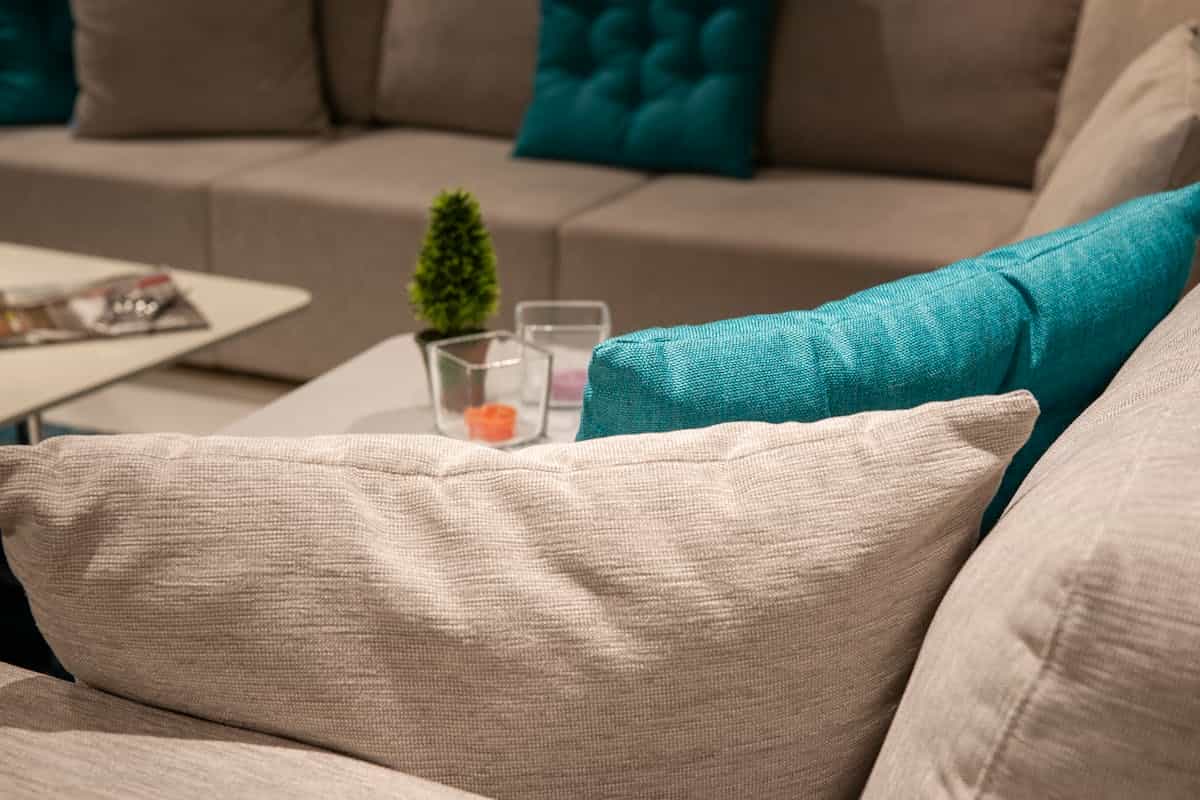
Knowing the colors is half of it; the proportions are the other half. The designer's 60/30/10 rule is the simplest way to keep a feng shui palette balanced:
- 60% dominant color — usually the walls and largest surfaces. This is where the grounded base lives: an earth tone, a soft neutral, a muted green.
- 30% secondary color — sofa, rug, curtains, larger furniture. A complementary tone that adds depth.
- 10% accent color — cushions, art, a lamp, the wealth-corner touch. This is where the bold or prosperous colors belong.
The beauty of this rule is that it solves the most common feng shui color mistake — overdoing a powerful color — without any mysticism. It also means you almost never need to repaint to shift a room: bedding, a rug, art, and cushions move the 30% and 10% long before the walls come into it. Activate an element or a prosperity color through the accent layer first.
Which Color Rules Actually Matter
This is the section most color guides never write, and the most useful. Sorting it honestly lets you follow the whole system or just the parts that hold up.
Worth doing regardless of belief: a calm, grounded base warmed by sociable accents, kept in balance by something like the 60/30/10 rule, and a tidy, well-lit room. Color psychology broadly links muted tones to calm and warm tones to sociability and warmth — so a grounded-but-warm living room genuinely tends to feel more harmonious and inviting, whatever you believe.
Traditional belief, not measurable: the precise mapping of colors to the five elements and compass directions, and the idea that a color in the wealth corner influences prosperity. Coherent within feng shui, harmless to follow, and often quietly beautiful — but cosmology, not mechanism. For how color sits alongside the rest of the room, the feng shui living room layout guide covers placement, and the sofa placement rules cover the room's biggest block of color.
Recommended Products
These are the easiest, lowest-commitment ways to bring feng shui living room colors into a room without repainting — most of them live in the 30% and 10% layers. (Links go to Amazon search results so you can compare current options.)
- Warm-toned area rug — grounds the room in an Earth-element base.
- Sage or terracotta throw pillows — the accent layer where Wood or warm Fire colors belong.
- Large floor plant (Wood element) — living green for calm and the wealth corner.
- Gold or brass accent décor — a prosperity touch for the wealth area.
- Linen curtains in a soft neutral — the 30% layer, and they shift the colour of the light.
- Abstract wall art with accent colors — to place a bold color deliberately.
The One Thing to Carry Away
A feng shui living room palette is really an answer to two questions at once: what makes a room feel calm enough to relax in, and alive enough to gather in? The answer is balance — a grounded, earthy base that settles everyone, lifted by just enough warmth and green to keep the room awake and inviting.
Whether you call the bright corner "activated wealth" or just a well-lit plant you keep tidy, the room does the same thing: it feels welcoming the moment you walk in. The cosmology is debatable. The difference between a room people linger in and one they leave is not.
Mirror FAQ
What are the best feng shui colors for a living room?
The most broadly favourable feng shui living room colors are grounding earth tones (beige, tan, taupe, soft yellow) for stability, soft greens (the Wood element) for growth and renewal, and gentle blues, greys, and white (Water and Metal) for calm and clarity. Because the living room is a social, active room, warm accent colors — soft red, terracotta, ochre — are welcome here in a way they would not be in a bedroom, since they encourage conversation. The rule of thumb: a calm, grounded base, lifted by a few warm or prosperous accents.
Which feng shui colors bring wealth and prosperity to a living room?
Green, purple, and gold are the classic prosperity colors, and red is the most auspicious color in Chinese culture for luck and abundance. In feng shui these are concentrated in the wealth area — the southeast of the room or, in the simplified Western bagua, the far left corner from the entrance. A healthy green plant, a touch of purple, or a gold accent in that corner is the traditional way to activate it. Keep prosperity colors as accents rather than whole walls so they energise without overwhelming.
What colors should you avoid in a feng shui living room?
No color is truly forbidden, but use the high-energy ones in moderation. Large expanses of bright, saturated red or orange can over-stimulate a room and tip it from sociable to agitated, and too much pure black can feel heavy and draining. Stark, high-contrast schemes and very cold, clinical whites can leave a living room feeling unwelcoming. The feng shui approach is balance: keep a calm, grounded base and let bold colors appear as accents — cushions, art, a single feature — rather than dominating.
What is the wealth corner in a living room and what color should it be?
The wealth corner is the area feng shui associates with prosperity and abundance. In traditional compass feng shui it is the southeast; in the simplified Western bagua, it is the far left corner as you stand in the doorway looking in. It is linked to the Wood element, so green and purple suit it, often boosted with a healthy plant, a small water feature, or a gold accent. Keep it clean, well-lit, and clutter-free — feng shui holds that a neglected wealth corner undermines the very prosperity it is meant to support.
What feng shui colors encourage conversation and harmony?
Warm, earthy colors do the social work in a living room: soft yellow, ochre, terracotta, and gentle reds and oranges are associated with warmth, togetherness, and good conversation, while earth tones and neutrals give the grounded, harmonious base that keeps the warmth from becoming agitation. Soft green adds a calming, balancing note. The harmony comes from the balance itself — a grounded palette with enough warmth to feel alive, neither cold and sterile nor loud and overstimulating.
Do feng shui living room colors actually work?
Partly, depending on the claim. The broad advice — a calm, grounded base with warm accents for a social room — lines up well with color psychology, which links muted tones to calm and warm tones to sociability and appetite. That part tends to help whatever you believe. The precise system — assigning colors to compass directions, the five elements, and a wealth corner — is traditional cosmology rather than a measured effect. A well-coloured living room usually feels more harmonious and inviting; much of that is sound color design.