Feng Shui Sofa Placement: Rules for Good Energy Flow
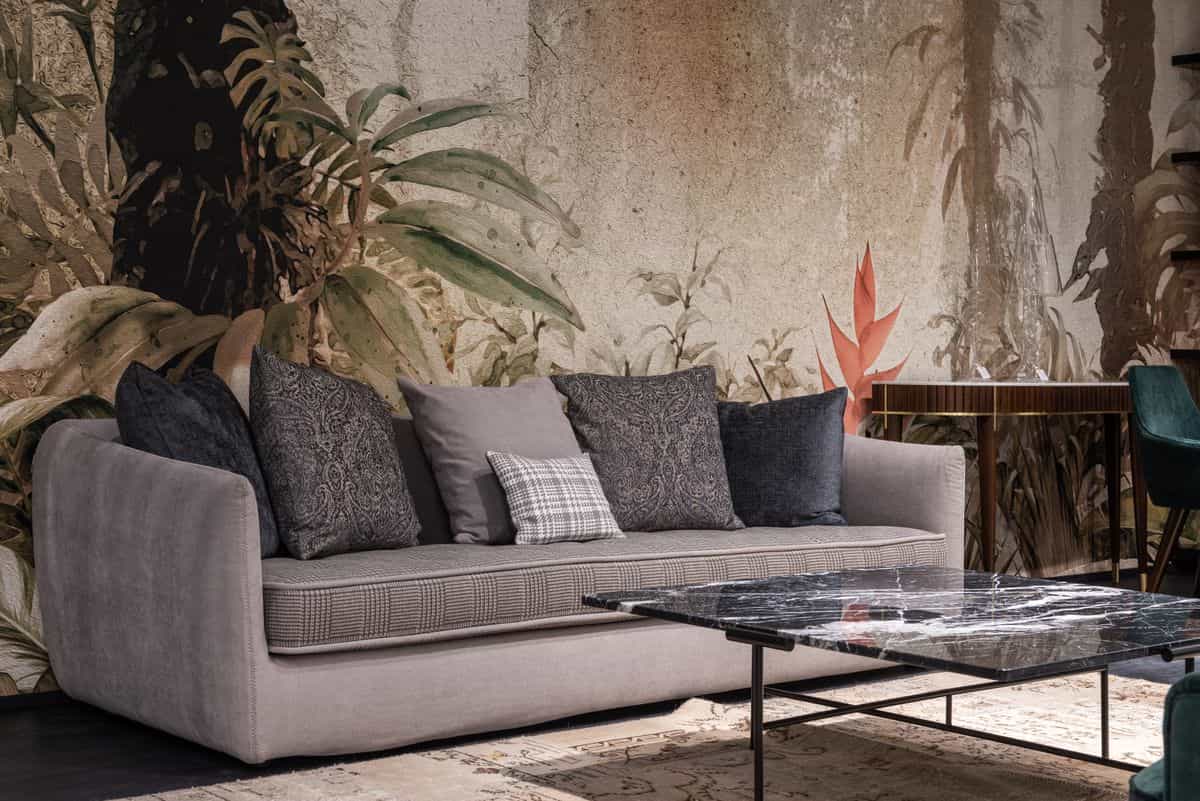
If you are trying to work out where your couch should go, feng shui has a surprisingly specific answer — and it starts with one rule that matters more than all the others. Here is the short version first.
For good feng shui, put the sofa against a solid wall, in the command position — where the people on it can see the door without being directly in line with it. Never float it with its back to the entrance, keep it out from under windows and beams, and arrange the seating into a balanced, U-shaped gathering. The wall behind the sofa does most of the work.
One thing worth saying before the rules, because it tells you which to take literally. The rules are not all the same kind of claim. Some — the wall behind the sofa, the command position, clear pathways — have real psychological support and help whatever you believe. Others — Qi rushing through the "mouth of Qi," element colours, beam oppression — are traditional belief you cannot measure. This guide gives you every rule and tells you honestly which is which.
Rule 1: Put a Solid Wall Behind the Sofa
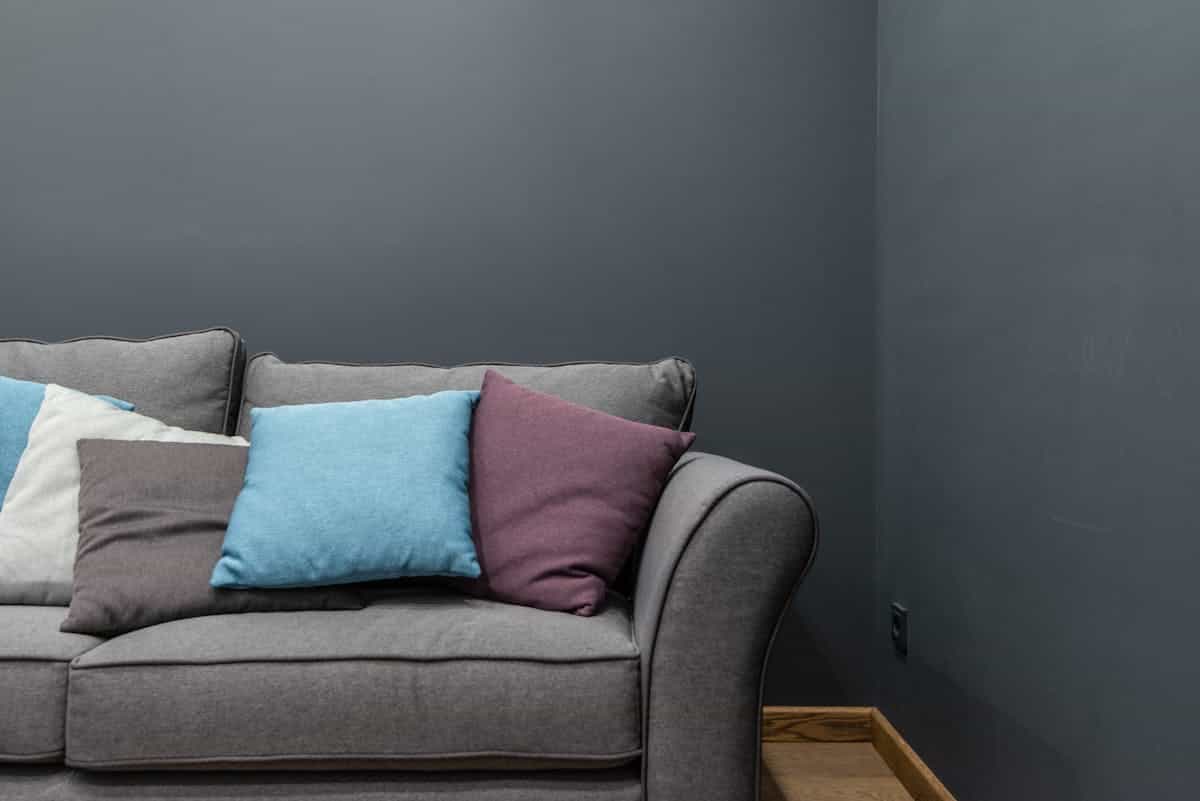
If you follow only one rule, follow this one. The sofa wants a solid wall behind it — what feng shui calls a "backing mountain," the same support a headboard gives a bed.
The reasoning works on both levels. Feng shui says a wall at your back gives stability and protection in life. The plainer version is just as real: a person sitting with a solid wall behind them, rather than open space, feels subtly safer and more settled, because nothing can approach unseen from behind. That security is the whole point of the main seat in a room. A bare wall is ideal; a wall with art or a low shelf is fine. What you want to avoid is a sofa backing onto open space, a window, or a walkway — the subject of Rule 3.
Rule 2: Set It in the Command Position
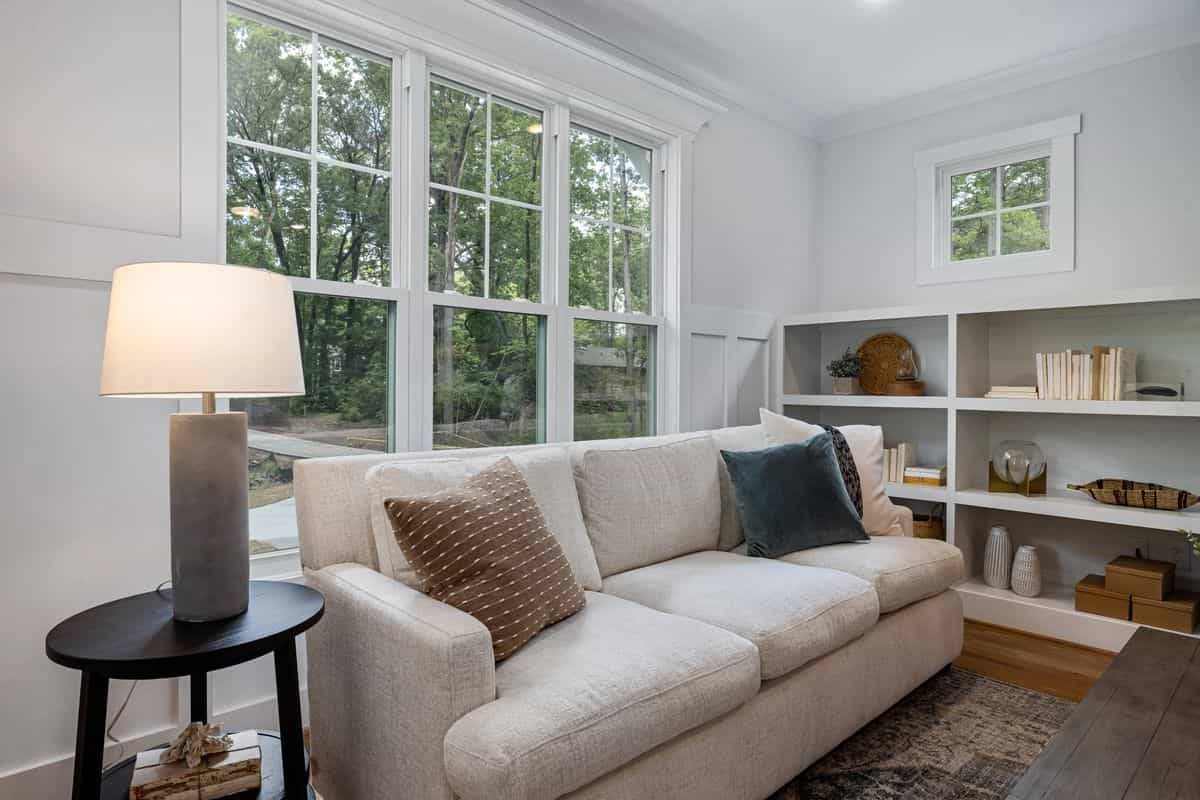
A wall at the back is half of it; the other half is what the sofa can see. The command position means placing the couch so the people on it can see the main doorway without being directly in line with it.
Feng shui treats the front door as the "mouth of Qi," where energy rushes in. A sofa squarely facing the door sits in that rushing stream — a "direct clash." But a sofa that cannot see the door at all leaves you startled by whoever enters. The sweet spot is diagonal: across the room from the entrance, angled so you take in the door without facing down its barrel. This is the same instinct behind the commanding position for a bed — see the entrance, from a position of safety, and the body relaxes.
Rule 3: Never Float the Sofa with Its Back to the Door
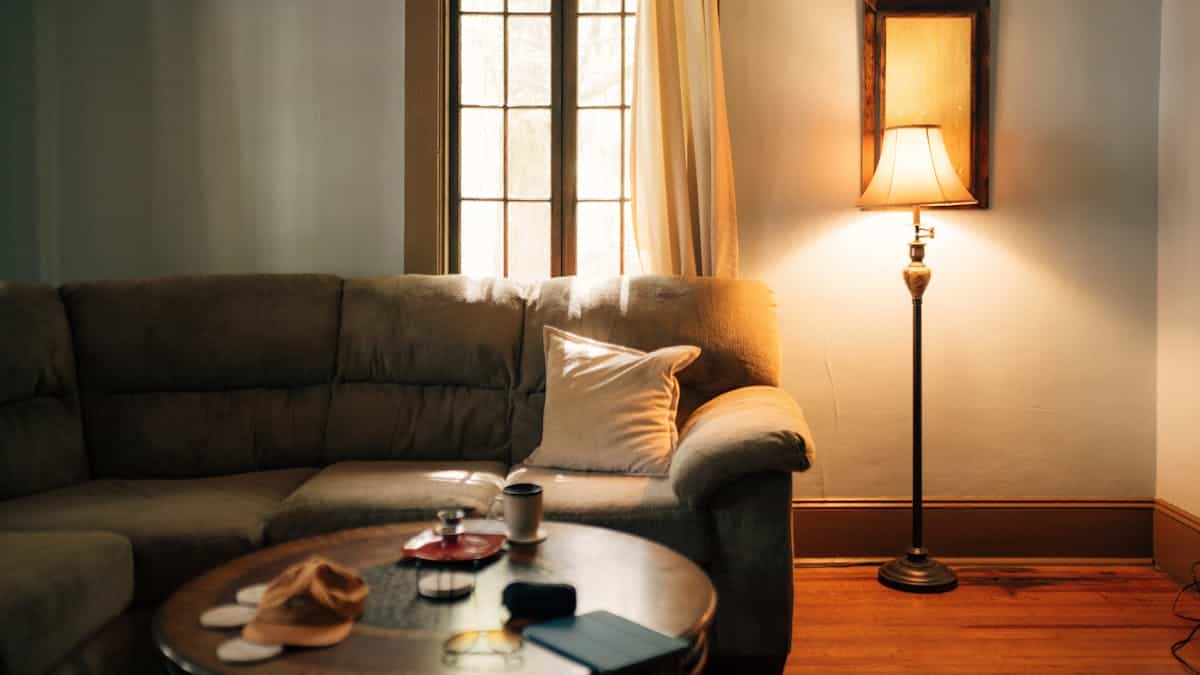
The single worst placement is a sofa floating in the middle of the room with its back to the entrance. You cannot see who comes in, there is nothing supporting you, and the energy (and people) approach from behind — the recipe feng shui most wants to avoid.
But open-plan rooms often leave no wall for the sofa, so here is the fix feng shui actually prescribes: build a "virtual wall." Run a console or sofa table along the back of the couch, or place a pair of tall plants, a bookshelf, or a long low cabinet behind it. Add a lamp at each end to anchor and balance the grouping. The console does the real work — it gives the back of the sofa something solid and turns "floating and exposed" into "defined and backed." A floating sofa is not forbidden; an unsupported one is.
Rule 4: Curve the Seating into a U
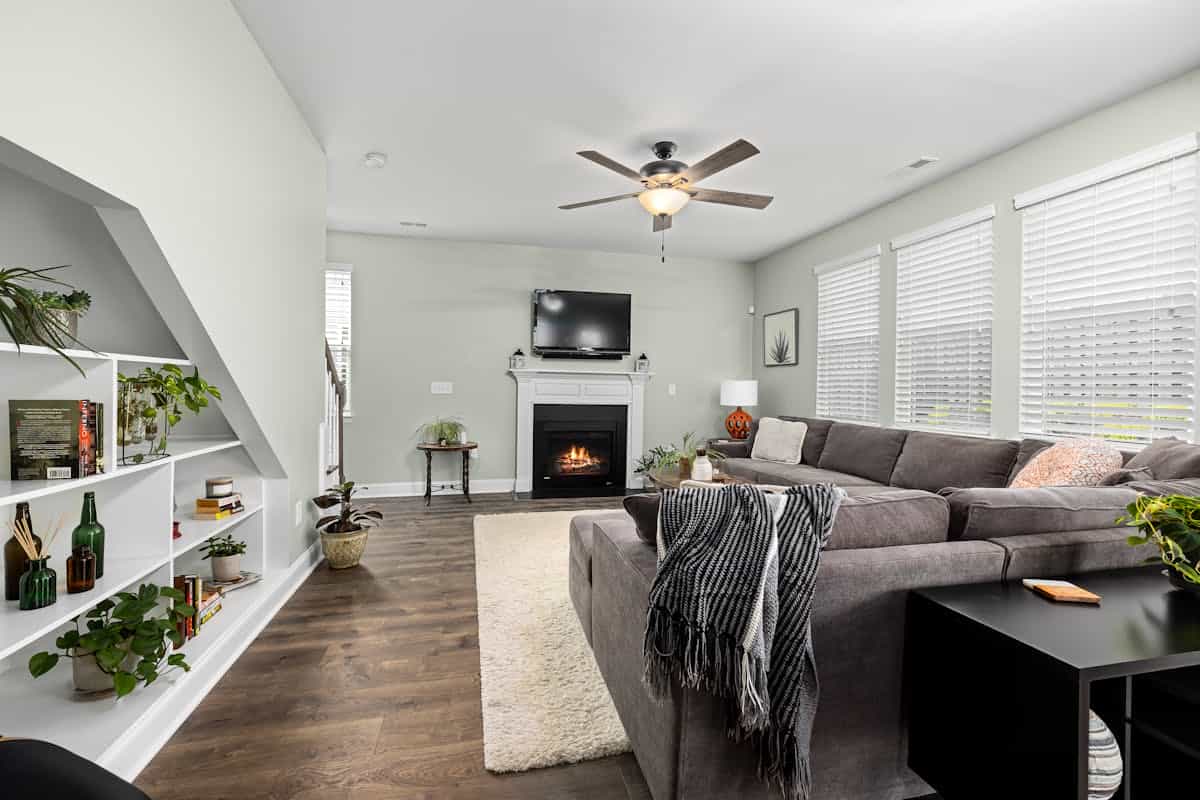
Feng shui likes seating that embraces — a U-shape or a loose circle where the sofa, chairs, and any loveseat face inward toward one another. The traditional idea is that an embracing arrangement gathers and holds positive energy rather than letting it scatter.
The plainer reason is conversation. Seating that curves inward invites people to face and talk to each other; seating strung in a straight line along the walls forces conversation across an empty middle and quietly kills it. A sectional naturally forms this embrace — just soften its sharp inner corner with a rounded cushion or a plant, and make sure its long back still meets a wall. Keep the pieces close enough for easy talk, a few feet apart, with a coffee table holding the center.
Rule 5: Balance the Arrangement
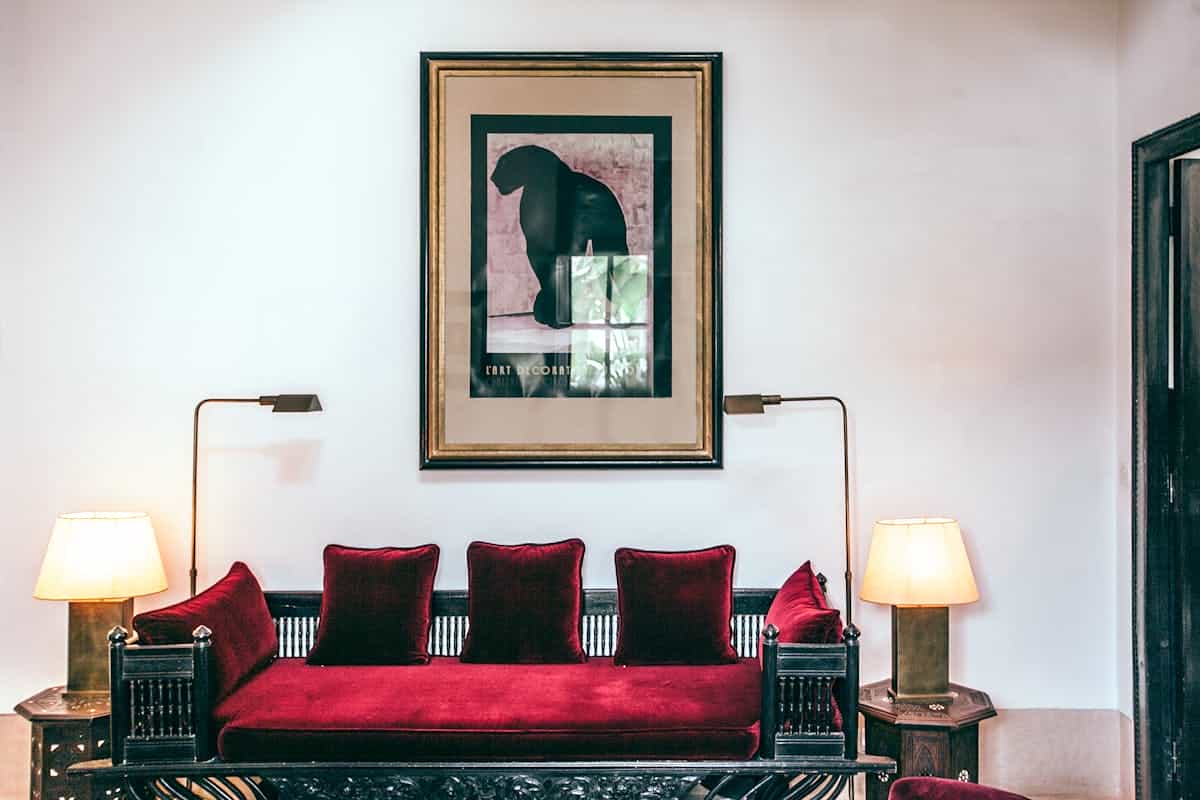
Feng shui prizes balance, and the sofa grouping is where it shows. A pair of matching lamps or side tables flanking the sofa, chairs of similar visual weight on either side, a coffee table centred in front — the eye reads this symmetry as calm and stable.
The point is not rigid mirror-imaging but distributed weight: avoid cramming all the furniture against one wall while the opposite side sits empty, which makes a room feel lopsided and unsettled. Matching, coordinated pieces also read as more harmonious than a jumble of mismatched ones — a principle that carries straight over from the feng shui bedroom layout guide. Pairs, again, do a lot of quiet work.
Rule 6: Mind the Beam, the Coffee Table, and the Corners
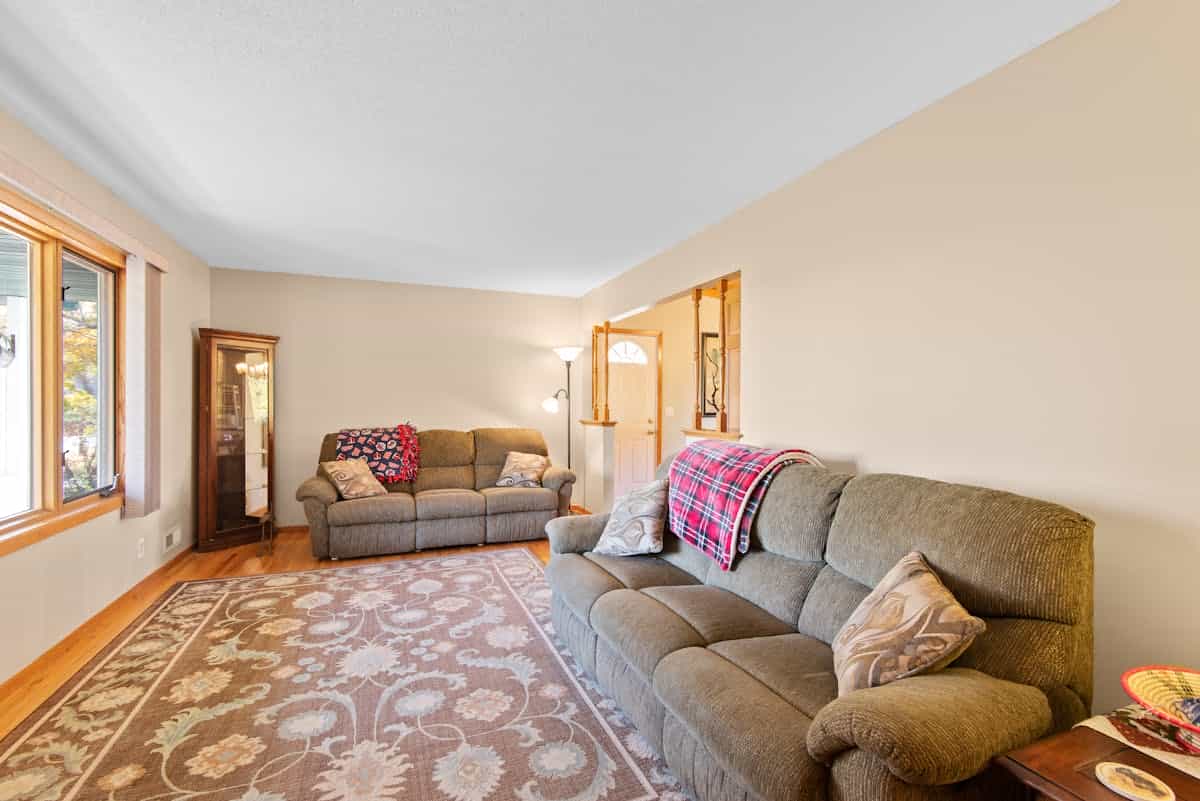
A few finer rules round out the sofa's placement:
- No beam overhead. Avoid seating directly under an exposed ceiling beam — feng shui calls this "beam oppression," a downward pressure said to weigh on you. If the beam is unavoidable, painting it to match the ceiling reduces the visual heaviness.
- Coffee table lower than the armrests. A coffee table kept below the height of the sofa's arms preserves a sense of openness and the right "host" proportion — and is simply more comfortable to reach.
- No sharp corners aimed at the seat. Protruding edges from other furniture form "poison arrows"; the plainer truth is a hard corner at shin or eye level in a busy room is genuinely a little hostile. Angle them away or soften with a plant.
- Keep clear pathways. Leave roughly 30 inches of walkway around and into the seating so nobody has to edge past — energy and people both need room to move.
- Away from the bathroom door. Feng shui treats bathrooms as draining, so the main seat is best not backed up to one.
Rule 7: Choose a Grounding Sofa Colour
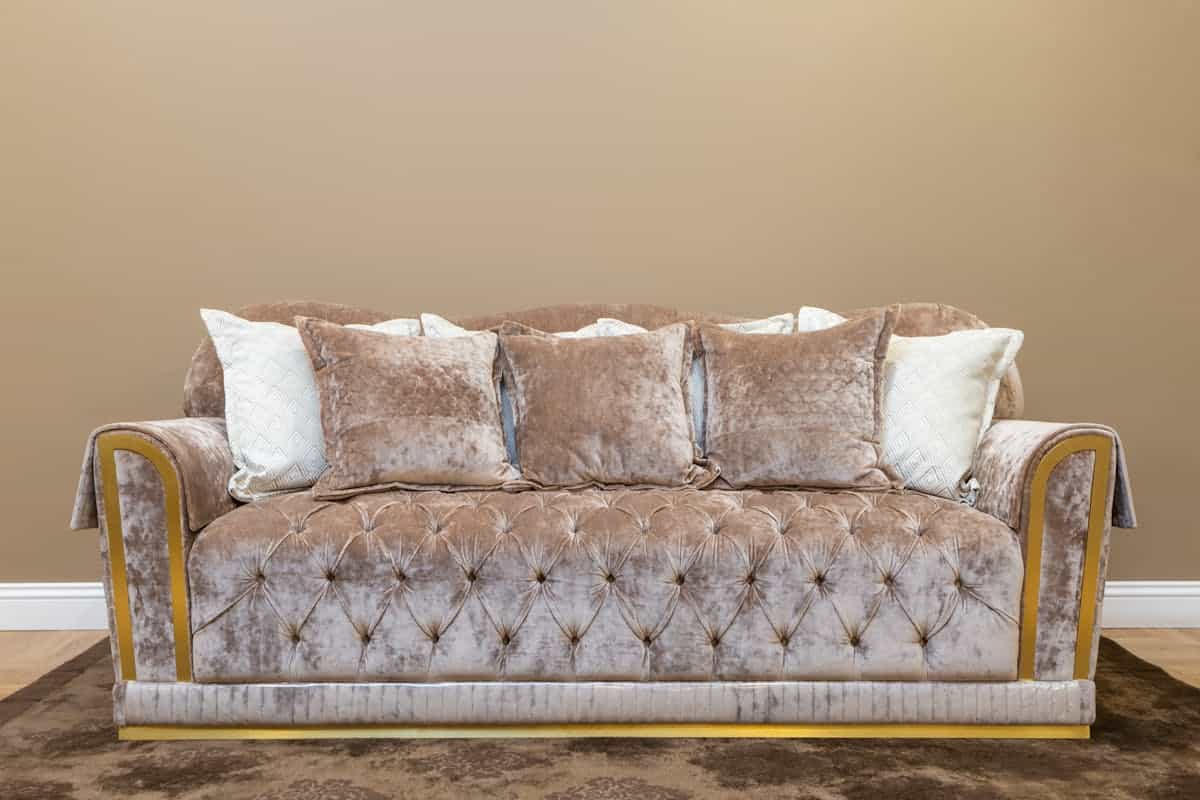
The sofa is the room's anchor, so feng shui leans toward grounding, stable colours for it. Earth tones — beige, tan, brown, soft terracotta — are the safe, broadly favourable choice. Soft greens borrow the renewing quality of the Wood element; muted blues bring the restful depth of Water.
Bold, saturated reds and oranges carry strong five-element Fire energy — wonderful in a cushion or two, exhausting across a whole three-seater you are trying to relax on. Natural materials (cotton, linen, wool, real wood legs) are preferred over hard, synthetic ones. Match the colour loosely to the feeling you want the room to hold, and let the bold notes live in the throw pillows.
Which Sofa Rules Actually Matter
This is the part most placement guides skip, and the most useful. Sorting the rules honestly lets you follow the whole system, or just the parts that hold up.
Worth doing regardless of belief: a solid wall (or a console "virtual wall") behind the sofa, the command position facing the door, an embracing U-shape for conversation, balance across the room, and clear pathways. These map onto real psychology and ergonomics — people relax when their back is protected and they can see the entrance, and they connect when they face each other. The broad case is sound design, not superstition.
Traditional belief, not measurable: Qi rushing through the "mouth of Qi," beam oppression as an energetic force, element colours as metaphysical influences, and sharp-corner "poison arrows" (though a hard edge is mildly unpleasant for ordinary reasons). Coherent, harmless, worth following if you enjoy it — just not where the real gains are. For how the sofa fits the whole room, see the feng shui living room layout guide.
Recommended Products
These are the pieces that make feng shui sofa placement easiest to get right — the priority is a well-backed, grounding couch and a balanced grouping. (Links go to Amazon search results so you can compare current options.)
- High-back sofa in a neutral earth tone — solid backing and a grounding colour in one.
- Console / sofa table — the "virtual wall" behind a floating couch.
- Pair of table lamps — to anchor and balance the ends of the sofa.
- Round or oval coffee table — soft edges and the right low height.
- Large floor plant — to back a sofa or soften a sharp corner.
- Set of accent throw pillows — where the bold Fire-element colour belongs.
The One Thing to Carry Away
Notice that every rule here serves a single feeling: the sense of sitting somewhere safe, backed, and able to see what is coming. Wall behind you, door in view, people facing you, a clear path in and out. That is what the "good energy flow" of a well-placed sofa actually is.
Whether you call it Qi or call it comfort, the couch ends up in the same spot — and the room ends up being one people sink into and stay in. The energy is debatable. The difference between a sofa you sprawl on and one you perch on is not.
Mirror FAQ
Where should a sofa be placed for good feng shui?
Against a solid wall, in the command position — positioned so the people sitting on it can see the main doorway without being directly in line with it. The solid wall behind the sofa acts as a "backing mountain" that gives a sense of support and security, and the clear view of the entrance lets the nervous system relax. Diagonally across from the door, spine to a wall, is the ideal. Avoid floating the sofa in the middle of the room, placing it under a window, or lining it up directly with the door.
Should a sofa face the door in feng shui?
It should face toward the door without being directly in line with it. The goal is for people on the sofa to see anyone entering — which feels secure — but a sofa squarely in front of and facing the door sits in the rushing energy that comes straight through the "mouth of Qi," which feng shui treats as a direct clash. Angle the sofa or set it diagonally across from the entrance instead. A sofa with its back to the door is the placement to avoid most of all.
Can a sofa go in front of a window in feng shui?
It is discouraged. A window behind the sofa gives no solid support — feng shui wants a wall there — and it lets light and energy spill behind you where you cannot see it. If the only spot is in front of a window, raise the effect of a wall: choose a high-backed sofa, leave a small gap, and place a console table or a row of plants behind it to create a sense of backing. Keep the window dressed so the sofa is not sitting against bare glass at night.
What if my sofa can't go against a wall?
This is common in open-plan rooms, and feng shui has a standard fix: create a "virtual wall" behind the floating sofa. A console or sofa table run along the back, a pair of tall plants, a bookshelf, or even a long, low cabinet all give the couch the backing a real wall would. Add a lamp at each end to anchor and balance it. The point is to remove the exposed, back-to-open-space feeling — not to find a wall that does not exist.
Should two sofas face each other in feng shui?
Yes — two sofas facing each other, or a sofa and a pair of chairs, is excellent feng shui because it creates a balanced, conversation-friendly gathering space. The one refinement: avoid placing them in a direct, confrontational line, and keep a coffee table between them to hold the center. Ideally at least one sofa still has a solid wall behind it, and the arrangement does not block the path into the room.
What is the best feng shui color for a sofa?
Earth tones — beige, tan, brown, soft terracotta — are the safe, broadly favourable choice, because they ground the room and suit the social, stabilising role of the main seat. Soft greens (Wood) bring growth and calm, and muted blues (Water) bring restful depth. Bold, saturated reds and oranges are best kept to cushions rather than the whole sofa, since they carry strong, stimulating Fire energy. Match the colour loosely to the feeling you want the room to hold.