Feng Shui Studio Apartment: Maximize Energy in Small Spaces
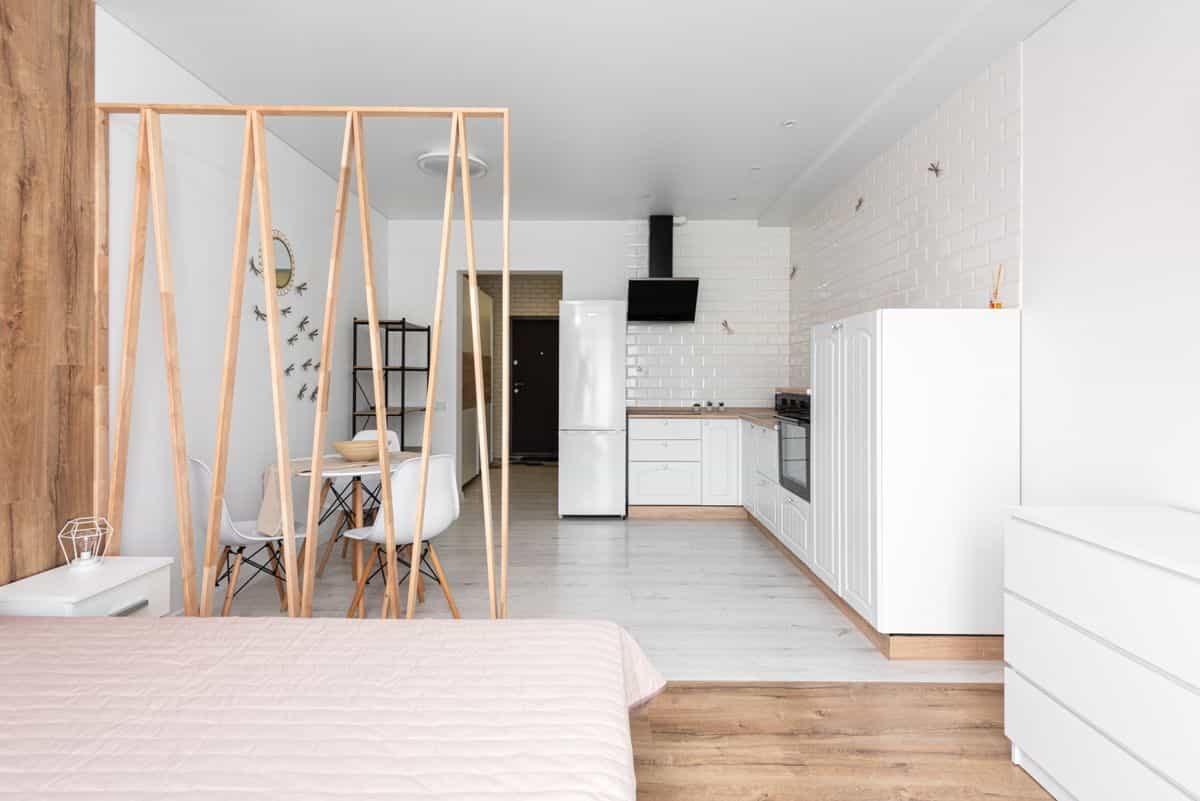
If you live in a studio and feng shui advice keeps assuming you have separate rooms, here is the real problem you are trying to solve: one space has to be your bedroom, living room, office, and kitchen at once — without the energy of all four colliding. Here is the short answer first.
To feng shui a studio apartment, divide the single room into zones — sleep, work, living, eat — using rugs, a low shelf, or a screen; place the bed in the commanding position and screen it from the rest; declutter and store vertically; and use mirrors and light to open the space. Zoning is the move that makes everything else work.
One thing worth saying before the tips, because small spaces reward it. Good feng shui is not about size. A well-arranged studio can feel calmer than a cluttered house — and most of what genuinely helps a small space (clear floor, defined zones, light, a bed you feel safe in) holds up whether or not you believe in Qi. This guide gives you the full approach and flags what matters most.
Why a Studio Is Feng Shui's Hardest Room
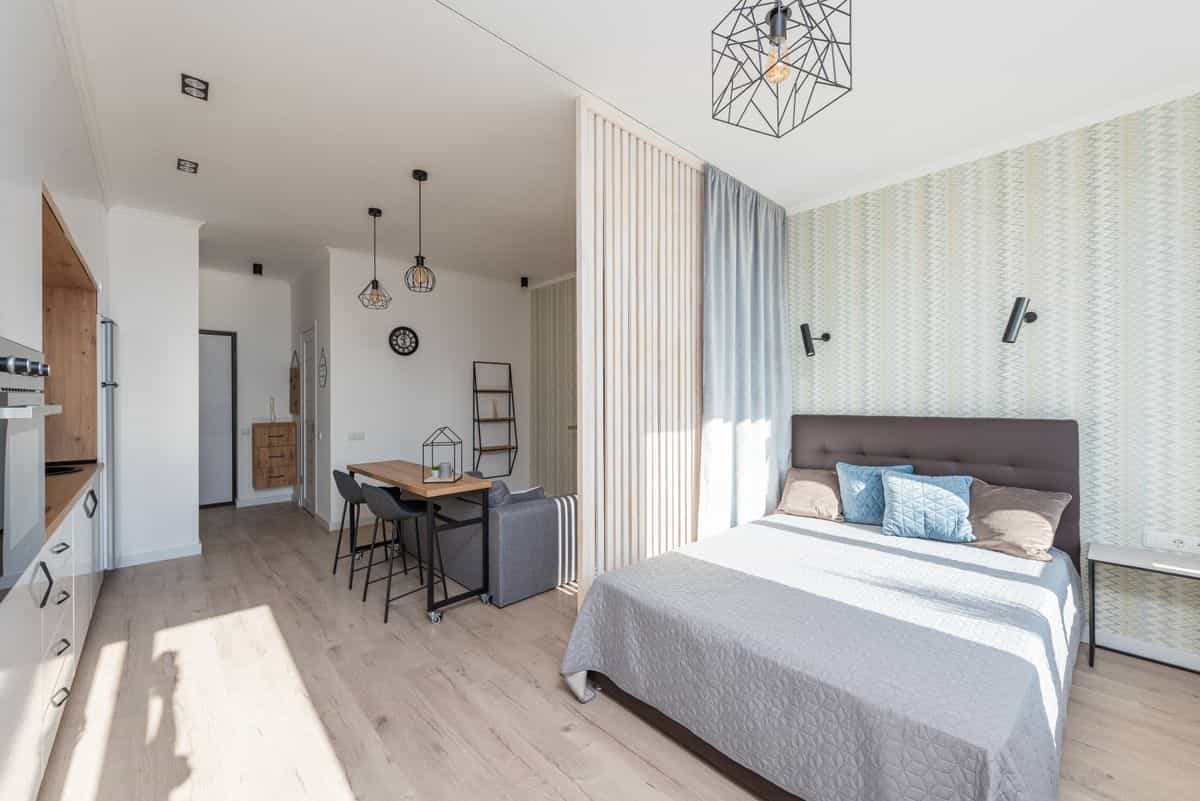
In feng shui, different activities want different energy. Sleep wants yin — calm, still, restful. Cooking and socialising want yang — active, bright, lively. A normal home gives each its own room. A studio forces them to share, and that is the whole challenge: the stimulating energy of the kitchen and workspace bleeds into the restful energy the bed needs, and rest suffers.
So the goal of a feng shui studio is not to pretend the room is bigger than it is. It is to give each function its own defined zone so the energies stay distinct, even in one space. Get that right and a studio can feel surprisingly serene. Ignore it and you end up trying to sleep three feet from your dirty dishes and your laptop — which your nervous system notices, energy framework or not.
Tip 1: Carve the Room into Zones
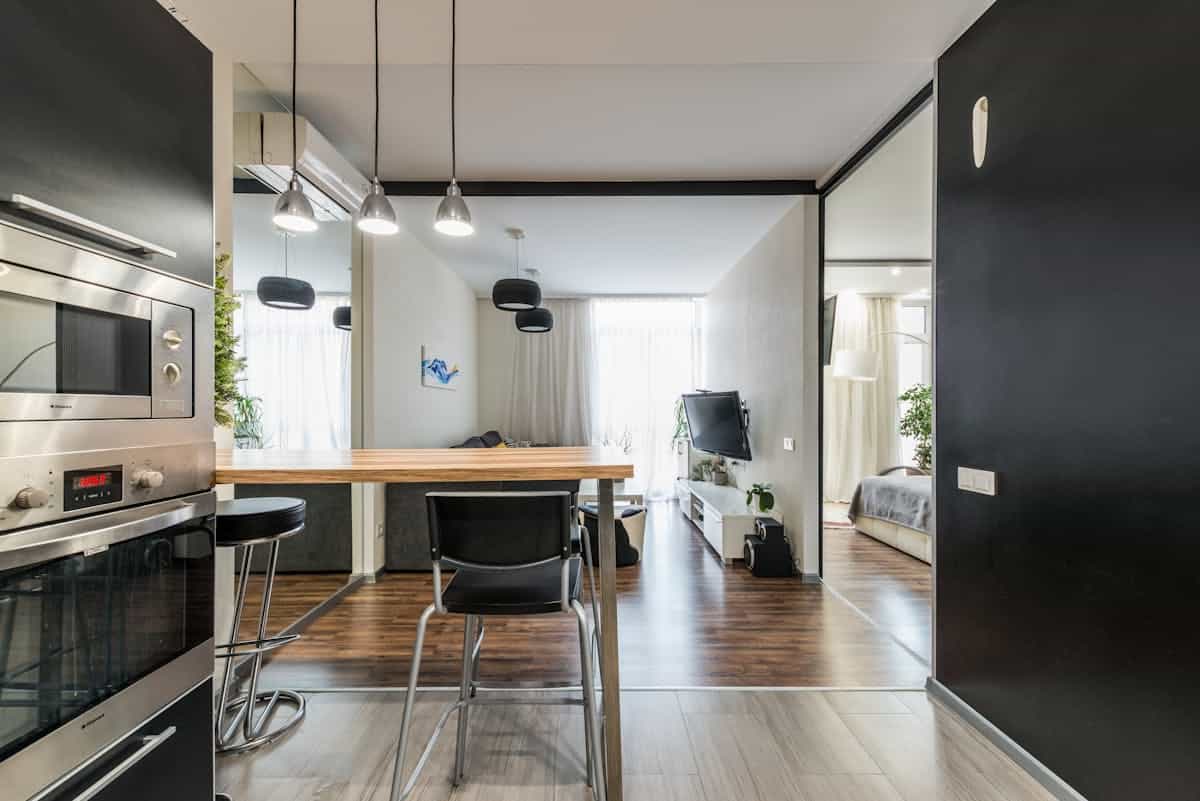
This is the foundational move. Since you cannot build walls, you suggest them — with "soft" dividers that mark boundaries the eye and the energy both read:
- Area rugs are the simplest tool — a rug under the bed and another under the sofa instantly say "two rooms," giving each zone a defined footprint.
- A low bookshelf, console, or the back of the sofa can part the sleeping area from the living area without blocking light.
- A folding screen or curtain gives the bed real privacy and is the classic feng shui cure for separating functions.
The principle is simple: every part of the room should have a clear purpose. A defined sleep zone, a defined work zone, a defined living zone — even a few feet each — keeps the room from becoming one undifferentiated blur of competing energy.
Tip 2: Put the Bed in the Commanding Position
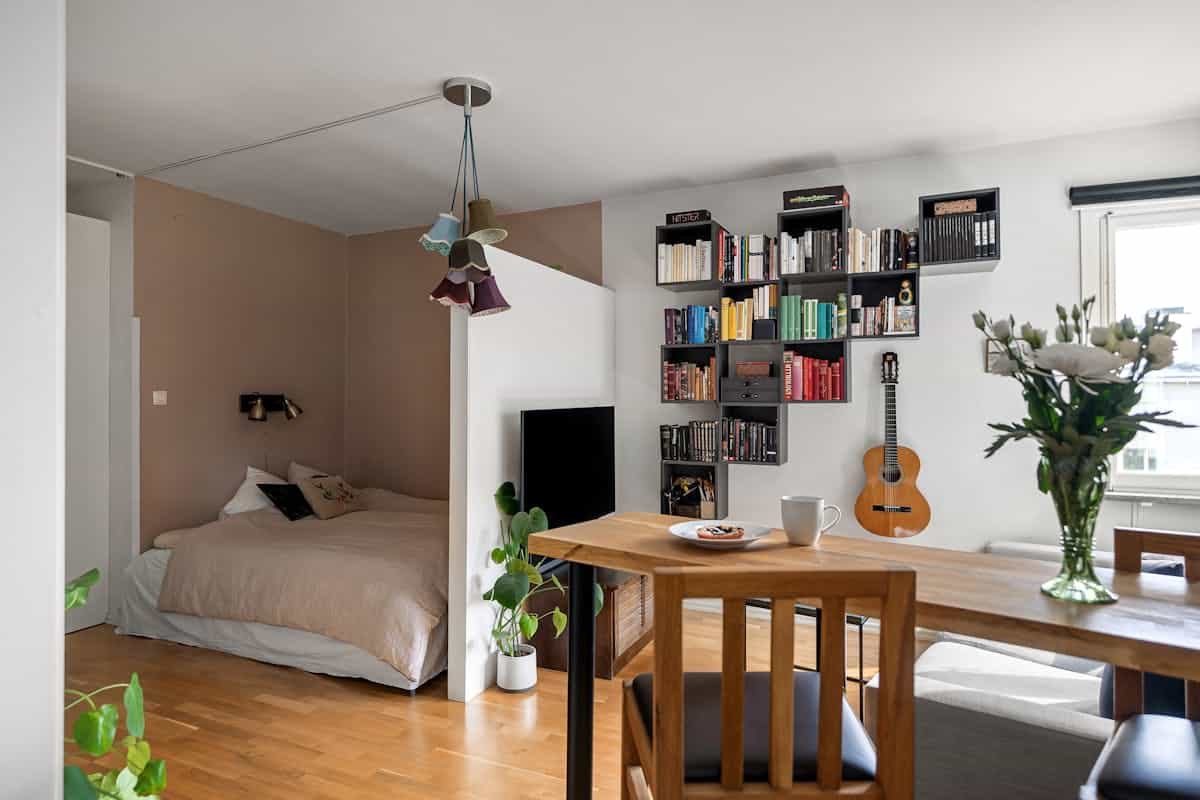
The bed is still the most important piece, even sharing a room. Give it the commanding position: against a solid wall, where you can see the front door without lying directly in line with it, and not pushed under a window.
In a studio that usually means the far corner from the entrance — the spot furthest from the door's rushing energy and the kitchen's activity, and the easiest to screen off. Tuck it behind a divider, a curtain, or a bookshelf so it reads as its own restful pocket. This is the same logic as the best bed position for feng shui in any bedroom — see the door, feel backed, sleep better — just applied to the one corner you can spare.
Tip 3: Keep Work Separate from Rest
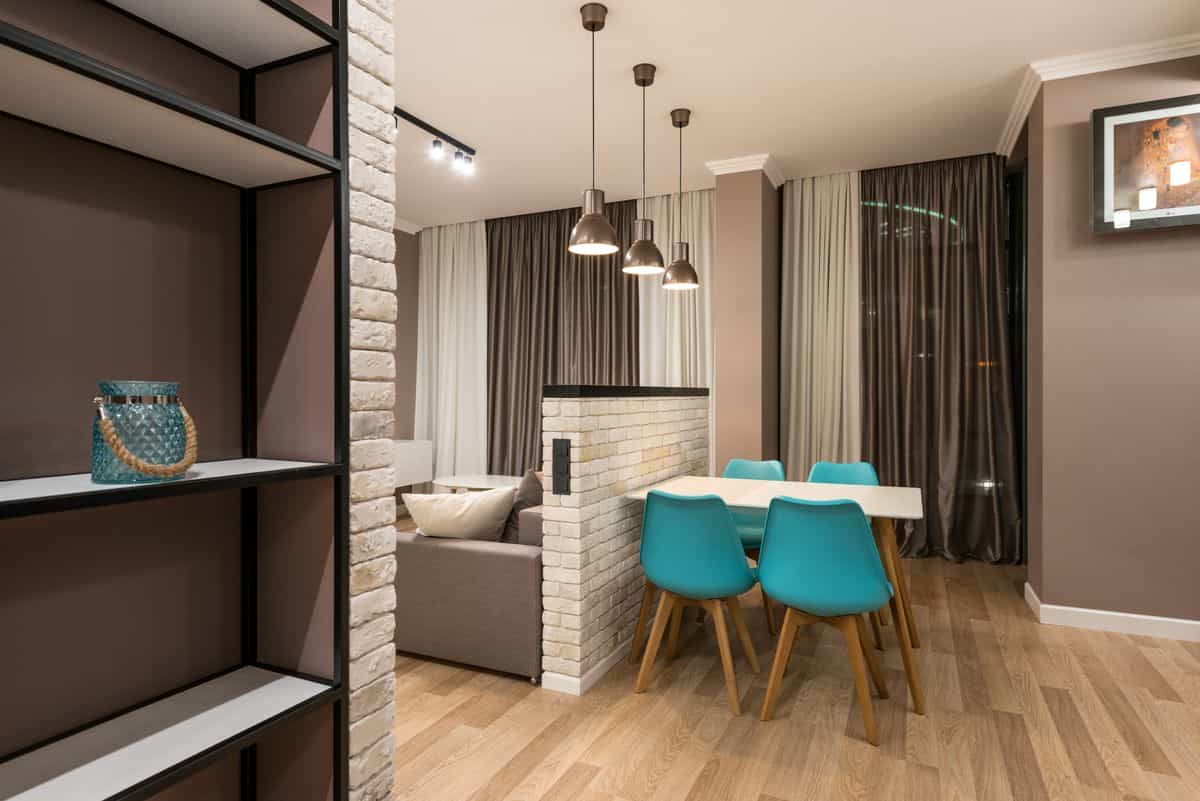
The desk is the studio's quiet energy-killer. Work energy is alert and restless — exactly what you do not want lingering over your bed at night. Feng shui's answer, when you cannot give work its own room, is to give it a ritual boundary instead.
The practical version: position the desk so you are in command (able to see the door, back not exposed) while you work; then, when the day ends, close the laptop and put it away, or drape the workspace with a cloth or screen. If the dining table doubles as the desk, clear it completely between uses. The point is to switch the zone off — to tell your own brain the working part of the day is over, so the room can become restful again. It is a small ritual that does real psychological work.
Tip 4: Use Mirrors to Open the Space
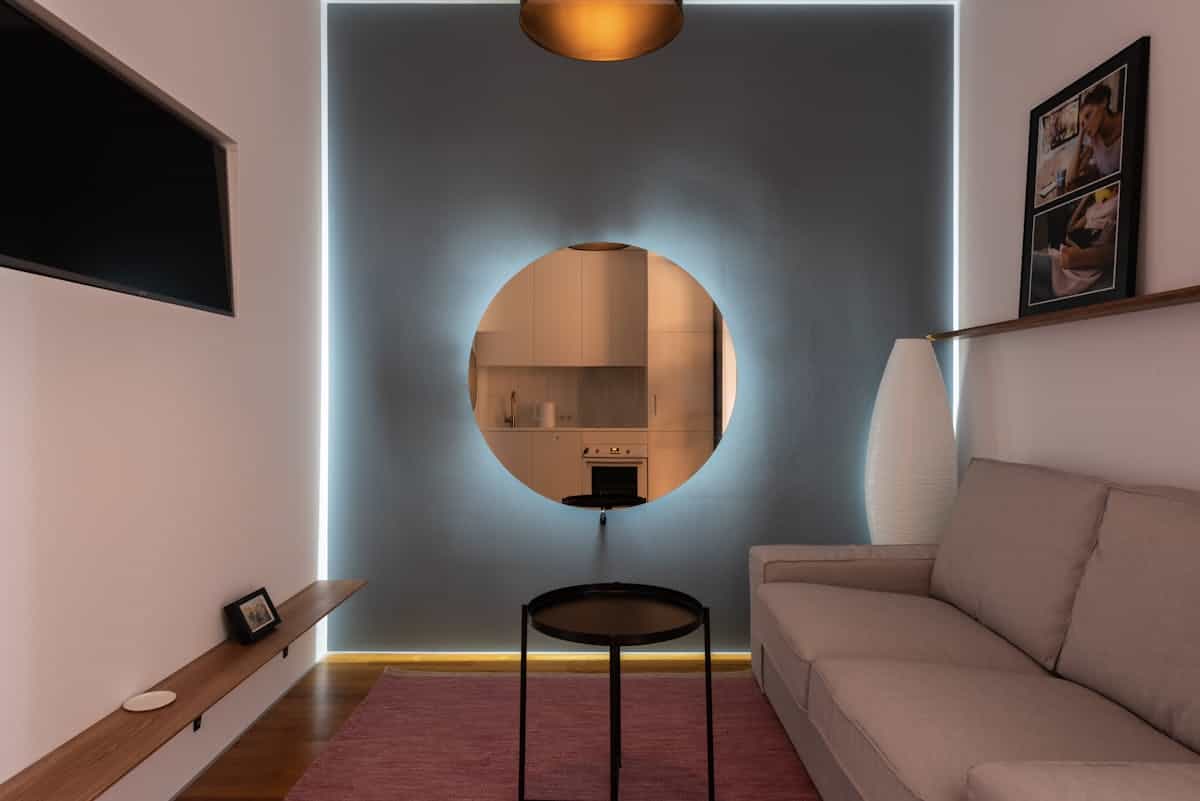
Mirrors are one of the most genuinely useful tools in a small space, and here feng shui and plain optics fully agree: a well-placed mirror bounces light and makes a cramped room feel larger and brighter. Position one to reflect a window, the daylight, or a pleasant view, and a studio opens up.
The cautions are the standard ones, and they matter more in a small room where every wall is close: do not let a mirror face the bed (it can disturb sleep), avoid two mirrors facing each other (over-active, bouncing energy), and keep one from sitting directly opposite the front door, where it sends incoming energy straight back out. The full set of rules is in the feng shui mirror placement guide — they apply doubly when the room is small.
Tip 5: Declutter and Go Vertical
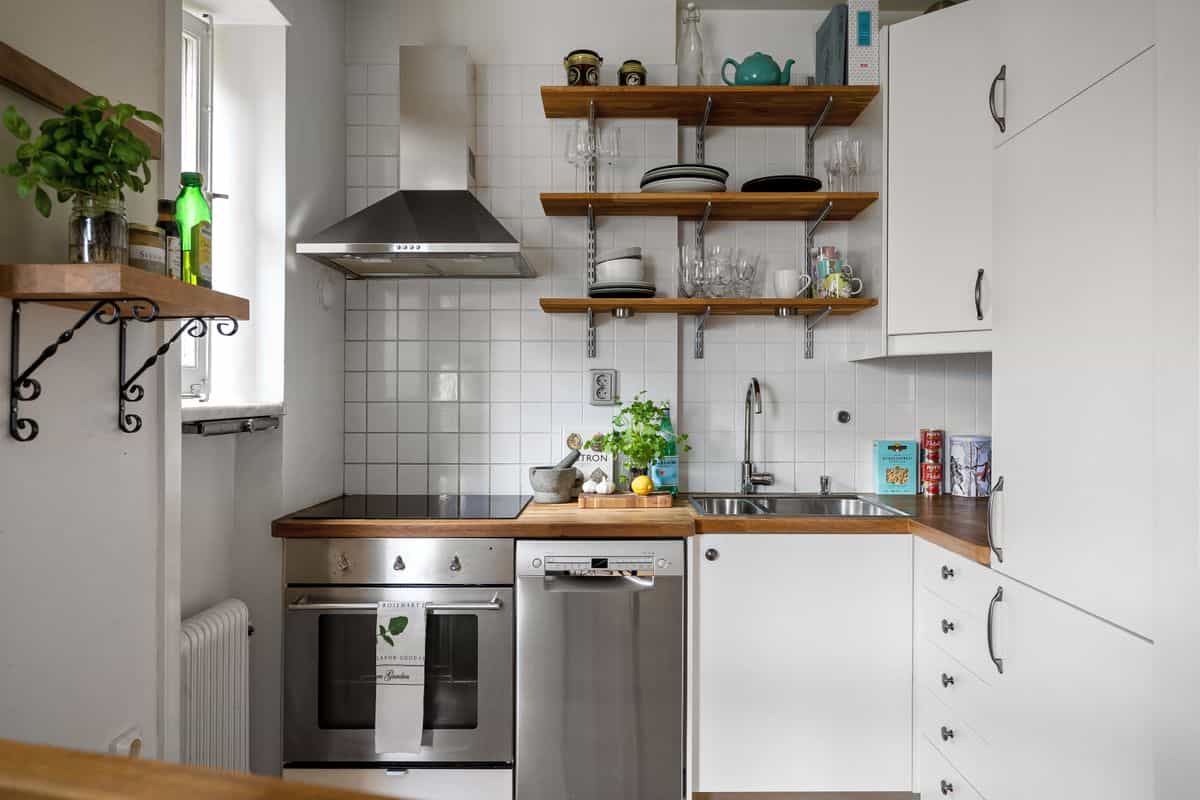
If you do one thing, declutter — and in a studio it is non-negotiable, because there is nowhere for mess to hide. Feng shui holds that clutter traps stagnant energy; the plainer truth is that a small room full of stuff feels stressful and stops both you and the light from moving through it.
The small-space strategy is to go vertical and multifunctional. Wall shelves, tall narrow storage, and hooks lift belongings off the precious floor, keeping the ground plane clear so the room breathes. Choose furniture that earns its place twice — a storage ottoman, a bed with drawers under it, a console that doubles as a desk. Keep surfaces mostly clear. In a studio, the clear floor is the feng shui; everything else is refinement.
Tip 6: Maximise Light, Air, and a Little Green
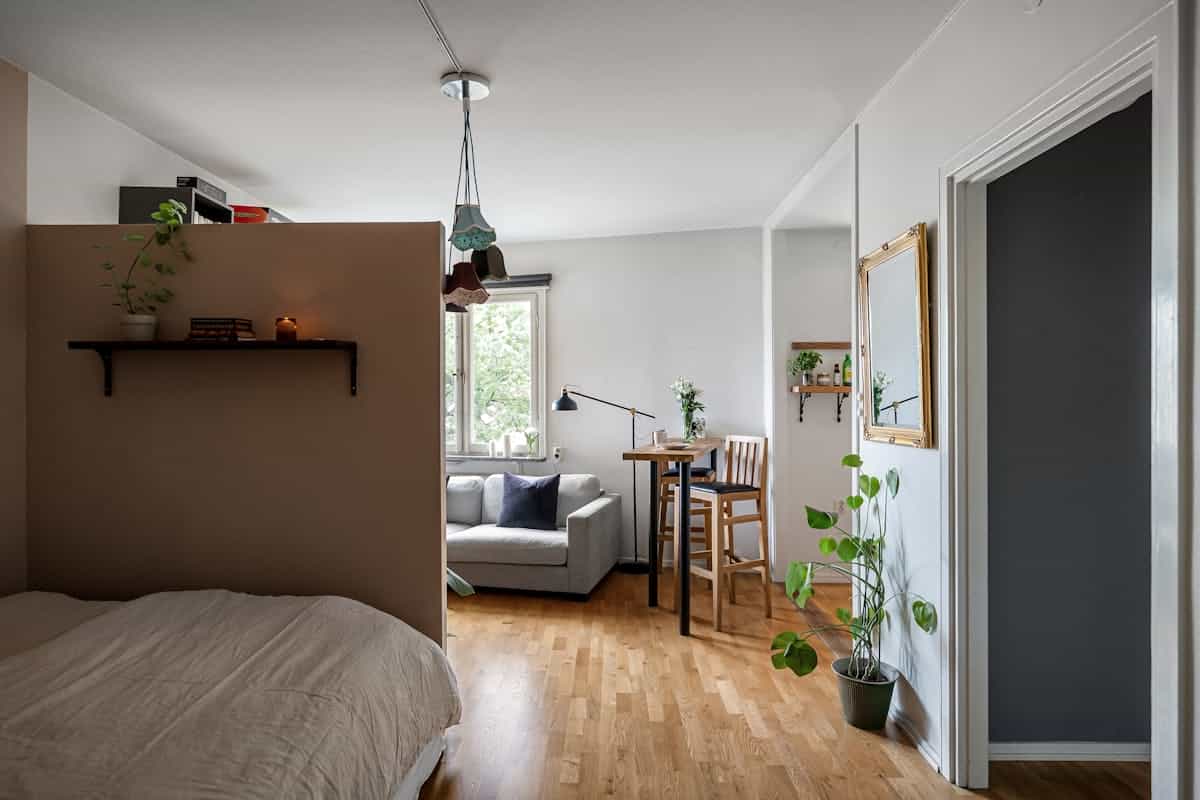
Light and air are how Qi — and a small room's mood — stay fresh. Let in as much natural light as you can, and layer the artificial light by zone: bright, task lighting in the kitchen and work areas, soft and dimmable in the sleep corner. The lighting itself helps zone the room, signalling active versus restful space.
Keep the air moving — open a window when you can — since feng shui treats fresh, circulating air as living energy, and stale air as stagnant. And add one or two healthy, soft-leafed plants to hold Qi and bring life; in a studio, a single trailing pothos on a high shelf does the job without eating floor space. Keep colors light and consistent as a base so the small room reads as open, then shift accents warmer in the living zone and calmer in the sleep zone, borrowing from the feng shui living room colors palette. (One honest aside: the popular claim that a plant will "purify" your air is weaker than it sounds — the studies behind it used sealed chambers, not apartments. Keep the plant for life and calm.)
Which Studio Rules Actually Matter
This is the part most small-space guides skip, and the most useful. Sorting it honestly lets you spend effort where it counts.
Worth doing regardless of belief: zoning the room, the commanding bed position, separating work from rest, decluttering, using mirrors to bounce light, and maximising natural light and air. Every one of these maps onto real psychology and basic spatial sense — defined zones, a protected bed, and a clear, bright room genuinely feel calmer, and the sleep environment research backs the screened-off, low-clutter sleep corner in particular.
Traditional belief, not measurable: Qi as an energy that stagnates or flows, mirrors "pushing" energy out the door, and the bagua energy map applied to a studio's corners. Coherent within feng shui, harmless to follow — but the real gains in a small space come from the practical column. A studio rewards good design more than almost any room, which is the genuinely encouraging part.
Recommended Products
These are the tools that make feng shui in a studio apartment easiest — the priority is zoning, storage, and light. (Links go to Amazon search results so you can compare current options.)
- Area rugs to define zones — the simplest way to suggest separate rooms.
- Folding room divider screen — to screen the bed or desk.
- Storage ottoman or bed with drawers — furniture that works twice.
- Tall vertical bookshelf — lifts storage off the floor.
- Large wall mirror — to bounce light and open the space.
- Easy-care trailing plant (pothos) — living Qi with no floor footprint.
The One Thing to Carry Away
A studio asks one room to be your whole home, and the temptation is to let everything blur together. Feng shui's real advice is the opposite: give each part of your life its own small, defined place — a corner to sleep, a corner to work, a corner to gather — even when only a rug marks the line.
Do that, and a single room stops feeling like a compromise and starts feeling like a sequence of rooms you move between. The square footage has not changed. What changes is that the space finally knows what each of its parts is for — and so do you.
Mirror FAQ
How do you feng shui a studio apartment?
Start by zoning the single room into distinct areas — sleep, work, living, and eating — using area rugs, a low bookshelf, or a folding screen to suggest the walls that are not there. Place the bed in the commanding position (able to see the door, not in line with it) and, ideally, screen it from the living and cooking areas. Declutter ruthlessly and go vertical with storage, use mirrors to bounce light and open the space, and keep work separate from rest with a desk you can close away. Clear floor and good light do most of the work.
Where should the bed go in a studio apartment for feng shui?
In the commanding position — against a solid wall, where you can see the front door without being directly in line with it, and not under a window. In a studio that often means the far corner from the entrance, with the bed screened off from the kitchen and living zones by a divider, curtain, bookshelf, or the back of the sofa. Keeping the bed visually separate from where you cook and work is the single most important move for restful sleep in a one-room home.
How do you separate spaces in a studio apartment for feng shui?
Use "soft" dividers that suggest boundaries without building walls: area rugs to define each zone underfoot, a low bookshelf or console to part the sleeping and living areas, a folding screen for the bed or desk, and curtains for privacy. Lighting helps too — bright, task lighting in the active zones and soft, dimmable light in the sleep zone tells the brain which area is which. The goal is distinct purposes for each part of the room, even without floor-to-ceiling separation.
Are mirrors good feng shui in a small apartment?
Yes, mirrors are one of the most useful feng shui tools in a small space, because they bounce light and make a room feel larger and more open. Place a mirror to reflect a window, natural light, or a pleasant view. The cautions are the usual ones: avoid a mirror that faces the bed directly (it can disturb sleep), avoid two mirrors facing each other, and do not place one directly opposite the front door, where it pushes incoming energy straight back out.
What colors are best for a feng shui studio apartment?
Use a calm, light base throughout to keep the small space feeling open — soft neutrals, pale blues, or gentle greens. Then shift the accent colors by zone: restful greens, blues, and warm neutrals in the sleeping area; warmer, more sociable tones like soft orange, ochre, or terracotta in the living and dining zones. A consistent light base unifies the room so it does not feel chopped up, while the accent shifts quietly signal the change from active to restful space.
Can a studio apartment have good feng shui?
Yes. Good feng shui is about how well energy moves and how supported you feel, not about square footage — a well-arranged studio can have far better feng shui than a cluttered mansion. Small spaces actually punish clutter faster, so the discipline a studio demands tends to produce calmer, clearer rooms. Zone the space, command the bed, declutter, and let in light, and a one-room home can feel genuinely restful and balanced.