Bedroom Wall Decor Ideas: Easy Ways to Transform Your Space
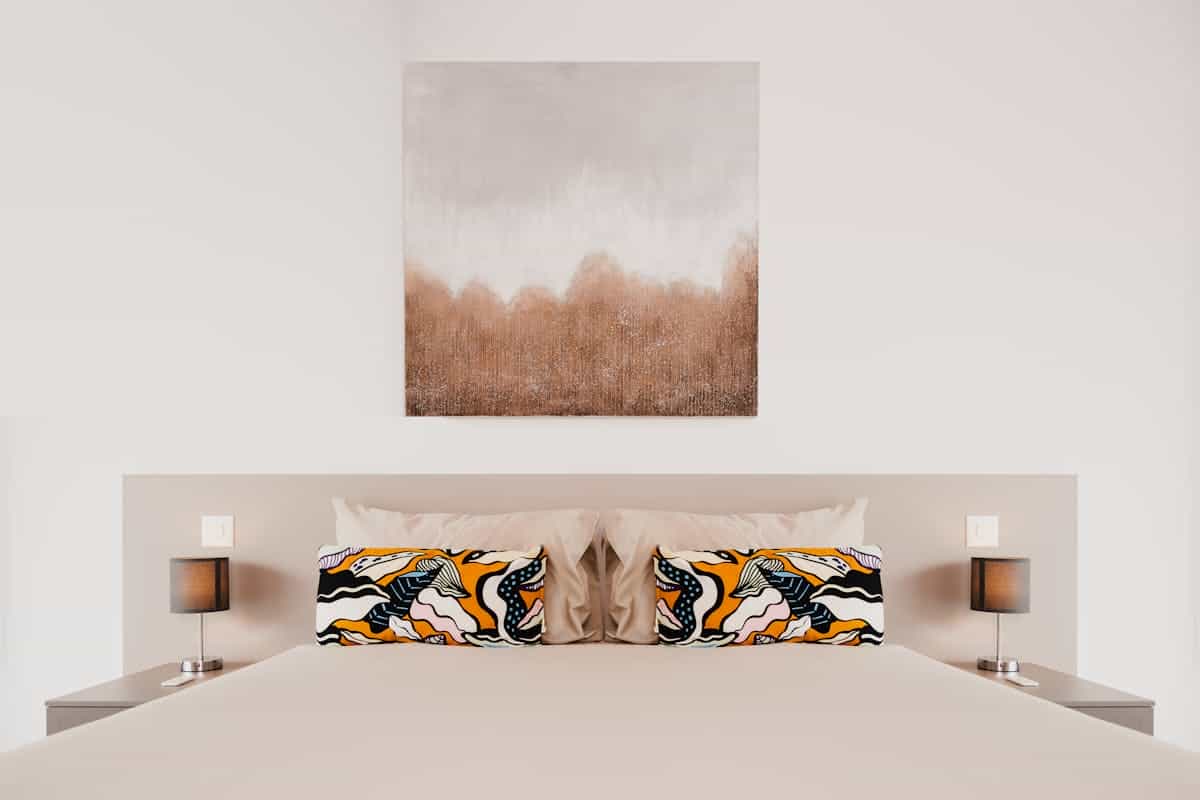
If your bedroom walls feel blank and you want the fastest way to fix that, here is the single most useful idea before any list: decorate the wall behind the bed first. It is the wall you see from the door and the one the whole room is built around, so getting it right transforms the space more than decorating every other wall combined.
The easiest way to transform a bedroom is to give the wall behind the bed one strong focal point — a large piece of art, a gallery wall, or an accent wall — then add a few light accents: a mirror, some texture, a shelf, and warmer lighting. You do not need all of it. One good focal wall plus a couple of accents does the work.
A quick honest note that will save you money and effort: a bedroom is the most restful room in the house, so it rewards restraint. The goal is a room that feels calm when you walk in, not a wall fighting for attention. Almost every idea below works better done once, well, than everywhere at once.
Start With the Wall Behind the Bed
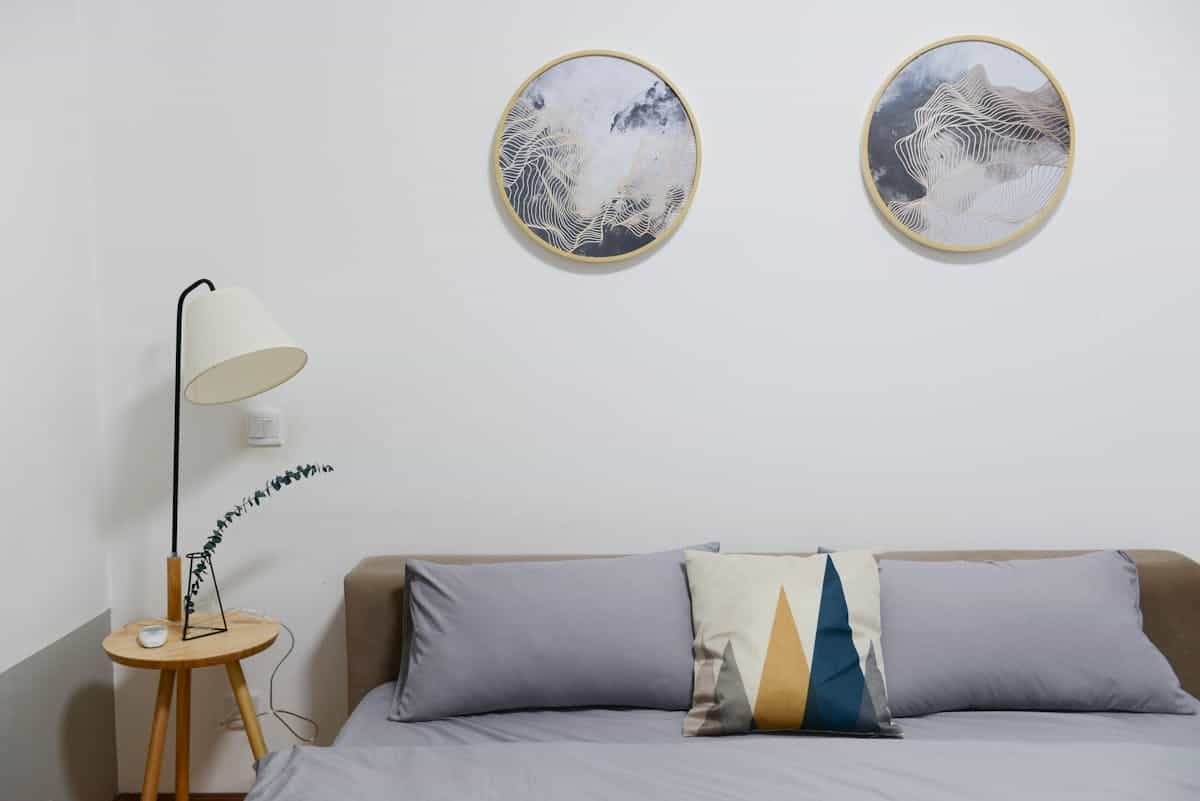
Every well-decorated bedroom has a focal point, and in a bedroom it is almost always the headboard wall. Decorate that wall deliberately and the rest of the room can stay simple.
This is the principle that makes all the specific ideas work: pick one wall to carry the room, and let the others support it. Trying to decorate all four walls equally is what makes a bedroom feel busy and unsettled rather than designed. So before you buy anything, decide that the wall behind the bed is the star — then the only question is which of the ideas below you put there. Whatever you choose, center it on the bed, not the wall, so it reads as one composition with the headboard.
Hang One Oversized Statement Piece
The simplest high-impact move is a single large piece of art above the bed. One confident, oversized print or canvas does what a scatter of small frames never can — it fills the wall, anchors the bed, and reads as intentional.
Size it generously: the piece should span roughly two-thirds the width of the headboard, and the most common mistake is going too small. A landscape, a soft abstract, a botanical, or a black-and-white photograph all suit a restful room; keep the palette calm and low-contrast so it soothes rather than stimulates. Hang the bottom edge about 6–10 inches above the headboard so the art and bed feel connected — the same height logic the how high to hang a mirror in a bedroom guide uses for mirrors. For the full sizing-and-height math, the magnolia wall art guide lays out the two-thirds rule and the eye-level standard in detail.
Curate a Gallery Wall
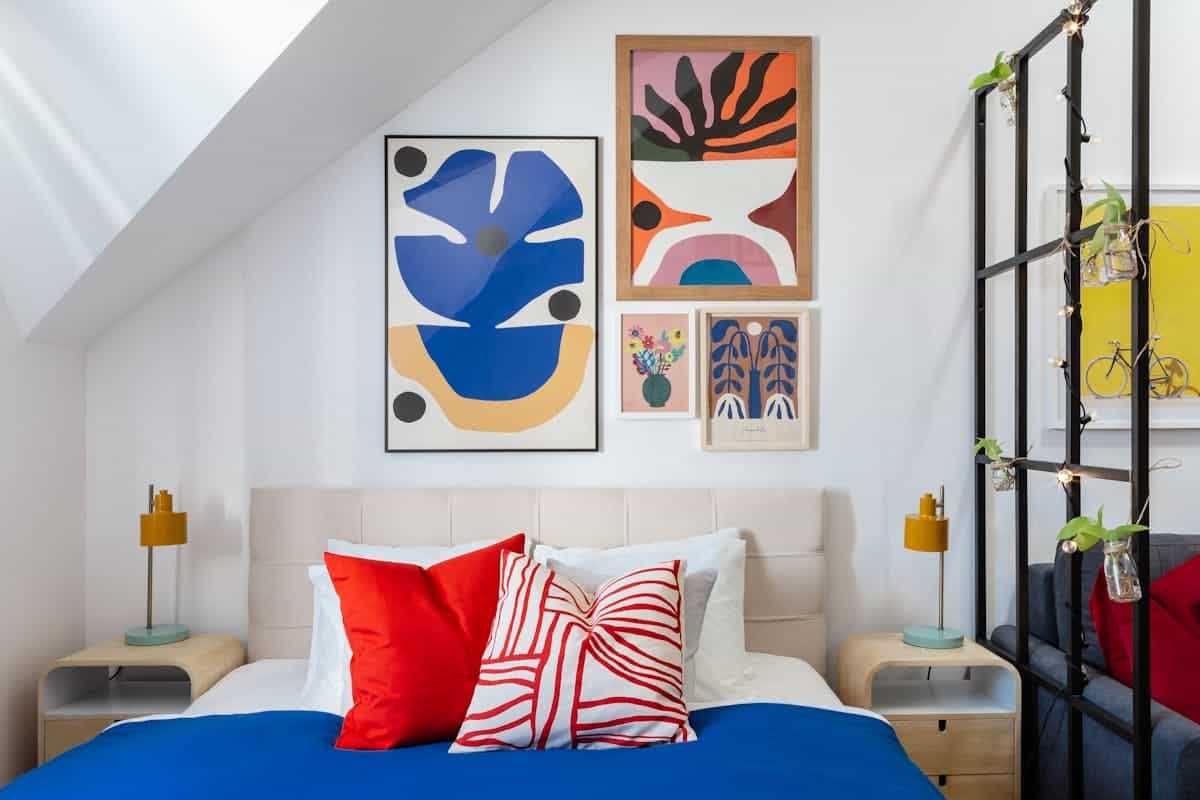
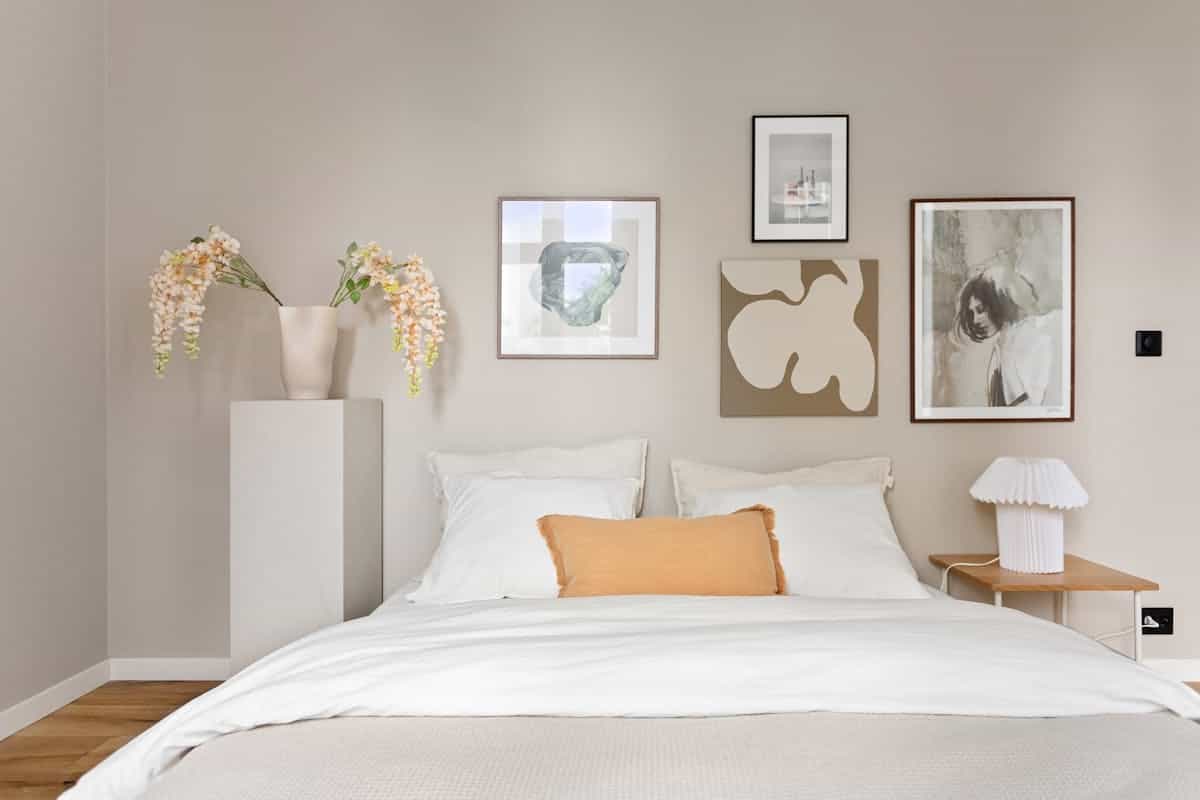
If one big piece is not your style, a gallery wall brings personality and lets you mix art, photos, and typography. The trick is to make it feel composed rather than chaotic.
Two rules keep a gallery wall from looking messy: lay it out on the floor first and adjust until it looks balanced, keeping a consistent 2–3 inch gap between frames; and limit yourself to two or three frame styles or colors so the variety reads as curated, not random. Trace each frame onto paper and tape the templates to the wall to preview the layout before you make a single hole. In a bedroom, a gallery wall works beautifully above the bed or filling the wall beside it — just keep the overall shape tidy so it still feels calm.
Add an Accent Wall
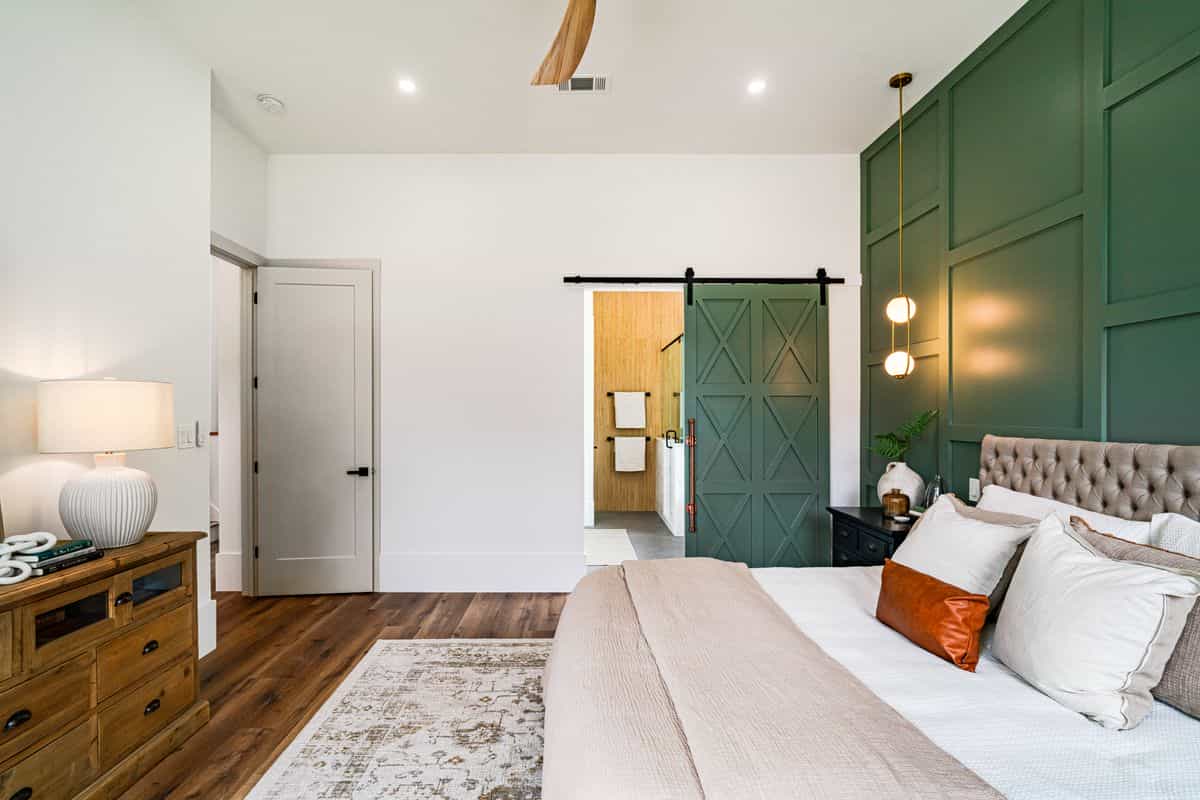
Sometimes the decor is the wall. An accent wall — one wall treated differently from the rest — transforms a bedroom with no frames at all, and the headboard wall is the obvious candidate.
The options run from no-commitment to permanent:
- Paint a single wall a deeper or warmer shade — designers favour soothing, low-stimulation colors for bedrooms, so blush, sage, muted blue, or a soft clay over anything jarring.
- Wallpaper, including peel-and-stick versions that come off cleanly — ideal for renters and the fastest way to add pattern or texture.
- Wood slats or panelling for warmth and a subtle vertical rhythm that also draws the eye up.
Because the bedroom is private, it is the room to be a little bolder than you would in a living room — and color psychology aside, a wall in a hue you find calming genuinely sets the mood you wake and fall asleep to.
Bring in a Mirror to Open the Room
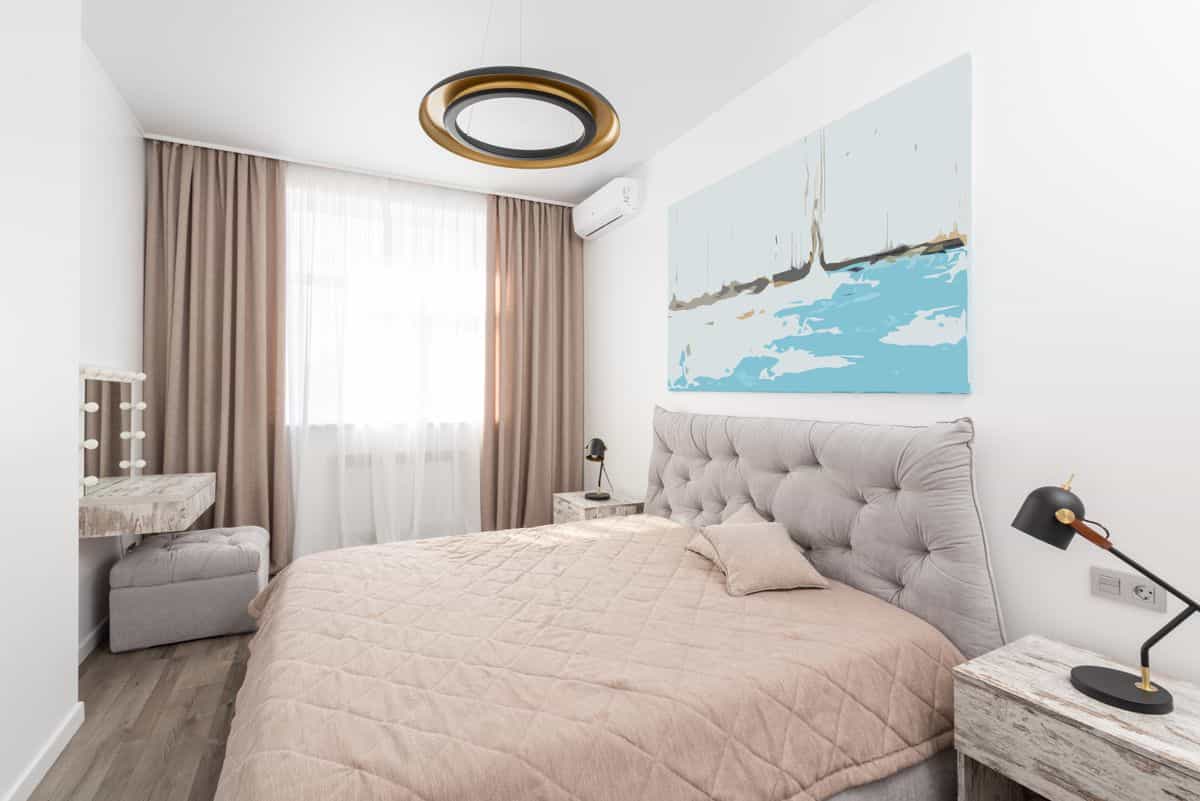
A mirror is the one piece of "wall decor" that does a job beyond looking good: it bounces light and makes a small or dim bedroom feel larger. Hung opposite or beside a window, it doubles the daylight; as a large leaning floor mirror, it adds height and a glamorous focal point.
One placement note specific to bedrooms: many people prefer not to hang a mirror directly facing the bed, both for the restless half-asleep reflection it can throw and for the feng shui tradition against it. A side wall keeps the light-and-space benefit without that. For the styling specifics, the mirror above the bed guide covers safe placement and height.
Layer in Texture: Woven Hangings and Tapestries
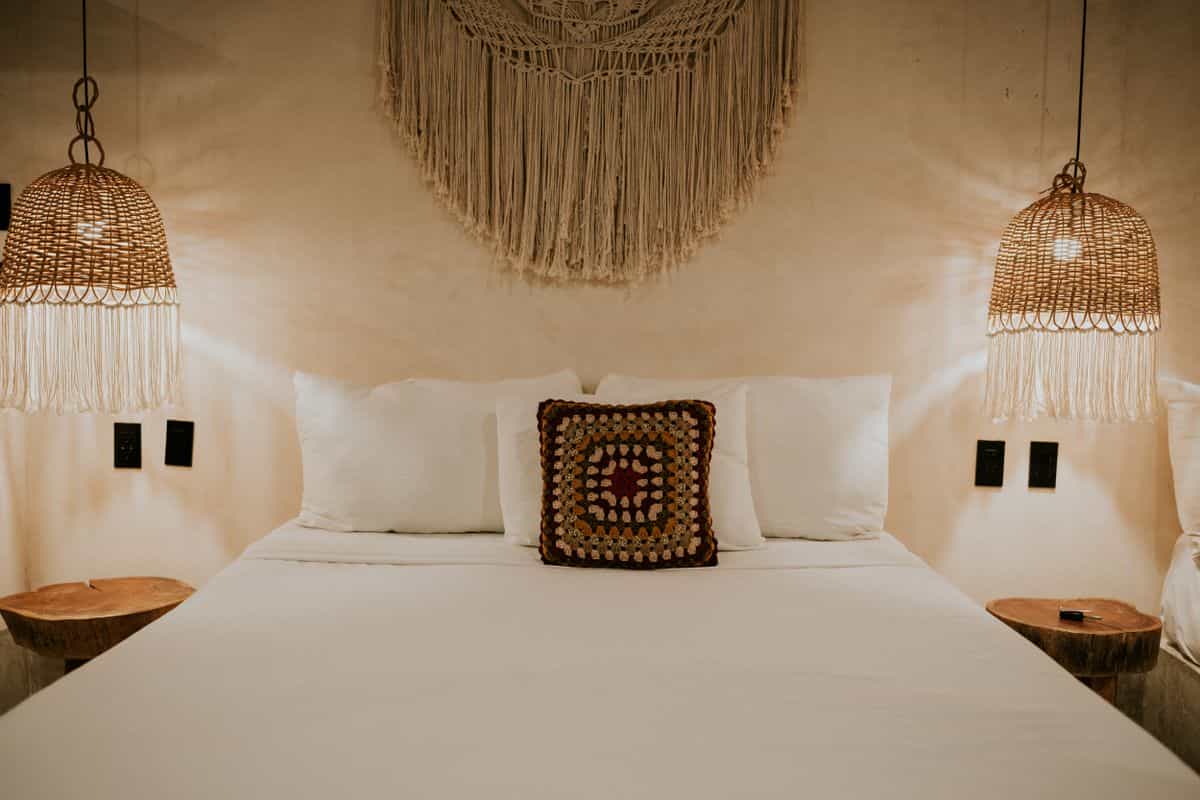
Flat art is not the only option, and texture is what makes a bedroom feel cozy rather than clinical. Soft, tactile wall pieces warm up a room instantly.
The easiest texture wins: a macramé or woven hanging above the bed or a dresser; a fabric tapestry, which is also the single cheapest way to cover a large blank wall; a cluster of woven baskets for warmth and quiet contrast; or a chunky fiber-art piece for a real focal point. These read especially well in boho, Scandinavian, and warm-minimalist rooms, and most hang from a single hook or even a damage-free strip — which makes them a favourite for renters.
Style a Floating Shelf
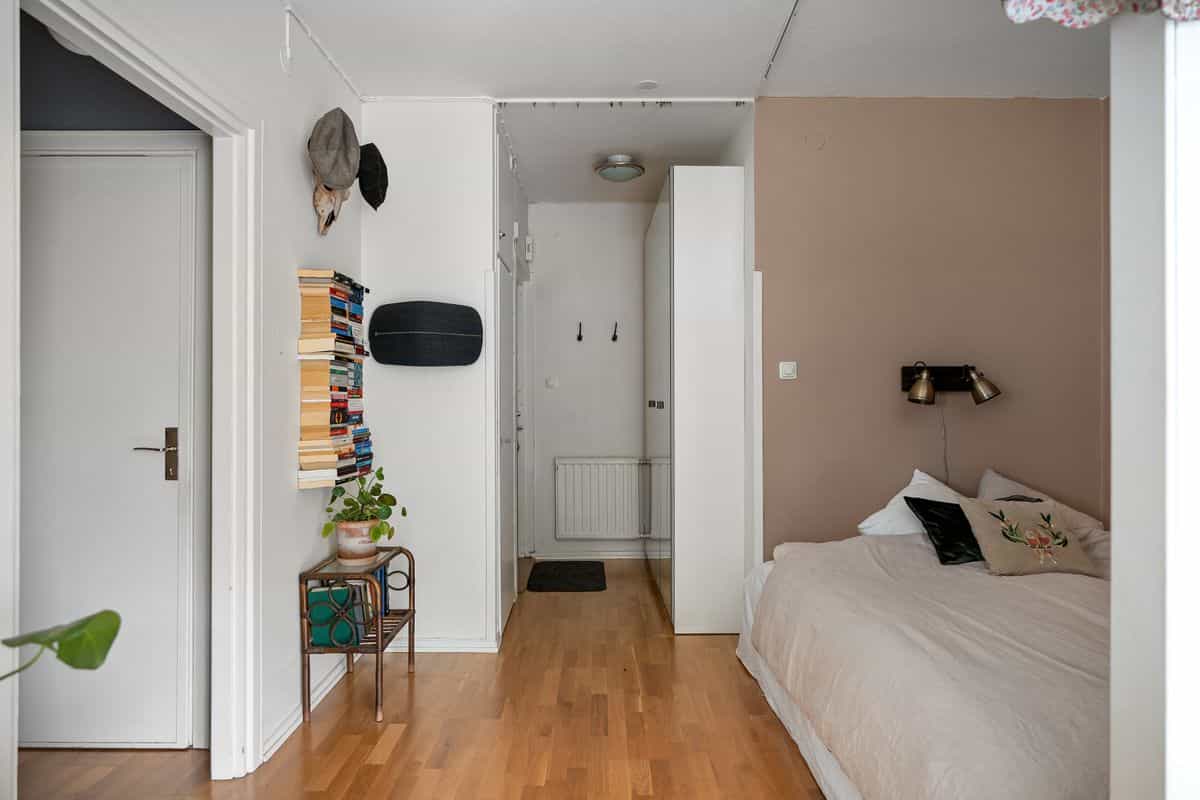
A floating shelf is decor that also works for a living, which is exactly what a small bedroom wants. One slim shelf above a nightstand or along an empty wall gives you a spot to style without sacrificing floor space.
The styling formula is simple: combine heights and textures — a small framed print or leaning art at the back, a short stack of books, a candle or small ceramic, and something living like a trailing plant or a sprig of greenery. Keep it to a few pieces with breathing room between them rather than a crowded row. A pair of shelves flanking the bed, or one above a dresser, adds storage, style, and a place for the personal objects that make a room feel like yours.
Light the Walls: Sconces, String Lights and Plants
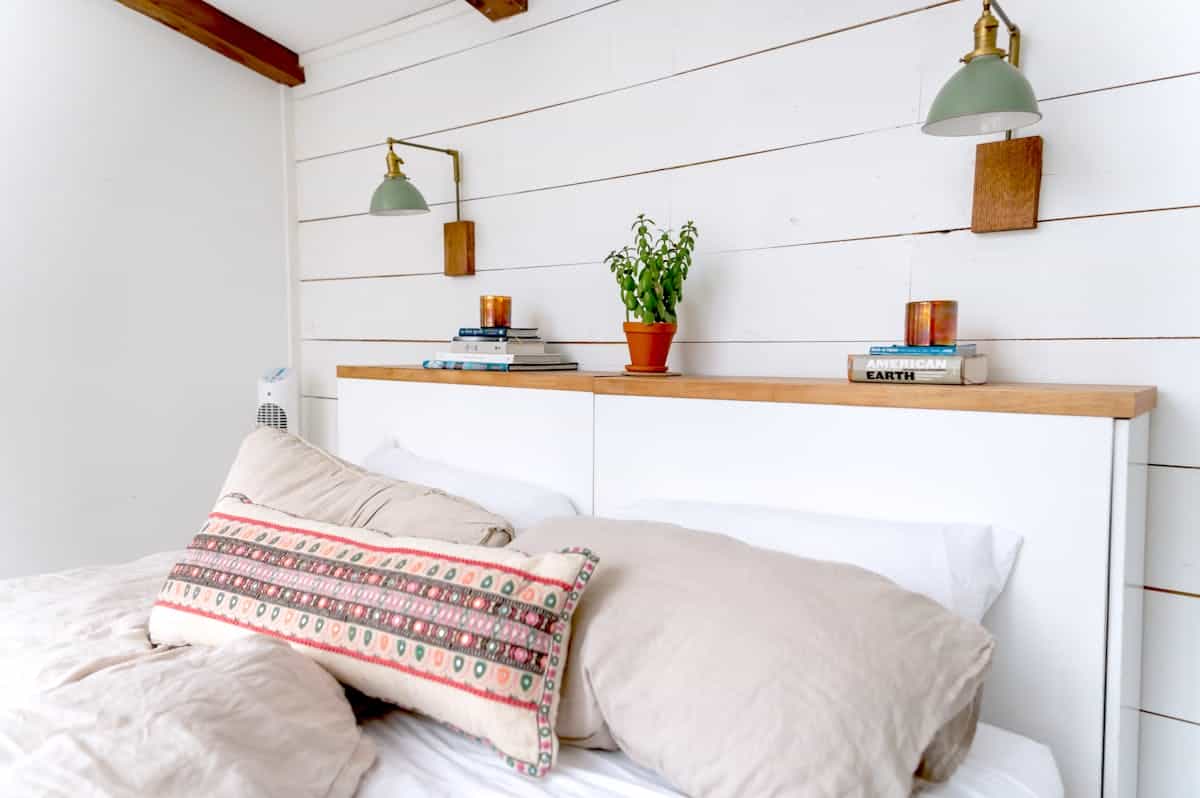
The last layer is the one that changes the mood: light and greenery on the walls themselves. Both add life that flat art cannot.
Wall sconces mounted above or beside the bed look instantly elevated and free up the nightstands — plug-in versions need no wiring and suit renters. String or fairy lights are the budget classic, soft and warm draped along a headboard wall or woven through a gallery arrangement. And wall-mounted or hanging plants bring color, life, and a calming presence; a trailing pothos on a high shelf or a row of small wall planters works where floor space is tight. (Plants are genuinely mood-lifting to be around — though the popular claim that a few houseplants will "purify your air" overstates the research, which was done in sealed lab chambers, not bedrooms. Keep them for the life and the green, not as air filters.)
A Simple Plan for an Empty Wall
If the ideas above feel like a lot of choices, here is the order that keeps it easy and stops a bedroom from tipping into busy:
- Choose the focal wall — almost always the one behind the bed.
- Pick one hero idea for it — a single large piece, a gallery grouping, or an accent treatment. Just one.
- Add one functional accent — a mirror to open the room, or a shelf to style.
- Add one soft layer — texture (a woven hanging) or light (sconces, string lights) or life (a plant).
- Leave one wall mostly bare, so the eye has somewhere to rest.
That is the whole formula: one hero, two light accents, one wall left alone. It is also the cheapest approach, because it stops you buying decor for walls that did not need it. Renting? Swap every "hang" for damage-free strips, leaning art, and peel-and-stick, and the same plan leaves no holes behind.
The One Thing to Carry Away
Look back at the list and notice that almost none of it needs to happen at once. The room transforms the moment you decide the wall behind the bed is the one that matters and put a single strong idea there — the art, the color, the texture. Everything after is a light touch.
That is the real secret to bedroom walls: it is not about filling them. It is about choosing the one wall you see first each morning and last each night, and making that one wall something you are glad to wake up to. Get that wall right, and the blank ones around it stop looking blank — they start looking calm.
Recommended Products
These are the categories that deliver the biggest bedroom-wall transformation for the least effort. (Links go to Amazon search results so you can compare current options.)
- Large bedroom wall art / canvas — the single statement piece for above the bed.
- Gallery wall frame set — coordinated frames to start a grouping.
- Peel-and-stick wallpaper — a renter-friendly accent wall in an afternoon.
- Macramé or woven wall hanging — instant texture from a single hook.
- Plug-in wall sconces — elevated lighting with no wiring.
- Floating wall shelves — style and storage in one.
- Damage-free hanging strips and hooks — for nail-free, deposit-safe hanging.
Mirror FAQ
How can I decorate my bedroom walls easily?
Start with the wall behind the bed, since it is the room's natural focal point, and put your best idea there: a single oversized piece of art, a small gallery wall, or a painted or wallpapered accent. From there, layer in the easy wins — a mirror to bounce light, a woven hanging or tapestry for texture, a floating shelf to style, and wall sconces or string lights. You do not need to do all of it; one strong focal wall plus one or two accents transforms most bedrooms.
What should go on the wall above a bed?
The wall above the bed wants one confident move, not a clutter of small things. A single oversized piece of art, a tight gallery grouping, a pair of matching prints, or a textured piece like a woven hanging all work — centered on the bed and sized to about two-thirds the width of the headboard. Hang it with the bottom edge roughly 6 to 10 inches above the headboard so it relates to the bed, and secure anything heavy to a stud or proper anchor since it hangs over where you sleep.
How do I decorate bedroom walls on a budget or as a renter?
Lean on removable and low-cost options: peel-and-stick wallpaper or wall decals for an accent wall, framed printable art or thrifted frames for a gallery wall, a fabric tapestry or woven hanging for instant texture, and string lights or plug-in sconces that need no wiring. Use damage-free hanging strips and hooks instead of nails so nothing leaves a mark. Leaning a large framed print on a shelf or the floor, rather than hanging it, is the most renter-friendly statement of all.
How do you make a small bedroom feel bigger with wall decor?
Use a mirror to bounce light and visually double the space, keep wall colors light and art low-contrast so the walls recede, hang decor a little higher to draw the eye up, and go vertical with tall, narrow pieces or shelves to add height. Floating shelves and wall sconces also free up floor and nightstand space. The trick is to add interest without adding visual clutter — one calm focal point does more for a small room than many small busy pieces.
How much wall decor is too much in a bedroom?
A bedroom is meant to feel restful, so it tolerates less busyness than a living room. A good rule is one focal wall (usually behind the bed) plus one or two secondary accents elsewhere — a mirror, a shelf, a plant — and at least one wall left relatively bare to let the eye rest. If the room feels stimulating rather than calming when you walk in, that is the signal to remove something rather than add. Restraint is part of the look.