Feng Shui Office Layout: 7 Essential Rules for Focus
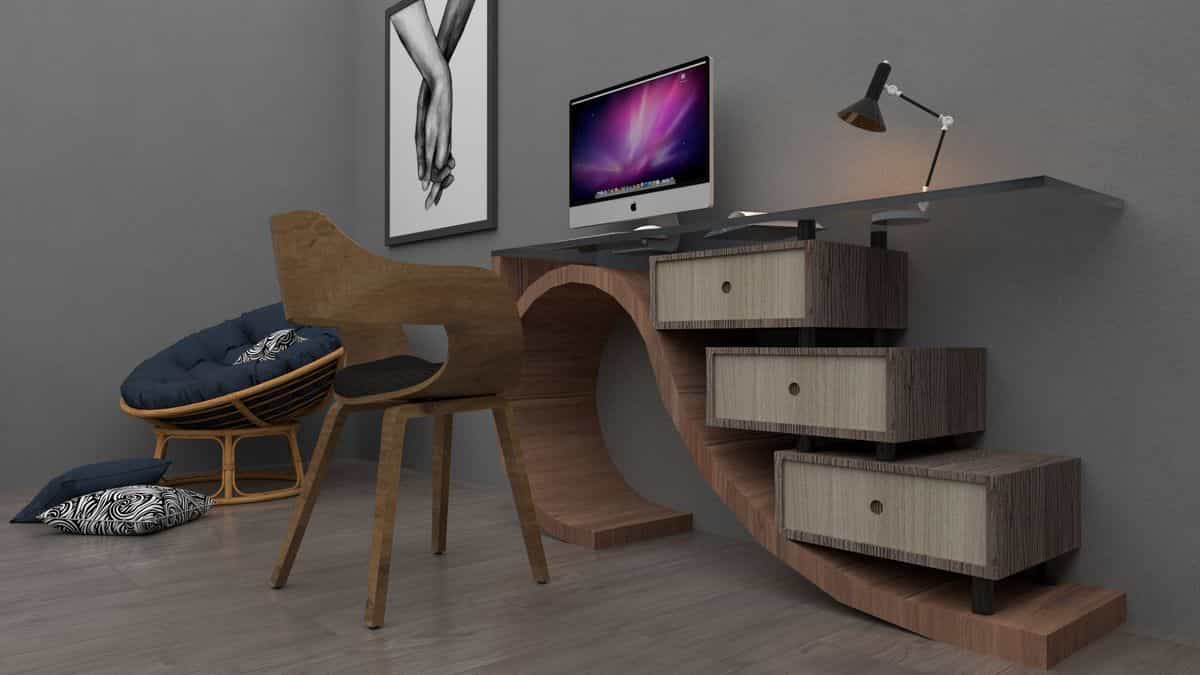
A good feng shui office layout puts the desk in the command position — facing the door, able to see who enters without being in line with it, and with a solid wall behind your chair. Then it keeps the energy flowing with clear pathways and a tidy desk, balances the five elements, and adds plants, light, and a well-kept wealth corner. The desk position does most of the work.
If you are setting up an office or a work-from-home desk and want it to actually support your focus, feng shui has a clear framework — and it starts with where the desk goes, which way it faces, and what sits behind your chair.
One thing worth saying before the layout, because it tells you which rules to take literally. The rules are not all the same kind of claim. Some — the command position, a backed chair, a clutter-free desk — have real psychological support and help your focus whatever you believe. Others — Qi flow, the bagua compass directions, the five-element balance — are traditional belief you cannot measure. This guide covers all of it and tells you honestly which is which.
The Desk Command Position: The Core of a Feng Shui Office Layout
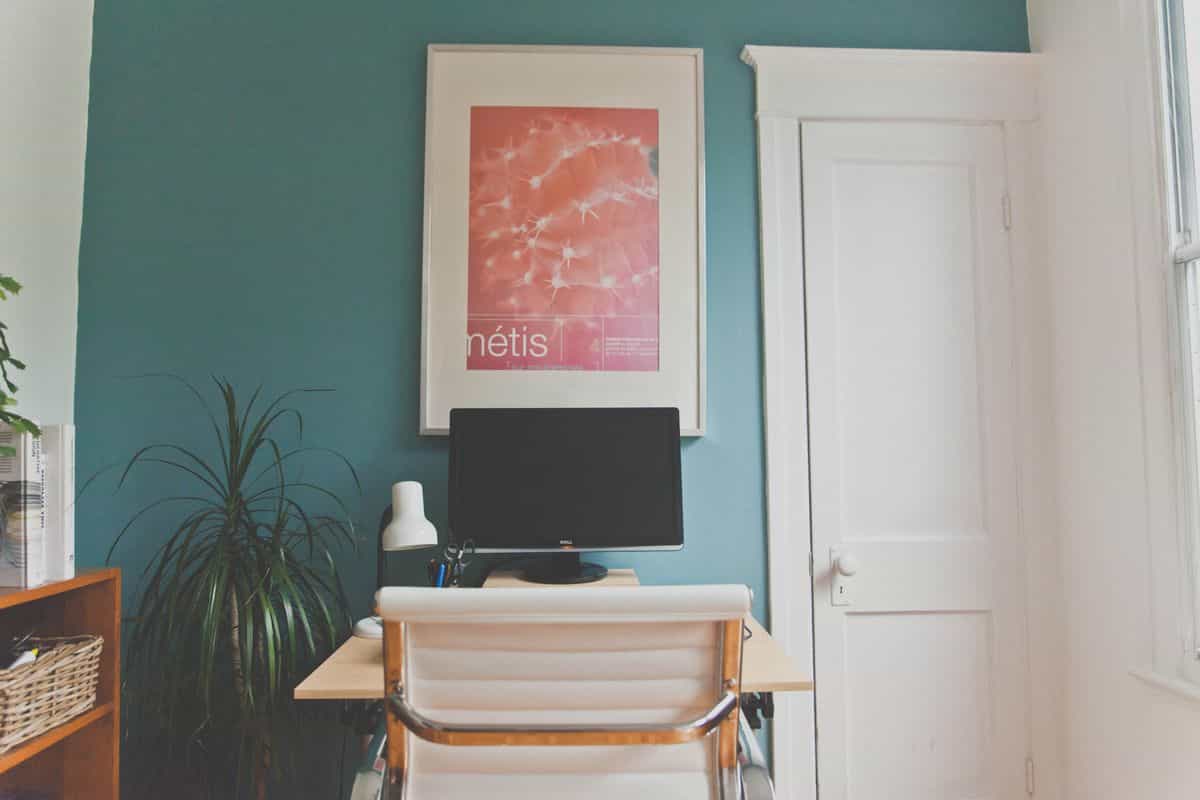
If you do nothing else, do this. The command position is the core of every feng shui office, and the rule with the strongest support outside the tradition. Place the desk so you face the door and can see anyone who enters, without sitting directly in line with it — diagonally across from the doorway is ideal — with a solid wall behind your chair.
Feng shui says this puts you "in command" of your work, your opportunities, and the energy entering the room. The plainer reason it works is just as real: a person who can see the entrance to a room from a backed, protected position stops doing the low-level threat-monitoring that quietly drains attention. You concentrate better when nothing can approach unseen from behind. It is the working cousin of the commanding position for a bed — see the door, feel supported, settle into the task.
Where Not to Put Your Desk
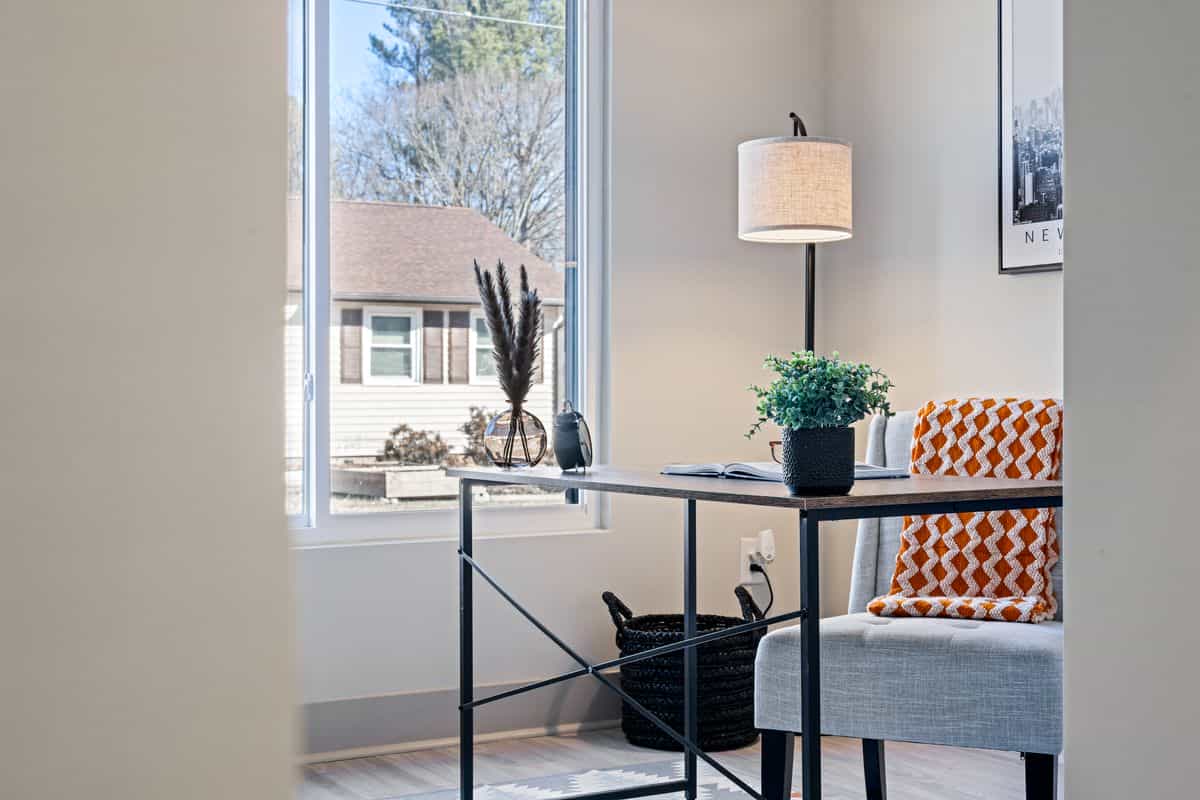
Four placements work against you, and most cramped offices fall into at least one. Here they are, with the honest reasoning and the standard fix for each:
- Back to the door. The worst one. You cannot see who approaches, so part of you stays on guard all day. Fix: a mirror placed to reflect the door, so you catch movement behind you — the classic feng shui cure, and a genuinely useful one. (The mirror placement rules cover how to angle it.)
- Back to a window. No solid support behind you, and the light and activity sit where you cannot see them. Fix: a high-backed chair, or close the blind during deep-focus work.
- Directly in line with the door. You sit in the energy rushing straight in from the entrance — a "direct clash." Fix: shift the desk to one side so it is offset from the doorway.
- Facing straight into a blank wall. Feng shui reads a wall right in front of your face as your path forward being blocked. Fix: hang inspiring art or a small mirror to give the eye depth, or angle the desk to look into the room.
- Directly under a ceiling beam. Feng shui calls this "beam pressure" — a downward force said to press on your energy as you work. The plainer truth is that sitting under something visually heavy is subtly unsettling. Fix: move the desk out from under the beam, or soften it with a drape or a trailing plant.
Which Direction Should Your Desk Face?
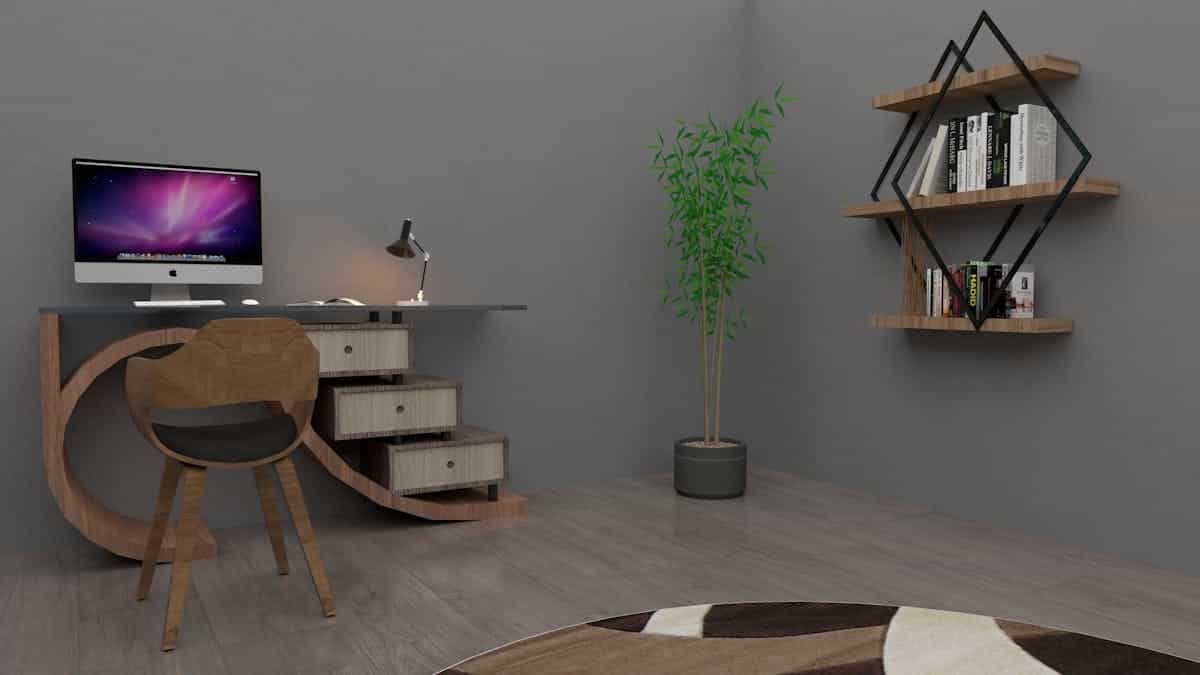
Once the desk is well placed, feng shui adds an optional layer: the compass direction you face. In the Eight Mansions system your best directions come from your personal Kua number, but the broadly favourable, work-supporting directions are east (growth and new beginnings), southeast (wealth), and south (recognition and reputation).
Here is the honest priority, and it matters: the command position almost always beats the compass. If facing your "best" direction would turn your back to the door or shove you against a wall, keep the command position and treat direction as a tiebreaker between two otherwise-good options. The Kua and bagua directions are tradition; the security of the command position has real psychological weight. Do not trade the strong rule for the weak one.
A Desk by a Window — and a Desk in the Bedroom
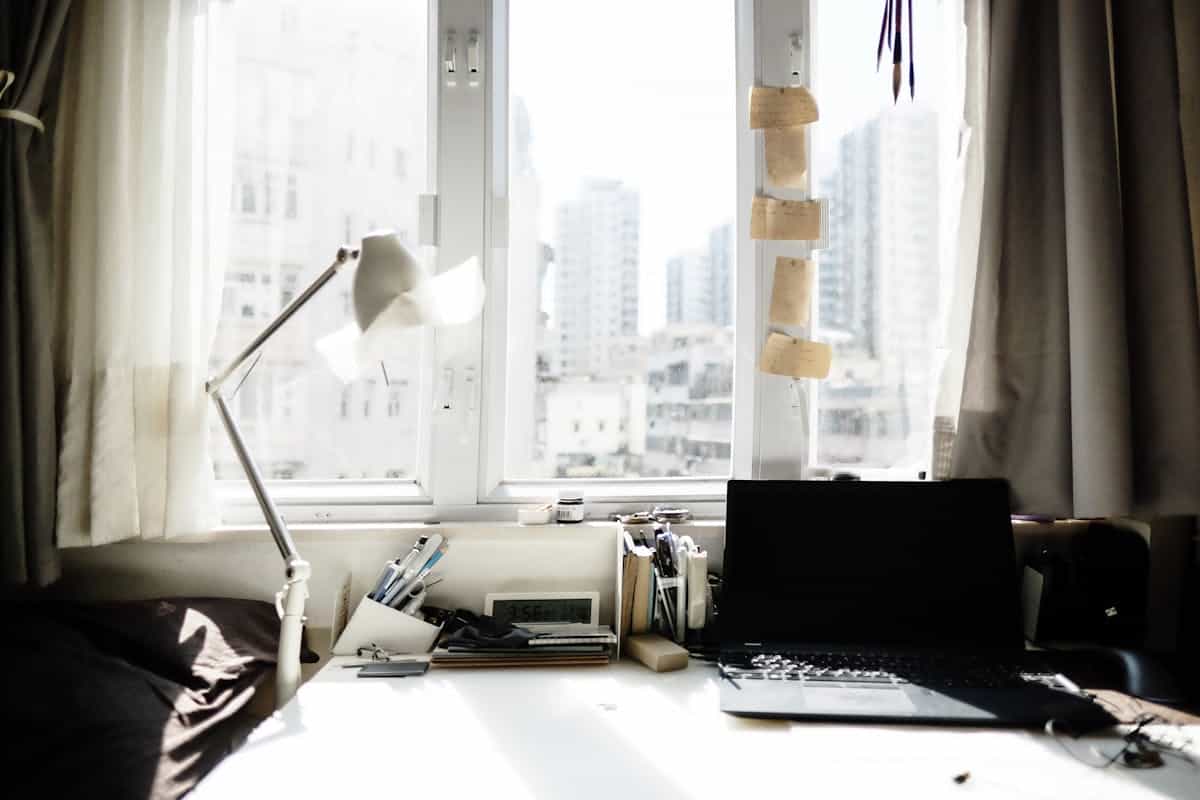
Two specific situations come up constantly, so here is the honest guidance on each.
A desk and a window. The position matters more than people think:
- Facing the window (avoid). Feng shui holds that your focus drifts straight out with the view — and practically, you get screen glare and a moving, distracting scene at eye level.
- Window to your side (good). Natural light without the glare or the pull outward, and your back can still meet a wall. This is the classic feng shui sweet spot.
- Perpendicular to the window (often best). Light falls across the desk rather than into your eyes or behind you, which is also what ergonomics guidance recommends for screens. Try this first.
A desk in the bedroom. This is one of the most common modern feng shui problems, and the principle is clear: work energy and sleep energy interfere. A desk is active and full of unfinished tasks — exactly what you do not want lingering over you as you wind down, which tends to mean worse sleep and worse focus. If the bedroom is your only option, keep the desk as far from the bed as possible, ideally out of sight from the pillow, give it the command position, and screen it or cover the work at night. It is the same logic that keeps screens out of the feng shui bedroom rules, and the sleep research backs a work-free bedroom about as firmly as any sleep advice gets.
Energy Flow and a Clutter-Free Desk
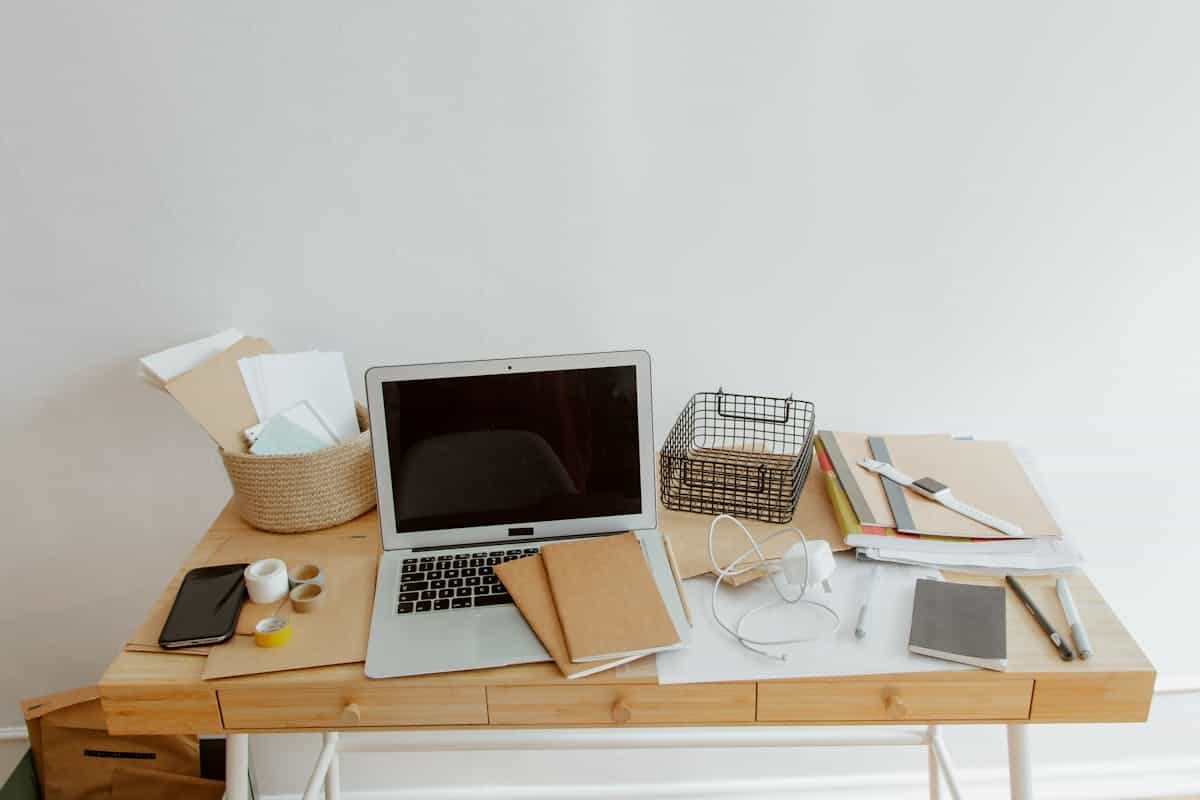
With the desk placed, the next job is movement — of energy, and of you. Feng shui asks you to picture Qi as a stream that should wander through the office without rushing or stalling, which becomes two concrete rules.
Keep clear pathways. You should be able to walk into the room and to the desk without weaving around furniture. Blocked routes and crammed corners make a room feel stressful whether or not you believe in Qi.
Clear the desk. A disorganised desk is the office's version of stagnant energy — and here the independent evidence is strong. A cluttered workspace genuinely competes for your attention and makes focus harder, so the feng shui instinct to keep surfaces clear doubles as plain productivity advice. Keep only what you use daily on the desktop; give everything else a home. The same logic that runs the feng shui bedroom layout guide — clear floor, defined places — applies at the scale of a desktop.
Balance the Five Elements
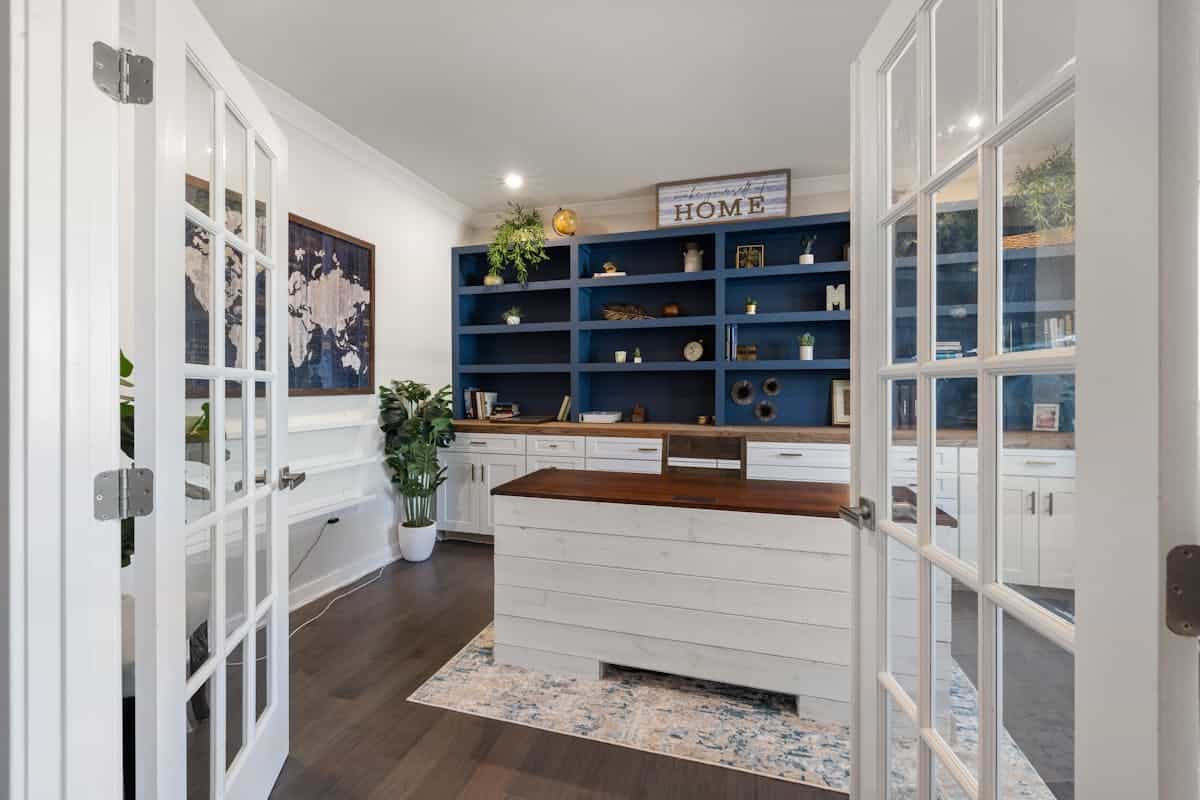
A balanced office is said to hold the five elements — Wood, Fire, Earth, Metal, Water — in gentle proportion. In practice this is about variety of material and color rather than anything you can measure:
| Element | Brought in by | What it supports |
|---|---|---|
| Wood | Plants, wood desk, greens | Growth, focus, new ideas |
| Fire | A lamp, warm light, small touches of red | Drive, recognition |
| Earth | Ceramics, earth tones, a solid desk | Stability, grounding |
| Metal | Metal frames, white, grey | Clarity, precision, efficiency |
| Water | A small fountain, dark blue, glass | Flow, communication, depth |
For color specifically: green supports growth and concentration, blue brings calm and clarity, earth tones ground the room, and small accents of red or purple energise without overwhelming. The honest note is that the precise element-and-direction mapping is tradition, but the underlying advice — a workspace with some warmth, some calm, and natural materials rather than one flat, sterile palette — is sound design either way.
Plants and Living Energy
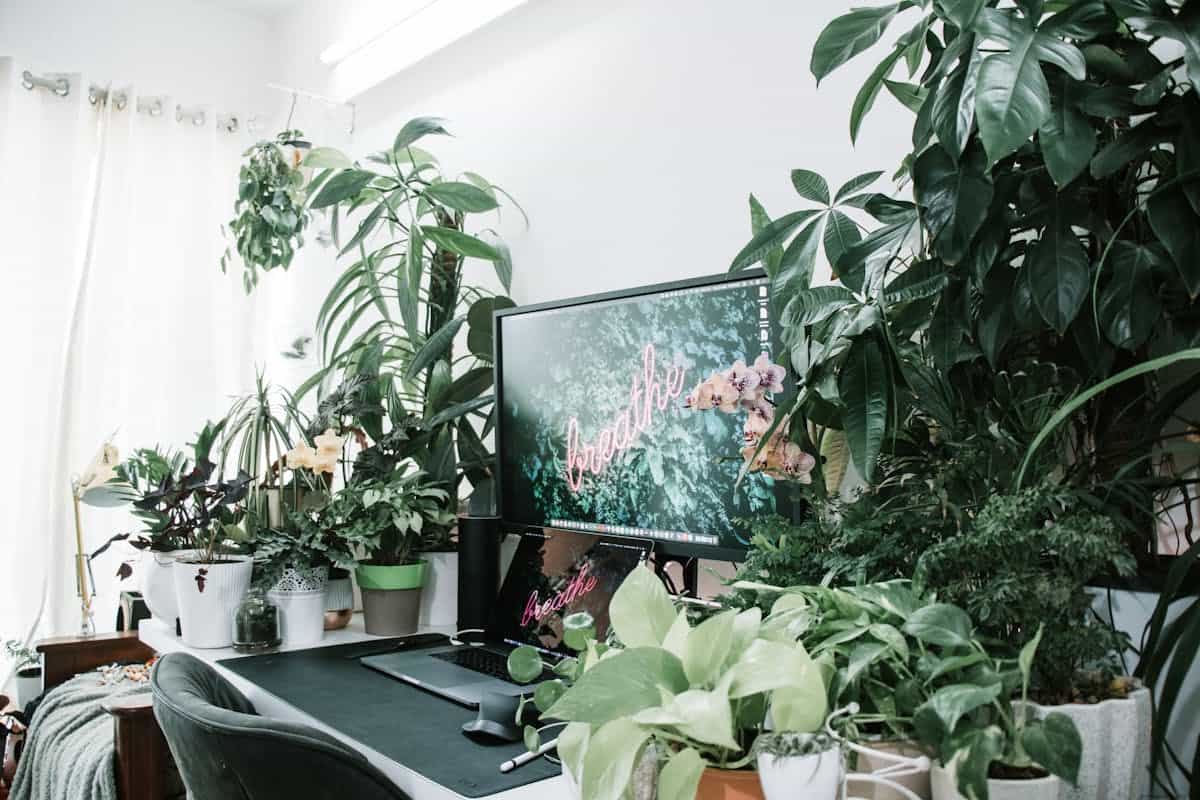
Feng shui treats a healthy plant as living, growing (Wood) energy — and the office is one place the advice is specific. Choose broad- or round-leafed plants: a jade plant (associated with prosperity), pothos, a money tree, or lucky bamboo. Avoid spiky cacti (their points read as "poison arrows" aimed at you), and skip dried or artificial plants, which feng shui considers dead, stagnant energy.
One honest aside, because this claim travels with office-plant advice: the popular idea that a desk plant will "purify your air" overstates the research it rests on, which was conducted in sealed chambers, not ventilated offices. Keep the plant for the genuine things it does — a touch of life, a focal point for tired eyes, a small mood lift — not as an air filter.
Light and the View in Front of You
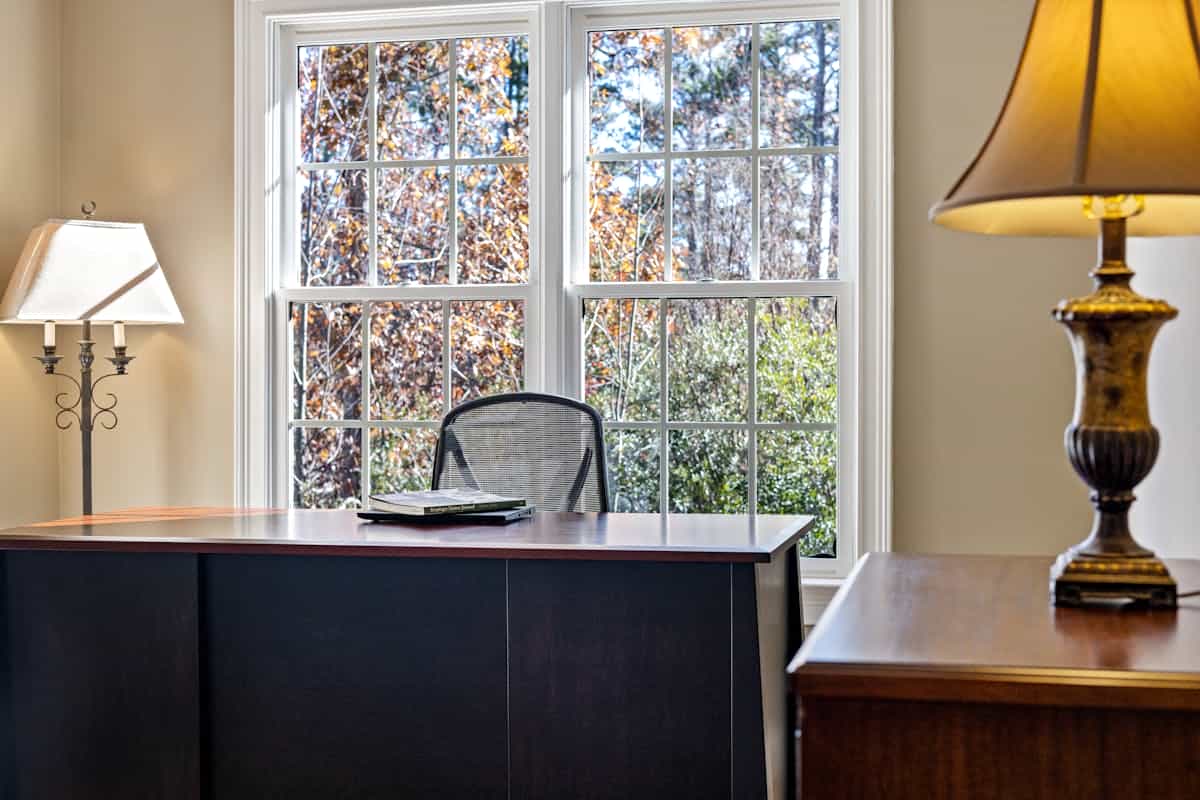
Light is energy, in feng shui and in plain biology. Natural light is best — the window section above covers where the desk should sit relative to it. Where daylight is scarce, layer warm task lighting; a dim office reads as low, stagnant energy and is simply harder to work in.
Then think about what you actually look at. Feng shui values an open, pleasant view in front of you — across the room or to inspiring art — rather than a cramped corner. A long sightline and something restful to glance at gives your eyes and mind a place to rest between bursts of work; a desk that looks at a blank, close wall offers neither.
Decor, the Bagua, and the Wealth Corner
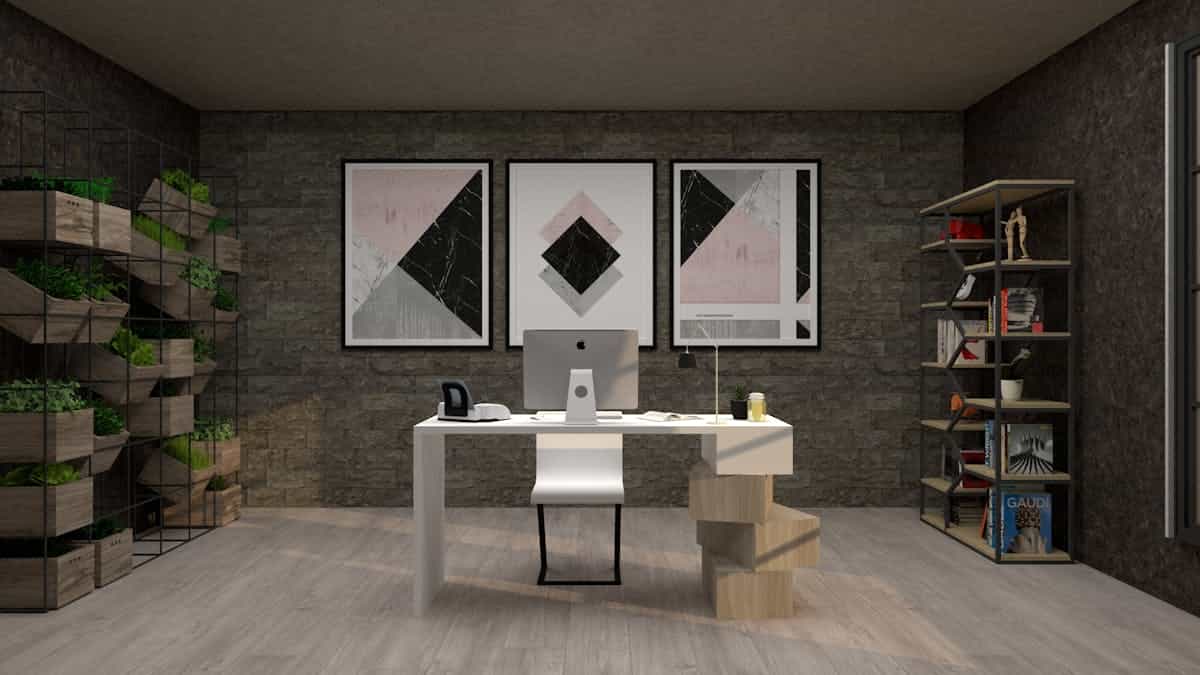
This is the most clearly traditional layer — useful as a finishing touch, not a foundation. The bagua is feng shui's energy map, dividing a space into areas tied to life themes. Two matter most in an office: the wealth area (the far left corner as you stand in the doorway looking in) and the career area (the centre of the wall the door is on).
Activate the wealth corner with something green and growing or a small symbol of abundance — and, more importantly, keep it clean, lit, and clutter-free, since a neglected wealth corner is said to undermine the prosperity it represents. For decor generally, surround the desk with images and objects that represent where you want to go. The cosmology is debatable; surrounding yourself with calm, motivating things rather than clutter and reminders of stress is hard to argue with.
Which Office Rules Actually Matter
This is the section most layout guides skip, and the most useful. Sorting it honestly lets you follow the whole system or just the parts that hold up.
Worth doing regardless of belief: the command position, a solid wall behind you, clear pathways, a decluttered desk, natural light, an open view, and a healthy plant. These map onto real workplace psychology — focus improves when you feel secure, in control, and free of visual clutter — and the broad case for a calm, ordered, well-lit workspace is sound design, not superstition.
Traditional belief, not measurable: Qi flowing as an energy, the bagua compass directions assigning corners to wealth and career, the five-element balance as a metaphysical force, and the dragon-and-tiger sides of the desk. Coherent within feng shui, harmless to follow, often quietly motivating — but cosmology, not mechanism. If you work from a one-room home, the feng shui studio apartment guide covers how to carve a real work zone out of a shared space.
The One Thing to Carry Away
Strip the office rules down and they answer a single question: what makes a person feel secure and clear enough to do good work? See the door, put a wall at your back, clear the desk, let in the light, and give your eye somewhere open to rest. Whether you call the result good Qi or good ergonomics, the desk ends up in the same place — and the work gets easier to start.
The energy is debatable. The difference between a desk you avoid and one you sit down at willingly is not.
Mirror FAQ
How should I lay out my office for good feng shui?
Start with the desk in the command position: facing the door, able to see anyone who enters, but not directly in line with it, and with a solid wall behind your chair. Keep the pathways and the desk itself clear so energy can move, balance the five elements through materials and colors, add a healthy plant or two for living energy, and maximise natural light. Then, if you follow the bagua, keep the wealth and career areas of the room tidy and well-lit. The desk position does most of the work.
Which way should your desk face in feng shui?
Your desk should face into the room toward the door, so you can see the entrance while you work — never with your back to the door. Facing a wall head-on is discouraged because it symbolically blocks your path forward, and sitting with your back to a window is considered unsupported. The ideal is a desk where you look out across the room at the door (without being directly in its line), with a solid wall behind you for backing.
Where should you not put a desk in feng shui?
Avoid four placements: back to the door (you cannot see who approaches, which keeps you subtly on guard), back to a window (no solid support behind you), directly in line with the door (you sit in the rushing energy from the entrance), and facing straight into a blank wall right in front of you (symbolically blocking your progress). If your room forces one of these, the standard fixes are a mirror positioned to see the door, a solid high-backed chair, or a plant or screen to soften the problem.
What is the command position for an office desk?
The command position places your desk diagonally across from the door, facing it, so you have the widest view of the room and can see anyone entering without being directly in line with the doorway — with a solid wall behind your chair. Feng shui says this puts you "in command" of your work and opportunities; the plainer explanation is that seeing the entrance from a backed, protected position lowers the low-level vigilance that drains focus, so you concentrate better.
What are the best feng shui plants and colors for an office?
For plants, choose healthy, broad- or round-leafed varieties such as a jade plant, pothos, or lucky bamboo, and avoid spiky cacti, dried plants, and artificial ones. For colors, green supports growth and focus, blue brings calm and clarity, brown and earth tones ground the room, and small touches of red or purple can energise the wealth area — kept as accents rather than overwhelming the whole space. Balance is the goal: enough warmth and life to feel motivating, enough calm to concentrate.
Do feng shui office layout rules actually work?
Several do, for reasons outside the energy framework. The command position, a solid wall behind you, clear pathways, a decluttered desk, natural light, and a plant or two all map onto real workplace psychology — people focus better when they feel secure, unclutered, and in control of their space. The more cosmological parts (Qi flow as an energy, bagua compass directions, the five-element balance) are traditional belief rather than measured effect. A good feng shui office usually feels calmer and more focused, and much of that is sound workspace design.
Which direction should your desk face in feng shui?
Feng shui ties the best facing direction to your personal Kua number, but the broadly favourable, work-supporting directions are east (growth and new beginnings), southeast (wealth), and south (recognition). The honest caveat is that the command position almost always matters more than the compass: if facing your best direction would put your back to the door or you against a wall, keep the command position and treat direction as a tiebreaker between two otherwise-good options.
Is it good feng shui to put a desk next to a window?
Next to a window with the glass to your side is good feng shui and usually the best real-world choice — you get natural light without glare or the distraction of staring out, and your back can still meet a solid wall. Facing the window directly is discouraged, since the light causes glare and feng shui holds that your focus drifts out with the view. A desk perpendicular to the window, so light falls across it, is the practical sweet spot.
Is it bad feng shui to have a desk in the bedroom?
Feng shui discourages a desk in the bedroom because work energy is active and alert while a bedroom should be restful, and the two interfere, hurting both sleep and focus. If you have no choice, keep the desk as far from the bed as possible, ideally out of sight from the pillow, give it the command position, and screen it or cover the work at night so the room can switch back into a sleeping space.