Kitchen Metal Wall Art: Best Picks for a Stylish Kitchen
If you want wall decor that can actually live in a kitchen — near the heat, the steam, and the inevitable splatter — metal wall art is the answer most other materials cannot give. Here is the short version first.
The best metal wall art for a kitchen is a powder-coated or stainless piece whose theme suits your room (culinary, botanical, geometric, or farmhouse), hung on a dry-ish wall like a breakfast nook, above the counter, or over the cabinets — not directly in the steam behind the stove. Match the finish to your hardware, and it will outlast every other thing on the wall.
There is one genuinely practical reason metal earns its place here, and it is worth saying plainly. A kitchen is the most hostile room in the house for decor — humidity, grease, temperature swings, and direct sun all conspire against it. Metal shrugs off all four. That is not marketing; it is just what the material does.
Why Metal Art Belongs in a Kitchen
Most wall decor is quietly unsuited to a kitchen. Paper prints warp and spot in humidity, fabric absorbs cooking smells, and bright art fades in a sunny breakfast room. Metal does none of that.
A powder-coated steel or aluminum piece resists rust and fading, ignores cooking odors, and wipes clean when a film of cooking grease eventually settles on it — which, in a working kitchen, it will. It is also usually lightweight, so it hangs with modest hardware or even heavy-duty mounting tape, and sculptural, casting small shadows that flat prints cannot. The honest caveat: "rust-proof" depends on the metal and finish, which is the next section. But as a category, metal is the rare decor built for the conditions a kitchen actually throws at it.
The Best Styles and Themes
"Metal wall art" covers a wide range, and the theme does most of the work in setting a kitchen's mood. The categories worth knowing:
- Culinary themes — utensils, coffee cups, wine glasses, fruit, herbs. The classic kitchen choice, and the most on-the-nose in the best way for a coffee nook or bar area.
- Botanical and floral — leaves, branches, single blooms. Adds softness and a "nature indoors" feel that warms up hard surfaces.
- Geometric and abstract — clean lines, grids, and undefined shapes that suit modern and minimalist kitchens.
- Word art and signs — "Kitchen," "Gather," a family name; covered in its own section below.
- 3D and layered pieces — dimensional designs that throw real shadow and read as sculpture rather than picture.
Pick the theme that fits how the room already feels, not the one that looks best in isolation on a product page.
Finishes and Colors That Last
The finish decides both the look and how well the piece survives. Here is what the common ones actually do:
- Powder-coated steel — color baked on as a tough, powder-coated layer that is far more durable than ordinary paint and genuinely resists rust and chips. Usually matte black, white, or bronze. The safest, most popular kitchen choice.
- Stainless steel and aluminum — naturally rust-resistant, with a cool, modern sheen that pairs well with stainless appliances.
- Raw or distressed iron — warm, rustic, and characterful, but it can develop surface rust in a humid kitchen. Sometimes that weathered patina is the intended look; if you do not want it spreading, choose a sealed piece.
- Copper and bronze tones — rich and warm, and they age into a patina of their own over time.
For color, the quiet trick is to match the metal to your hardware — black art with black faucets and pulls, warm metals with brass or copper fixtures — so the piece reads as part of the kitchen rather than a stranger on the wall.
Match the Art to Your Kitchen's Style
The same material reads completely differently depending on the design, so let the kitchen lead:
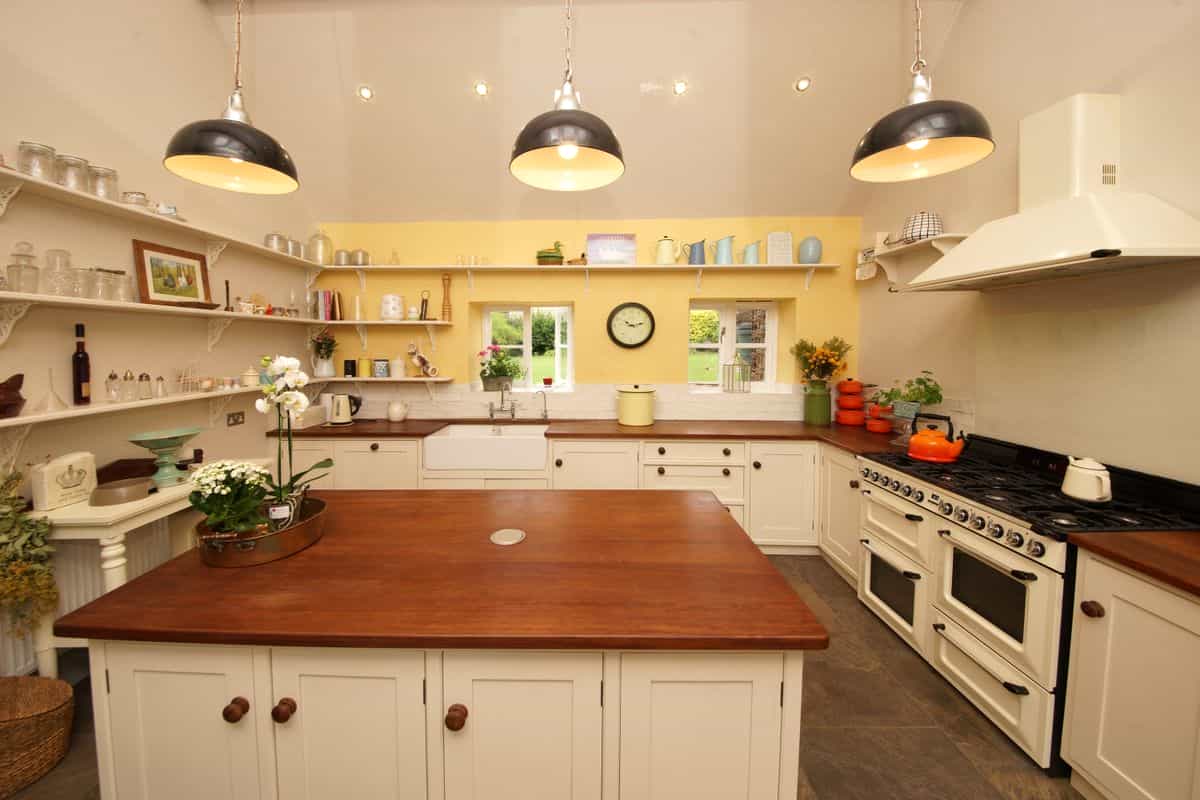
- Farmhouse and rustic kitchens suit scrolled, distressed, or word-based pieces in matte black or aged iron — a metal "Fresh Eggs" or scrollwork panel over open shelving.
- Modern and minimalist kitchens want clean geometric or abstract pieces, often a single bold shape in black or stainless.
- Traditional kitchens take well to botanical or culinary pieces with a little detail and a bronze or pewter finish.
- Eclectic and colorful kitchens can carry a brighter multi-color metal piece as a deliberate focal point.
One strong-but-true opinion: a single, well-sized metal piece almost always beats a crowd of small ones in a kitchen. Counters and cabinets are already busy with hardware, jars, and appliances, so the wall is where the eye wants somewhere calm to land.
Where to Hang It in the Kitchen
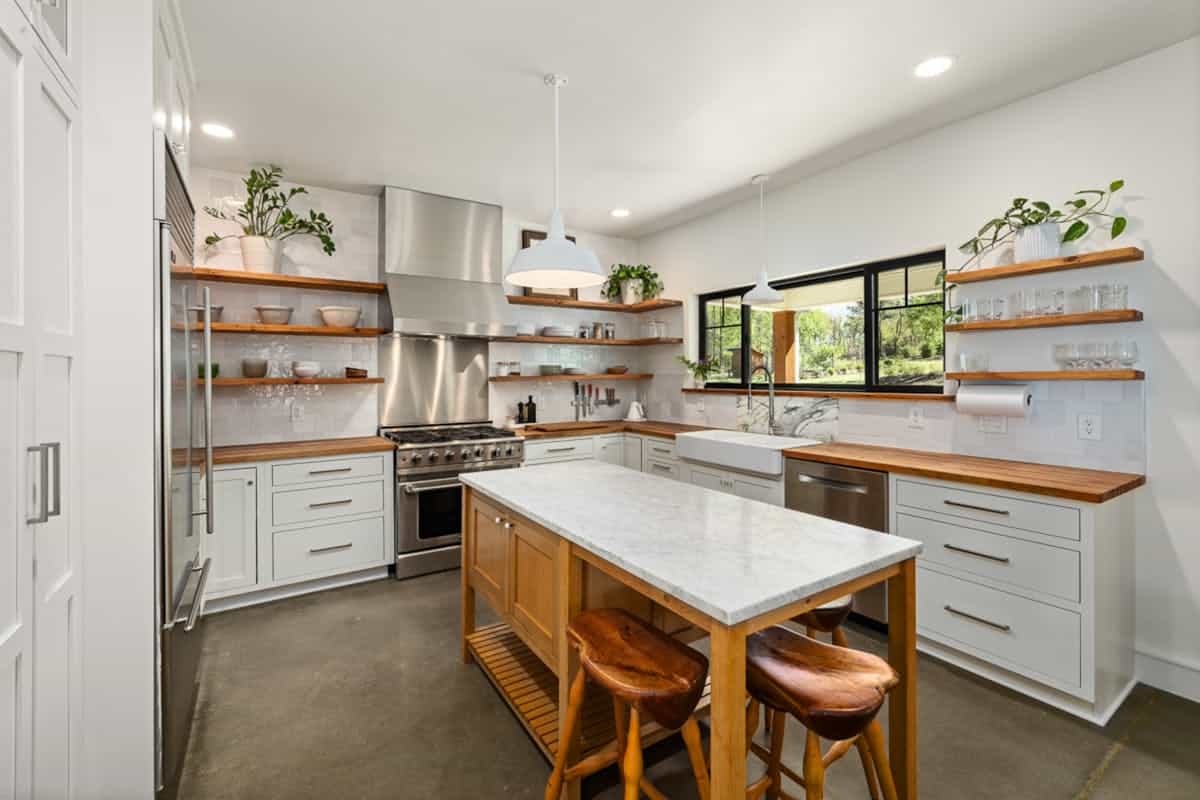
Kitchens have less open wall than other rooms, so the spots that work are specific:
- The breakfast nook or eating area — the largest blank wall, and the best home for a statement piece at eye level.
- Above the countertop or coffee station — fills the gap between counter and upper cabinets, where a smaller piece shines.
- Above the cabinets — that awkward high strip suits a long horizontal piece or a row of smaller ones.
- Over the range hood — a focal point, but choose sealed metal and expect to wipe it; this is a steam-and-grease zone.
- A large empty wall — treat it like any room and size the art to about two-thirds of the space.
Keep the wettest, greasiest zone — directly behind the stove and sink — for pieces that are explicitly made for it. Everywhere else, normal metal art is fine. For the full sizing-and-height math that applies to any wall piece, the magnolia wall art guide lays out the two-thirds rule and the eye-level standard.
How Big Should It Be, and How Many Pieces?
Size is where kitchen art most often goes wrong, almost always too small — a tiny plaque marooned on a wide wall looks like an afterthought. The fix is to size the piece to the space it anchors:
- On an open wall (a breakfast-nook wall, say), a single piece should fill roughly two-thirds of the usable width and hang with its center near eye level, about 57–60 inches from the floor.
- Above a counter or console, fill the gap between the surface and the upper cabinets, leaving a few inches of breathing room top and bottom rather than crowding either.
- Above the cabinets or hood, go wide and low-profile — a long horizontal piece reads better in that shallow strip than a tall one.
On quantity, a kitchen usually wants one confident piece, not a scatter of small ones, because the counters are already visually busy. If you do group several, treat them as one block, keep a consistent gap, and plan the layout on the floor first. The hanging-height logic carries straight over from the how-high-to-hang-a-mirror guide — eye level is eye level, whatever is on the wall.
Kitchen Signs and Personalized Pieces
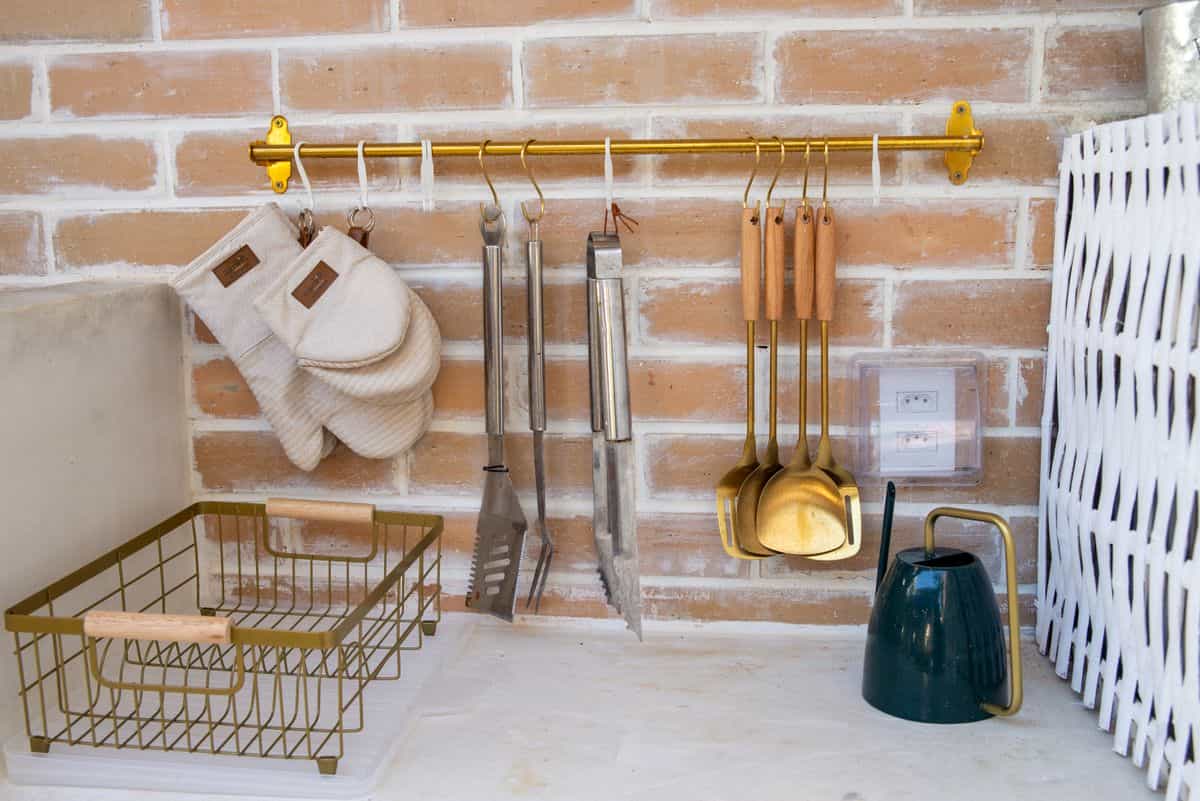
Word-based metal art is its own popular category, and a kitchen is where it feels most at home. Cut or scrolled steel kitchen signs — "Kitchen," "Gather," "Fresh Coffee," or a family name and "est. [year]" — work above a doorway, over open shelving, or on the wall of an eating area.
A practical bonus: these metal signs come as coordinated sets for the whole house. A matching metal bath sign in the same finish for the bathroom, a similar piece for the entry, and your kitchen sign all read as one intentional family rather than scattered one-offs. If you like the look, buying within a single style and finish is the easiest way to make a house feel pulled together — the same logic that makes a coordinated set of dining room wall decor look deliberate rather than accidental.
Care and Installation
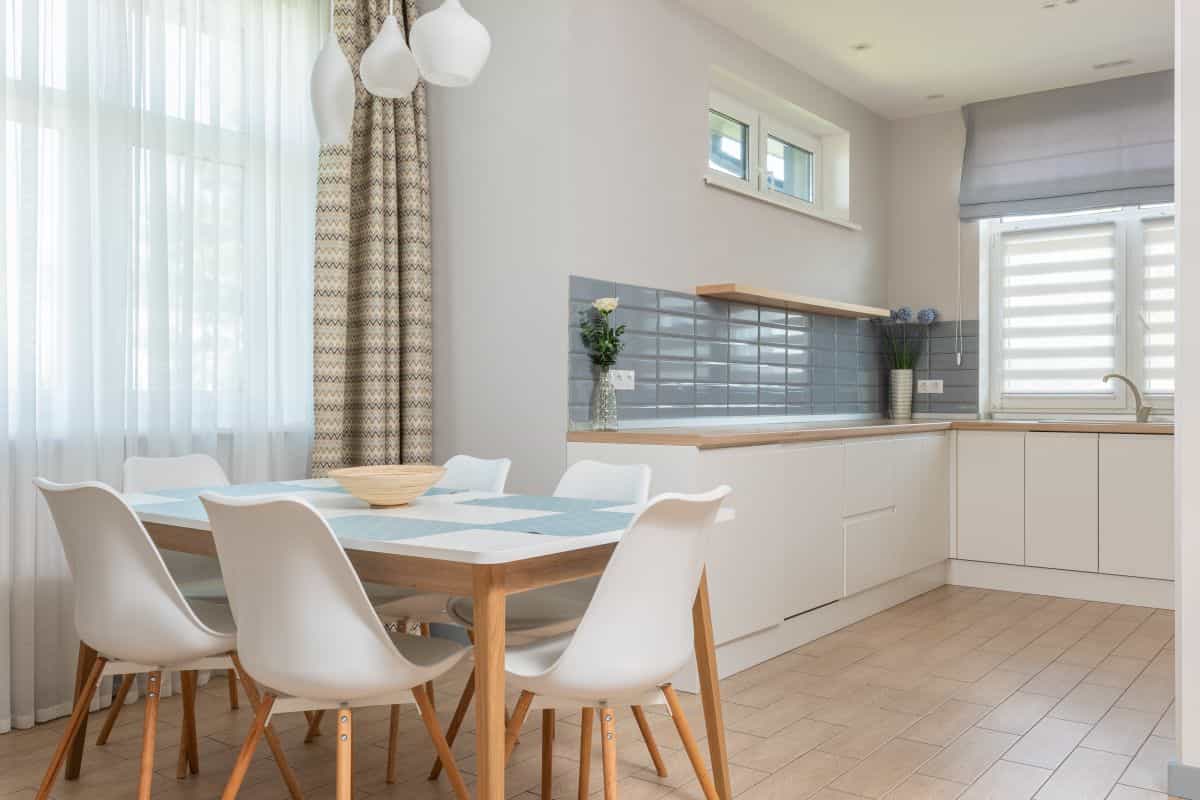
The upkeep is genuinely minimal, which is half the appeal. Dust regularly with a soft, dry cloth. When a grease film builds up, wipe it with a cloth dampened in mild soapy water, then dry it so moisture does not sit in crevices or seams. Avoid abrasive pads and harsh chemicals, which can scratch powder coating or strip a finish. For raw or patinated iron, skip the water and just dust.
Installation is usually easy because metal art is light. Most pieces hang on a nail, screw, or wall anchor sized to their weight; many flat designs also take heavy-duty mounting strips, which is handy on tile or where you cannot drill. Use a level, and for multi-piece arrangements, lay everything out on the floor or with paper templates before you make a single hole — the same approach that keeps any wall display straight.
The One Thing to Carry Away
Most kitchen decor is a quiet compromise — it looks good until the room it lives in slowly wears it down. Metal wall art is the exception: it was built for heat, steam, and grease, so the only real question is which design you actually want to look at while the kettle boils.
Choose a finish that matches your hardware, hang one well-sized piece where the eye lands, and keep it a polite distance from the stove. Do that, and the art on your kitchen wall will still look sharp long after the trend that sold it to you has moved on.
Recommended Products
These are the categories worth browsing for metal wall art for a kitchen and the bits to hang it well. (Links go to Amazon search results so you can compare current options.)
- Kitchen metal wall art (culinary themes) — coffee, wine, utensils, and food motifs.
- Metal kitchen word signs — "Kitchen," "Gather," and family-name pieces.
- Botanical metal wall decor — leaves and florals to soften hard surfaces.
- Geometric / abstract metal wall art — clean shapes for modern kitchens.
- Matching metal bath sign — to coordinate the look into other rooms.
- Heavy-duty mounting strips and anchors — for drilling-free hanging on tile.
Mirror FAQ
Why is metal wall art good for a kitchen?
Metal wall art suits a kitchen because it survives the conditions that ruin other decor. Unlike paper prints or fabric, it does not warp in humidity, fade quickly in sunlight, absorb cooking odors, or stain from grease — and it wipes clean with a damp cloth. Powder-coated steel and aluminum pieces are especially durable, resisting rust and heat near a stove. That toughness, plus a light, sculptural look, is why metal is one of the most practical choices for kitchen walls.
What style of metal wall art is best for a kitchen?
Match the style to your kitchen. Culinary themes (utensils, coffee, wine, fruit) are the classic kitchen choice; botanical and floral pieces add softness; geometric and abstract designs suit modern kitchens; and scrolled or distressed pieces fit farmhouse and rustic rooms. Word art and family-name signs personalize a breakfast nook. The safest approach is to echo something already in the room — the cabinet color, the hardware finish, or the overall mood — so the art looks intentional rather than added on.
Where should I hang metal wall art in a kitchen?
The best spots are the empty wall of a breakfast nook or eating area, the wall above a countertop or coffee station, the space above the cabinets or the range hood, and any large blank wall that needs a focal point. Keep metal art a little away from direct steam and splashes — beside the stove rather than directly behind it — unless the piece is sealed, powder-coated metal made for it. Hang a single statement piece at eye level, or group smaller pieces as a balanced cluster.
Does metal wall art rust in a kitchen?
It depends on the metal and finish. Powder-coated steel, stainless steel, and aluminum resist rust well and are the safest near steam and splashes. Raw or distressed iron and some decorative pieces can develop surface rust or spots in a humid kitchen, which is sometimes the intended rustic look but can spread if the piece is unsealed. If you want zero rust, choose a powder-coated or sealed piece; if you like a weathered patina, raw metal will keep aging — keep it away from the wettest zones either way.
How do you clean and care for kitchen metal wall art?
Dust it regularly with a soft, dry cloth, and wipe away any grease film with a cloth dampened in mild soapy water, then dry it so no moisture sits in crevices. Avoid abrasive scrubbers and harsh chemicals, which can scratch powder coating or strip a finish. For raw or patinated metal, skip water where you can and dust only. Hanging the art slightly away from the heaviest steam and splatter zones means you will rarely need more than an occasional dusting.
What is a metal kitchen sign and where does it go?
A metal kitchen sign is word- or phrase-based wall art — "Kitchen," "Gather," "Fresh Coffee," a family name — usually in cut or scrolled powder-coated steel. It works above a doorway, over open shelving, on the wall of an eating area, or above a coffee station. The same style of metal sign is made for other rooms too, like a coordinating metal bath sign for a bathroom, so you can carry one material and finish through the house for a consistent look.