Accidentally Broke a Mirror: What to Do First (Safe Cleanup + Optional Spiritual Steps)
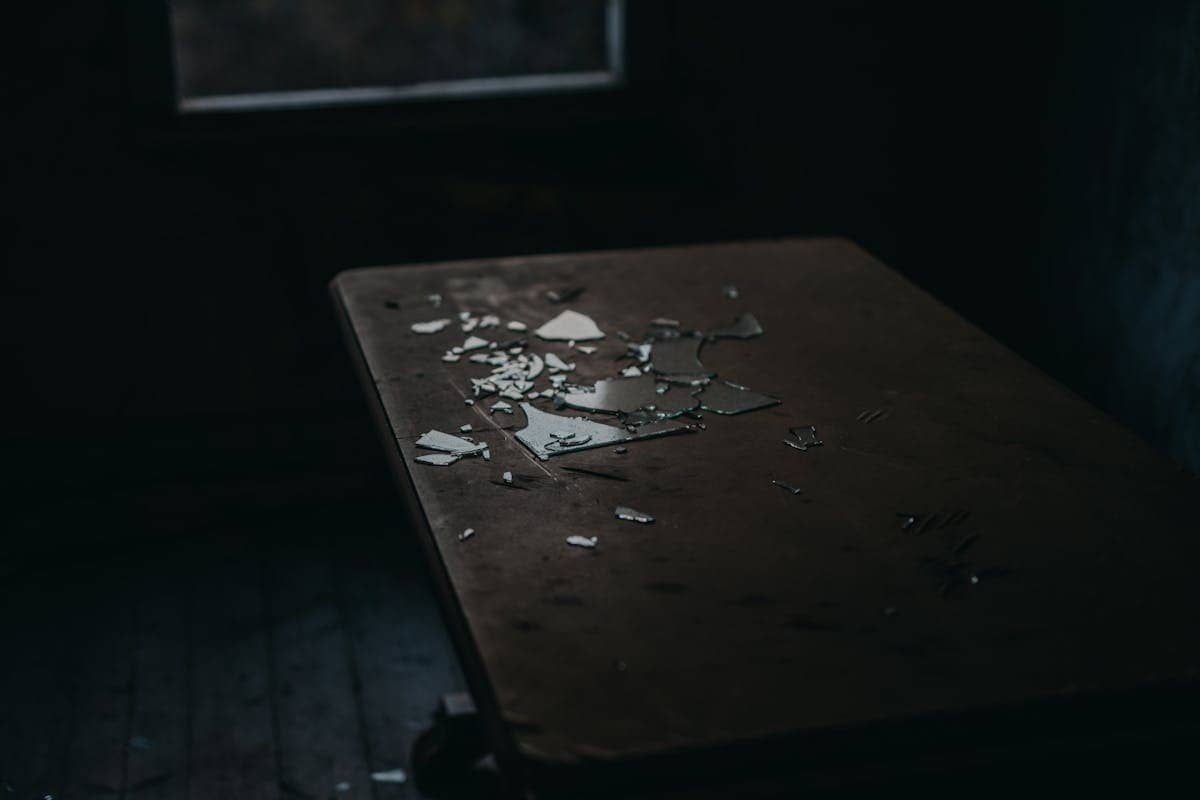
If you accidentally broke a mirror, treat the next few minutes like a workshop accident: clear children and pets from the zone, wear closed-toe shoes and gloves if you can, stop shards from tracking through the house, sweep before you think about vacuuming, use sticky lifts for glitter-fine fragments, then bag rigid and label the trash. Only after the glass is controlled should you decide whether you want any optional spiritual framing — salt, prayer, burial timing — as a separate layer that does not replace gloves or a dustpan.
What Should You Do in the First Minute After a Mirror Breaks?

Sound comes before sight — you already know something went wrong. The goal of minute one is to shrink the accident: stop barefoot traffic, keep dogs and toddlers out, and resist the urge to rake shards toward you with your palms.
Block off the area with a chair or tape line if you need to. Turn on lights so glitter is visible; broken mirror throws more pinpoints than you expect. If a large sheet still hangs on a wall mount, do not force it — support the loose piece so it does not drop in a second snap.
What Is a Safe Step-by-Step Cleanup Order for Broken Mirror Glass?
-
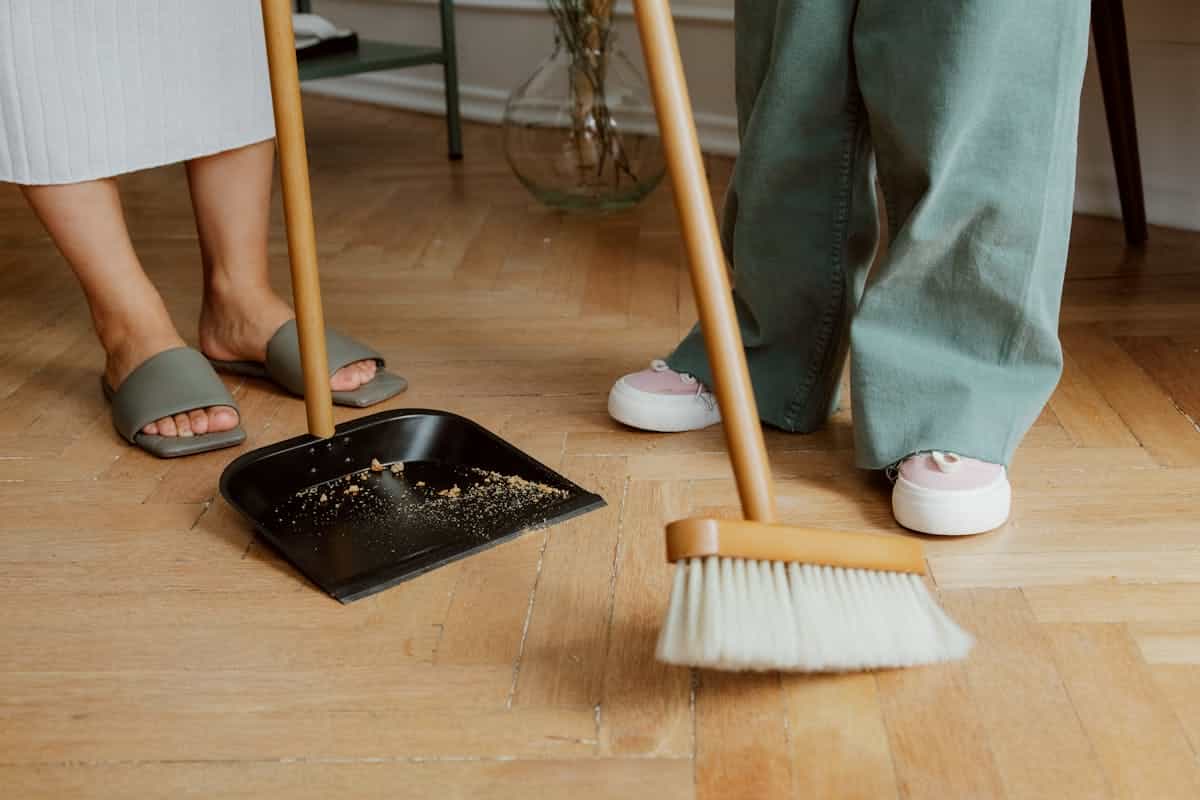
Sweep large arcs first. Use a broom to pull fragments toward a pile, working from the outside of the scatter inward so you do not skate pieces into another room.
-
Lift the pile with a dustpan held close to the floor. Tap the pan edge down so shards slide instead of launching.
-
Chase the sparkles. Micro-splinters read as harmless dust until they are not. Press a barely damp paper towel flat across the floor; wide painter tape works on hard surfaces; a soft bread interior or cut potato can lift invisible points from textured tile.
-
Check footwear and broom bristles. Glass loves to hide in rubber soles and bristle packs — tap them outside before you walk away.
-
Bag like you mean it. Heavy contractor bags beat skinny kitchen sacks. Double-wrap. If local guidance asks for rigid boxes for sharp goods, use a small cardboard box inside the bag.
This sequence matches what most safety-minded guides recommend: mechanical pickup before suction, because fines scatter when rushed.
How Do Gloves, Lighting, and Shoes Change the Whole Outcome?

Thin disposable gloves beat bare skin for wiping passes — but they are not stab-proof. Leather or cut-resistant work gloves help when you must lift a curved shard. If you only have rubber kitchen gloves, still better than fingertips.
Daylight or a low-angle lamp reveals sparkles across wood grain that overhead bulbs miss. If you wear readers, use them; the failure mode here is invisible glass, not drama.
When Might Vacuuming Be Reasonable — and Why Not First?

Vacuuming first is the classic mistake. Aggressive airflow can embed glass in a carpet pile deeper, overload a beater bar, or leave fine dust inside a cheap filter that puffs out later.
After the broom and sticky passes, you can vacuum for the last haze if your machine tolerates it — some people prefer a shop vac on hard floor for this reason. Empty the collection chamber outside or into a bag straight away, and wipe the nozzle. If you would rather not risk the vacuum at all, that is reasonable; repeat damp-towel passes until towels come back clean.
How Should You Dispose of Mirror Fragments Responsibly?

Label the bundle as glass or sharp even when laws do not force the word — handlers deserve a warning.
If you have municipal bulk pickup rules, follow them; some locations want mirror with construction debris, not mixed curbside. Never sneak jagged bags into recycling bins unless local programs explicitly accept treated mirror glass — many do not, and workers sort by hand.
If the mirror held sentimental weight, allow the practical task first. People sometimes keep a small non-razor piece for memory after the hazard is gone — the emotional piece is real, but so is blood loss; honor the feeling without skipping the basics.
Where Did the "Seven Years" Story Come From — and Why Does It Still Show Up?

Roman-era ideas linked reflections with the self in ways that felt almost sacred; damaging a reflective surface read as disrespect that invited misfortune, and a seven-year bodily renewal belief provided a time horizon that felt finite rather than endless. The superstition became far more common once mirrors were mass-produced in the late 1800s — more glass in ordinary homes meant more breaks to narrate.
Social psychologists describe these beliefs as culturally sticky: once a group repeats them, they feel true because trusted people said them — not because the mirror has memory. For a careful, sourced narrative of how the meme travels, read the discussion in this piece from The Conversation. For how humans sometimes treat false patterns as causal, the American Psychological Association overview of motivated reasoning lays out why reassurance can trump accuracy. Collective reinforcement matters too — ScienceDaily summarized research on how repeated social signals increase belief spread.
For a dedicated site walkthrough of the seven-year motif itself, see the origin-focused guide to breaking a mirror and the seven years belief. For the opposite valence — traditions that do not read a crack as doom — some cultures treat breakage as release rather than doom. Meaning follows culture, not the mirror itself.
What Spiritual or Cultural Responses Can You Choose — Clearly Labeled as Optional?

These are meaning-making tools, not substitutes for brooms. If the list below makes you roll your eyes, skip without guilt — the floor still needs sweeping.
- Salt thrown over the shoulder, a spoken intention, or a brief silence — symbolic reset for people who already use gesture to mark transitions.
- Burying wrapped shards at night, leaving pieces at a crossroads, or rinsing hands at a faucet while naming a fresh start — folklore varies by region; pick only what aligns with your ethics and local respect for public space and water.
- Prayer or recitation from your tradition if prayer anchors you after mistakes.
For a longer menu of counter-rituals gathered in one place, use the stepwise remedies collection for reversing perceived bad luck after a mirror breaks — treat it as an idea buffet, not a contract with the universe.
Some folk instructions mention moving water. If you ever consider natural water, obey safety, leave-no-trace norms, and never litter glass into a stream — bag it instead.
Some schedules prefer burial or other finishing gestures after dark. Moon phase does not alter how glass behaves in a landfill; night work can feel private and ceremonial, and it also makes sparkle harder to see — use a bright lantern if you still need to verify the floor.
What About Reading the Accident as a Sign or Omen?

If your mind immediately hunts for meaning — a job worry, a relationship crack, a streak of clumsy weeks — that search is psychological pattern-matching, not proof of prophecy. You can still journal what you felt without declaring the mirror a messenger.
For readers who want a structured look at symbolism rather than magical certainty, the broken mirror as sign and omen article lays out how different frames treat the same crack.
How Do You Quiet Anxiety, Embarrassment, or Hypervigilance After the Crash?

Superstitions can lower stress when they feel like control — and they can spike guilt when they feel like judgement. If the broken mirror launches self-blame, name what is verifiable: you had an accident while moving through space, not a cosmic indictment.
Practical grounding beats rumination: walk the path you already took while barefoot and scan again; shake rugs outside; wash socks separately. If intrusive thoughts persist about bad luck, that is anxiety doing predictable loops — talk to someone you trust, or a clinician if the spiral persists. The mirror cannot trap a soul in any physics lab sense; your brain can still spin stories.
A broken mirror ends up in the same factual category as any dropped glass: sharp, sneaky at the glitter scale, and finished once bagged properly. Whatever meaning you give the moment — Roman curse, Indian reset story, or pure coincidence — let it ride on top of completed cleanup, not instead of it. When the floor passes the damp-towel test clean, you have already done the part that deserved reverence: keeping bodies safe.
Mirror FAQ
What is the first thing you should do if you break a mirror?
Get people without shoes and pets out of the area, put on closed-toe shoes and work gloves if you have them, and stop the spill from spreading with a broom or stiff cardboard before you try to pick up pieces by hand.
Is it true that breaking a mirror causes seven years of bad luck?
That line is a folk belief with ancient Roman roots tied to reflections and a seven-year renewal idea — not a measurable physical rule. Many people treat it as symbolism; others ignore it. What is objectively true is that broken mirror glass can cut skin. Handle that part seriously.
Can you vacuum broken mirror glass?
Do not vacuum as your first step, because it can scatter fine shards and damage some vacuums. Sweep or tape-lift the bulk, then vacuum only for residual dust if your machine is suitable, empty the bin soon after, and check footwear and wheels for embedded glass.
How do you pick up tiny mirror shards safely?
Use a damp paper towel, wide packing tape, soft bread, or a cut potato pressed gently to surfaces — these lift micro-splinters your eyes can miss. Work slowly and re-check corners, grout lines, and carpet fibers.
How should you throw away broken mirror pieces?
Wrap fragments in newspaper or cloth, place them in a rigid box or thick contractor bag, seal it, and label it as glass so waste handlers are not surprised. Follow local rules for sharp waste where those exist.
What if I break a mirror in a store or another persons home?
Tell the host or manager immediately so the area can be secured safely. Offer reasonable help with cleanup or replacement according to the situation. Liability and politeness are practical matters separate from superstition.
Does salt or running water actually undo bad luck from a broken mirror?
Those are optional folk rituals meant as symbolic resets for people who already find them meaningful. They do not change glass chemistry. If a ritual lowers your anxiety and does not delay real cleanup, it can still serve a human purpose.
Why do some cultures treat a broken mirror as good luck?
Not every tradition reads a crack the same way — some approaches treat breakage as release or reset rather than doom. Meaning follows culture, not the mirror itself.