Breaking a Mirror: 7 Years of Bad Luck — Origin, History, and What It Really Means

The "7 years bad luck" superstition for breaking a mirror originated in ancient Rome. Romans believed the human body and soul underwent a complete renewal every seven years. Since mirrors were thought to capture the soul — not merely reflect the face — breaking one meant the soul-image was shattered. It would then take a full seven-year cycle to heal.
That is the short answer. But the full history of where this superstition came from, why the number seven was chosen specifically, and how the belief spread across centuries and continents is considerably more interesting than the superstition itself. It involves Greek prophecy, a Venetian trade monopoly so valuable that defectors were allegedly threatened with assassination, and at least one cultural tradition in which breaking a mirror means the exact opposite of bad luck.
Where Did the "7 Years Bad Luck Mirror" Superstition Actually Begin?
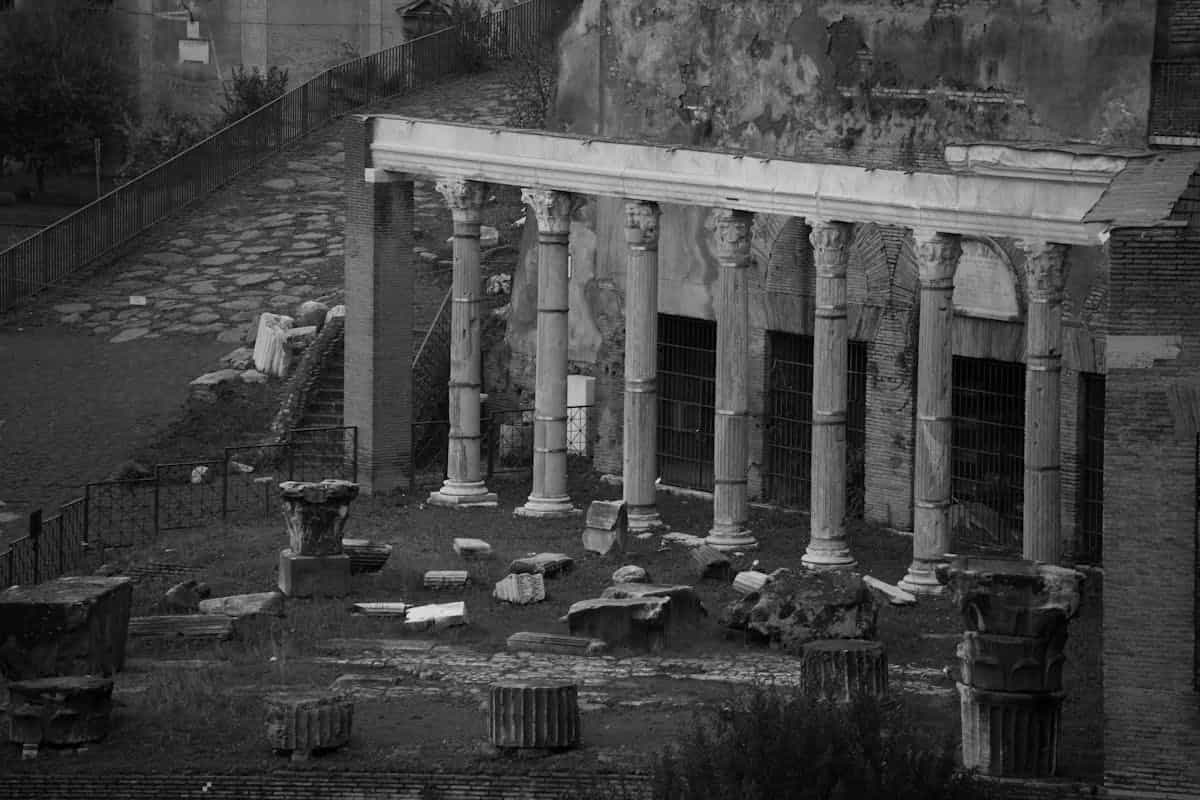
The belief starts in ancient Rome, in the first and second centuries CE, though its roots run deeper into Greek thinking. Romans held that the human body and spirit operated on a seven-year cycle — that every seven years, the body renewed itself entirely: flesh, health, and spiritual fortune reset. This was not a fringe theory. It shaped how Roman physicians and philosophers understood illness, aging, and fate.
Into this framework, add their understanding of what a mirror was. Early Romans did not have glass mirrors. They used polished metal — bronze, copper, silver. The history of mirrors goes back to approximately 6000 BCE in Anatolia, but in Rome the surface carried a meaning far beyond optics. What appeared in the polished metal was considered a genuine image of the soul, not a mere bounce of light.
This is the crux of why breaking a mirror is bad luck in the Roman framework: the mirror did not reflect your face. It held your soul's image. Break the mirror, and the soul-image fractures with it. Your soul, now damaged, cannot be repaired by willpower or ritual alone. It must wait for the body's next natural reset. Seven years.
The superstition spread widely after mirrors became mass-produced in the late 1800s, when ordinary households could own one for the first time. Before then, the belief existed — but mirrors were rare and expensive enough that breaking one was primarily a financial catastrophe. The supernatural explanation became widely known only once breaking a mirror became a common household accident.
The Greek Roots: Divination, Fate, and the Broken Reflection
The Romans did not invent the idea that mirrors held something beyond the visual. They inherited it from the Greeks.
The ancient Greek practice of catoptromancy — mirror divination — was documented by the traveller Pausanias in the 2nd century CE. Greek seers at temples would submerge a mirror in water and ask a sick person to gaze into it. A clear, steady reflection meant the person would recover. A distorted or broken image was read as a death omen.
Breaking the mirror in this context was not simply damaging an object. It was breaking the instrument of fate — the tool through which the future was visible. Greek priests called specularii used polished metal mirrors specifically for this kind of reading, and the objects were treated with corresponding reverence.
When Greek and Roman culture came into sustained contact — through conquest, trade, and cultural exchange — these two streams of mirror-belief merged. The Roman cosmological framework (seven-year renewal cycles) combined with the Greek interpretive tradition (mirrors as fate-tools), and the result was more developed and more specific than either had been independently.
The belief that mirrors were connected to something beyond ordinary light reflection appears across cultures that had no contact with Greece or Rome: in Egyptian burial practices, in Indian Vedic texts, in Chinese mirror divination. The seven-year number is distinctly Roman. But the deeper belief — that mirrors and fate are connected — is far older and far more widespread.
The Venetian Mirror Monopoly: When Economics Reinforced Superstition
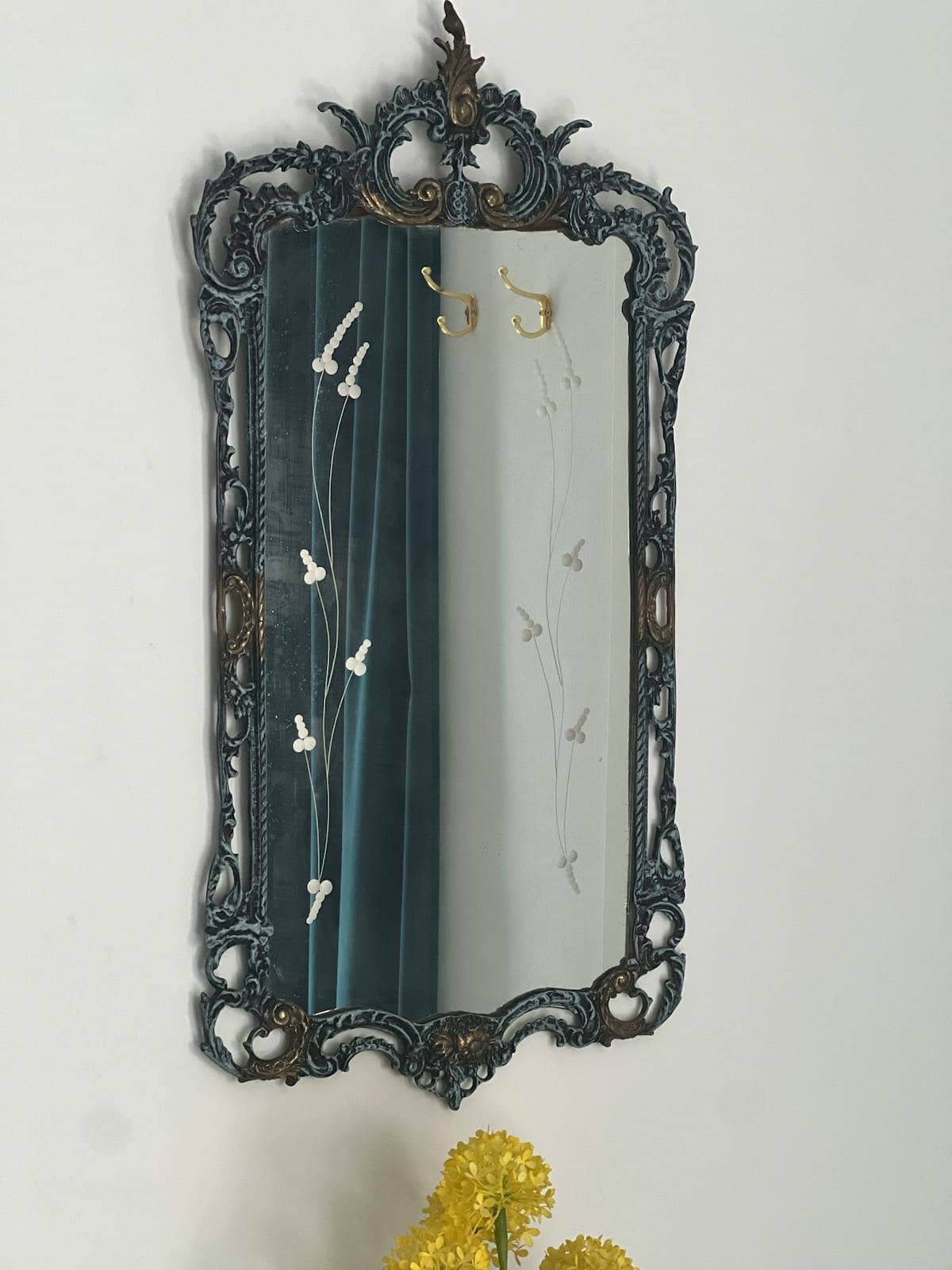
Here is the part of the broken mirror superstition that most articles skip — and it is the most practically interesting part.
In the 13th century, glassmakers on the island of Murano, near Venice, developed a method for producing flat, clear, highly reflective glass mirrors using a tin-mercury amalgam backing. The result was dramatically superior to anything previously available in Europe. Venice held an effective monopoly on European mirror production for the next four centuries.
A Venetian mirror in the 1600s could cost as much as a painting by a major artist — some records indicate that a large Venetian mirror sold for more than a small sailing ship. The Venetian government protected this advantage with such intensity that glassmakers who attempted to share the technique with foreign courts were reportedly threatened with assassination. Whether those threats were carried out is uncertain. The monopoly held for over 200 years regardless.
For the servants and staff of households wealthy enough to own a Venetian mirror, breaking one was a catastrophe that had nothing metaphysical about it. Seven years of bad luck had a literal financial meaning: that was roughly how long it would take to work off the debt or absorb the loss. The supernatural explanation for this economic reality was already in place — the Roman and Greek roots predate Venice by more than a thousand years — but the mirror trade gave the superstition renewed practical force. When mirrors became common enough for ordinary people to break regularly, the seven-year curse was already deeply embedded.
The 7 Years of Bad Luck in Hindu and Other Traditions
The phrase "7 years of bad luck Hindu" appears frequently in searches on this topic. The honest answer is that the seven-year broken mirror curse is not specifically part of Hindu doctrine or philosophy. It is a Western superstition with Roman and Greek foundations.
Hindu mirror beliefs are distinct and worth understanding on their own terms. Vastu Shastra — the ancient Indian system of spatial arrangement and architectural alignment — includes guidance about mirrors: where they should be placed, in which direction, and what condition they should be in. A cracked or broken mirror is considered inauspicious in many Vastu interpretations. Not because of a seven-year curse, but because a broken mirror is seen as energetically disruptive — it no longer functions as a coherent reflective surface, and this is considered problematic for the energy of the space.
More striking is what some Indian folk traditions say about deliberately breaking a mirror: that it can be good luck. The reasoning is that a mirror accumulates energy over time — including the negative energy of everyone who has gazed into it in states of anxiety, grief, or illness. Breaking the mirror does not curse the breaker; it releases that accumulated charge, clearing the space of what had built up.
The same broken glass. The opposite meaning.
Different cultural traditions across the world arrive at genuinely different interpretations of the same act. The Western tradition inherited the Roman curse. Parts of India developed a clearing-and-release framework instead. Both are internally coherent. Neither has a physical mechanism. Both say something real about how the culture understands energy, misfortune, and how to respond to an unexpected break.
Is 7 Years of Bad Luck from Breaking a Mirror Really True?
No documented physical mechanism links breaking a mirror to seven years of misfortune. The breaking produces glass fragments. Nothing leaves the mirror and enters you.
What is real is the psychological effect of believing you are cursed. Research on superstition and behaviour consistently shows that people who believe strongly in luck — good or bad — act in ways that reflect and sometimes produce their beliefs. Someone convinced they are in a seven-year bad-luck period may become more anxious, more risk-averse, more inclined to attribute normal misfortune to the curse. This is not the same as the curse being real. It is the belief having real consequences.
The Romans were not irrational. They built a coherent system for understanding why things went wrong: the soul was damaged, the body would eventually renew, time was the remedy. This framework does not hold up under modern physical or psychological scrutiny — but it held up well enough under Roman experience to survive two millennia of cultural change.
The honest position on whether seven years of bad luck are real: the anxiety after breaking a mirror is real, the sense of vulnerability is real, and the way belief shapes behaviour is real. The seven years are not.
Accidentally Breaking a Mirror — Does Intent Change Anything?
Most people who search this topic broke their mirror by accident. A hook gave way. A shelf shifted. Someone's elbow caught the frame. The question that follows is whether accidentally breaking a mirror carries the same weight as breaking one deliberately.
In the original folklore: intent does not matter. The broken reflection is the source of the problem, not the reason for the break. Your soul's image was in that mirror. The mirror is now broken. The image is broken. The cause of the break changes nothing about the outcome.
This sounds harsh — and most counter-traditions within the same folklore acknowledged it. That is why so many cultures that hold the seven-year belief also developed remedies for it. The existence of the remedies implies that the curse is not entirely fixed, and that action can change the outcome. If you have broken a mirror by accident and want to understand what the traditions say about undoing it, there are documented remedies across multiple traditions — the most common involve running water, moonlight, or rendering the shards unable to reflect.
The running-water remedy is the most widespread: throw the broken pieces into a flowing stream or river, and the current carries the bad luck away before it can attach to you. The internal logic holds: a reflection cannot do damage once it can no longer reflect.
What the Seven Years Actually Represents

The number seven was not chosen arbitrarily. The Romans were reaching toward something real.
They believed the body renewed itself completely on a seven-year cycle. This was an approximation of a genuine biological reality — many cell types in the human body do replace themselves over periods of years, though the timeline varies significantly by tissue and some key neurons are largely permanent. The "complete seven-year renewal" is an oversimplification, but it is not entirely fabricated intuition.
Seven years is also a psychologically meaningful span of time. Long enough to be significant — long enough for a child to grow substantially, for a marriage to change, for a career to shift. Short enough to be finite. The Roman belief, even within its supernatural framing, contained the promise of recovery. The soul would heal. The cycle would reset. Time alone was sufficient. This is different from "you are cursed forever" — it is "you are damaged until the system resets, which it will."
The superstition is, in this reading, a way of putting a container around misfortune. Seven years is manageable. It has an end. The bad luck has a duration rather than being an open-ended state of ruin. Many of the most enduring folk beliefs have this structure: they acknowledge that something has gone wrong while simultaneously telling you that it will eventually be over.
The Takeaway
A mirror is a piece of glass coated in aluminium or silver. Breaking one does not transfer anything from the glass to you. The seven-year bad luck for breaking a mirror is a belief, not a physical law — one that has travelled from ancient Rome through Greece, through Venice, through the mass-produced mirrors of the 19th century, and into your kitchen or bathroom today.
What different traditions do with the same broken object is revealing. The Roman tradition cursed the breaker for seven years. Certain Indian folk traditions called it a clearing. Other cultures read it as an omen of change rather than a curse. The object does not determine the meaning. The culture does.
Breaking a mirror as good luck and breaking a mirror as seven years of misfortune are both responses to the same moment of unexpected breakage — the slip, the shatter, the unavoidable mess. What you make of that moment has always depended more on what you brought to the mirror than on anything the mirror did.
The mirror has not changed in two thousand years. What has changed is everything we bring to it — the cosmologies, the trade routes, the fears, the frameworks for understanding misfortune. That is the more interesting story.
Mirror FAQ
Where did the 7 years bad luck for breaking a mirror come from?
The superstition originated in ancient Rome. Romans believed the human body and soul underwent a complete renewal every seven years. Since mirrors were thought to reflect the soul rather than just the face, breaking one was believed to shatter your soul-image — which would then need a full seven-year renewal cycle to recover.
What causes 7 years of bad luck when you break a mirror?
According to Roman belief, a mirror held a reflection of your soul. Breaking it left that soul-image fragmented, making you spiritually vulnerable until the next natural seven-year renewal cycle completed. There is no documented physical mechanism — the "cause" exists entirely within the belief system itself.
Is 7 years of bad luck from breaking a mirror really true?
No. There is no documented evidence that breaking a mirror produces seven years of misfortune. What is real is the anxiety that often follows the act. Research on belief and behaviour suggests that people who are convinced they are cursed sometimes act in ways that produce negative outcomes — a self-fulfilling mechanism rather than a supernatural one.
What does accidentally breaking a mirror mean spiritually?
In most folklore traditions, intent did not matter — the broken reflection itself was the source of misfortune. However, most traditions that hold this belief also offer counter-rituals: burying the shards under moonlight, throwing them into a running stream, or grinding them to dust so they can no longer form a reflection.
Is breaking a mirror good luck in some cultures?
Yes. In parts of India, breaking a mirror is considered good luck — the belief being that a mirror accumulates negative energy over time, and breaking it releases and clears that charge. The same act carries opposite meanings in different traditions, which tells you something important: the meaning lives in the culture, not in the glass.