Mirror Falling Off Wall: Spiritual Meaning, Dream Interpretation and What to Do
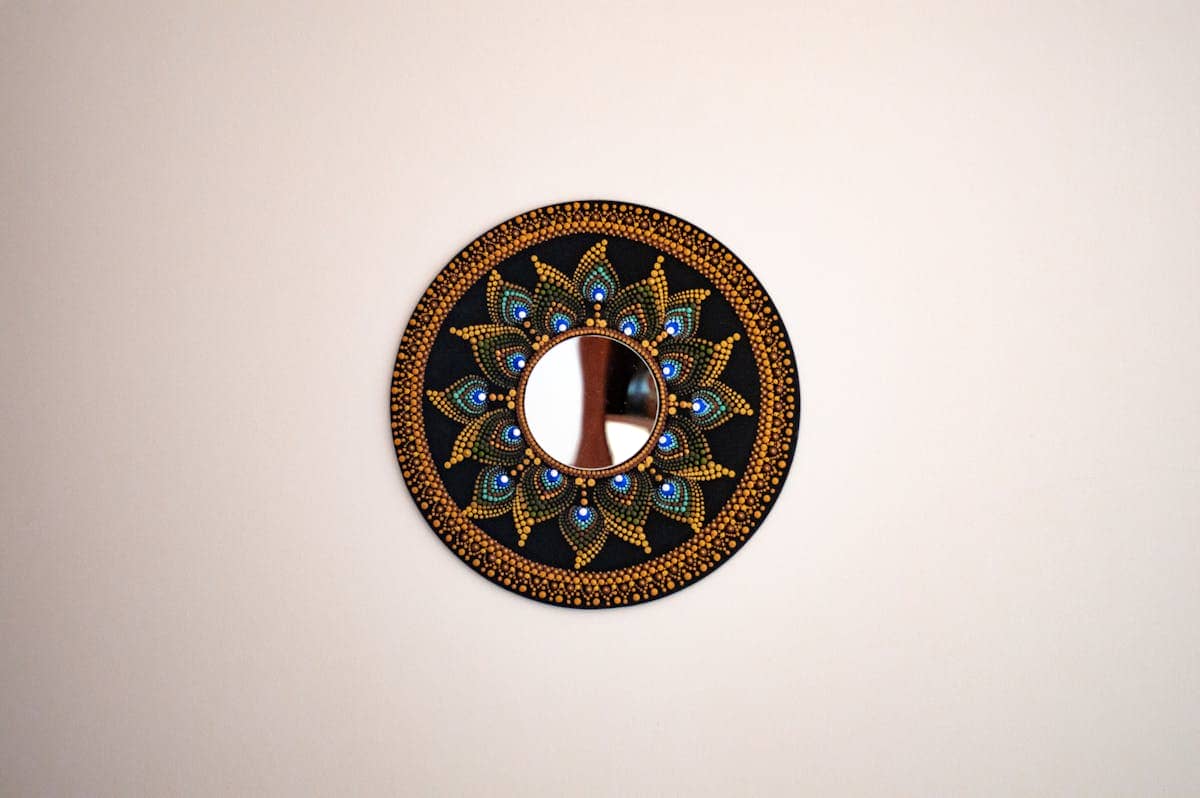
A mirror falling off a wall is, in most traditions, read as a meaningful event rather than a random accident — an interruption from something in your environment or inner life that is asking for attention. The most common spiritual interpretation across multiple traditions is that the mirror was acting as a receptor for energy, and its fall signals a shift: something has changed, built up, or is trying to communicate. Whether that reading resonates with you depends on your own framework — but the cross-cultural consistency of the response is worth taking seriously on its own terms.
The honest starting point is this: mirrors have never been treated as neutral objects in any major spiritual tradition. They have been understood as thresholds — surfaces that receive and hold energy, that capture something of the people and spaces reflected in them, and that can act as windows between the visible and invisible worlds. When such an object falls, the question different traditions ask is not "was that random?" but "what does it mean?"

What Does It Mean When a Mirror Falls Off the Wall?
Three broad categories of spiritual interpretation appear consistently across traditions:
An urgent message. Many traditions interpret a suddenly falling mirror as an interruption — the universe, an ancestor, or your own intuition using a dramatic physical event to get your attention. The question worth sitting with: what were you thinking about just before it fell? What situation have you been putting off examining?
An energy release. Some traditions hold that mirrors accumulate the energy of the people and events reflected in them over time. A falling mirror in this reading signals that the mirror had absorbed more than its capacity — and the fall is a release, a clearing. This reading is less about warning and more about the conclusion of a cycle.
A call to self-reflection. Since mirrors are universally associated with self-perception, a falling mirror is often read as an invitation to examine something you have been avoiding — in yourself, in a significant relationship, or in your current life circumstances.
None of these readings requires belief in supernatural agency. They function as frameworks for deliberate reflection — and there is something psychologically astute about using a dramatic physical event as a prompt to look inward.

11 Spiritual Meanings of a Mirror Falling Off the Wall
Different traditions produce different specific interpretations. Here are the most commonly cited, drawn from the full range of spiritual and folk frameworks rather than a single tradition:
1. Transformation is arriving. The fall disrupts the status quo — a signal that a period of change is beginning, whether or not you have consciously invited it.
2. Inner turmoil is surfacing. The mirror reflects the soul. A fallen mirror reflects a fractured inner state — conflicting desires, unresolved grief, or suppressed emotions pushing their way to the surface.
3. An ancestor is trying to communicate. In several West African spiritual traditions, mirrors are understood as communication channels between the living and the departed. A mirror falling unexpectedly may carry a message from someone who has passed, drawing attention to an unfinished matter.
4. Old self-images are breaking down. The version of yourself you have been presenting — or the identity others expect — may no longer fit who you are becoming. The falling mirror signals it is time to let go of an outdated self-concept.
5. Bad luck ahead. In Roman-influenced European folk tradition, a falling mirror warns of misfortune, particularly if it breaks. This is the tradition behind the seven years of bad luck belief — which originated in ancient Rome and attached itself to mirrors specifically because of how Romans understood the soul.
6. Someone is focusing negative energy your way. In protective spiritual traditions, mirrors are considered energetic shields. A mirror that falls may have absorbed hostile attention directed toward you — and the fall signals the shield has exhausted itself.
7. Shadow work is being called for. The shadow in Jungian psychology is everything about yourself you have not yet integrated — fears, denied impulses, rejected parts of your history. A falling mirror is an invitation to look at what you have been avoiding seeing.
8. Your spiritual practice needs attention. Several traditions read a mirror fall as a prompt to return to regular practice — meditation, prayer, ritual, or simply the habit of quiet self-examination.
9. A relationship is under strain. Mirrors in folk tradition are associated with how clearly — or distortedly — we see others as well as ourselves. A falling mirror can signal friction in a significant relationship that has not yet been directly addressed.
10. A protective barrier has been cleared. Rather than a warning, this reading frames the fall as relief — the mirror has finished its work of protection or energy absorption and is signalling that its task is complete.
11. A new cycle is beginning. Just as breaking a mirror ends one phase, a falling mirror can be read as a threshold — the close of one chapter and the opening of the next.
No single interpretation is authoritative. These meanings are frameworks for reflection, not prophecy. The one that resonates most is usually the one pointing at something you already sensed.
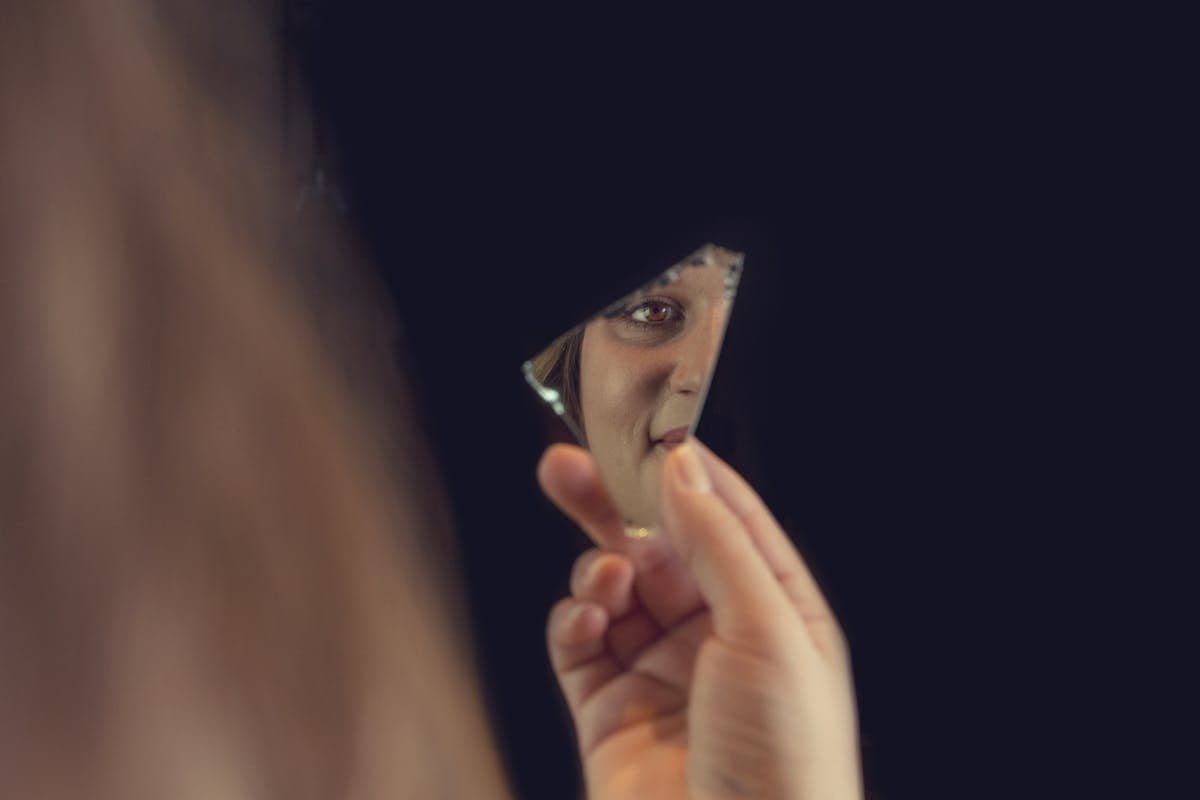
When the Mirror Breaks: Does It Change the Meaning?
Whether the mirror shatters on impact or survives the fall is, in most traditions, a meaningful distinction.
A mirror that falls but does not break is generally interpreted more mildly: the message has been delivered, the energy has shifted, but no significant disruption has occurred. The event is an alert, not a catastrophe.
A mirror that breaks is typically amplified in meaning. In Roman-influenced tradition, this triggers the seven-years-of-bad-luck belief — rooted in the idea that the soul, partially captured in the mirror, would require seven years to regenerate after the glass shattered. (For historical context: the "seven years" figure comes directly from Roman belief that the soul renewed itself in seven-year cycles — not from the number of pieces or any other feature of the break itself.)
But other traditions interpret a breaking mirror differently. In certain regions of India, a mirror shattering is understood as the mirror having successfully absorbed a threat and neutralised it — the breakage is evidence that it worked. In some West African traditions, a broken mirror is a gateway opening rather than a door closing.
For more on how different cultures interpret broken glass specifically, the detailed breakdown in Broken Mirror Meaning in Different Cultures covers ten distinct traditions and their contrasting readings.

What Different Traditions Actually Say About Falling Mirrors
Specificity matters here. "Many cultures believe" is the phrase that drains meaning from spiritual content. Here is what specific traditions actually say:
Ancient Rome (1st–5th century CE): Romans believed mirrors captured a portion of the viewer's soul. Damage to a mirror was damage to the soul's reflection. Since Romans believed the soul renewed completely every seven years, breaking a mirror meant seven years of misfortune — until the soul-cycle completed. This is the precise origin of the superstition still widely circulating today. It spread through European folk culture over centuries, surviving long after its original theological context was forgotten. By the 19th century, when mirrors became mass-produced and widely owned, the belief was already embedded across the continent. For a detailed account of how mirrors became culturally loaded objects, the World History Encyclopedia entry on mirrors traces the history well.
West African traditions: In several traditions of Yoruba and related spiritual practices, mirrors are not passive objects. They are receptive surfaces capable of capturing spiritual energy, communicating across the boundary between the living and the dead, and serving as vehicles for ancestor contact. A mirror falling unexpectedly in this context is often interpreted as a direct signal from an ancestor — a communication that demands acknowledgment.
Feng Shui: In Chinese Feng Shui practice, mirrors are powerful tools for redirecting and amplifying energy flow (qi). Placement is considered carefully — mirrors facing doors push energy back out of a space; mirrors in cluttered areas amplify disorder. A mirror falling in Feng Shui terms suggests the mirror was absorbing more energetic traffic than its placement could sustainably manage. It is less a sign of misfortune and more a diagnostic: reassess the placement before rehanging.
Islamic tradition: Islam has historically maintained a cautious approach to mirrors as objects of ritual or spiritual focus, and in some traditions mirrors are covered during periods of mourning. A mirror falling is not specifically codified in Islamic jurisprudence, but folk traditions across the Muslim world have absorbed older regional beliefs about accumulated mirror energy — particularly the idea that a mirror can hold and then release what has been reflected in it.

Mirror Falling Off Wall in a Dream: What It Means
When a mirror falling appears in a dream rather than in waking life, the interpretive framework shifts. Dream mirrors are primarily symbolic of self-perception and social identity — what you believe others see when they look at you, and what you see when you look at yourself honestly.
A mirror falling in a dream typically points to one of three core situations:
Fear of how others perceive you. The falling mirror represents your social image under threat — a worry that the face you present to the world is unstable, or that what others see does not match who you believe yourself to be.
Losing your sense of self during transition. A mirror crash in dreams commonly accompanies periods of major life change — job loss, relationship upheaval, identity questioning — where the familiar self-image is genuinely disrupted and a new one has not yet formed.
Readiness to release an outdated identity. More positively, a falling mirror in a dream can signal that you are prepared to let go of a self-concept you have outgrown. The crash is uncomfortable, but the clearing it creates is necessary for what comes next.
The dream context also matters: were you watching the mirror fall, or did you cause it? Were you frightened or relieved? These details shift the reading significantly. For a comprehensive guide to mirror symbolism in dreams — including cloudy mirrors, mirrors that show the wrong face, and mirrors that multiply — Mirror Dream Meaning: Spiritual Interpretation Guide covers the full range.

What Should You Do After a Mirror Falls?
On a practical level: wear shoes if you are barefoot, clean up the glass carefully, and dispose of broken pieces wrapped in newspaper or sealed in a bag. Then check the wall hardware — most mirror falls are caused by inadequate anchoring, a hook not load-rated for the mirror's weight, or a nail placed in drywall rather than a stud.
On a spiritual level, most traditions suggest some form of intentional response rather than simply rehanging the mirror and moving on.
In folk traditions influenced by the seven-year belief: Grind the broken glass to powder, or dissolve the broken pieces in moving water, or bury them away from the home. The logic is that destroying the mirror removes the accumulated energy from the space entirely.
In Feng Shui: Cleanse the space with sound (bells or singing bowls), smudging, or opening windows and allowing fresh air to move through before doing anything else. Reassess the original placement — was it facing a door, reflecting a sharp architectural angle, or positioned to amplify energy you do not want amplified?
In ancestor-focused traditions: Acknowledge the event with a brief intention — "I receive the message" or simply a moment of deliberate stillness. Then notice what comes to mind in the quiet that follows. The practical step is whatever that awareness points toward.
According to the Sleep Foundation's overview of symbolic processing in dreams and waking life, the mind uses symbolic and unexpected events as prompts for psychological integration — which is precisely what these rituals provide. Whether you frame it spiritually or psychologically, the underlying function is the same: deliberate processing of an event that the nervous system has already registered as significant.
Universally practical: Do not immediately rehang a mirror in the exact same position and manner it occupied before. Something about the original placement was not working — either structurally or, depending on your framework, energetically. For the complete set of ritual options after a mirror breaks, How to Reverse Bad Luck from a Broken Mirror: 13 Remedies covers the full range of approaches.

The Psychology Behind Why This Event Feels So Significant
There is a reason a mirror falling creates unease that a picture falling, or a book sliding off a shelf, does not match.
Mirrors are uniquely associated with identity. You see yourself in them. When a mirror is suddenly gone — crashed, shattered, removed — the psychological effect is subtly destabilising in a way that other objects simply are not.
This is not superstition. It is cognition. Research on self-perception consistently shows that mirrors play an active role in how people process and manage their self-concept. The mirror self-recognition test — the same test that human children pass at approximately 15 to 18 months, and that chimpanzees, dolphins, elephants, and certain birds also pass — demonstrates that the mirror has a unique relationship with the sense of self across conscious beings. When that surface is suddenly disrupted, the brain registers it as something more than a physical event.
This is also why mirror-related events tend to generate the feeling that they are "signs." The brain, already primed to connect mirrors with self-examination, naturally reads any disruption of the mirror as a disruption of the self. The spiritual traditions that have grown up around this intuition are, in a sense, giving formal language to something the human nervous system already registers as significant.
Understanding this does not cancel the spiritual reading. It explains why the spiritual reading arises so consistently across unrelated cultures — it tracks something real about human psychology and self-perception.
(This is the part most articles on this topic avoid: the spiritual significance and the psychological explanation are not competing accounts. They are pointing at the same phenomenon from different angles.)

Feng Shui and Mirror Placement: Why Placement Matters More Than People Realise
One practical angle most spiritual articles on this topic skip entirely: the conditions that cause mirrors to fall are often the same conditions Feng Shui identifies as problematic placement.
Mirrors hung opposite front doors, reflecting sharp architectural angles, or placed in high-traffic, high-vibration areas are considered energetically disruptive in Feng Shui. They are also, practically, more likely to be knocked loose by door-slam shock waves, vibration from nearby traffic, or the gradual fatigue of inadequate wall anchors.
In Feng Shui, the most commonly flagged problematic placements for mirrors include:
- Directly opposite the front door. This pushes incoming energy — and incoming good fortune — back out of the space before it can circulate.
- Facing the bed. This is considered one of the most disruptive placements in traditional Feng Shui, associated with restless sleep and an unsettled sense of self.
- Reflecting clutter. A mirror that doubles a disordered area doubles the visual and energetic weight of that disorder.
- At the end of a hallway. Creates a sense of energy being trapped and amplified rather than allowed to flow.
Whether you interpret this through Feng Shui or through physics, the outcome is the same: mirrors need wall anchors rated for their actual weight, hung on studs or appropriate wall anchors rather than drywall alone. And mirrors in high-traffic or high-vibration locations need more secure mounting than those in still, low-activity areas.
Spiritual significance and practical prevention are, in this case, pointing at the same solution: pay considerably more attention to where and how you hang a mirror than most people do.

The mirror has been the same object for six thousand years — polished obsidian in Anatolia, silver-backed glass in 17th-century Venice, vacuum-deposited aluminium coating today. What has changed is everything we bring to it: the cultures, the fears, the accumulated symbolism, the belief systems layered onto a simple reflective surface over millennia. When one falls, the question worth sitting with is not simply "is this a sign?" but: what does my response to this event reveal about what I currently believe, and what I have been avoiding looking at directly?
Mirror FAQ
What does it mean spiritually when a mirror falls off the wall?
Spiritually, a mirror falling off the wall is interpreted as an urgent message calling for self-reflection. Since mirrors symbolize truth and identity across cultures, a falling mirror signals that something in your inner world — an unexamined belief, a suppressed emotion, or an unresolved situation — is demanding attention. Different traditions read it as transformation, warning, ancestral communication, or the release of accumulated negative energy.
Is a mirror falling off the wall bad luck?
In some traditions, yes — particularly those rooted in ancient Roman and European folk belief, where mirrors were thought to capture part of the soul, making damage to them ominous. In other traditions, a falling mirror is neutral or even positive, interpreted as the release of stored negative energy rather than a curse. Whether it is bad luck depends entirely on the cultural frame you bring to it.
What does it mean when a mirror falls and breaks?
When a mirror falls and breaks, most spiritual traditions intensify the meaning. Breaking is seen as the shattering of old self-images, the release of accumulated energy, or — in Roman-influenced folk belief — the beginning of a seven-year cycle of misfortune. In some Asian and African traditions, breaking a mirror is interpreted as a sign that the mirror absorbed and neutralised a threat before it could reach you.
What does dreaming of a mirror falling mean?
Dreaming of a mirror falling typically represents anxiety about how others perceive you, fear of losing your sense of identity, or an unconscious recognition that your current self-image does not match who you are becoming. Unlike waking superstitions, dream mirrors are primarily symbolic of self-perception and social identity. It can also signal readiness to release an outdated version of yourself.
What should you do after a mirror falls off the wall?
Practically: clean up the glass carefully and check the wall hardware — most falls are caused by inadequate anchoring. Spiritually, most traditions suggest some form of cleansing or intentional response, whether that is smudging the space, saying a brief prayer, or simply pausing to notice what the event is inviting you to examine. In Feng Shui, it is also worth reassessing placement before rehanging.
Does a mirror falling mean seven years of bad luck?
The seven years of bad luck belief comes from ancient Rome, where mirrors were believed to capture the soul. Romans also believed the soul renewed itself every seven years — so a broken mirror meant seven years until the soul was whole again. This belief spread through Europe and persisted into modern Western folk culture. It is not universal: many other traditions have no equivalent belief, and some interpret a fallen mirror positively.
What does a falling mirror mean in Feng Shui?
In Feng Shui, a mirror falling suggests that its placement was creating energetic imbalance — either amplifying the wrong kind of energy or reflecting negative energy back into the space. A fallen mirror is a prompt to reassess: was it facing a door, reflecting a cluttered area, or positioned to create visual stress? Feng Shui practitioners generally recommend cleansing the space and reconsidering placement before rehanging.
What do different cultures say about a mirror falling off the wall?
Interpretations vary widely. Ancient Roman tradition linked a falling mirror to soul damage and bad luck. In some West African traditions, a mirror falling signals ancestral communication — a spirit trying to deliver a message. In parts of India, it can be seen as the release of negative energy that had accumulated. In Feng Shui, it signals misaligned energy rather than supernatural consequence. No single tradition owns the meaning.