Mirror Gazing Meditation
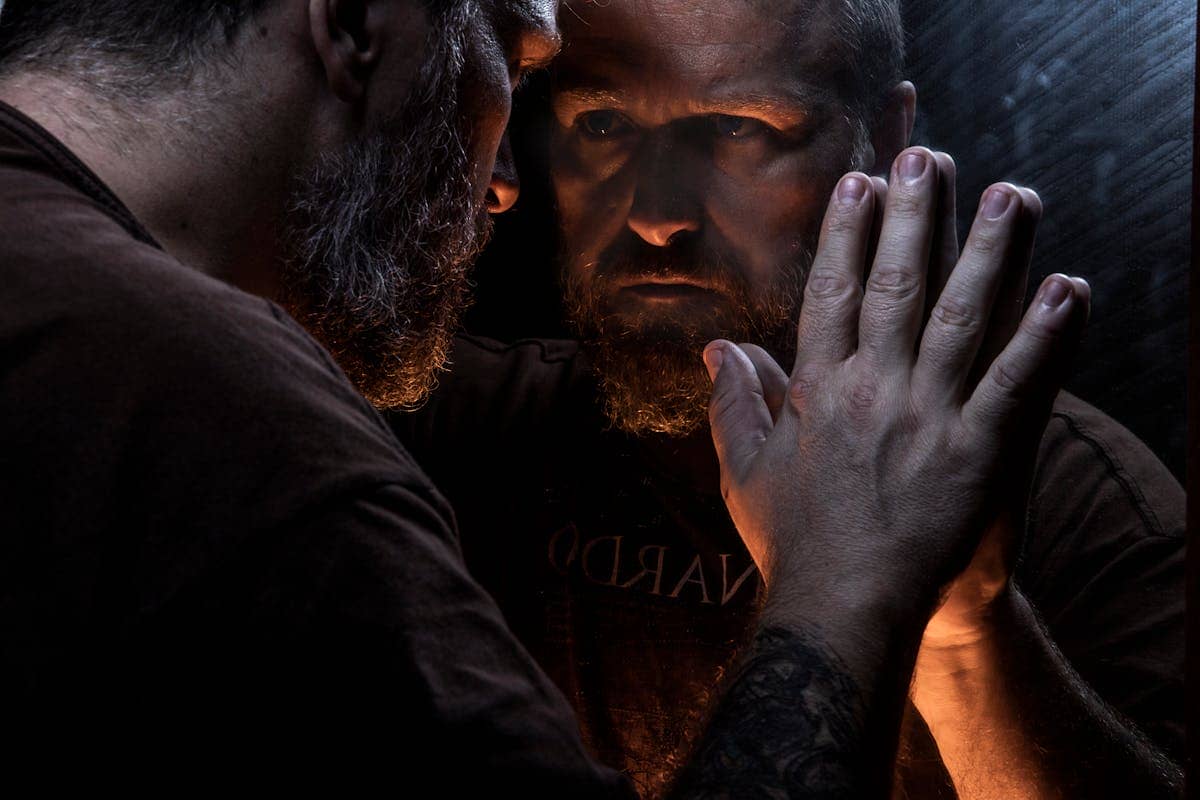
Mirror gazing meditation is sustained, soft-eyed attention directed at your own reflection—often under deliberate dim light—until ordinary visual stabilization starts to fray and interpretations become unstable; most reported visuals line up surprisingly well with known perceptual quirks like Troxler-related fading plus culturally famous strange-face distortions described in perceptual psychology, which is precisely why grounding the spirituality in neuroscience keeps the practice humane instead of frantic.
Readers arrive from two tributaries simultaneously: mystical curiosity about mirrors as confessionals, plus sober warnings they read somewhere online minutes ago about faces morphing in the glass. Competitor articles blend those lanes because the lived experience insists on both. Mirror gazing is not unique in producing altered perception—sensory deprivation, sleep debt, hypnosis, chanting, rhythmic breathing, and plain stress can steer the cortex toward pattern completion. Mirrors simply offer a ruthless, high-detail target that recruits identity circuitry while your eyes fight blur and micro-movement. If you feared you were cracking up the first time your jawline liquefied, you were probably watching normal limits of mammalian optics interact with arousal—not receiving a courthouse verdict about your psyche.
Still, sincerity matters because mirrors sit at anxiety choke points for humans. Recent college-student surveys report 73.03% carrying a broadly negative perception of personal body image, with dissatisfaction tracking alongside anxiety and depression while moving inverse to self-esteem in the same analyses. None of that makes mirror gazing impossible; it means your nervous system may import static before you even sit down. Start carefully, keep agency, and remember that mirror avoidance tends to widen distress over cycles rather than narrowing it—as contextualized gently in our guide to eisoptrophobia and spiritually literate healing.
Why does dim light keep showing up in mirror gazing instructions?
Dim light is not theater; it is engineering. High-contrast bathroom LEDs refresh micro-texture constantly, which helps you parse pores and fabric weave but works against the slow visual fatigue many protocols recruit. Soft illumination—think warm lamp through a shade, indirect bounce, or a narrow beam placed so it does not blind you from the glass—keeps the face legible while inviting Troxler-type fading at the margins described in the overview of Troxler's fading. Competitor walkthroughs converge on a practical middle path: dark enough that walls fall out of attention, bright enough that you are not straining into scotopic uncertainty for ten minutes straight.
Practical setup notes serious teachers repeat:
- Sit close enough that your facial outline dominates the mirror without needing a squint choreography.
- Stabilize the head lightly; micro-tremor is fine, choreography is unnecessary.
- Remove phone glare bouncing off the bezel; cover LEDs; prefer analog timers if countdown anxiety spikes you.
- Use a seated posture you can sustain; standing works but increases sway-driven retinal jitter.
- If smoke, botanical smudge, incense, or oils matter symbolically where you live, ventilate conscientiously—you still require oxygen—not theater fog.
If you pair objects with symbolism, anchor them in ergonomics too: cords secured, flames supervised, soot kept far from airway height so atmosphere supports attention instead of coughing fits.
What is a grounded mirror gazing meditation protocol beginners can steal?

Assume ten to twenty exploratory minutes—not because enlightenment ships on a timetable, but because shorter windows often truncate the perceptual storyline competitors describe.
Minute zero. Set expectations before light drop: you investigate phenomenology plus meaning, not a dare. Write a grounding sentence on paper if rumination steals your verbs.
Breath layering. Nasal breathing at a conversational pace recruits parasympathetic tone without turning this into alternate-nostril yoga cosplay unless you adore that modality.
Gaze softness. Maintain a diffuse focus near your eyes-bridge—not laser drilling into pupils unless that destabilizes you faster than helpful. Blink naturally; dryness is intelligence, not defeat.
Cognitive labeling. Silently note itch, swallow, intrusive lyrics, intrusive memories—then return. No scoreboard.
Closure. Two slow breaths, lights up gradually, hydrate, jot one sentence factual description before interpreting. That buffer reduces impulsive spiritual conclusions birthed from adrenaline.
If journaling afterwards, split raw perceptual bullets from interpretive theology on separate lines—speed is how frameworks collide sloppily.
What should you realistically expect—the boring parts included?
Bodies leak boring data first. Tear film breaks up; sclera dries; lids flutter. Anxiety may spike—not because demons sharpened claws, because sustained self-face viewing is culturally loaded. Competitive articles correctly mention boredom as the hidden gatekeeper: boredom means your narrative mind lost plot hooks yet your visual stream continues. That plateau often precedes drift.
Potential progression many report (non-exhaustive, non-prescriptive):
- Micro-shimmer crawling along cheeks as edge detectors fatigue.
- Subtle symmetry illusions—you forget which side owns a beauty mark unless you memorize it.
- Flattened affect in the reflected affect—like watching a rehearsal recording.
- Stranger morphology—ancestors, exaggerated age, ambiguous gender, ambiguous species—clustering near descriptions summarized under the folklore-science crossover entry on the strange face illusion topic.
If nothing uncanny manifests session one, shrug. Expectancy effects matter; paradoxically, gripping for awe can nail the perceptual butterfly under glass.
How do Troxler fading and strange-face reports fit into one explanatory attic?

Neuroadaptation narratives and archetypal dream language can share a roof politely when you forbid them from bulldozing each other.
Troxler's fading warns that unattended regions lose crispness; fixation steers resource allocation. Mirrors couple that fading with familiarity—your fusiform face machinery expects identity continuity, so degraded input plus prediction error may invite confabulatory completions: this is loosely parallel to gist reconstruction in degraded photographs, though faces carry heavier emotional payloads.
Laboratory-linked mirror phenomena—surveyed academically under banners like archetypal imaging—tie controlled illumination with systematic first-person anomalies; Caputo summarizes experimental mirror-gazing frames in a peer-reviewed Behavioral Sciences orientation indexed on PubMed. Use that citation when someone claims zero literature exists—it is narrower than meme culture suggests, broader than woo dismissives admit.
Maintain epistemic hygiene: hallucination-prone physiology plus trauma history can escalate any sensory ritual. That is descriptive, not punitive.
How can spiritual sincerity coexist with perceptual skepticism?
Many traditions insist mirrors unveil interior weather; modern psychology replies that predictive coding plus affect labeling sculpts visionary narrative. Holding both admits complexity: symbolism can heal even when ontology stays contested. Ritual maturity means refusing to outsource all authority to a sheet of polished glass—you remain the respondent.
Readers curious about ceremonial black surfaces may contrast this section with protections and beginner pacing from the dedicated black mirror scrying introductory walkthrough before improvising blackout experiments without containment habits.
Symbolic readings thrive when tethered ethics exist: humility, proportional interpretation speed, mentorship when available, journaling with timestamps separating raw sensation from later mythmaking.
Who should pause or skip mirror gazing meditation altogether?

Psychosis-spectrum volatility, clinician-advised stabilization windows, intrusive command hallucinations, dissociative identity complications lacking specialist coordination, intoxication, manic sleepless arcs, unreconciled traumatic flashbacks triggered reliably by mirrored self-viewing—these constitute compassionate stop signs, not cosmic rejection. Mirrors intensify ambiguity; ambiguity plus fragile reality testing drains safety margin fast.
Mirror-specific phobia or compulsive checking tied to obsessive appearance loops requires graded clinical design rather than improvised endurance trials; again, healing-oriented framing for eisoptrophobia underscores hybrid spiritual-psychological care.
Medication changes, migraine with aura triggered by glare, seizure history sensitized to flashing edges—coordinate with prescribing professionals rather than debating forums.
What does quantitative psychology whisper about deliberate mirror staring?
Cosmetic reassurance is not guaranteed. A 2024 Journal of Behavior Therapy report found attentive mirror gazing reduced appearance satisfaction—even among undergraduates screened without pronounced body dysmorphic profiles. One study proves nothing universally, yet it warns against prescribing mirror fixation as naive self-esteem fuel when bodily shame already spikes.
Contextual contrasts help: selfies and filtered feeds may normalize subtly warped ideals that diverge from specular selves; dissatisfaction is not inherently objective truth about your morphology. Disorders like body dysmorphic spectrum concerns sit near low single-digit percentages in broad general-population prevalence estimates—not everyone staring sadly at acne shares that diagnosis, but screening awareness matters before marathon mirror vigils framed as holiness.
Readers balancing soul language with cognition often benefit from mirrored vocabulary across disciplines—as mapped in broader form inside psychology braided with spirituality on mirrors, mind, and soul.
How do mirror gazing, black mirror discipline, and daily mirror anxiety talk to each other?
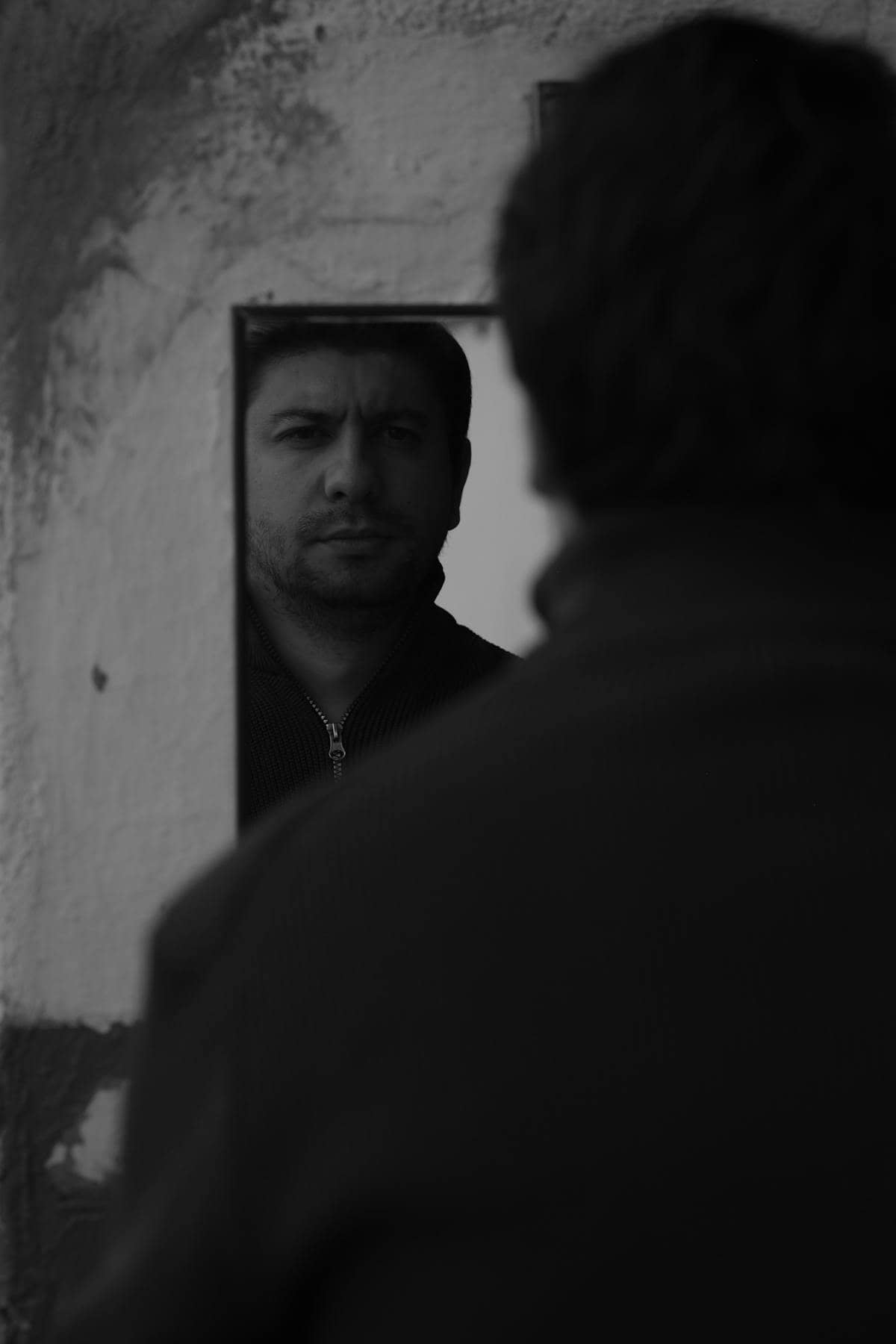
These paths share optics but diverge in dosage, darkness, interpretive speed, and community oversight. Mirror gazing as meditation often foregrounds somatic steadiness; black mirror scrying foregrounds liminal symbol reception with darker fields; everyday mirror anxiety foregrounds avoidance spirals that shrink lived space. None automatically grants moral rank—only appropriateness per nervous system, culture, consent, and clinical advisement.
If you integrate music, choose instrumental beds; lyrics hijack verbal working memory you might prefer quiet. If you integrate prayer, state intentions that protect agency: you end when compassion says end.
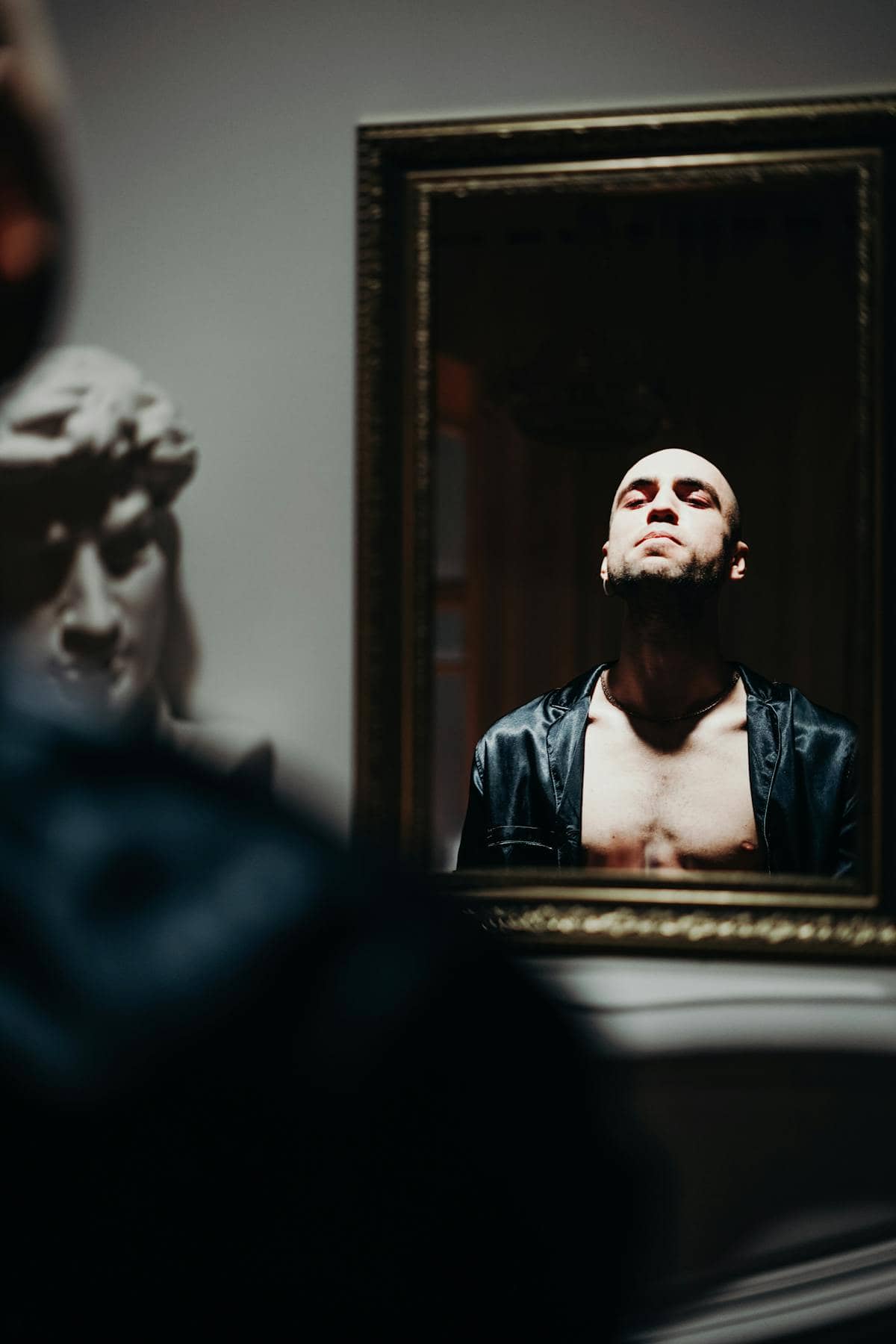
What is the single habit that keeps mirror gazing from turning into self-surveillance?
Exit rituals matter as much as entry ones. Light restoration, shoulder rolls, cold water on wrists, spoken grounding facts (date, address, safe person contact), and delayed interpretation give the amygdala a ladder. The mirror is ancient; your nervous system is contemporary. Treat both with proportion.
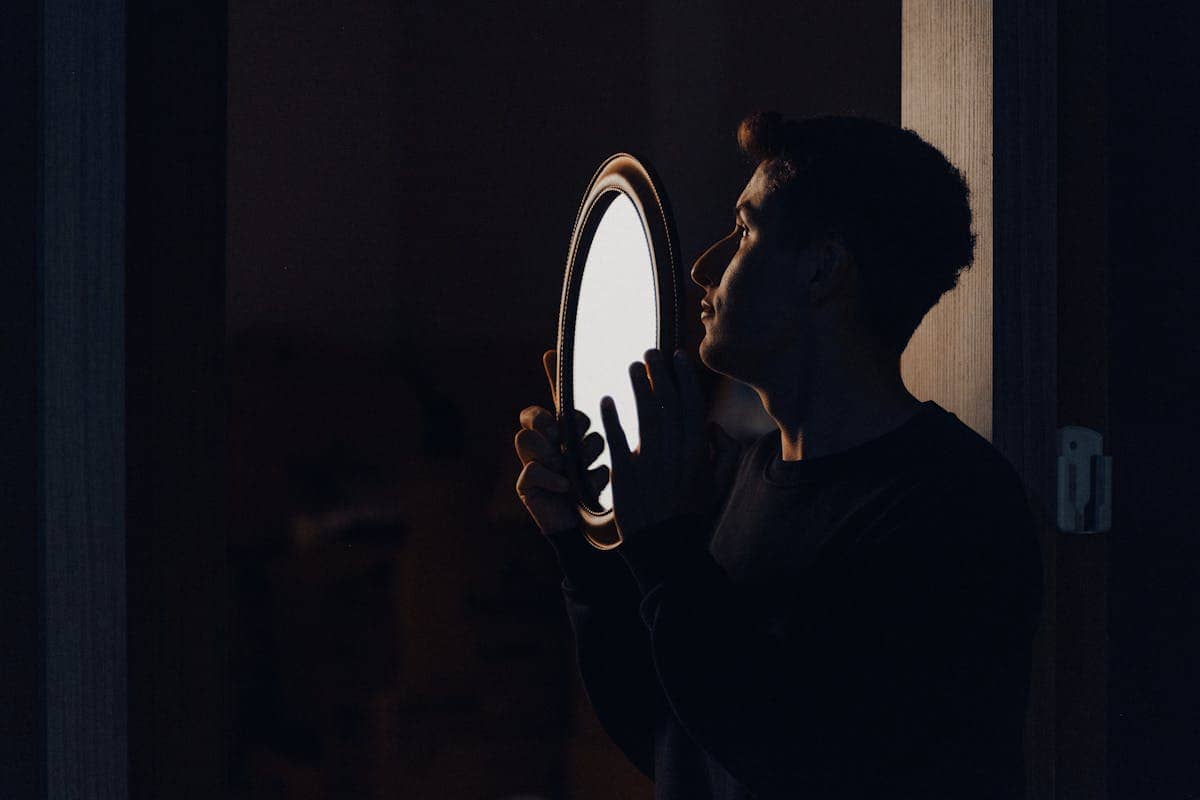
The longer historical arc is humbling: most ancestors never owned optically crisp silvered glass, yet selfhood still formed. Your bedroom mirror is an instrument, not a verdict machine. If mirror gazing meditation clarifies something true, beautiful, or sorrowful, notice it. If it destabilizes more than it steadies, stop—no tradition worth keeping punishes you for choosing breath over glass tonight.
Frequently Asked Questions
What is mirror gazing meditation supposed to accomplish?
Most serious instructions treat it less like affirmation theater and more like sustained attention plus interoceptive awareness while a stable face-image anchors the gaze. Teachers describe outcomes such as softened self-judgment, emotional release, or symbolic insight. Neurologically, the same conditions reliably produce perceptual instability, so fruitful practice keeps both frames available: meaningful experience and plausible visual mechanisms.
Why do guides insist on dim light instead of bright bathroom LEDs?
Dim light reduces crisp edge information and lowers photopic dominance, which makes fixation easier to hold without micro-saccades constantly refreshing tiny details. Competent guides pair low illumination with a controlled lamp position so glare does not carve hot spots across the reflection. Bright light tends to stabilize the percept and can make the quasi-hallucinatory drift many people associate with mirror gazing less pronounced.
Is the strange-face effect the same thing as contacting spirits in the mirror?
Different traditions answer that differently on purpose. Researchers study reports of deformations or unfamiliar faces as perceptual phenomena that healthy adults can describe under standardized mirror setups. Spiritual practitioners sometimes interpret analogous imagery through protective frameworks, symbolism, or prayer. The honest convergence point is practical: pause, breathe, widen context, remember physiological explanations exist, and do not force yourself to collapse the experience into only one layer if that increases fear.
How long until something unusual happens during mirror gazing?
Tearing and subtle shimmer can emerge within minutes for beginners because faces are tiring fixation targets and low light is visually demanding. Larger subjective shifts vary widely depending on arousal level, illumination, fixation quality, expectancy, fatigue, caffeine, medications, trauma triggers, dissociative tendencies, and prior sleep deprivation. Competitor-style articles often mention first-session distortions under ten to fifteen serious minutes—treat such numbers as anecdotes, not promises.
What is Troxler fading in mirror gazing, and why does it matter?
Troxler fading describes stable peripheral textures appearing to weaken or dissolve when fixation holds steady elsewhere. Researchers link it with neural adaptation. In mirror gazing, parts of cheeks, jawline shadows, or background wall texture may seem to liquefy momentarily until you blink or shift weight. Naming the mechanism reassures newcomers that drift is ordinary vision behavior, even when imagery feels spooky.
Can mirror gazing damage your vision or worsen eye strain permanently?
It is nearer to strenuous reading under poor light than catastrophic injury. Symptoms such as dryness, redness, migraine prodrome aura, or visual fatigue merit stopping, hydrating, resting, and checking lighting ergonomics rather than powering through stoically. Chronic strain still deserves an optometrist if symptoms persist unrelated to deliberate practice.
Should people with schizophrenia, psychosis history, or active hallucinations try mirror gazing meditation?
Clinicians and trauma-informed teachers generally advise against unsupervised prolonged mirror fixation if reality testing swings wide, intrusive perceptual disturbances are escalating, instructions feel compulsive rather than elective, or a psychiatrist has not weighed in when symptoms are medically labile. The goal is prudent restriction, not judgment about worthiness—as with many intensive contemplative practices, some nervous systems tolerate this stimulus poorly.
Is mirror gazing always bad for anxiety or fear of mirrors?
Not universally, though mirror-specific phobia warrants tailored plans. Gradual exposure with a therapist can help some people—while unsupervised high-intensity mirror rituals can backfire. If mirrors already spike panic, read the gentler orientation in the eisoptrophobia healing guide before experimenting with long holds in darkness.
Does research say mirror gazing improves body image?
You should not extrapolate reassurance from scattered tradition alone. Separate literatures collide here: folklore frames mirror solitude as illuminating, while quantitative work on deliberate mirror staring shows mixed or negative short-term cosmetic satisfaction effects in convenience samples unrelated to mystical claims. Interpret personal benefits through your lived data, clinician input if relevant, and modest expectations when appearance anxiety is acute.
What is the difference between mirror gazing and black mirror scrying?
Mirror gazing as meditation usually centers on physiology plus phenomenology—you stay embodied, soften interpretation, emphasize ethical containment. Traditions that study black reflective surfaces emphasize focal drift in much darker fields, symbolism, lineage protections, journaling, sometimes collaborative supervision. Technique overlaps mechanically; intent, cultural packaging, ritual safety scaffolding, and teacher expectations diverge, which is why black mirror scrying is usually taught as its own paced beginner track instead of being collapsed into a single condensed ritual description.