
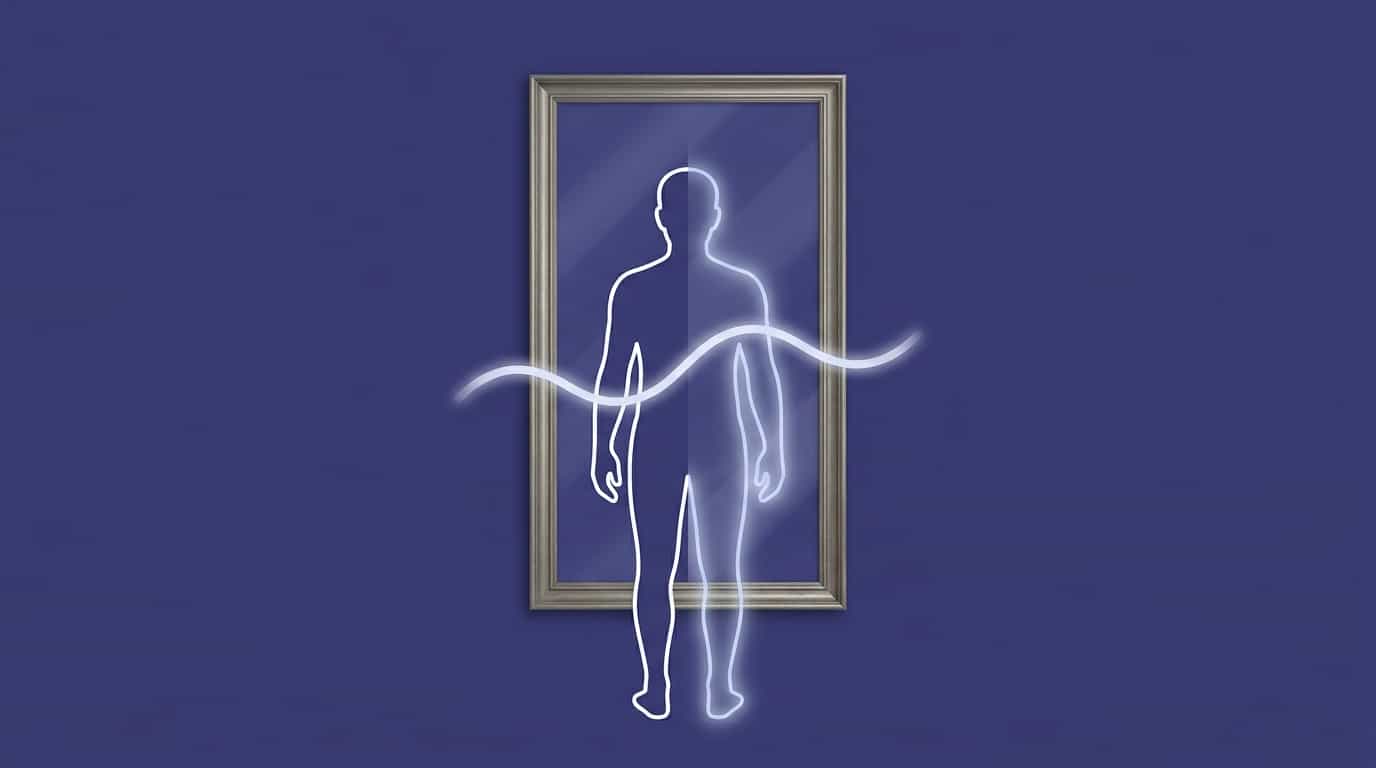
We begin our day with them. We check our appearance, adjust our hair, and sometimes, we avoid them altogether. The mirror is arguably the most common object in human history, yet it remains one of the most mysterious. It is a tool of vanity, a portal to the subconscious, and a sacred artifact used in rituals for millennia.
But what happens when we stop using the mirror to check for spinach in our teeth and start using it to look inward? We enter a fascinating intersection of disciplines. At the crossroads of mirror psychology and spirituality, we find a profound truth: the glass before us is not just reflecting our physical form; it is reflecting the state of our mind and the depth of our soul.
In the modern era, where mental health awareness meets a resurgence of ancient spiritual practices, the mirror serves as a unique bridge. This article explores the science of self-reflection—both literal and metaphorical. We will journey through psychoanalytic theory, Jungian shadow work, ancient mythology, and modern neuroscience to understand why the mirror holds such power over us. Whether you suffer from mirror anxiety, want to deepen your spiritual practice, or simply wish to understand your identity better, understanding the duality of this object is the first step toward genuine self-awareness.
Why Mirrors Are Both Psychological & Spiritual Objects
To the casual observer, a mirror is a piece of glass with a metallic backing. But to a psychologist, it is a diagnostic tool for consciousness. To a mystic, it is a gateway to the energetic self. Why does this single object straddle the line between two seemingly disparate worlds?
The answer lies in what the mirror represents: perception. Psychology is concerned with how we perceive ourselves and how that perception shapes our behavior. Spirituality is concerned with who we truly are beneath the layers of societal conditioning and ego. The mirror forces a confrontation between these two states.
When you stand in front of a mirror, you are engaging in a rare act of simultaneous external observation and internal introspection. On the psychological side, you are assessing your “self-concept”—the mental image you have of your traits, abilities, and appearance. On the spiritual side, you are facing the “witness” or the “observer”—the part of you that exists independent of your physical form.
Historically, cultures understood this duality instinctively. The ancient Greeks used polished obsidian to “know thyself.” In many Indigenous traditions, reflective surfaces were used for scrying (divination) to communicate with ancestors. In Feng Shui, mirrors are used to redirect energy (Chi), not just to make a room look bigger. This historical consensus suggests that the link between mirror psychology and spirituality is not a modern New Age invention; it is a return to an ancient understanding that the reflection we see is a multi-layered reality.
The Overlap Between Self-Image, Identity & the Soul
The overlap occurs when we ask the question: Is what I see truly me?
Psychologically, your self-image is a construct. It is built from childhood experiences, trauma, praise, and cultural beauty standards. It is fragile and changeable.
Spiritually, your identity—often referred to as the soul or higher self—is considered immutable and eternal.
The mirror sits at the fulcrum of these two ideas. When you look in the mirror and feel shame, sadness, or pride, you are experiencing the clash between the constructed self-image (the ego) and the true self (the soul). A healthy relationship with the mirror involves using it to bridge this gap, allowing us to see the physical vessel as a temporary home for the eternal soul.
What Psychology Says About Mirrors
Modern psychology has long been fascinated by the mirror. It is one of the few tools that can measure the emergence of consciousness. For over a century, psychologists have used reflections to understand how we develop identity, how we repress parts of ourselves, and how we distort reality.
Lacan’s Mirror Stage — When We First Recognize Ourselves
Perhaps the most famous psychological theory regarding mirrors comes from French psychoanalyst Jacques Lacan. In the 1930s, Lacan introduced the concept of the “Mirror Stage” (stade du miroir) , which describes the formation of the ego.
Lacan observed that human infants, typically between 6 and 18 months old, lack a sense of bodily cohesion. They experience themselves as a “fragmented body”—they can move their arms and legs, but they don’t have a unified sense of self. However, when the infant sees their reflection in a mirror (or recognizes themselves in a video or through the reaction of a caregiver), something monumental happens. For the first time, they see a whole image of themselves.
The infant identifies with this image. They jubilantly recognize that “That is me.” Lacan argued that this moment is foundational for the ego. However, he also noted it is a moment of alienation. The ego, according to Lacan, is built on an illusion—a “gestalt” (a structured whole) that is external to the infant’s actual bodily experience. We spend the rest of our lives trying to live up to this external image of wholeness.
In the context of mirror psychology and spirituality, Lacan’s theory is crucial because it suggests that our sense of “self” is actually formed by looking outside of ourselves. Spirituality often seeks to dismantle this illusion, to find a self that is not dependent on external reflection. The mirror, therefore, becomes the object that creates the ego—and the object we must eventually see through to transcend it.
Carl Jung & the Mirror as the Shadow Self
Where Lacan focused on the formation of the ego, Carl Jung focused on what the ego hides. Jungian psychology posits that the “Shadow” is the unconscious part of the personality that the conscious ego refuses to identify with. It contains our repressed weaknesses, desires, instincts, and even our unacknowledged strengths.
Jung saw the mirror as a direct symbol of confronting the Shadow. He famously noted that looking into a mirror is an act of courage. To look at someone else’s face is ordinary; to look at your own face in a mirror is a confrontation with the truth.
When you look in the mirror and feel a sudden spike of irritation, disgust, or fear—beyond a simple dislike of your haircut—you are likely glimpsing your Shadow. The mirror reflects back the parts of yourself you have disowned. For example, if you value humility above all else, you might look in the mirror and feel intense anger at seeing what you perceive as “vanity” in your posture. In reality, the mirror is showing you your repressed need for recognition.
Jungian mirror work is a form of active imagination. By looking into your own eyes for an extended period, you allow the unconscious to surface. The goal isn’t to destroy the Shadow, but to integrate it. Jung believed that until you make the unconscious conscious, it will direct your life and you will call it fate. The mirror, therefore, is the primary tool for this integration—a psychological tool that borders on spiritual alchemy.
Self-Perception Theory & Mirror Distortion
Moving into the latter half of the 20th century, social psychologist Daryl Bem proposed Self-Perception Theory. This theory challenges the idea that we have innate knowledge of our own internal states. Instead, Bem argued, we infer our attitudes and emotions by observing our own behavior, just as we observe others.
What does this have to do with mirrors? Mirrors act as a feedback mechanism for self-perception. Studies have shown that when people are placed in front of a mirror (a state of “self-awareness”), they become more consistent with their internal values. If you claim to be a hard worker but catch yourself slacking in a reflection, the mirror creates cognitive dissonance.
However, this can lead to mirror distortion. Mirror distortion isn’t just a physical phenomenon (like the fact that most mirrors are slightly concave, making us look thinner or wider depending on the glass); it is a psychological one. Body Dysmorphic Disorder (BDD) is a severe mental health condition where individuals cannot stop thinking about perceived flaws in their appearance—flaws that are often invisible to others. According to the Anxiety and Depression Association of America, BDD affects approximately 1 in 50 people.
In BDD, the mirror ceases to be a tool for self-perception and becomes a torture device. The brain’s visual processing system interacts with the emotional centers (the amygdala) to create a distorted reality. The individual doesn’t “see” themselves; they see their anxiety projected onto the glass. This highlights the powerful interplay between psychology and the mirror: the mirror doesn’t lie, but our brain’s interpretation of the reflection certainly can.
What Spirituality Says About Mirrors
If psychology views the mirror as a tool for understanding the mind, spirituality views it as a tool for transcending it. Across various traditions—from Sufism to Taoism to Western esotericism—the mirror is considered a sacred object capable of revealing truth, warding off evil, and connecting the physical realm to the divine.
The Mirror as a Tool for Soul Recognition
In spiritual contexts, the mirror is often referred to as “the Soul’s looking glass.” Unlike the psychological approach, which focuses on the ego and the shadow, the spiritual approach asks: Who is the one looking?
In Vedantic philosophy (Hinduism), this is the practice of Neti Neti—”not this, not that.” When you look in the mirror, you recognize that you are not your reflection. You are the one observing the reflection. If you go deeper, you realize you are not your thoughts about the reflection. You are the awareness behind the thought.
Sufi poet Rumi captured this beautifully:
“The mirror is the heart. Polish it, and you will see the reflection of the Beloved.”
In this context, the mirror isn’t just for self-absorption; it is a metaphor for the purified heart. When the heart is free from rust (ego, greed, resentment), it reflects the divine.
Practitioners of spirituality use the mirror for “Soul Recognition” exercises. This involves gazing into one’s own eyes not to check for wrinkles, but to see past the physical features. The goal is to connect with the “I Am” presence—the feeling of existence that predates thoughts. This practice blurs the line between mirror psychology and spirituality, as it uses the psychological act of gazing to achieve a spiritual state of presence.
Seeing Past the Physical Into the Energetic Self
Beyond recognizing the soul, spiritual traditions use mirrors to perceive the aura—the energetic field surrounding the physical body. In practices like “scrying,” a mirror (often black obsidian or a dark surface) is used as a focal point to bypass the analytical mind and access clairvoyant or intuitive vision.
The theory is that the physical eye tends to dominate perception. When you look into a standard mirror, the brain immediately categorizes: eye color, skin tone, expression. However, when the mirror is darkened or when one uses a “soft gaze” (unfocusing the eyes), the brain stops categorizing and starts perceiving energy.
This is why many spiritual healers and energy workers use mirrors to diagnose energetic blockages. They claim that by looking at a client’s reflection—or by having the client look at their own—they can see distortions in the aura, chakras that are out of alignment, or “cords” (energetic attachments) to other people.
From a psychological perspective, this could be explained by dissociation or pattern recognition. From a spiritual perspective, it is the belief that the mirror acts as a neutral medium, revealing what the naked eye—blinded by social norms and personal bias—cannot see. Whether you view this as a metaphor or metaphysics, the intention is clear: to use the mirror to look beyond the flesh and into the essence of being.
Mirror Anxiety — When Fear of Mirrors Has Deep Roots
For many, the mirror is not a source of enlightenment but a source of dread. Mirror anxiety, or eisoptrophobia (the fear of mirrors), is a surprisingly common phenomenon. While severe phobias are rare, a general sense of unease or avoidance regarding mirrors is prevalent, especially in those struggling with self-esteem, trauma, or identity issues.
Psychological Roots of Mirror Avoidance
Psychologically, mirror avoidance is a defense mechanism. If the self-concept is fragile or negative, the mirror acts as a threat. It threatens to confirm the worst fears of the individual.
- Trauma: Individuals who have experienced trauma, particularly physical or sexual abuse, often struggle with mirror avoidance. The body becomes associated with the trauma. Looking in the mirror forces a confrontation with the physical vessel that was violated. It can trigger dissociation—a feeling of detachment from the body—where the person feels like they are looking at a stranger.
- Body Dysmorphic Disorder (BDD): As mentioned earlier, for those with BDD, mirrors trigger obsessive-compulsive cycles. They might check the mirror compulsively (hundreds of times a day) to seek reassurance, only to feel worse, or they might avoid mirrors entirely to escape the distress. This isn’t vanity; it’s a severe distress disorder often linked to obsessive-compulsive spectrum conditions.
- Low Self-Esteem: For those with deep-seated feelings of inadequacy, the mirror represents a judge. They anticipate negative feedback, even though the mirror is simply a reflective surface. This is the psychological manifestation of a harsh inner critic.
From a mirror psychology and spirituality standpoint, this avoidance is often a sign that the conscious self is terrified of integrating the Shadow or confronting the Soul. The ego knows that if the person truly looks, they might have to change.
Spiritual Meaning of Not Being Able to Look at Yourself
Spiritually, the inability to look at oneself in the mirror is often interpreted as a fracture in the soul—a disconnection from one’s true essence.
In many esoteric traditions, the mirror is considered a truth-teller. If you cannot look at your own reflection, it suggests you are living a lie. It suggests that the “persona” (the social mask, a term Jung borrowed from the Latin word for actor’s mask) has become so dominant that the soul beneath it is suffocating.
There is also the concept of “soul loss,” a phenomenon recognized in shamanic traditions. When a person undergoes severe trauma, a part of their spiritual essence may flee the body to avoid being hurt. The result is a feeling of emptiness or being “not all there.” When such a person looks in the mirror, they feel a terrifying emptiness because the soul they are looking for is not present in the reflection.
Another spiritual interpretation involves “the evil eye” or superstition. Some cultures believe that mirrors can trap souls or that breaking a mirror brings seven years of bad luck (a belief stemming from the Roman idea that life renewed itself every seven years, and breaking the mirror damaged the soul’s health). While superstitious, these beliefs point to a deep-seated human intuition: the mirror is connected to the vitality and integrity of the spirit.
Healing mirror anxiety, therefore, requires a dual approach. Psychologically, it requires Cognitive Behavioral Therapy (CBT) to rewire the distorted thoughts. Spiritually, it requires “mirror work” —a gentle, compassionate reintroduction to the self to reclaim the soul that was lost or hidden.
Narcissism, Mythology & the Spiritual Warning of the Mirror
When we discuss mirror psychology and spirituality, we cannot ignore the archetype that dominates the conversation: Narcissus. The Greek myth of Narcissus serves as both a psychological warning and a spiritual lesson about the dangers of obsession with the surface reflection.
The Narcissus Archetype in Modern Life
The story is well-known: Narcissus was a hunter of exceptional beauty. He rejected all romantic advances, including the nymph Echo. As punishment from the gods (or fate), he saw his own reflection in a pool of water and fell in love with it, not realizing it was merely an image. Unable to leave the beauty of his own reflection, he died there.
In modern psychology, narcissism is classified as a personality disorder characterized by grandiosity, a lack of empathy, and a need for admiration. However, the myth is more nuanced. Narcissus didn’t love himself; he loved an image of himself. He was trapped by his own reflection.
This is the spiritual warning of the mirror. The danger is not self-love; the danger is mistaking the reflection for the reality. A narcissist, in the spiritual sense, is someone who has identified so completely with their persona (their reflection) that they have lost connection to their soul. They are trapped on the surface of the water, unable to dive into the depths of authentic being.
In modern life, the Narcissus archetype is amplified by social media. Our phones have become handheld mirrors. We curate a reflection—a digital avatar—and we seek validation (likes, comments) for this reflection. We risk becoming like Narcissus, staring at our own curated image, ignoring the real world, the people in it (like Echo), and our own internal reality.
The integration of mirror psychology and spirituality offers an antidote to Narcissism. It invites us to use the mirror not to admire the surface, but to penetrate it. To look at the reflection and ask, “What lies beneath?” rather than “Does this look good?”
Mirror Affirmations — Where Psychology & Spirituality Agree
If there is a place where mirror psychology and spirituality shake hands and work as one, it is in the practice of mirror affirmations. This practice bridges the gap between psychological rewiring and spiritual self-acceptance.
Mirror affirmations involve standing in front of a mirror, looking into your own eyes, and speaking positive statements aloud. While it can feel awkward or even terrifying at first, it is widely considered one of the most powerful self-help techniques available.
Why Looking Into Your Eyes Works
Why is the eye contact component so crucial? Why can’t you just say affirmations in your head?
From a psychological perspective, eye contact with oneself triggers a state of heightened self-awareness. It activates the prefrontal cortex, the part of the brain responsible for executive function, planning, and self-regulation. When you look away, you are giving your brain an escape route. When you hold your own gaze, you cannot lie to yourself. The brain registers the statement as a direct command from the self to the self.
From a spiritual perspective, the eyes are the “windows to the soul.” Looking into your own eyes is an act of soul-to-soul communication. It is the conscious self (the ego) making a treaty with the higher self. In many spiritual traditions, it is believed that the eyes carry the energetic imprint of the divine. When you look into your own eyes with love, you are essentially blessing yourself.
The practice forces vulnerability. You cannot hide behind your thoughts when you are staring at your own face. It strips away the pretense. If you say “I love you” to yourself while looking away, it feels hollow. If you say it while holding your own gaze, it either feels deeply true or deeply triggering—both of which are valuable data points for healing.
The Research on Mirror Affirmation Effectiveness
The effectiveness of mirror affirmations is supported by scientific research, particularly in the realm of self-affirmation theory (Claude Steele, 1980s) and recent neurological studies.
| Mechanism | How It Works |
|---|---|
| Neuroplasticity | Repeating affirmations while in a state of high self-awareness strengthens new neural pathways; negative default pathways are pruned away over time. |
| Reduction of Cortisol | A 2016 study in Social Cognitive and Affective Neuroscience found that self-affirmation activates brain regions associated with self-processing and reduces stress-induced cortisol levels. |
| Facial Feedback Hypothesis | Facial expressions influence emotions. Mirror work forces alignment of physiology (posture, expression) with words, creating powerful congruence. |
To practice mirror affirmations effectively:
- Stand or sit comfortably.
- Look into your own eyes. Do not look at your hair, skin, or clothes.
- Say your name. (“[Name], I love you.”)
- Start with simple truths if deeper truths feel like lies. (Instead of “I am successful,” if that feels false, try “I am capable of success.”)
- Do this daily for 2–5 minutes.
This practice is the ultimate synthesis of the article’s theme. It uses the psychological mechanism of self-perception and the spiritual practice of soul-gazing to create measurable change in one’s self-concept and energetic presence.
The Mirror as the Most Honest Spiritual Tool You Own
We have covered the depths of psychoanalysis, the shadows of the unconscious, the myths of Narcissus, and the science of affirmations. We return now to where we began: the mirror in your bathroom, the small compact in your purse, the rearview mirror in your car.
Why is the mirror the most honest spiritual tool you own? Because it doesn’t require a guru, a sacred text, or a trip to a temple. It is accessible 24/7. And most importantly, it lies to you—but only if you let it.
The mirror is honest because it reflects your internal state. If you are carrying resentment, you will see it in your jaw. If you are grieving, you will see it in your eyes. If you are hiding from your Shadow, you will avoid the mirror entirely. The mirror is a barometer for your spiritual and psychological health.
When you use the mirror as a spiritual tool, you stop asking superficial questions:
- Do I look fat in this?
- Is my hair gray?
You start asking deeper questions:
- Do I look like myself?
- Is there joy behind these eyes?
- Am I living a life that aligns with the soul I see reflected here?
In a world that often separates the mind and the spirit, the mirror remains a sacred meeting place. It is the only object where the internal and external worlds collide with such undeniable force.
Integrating the Practice: How to Use Your Mirror for Self-Reflection
To conclude, here is a practical guide to integrating the principles of mirror psychology and spirituality into your daily life.
1. The Morning Blessing (Spiritual Focus) Upon waking, avoid grabbing your phone. Go to the mirror. Before you critique your bedhead, place your hand over your heart. Look into your eyes. Say: “Good morning. I am here. I am grateful for this body. I am grateful for this day.” This sets the tone for the day, anchoring you in presence rather than productivity.
2. The Shadow Check-In (Psychological Focus) During the day, when you feel a sudden spike of anger, jealousy, or insecurity, go to a mirror. Look at your face. Ask: “What are you trying to tell me?” Often, the emotion isn’t about the present situation; it’s about an old wound. The mirror helps you decouple the trigger (the event) from the wound (the past). Don’t suppress the emotion; observe it on your face. Let it be there. This is Jungian integration in real-time.
3. The Unfocus Gaze (Energetic Focus) Once a week, practice a “soft gaze.” Stand about 18 inches from the mirror. Relax your eyes. Instead of staring at your features, look through them. Let your eyes go slightly out of focus. Breathe deeply. You may see your face distort; this is a neurological phenomenon called the Troxler effect, where static stimuli fade. Do this for 3–5 minutes. Spiritually, this is “scrying” for the self—looking past the physical to feel the energy. Psychologically, it helps desensitize hyper-vigilance about appearance.
4. The Nightly Release (Healing Focus) Before bed, wash your face. As you look in the mirror, visualize washing away the stress, the perceived slights, and the mistakes of the day. Say: “I release what is not mine to carry. I forgive myself for today’s shortcomings.” This prevents the mirror from becoming a place of rumination where you stare at flaws before sleep.
Conclusion: The Unbroken Reflection
The journey through mirror psychology and spirituality reveals that the mirror is far more than a tool for vanity. It is the first witness to our developing ego, the revealer of our hidden shadows, the canvas for our distorted perceptions, and the gateway to our soul.
In a fragmented world, where we often feel pulled between the demands of the mind and the longings of the spirit, the mirror offers a chance for wholeness. It asks us to look—not with judgment, but with curiosity. It asks us to see not just the face that ages, but the consciousness that remains timeless.
The science is clear: how we interact with our reflection affects our mental health, our relationships, and our sense of identity. The spiritual traditions are clear: how we interact with our reflection affects our connection to the divine, our authenticity, and our inner peace.
Ultimately, the mirror is honest, but it is not cruel. It reflects what is there. If you do not like what you see, the mirror is not the enemy. The reflection is an invitation—to heal, to integrate, and to grow.
So tonight, when you brush your teeth, or tomorrow morning when you wake up, stop. Look. Breathe. And ask yourself not, “Do I look okay?” but “Am I okay?” And then listen. The answer, reflected in your own eyes, is the beginning of everything.
Frequently Asked Questions
What is the psychology behind looking in the mirror?
Psychologically, looking in a mirror triggers self-awareness. It activates the prefrontal cortex, prompting us to compare our current state to our internal standards. This can lead to self-evaluation, either motivating positive behavior change or causing distress if there is a gap between our perceived self and our ideal self. It is deeply tied to identity formation, beginning with Lacan’s Mirror Stage in infancy.
How do mirrors affect mental health?
Mirrors can have both positive and negative effects. Positively, they are used in therapy (like mirror exposure therapy for body image issues) to reduce anxiety and improve self-compassion. Negatively, for individuals with Body Dysmorphic Disorder (BDD) , eating disorders, or severe anxiety, mirrors can trigger obsessive checking, distress, and avoidance behaviors.
What is the spiritual significance of seeing yourself in a mirror?
Spiritually, seeing yourself in a mirror is often viewed as an opportunity for soul recognition. It is a moment to look past the physical ego and connect with the eternal observer or the higher self. In many traditions, it is a practice of self-blessing, energetic cleansing, and a way to confront one’s authenticity.
Why do I feel uncomfortable looking in the mirror?
Discomfort when looking in the mirror can stem from mirror anxiety or eisoptrophobia. Psychologically, it often relates to low self-esteem, past trauma (especially body-related trauma), or a disconnection between your persona and your true self. Spiritually, it can be interpreted as a sign of “soul loss” or a deep-seated fear of confronting your Shadow self.
Do mirror affirmations actually work?
Yes, mirror affirmations are supported by both psychological research and spiritual practice. Psychologically, they leverage neuroplasticity and self-perception theory to rewire negative thought patterns. The act of maintaining eye contact with oneself while speaking creates a powerful state of congruence, making the affirmation more impactful than silent thought alone.