Entryway Mirror With Hooks: Best Picks for Storage and Style
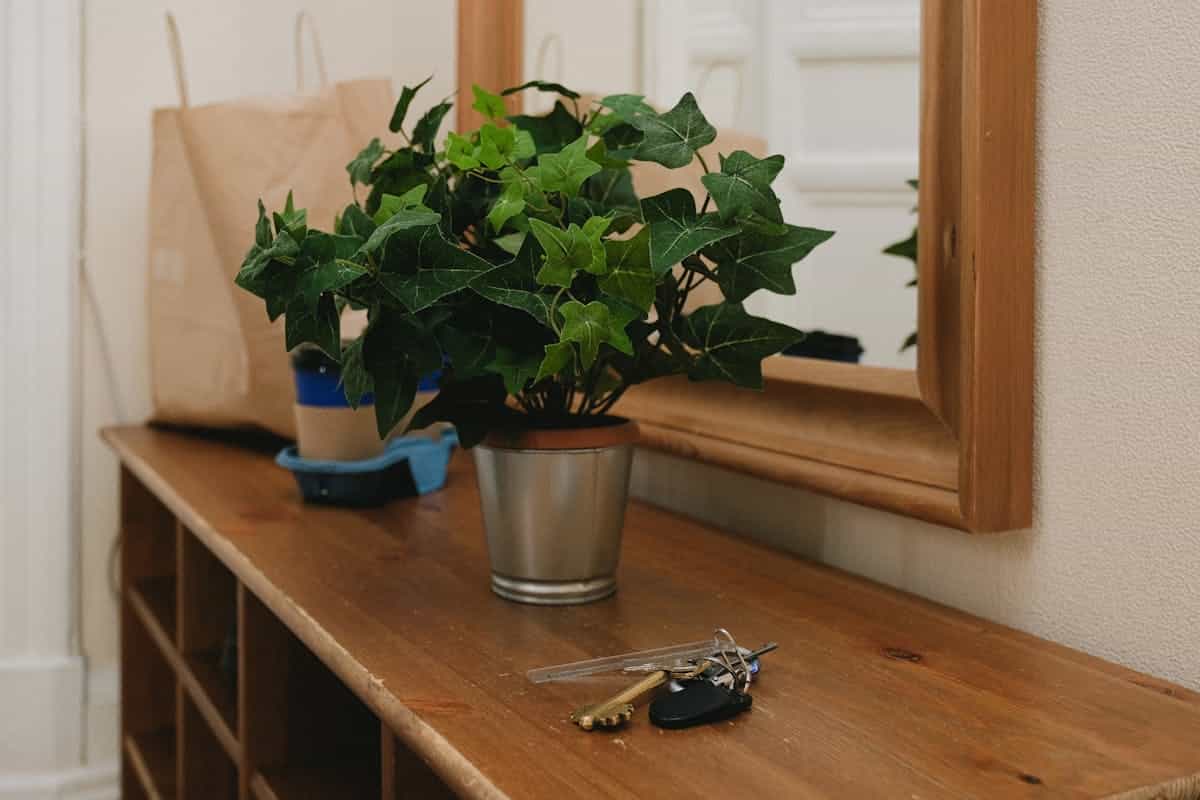
An entryway mirror with hooks is the rare piece of decor that earns its wall space three times over: it is a last-look mirror, a coat rack, and a key drop in a single frame. In a small hallway with room for one thing, it is almost always the right thing. The question is which one — and how to hang it so a winter's worth of coats does not pull it off the wall. The short answer first.
The best entryway mirror with hooks has 4–6 hooks rated for at least 5 pounds each, a small shelf or tray for keys and phone, a frame material that matches your entry, and a size that fits your wall without crowding it — mounted into studs so the loaded hooks stay put. Hang it so the hooks land around 62–66 inches from the floor, within arm's reach of the door.
Most search results for an entryway mirror with hooks are shopping pages, not advice. Here is the advice: what actually separates a good one from a wobbly one, and how to put it up safely.
Why an Entryway Mirror With Hooks Is the Smartest Small-Space Buy
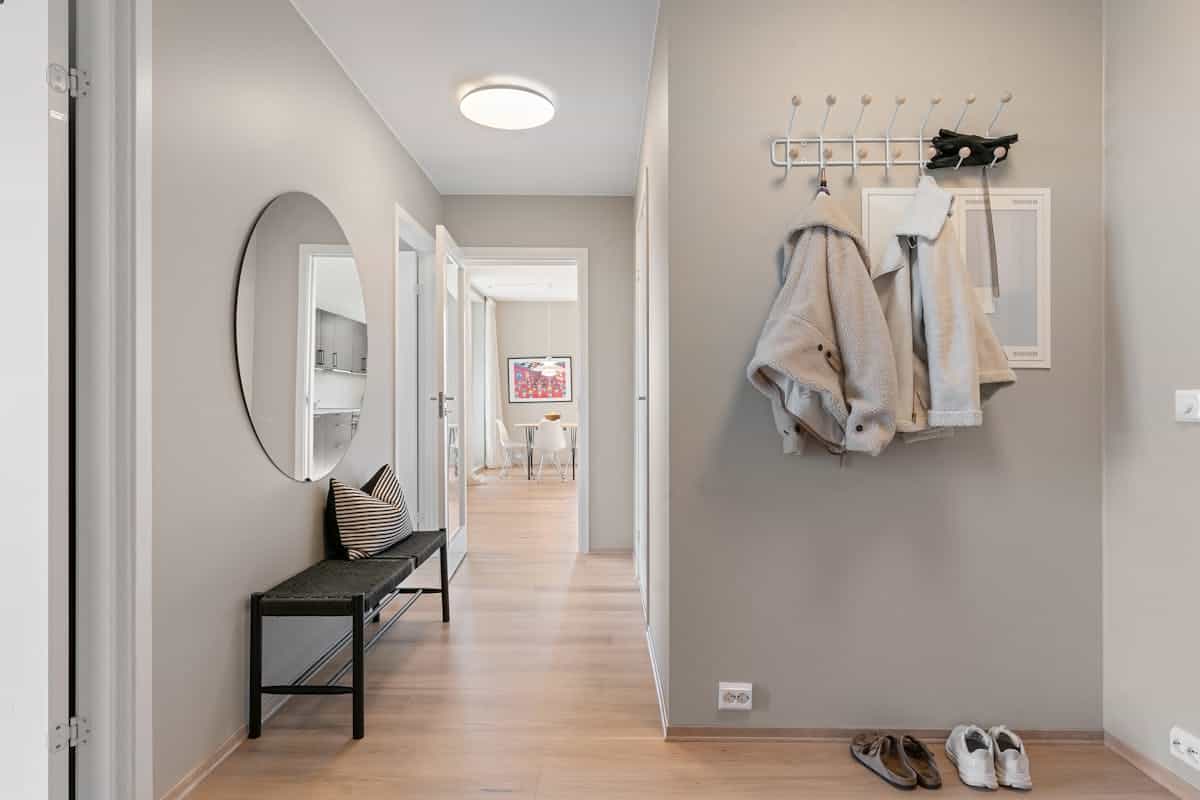
Walk into most homes and the entryway is doing four jobs with no furniture for any of them: somewhere to check yourself, somewhere to hang a coat, somewhere to drop keys, and somewhere to not look cluttered. A mirror with hooks entryway piece collapses all four into one wall-mounted unit — which is why it punishes a small space so little.
It reflects light into a dark spot. Entryways rarely have their own window; they borrow light. A mirror bounces whatever light reaches the hall back into it, which is just how reflection works, and makes a dim entrance feel brighter and larger.
It creates a drop zone. The hooks catch coats, bags, hats, and the dog's leash; the shelf catches keys, phone, and wallet. Everything that usually ends up on the floor or the kitchen counter has a home at the exact point you walk in.
It gives you the last look. The entry is the final place you pass on the way out — the natural spot to check the whole outfit. A hook mirror puts that check exactly where your coat already is.
There is a reason this feels so satisfying to use. The instinct to glance at yourself on the way out is, historically, very new: a clear, accurate reflection of your own face was a luxury ordinary people could not own until the 19th century. The combined mirror-and-hooks unit is just the most efficient modern home for a very modern habit.
What to Look For: Hooks, Shelf, Material, and Size
Four things separate a piece you will love from one you will quietly resent:
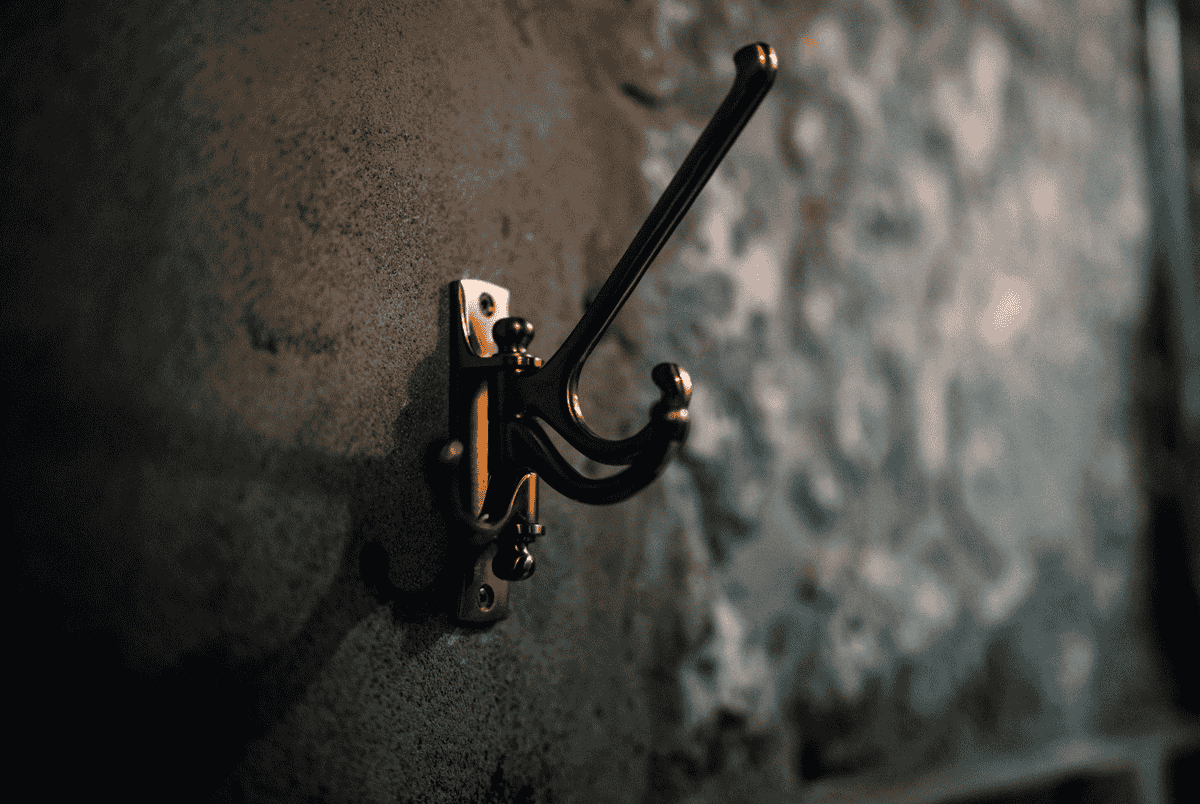
- Hooks — number and rating. Most units carry three to six hooks. Three or four suit one person or a narrow wall; five or six suit a family or anyone hanging bags plus coats. Look for a stated per-hook weight rating — good ones hold around 5 pounds per hook (so six hooks ≈ 30 pounds of coats), and metal hooks outlast moulded plastic ones.
- Shelf or tray. A small ledge or recessed tray is what catches keys, phone, and wallet. It is the difference between a coat rack and a true command center. Skip it only in a hallway so narrow the ledge would catch passing shoulders.
- Material. Warm woods (oak, walnut, mango) read farmhouse or organic; black or brass metal reads modern or industrial; a painted frame suits traditional. Match the frame to one thing already in the entry — the door hardware, the floor tone, a light fixture.
- Size and proportion. Measure your wall and leave breathing room. A typical unit runs around 16–24 inches wide; a compact model like Umbra's Estique is about 18 inches wide with six hooks and a tray, sized deliberately for small entries.
The quiet tell of a good one is the total weight capacity — quality pieces state it (around 35 pounds for a small wood-and-metal unit). That number is your budget for coats, and it is the number that decides how you mount it.
Mirror With Hooks vs Mirror With Shelf and Hooks
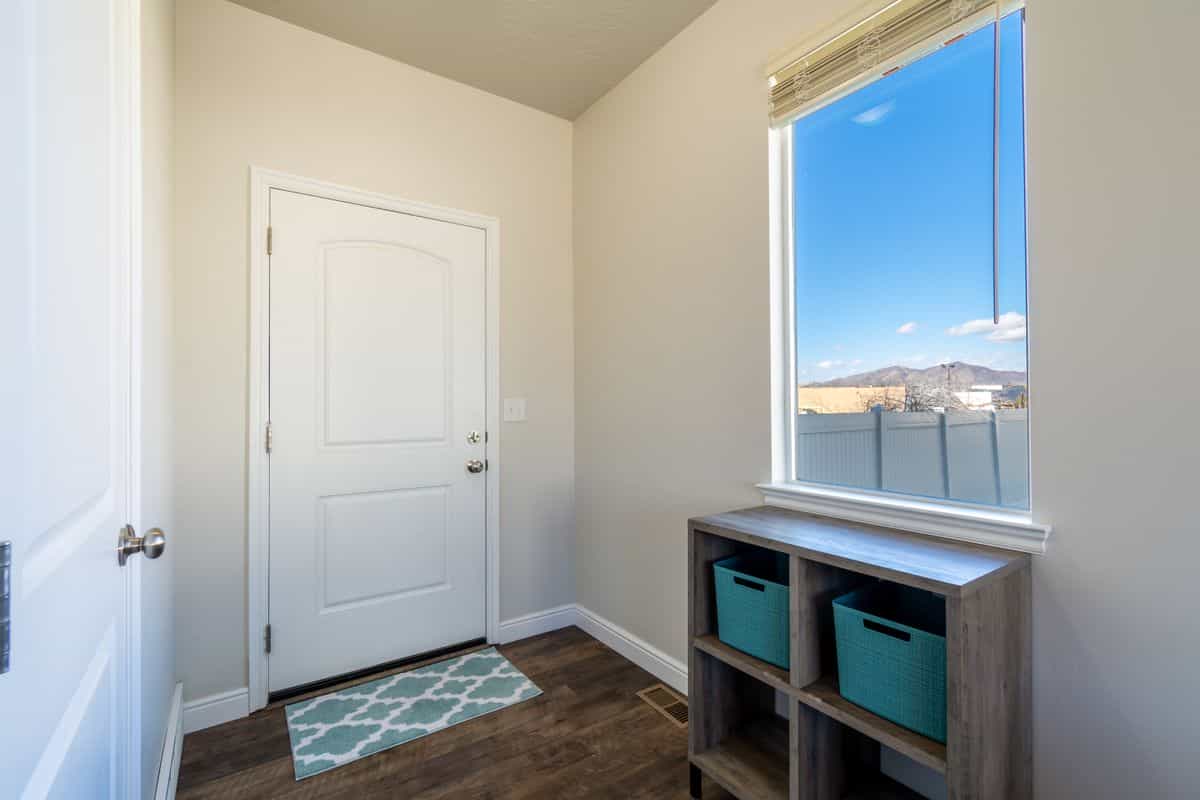
There are two main configurations, and the right one depends on what scatters in your house.
Mirror with hooks only. Cleaner, slimmer, and best where the problem is coats and bags rather than small clutter. It sits closer to the wall, so it suits tight corridors. The downside: keys and phone still need a home elsewhere.
Mirror with shelf and hooks. The fuller solution — a mirror with shelf and hooks adds a ledge or tray under the glass for the small daily items. This is the one most people actually want, because the keys-and-phone problem is the one that drives you mad. An entrance mirror with hooks plus a shelf is a complete drop zone in one purchase.
If you are torn, ask what is on your kitchen counter right now that came in from outside. If it is mostly coats, hooks are enough. If it is keys, sunglasses, and a pile of post, get the shelf.
Styles That Suit Your Entryway
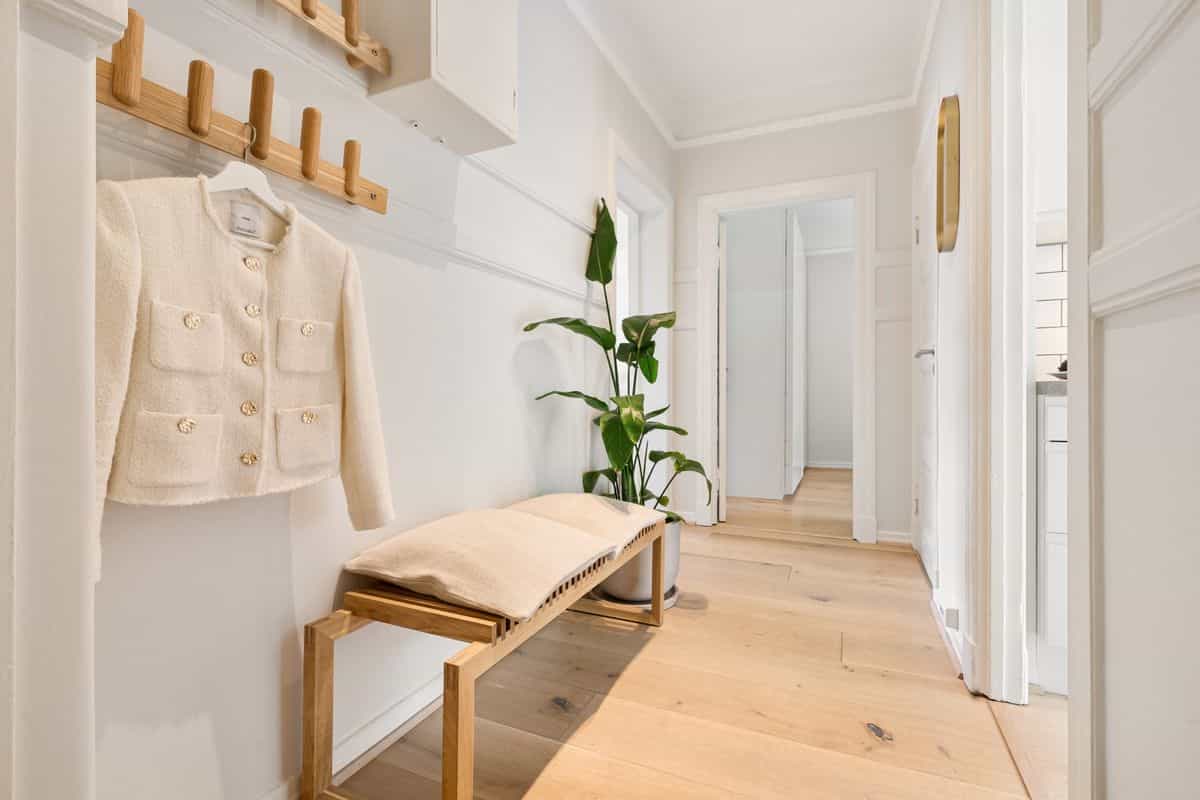
The frame sets the tone, so match it to the entry you have:
- Farmhouse / rustic — weathered or mango wood, a wood shelf, simple peg or hook hardware. Warm and forgiving; hides scuffs.
- Modern / minimalist — a frameless or thin-framed mirror with a slim metal rail of hooks. Recedes into a clean entry.
- Industrial — black metal frame, exposed hardware, often a pipe-style rail. Urban and hard-wearing.
- Arched — an arched mirror with pegs beneath is the current favourite: the curve softens the wall and the shape adds height to a low entry.
- Glam / traditional — a gilded or detailed frame with decorative hooks, for an entry that wants one elegant focal point.
For the full range of shapes and the sizing logic behind them, the companion guide on entryway mirror ideas, styles, and placement goes deeper than the hooks question alone.
How High to Hang It — and How to Mount It Safely
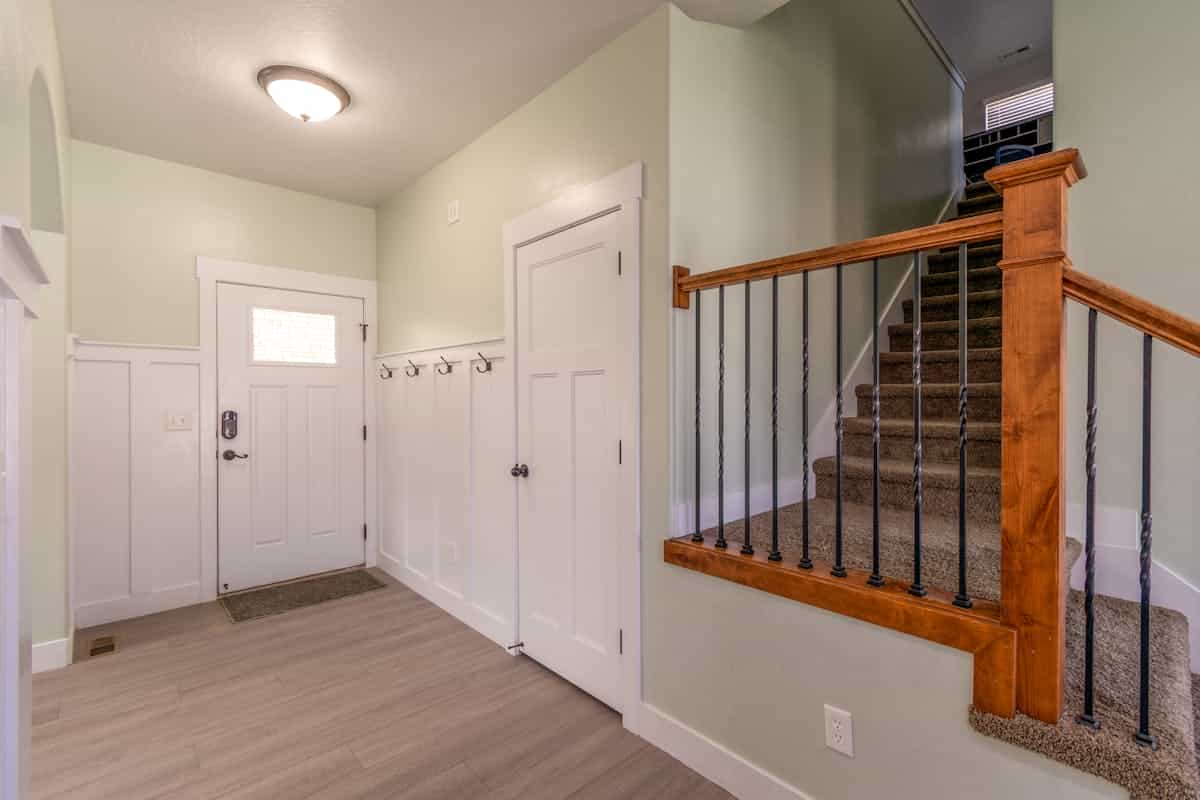
This is the part the shopping pages skip, and it matters more for a hook mirror than for any plain mirror — because the hooks add a daily load.
Height: balance two needs. The mirror wants its centre near eye level (57–65 inches); the hooks want to be reachable, around 60–66 inches for adult coats, lower for children. On a combined unit the spacing is fixed, so hang it so the hooks land about 62–66 inches from the floor and let the mirror centre fall where it may — a mirror slightly off eye level still works, but hooks you have to reach up to never get used. The general height logic is covered in how high to hang a mirror.
Mounting — the safety part: a plain mirror only carries its own weight. A loaded hook mirror carries the mirror plus a winter coat, a heavy bag, and the outward yank every time someone grabs a jacket on the way out. So:
- Anchor into wall studs wherever possible. A stud will hold the mirror and a full load without complaint.
- Where studs are not in the right place, use rated anchors — toggle bolts or heavy-duty wall anchors rated well above the combined weight of the unit and a full load of coats.
- Use two fixing points, not one, so the piece cannot pivot when a hook is pulled.
- Never hang a hook mirror on adhesive strips alone. A coat rack tugging on a sticky pad is the single combination that reliably ends on the floor at 8 a.m.
Get the fixing right once and you never think about it again — which is the whole point of a piece you use every single day.
How to Style and Use It as a Drop Zone
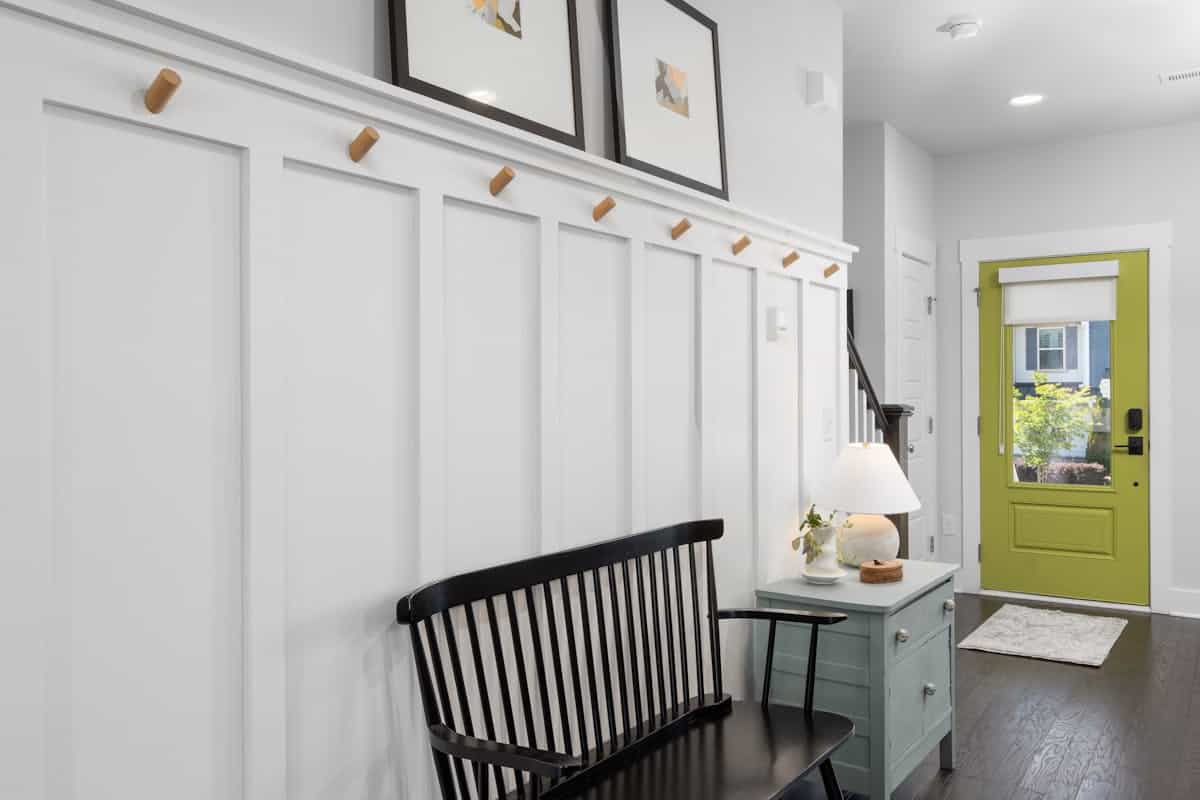
A mirror with hooks works best when you treat it as a system, not just a wall ornament:
- Assign the hooks. One for each person's everyday coat, one for bags, one for the leash. Unassigned hooks fill with everything and look messy.
- Keep the shelf to a tray plus one object. A small dish or tray for keys and phone, and one decorative thing — a short vase, a candle. The mirror doubles whatever sits there, so restraint reads as twice the restraint.
- Point the reflection at light, not the door. Position the piece so the mirror catches a lamp or a window rather than the open front door — both for the look and, if you follow feng shui entry guidance, because a mirror square-on to the door is traditionally discouraged.
- Add a bench or basket below for shoes if floor space allows, and the wall unit plus the bench becomes a full entryway without built-in furniture.
The goal is that everything you need on the way out — coat, bag, keys, a last look — lives in one arm-span by the door. Done well, you stop losing your keys. That is a low bar for decor to clear, and this is one of the few pieces that clears it.
Recommended Products
These are the categories worth comparing for an entryway mirror with hooks — prioritise hook rating, a useful shelf, and secure mounting hardware. (Links go to Amazon search results so you can compare current options.)
- Entryway mirror with hooks and shelf — the complete drop-zone unit.
- Arched mirror with pegs / hooks — the soft-shape favourite for small entries.
- Wood-and-metal mirror with hooks — warm, farmhouse-leaning option.
- Heavy-duty wall anchors and toggle bolts — so loaded hooks stay on the wall.
- Stud finder — to anchor into framing.
- Entryway key and mail tray — to keep the shelf tidy.
The One Thing to Remember
An entryway mirror with hooks is not really decoration — it is the smallest possible piece of furniture doing the work of three, hung at the one point in the house where coats, keys, and a last look all need to happen at once. Buy one with hooks rated for real coats, give it a shelf if your counter keeps filling with keys, and anchor it into something solid.
Get that right and the messiest three feet of your home becomes the most useful. The mirror shows you on the way out; the hooks make sure you leave with everything — which, on a rushed morning, is the only decor decision that pays you back daily.
Mirror FAQ
What is an entryway mirror with hooks?
It is a wall-mounted mirror with a row of hooks built into its frame or a rail beneath it, often with a small shelf or tray as well. It combines three entryway essentials in one piece: a mirror for a last look before you leave, hooks for coats, bags, keys, and leashes, and (on shelf models) a surface to drop your phone and wallet. It is designed to give a small hallway a full drop zone without needing separate furniture.
How many hooks should an entryway mirror have?
Most models have between three and six hooks. Three to four suits a single person or a tight wall; five to six works for a couple, a family, or anyone who wants to hang bags and a dog leash alongside coats. Check the per-hook weight rating too — quality mirrors with hooks rate each hook for around 5 pounds, so six hooks hold roughly 30 pounds of coats and bags before you even count the mirror itself.
How do you hang a heavy mirror with hooks so it stays on the wall?
This matters more than with a plain mirror, because the hooks add a constant downward and outward pull every time something is hung or grabbed. Anchor the mounting hardware into wall studs, or use wall anchors or toggle bolts rated well above the combined weight of the mirror plus a full load of coats. Use two fixing points, not one, and never rely on adhesive strips for a hook-bearing mirror — a loaded coat rack tugging on a sticky pad is the one combination that ends on the floor.
How high should an entryway mirror with hooks be hung?
Balance two heights. The mirror wants its centre near eye level (about 57 to 65 inches from the floor), while the hooks want to be reachable — roughly 60 to 66 inches for adult coats, lower if children will use them. On most combined units the proportions are fixed, so hang the piece so the hooks land around 62 to 66 inches and accept the mirror centre wherever that puts it; a mirror an inch off eye level still works, but hooks out of easy reach do not get used.
Is a mirror with a shelf and hooks better than just hooks?
For most entryways, the shelf earns its place. Hooks handle coats and bags; the shelf or tray handles the small things that otherwise scatter — keys, phone, wallet, sunglasses, post. A mirror with shelf and hooks turns the wall into a complete command center. The only reason to skip the shelf is a very narrow hallway where a protruding ledge would catch shoulders or bags as people pass.
Where should you put an entryway mirror with hooks?
On the first solid wall you reach as you come in, ideally a side wall rather than the one directly facing the front door, and within arm's reach of where you take off your coat and set down your keys. The point of the piece is to catch those items at the moment of entry, so placement is about the flow of walking in, not just the look of the wall. Make sure the wall has studs or takes solid anchors, since the hooks will be loaded daily.