Hallway Mirror Placement: Rules for Narrow Spaces
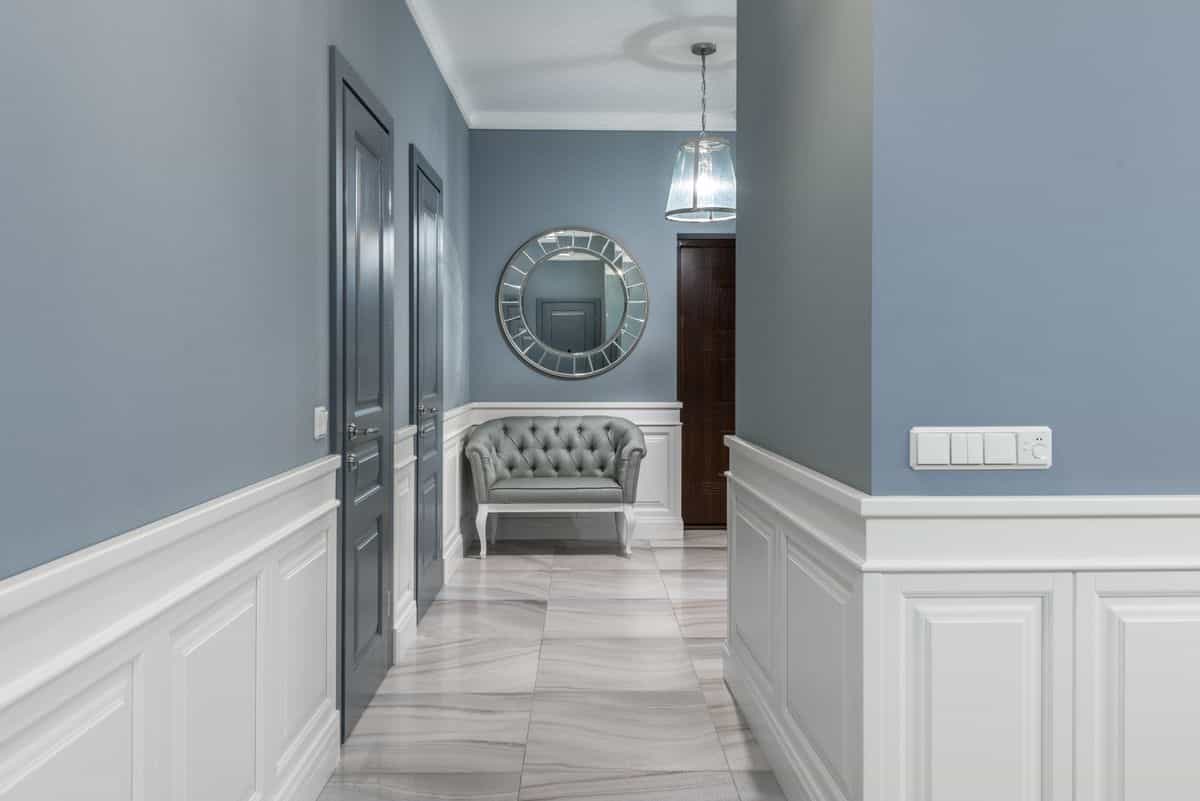
A mirror is the cheapest, fastest way to make a narrow hallway feel wider and brighter — and the most common way people get it wrong is hanging it on the one wall that makes things worse. The honest answer to "where do hallway mirrors go in a narrow space" surprises most people. The short version first.
In a narrow hallway, hang the mirror on a long side wall, not at the far end — a side mirror reflects light and the opposite wall across the corridor, widening it, while an end mirror only deepens the tunnel. Centre it at eye level (about 57–60 inches), point it at a light source or a pleasant view, choose a long or slim shape with a low-profile frame, and never hang two mirrors facing each other.
Most hallway mirrors advice repeats "put a mirror at the end of the hall to make it look longer." That is exactly the move that can backfire. Here is what actually works, and why.
Far End or Side Wall? The Most Important Decision
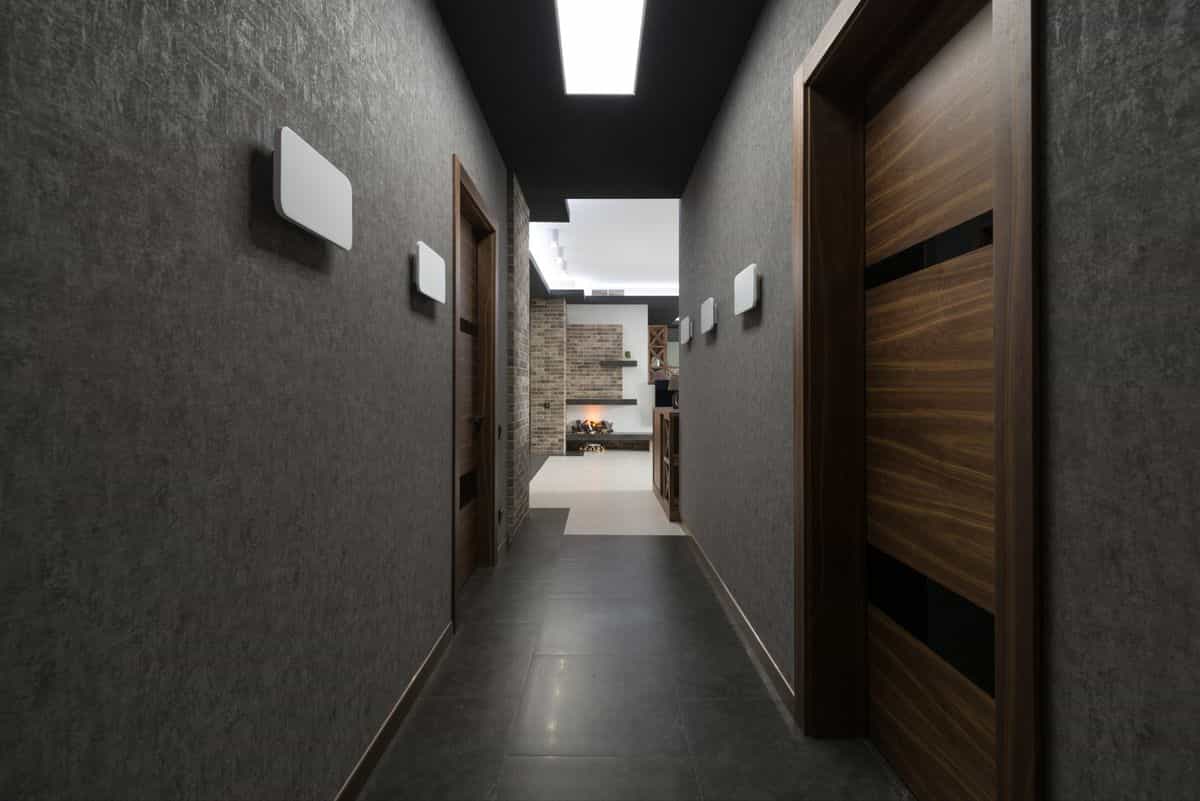
The single biggest choice is which wall the mirror goes on, and the popular answer is only half right.
The far end is the classic advice: a mirror at the end of a hallway reflects the corridor back and appears to extend it, drawing the eye forward. It can work — but with a real caveat. A large mirror squarely at the end of a long, narrow hall exaggerates the tunnel rather than relieving it, and walking straight toward your own full-length reflection in a tight corridor can feel oddly confrontational. The far end suits a small accent mirror, or a hall that ends by opening into a brighter room worth reflecting.
The side wall is the better default for a narrow hallway, and it is the move most guides underplay. A mirror on the long wall reflects the opposite wall and whatever light crosses the corridor, which adds apparent width exactly where a narrow hall needs it. Instead of lengthening the tunnel, it widens it. For most tight corridors, this is the answer.
Why a Side Mirror Beats an End Mirror in a Narrow Hall
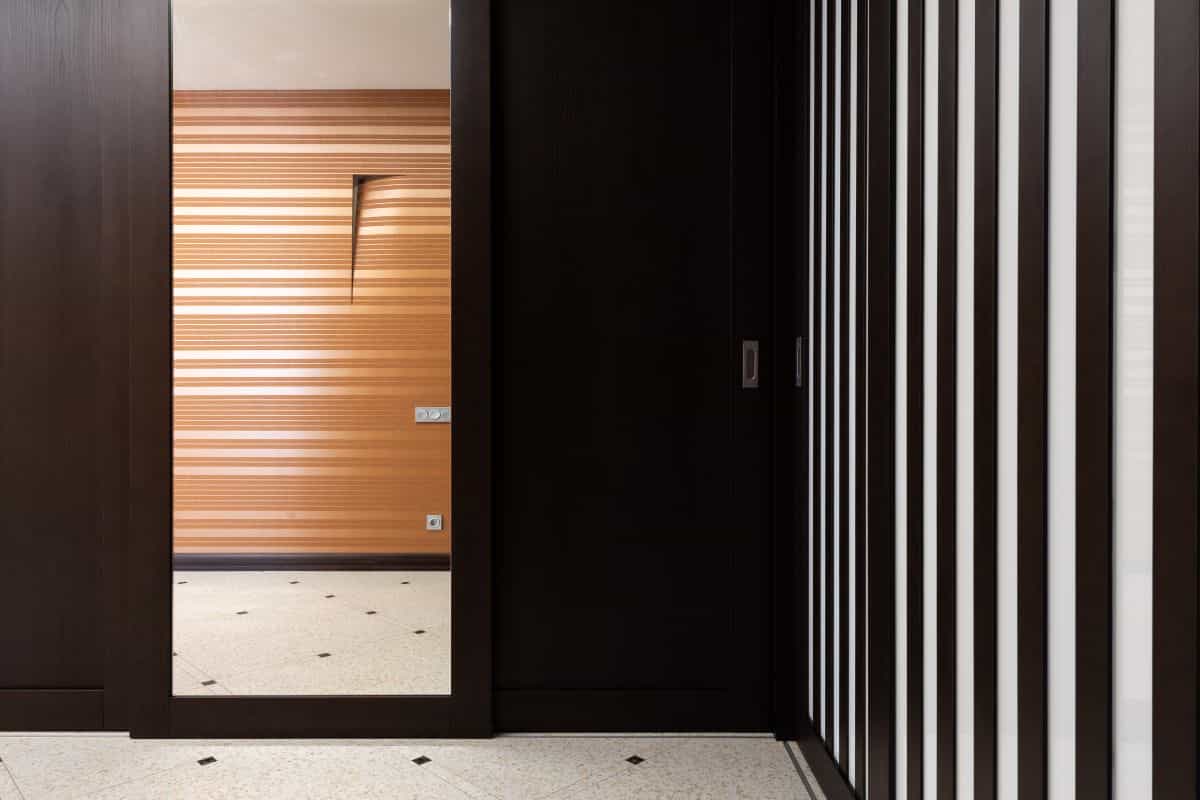
This is worth understanding, because once you see the geometry the rule stops being arbitrary.
A hallway is narrow in one direction and long in the other. A mirror at the far end reflects along the long axis — the direction that already has plenty of depth — so it adds more of the dimension you do not lack. A mirror on the side wall reflects along the short axis: it throws the image of the opposite wall back across the corridor, so the eye reads roughly double the width. You are adding apparent space in the exact direction the hallway is starved of it.
There is a light angle too. A side mirror catches light crossing the corridor — from a doorway, a window at one end, a fixture — and bounces it sideways into the space, which is just how reflection behaves. A windowless corridor borrows all its light; a side mirror redistributes that borrowed light instead of sending it straight back down the tunnel. Most people install one mirror at the dead end and wonder why the hall still feels tight. The wall was the problem, not the mirror.
How High to Hang a Hallway Mirror
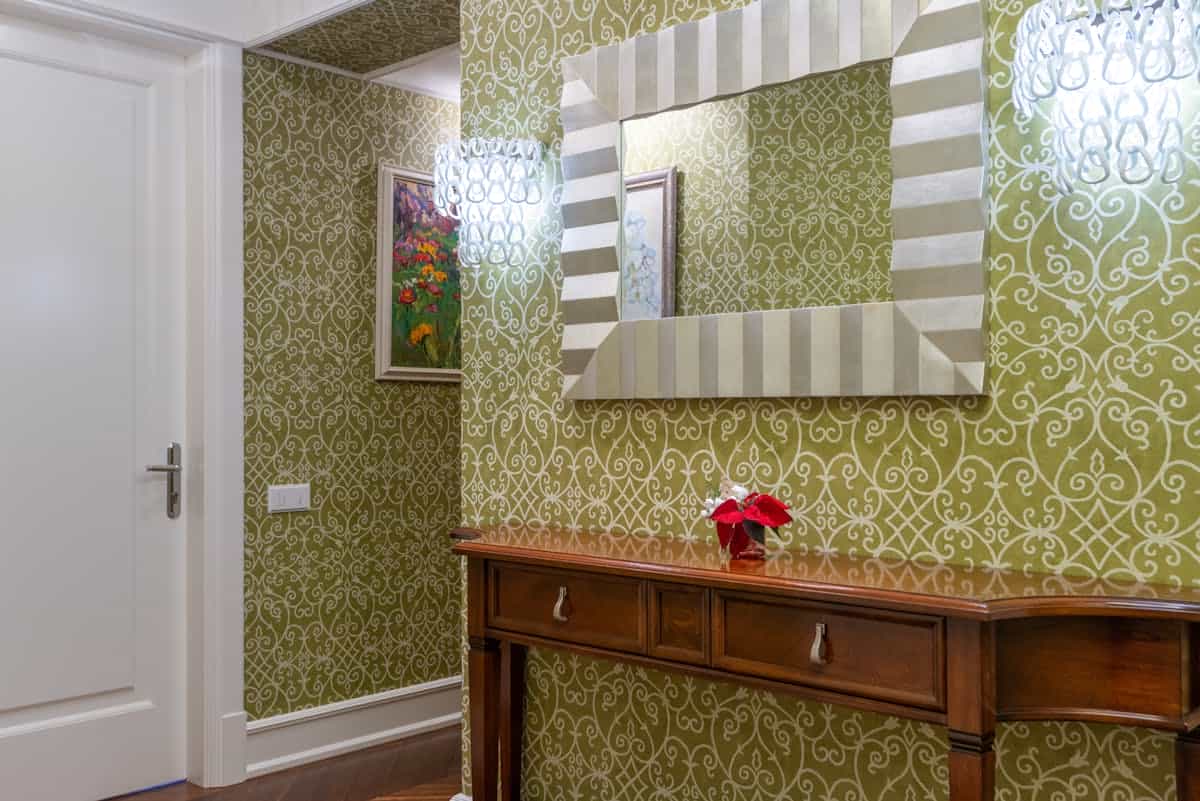
Height is simpler than the wall question. Hang the mirror so its centre sits at eye level — about 57 to 60 inches from the floor. Over a console table, leave a 6 to 8-inch gap above the surface so the two read as one unit; the same eye-level logic applies as in the full guide to how high to hang a mirror.
One hallway-specific adjustment the standing-room rule usually misses: most guides say leave 3 to 5 feet of clear space in front of a mirror so you can step back. In a hallway you often cannot — the corridor is the standing space, and you mostly pass the mirror rather than stop at it. That is fine. A hallway mirror's job is light and the feeling of space, not a full-length grooming check, so judge the height by what it catches as you walk past — a face, not a chest — rather than by how far back you can stand.
What a Hallway Mirror Should Reflect
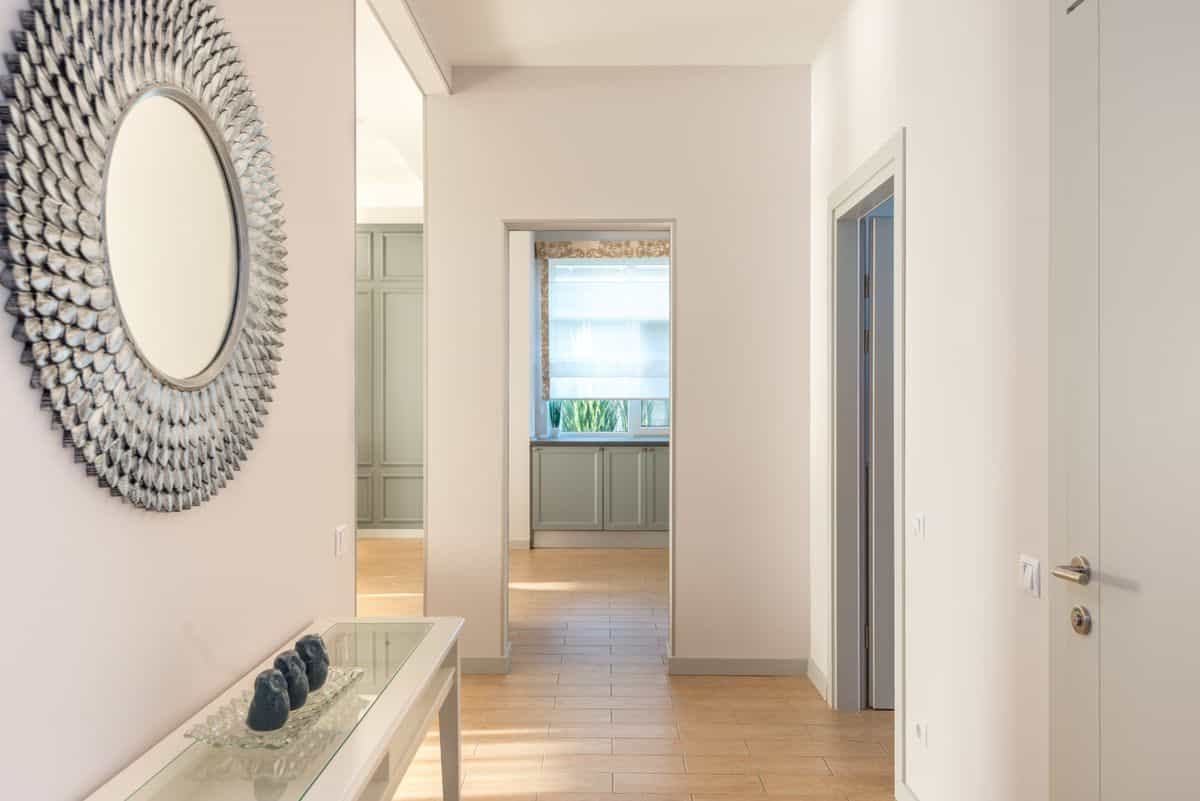
A mirror doubles whatever it faces, so in a narrow hall the question is what you want twice as much of. Aim it at:
- A light source — a window at the end of the hall, a doorway into a bright room, or a wall light. This is where the brightening effect comes from.
- A pleasant view — a glimpse into a nicer room, a piece of art on the opposite wall, a plant.
- Open floor and wall — even reflecting an uncluttered stretch of corridor adds depth.
Avoid pointing it at clutter, a stack of shoes, a cramped corner, or — if the hall is an entry — straight at the front door. A hallway is often the most neglected wall in a house; the mirror is your chance to double the one good thing in it rather than the mess. For the broader styling options, the companion guide to entryway mirror ideas, styles, and placement covers shapes and frames in depth.
Best Shapes and Frames for a Narrow Hallway
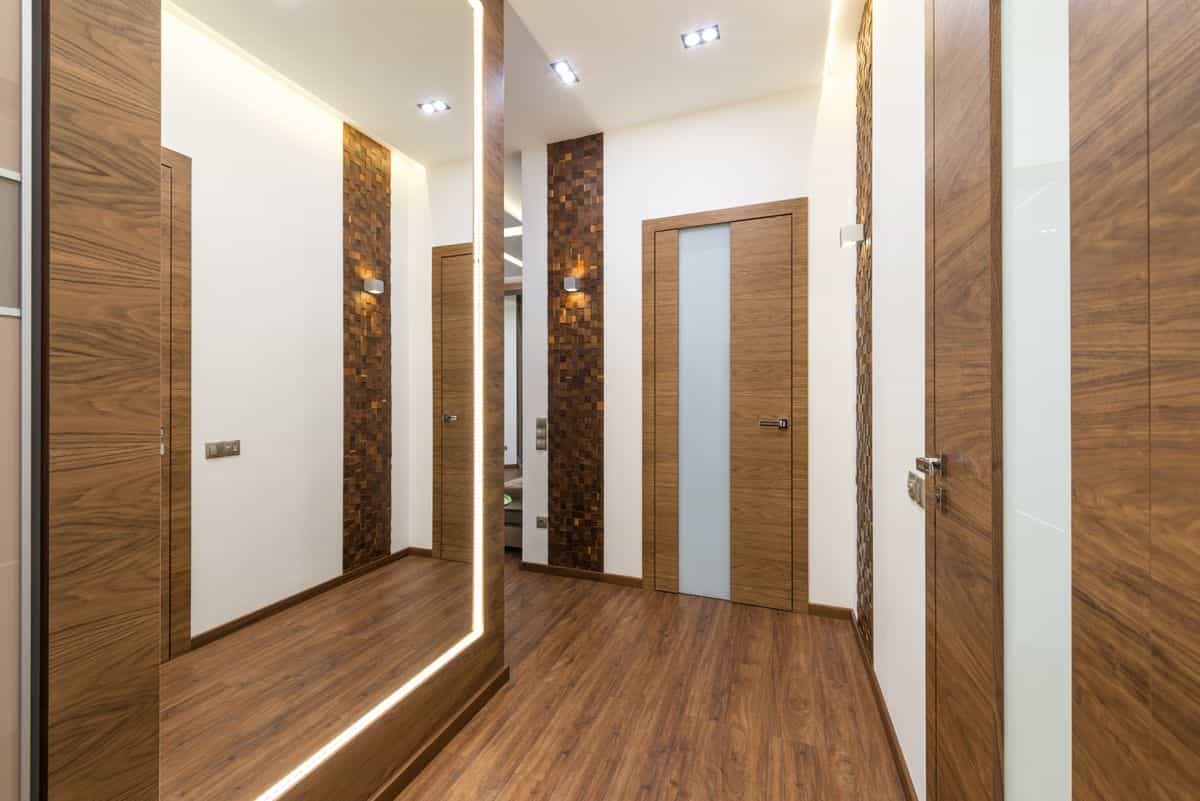
Shape should answer the corridor's particular problem:
- Long horizontal mirror — the most effective for visually widening a narrow hall. Hung on the side wall, it stretches the perceived width along the corridor.
- Tall vertical or arched — best where the ceiling is low; it draws the eye up and adds height.
- Round or oval — softens the hard parallel lines of a corridor, which can feel severe. A round mirror is the calmest choice in a tight, boxy hall.
- A row of smaller mirrors — several spaced along the side wall reflect light at multiple points and add rhythm without one large piece dominating.
Two frame rules specific to tight spaces. First, keep the frame slim and low-profile — a deep, protruding frame in a narrow hall catches shoulders, sleeves, and bags as people pass. Second, favour rounded or simple frames over heavy, sharp-cornered ones, which make a confined space feel more confined.
The Narrow-Hall Rules: What to Avoid
A few placements reliably backfire in a corridor:
- Two mirrors facing each other. On opposite walls they create an endless, repeating reflection that is genuinely disorienting in a space you move through — the reasons are part optics, part perception, covered in the piece on two mirrors facing each other. Stagger them instead.
- A big mirror dead-ending a long hall. It deepens the tunnel and puts your advancing reflection in your face. Move it to the side wall.
- A mirror facing the front door (in an entry hall). Feng shui and other traditions discourage it, and practically, a reflection square-on as you enter reads as a stop rather than a welcome.
- A protruding frame in a pinch point. In the narrowest stretch, anything that sticks out becomes something to brush against. Keep the tightest section clear or use a flush, framed mirror there.
Get those four out of the way and almost any side-wall placement will improve the hall.
Recommended Products
These are the categories worth comparing for hallway mirrors in a narrow space — prioritise a long or slim shape, a low-profile frame, and secure fixings. (Links go to Amazon search results so you can compare current options.)
- Long horizontal wall mirror — the shape that widens a narrow corridor.
- Arched hallway mirror — adds height where ceilings are low.
- Round wall mirror — softens a boxy, tight hall.
- Set of mirrors for a gallery wall — for rhythm along a side wall.
- Slim console table for a narrow hallway — pairs with a foyer mirror without blocking the path.
- Heavy-duty flush mirror hanging kit — keeps the mirror tight to the wall and level.
The One Thing to Remember
The whole secret of foyer mirrors and hallway mirrors in a narrow space is one counterintuitive move: stop hanging the mirror at the end of the tunnel and put it on the side. An end mirror gives you more of the length you already have; a side mirror gives you the width you do not. That single switch — plus pointing the glass at light rather than clutter — does more than any frame or finish.
A narrow hallway will never be wide. But a mirror on the right wall makes it feel like it forgot how narrow it was — which, in the tightest part of a home, is the most useful trick a flat piece of glass can do.
Mirror FAQ
Where should you hang a mirror in a narrow hallway?
On a side wall, not at the far end, in most narrow hallways. A mirror on the long side wall reflects light and the opposite wall across the corridor, which makes the passage feel wider and breaks up the tunnel effect. A mirror at the far end only lengthens the tunnel and, if it is large, can feel disorienting as you walk toward your own reflection. Use the far end only for a small accent mirror or where the hallway opens into a brighter room worth reflecting.
How high should a hallway mirror be hung?
Hang it so its centre sits at eye level, about 57 to 60 inches from the floor. If it goes above a console table, leave roughly 6 to 8 inches between the table top and the bottom of the mirror. In a hallway you mostly pass rather than stand at, so prioritise getting the centre near average eye level over any furniture relationship — a mirror you glance at in motion still needs to catch a face, not a chest.
Do mirrors make a narrow hallway look bigger?
Yes, genuinely — a mirror reflects the light and the opposite wall, which adds apparent width and depth, so a cramped corridor reads as more open. The effect is strongest with a mirror on the side wall reflecting a light source or a window, and with a large or long mirror rather than a small one. It is an optical effect, not a decorating myth: the mirror returns real light into a space that usually has none of its own.
What shape mirror is best for a narrow hallway?
A long horizontal mirror visually widens a narrow hallway and is the most effective shape for the job. A tall vertical or arched mirror adds height and suits a hallway with a low ceiling. Round and oval mirrors soften the hard parallel lines of a corridor and feel less severe. Whatever the shape, a slim, low-profile frame is best in a tight hall so the mirror does not protrude into the walking path.
What mirror placements should you avoid in a hallway?
Avoid two mirrors directly facing each other on opposite walls, which creates a disorienting infinite-corridor reflection. Avoid a large mirror squarely at the end of a long narrow hall, which exaggerates the tunnel feeling. Avoid a mirror directly facing the front door if the hallway is an entry, which many traditions discourage. And avoid a deep, protruding frame in a tight corridor, where it catches shoulders and bags as people pass.
Are hallway and foyer mirrors the same thing?
They overlap. A foyer mirror sits in the entrance area and doubles as a last-look mirror as you leave; a hallway mirror is anywhere along a corridor and is mostly about light and the feeling of space. The placement rules are the same — side wall over far end, eye level, reflect light not clutter — but a foyer mirror usually pairs with a console or hooks, while a corridor mirror is more often a standalone piece doing purely spatial work.